Develop fine motor skills Adding up to 100 Worksheets for Ages 4-7
5 filtered results
-
From - To
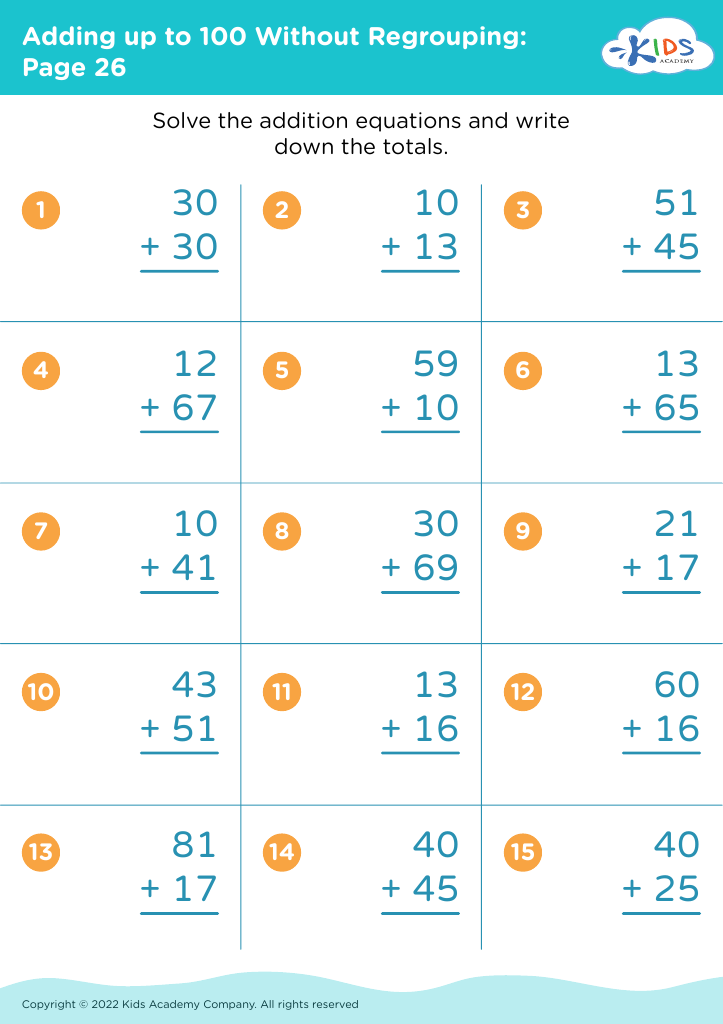
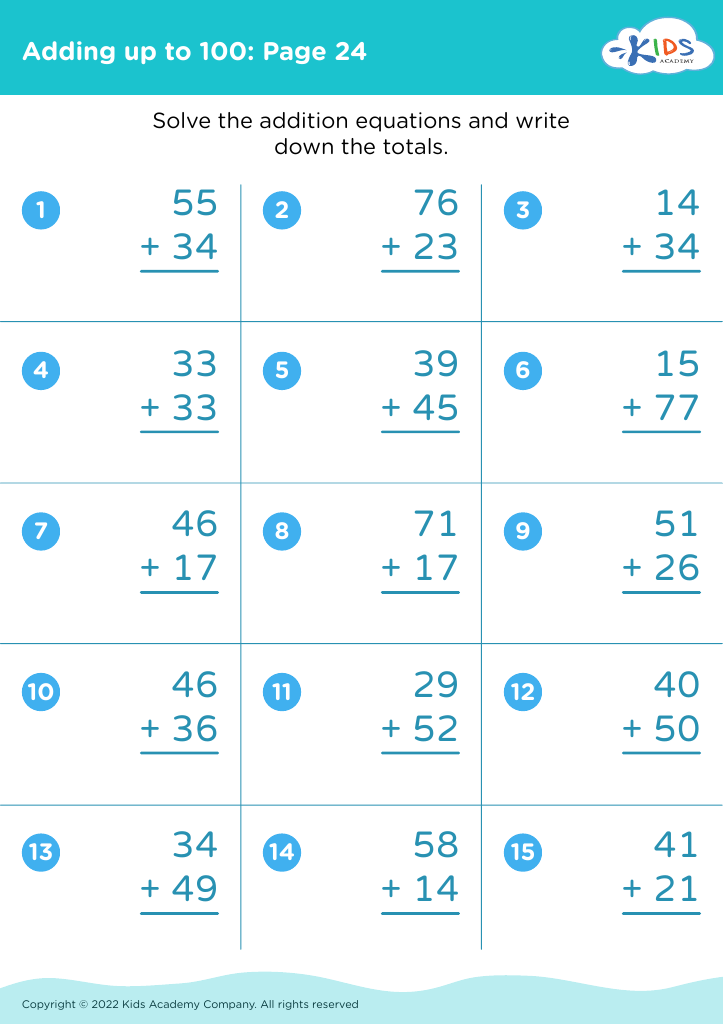
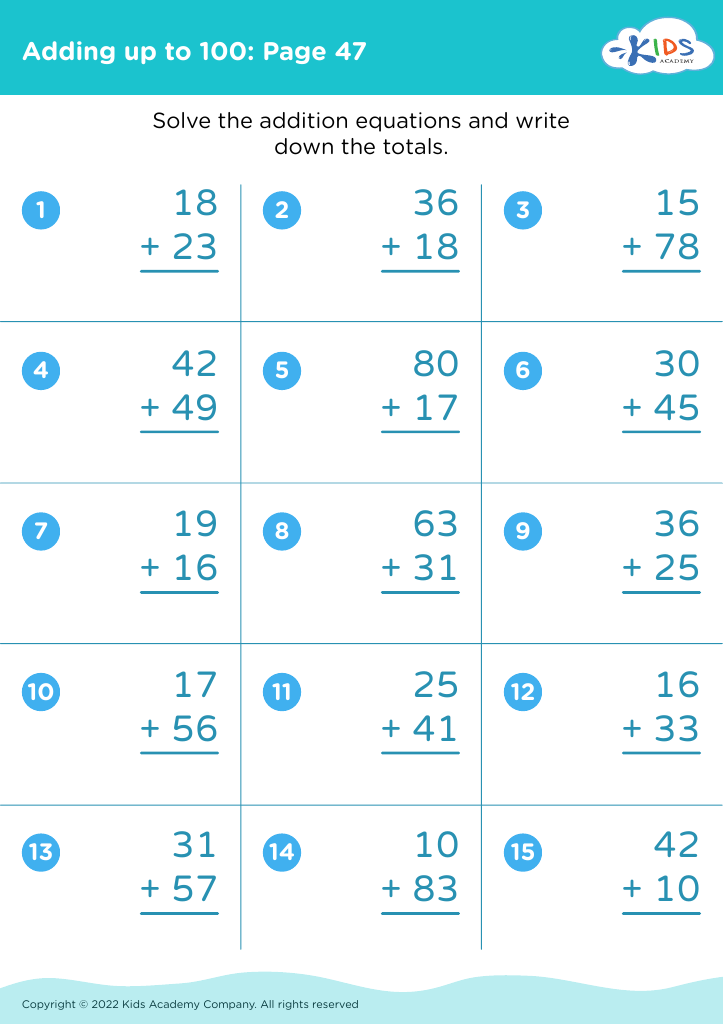
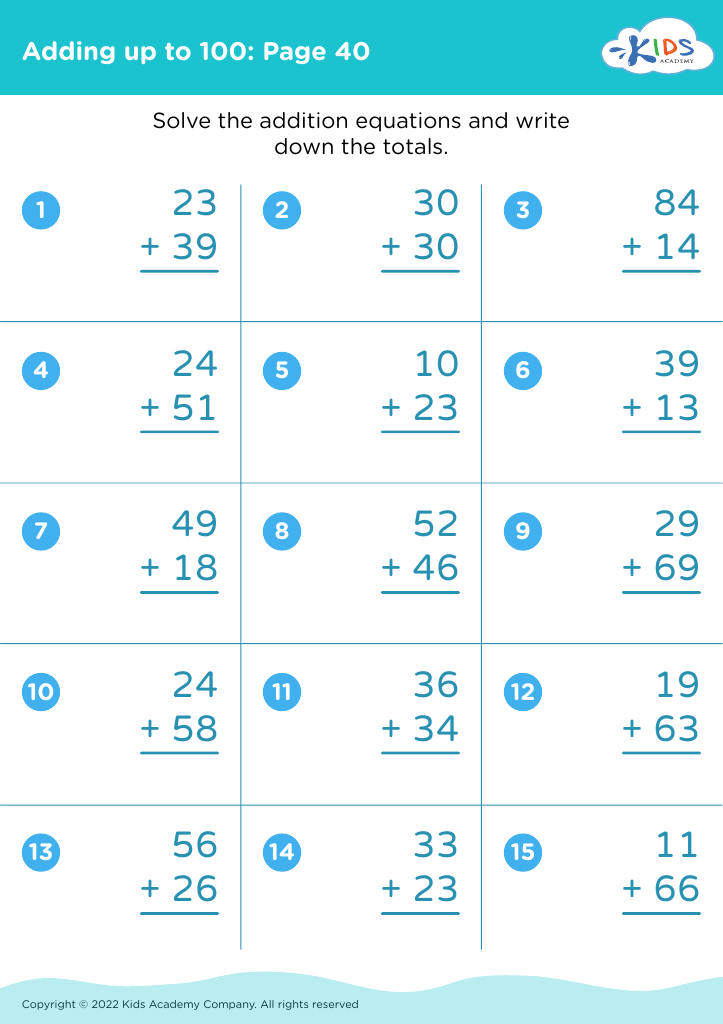
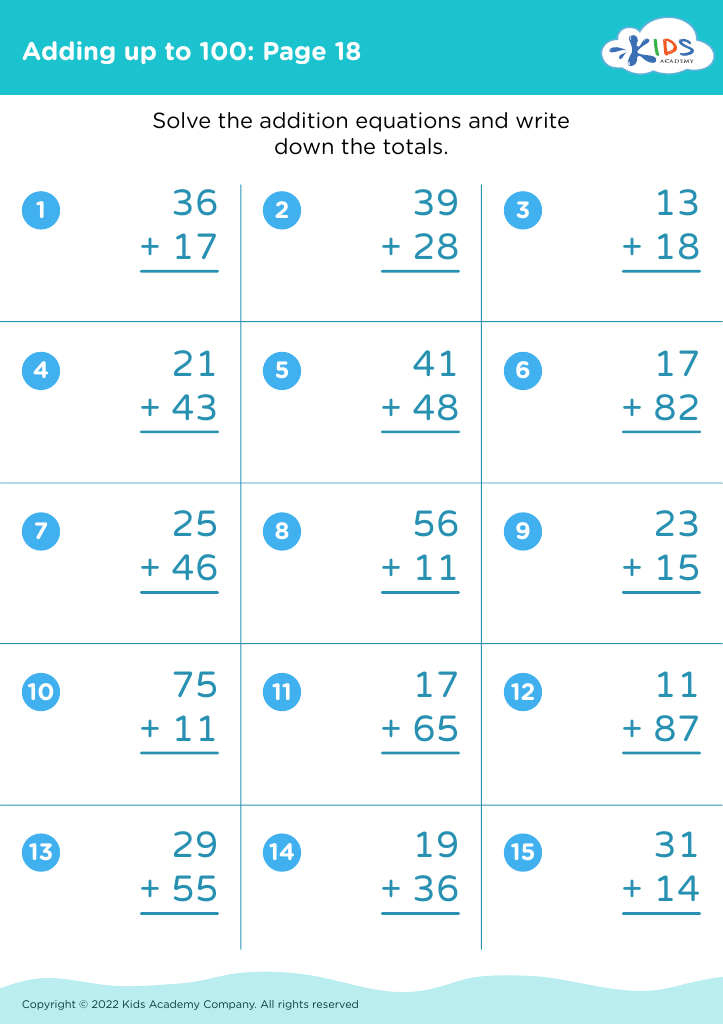
Welcome to our “Develop Fine Motor Skills: Adding Up to 100 Worksheets” page! Designed for children ages 4-7, these engaging worksheets seamlessly integrate fine motor skill development with foundational math concepts. As your child practices adding numbers up to 100, they will enhance their hand-eye coordination and dexterity through various fun activities. From tracing numbers to drawing shapes, each worksheet is crafted to make learning enjoyable while fostering essential skills. Perfect for at-home practice or classroom use, these resources provide a dynamic learning experience that sets the stage for future academic success. Explore our worksheets and watch your child's confidence grow!





%20(1).jpg)

Developing fine motor skills is crucial for children aged 4-7, as these abilities serve as the foundation for numerous everyday tasks and academic success. Fine motor skills involve the coordination of small muscles in the hands and fingers, enabling children to perform precise movements such as writing, cutting, and manipulating small objects. Early investment in these skills can significantly enhance a child’s capacity for academic learning, particularly as they begin to write and engage in art and crafts.
Parents and teachers should prioritize fine motor skill development because these skills encourage independence and self-confidence. Children who can successfully complete tasks, such as buttoning their clothes or tying shoelaces, feel a sense of achievement that motivates them to take on new challenges. Furthermore, strong fine motor skills are associated with improved concentration, problem-solving, and cognitive abilities.
Engaging in activities like drawing, crafting, and playing with building toys not only fosters fine motor development but also nurtures creativity and critical thinking. By focusing on this essential aspect of development, parents and teachers can help ensure that children are well-prepared for their educational journey and equipped with life skills that span well beyond the classroom.








