Enhancing problem-solving abilities Adding up to 100 Worksheets for Ages 4-7
3 filtered results
-
From - To
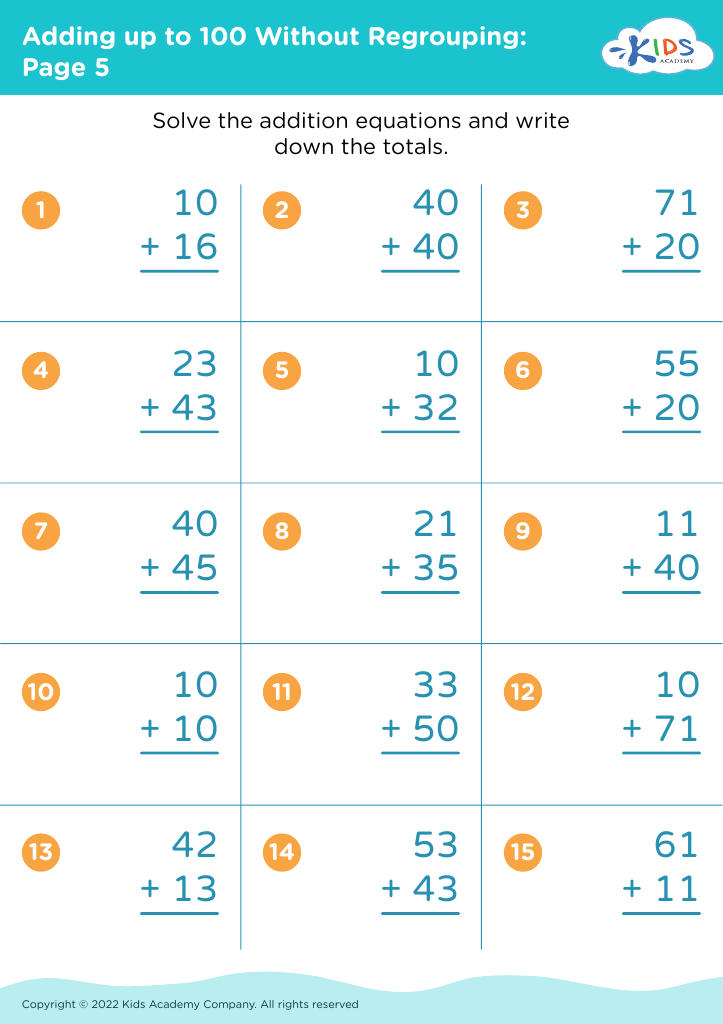
Enhance your child's problem-solving abilities with our engaging "Adding Up to 100" worksheets designed for ages 4-7. This collection features 100 unique worksheets that encourage critical thinking and mathematical understanding through fun, interactive activities. Kids will practice addition, develop number sense, and improve their ability to solve problems independently. Each worksheet is crafted to ensure an enjoyable learning experience while building foundational math skills. Perfect for parents and educators, these resources foster a love for math and empower young learners to tackle challenges confidently. Download our "Adding Up to 100" worksheets today and watch your child thrive in their math journey!








%20(1).jpg)
Enhancing problem-solving abilities in children aged 4-7 is crucial for their cognitive and emotional development. During these formative years, children begin to form the foundation for critical thinking skills. Teaching them how to tackle problems, such as adding up to 100, encourages them to think logically, analyze situations, and strategize effectively. This nurtures their capacity to explore multiple solutions rather than sticking to a single approach, fostering creativity and resilience.
Additionally, strong problem-solving skills bolster a child's confidence. When they successfully solve challenging tasks, their self-esteem increases, motivating them to tackle new challenges. This confidence can extend to various areas, improving their academic performance and social interactions.
Furthermore, problem-solving lessons, like those involving addition, can be integrated into everyday activities, making learning engaging and relatable. It also opens opportunities for constructive play, collaboration, and discussion, involving parents in a child's learning journey.
Ultimately, helping young children develop robust problem-solving abilities is essential as it prepares them not just for academic success, but also equips them with lifelong skills they will rely on in personal, academic, and professional realms. Parents and teachers play a critical role in cultivating this essential facet of a child's development.








