Identify shapes Adding up to 100 Worksheets for Ages 4-7
4 filtered results
-
From - To
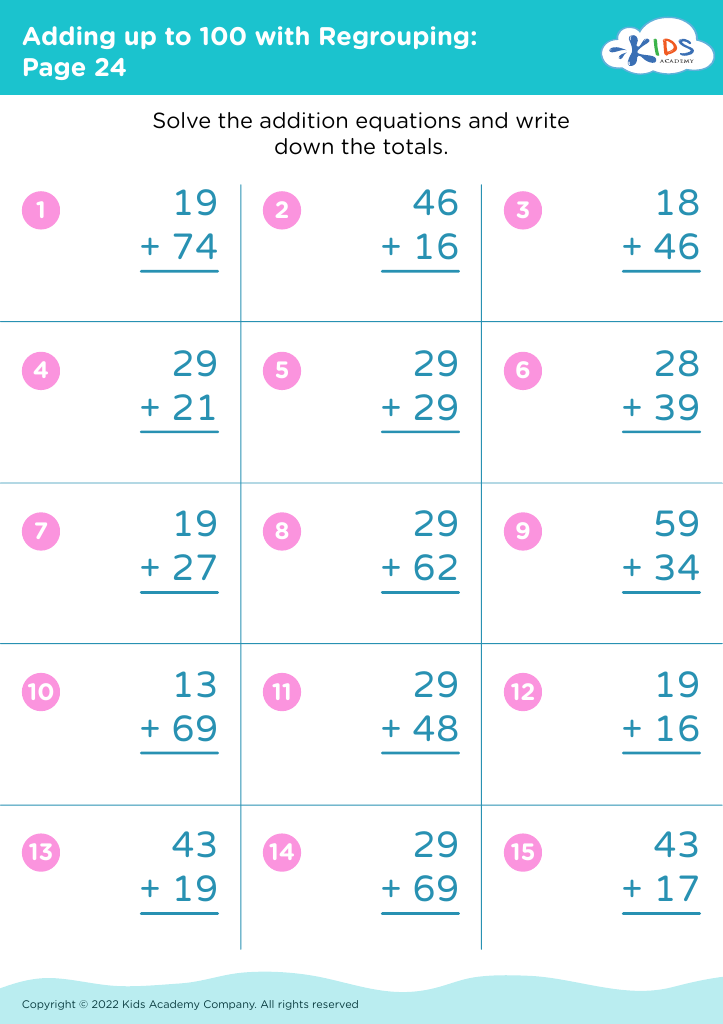
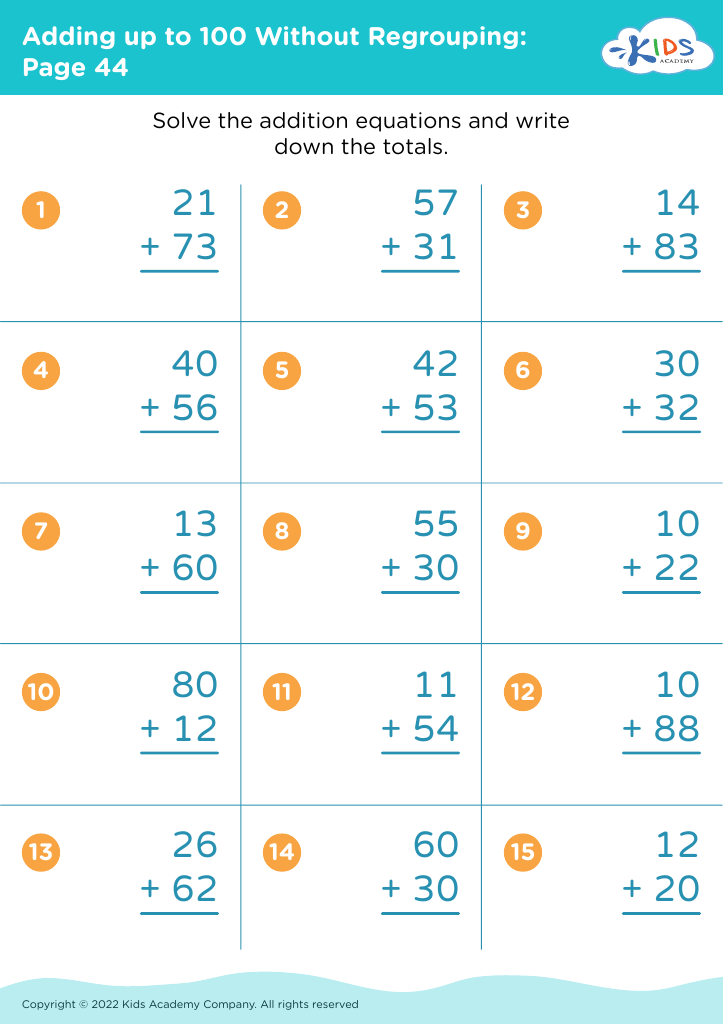
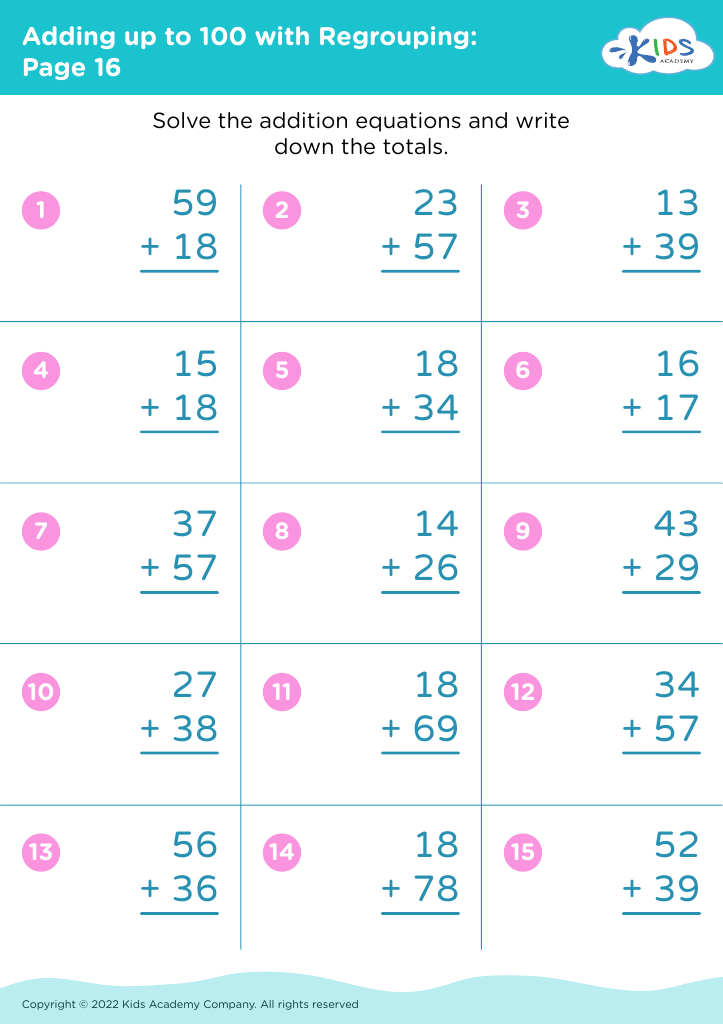
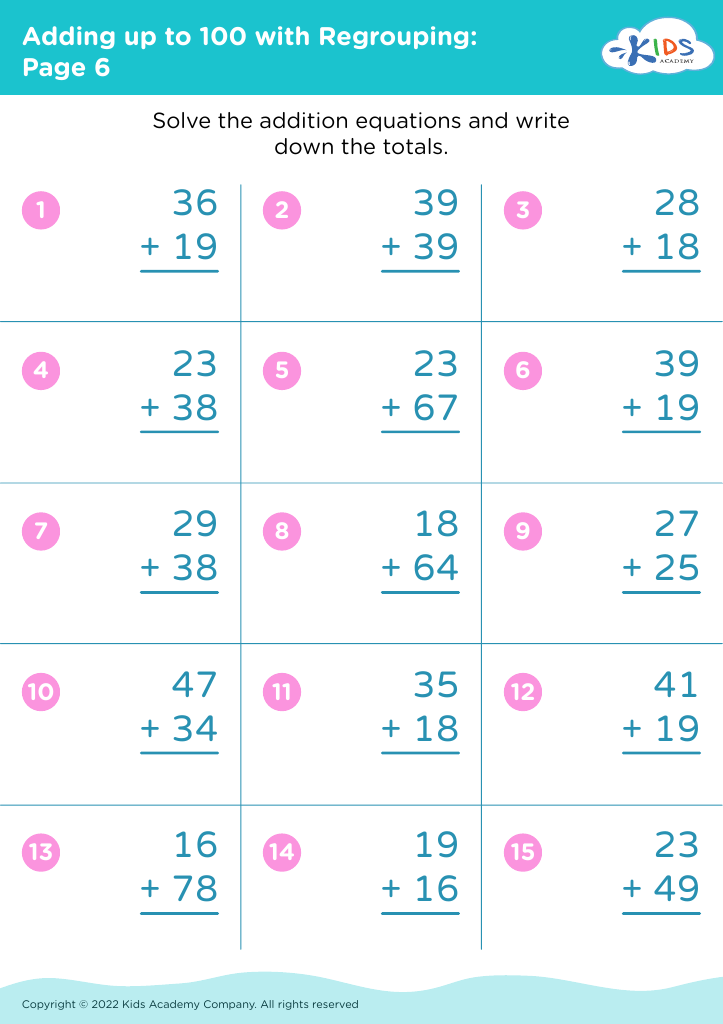
Welcome to our "Identify Shapes Adding up to 100 Worksheets" for ages 4-7! These engaging worksheets blend mathematics and shape recognition, providing young learners with a fun way to enhance their skills. Kids will practice identifying various shapes while mastering addition concepts up to 100. Our thoughtfully designed activities encourage creativity and critical thinking, making learning enjoyable. Perfect for home or classroom use, these worksheets are tailored to meet educational standards and foster a love for learning. Equip your child with the confidence and competence they need in math and geometry with our exciting resources. Start your child's learning journey today!






%20(1).jpg)
Identifying shapes and understanding basic arithmetic concepts like "adding up to 100" are foundational skills that benefit children aged 4-7 in numerous ways. At this age, children are highly receptive to learning, making it the perfect time to introduce crucial mathematical concepts through playful and engaging activities.
First, shape identification fosters spatial awareness, helping children navigate their environment and build critical thinking skills. Recognizing shapes develops their ability to categorize and make sense of the world around them, paving the way for more complex subjects such as geometry later on.
Secondly, an understanding of addition and working with numbers up to 100 encourages early numeracy skills essential for everyday problem-solving. By associating shapes with numbers during activities, children begin to comprehend the relationship between various mathematical concepts, fostering a positive attitude towards math.
Moreover, integrating shape and number recognition can enhance fine motor skills through hands-on activities like building or drawing. This multi-faceted approach to learning promotes cognitive, social, and emotional development, providing a well-rounded educational experience. Ultimately, investing in these skills sets children up for academic success and instills a lifelong love for learning. Parents and teachers play a crucial role in nurturing these abilities during these formative years.








