Mathematical reasoning Adding up to 100 Worksheets for Ages 4-7
3 filtered results
-
From - To
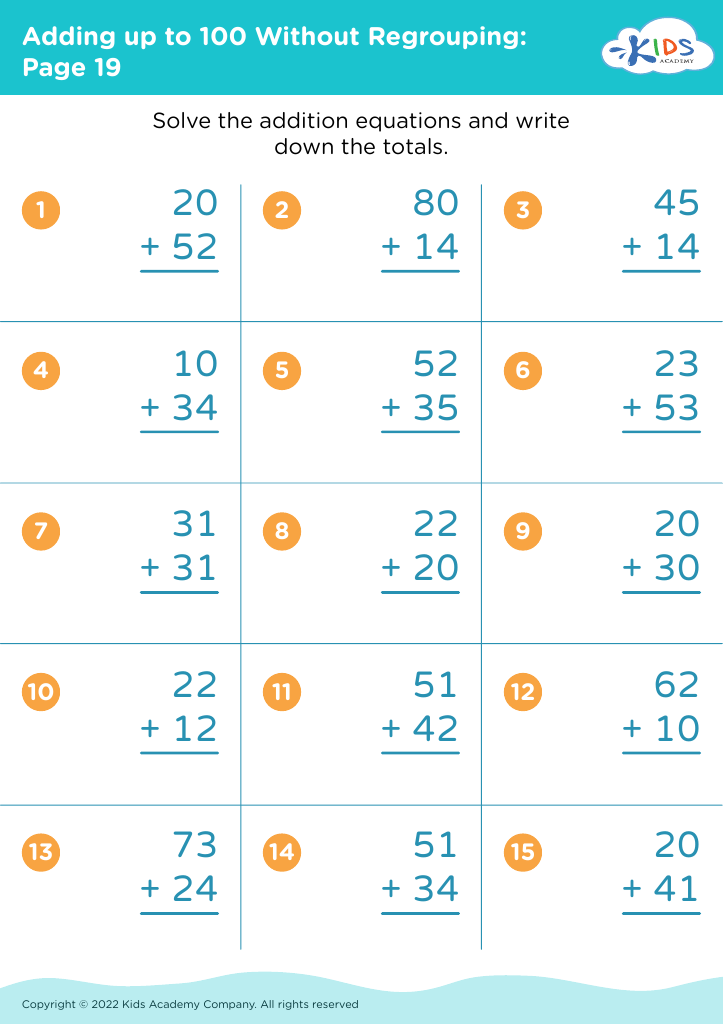
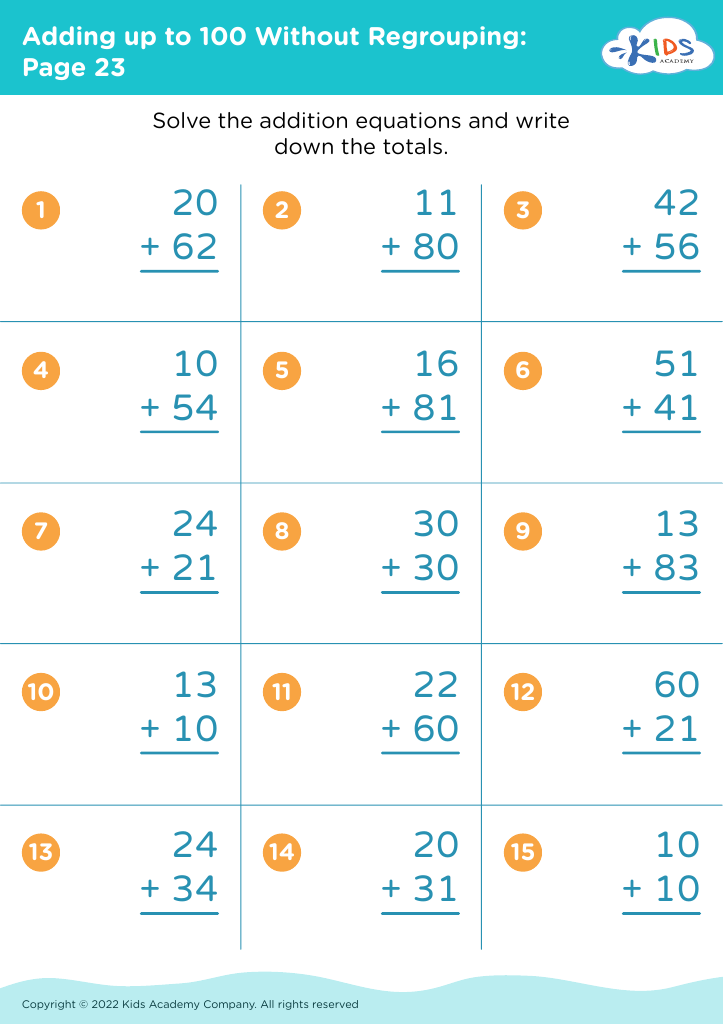
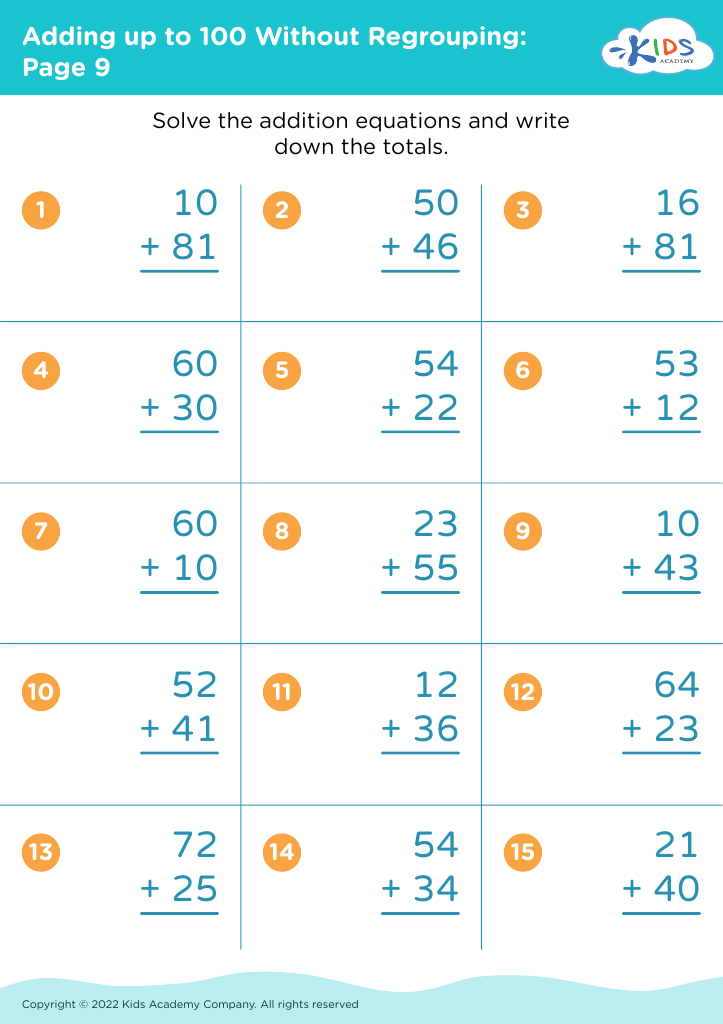
Discover our engaging "Mathematical Reasoning Adding Up to 100 Worksheets," designed specifically for children ages 4-7. These fun and interactive worksheets encourage early learners to develop essential math skills by exploring addition and number sense. Tailored to enhance logical thinking, these exercises help young minds grasp the concept of combining numbers confidently, ultimately working towards the goal of reaching 100. Our resources support skill-building through diverse problems and formats, ensuring a thorough understanding of mathematical reasoning. Let your child's learning journey be enjoyable and effective with our thoughtfully crafted worksheets, paving the way for a strong foundation in mathematics.



%20(1).jpg)



Mathematical reasoning, particularly the concept of adding up to 100, is crucial for children aged 4-7 as it lays the foundation for essential cognitive skills. At this age, children are developing their understanding of numbers and basic arithmetic. By focusing on adding up to 100, teachers and parents can help children build number sense, encourage logical thinking, and enhance problem-solving abilities.
Engaging children with activities that include adding to 100 fosters a deeper understanding of number relationships and helps them grasp concepts of_place value_ and quantity. When children work with numbers in this way, they learn to recognize patterns, which is fundamental not only in math but also in everyday situations.
Moreover, mathematical reasoning promotes confidence in children. Developing these skills early on prepares them for more complex math concepts as they advance in their education. Parents and teachers should create a supportive environment where children feel comfortable exploring numbers. This approach not only makes math accessible but also enjoyable, sparking curiosity and a lifelong appreciation for learning. Ultimately, nurturing mathematical reasoning during these formative years fosters critical thinking skills essential for success in various disciplines beyond math.








