Recognize patterns Adding up to 100 Worksheets for Ages 4-7
4 filtered results
-
From - To
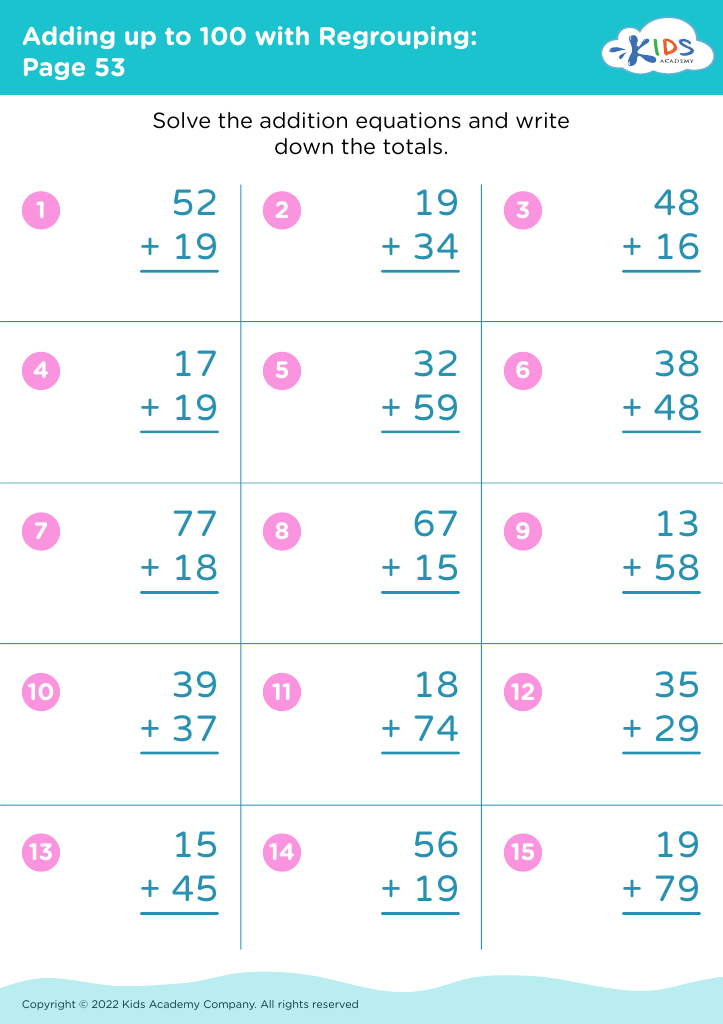
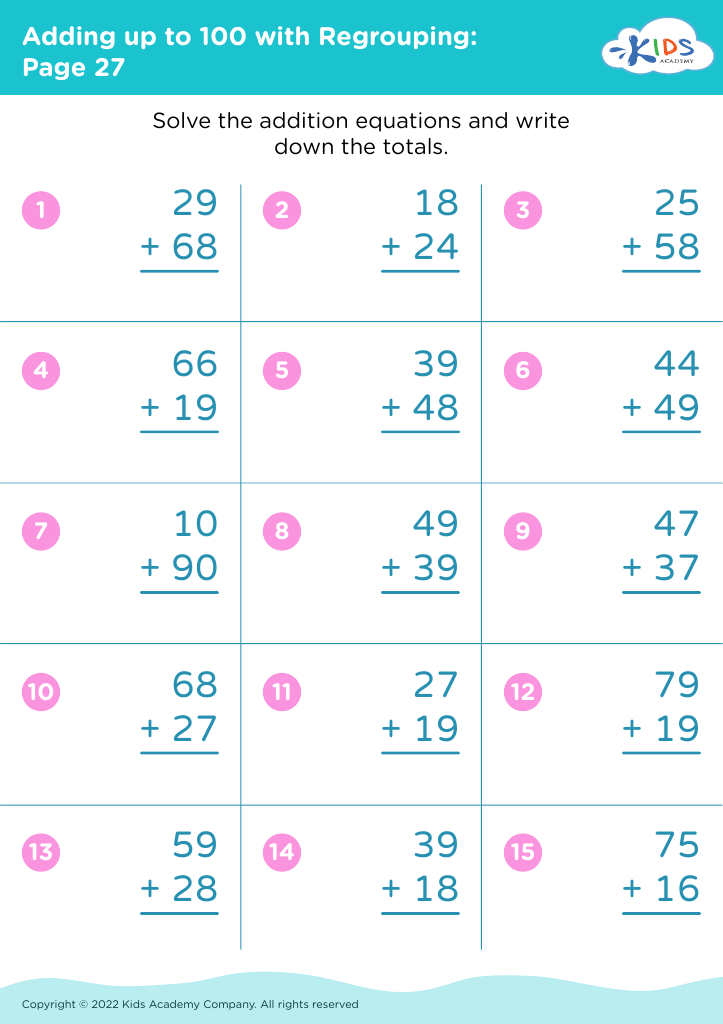
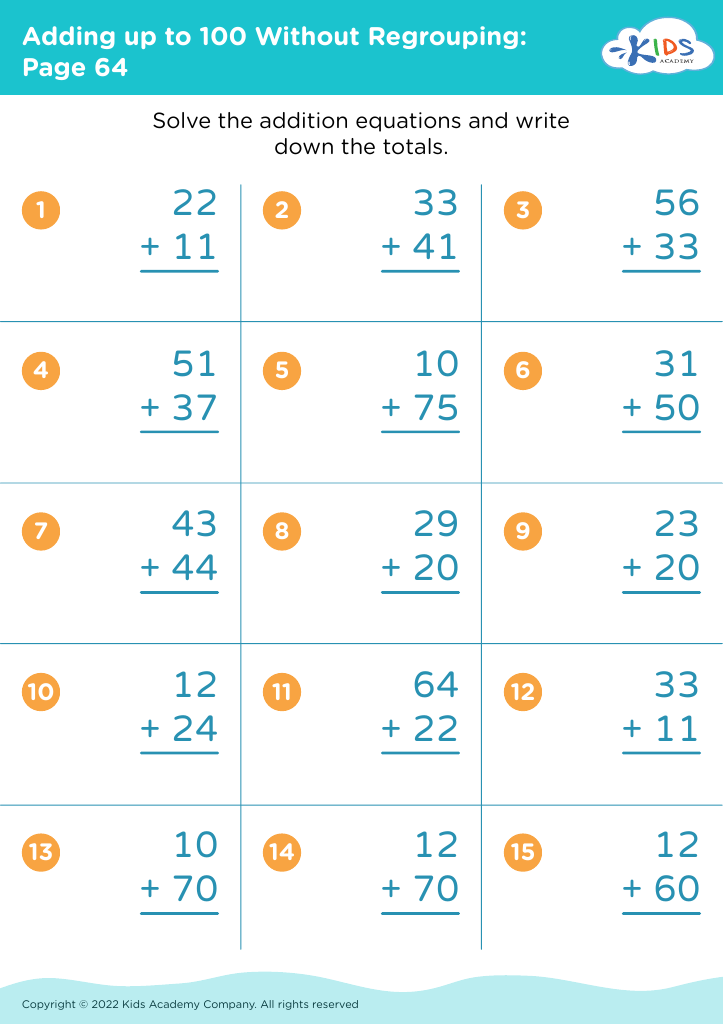
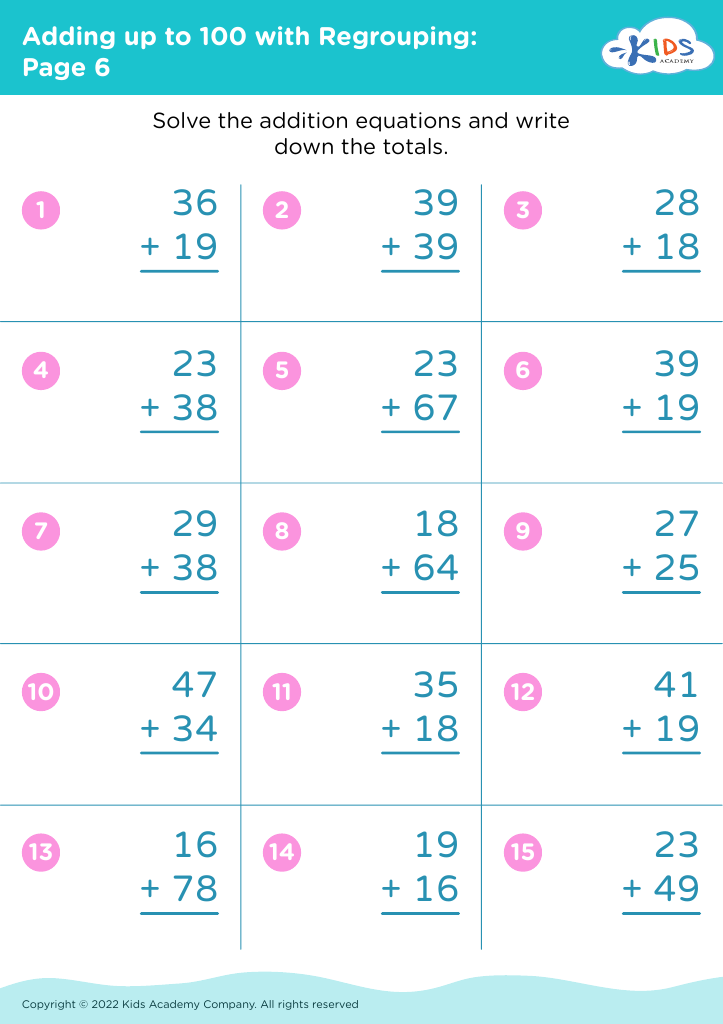
Discover our engaging "Recognize Patterns Adding Up to 100 Worksheets" specifically designed for children aged 4-7. These worksheets aim to enhance your child's mathematical skills by helping them identify and understand patterns while mastering addition up to 100. Packed with colorful visuals and stimulating activities, these printables make learning fun and interactive. Perfect for home or classroom use, they promote critical thinking and problem-solving abilities, laying a solid foundation for future math competencies. Help your young learners thrive as they connect mathematical concepts through pattern recognition. Start fostering a lifelong love of learning with our carefully crafted worksheets today!



%20(1).jpg)



Recognizing patterns and adding up to 100 are foundational skills in early mathematics for children ages 4-7. These concepts are essential as they build a strong numerical sense, critical thinking, and problem-solving abilities. When children learn to recognize patterns, they develop predictive skills that enhance their ability to understand sequences and relationships within numbers. This cognitive foundation is crucial as it makes higher-level math much more accessible later on.
Moreover, adding up to 100 helps young learners grasp the idea of place value and the concept of tens and ones, which are critical for their future mathematical experiences. Engaging with these ideas early on fosters confidence in mathematics, making children more likely to enjoy and pursue math in the future.
For parents and teachers, emphasizing these skills means giving children the tools they need to succeed in academic settings. It encourages collaboration, boosts self-esteem, and lays the groundwork for lifelong learning. Additionally, recognizing patterns and mastering addition prepares children to make meaningful connections across subjects, enhancing their overall educational experience. By cultivating these skills, parents and teachers can instill a solid math foundation that benefits children far beyond the classroom.








