Filters

50 filtered results

Clear all filters
Favorites
With answer key
Interactive

50 filtered results

Difficulty Level

Grade


Check out this FREE Trial Lesson on Adding Up to 5 for age 4-7!

Sorting Objects into 3 Categories

Favorites
With answer key
Interactive
  • 4-7
  • Addition Practice
  • Adding Up to 5
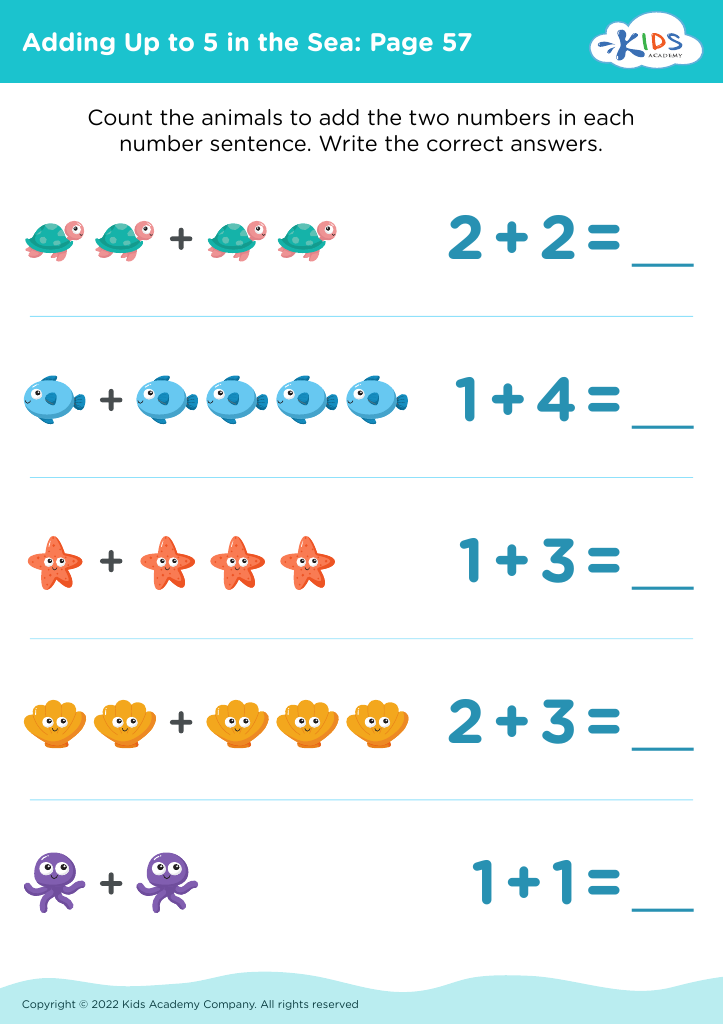
Adding Up to 5 in the Sea: Page 57
Worksheet
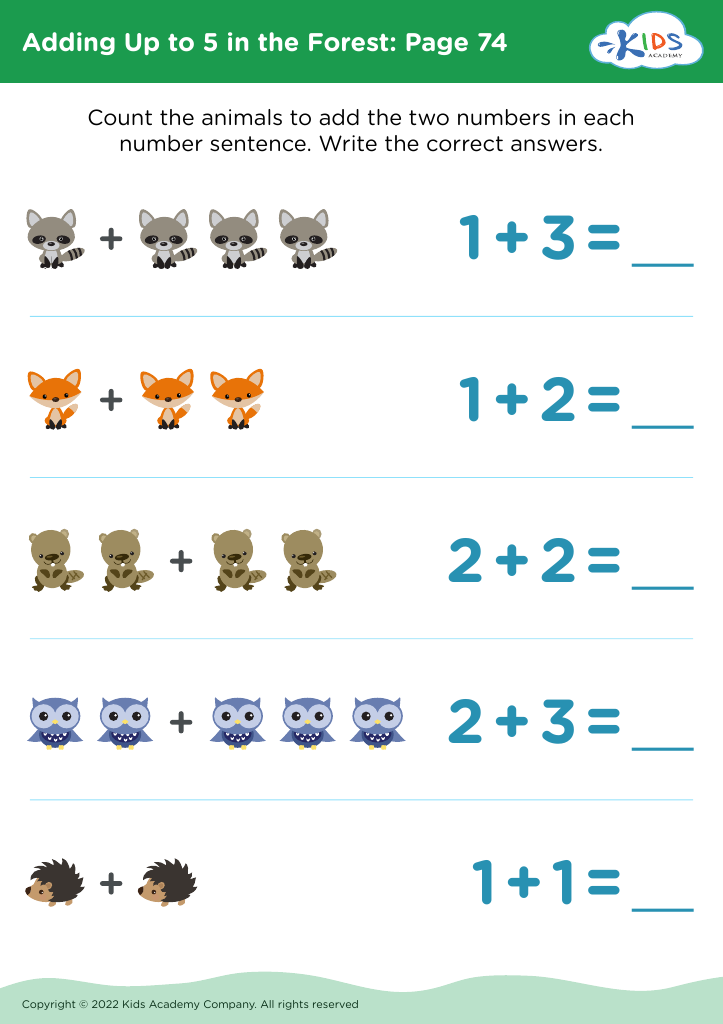
Adding Up to 5 in the Forest: Page 74
Worksheet
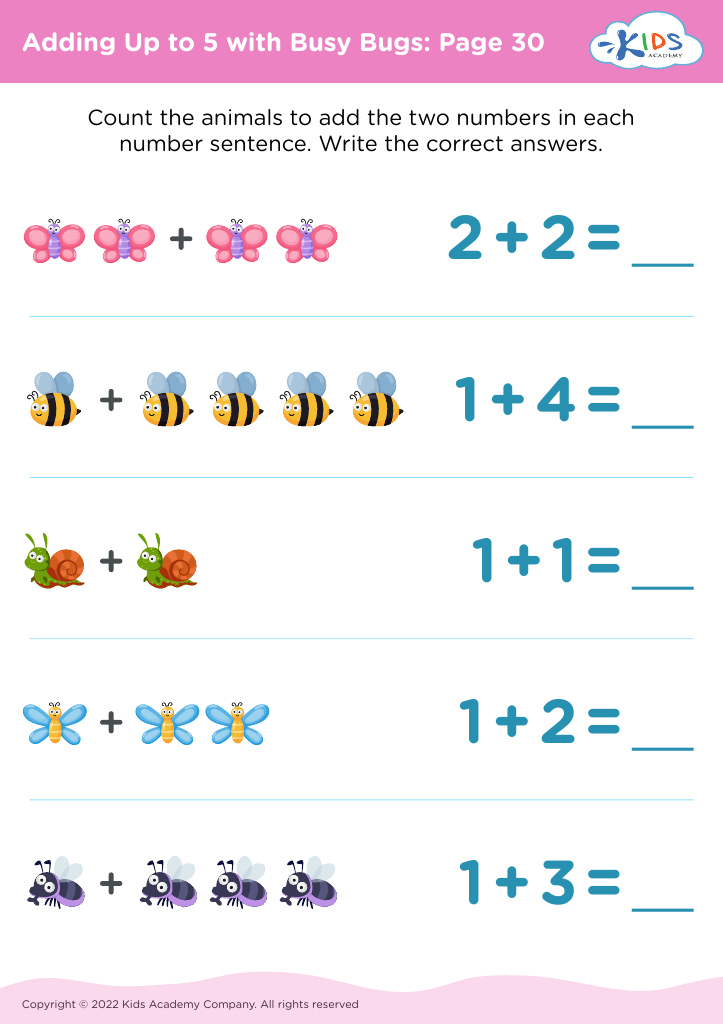
Adding Up to 5 with Busy Bugs: Page 30
Worksheet
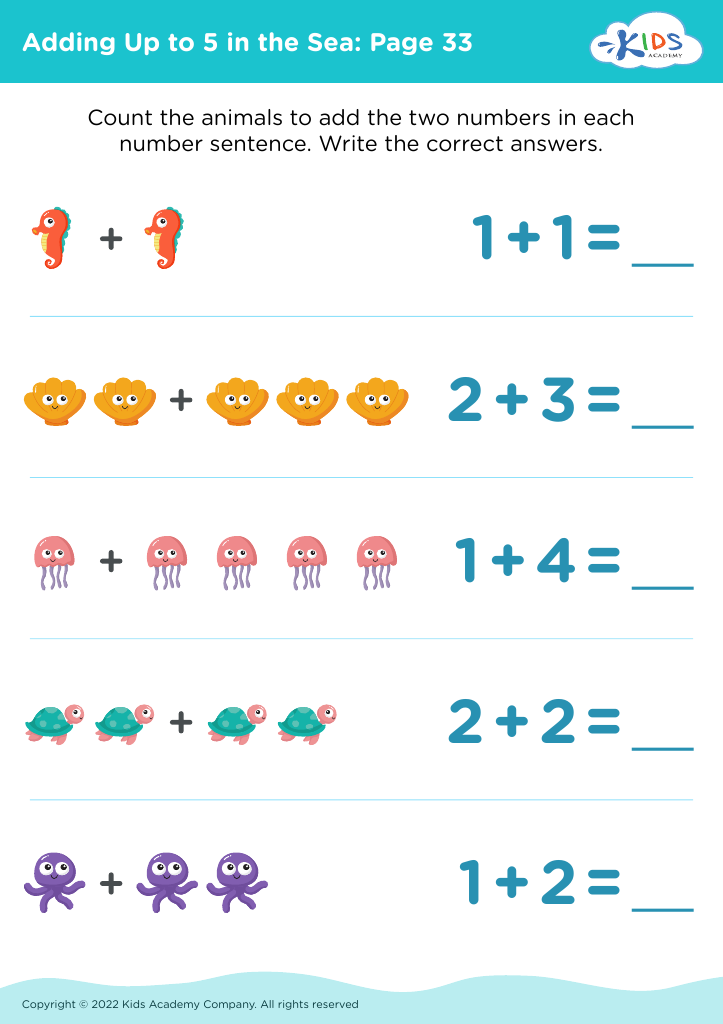
Adding Up to 5 in the Sea: Page 33
Worksheet
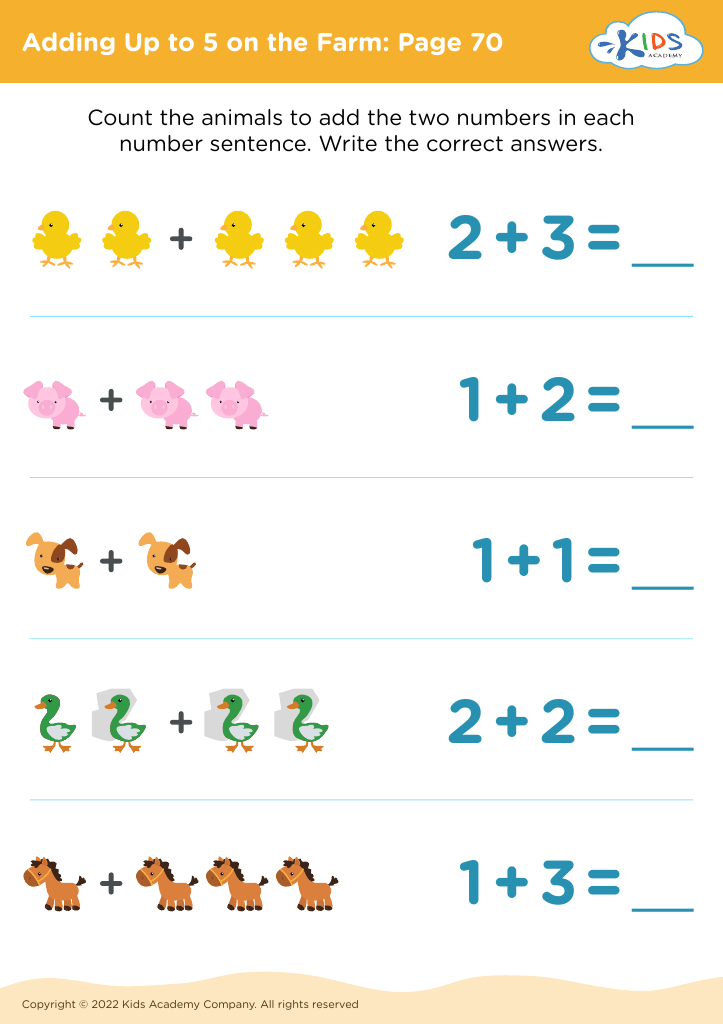
Adding Up to 5 on the Farm: Page 70
Worksheet
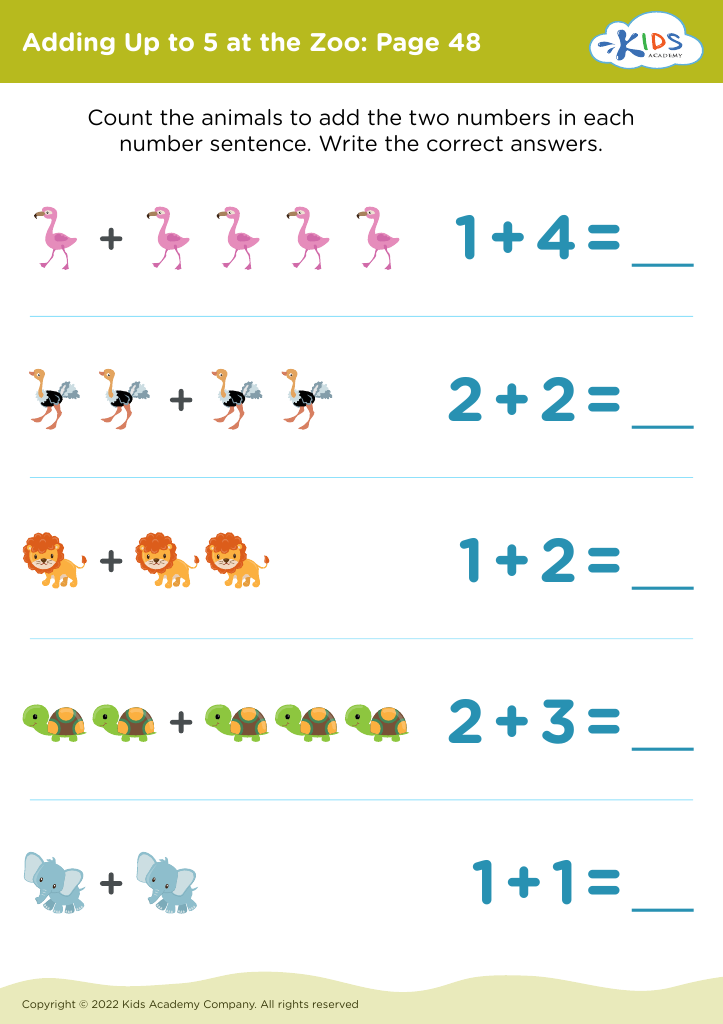
Adding Up to 5 at the Zoo: Page 48
Worksheet
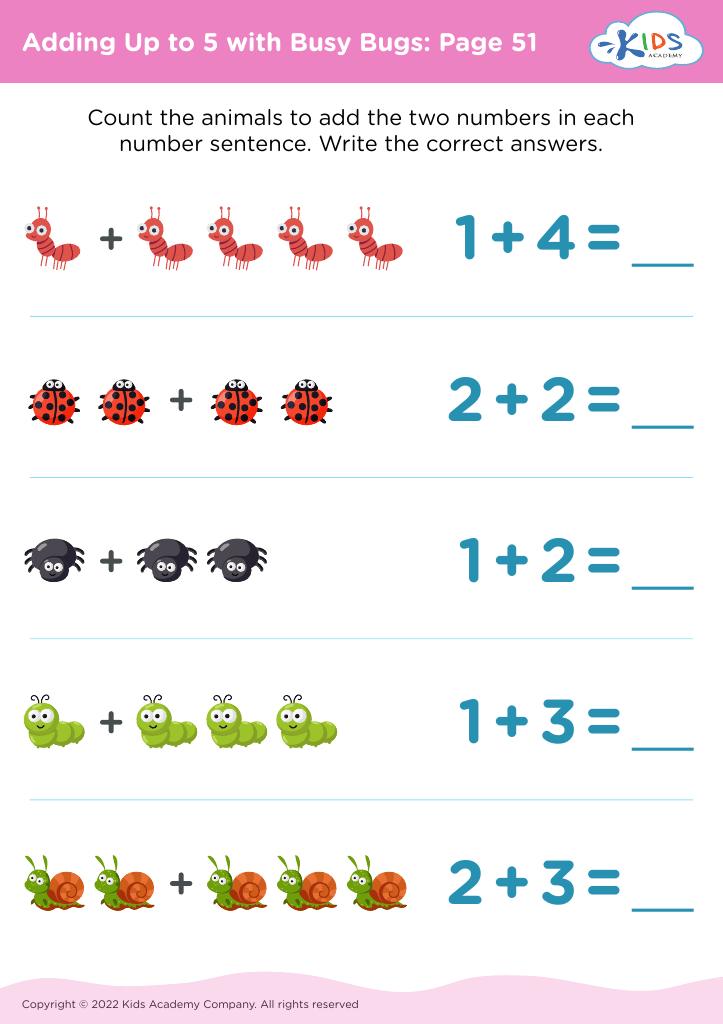
Adding Up to 5 with Busy Bugs: Page 51
Worksheet
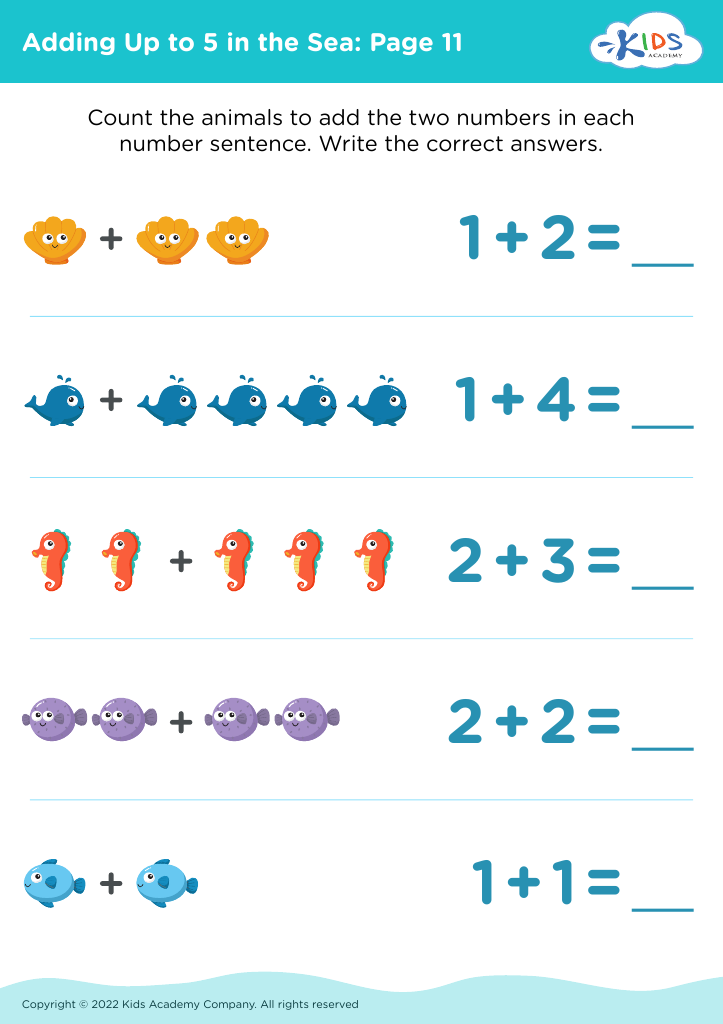
Adding Up to 5 in the Sea: Page 11
Worksheet
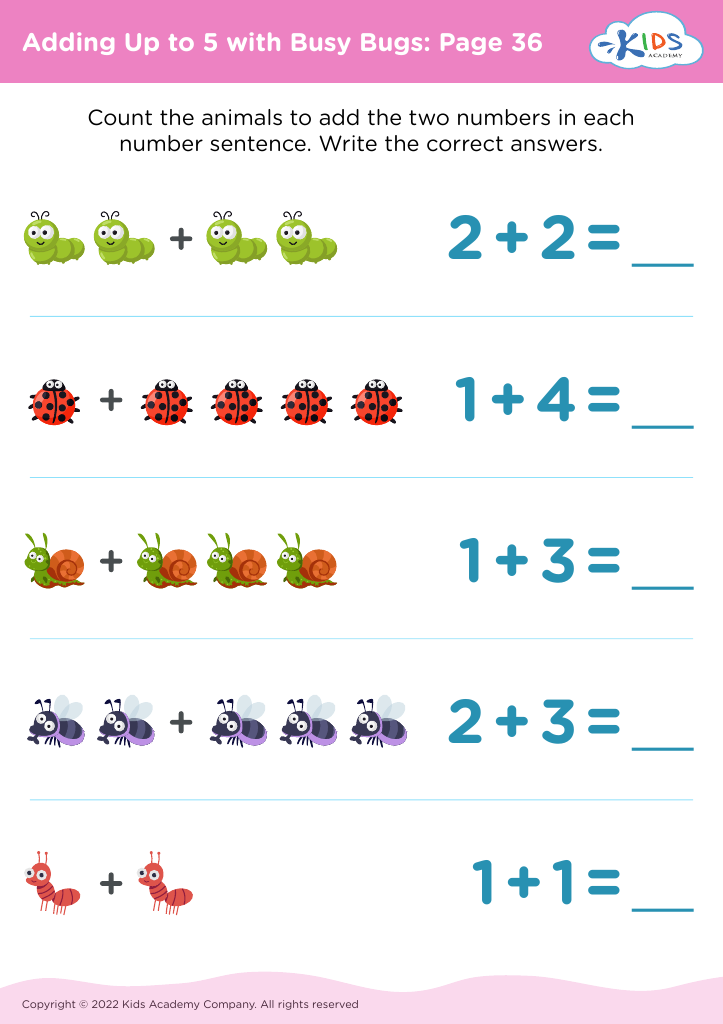
Adding Up to 5 with Busy Bugs: Page 36
Worksheet
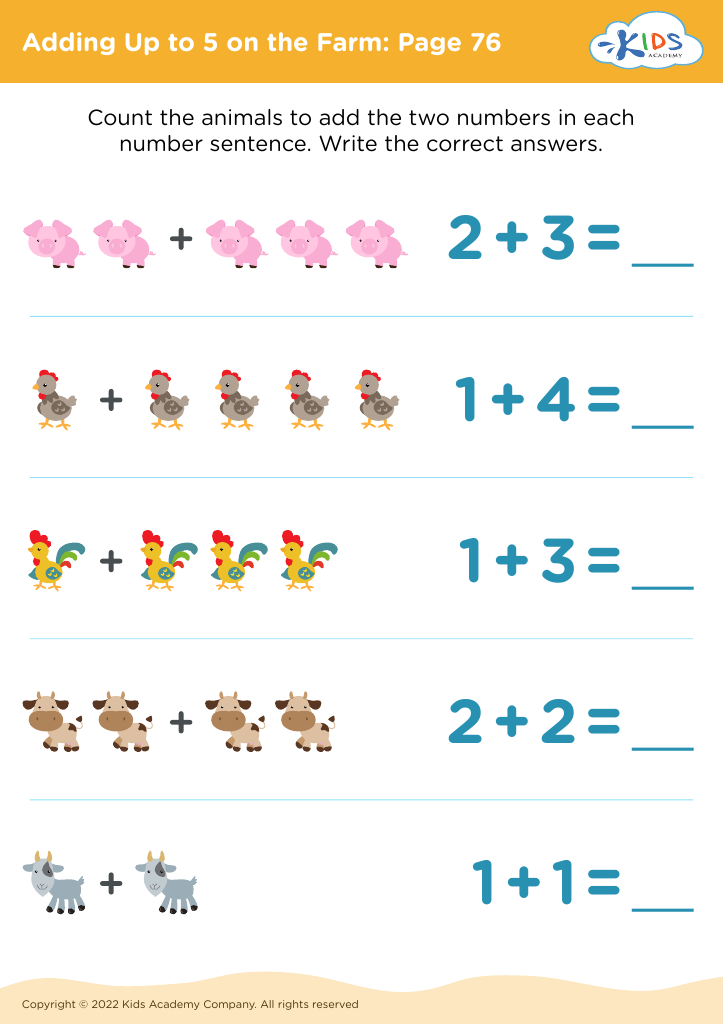
Adding Up to 5 on the Farm: Page 76
Worksheet
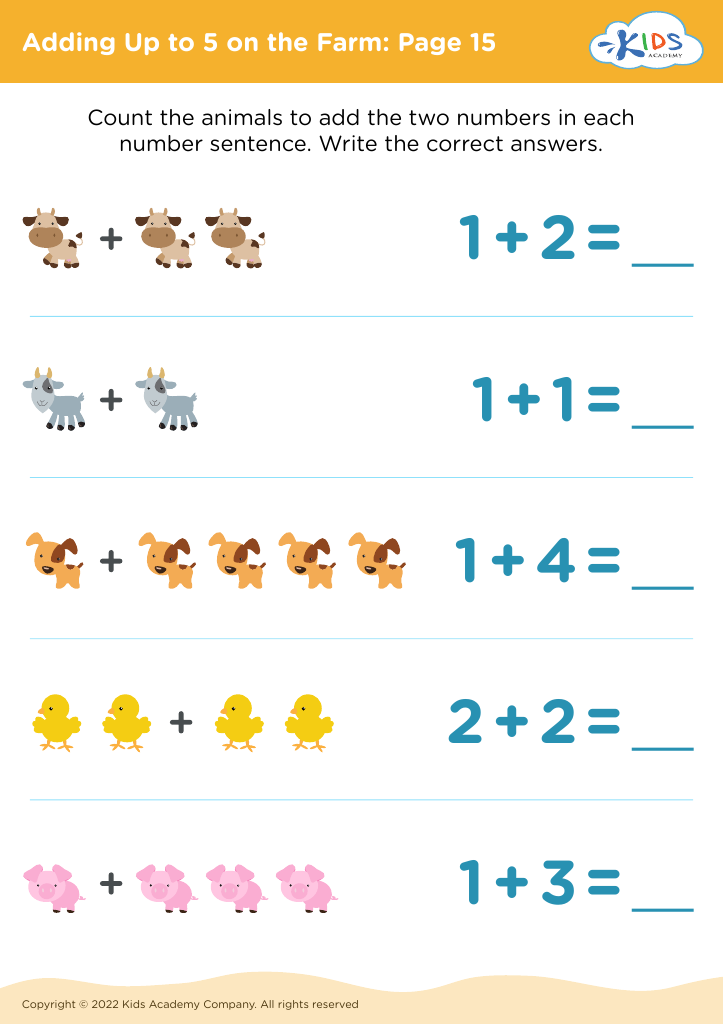
Adding Up to 5 on the Farm: Page 15
Worksheet
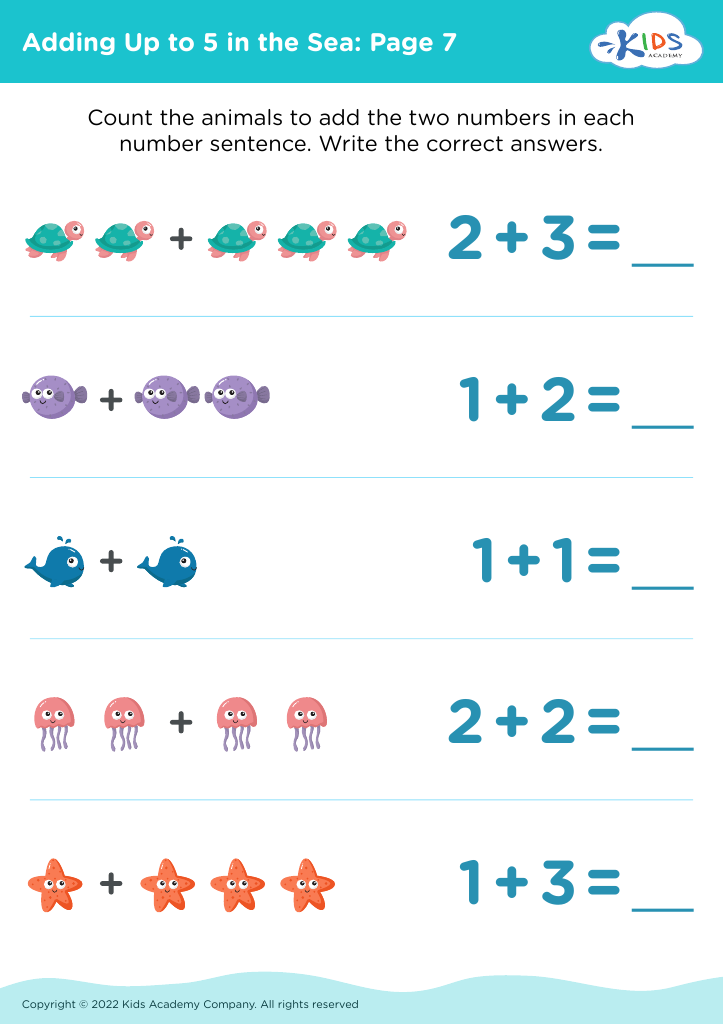
Adding Up to 5 in the Sea: Page 7

Adding Up to 5 in the Sea: Page 7

Adding Up to 5 in the Sea: Page 7
Worksheet
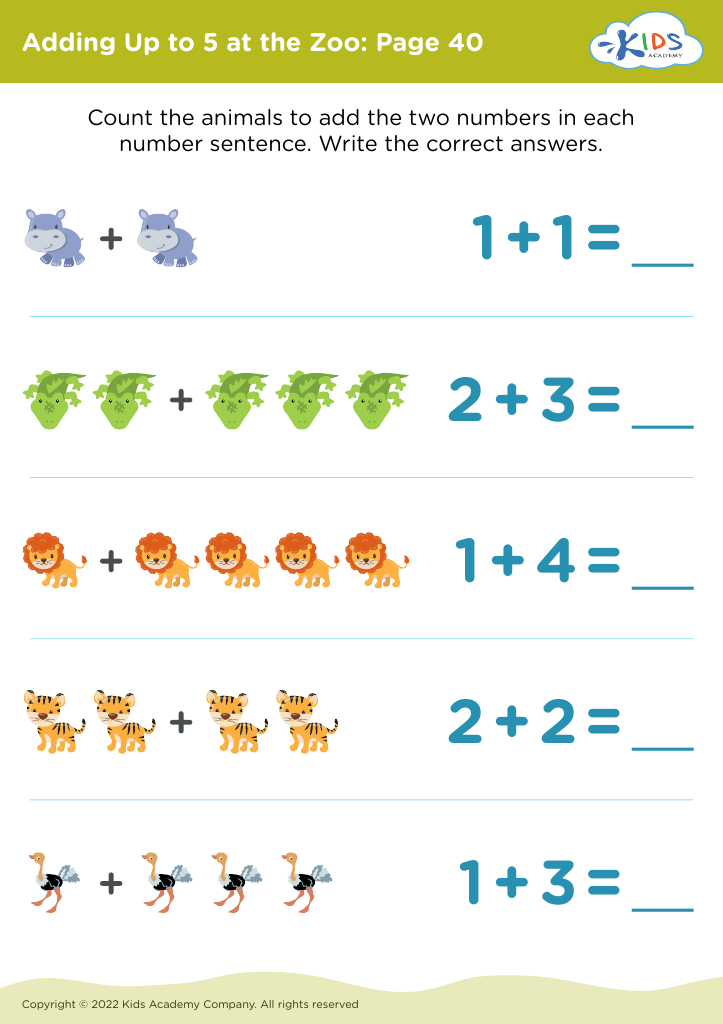
Adding Up to 5 at the Zoo: Page 40
Worksheet
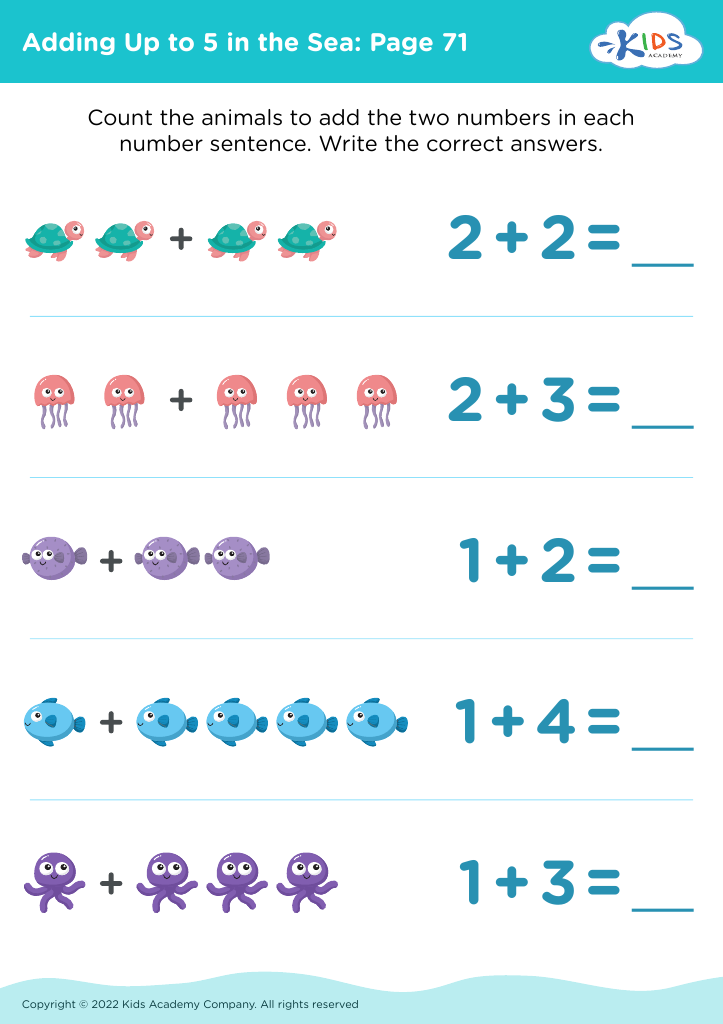
Adding Up to 5 in the Sea: Page 71
Worksheet
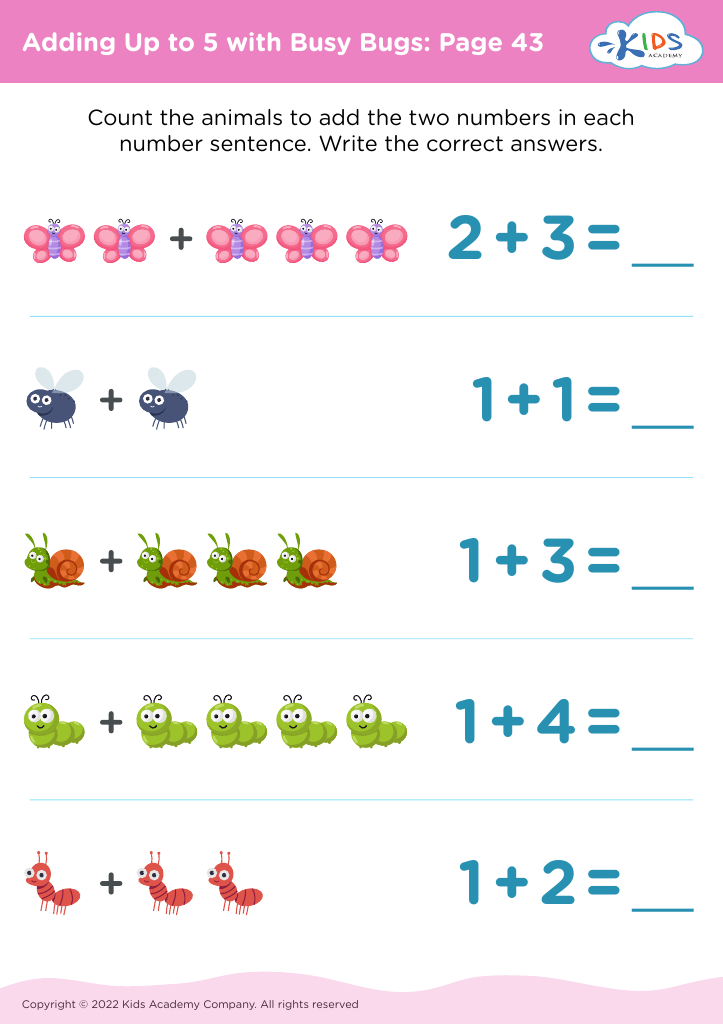
Adding Up to 5 with Busy Bugs: Page 43
Worksheet
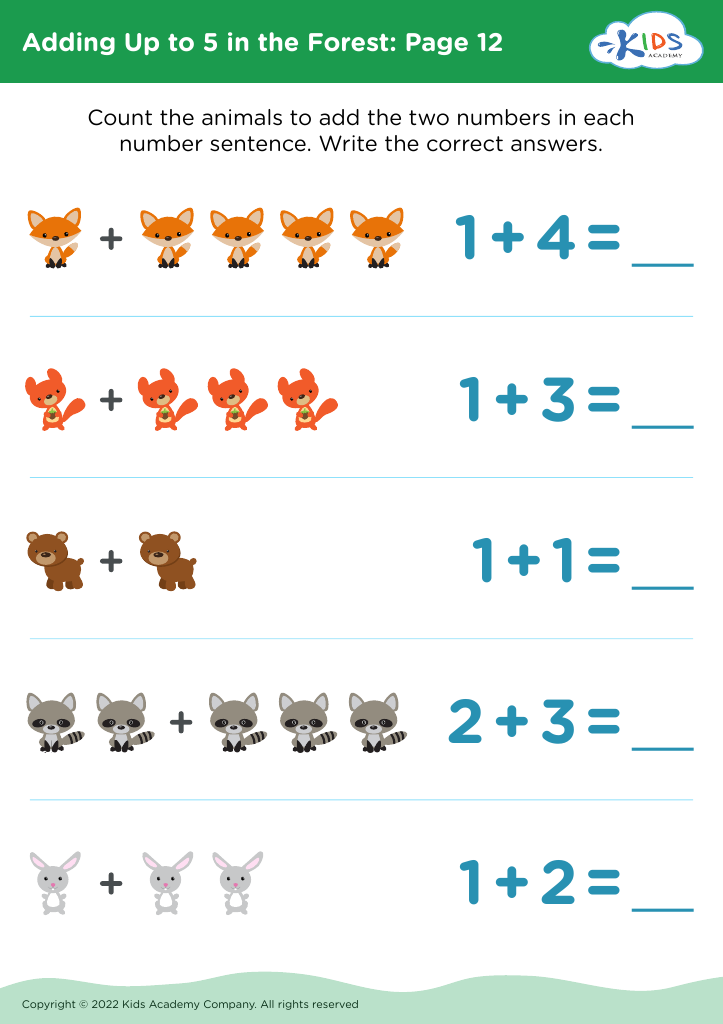
Adding Up to 5 in the Forest: Page 12
Worksheet
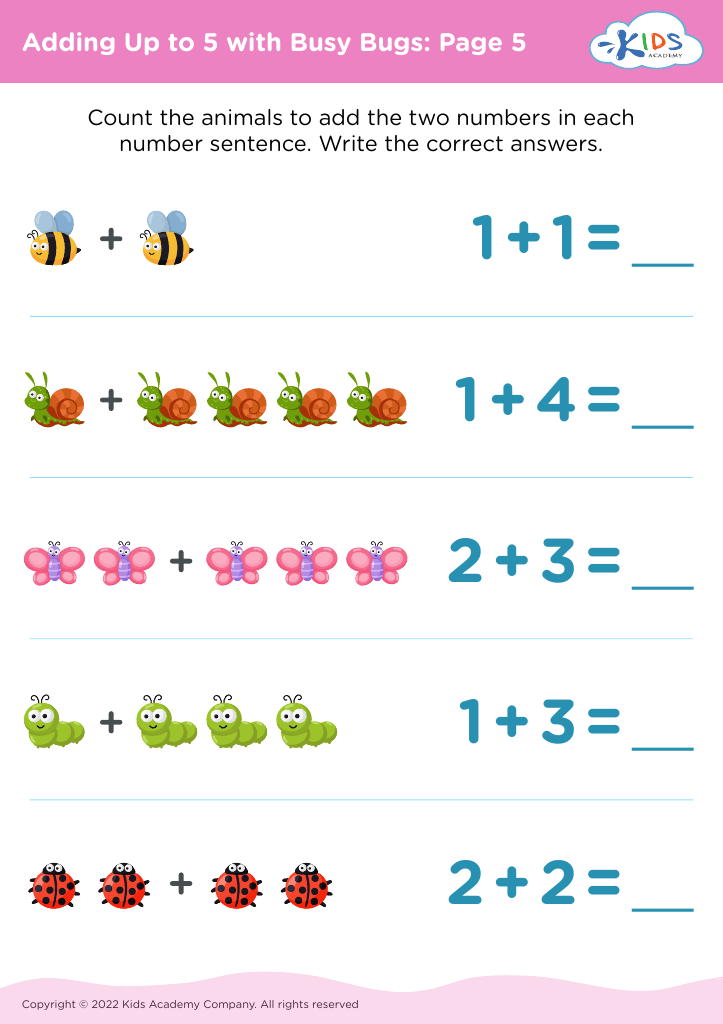
Adding Up to 5 with Busy Bugs: Page 5
Worksheet
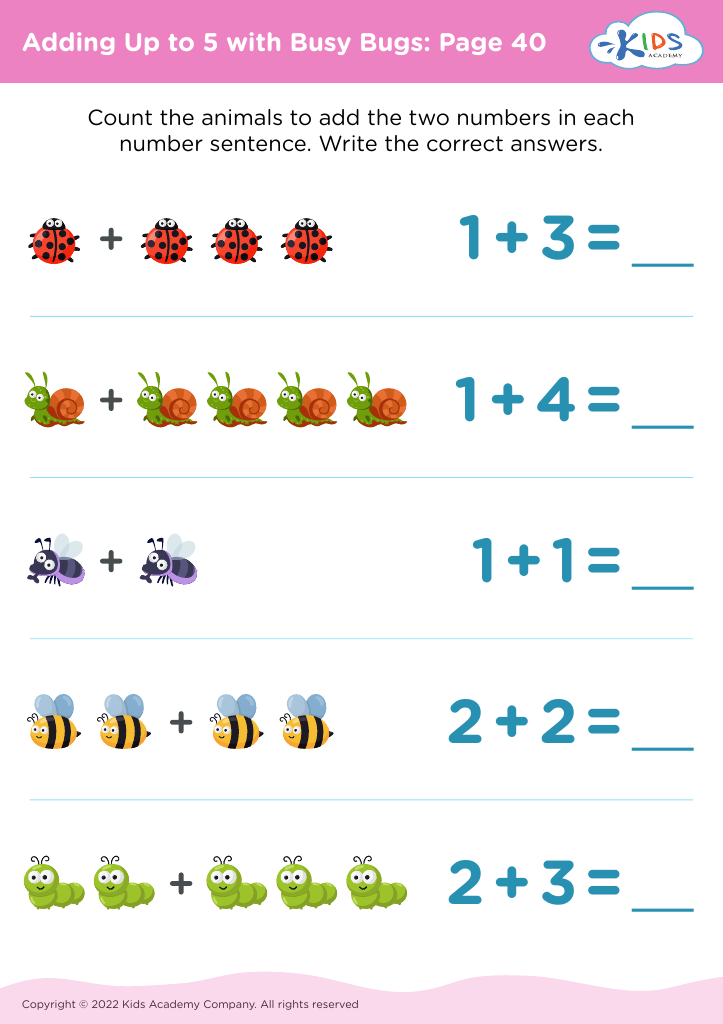
Adding Up to 5 with Busy Bugs: Page 40
Worksheet
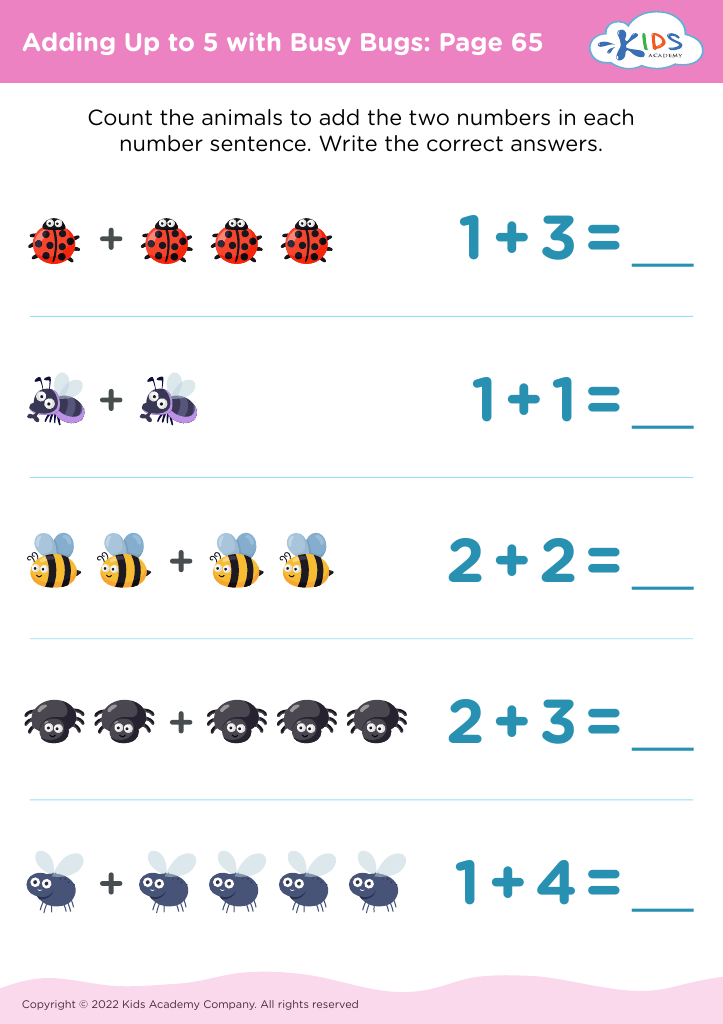
Adding Up to 5 with Busy Bugs: Page 65
Worksheet
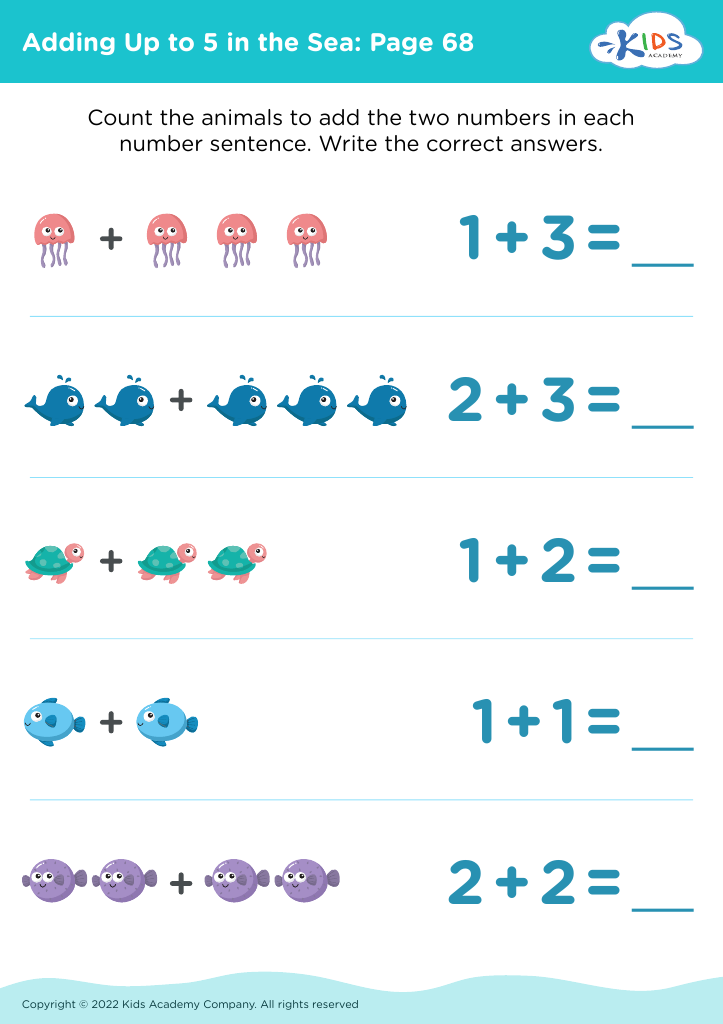
Adding Up to 5 in the Sea: Page 68
Worksheet
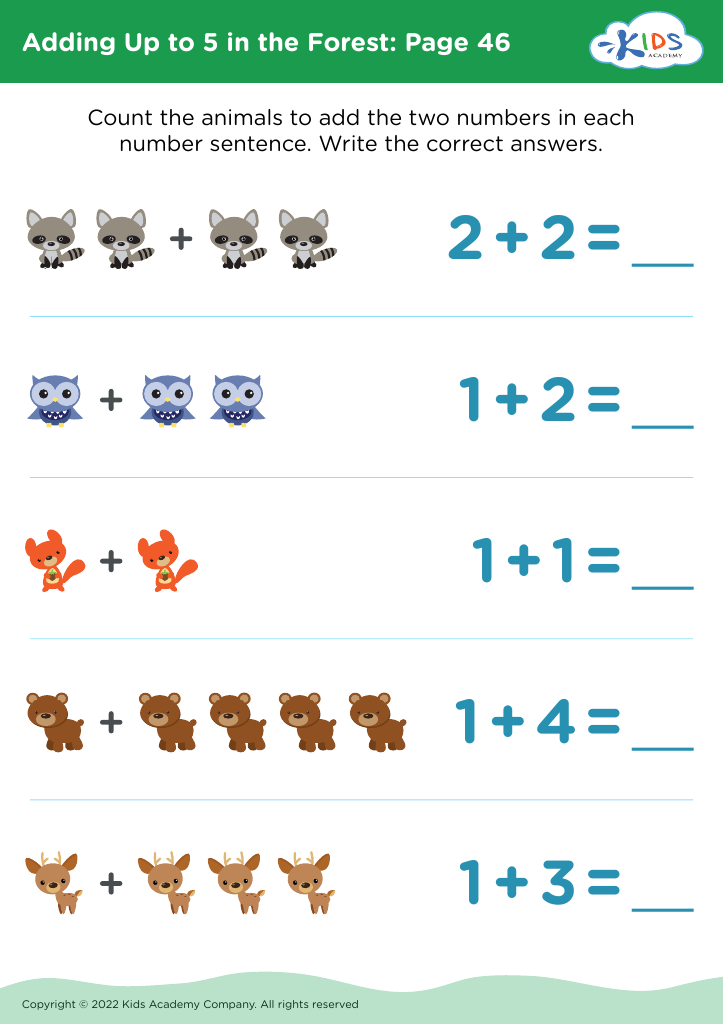
Adding Up to 5 in the Forest: Page 46
Worksheet
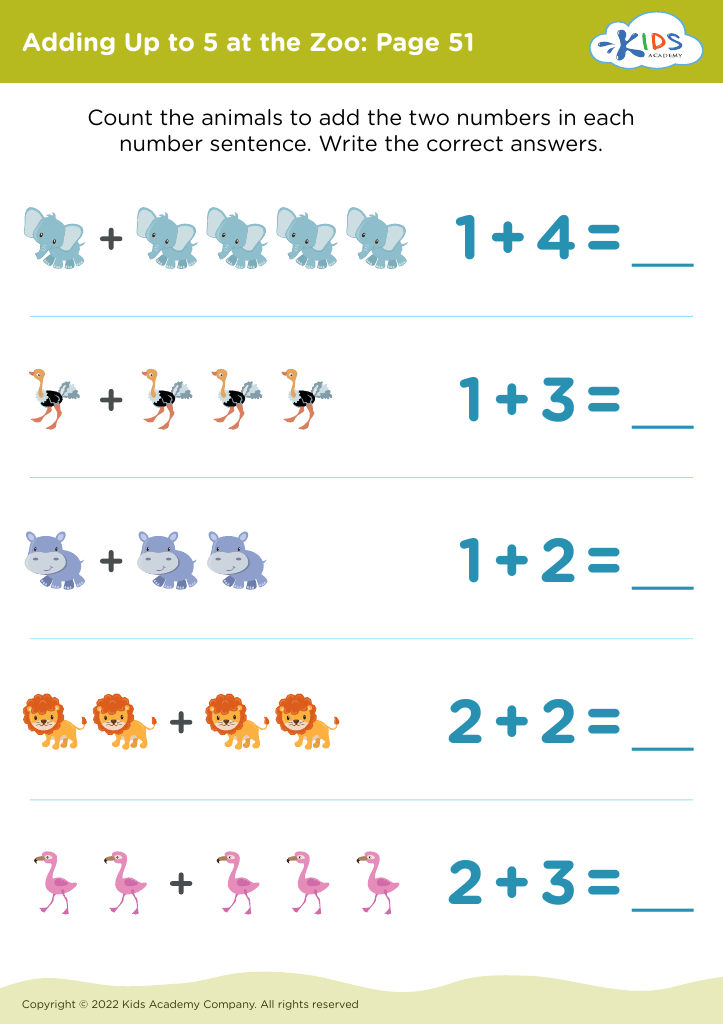
Adding Up to 5 at the Zoo: Page 51
Worksheet
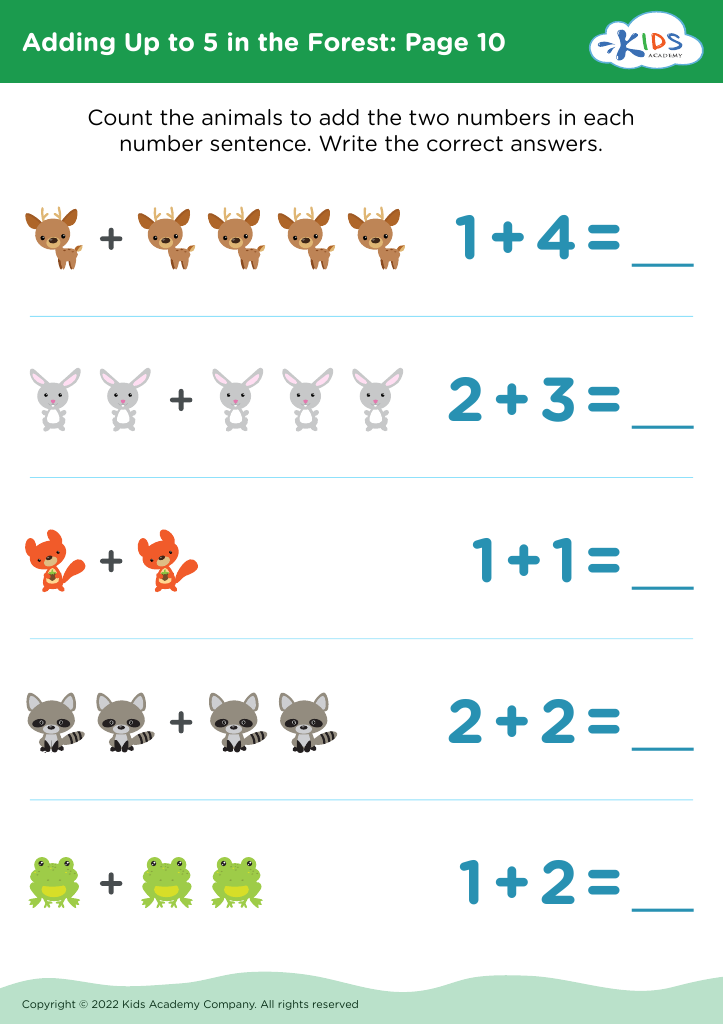
Adding Up to 5 in the Forest: Page 10
Worksheet
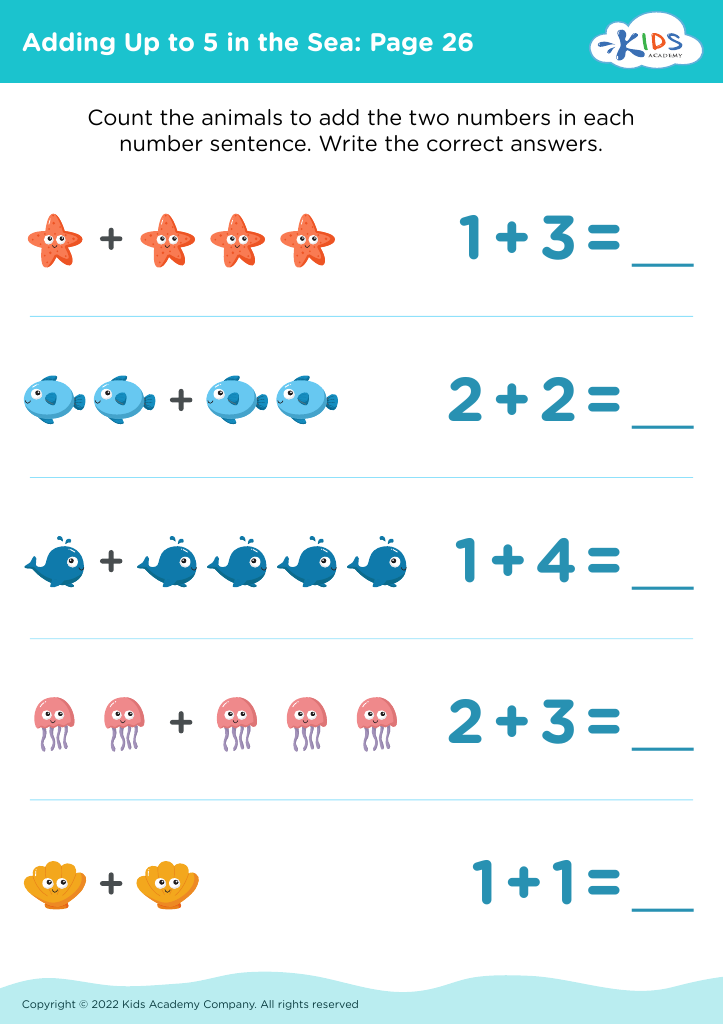
Adding Up to 5 in the Sea: Page 26
Worksheet


Addition practice for young learners, focusing on adding up to 5, is fundamental for several reasons. Firstly, mastering basic addition is an essential building block of mathematics. When children can confidently add numbers up to 5, they develop essential numeracy skills that form the groundwork for more complex mathematical concepts they will encounter later on.

Furthermore, addition practice promotes cognitive development. Engaging in this type of mathematical practice enhances problem-solving abilities, logical reasoning, and critical thinking skills. These cognitive benefits extend beyond math and help children in a variety of academic disciplines and in everyday decision-making.

It also fosters a sense of confidence and achievement in young learners. Successfully solving addition problems showcases their progress and boosts their self-esteem, making them more eager to tackle challenging tasks. This early confidence in math can set a positive attitude toward the subject that persists as they grow older.

Additionally, practicing addition encourages attention to detail and improves concentration and memory skills. Consistent practice helps solidify their understanding and retention, creating a strong mental foundation.

Ultimately, prioritizing addition practice for ages 4-7 ensures that children receive the support they need in these crucial early years, setting them up for academic success and a lifelong appreciation for mathematics.