Filters

244 filtered results

Clear all filters
Favorites
With answer key
Interactive

244 filtered results

Difficulty Level

Grade


Check out this FREE Trial Lesson on Adding Up to 5 for age 4-7!

A

Favorites
With answer key
Interactive
  • 4-7
  • Basic Addition Skills
  • Adding Up to 5
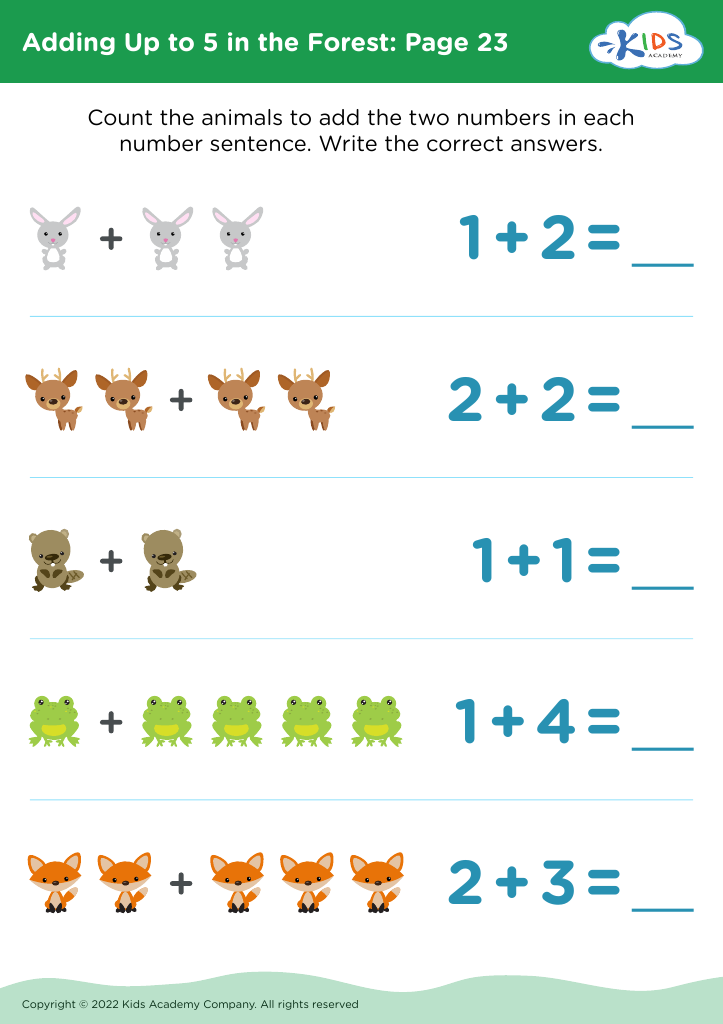
Adding Up to 5 in the Forest: Page 23
Worksheet
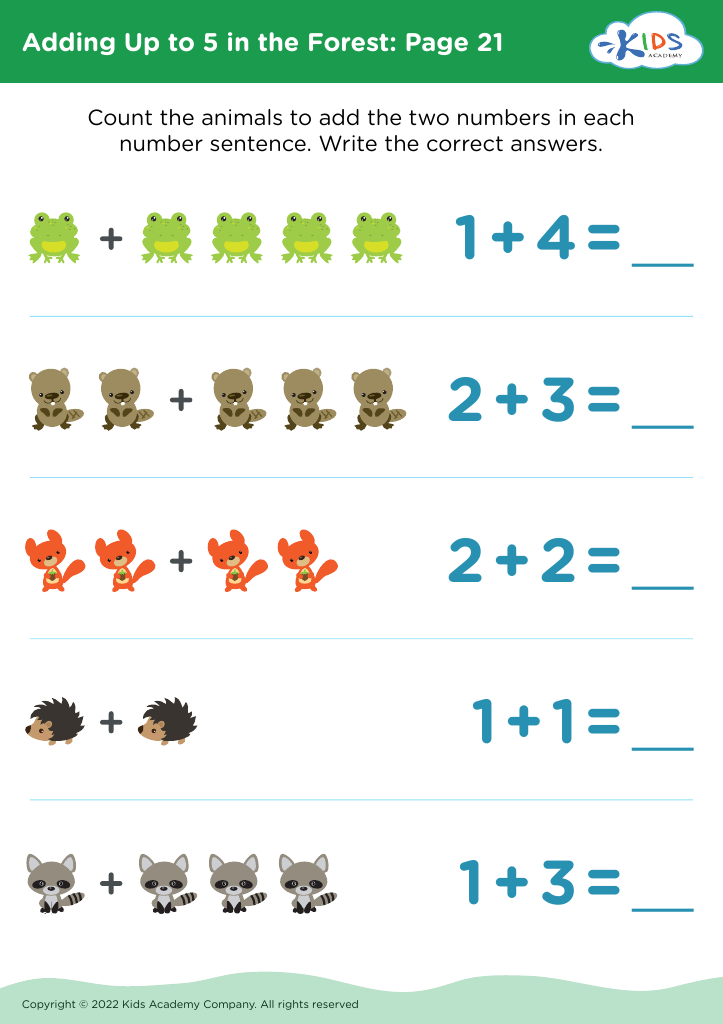
Adding Up to 5 in the Forest: Page 21
Worksheet
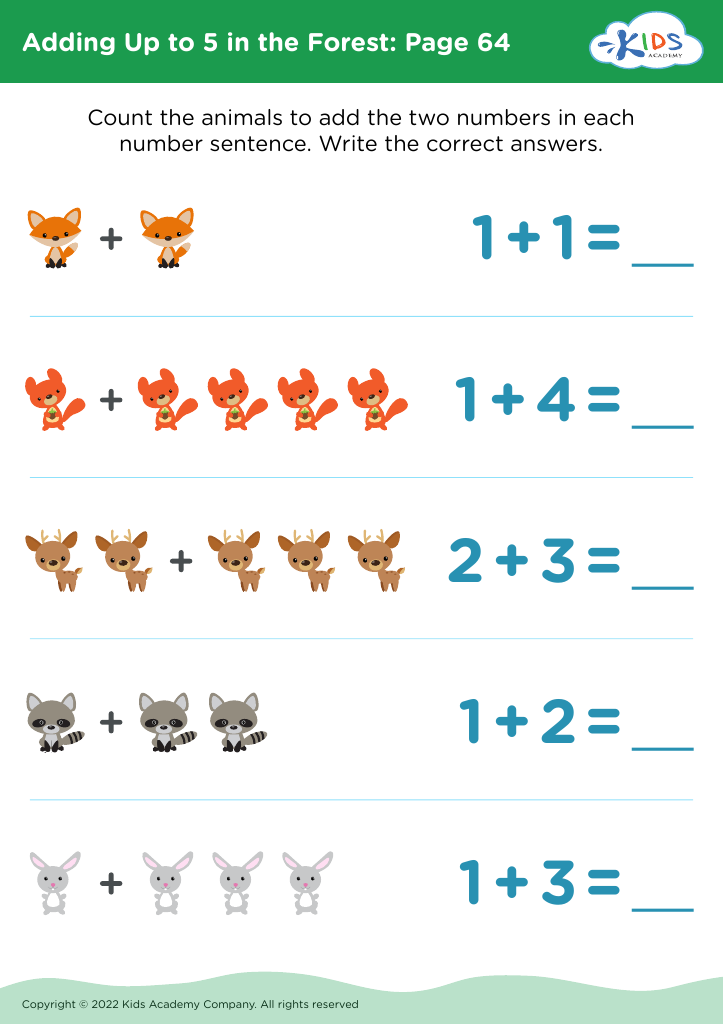
Adding Up to 5 in the Forest: Page 64
Worksheet
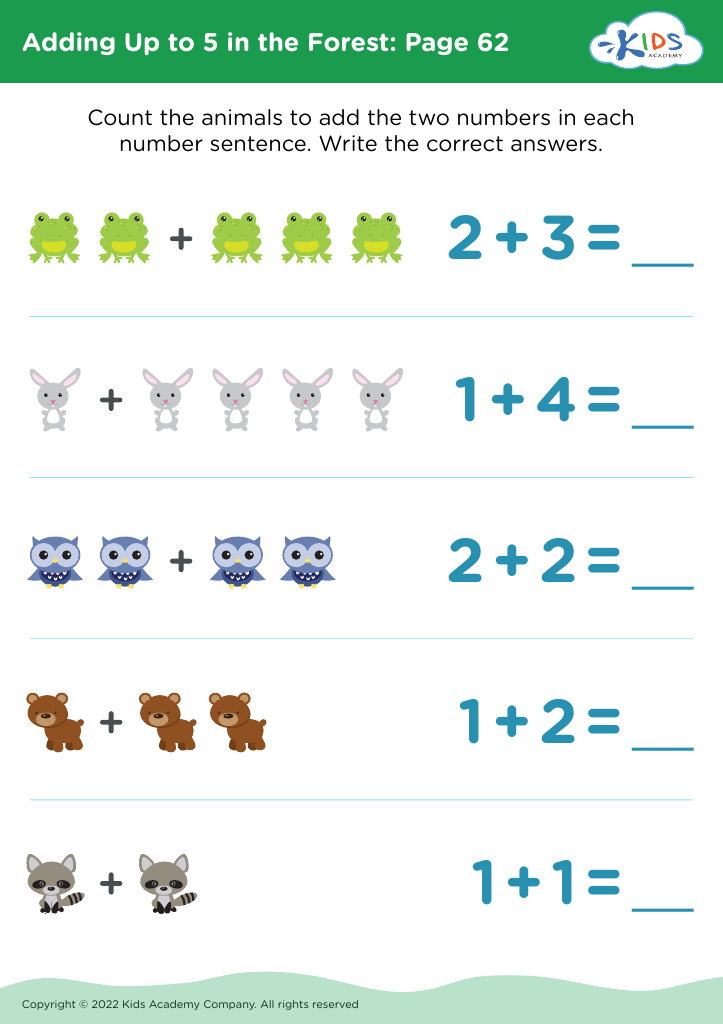
Adding Up to 5 in the Forest: Page 62
Worksheet
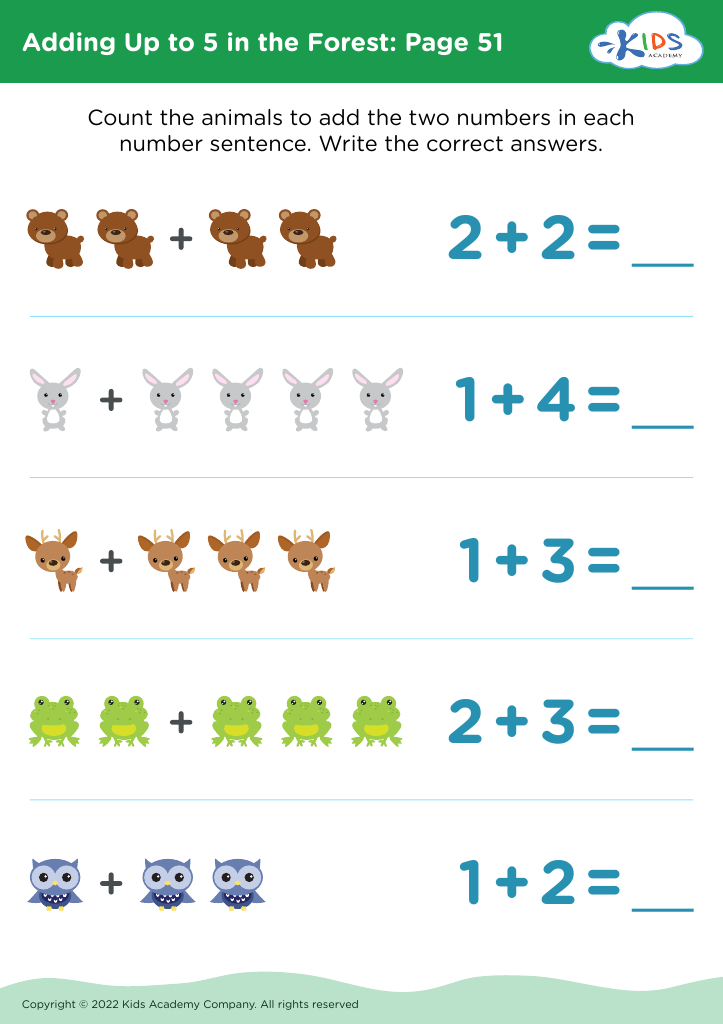
Adding Up to 5 in the Forest: Page 51
Worksheet
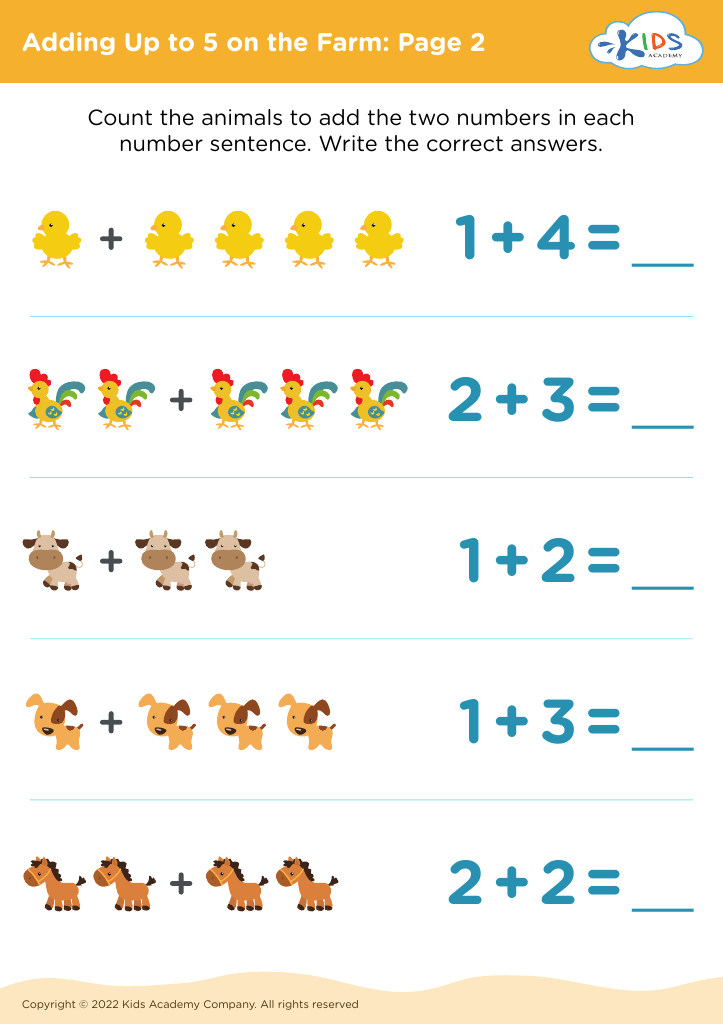
Adding Up to 5 on the Farm: Page 2
Worksheet
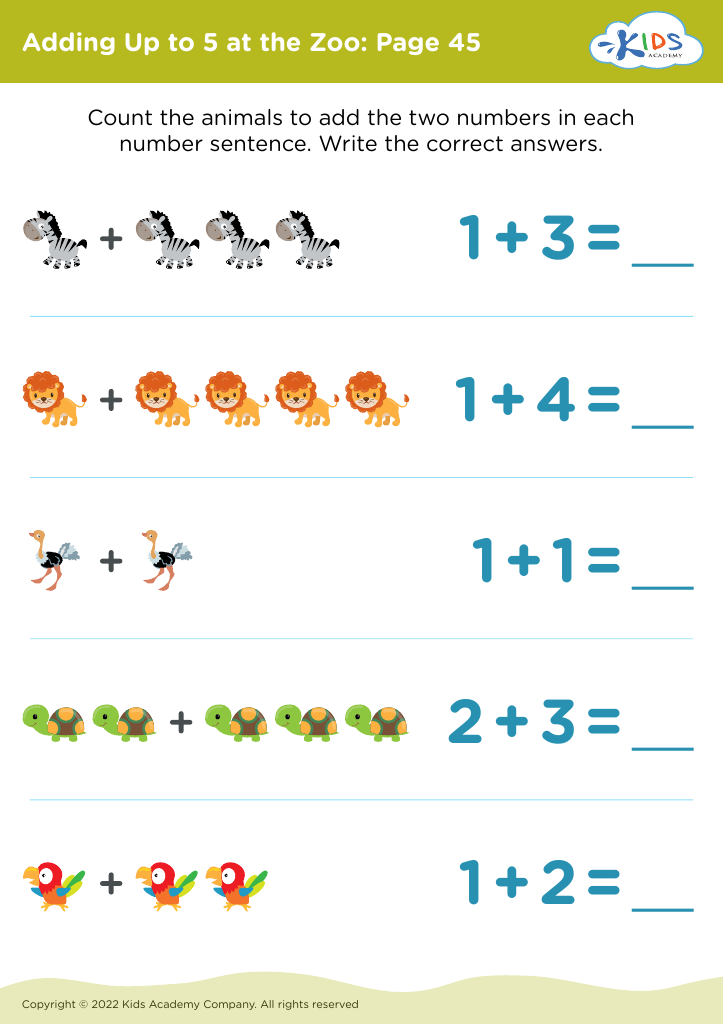
Adding Up to 5 at the Zoo: Page 45
Worksheet
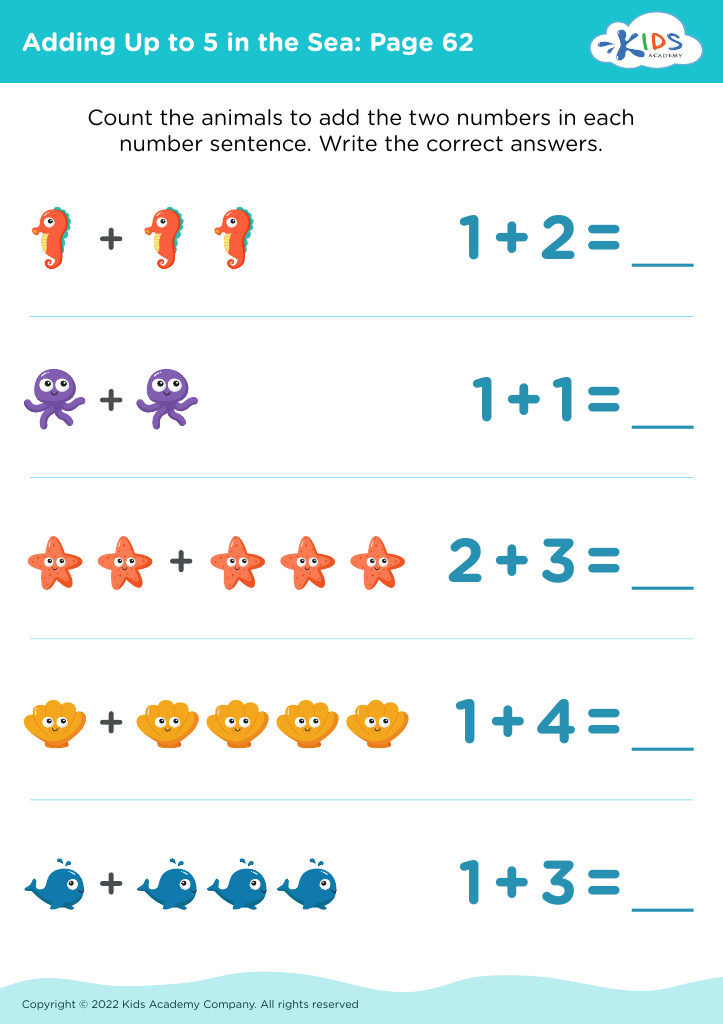
Adding Up to 5 in the Sea: Page 62
Worksheet
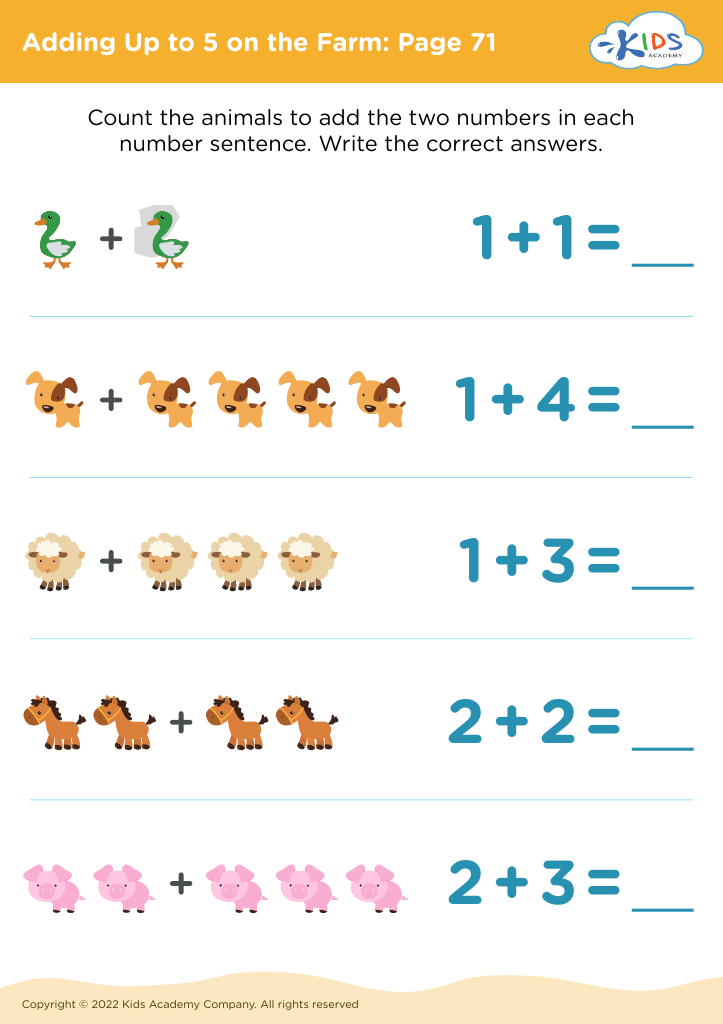
Adding Up to 5 on the Farm: Page 71
Worksheet
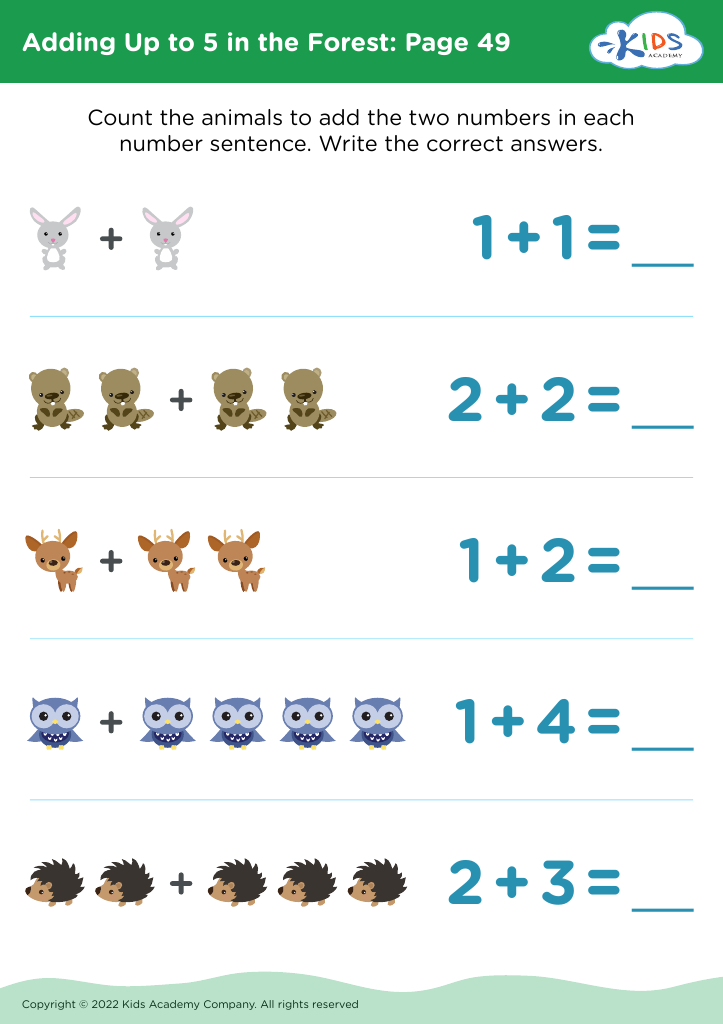
Adding Up to 5 in the Forest: Page 49
Worksheet
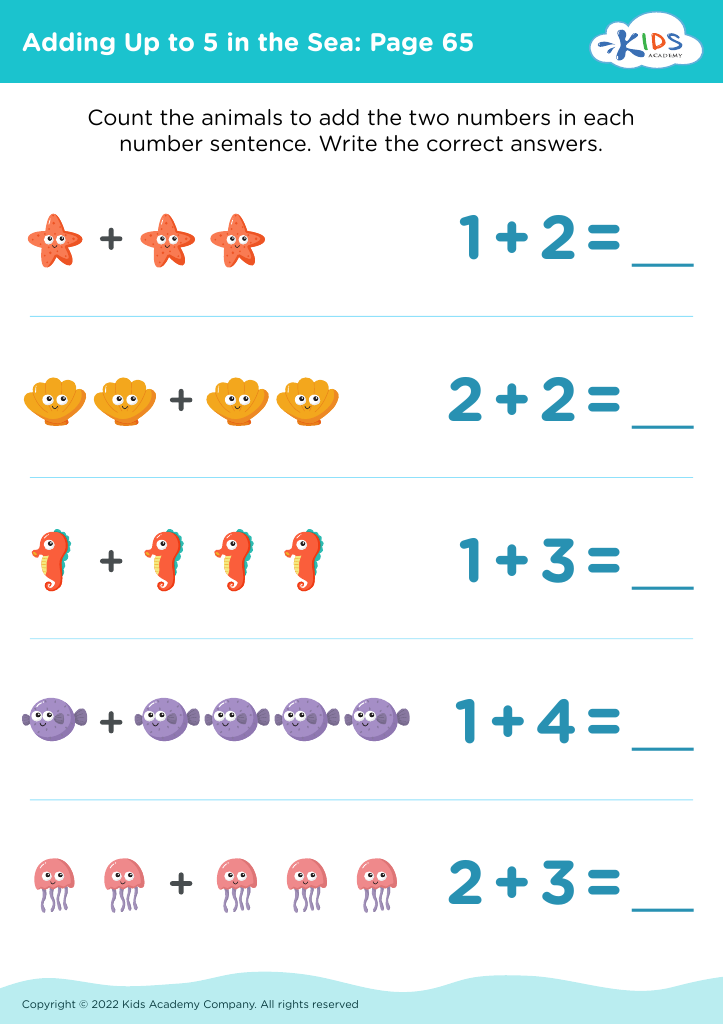
Adding Up to 5 in the Sea: Page 65
Worksheet
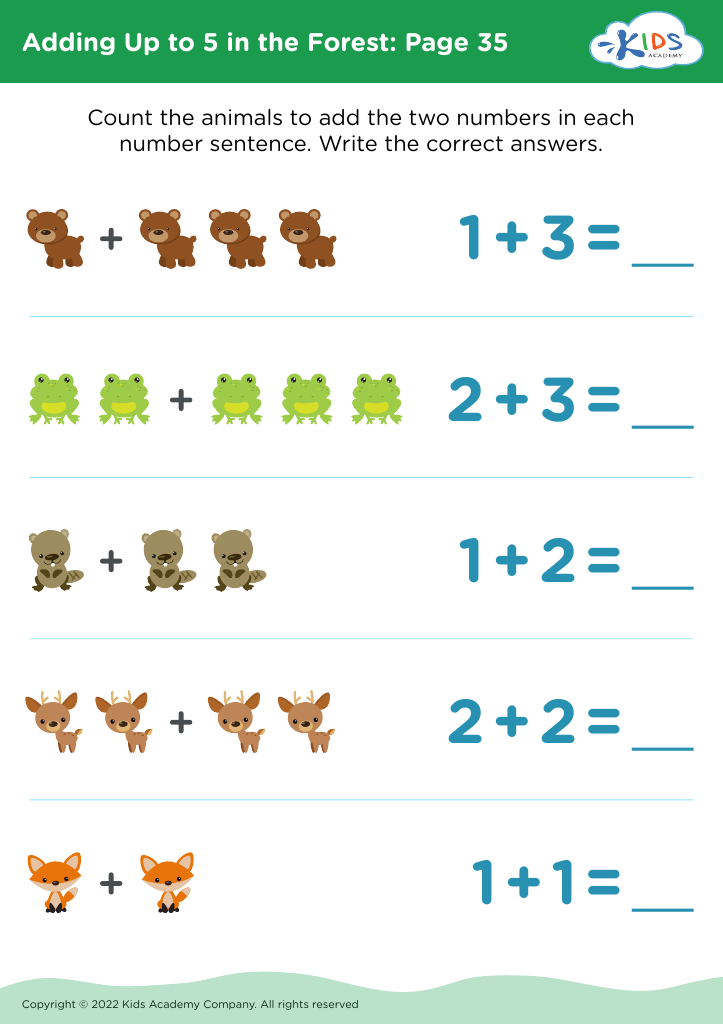
Adding Up to 5 in the Forest: Page 35
Worksheet
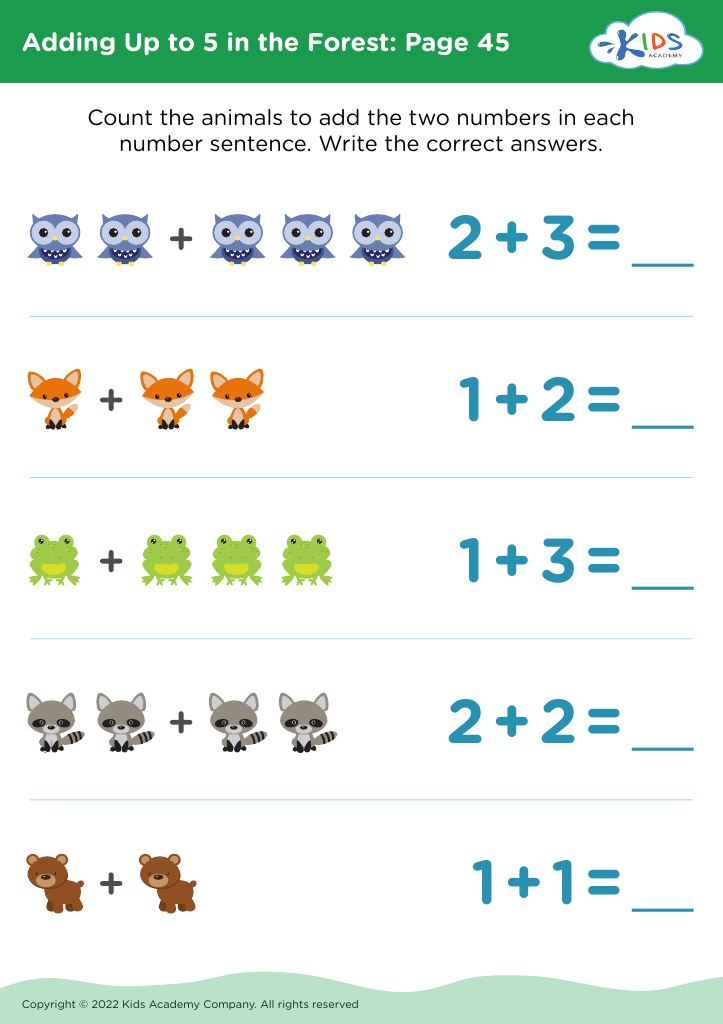
Adding Up to 5 in the Forest: Page 45
Worksheet
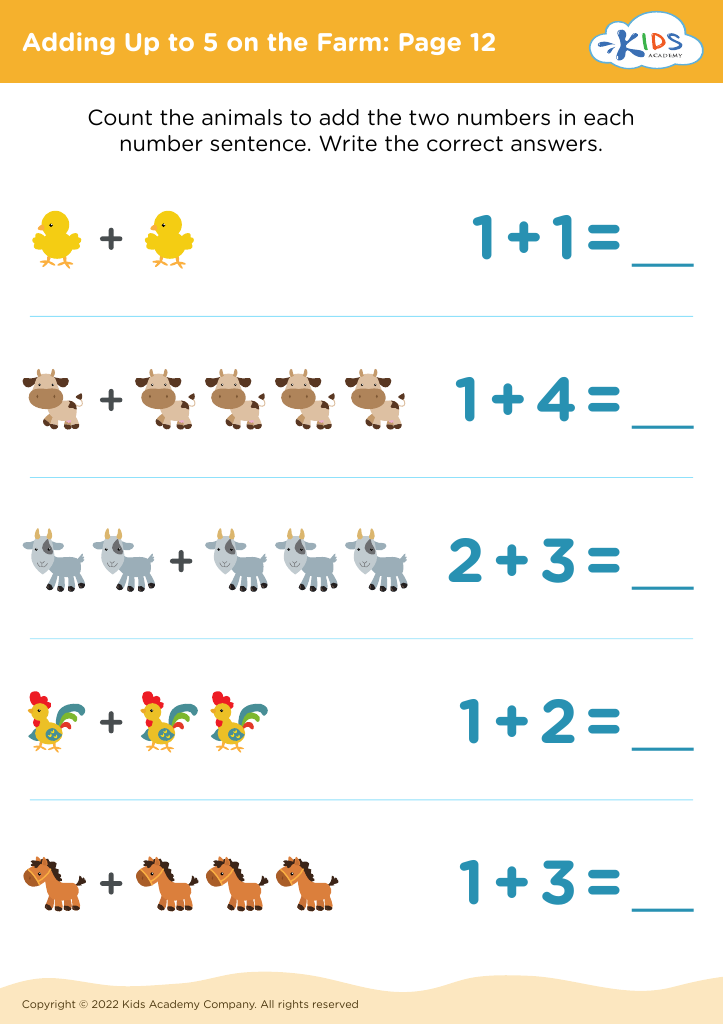
Adding Up to 5 on the Farm: Page 12
Worksheet
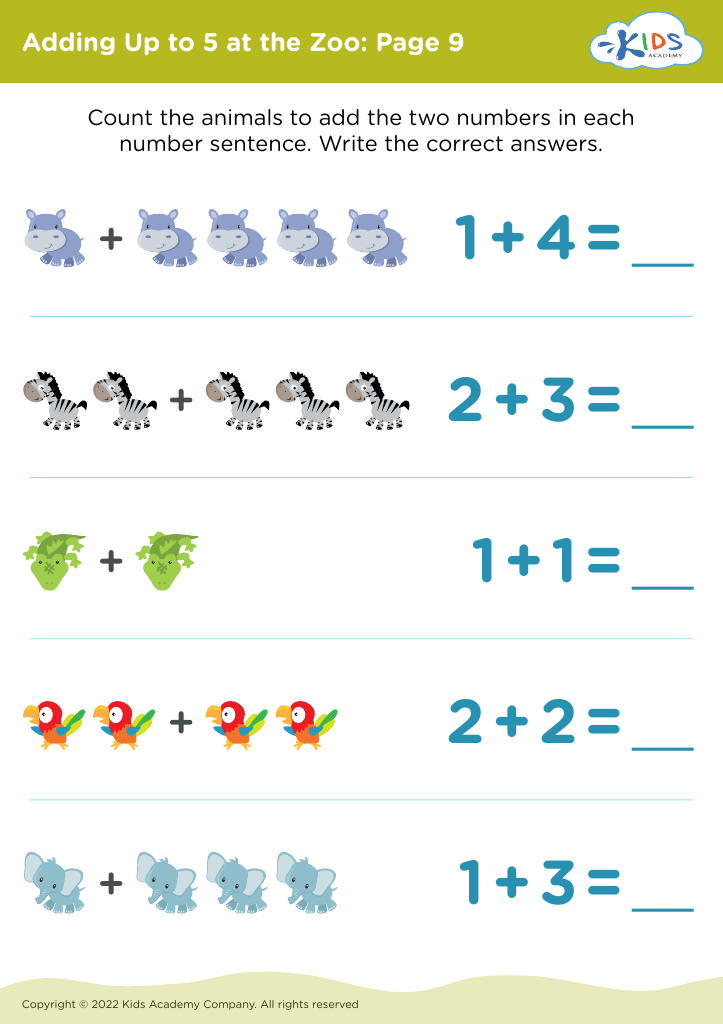
Adding Up to 5 at the Zoo: Page 9

Adding Up to 5 at the Zoo: Page 9

Adding Up to 5 at the Zoo: Page 9
Worksheet
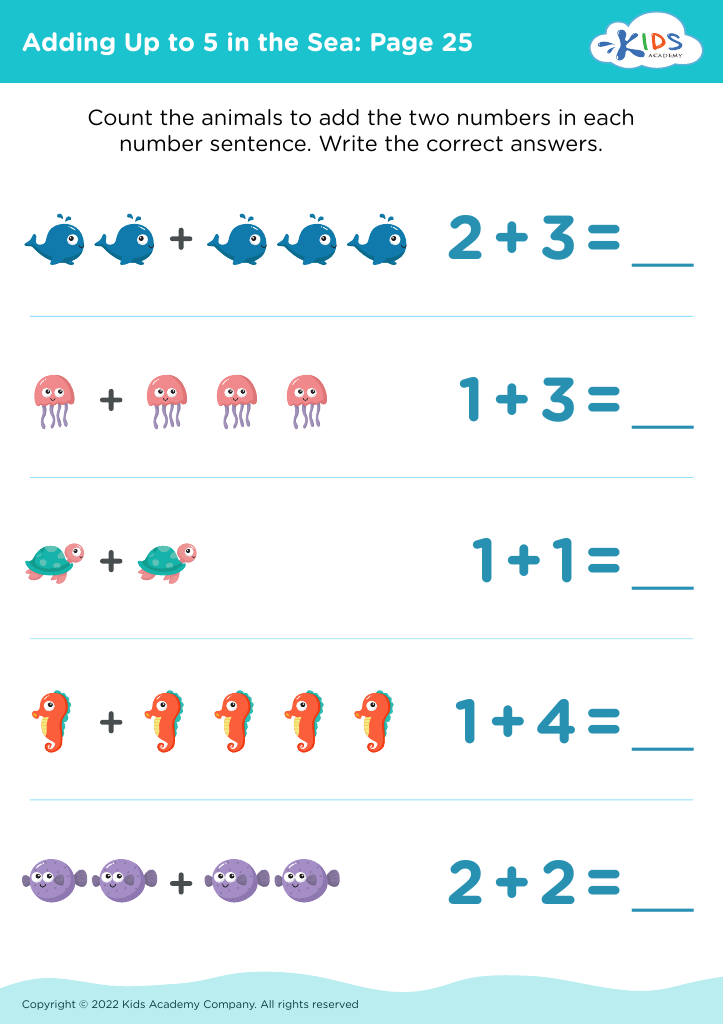
Adding Up to 5 in the Sea: Page 25
Worksheet
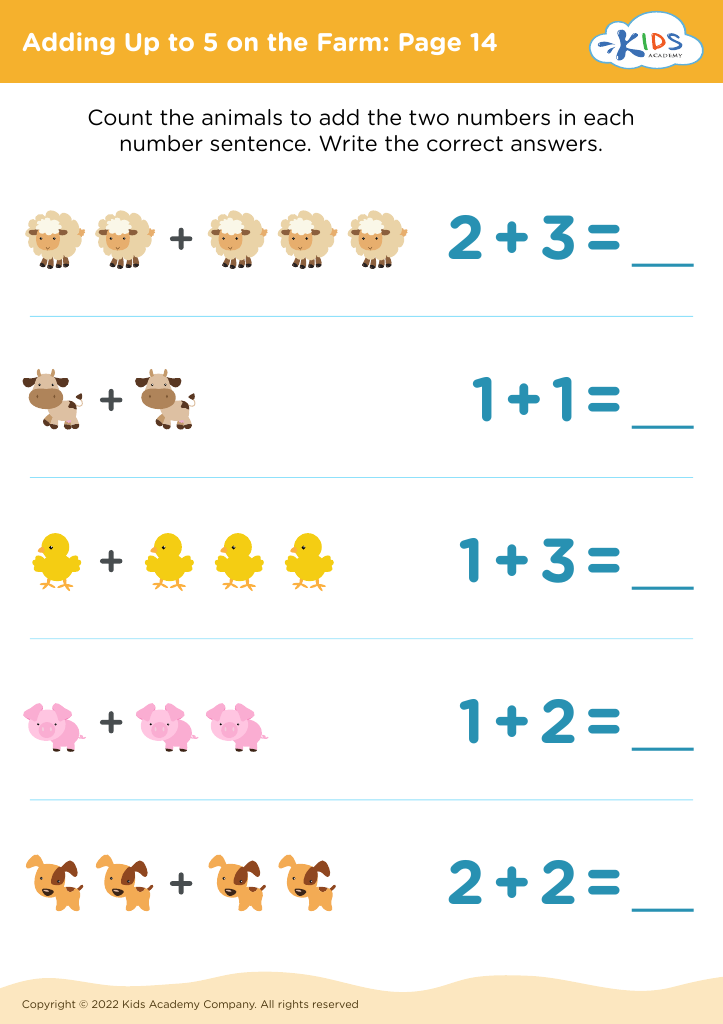
Adding Up to 5 on the Farm: Page 14
Worksheet
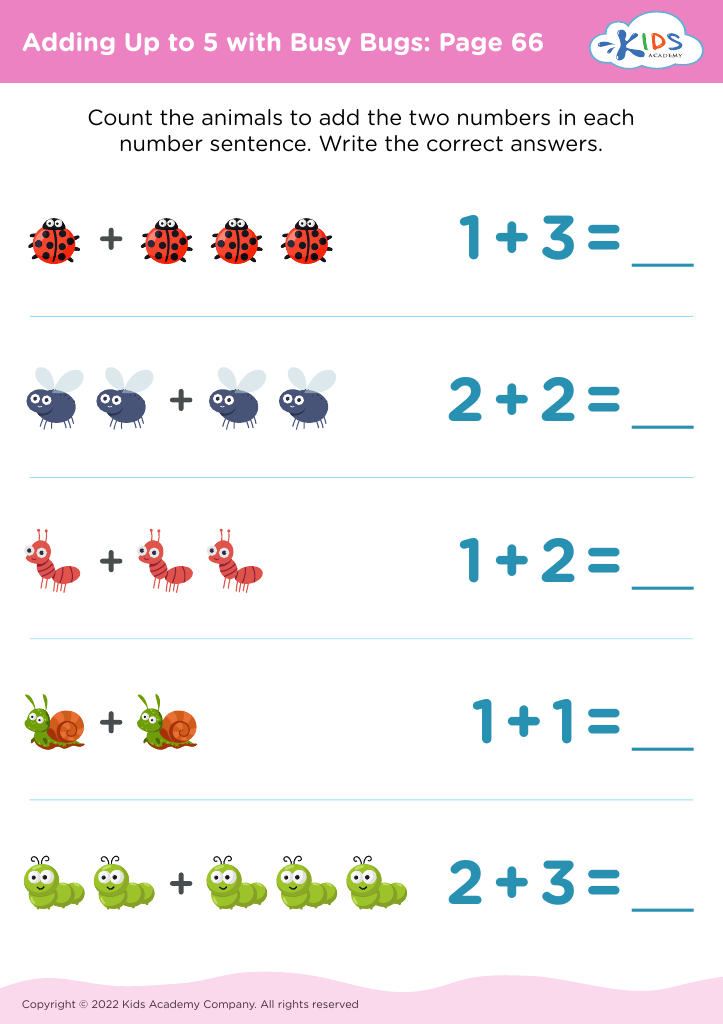
Adding Up to 5 with Busy Bugs: Page 66
Worksheet
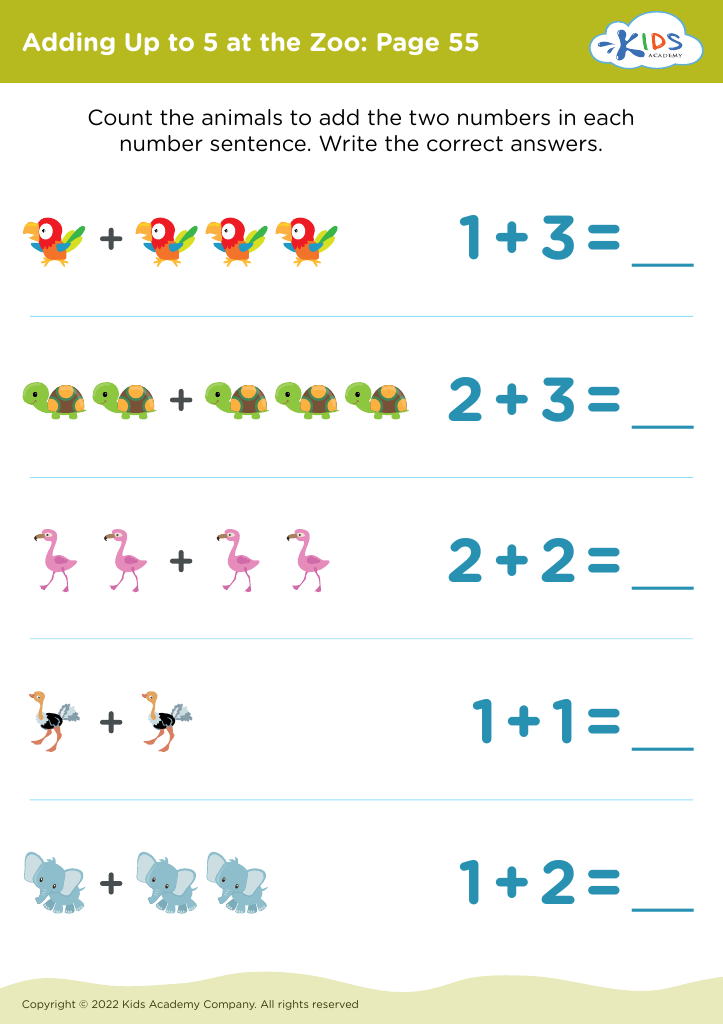
Adding Up to 5 at the Zoo: Page 55
Worksheet
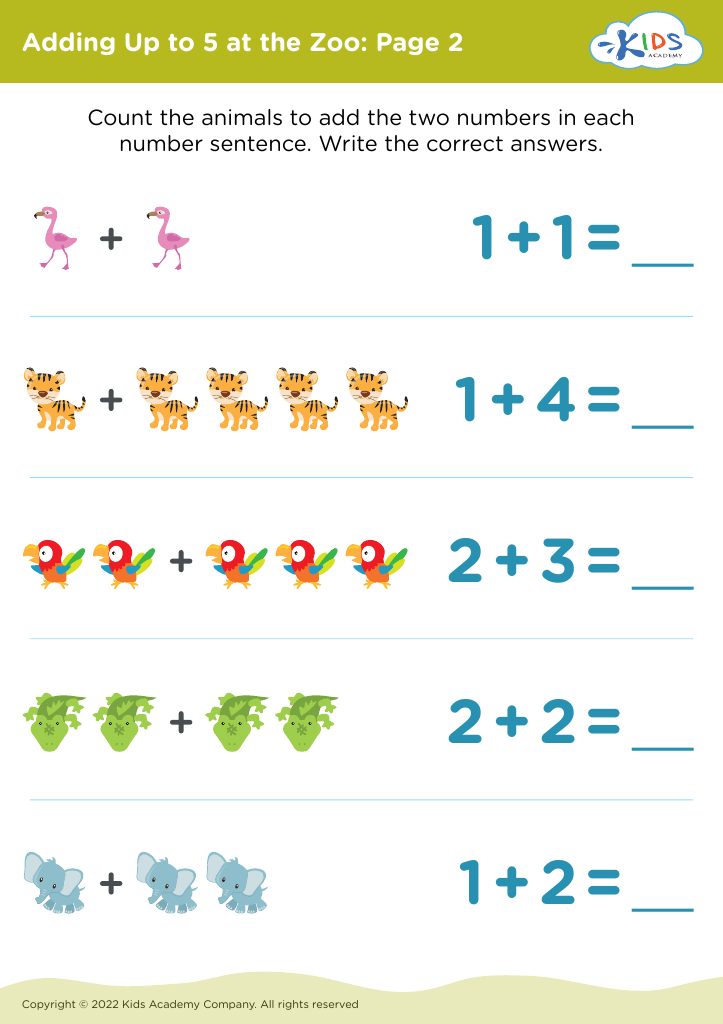
Adding Up to 5 at the Zoo: Page 2

Adding Up to 5 at the Zoo: Page 2

Adding Up to 5 at the Zoo: Page 2
Worksheet
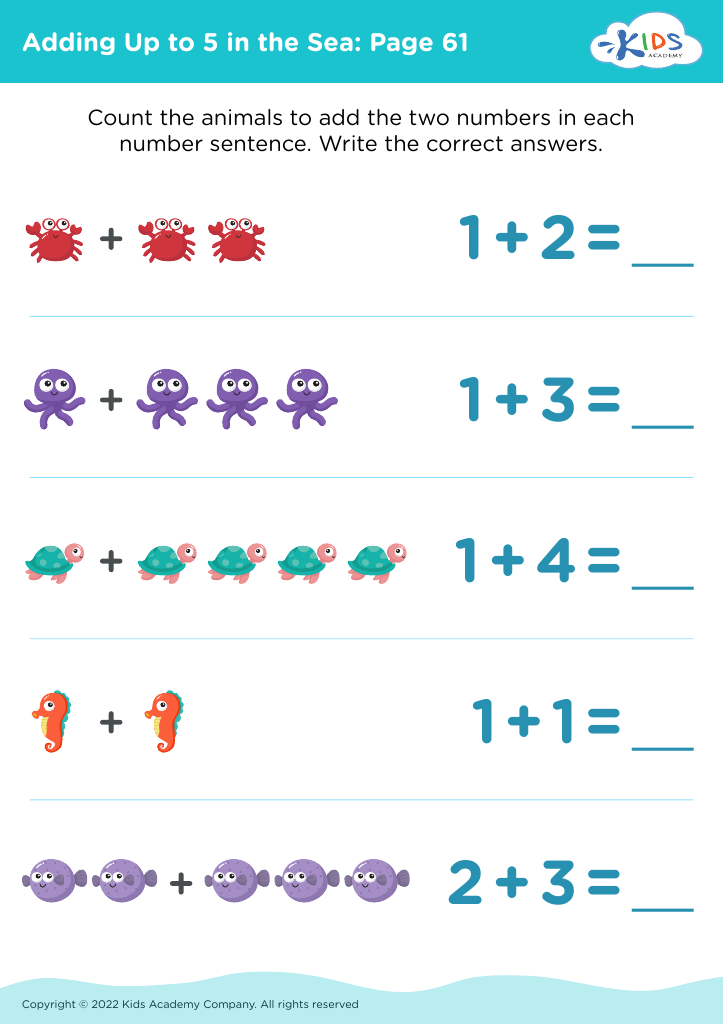
Adding Up to 5 in the Sea: Page 61
Worksheet
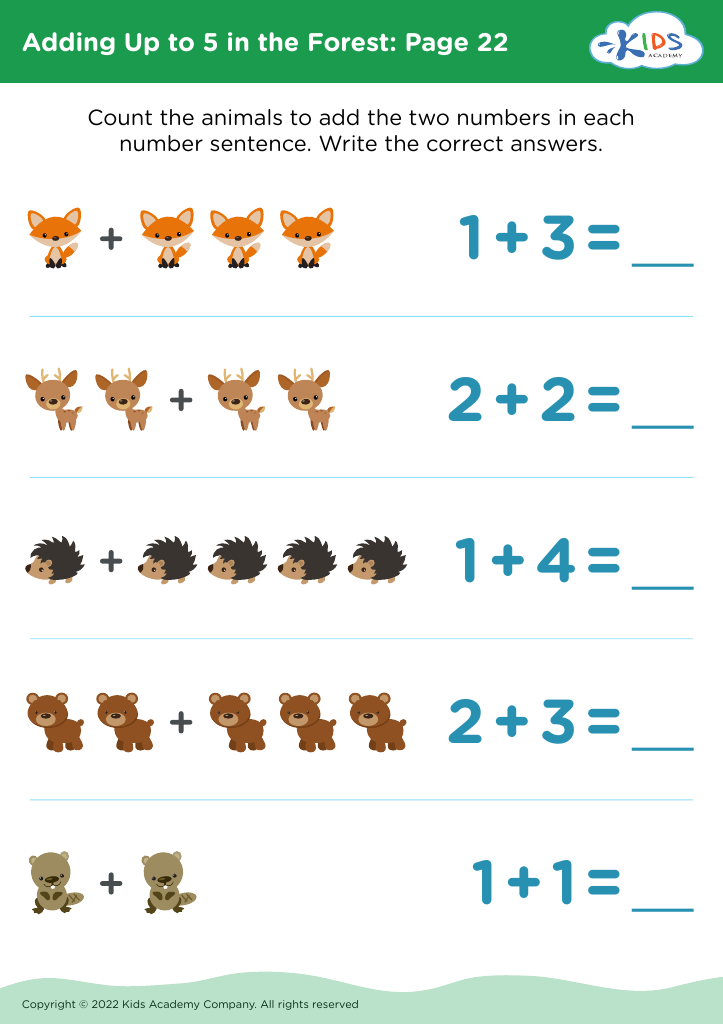
Adding Up to 5 in the Forest: Page 22
Worksheet
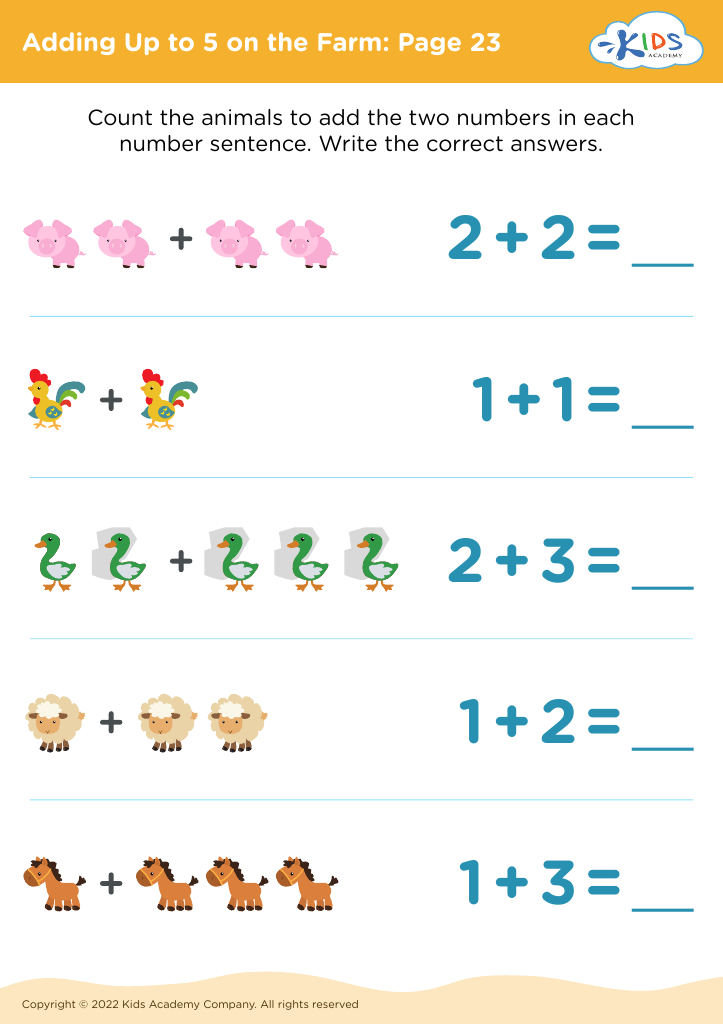
Adding Up to 5 on the Farm: Page 23
Worksheet
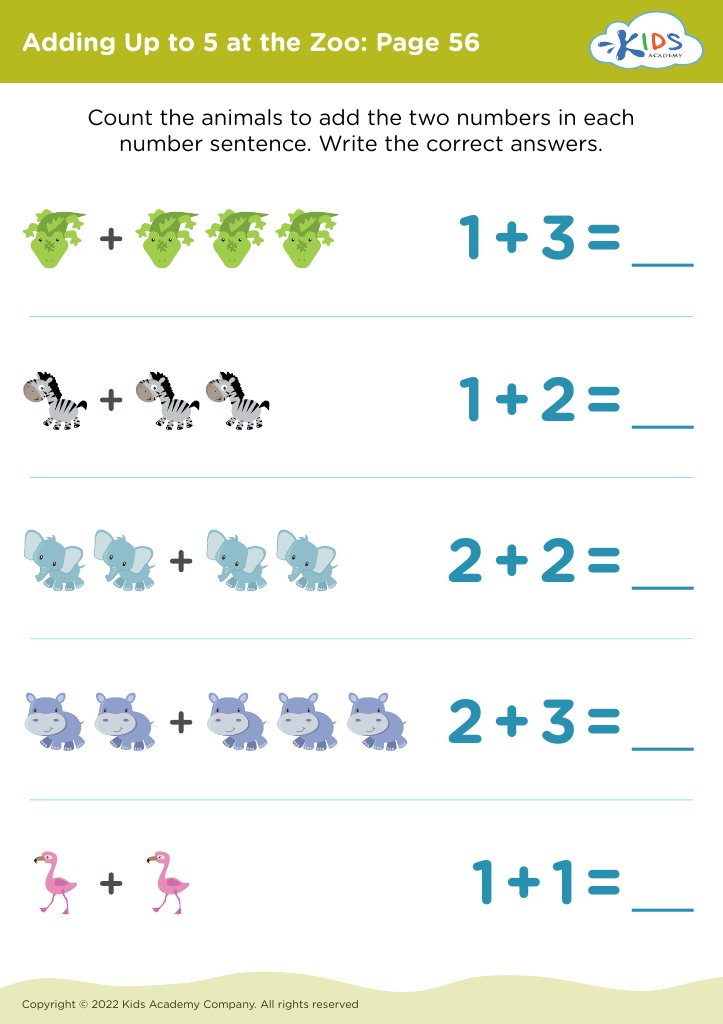
Adding Up to 5 at the Zoo: Page 56
Worksheet


Basic addition skills are foundational for children aged 4-7 as they set the stage for future mathematical understanding and problem-solving abilities. At this early age, children's brains are highly receptive to learning new concepts, and mastering addition up to 5 develop their number sense and cognitive skills effectively.

Children who can perform simple addition gain confidence in their numerical abilities, which encourages a positive attitude toward math. This confidence is crucial because students who feel competent in math are more likely to participate, ask questions, and develop a love for the subject.

Moreover, basic addition helps develop critical thinking and logical reasoning. Children learn to recognize patterns, understand relationships between numbers, and manage simple operations, all of which are essential skills in everyday life.

Effective early education in addition aids children in smoothly transitioning to more complex mathematical concepts such as subtraction, multiplication, and division. Early exposure to math fundamentals can particularly benefit children as they progress through their educational journey, making them more capable and less likely to struggle with advanced topics.

In conclusion, prioritizing basic addition skills for young children not only enhances their math proficiency but also contributes to their overall intellectual development and academic success. Parents and teachers play a pivotal role in fostering these essential early math skills.