Filters

36 filtered results

Clear all filters
Favorites
With answer key
Interactive

36 filtered results

Difficulty Level

Grade


Check out this FREE Trial Lesson on Adding Up to 5 for age 4-7!

Short and Long Vowel Sort

Favorites
With answer key
Interactive
  • 4-7
  • Understanding Quantities
  • Adding Up to 5
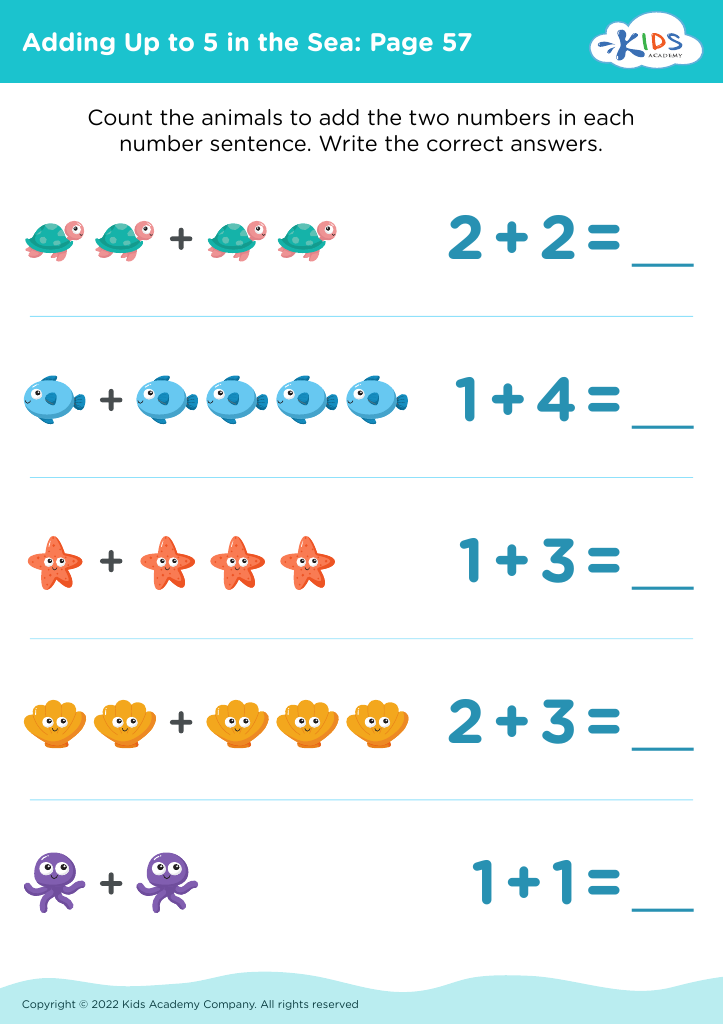
Adding Up to 5 in the Sea: Page 57
Worksheet
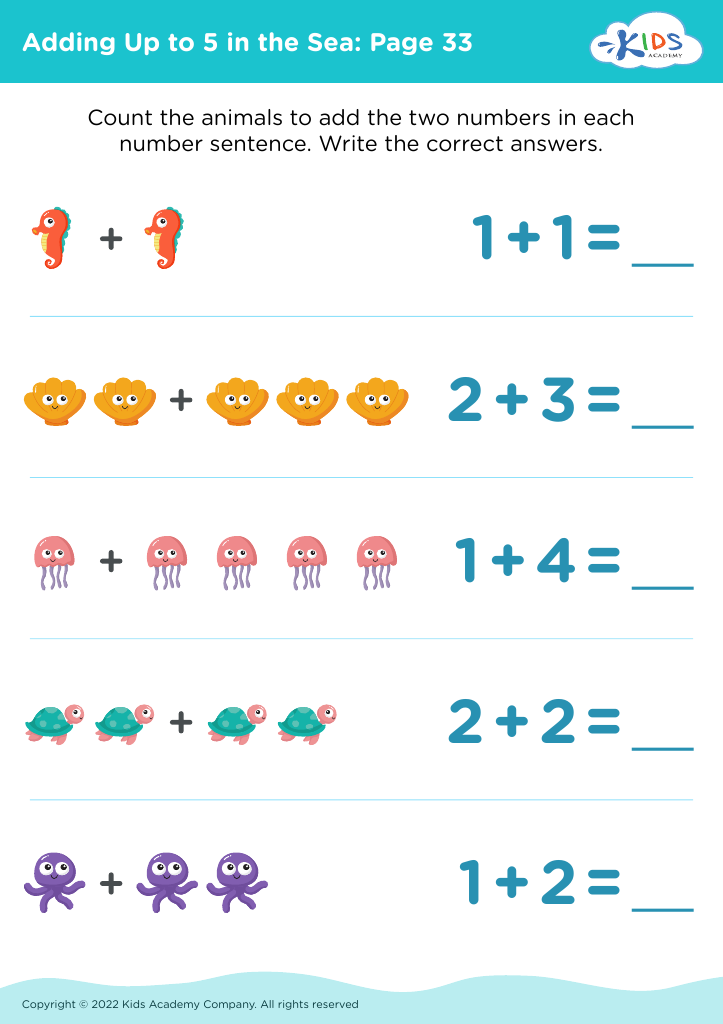
Adding Up to 5 in the Sea: Page 33
Worksheet
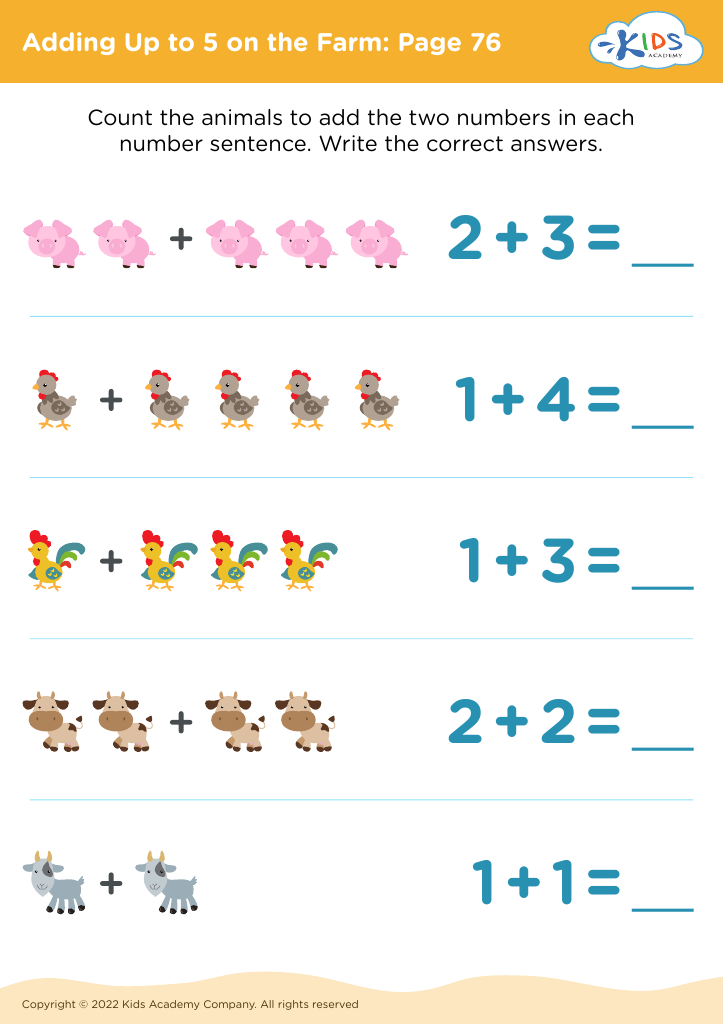
Adding Up to 5 on the Farm: Page 76
Worksheet
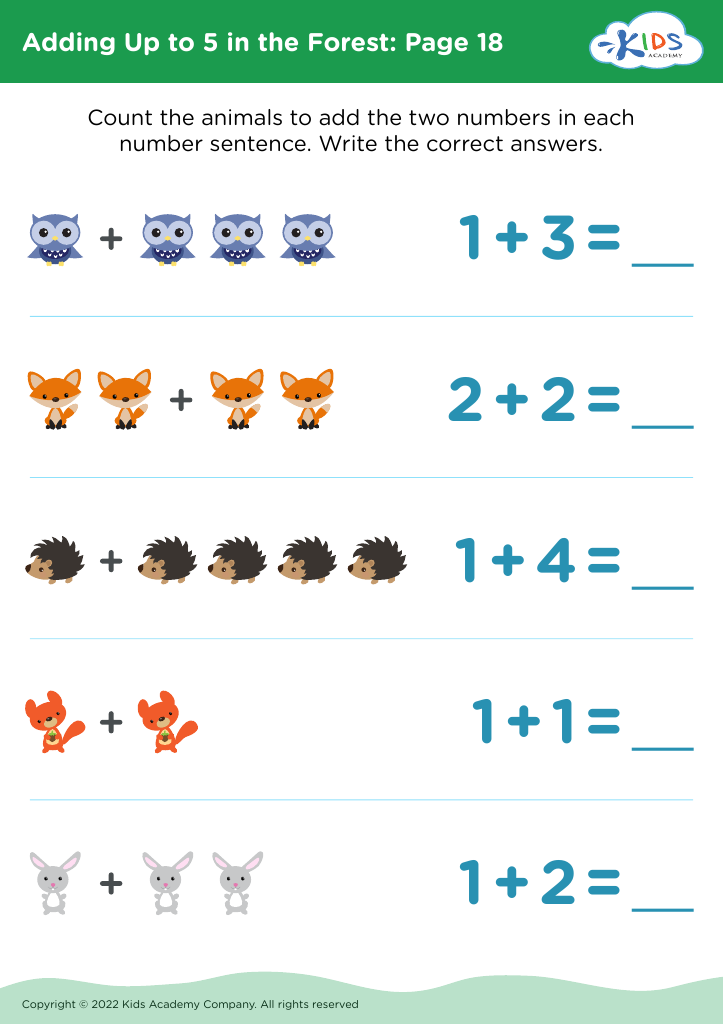
Adding Up to 5 in the Forest: Page 18
Worksheet
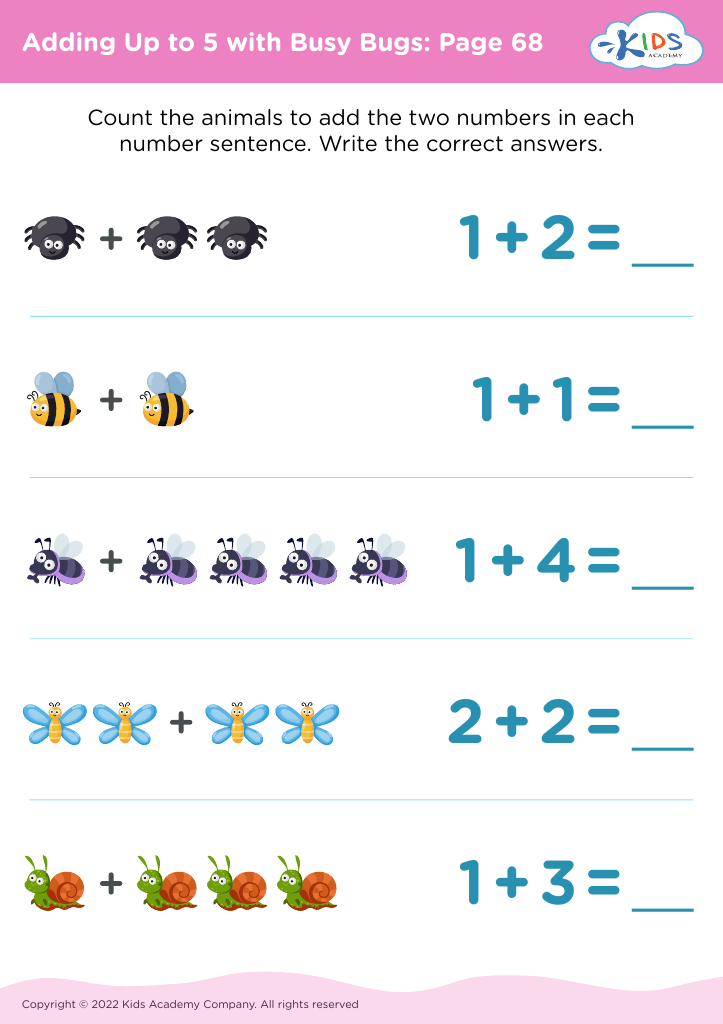
Adding Up to 5 with Busy Bugs: Page 68
Worksheet
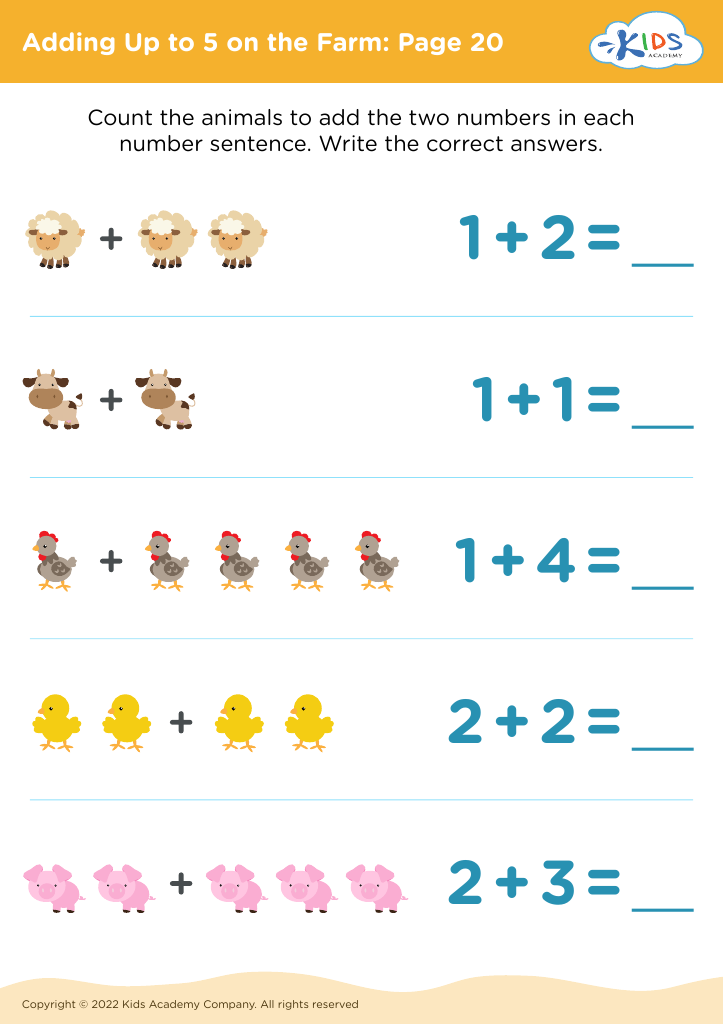
Adding Up to 5 on the Farm: Page 20
Worksheet
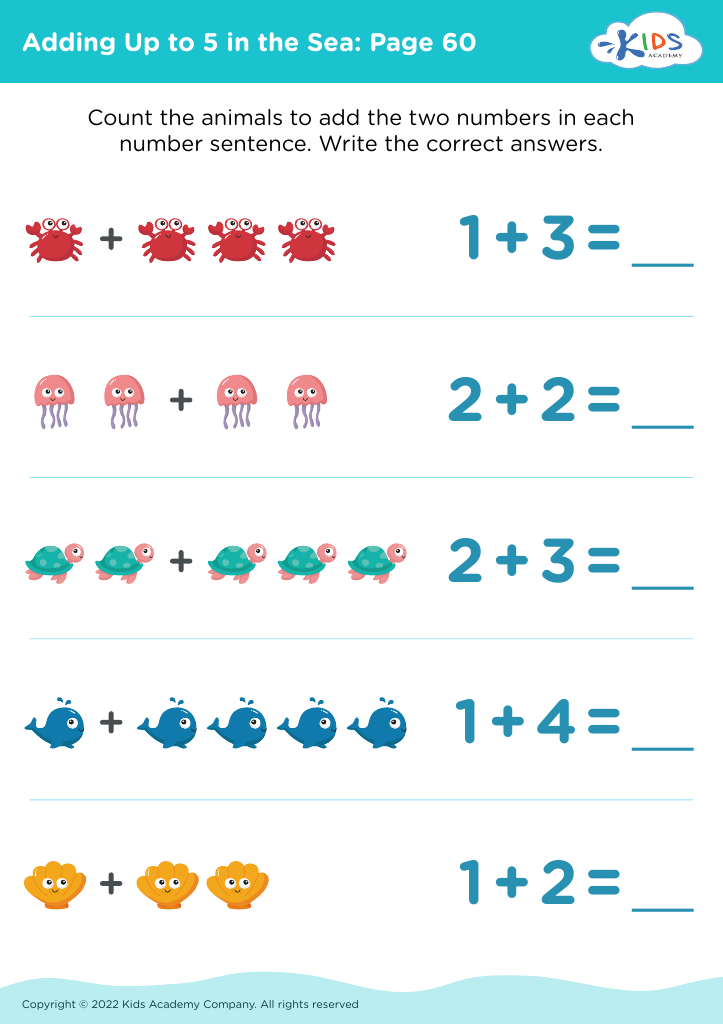
Adding Up to 5 in the Sea: Page 60
Worksheet
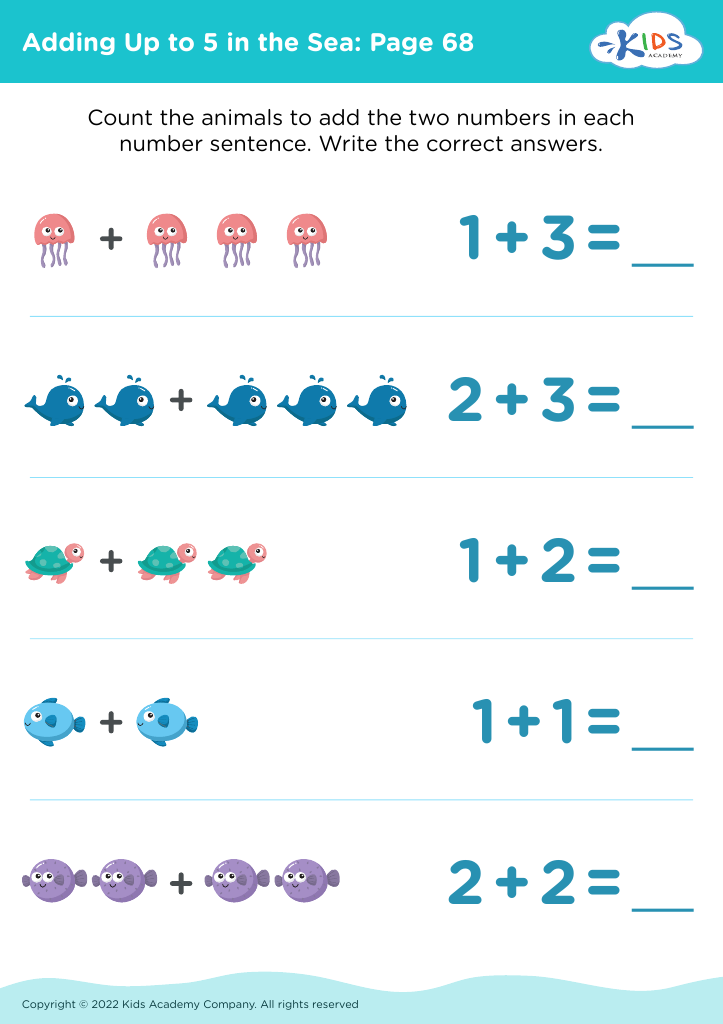
Adding Up to 5 in the Sea: Page 68
Worksheet
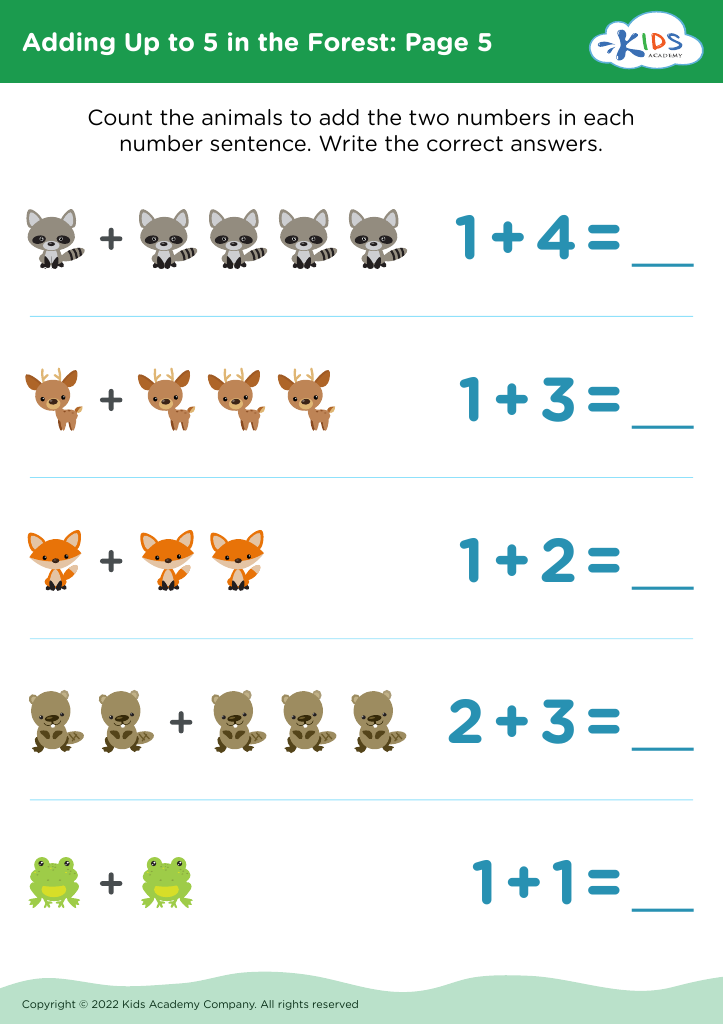
Adding Up to 5 in the Forest: Page 5
Worksheet
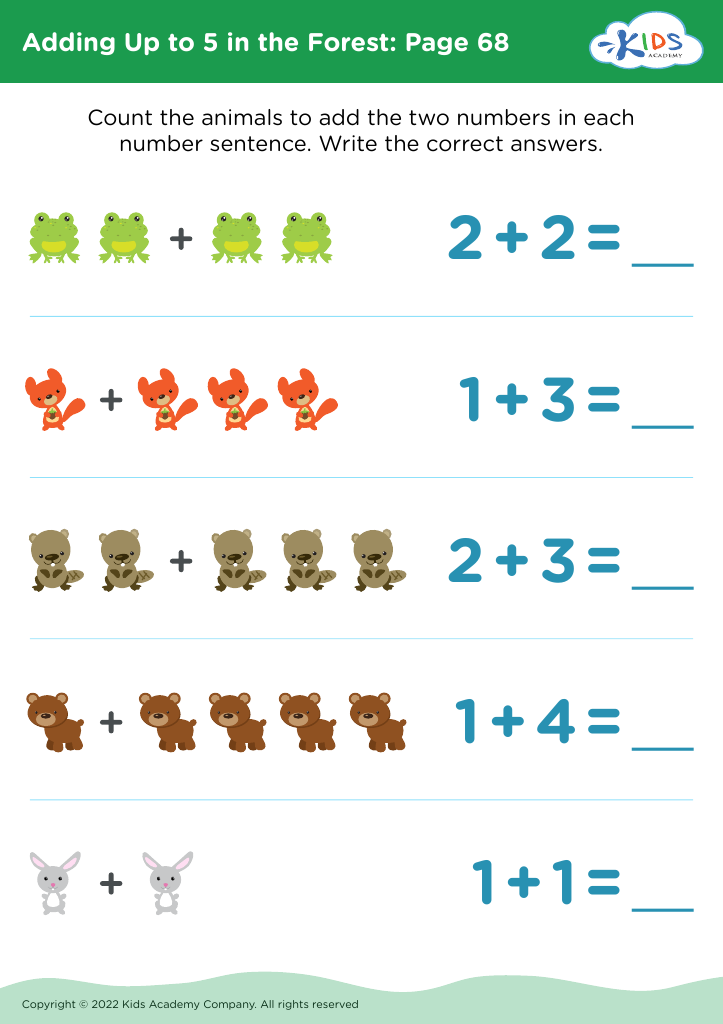
Adding Up to 5 in the Forest: Page 68
Worksheet
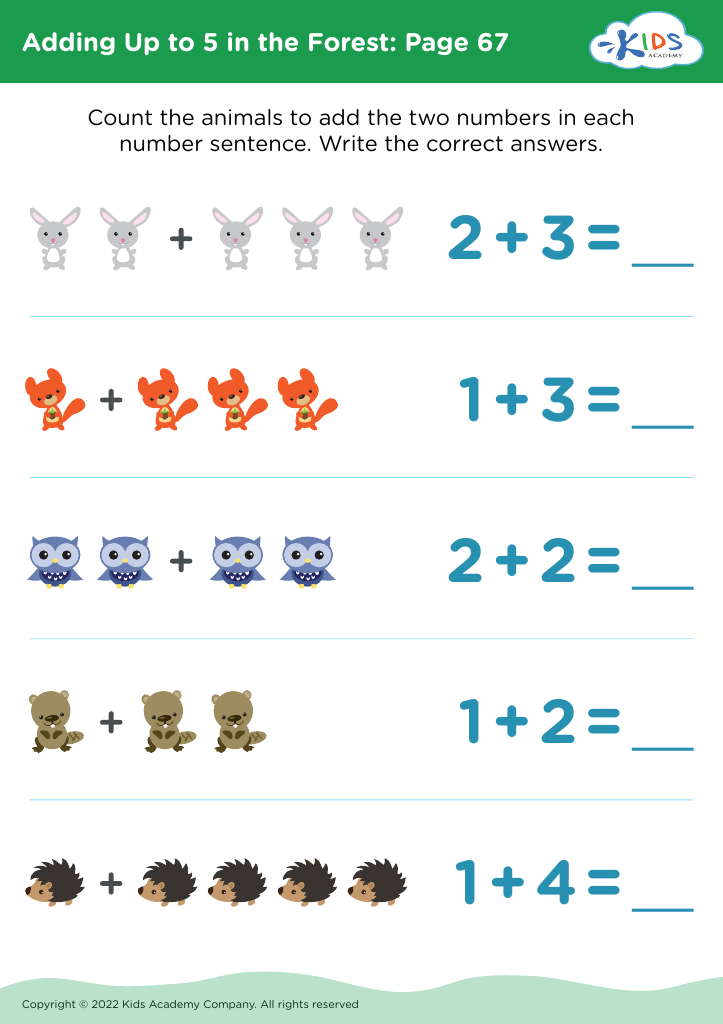
Adding Up to 5 in the Forest: Page 67
Worksheet
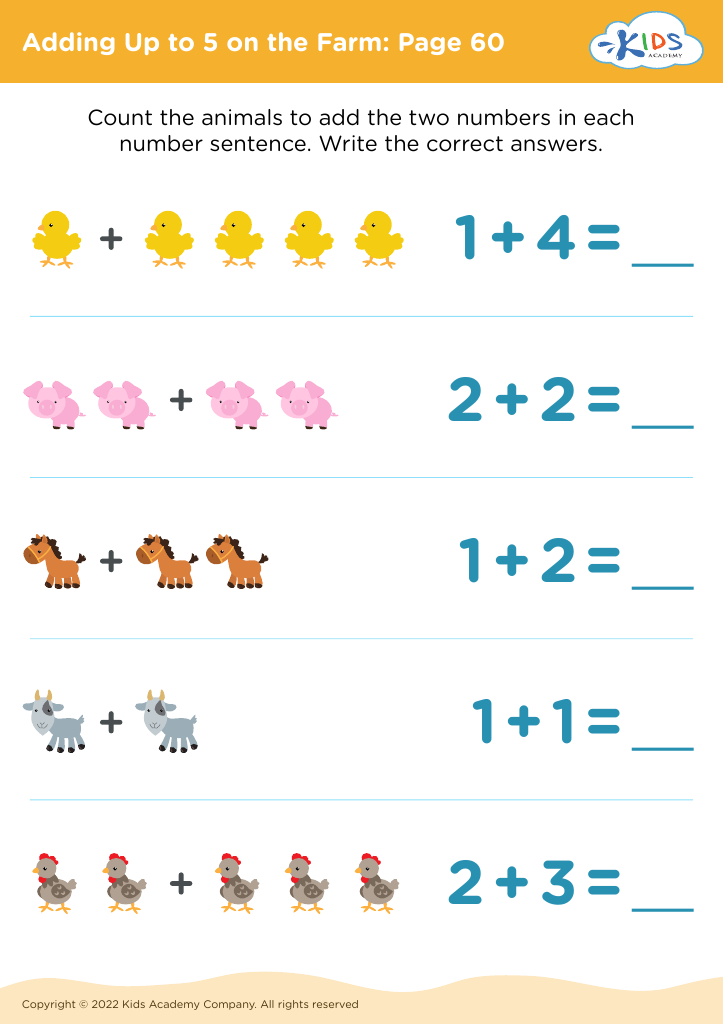
Adding Up to 5 on the Farm: Page 60
Worksheet


Understanding quantities that add up to 5 is crucial for children aged 4-7 because it lays a foundational skill in early mathematics and supports cognitive development. At this stage, children begin to grasp the concept of numbers and addition, making it essential for them to recognize and manipulate small quantities. This understanding contributes to their ability to solve more complex math problems in later years.

Learning to visualize and understand combinations that total 5 fosters critical thinking skills. For instance, it encourages children to explore different pairings (e.g., 2 + 3, 4 + 1), enhancing their flexibility in problem-solving. Additionally, it supports number sense, enabling kids to see the relationships between numbers and develop computational fluency.

Moreover, this concept serves as a building block for future math concepts such as counting, subtraction, and place value. Engaging parents and teachers in this learning process allows for interactive and supportive experiences—whether it's through games, counting exercises, or everyday scenarios—that ultimately instill confidence in children as they master essential math skills. By focusing on understanding quantities, parents and educators empower children to become proficient learners, ready to tackle more challenging mathematics as they advance.