Filters

84 filtered results

Clear all filters
Favorites
With answer key
Interactive

84 filtered results

Difficulty Level

Grade


Check out this FREE Trial Lesson on Adding Up to 5 for age 4-7!

T

Favorites
With answer key
Interactive
  • 4-7
  • Visual Learning
  • Adding Up to 5
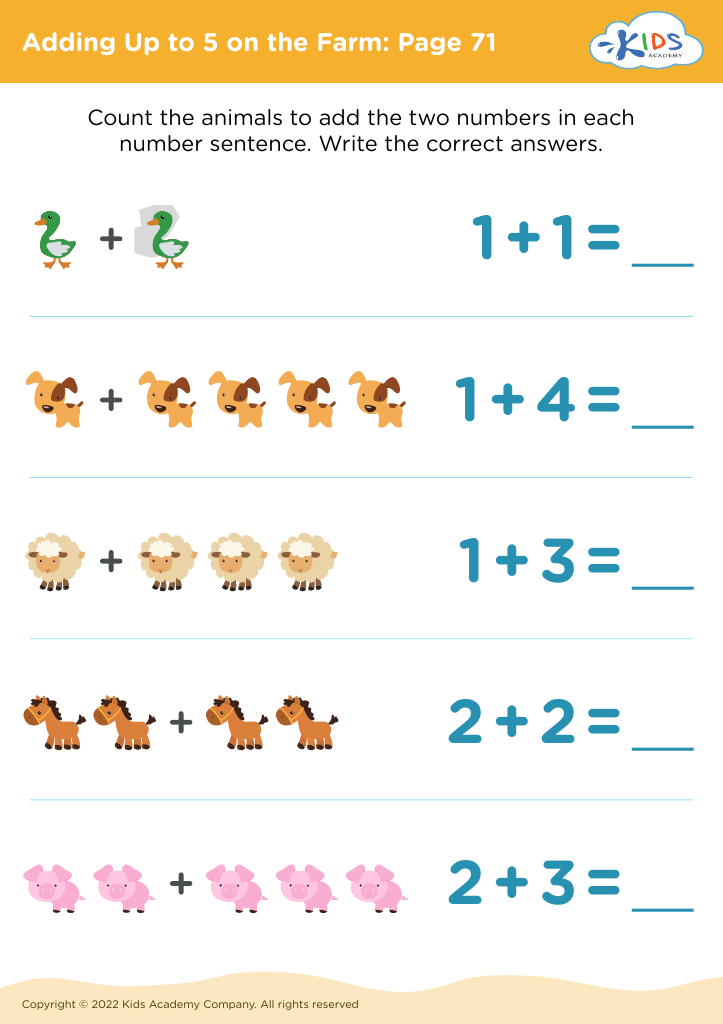
Adding Up to 5 on the Farm: Page 71
Worksheet
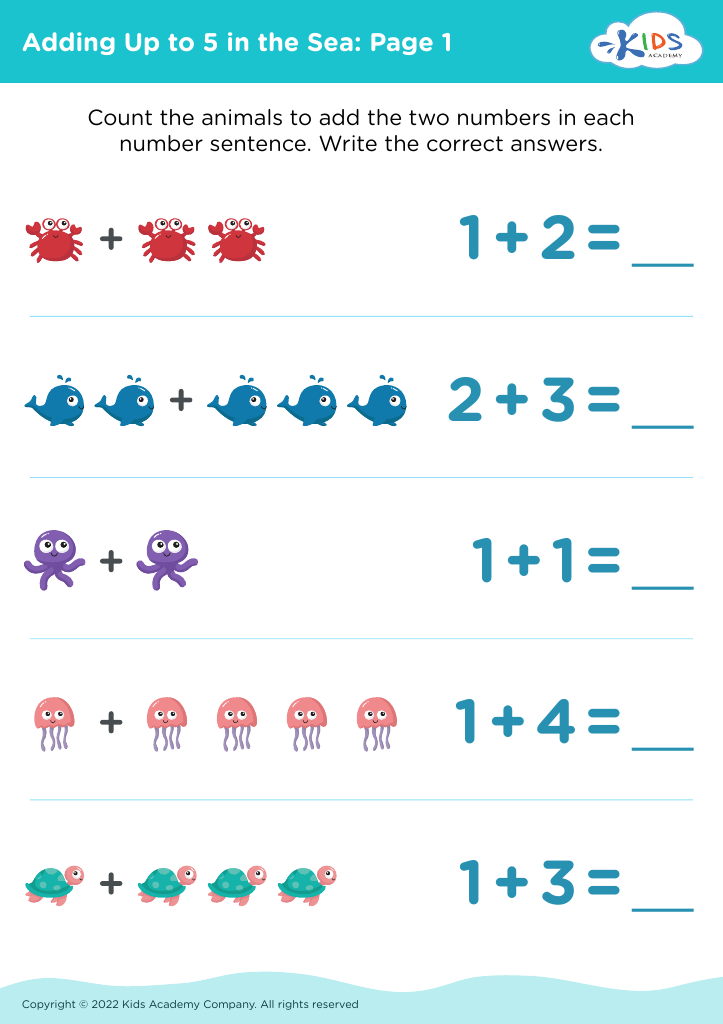
Adding Up to 5 in the Sea: Page 1

Adding Up to 5 in the Sea: Page 1

Adding Up to 5 in the Sea: Page 1
Worksheet
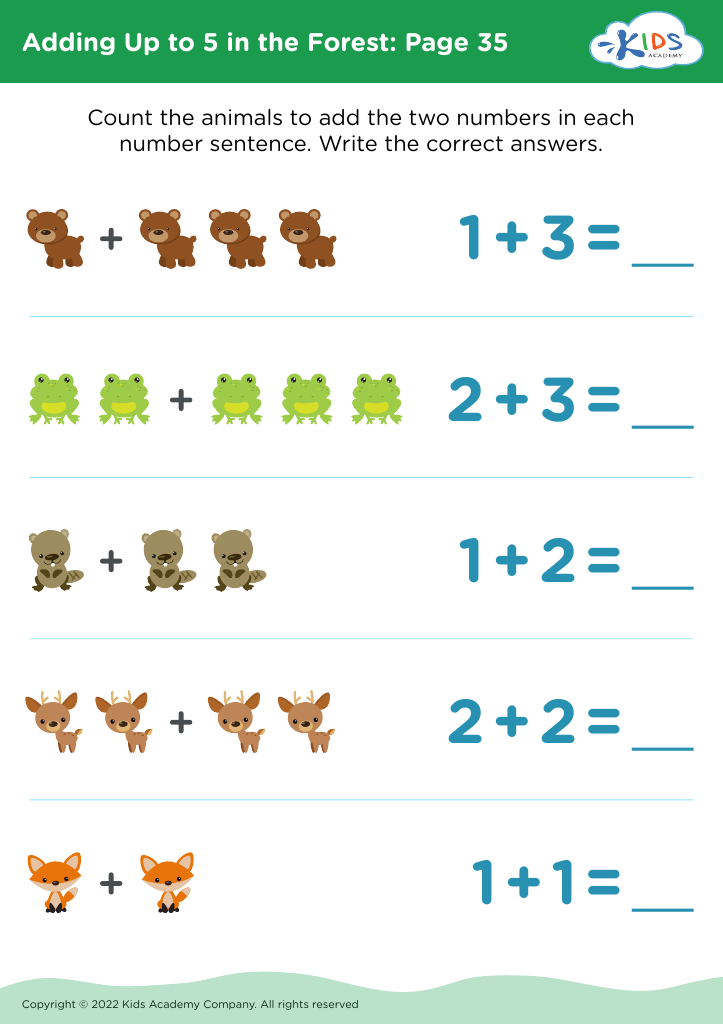
Adding Up to 5 in the Forest: Page 35
Worksheet
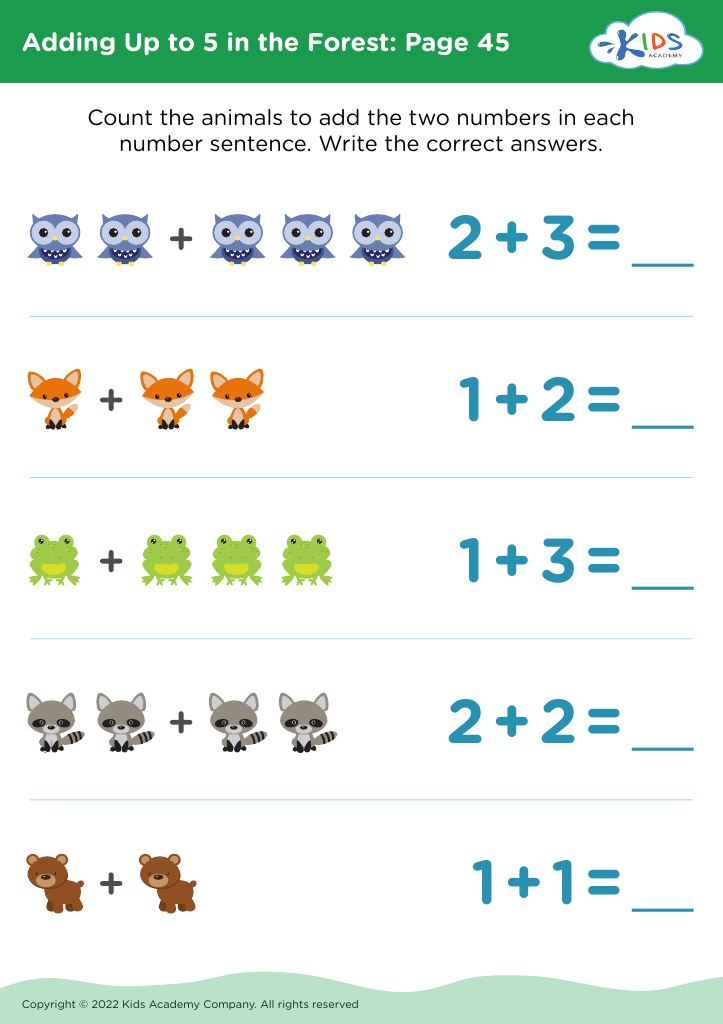
Adding Up to 5 in the Forest: Page 45
Worksheet
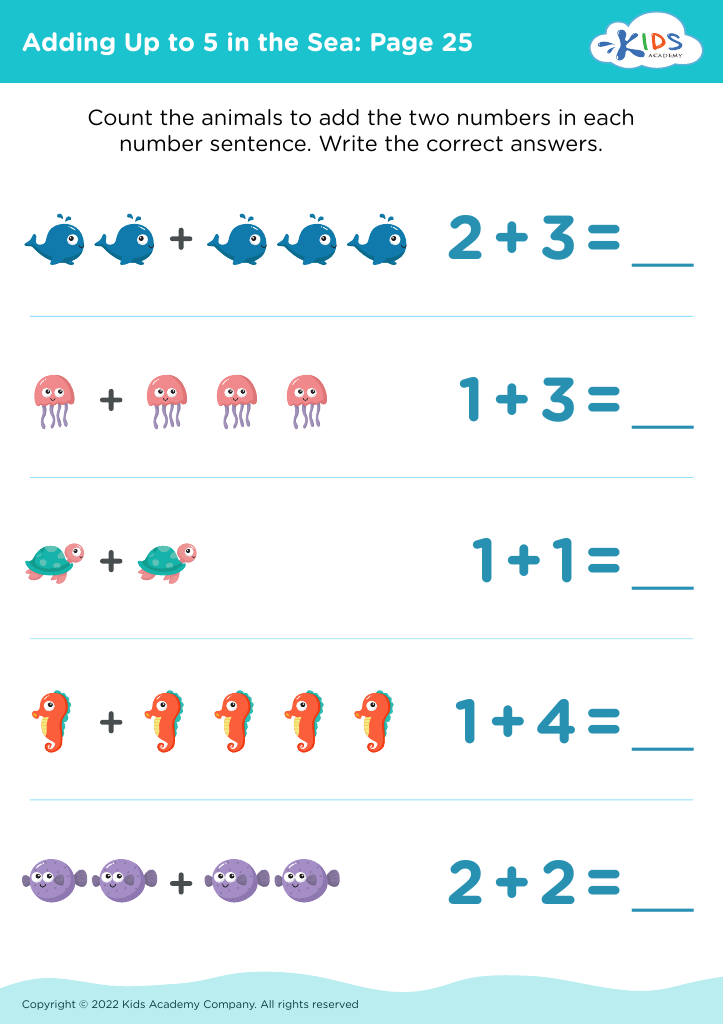
Adding Up to 5 in the Sea: Page 25
Worksheet
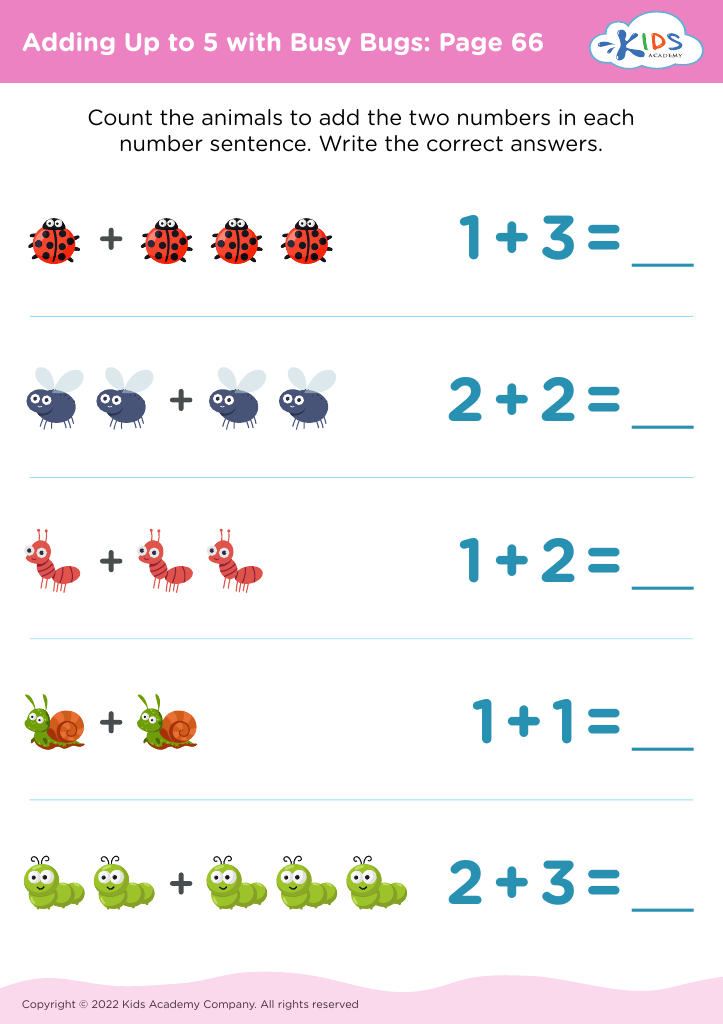
Adding Up to 5 with Busy Bugs: Page 66
Worksheet
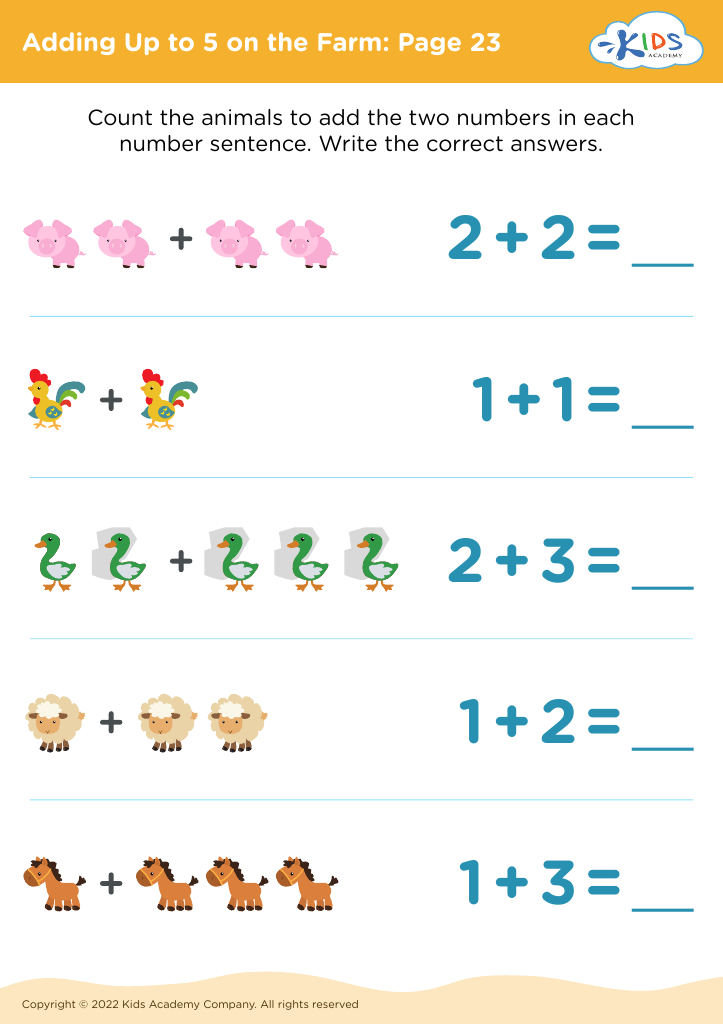
Adding Up to 5 on the Farm: Page 23
Worksheet
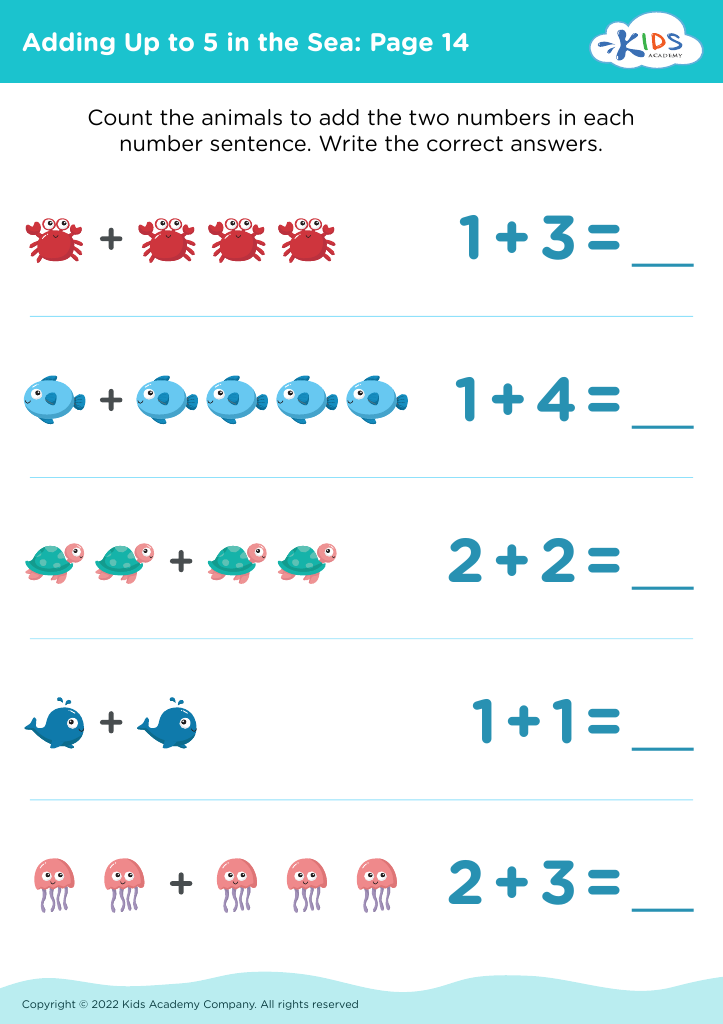
Adding Up to 5 in the Sea: Page 14
Worksheet
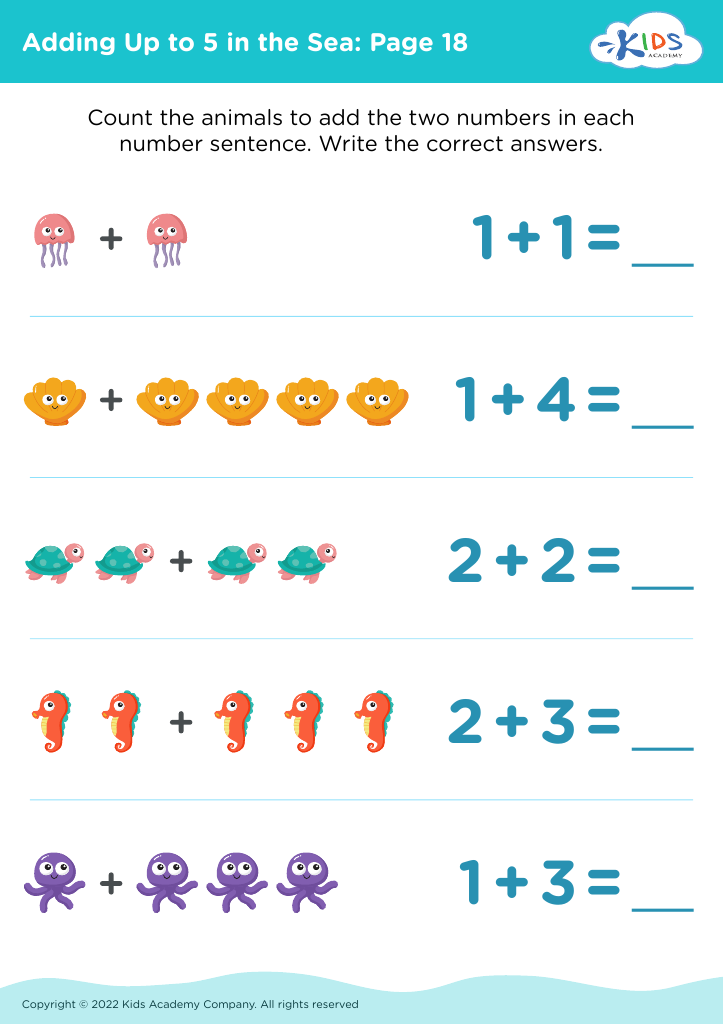
Adding Up to 5 in the Sea: Page 18
Worksheet
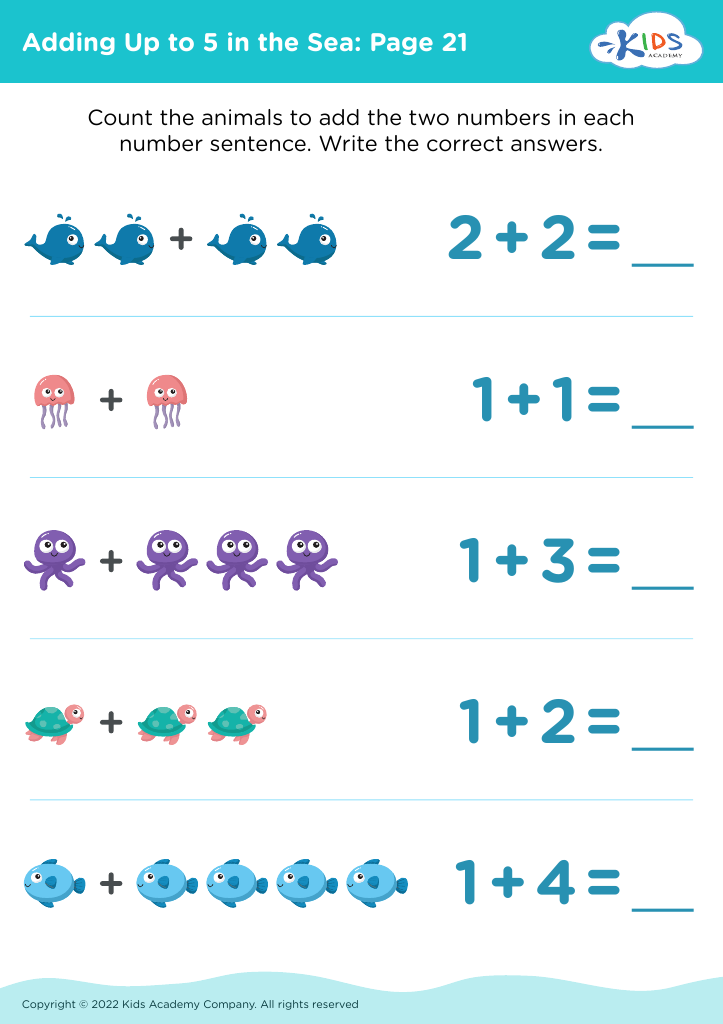
Adding Up to 5 in the Sea: Page 21
Worksheet
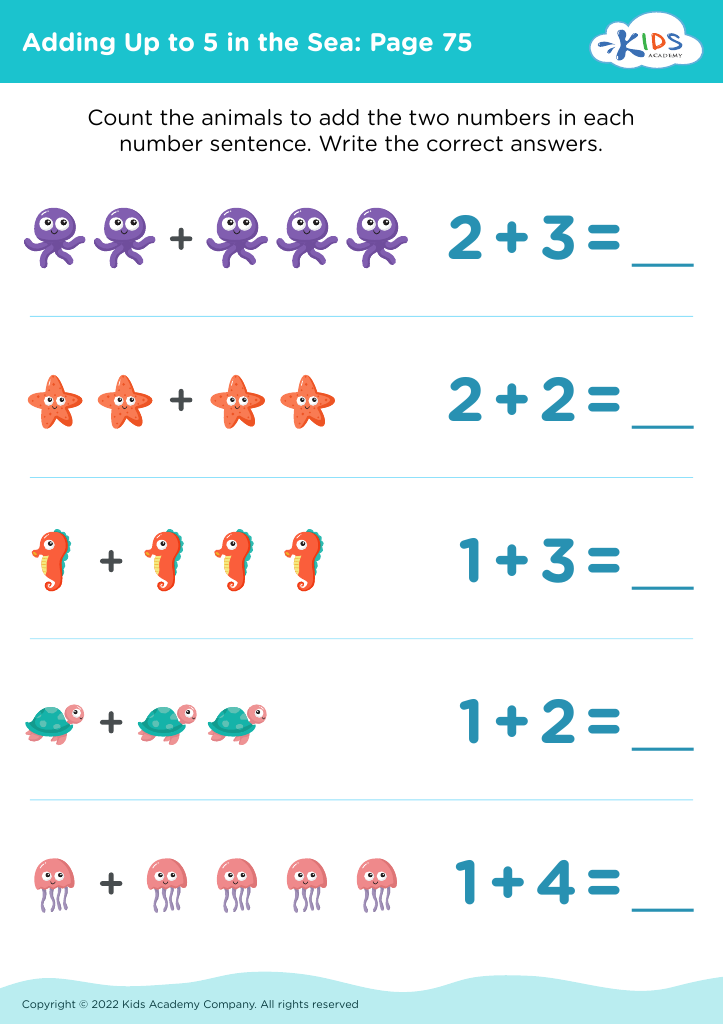
Adding Up to 5 in the Sea: Page 75
Worksheet
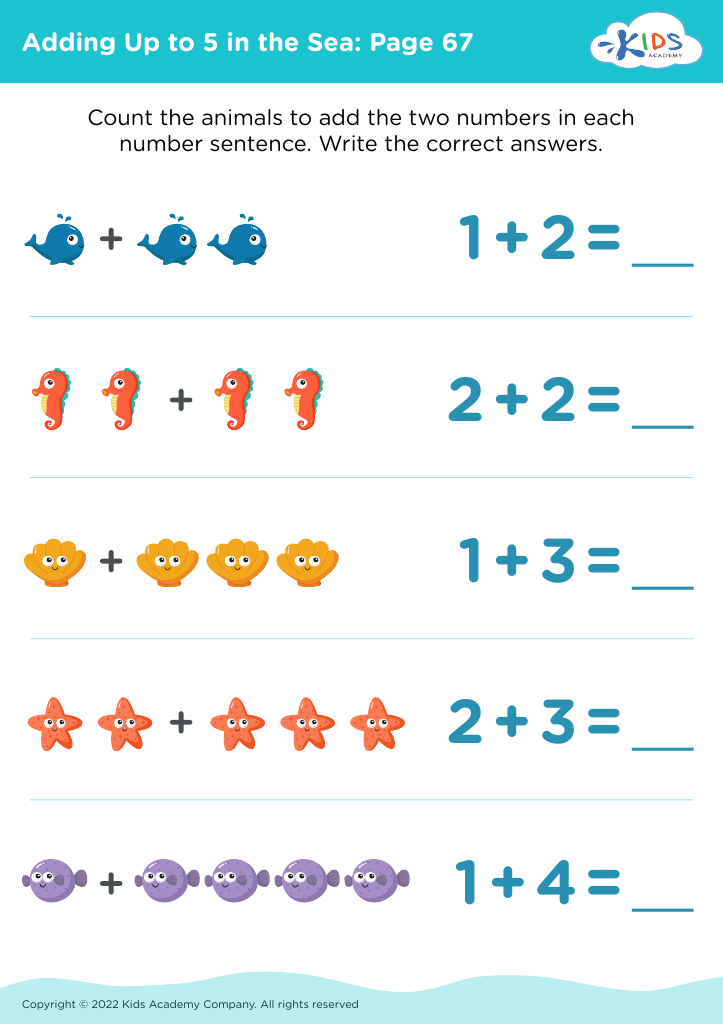
Adding Up to 5 in the Sea: Page 67
Worksheet
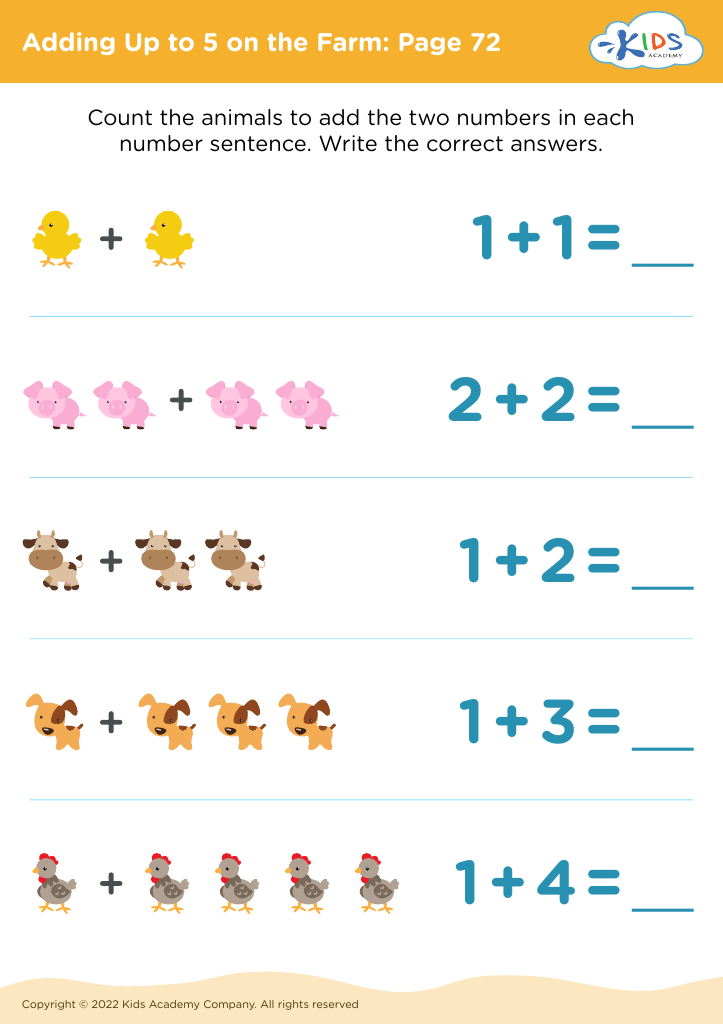
Adding Up to 5 on the Farm: Page 72
Worksheet
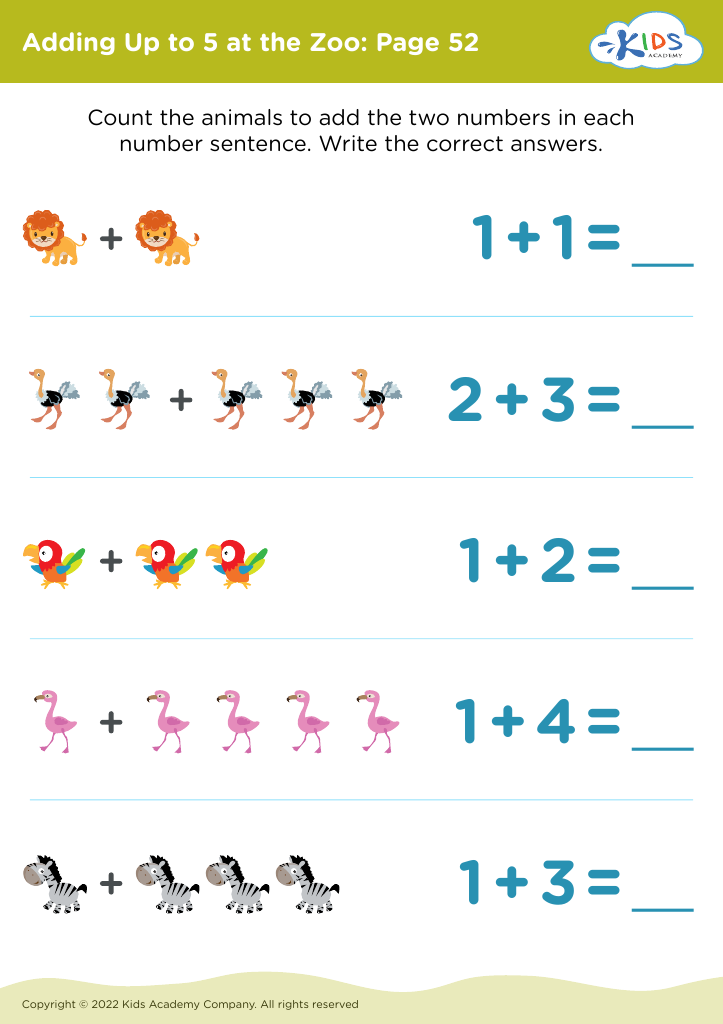
Adding Up to 5 at the Zoo: Page 52
Worksheet
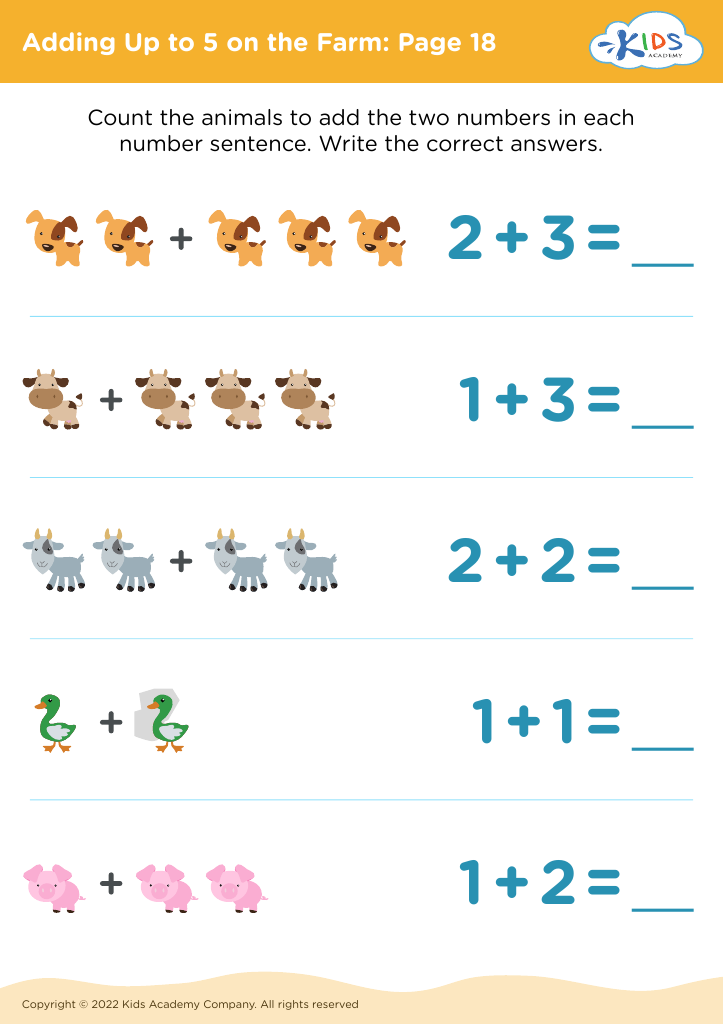
Adding Up to 5 on the Farm: Page 18
Worksheet
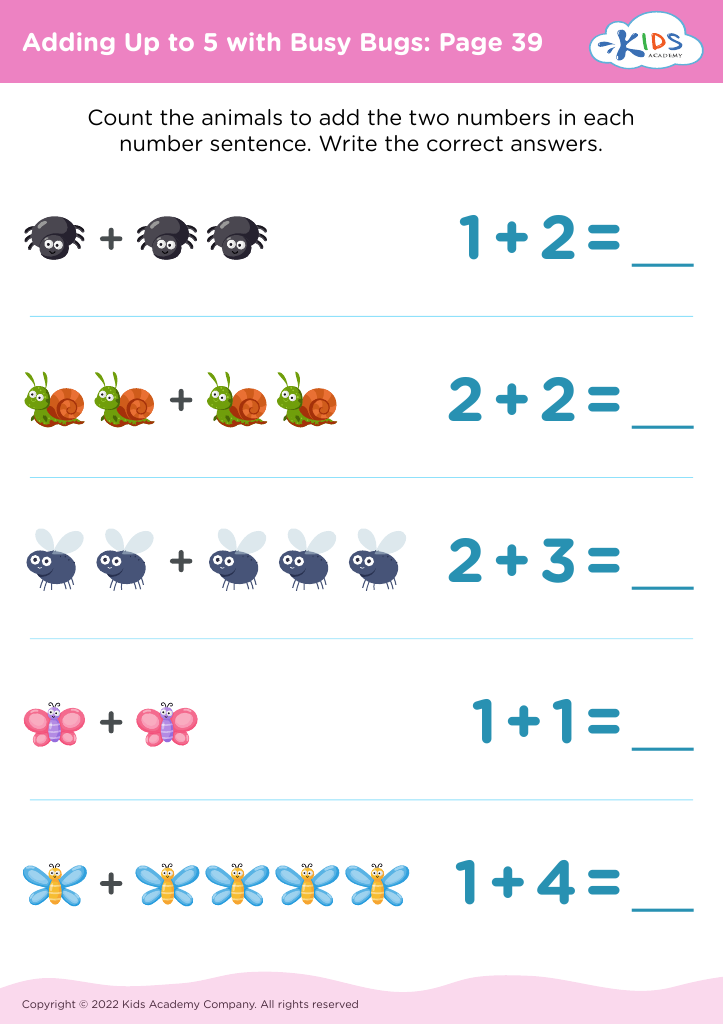
Adding Up to 5 with Busy Bugs: Page 39
Worksheet
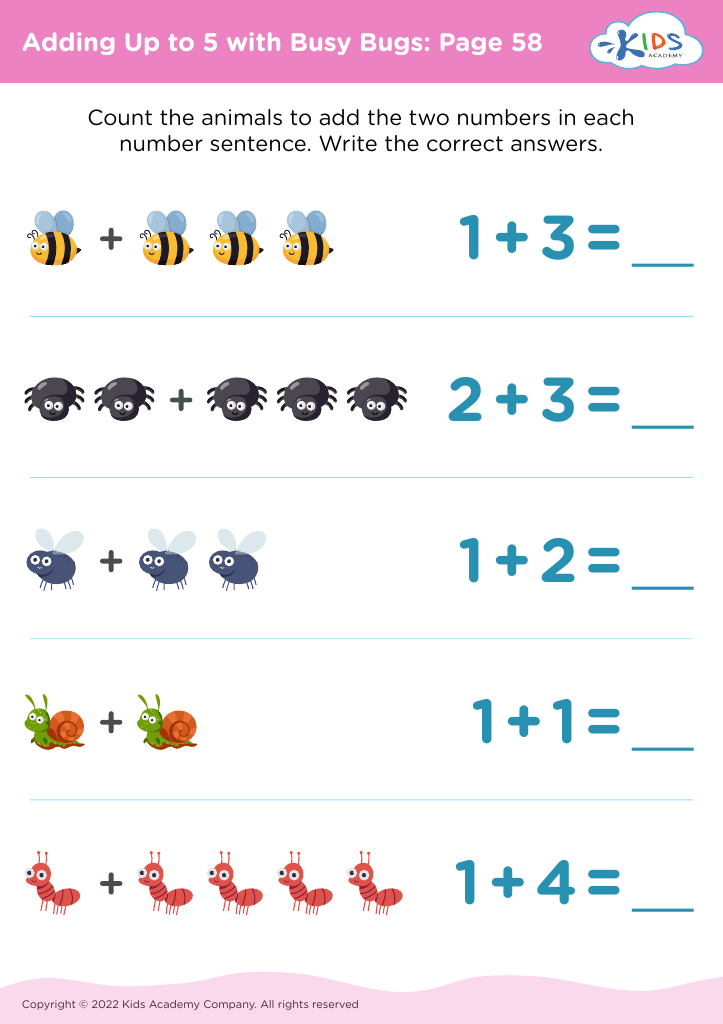
Adding Up to 5 with Busy Bugs: Page 58
Worksheet
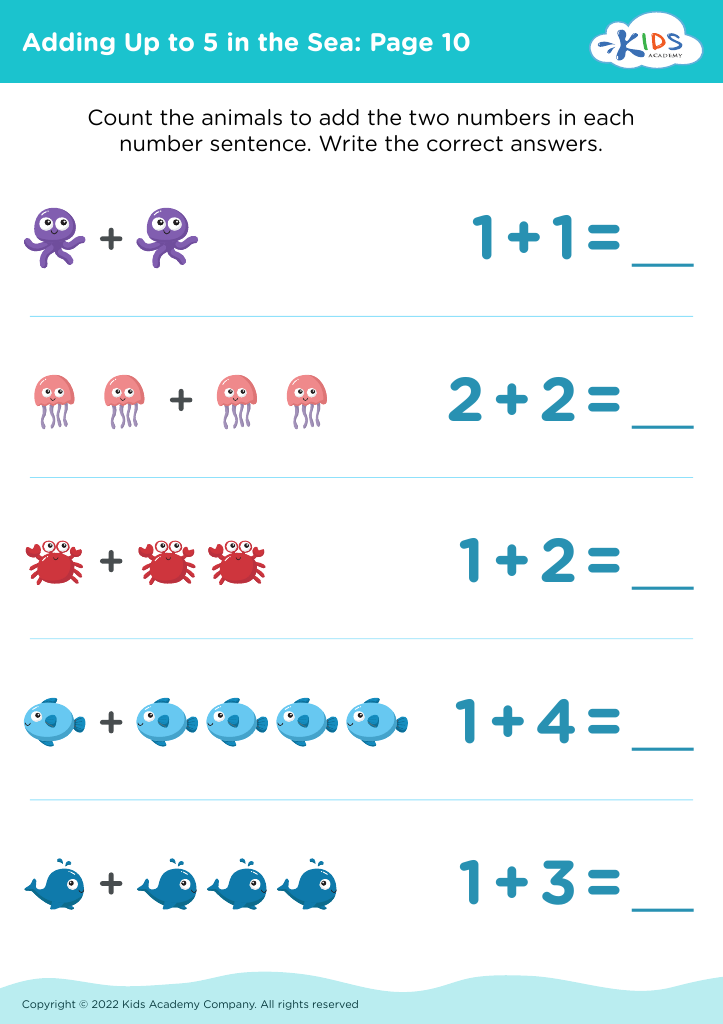
Adding Up to 5 in the Sea: Page 10
Worksheet
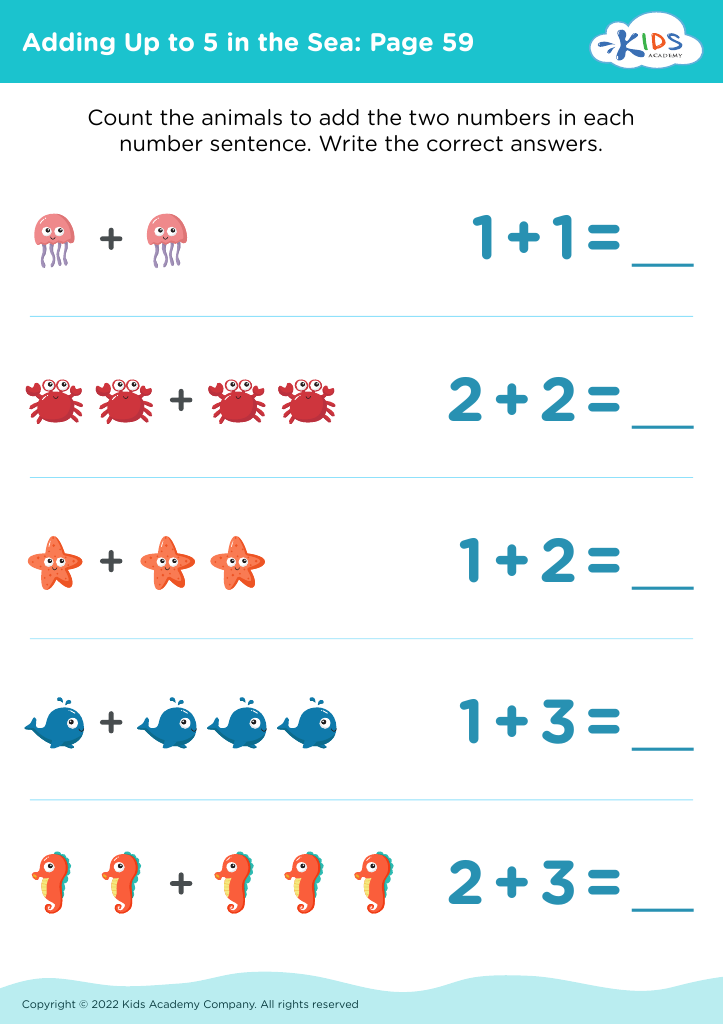
Adding Up to 5 in the Sea: Page 59
Worksheet
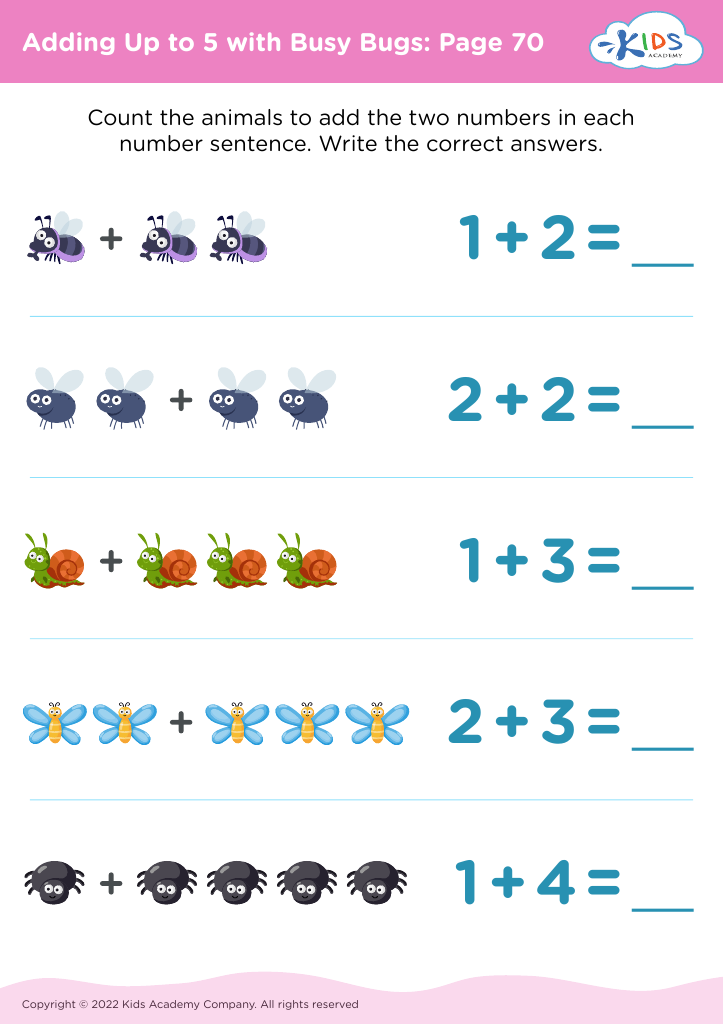
Adding Up to 5 with Busy Bugs: Page 70
Worksheet
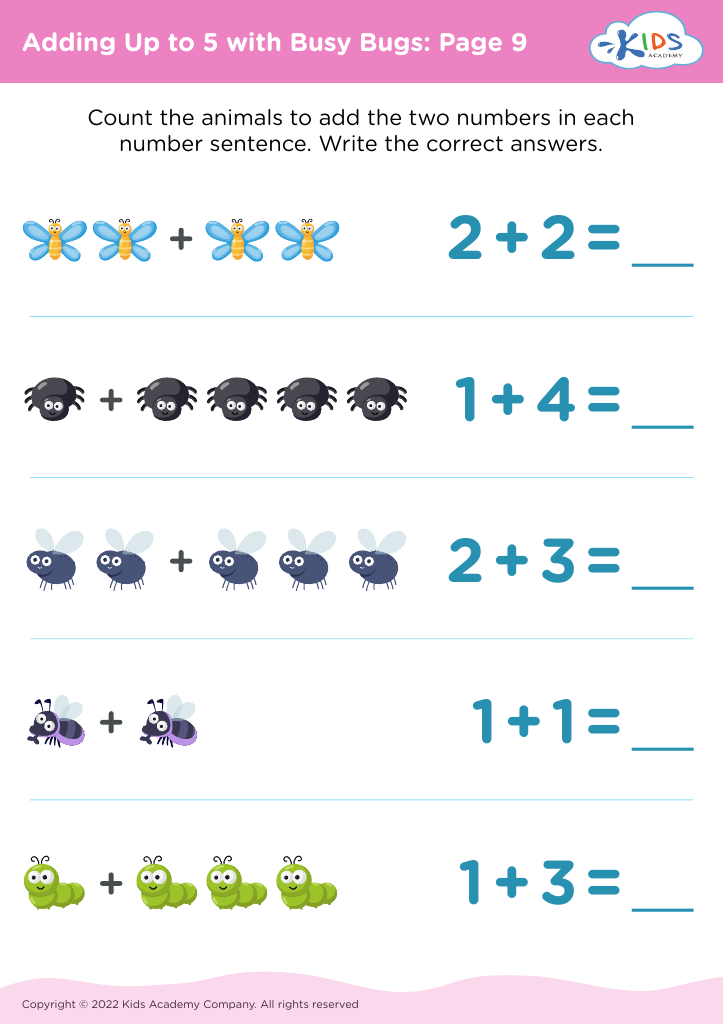
Adding Up to 5 with Busy Bugs: Page 9
Worksheet
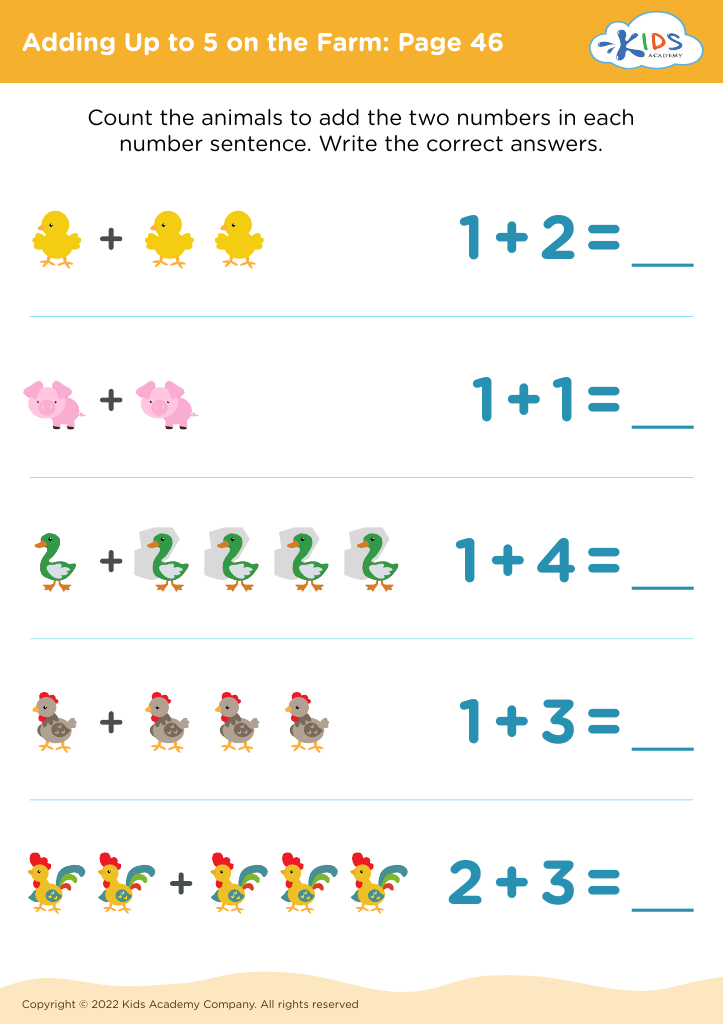
Adding Up to 5 on the Farm: Page 46
Worksheet
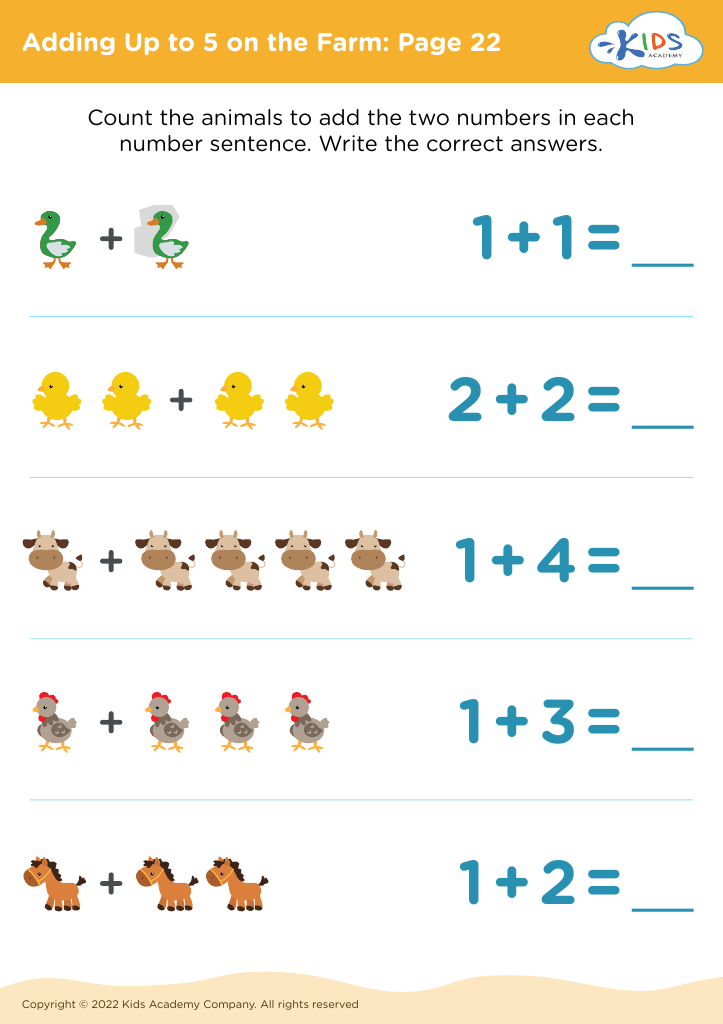
Adding Up to 5 on the Farm: Page 22
Worksheet
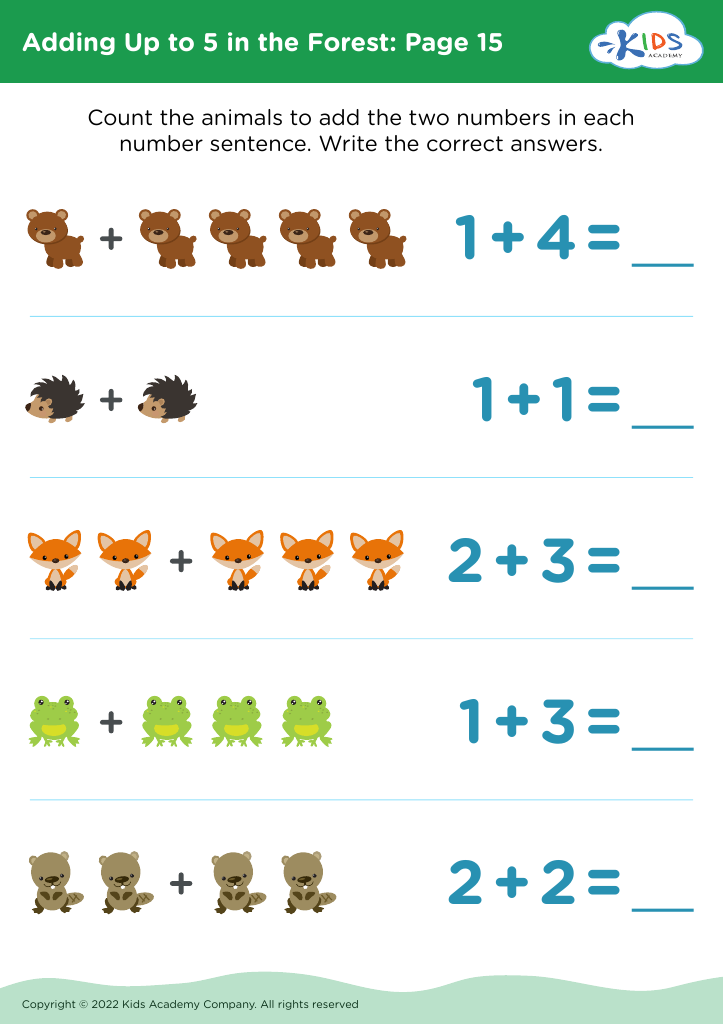
Adding Up to 5 in the Forest: Page 15
Worksheet


Visual learning can be incredibly impactful for young children, especially when they are grasping foundational math concepts such as adding up to 5. For parents and teachers of children ages 4-7, incorporating visual aids in early numeracy is crucial. At this age, children are often concrete thinkers; they understand better when they can see and manipulate objects in their environment.

When they use visual tools like counting blocks, fingers, or charts, children can physically see the concept of addition. For instance, showing that 2 apples plus 3 more apples equal 5 allows them to directly witness the accumulation. This tangible experience encourages better comprehension than abstract numbers alone.

Moreover, visual learning helps in developing problem-solving and critical-thinking skills. Engaging with visual representations can make learning more interactive and enjoyable, thus fostering a positive attitude towards math at an early age. This positive experience is essential for encouraging a lifelong interest in mathematics.

Equipping children with the skills to visualize mathematical concepts can also enhance their ability to tackle more complex problems later on. It's an investment in their mathematical foundation which pays dividends throughout their educational journey. Therefore, parents and teachers should care deeply about leveraging visual learning tools to support their child's or student's understanding of basic math.