Filters

43 filtered results

Clear all filters
Favorites
With answer key
Interactive

43 filtered results

Difficulty Level

Grade


Check out this FREE Trial Lesson on Adding up to 50 for age 4-7!

P

Favorites
With answer key
Interactive
  • 4-7
  • Number Recognition
  • Adding up to 50
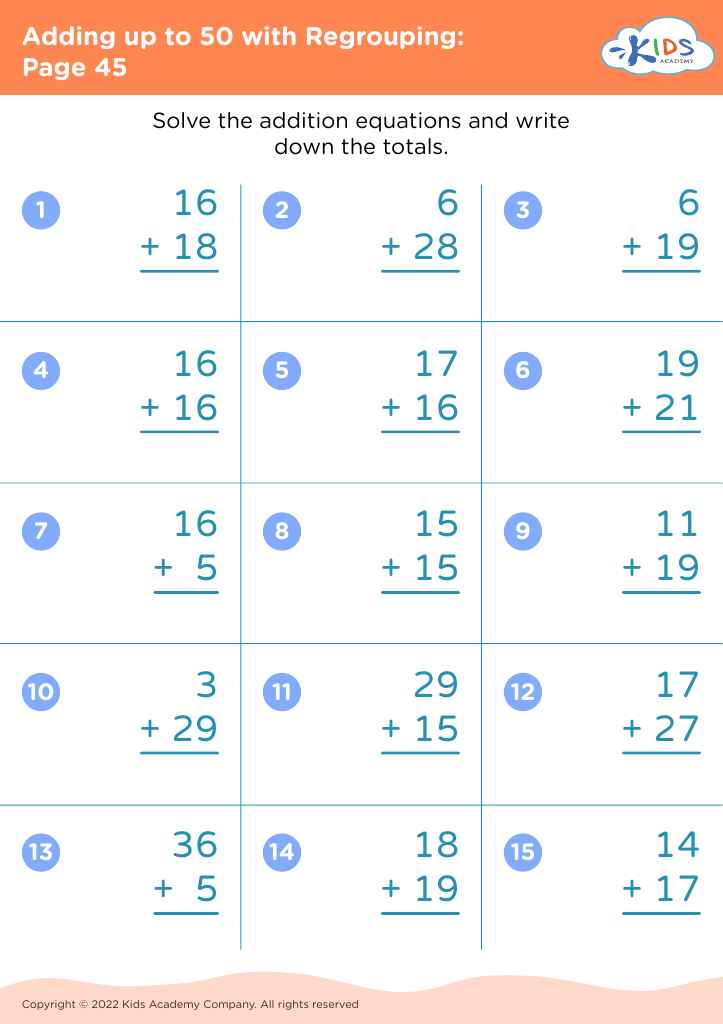
Adding up to 50 with Regrouping: Page 45
Worksheet
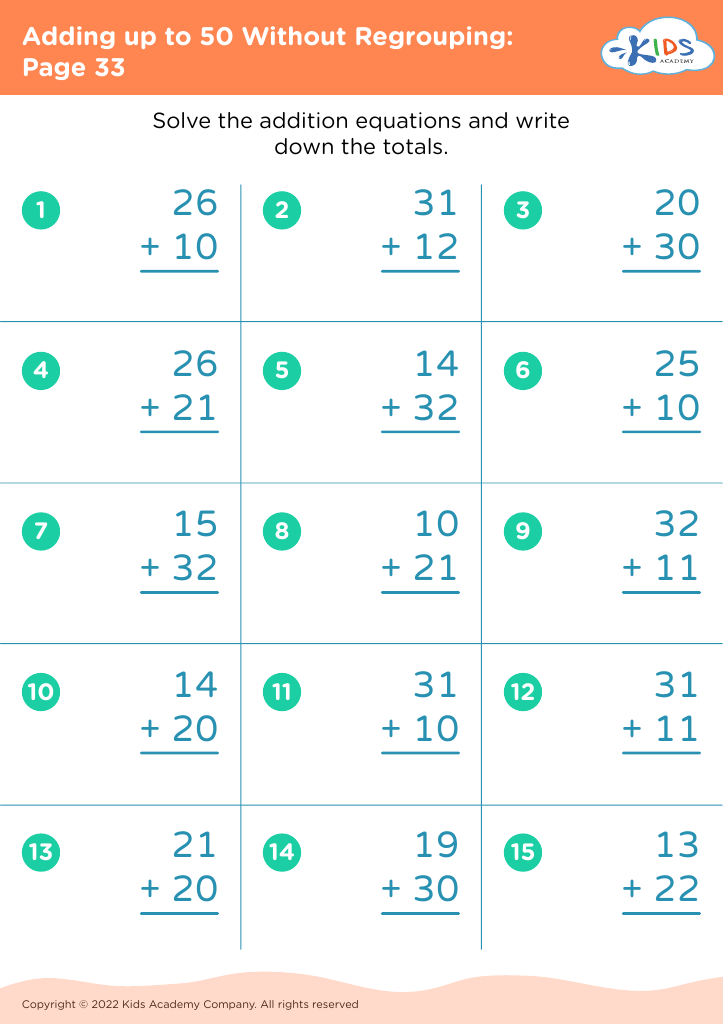
Adding up to 50 Without Regrouping: Page 33
Worksheet
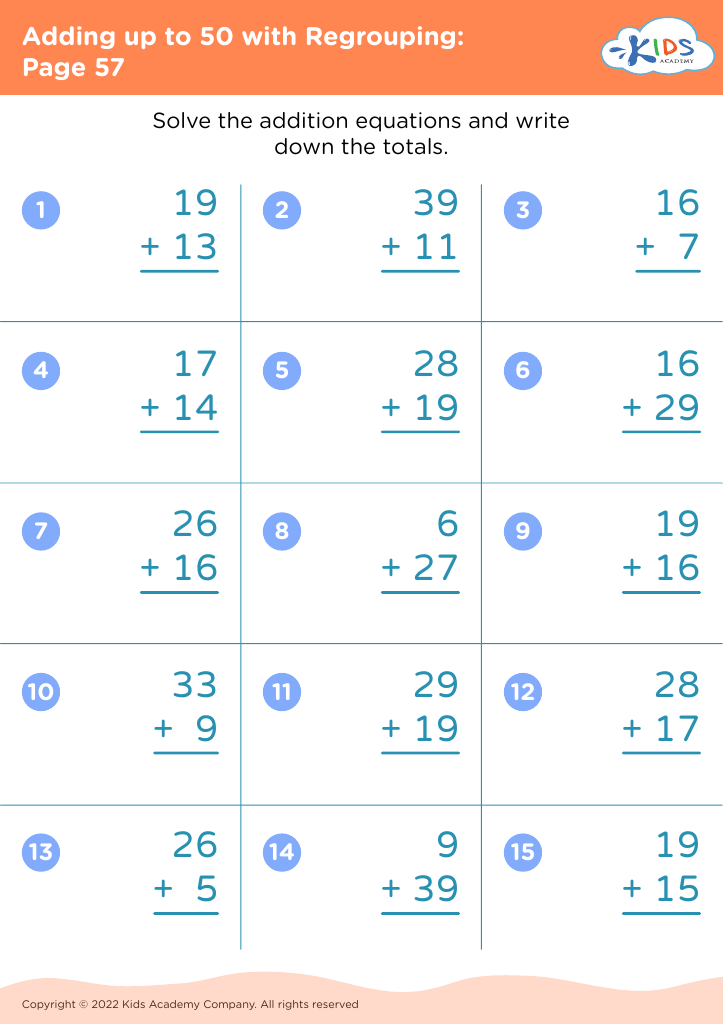
Adding up to 50 with Regrouping: Page 57
Worksheet
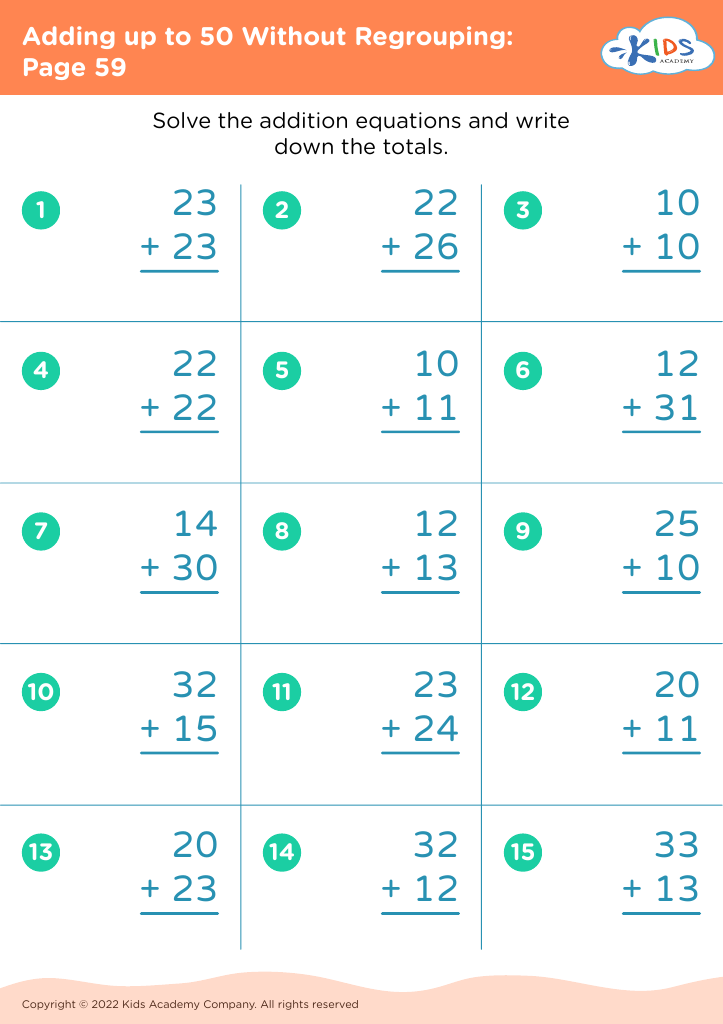
Adding up to 50 Without Regrouping: Page 59
Worksheet
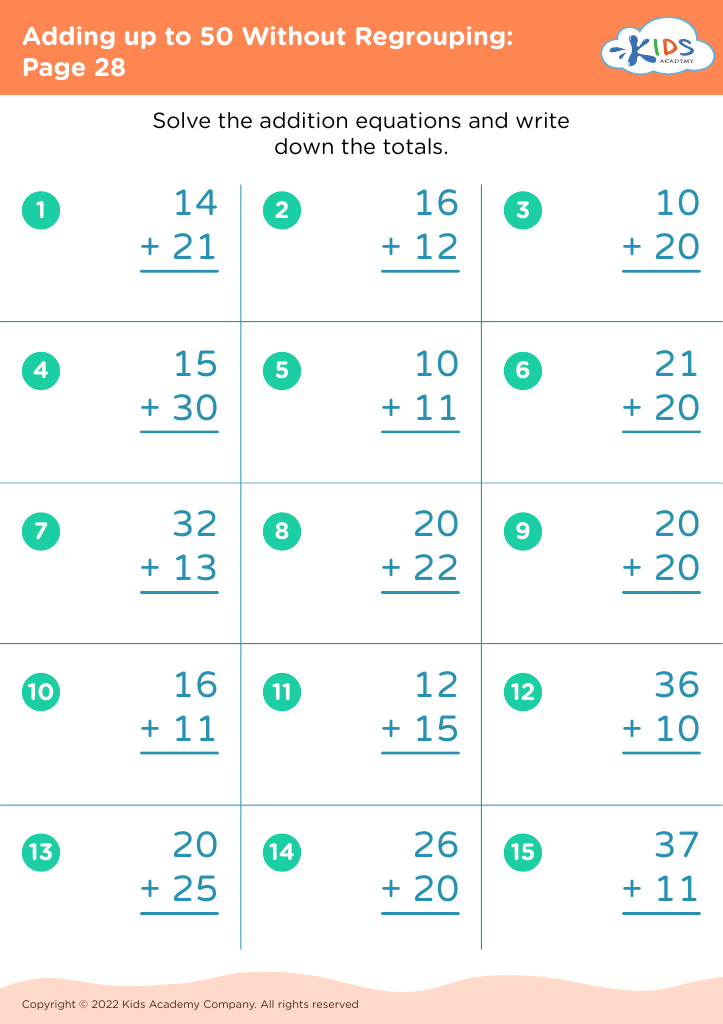
Adding up to 50 Without Regrouping: Page 28
Worksheet
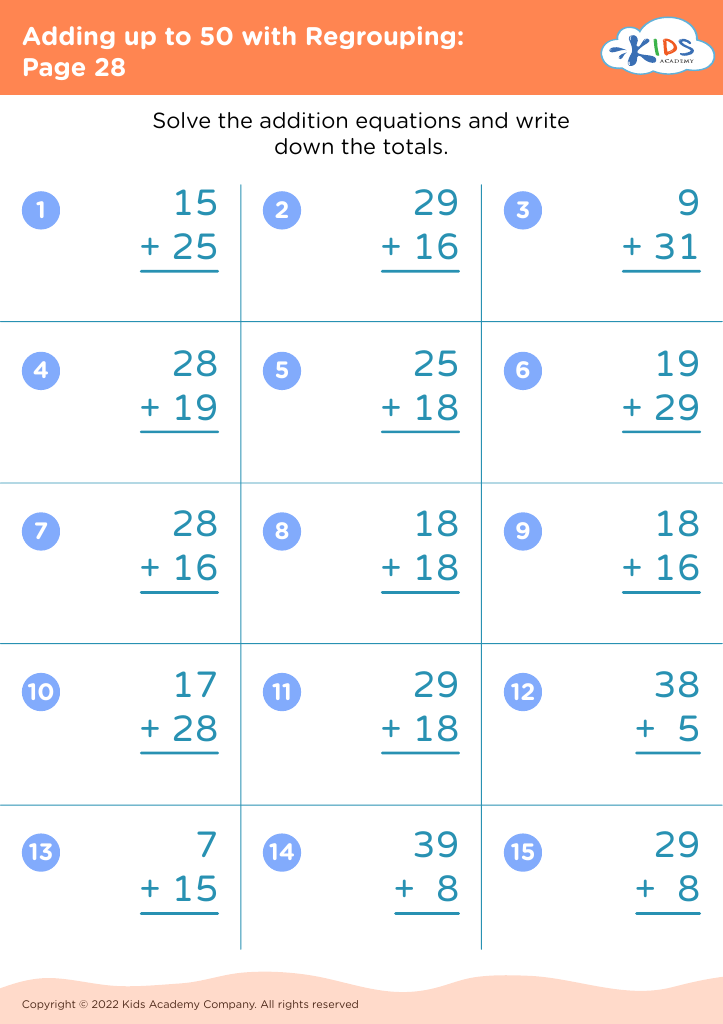
Adding up to 50 with Regrouping: Page 28
Worksheet
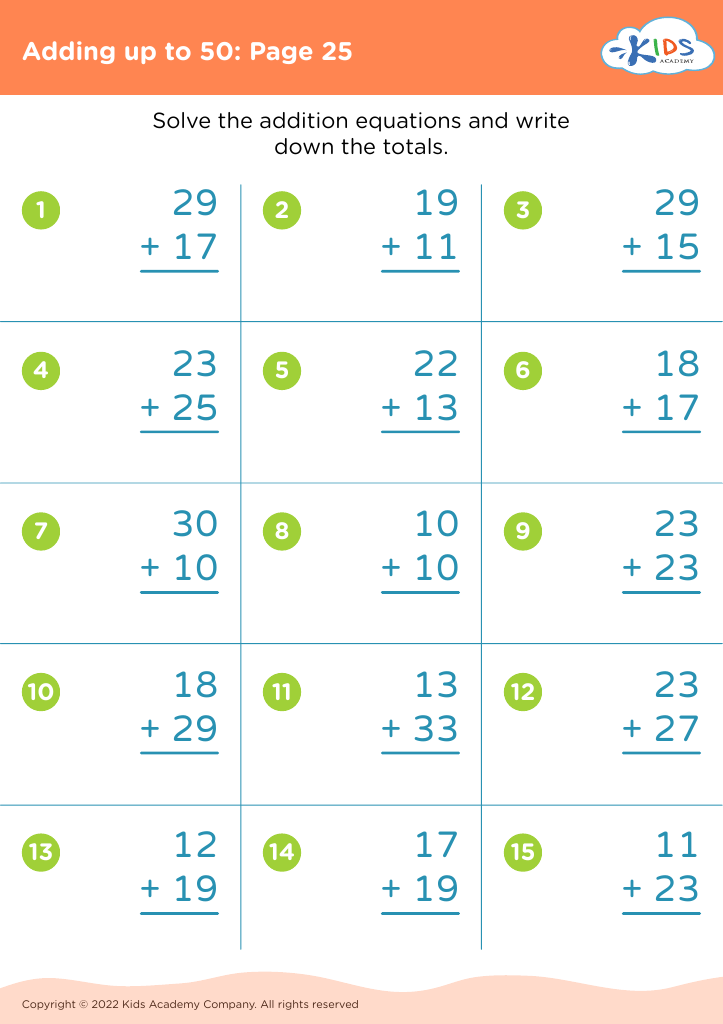
Adding up to 50: Page 25

Adding up to 50: Page 25

Adding up to 50: Page 25
Worksheet
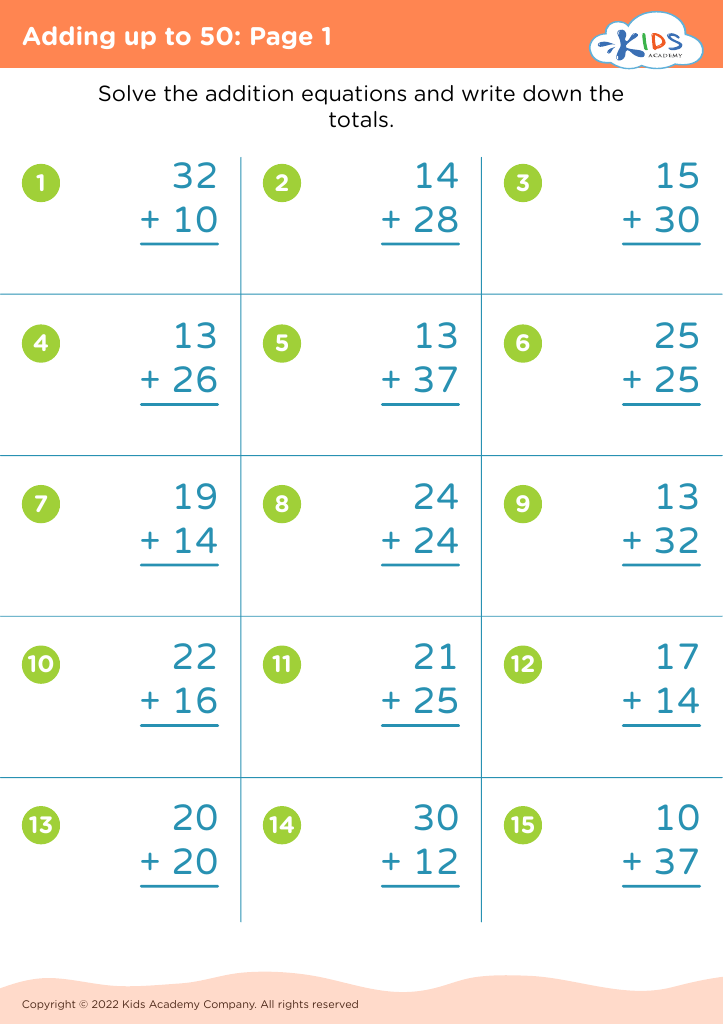
Adding up to 50: Page 1

Adding up to 50: Page 1

Adding up to 50: Page 1
Worksheet
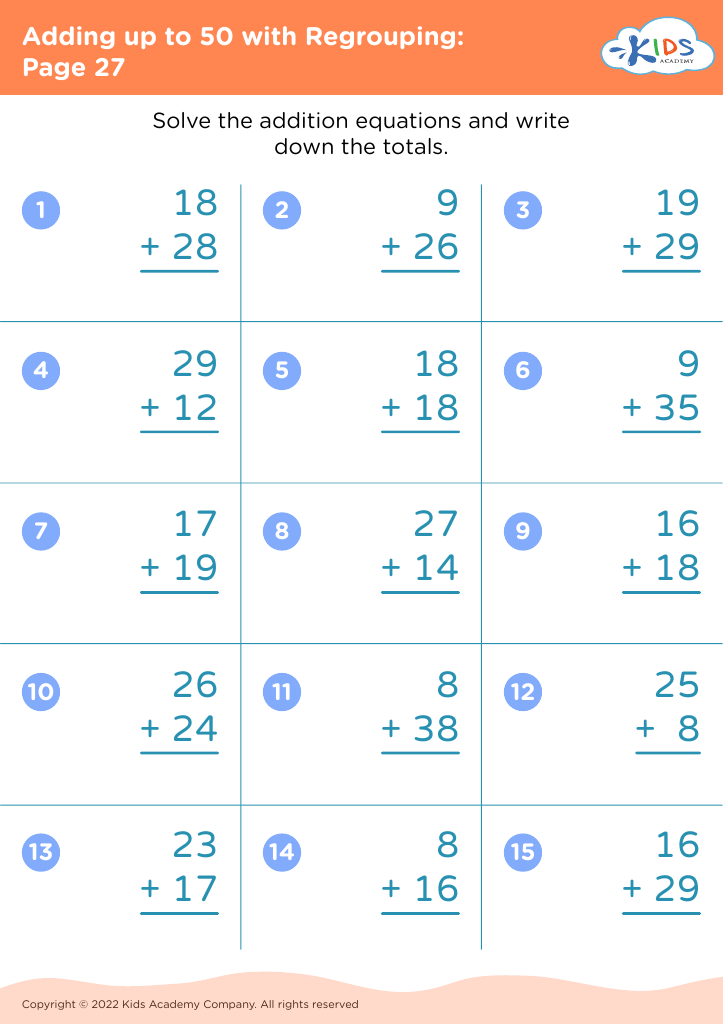
Adding up to 50 with Regrouping: Page 27
Worksheet
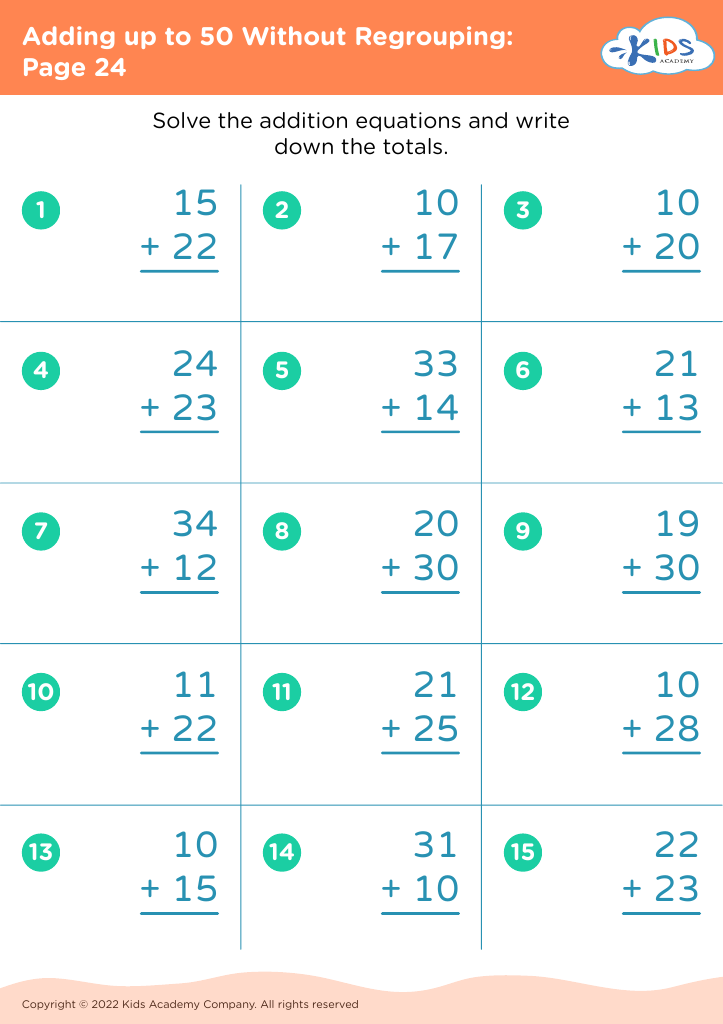
Adding up to 50 Without Regrouping: Page 24
Worksheet
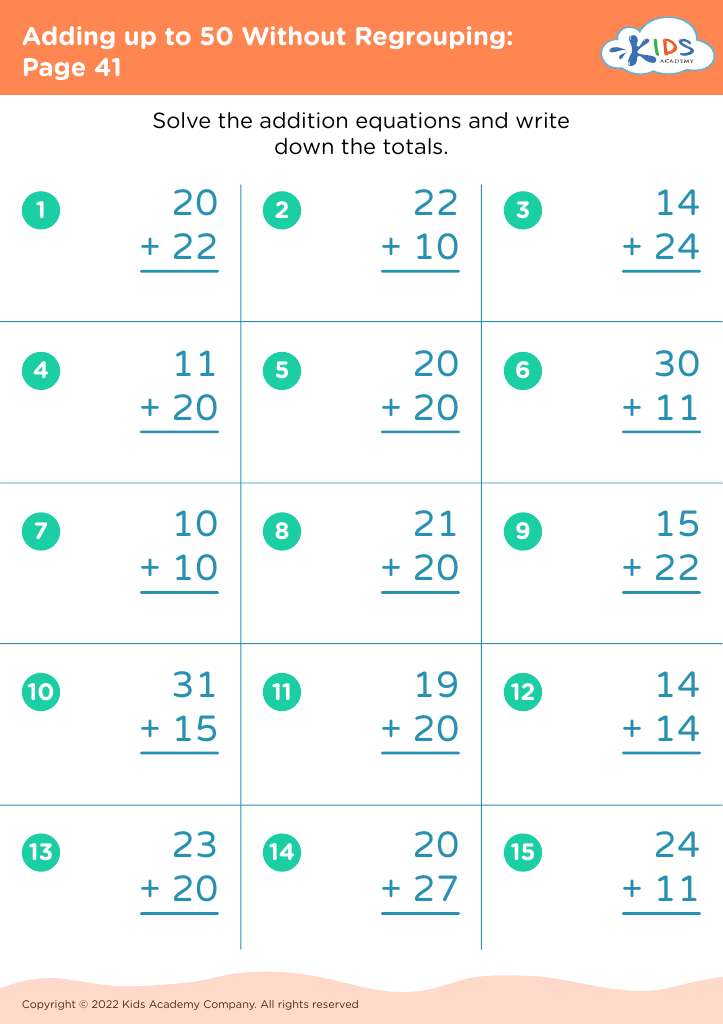
Adding up to 50 Without Regrouping: Page 41
Worksheet
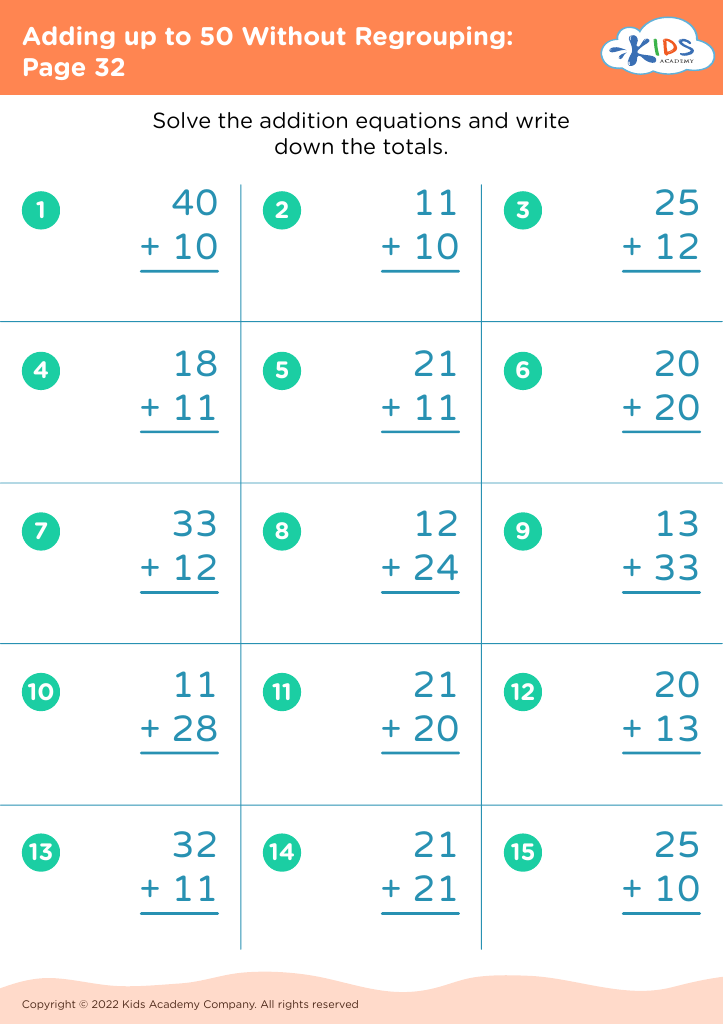
Adding up to 50 Without Regrouping: Page 32
Worksheet
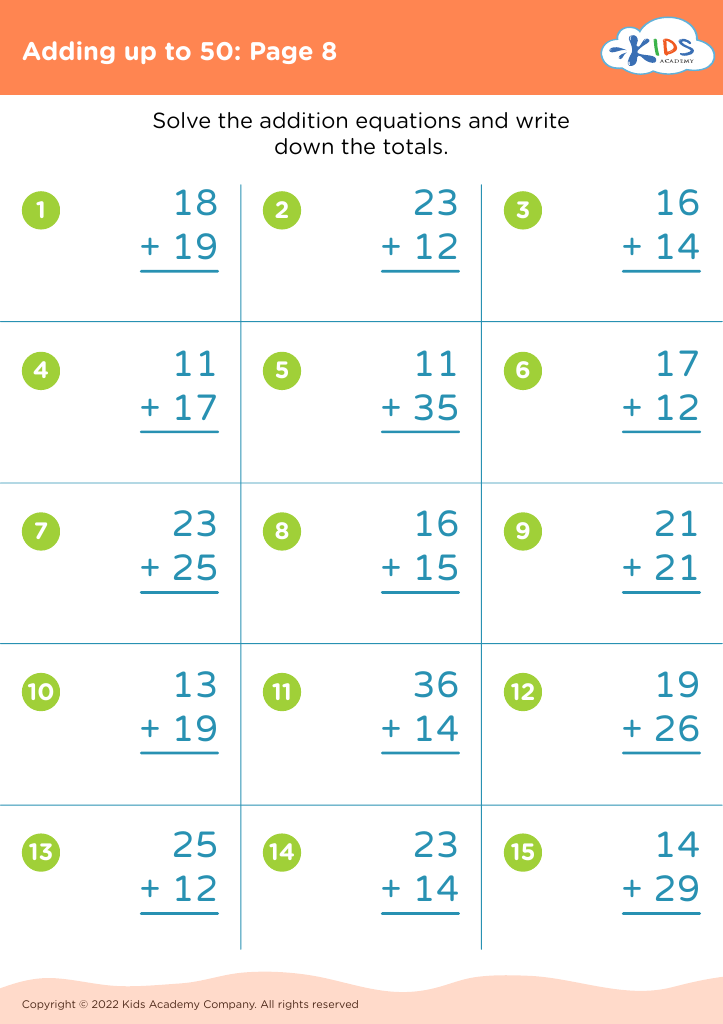
Adding up to 50: Page 8

Adding up to 50: Page 8

Adding up to 50: Page 8
Worksheet
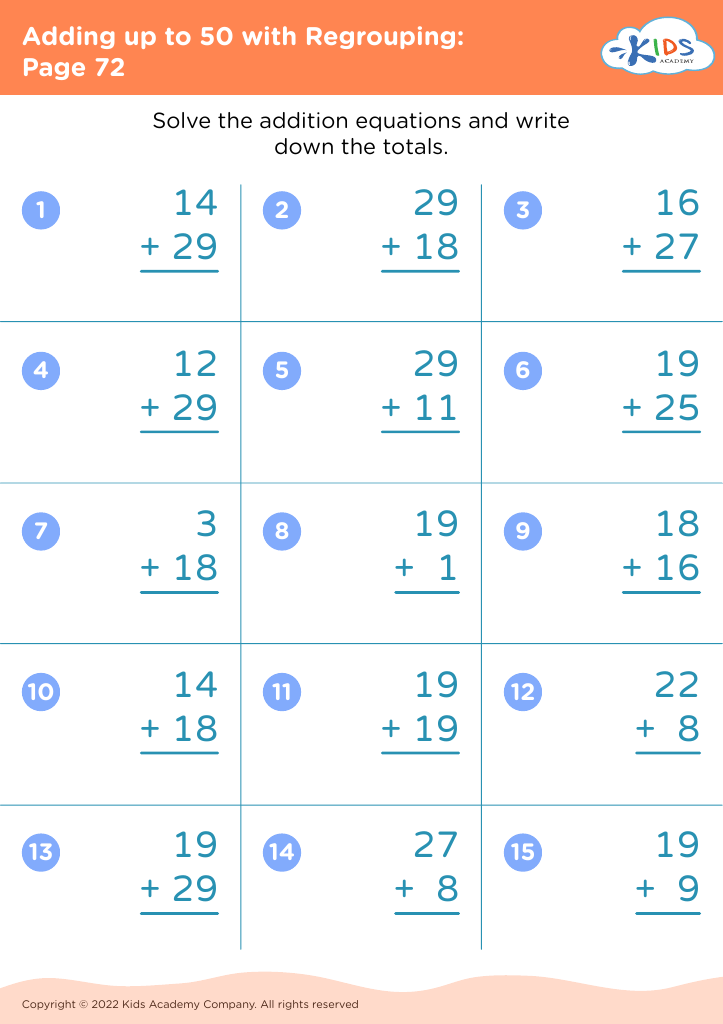
Adding up to 50 with Regrouping: Page 72
Worksheet
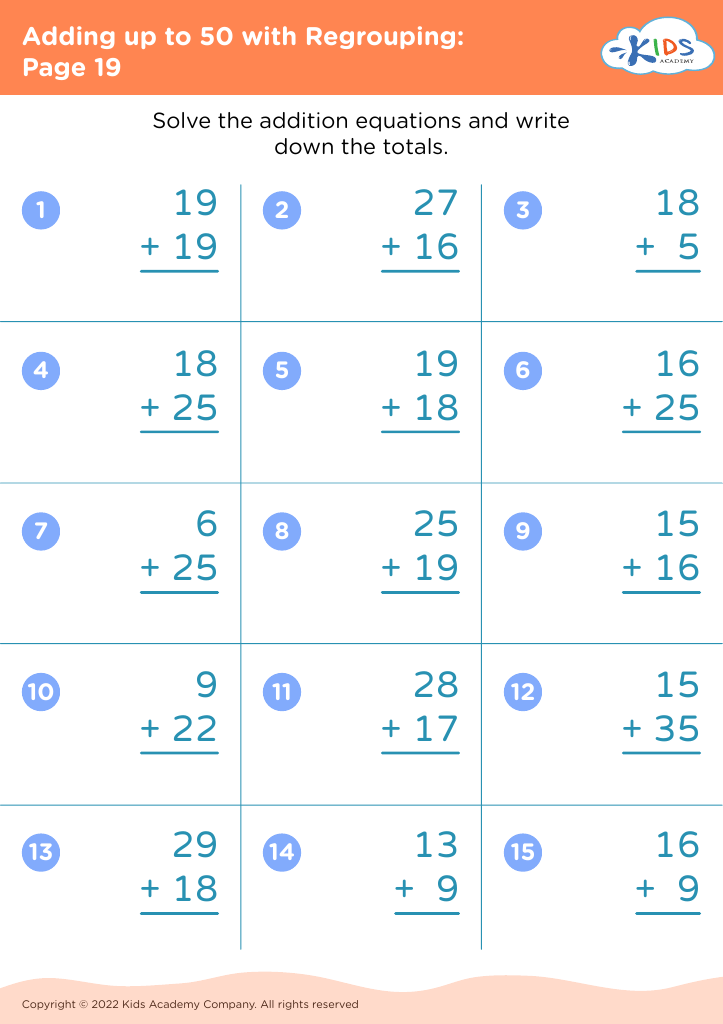
Adding up to 50 with Regrouping: Page 19
Worksheet
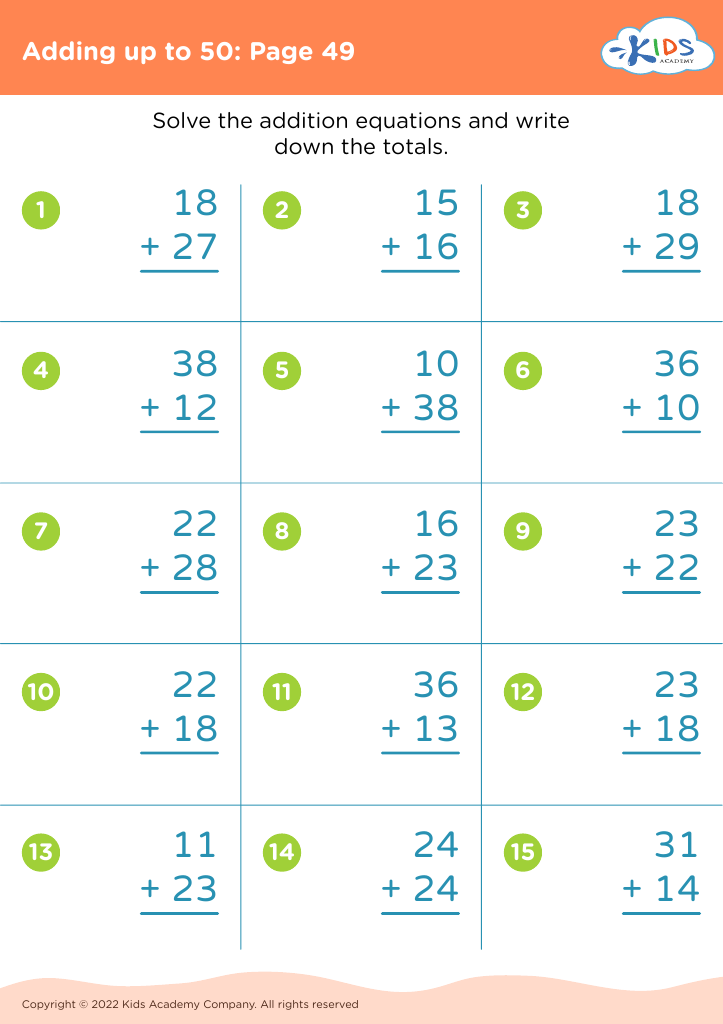
Adding up to 50: Page 49

Adding up to 50: Page 49

Adding up to 50: Page 49
Worksheet
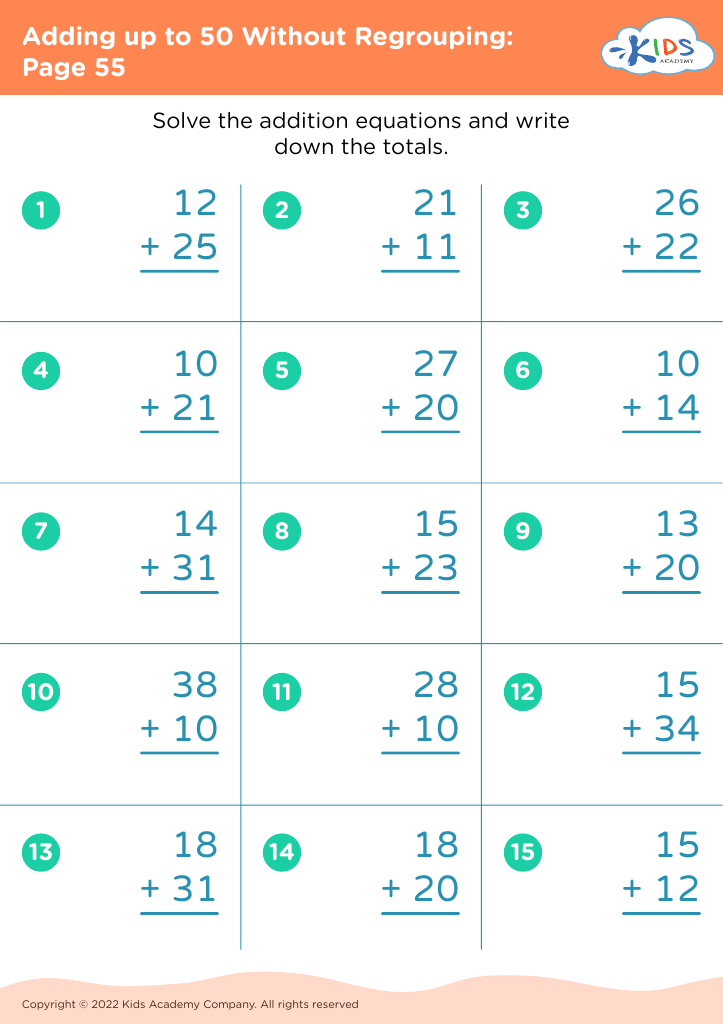
Adding up to 50 Without Regrouping: Page 55
Worksheet
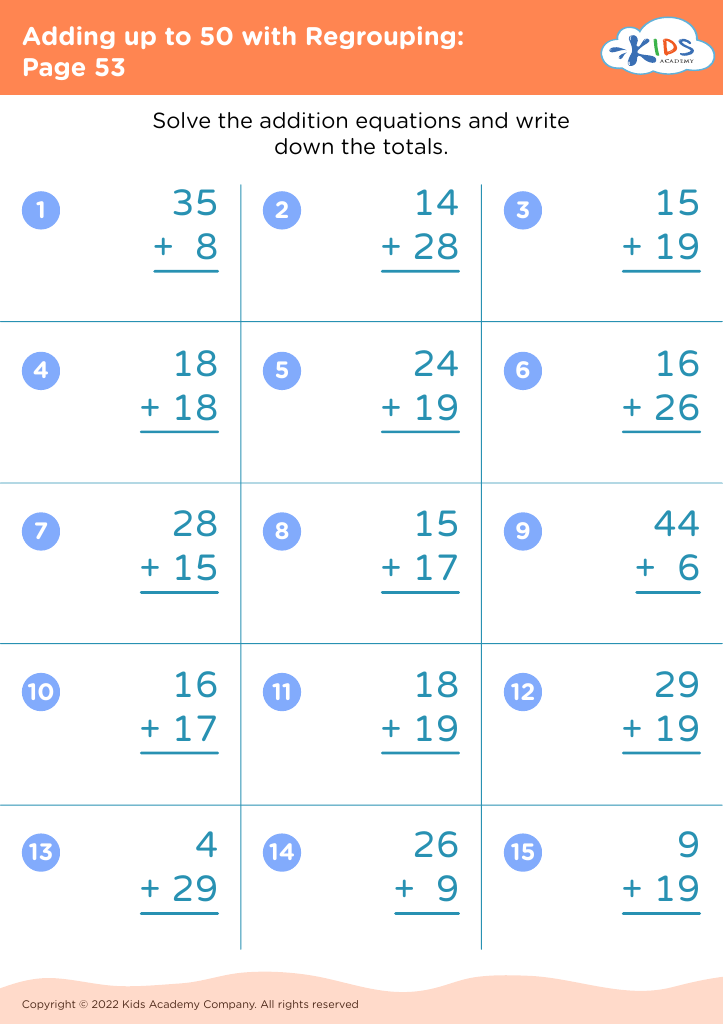
Adding up to 50 with Regrouping: Page 53
Worksheet
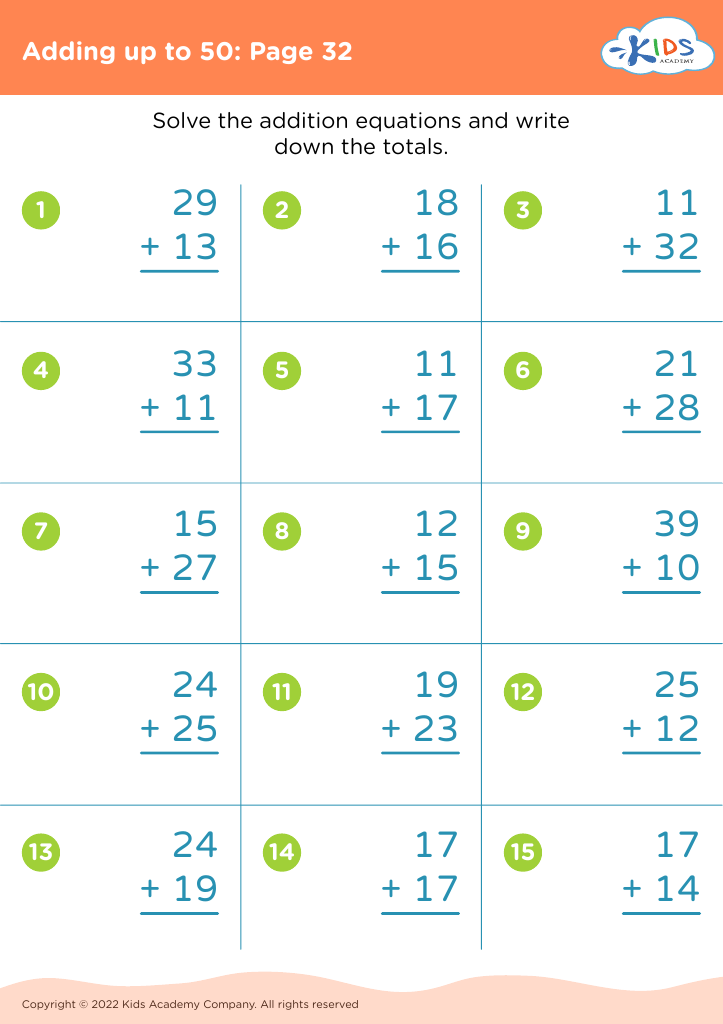
Adding up to 50: Page 32

Adding up to 50: Page 32

Adding up to 50: Page 32
Worksheet


Number recognition is a vital skill for children aged 4-7 as it lays the foundation for effective mathematics learning, particularly when adding up to 50. This stage of development is crucial because it enhances cognitive skills, critical thinking, and problem-solving abilities. Recognizing numbers helps children understand not just quantity but also how numbers relate to one another, forming the basis for addition, subtraction, and more complex arithmetic.

By mastering number recognition, children can develop confidence in their mathematical abilities, which positively influences their overall academic performance. Furthermore, this skill promotes early math literacy, allowing kids to make connections in daily life, such as counting objects, telling time, or managing money.

For parents and teachers, fostering number recognition can create a supportive learning environment. Incorporating fun activities, like games and puzzles, can stimulate engagement and motivation. Since early mathematical skills are linked to long-term academic success, investing time in teaching number recognition is crucial.

Ultimately, ensuring children can recognize and work with numbers up to 50 sets a solid groundwork for future learning, supporting lifelong skills that extend beyond the classroom. Encouraging this endeavor should be a priority for everyone involved in a child's education.