Basic arithmetic skills Addition and Subtraction Word Problems Worksheets for Ages 4-7
3 filtered results
-
From - To
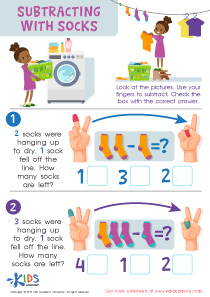
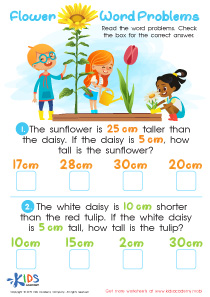
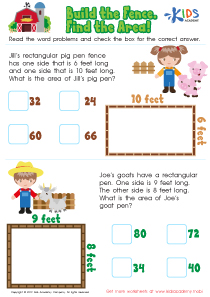
Unlock the potential of young learners with our Basic Arithmetic Skills: Addition and Subtraction Word Problems Worksheets for ages 4-7. Designed to build foundational math skills, these engaging printables introduce children to real-world scenarios where they can apply addition and subtraction. Perfect for classroom or home use, the worksheets use colorful illustrations and relatable problems to make learning fun and interactive. As children solve these thoughtfully crafted exercises, they develop critical thinking and problem-solving abilities, setting a strong foundation for future math success. Start fostering a love for math today with our expertly designed worksheets!
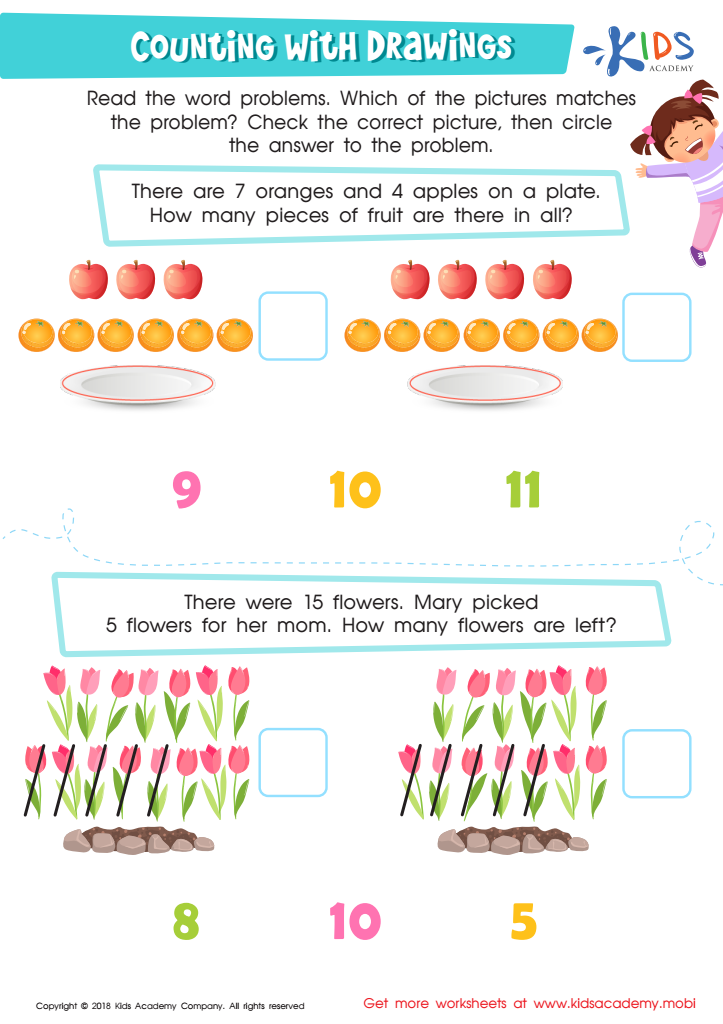
Counting with Drawings: Fruits & Chocolates Worksheet
 Assign to My Students
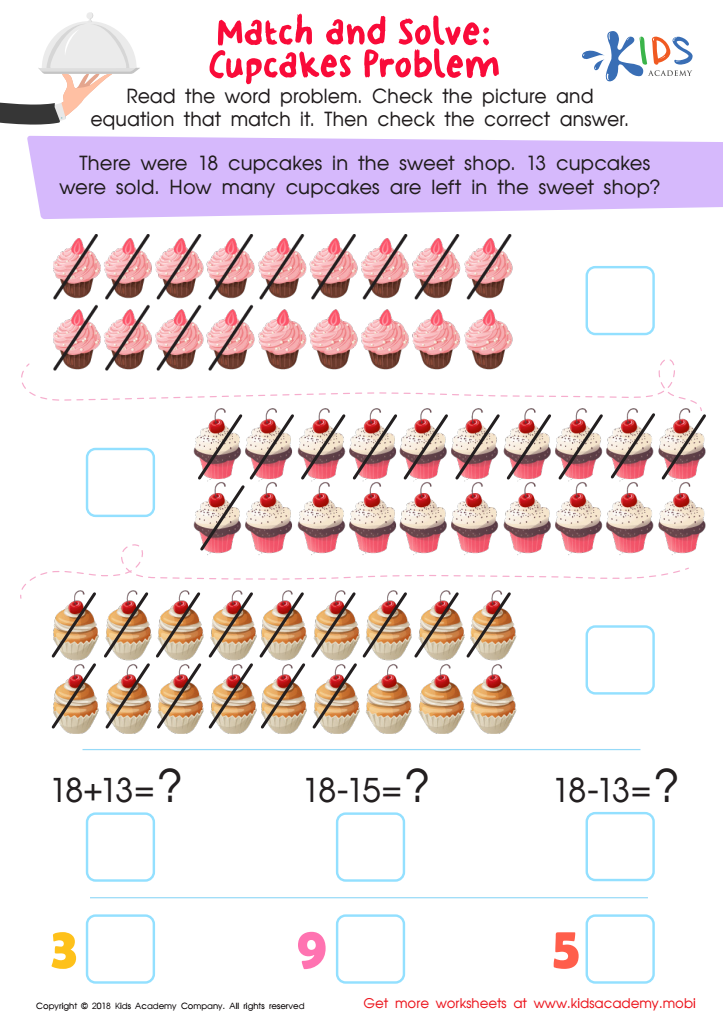
Match and Solve: Cupcakes Problem Worksheet
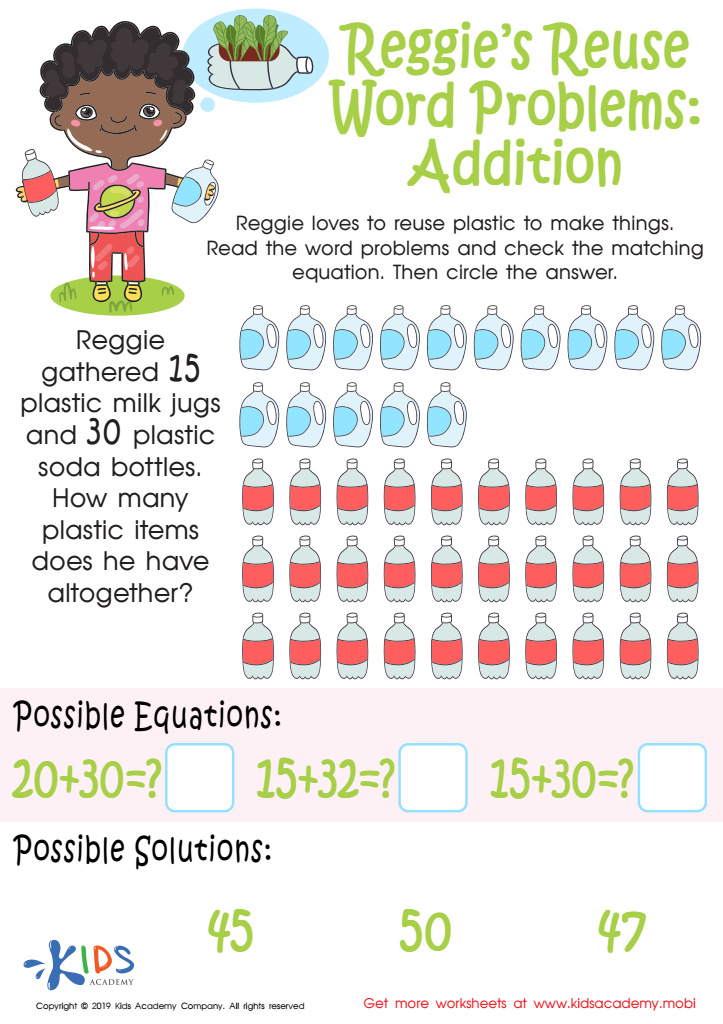
Reggie's Reuse Word Problems: Addition Worksheet








Parents and teachers should place importance on basic arithmetic skills and word problems involving addition and subtraction for several key reasons, especially for children ages 4-7. First and foremost, these fundamental skills are the building blocks of all higher-level math concepts. Developing a strong foundation in basic arithmetic ensures that children are well-equipped to tackle more advanced topics as they progress in their education.
Addition and subtraction word problems enhance a child's ability to apply mathematical concepts to real-life scenarios. This not only reinforces their computation skills but also improves their problem-solving, critical thinking, and comprehension abilities. When children learn to interpret a word problem, identify the mathematical operation needed, and execute a solution, they are practicing essential cognitive skills that are transferable to any subject area.
Moreover, mastering these skills at a young age boosts confidence and fosters a positive attitude toward mathematics. Children who feel competent and successful in their early math experiences are more likely to engage positively with the subject in the future.
Parents and teachers are crucial facilitators in this learning process. Their involvement and encouragement can make arithmetic a fun, engaging, and stress-free experience for young learners. Teachers utilize structured curriculum and activities, while parents can introduce everyday contexts to practice these skills, such as counting groceries or measuring ingredients. By supporting basic arithmetic learning through varied methods, children receive the consistent practice they need for long-term academic success.