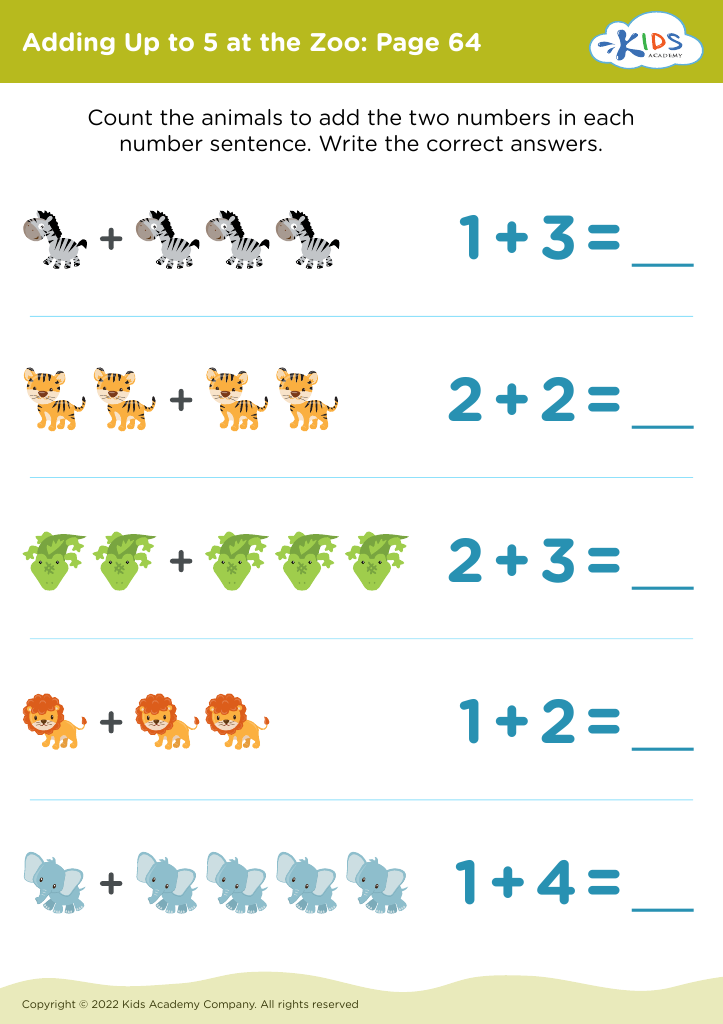
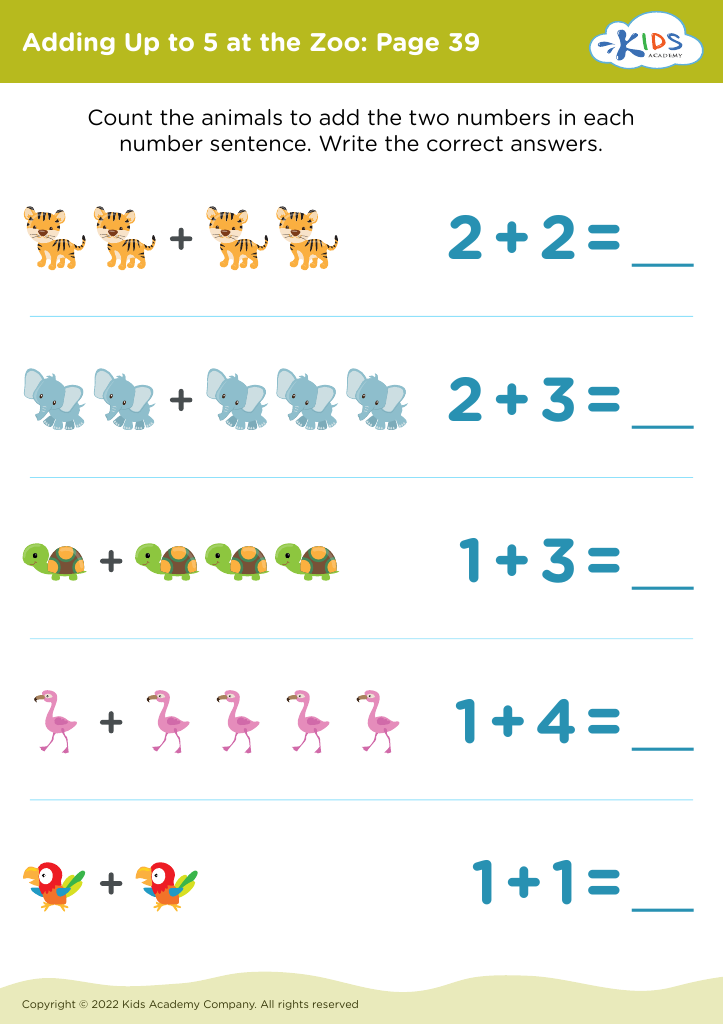
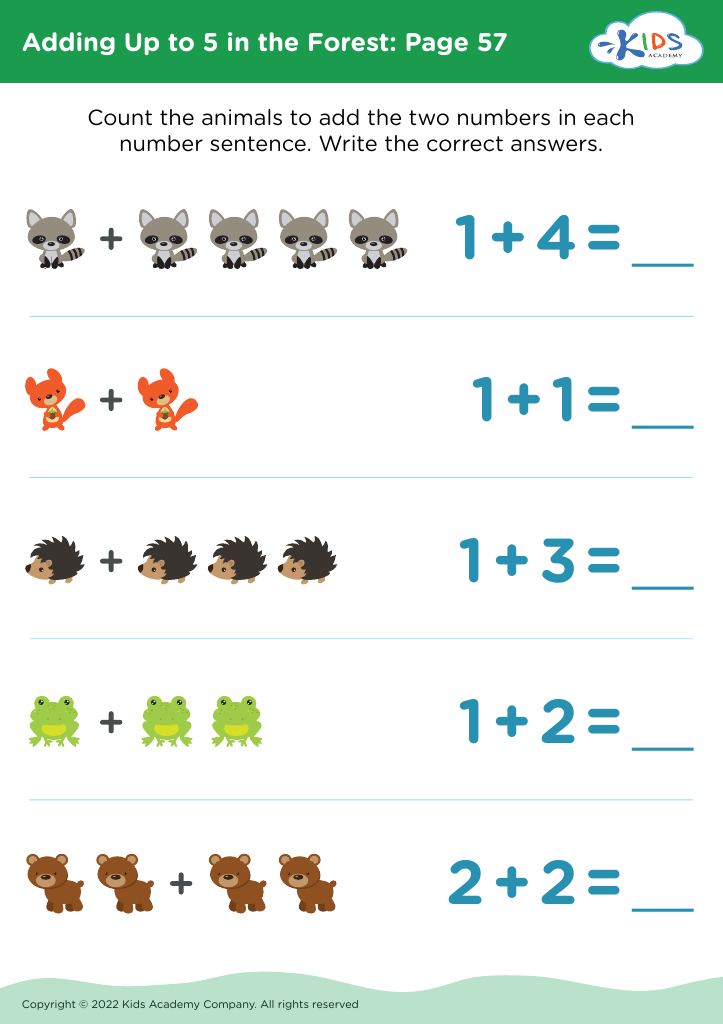








Animal recognition combined with addition and subtraction for ages 4-7 serves as a powerful educational tool that shapes foundational skills in young learners. Parents and teachers should care about this integrative approach for several compelling reasons.
Firstly, the development of mathematical skills in early childhood is critical for later academic success. Children who grasp basic arithmetic at an early age tend to excel in advanced math and other subjects as they progress through school. By incorporating addition and subtraction into animal recognition, children engage in a multisensory learning experience that can make abstract math concepts more tangible and relatable.
Secondly, integrating animal recognition captivates children’s natural curiosity. Animals are universally fascinating to young children, and their inclusion in lessons keeps students engaged and motivated. This enthusiasm for animals fosters a positive learning environment where children are more likely to participate actively and enthusiastically.
Furthermore, this multidisciplinary approach promotes the development of cognitive skills such as memory, attention, and problem-solving. Recognizing different animals and understanding their attributes involves categorization and pattern recognition, key cognitive processes that support mathematical reasoning.
In summary, blending animal recognition with basic arithmetic not only makes learning more enjoyable but also builds essential early math skills and cognitive abilities. This holistic approach aids in developing well-rounded, enthusiastic learners who are better prepared for future academic challenges.








