Boost your child’s math skills with our Basic Addition Practice Worksheets, perfect for ages 4-7! Designed to make learning fun and engaging, these worksheets provide essential practice in addition and subtraction. Tailored to young learners, each worksheet simplifies math concepts using colorful illustrations and easy-to-follow exercises. Developed by experts, these printables help build a strong foundation in basic arithmetic while enhancing problem-solving abilities. Ideal for at-home learning or classroom use, our worksheets support early math success and build confidence. Transform math practice into an exciting adventure with our top-quality resources. Start practicing today!
Check out this FREE Trial Lesson on Addition & Subtraction for age 4-7!

Enrichment

Favorites
With answer key
Interactive
  • 4-7
  • Basic addition practice
  • Addition & Subtraction
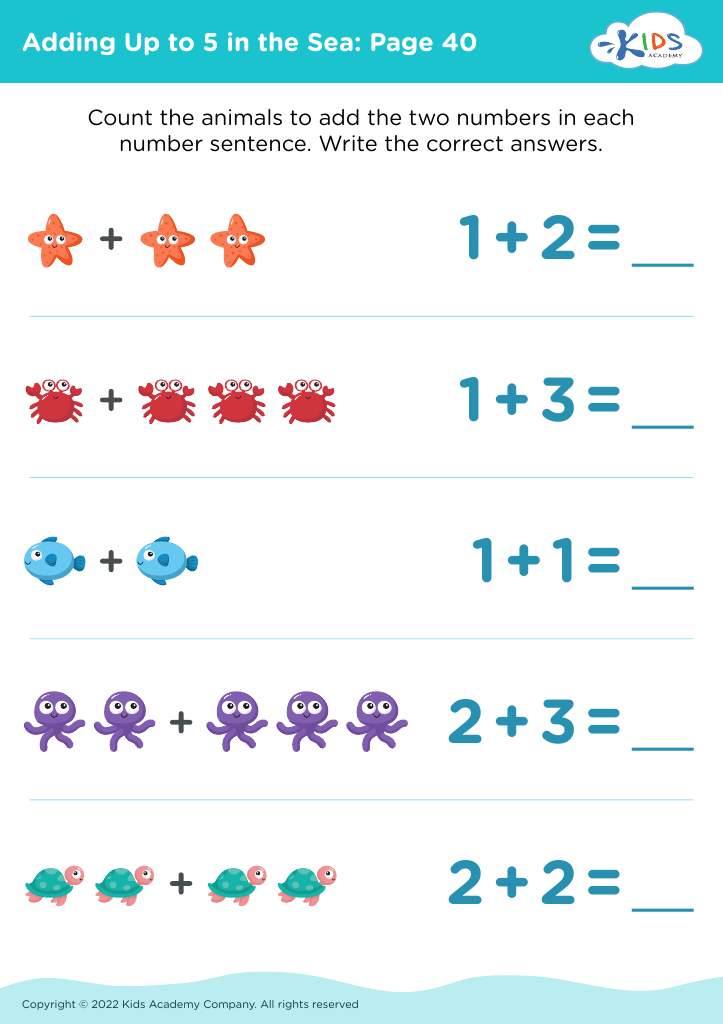
Adding Up to 5 in the Sea: Page 40
Worksheet
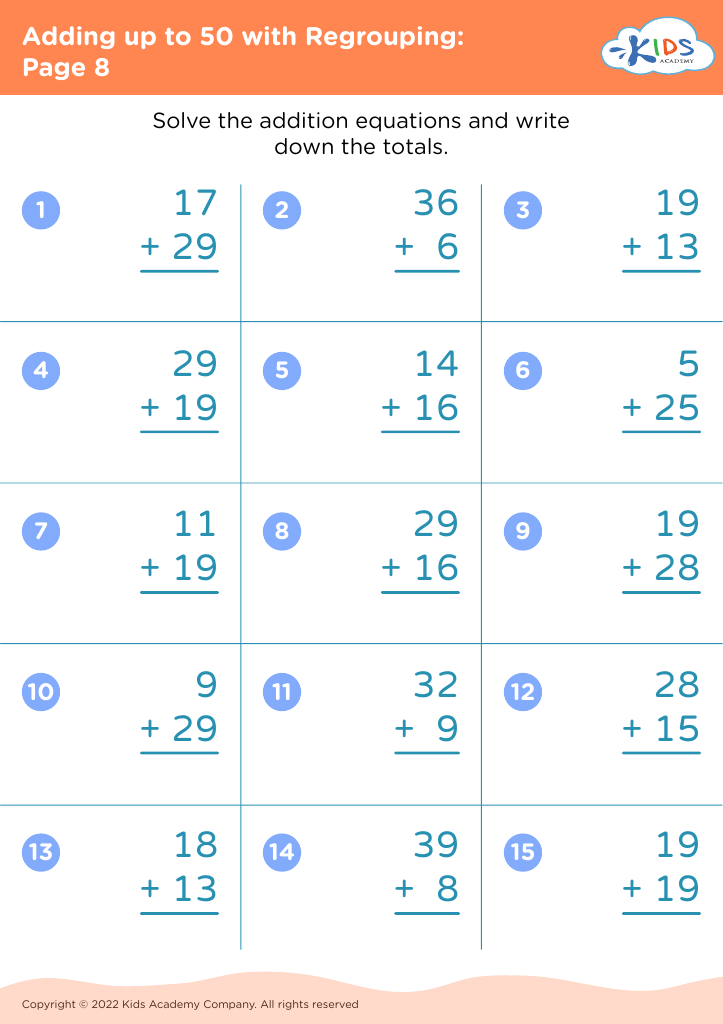
Adding up to 50 with Regrouping: Page 8
Worksheet
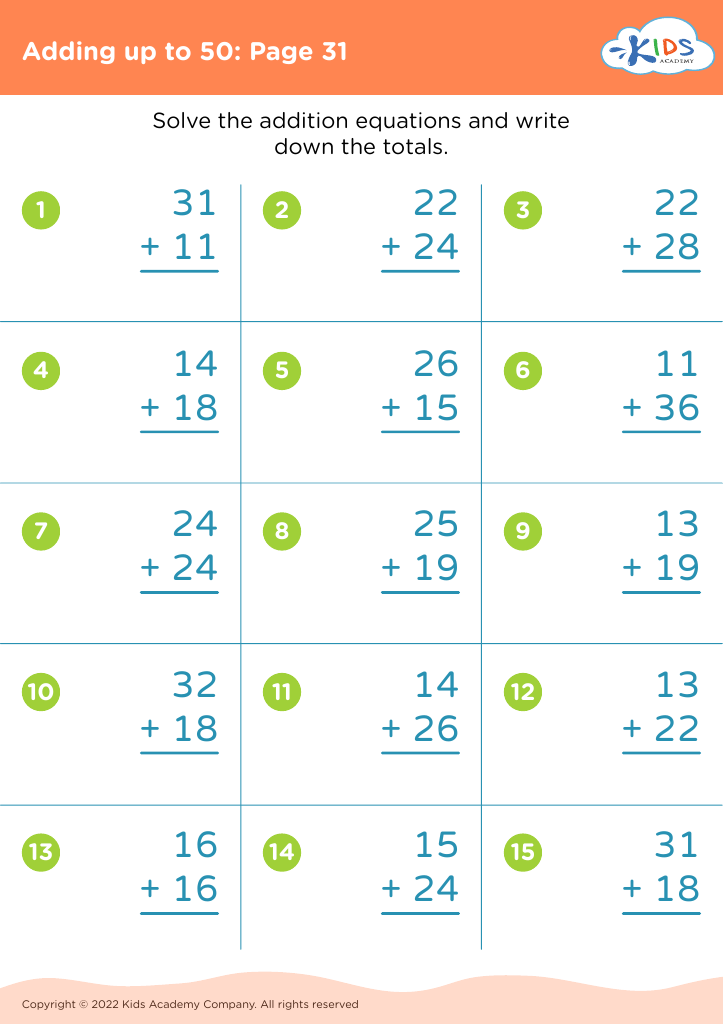
Adding up to 50: Page 31

Adding up to 50: Page 31

Adding up to 50: Page 31
Worksheet
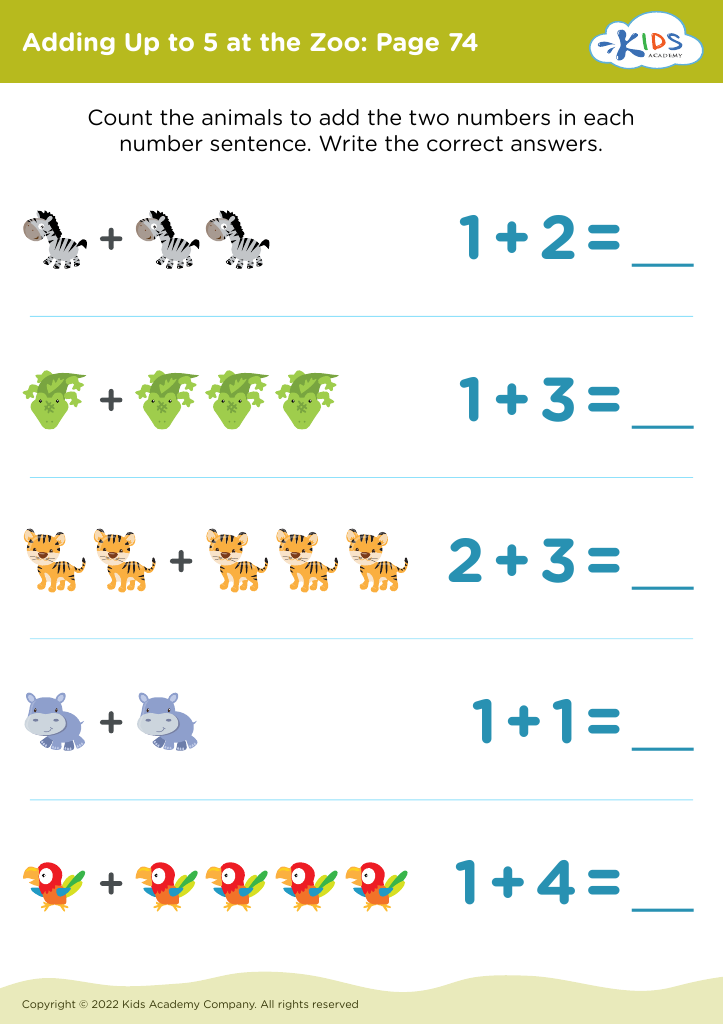
Adding Up to 5 at the Zoo: Page 74
Worksheet
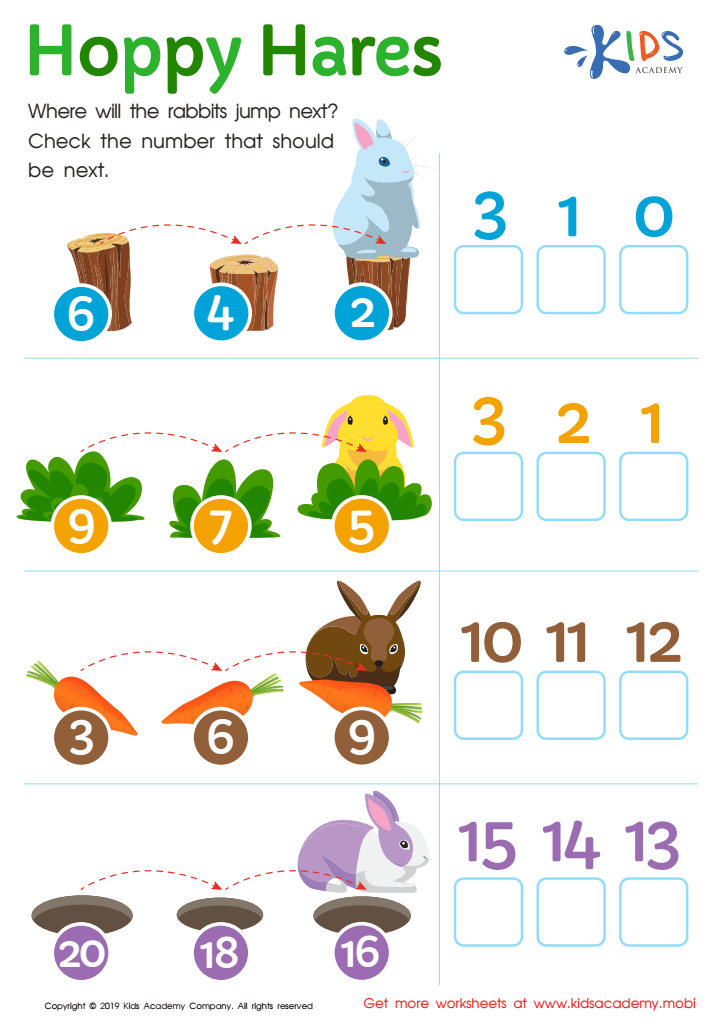
Hoppy Hares Worksheet

Hoppy Hares Worksheet

Ask your kids if they can identify the rabbits in the picture, then help them solve the math problems. The rabbits need to hop from place to place, so look at the numbers and help your kids figure out the next one. These cute and friendly little animals make great pets. Have fun solving this worksheet together!
Hoppy Hares Worksheet
Worksheet
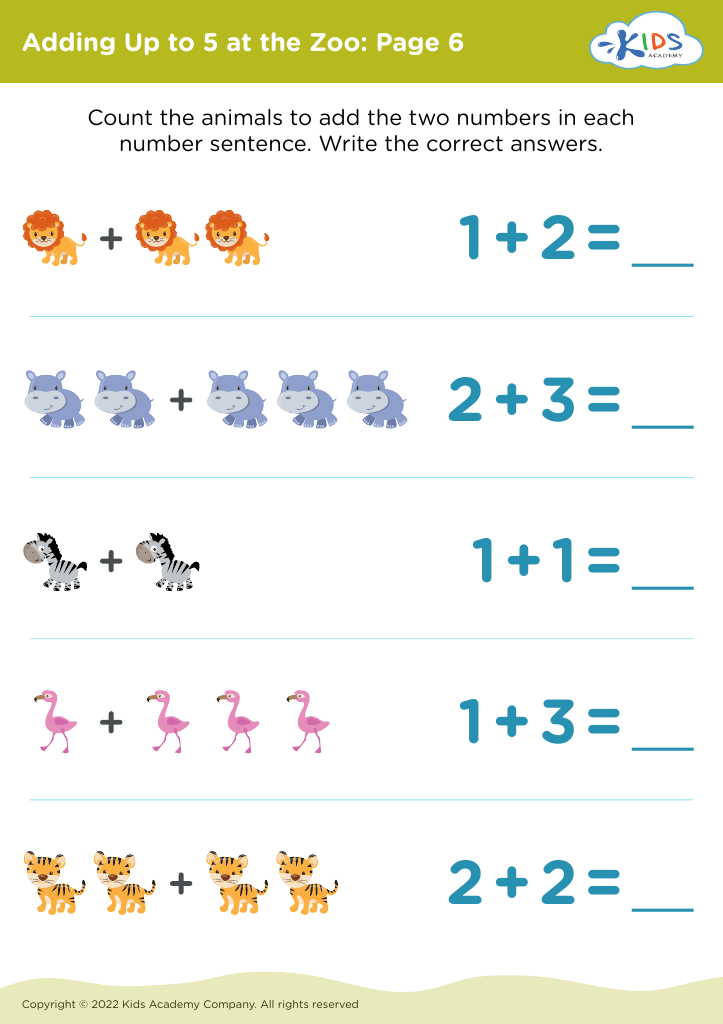
Adding Up to 5 at the Zoo: Page 6

Adding Up to 5 at the Zoo: Page 6

Adding Up to 5 at the Zoo: Page 6
Worksheet
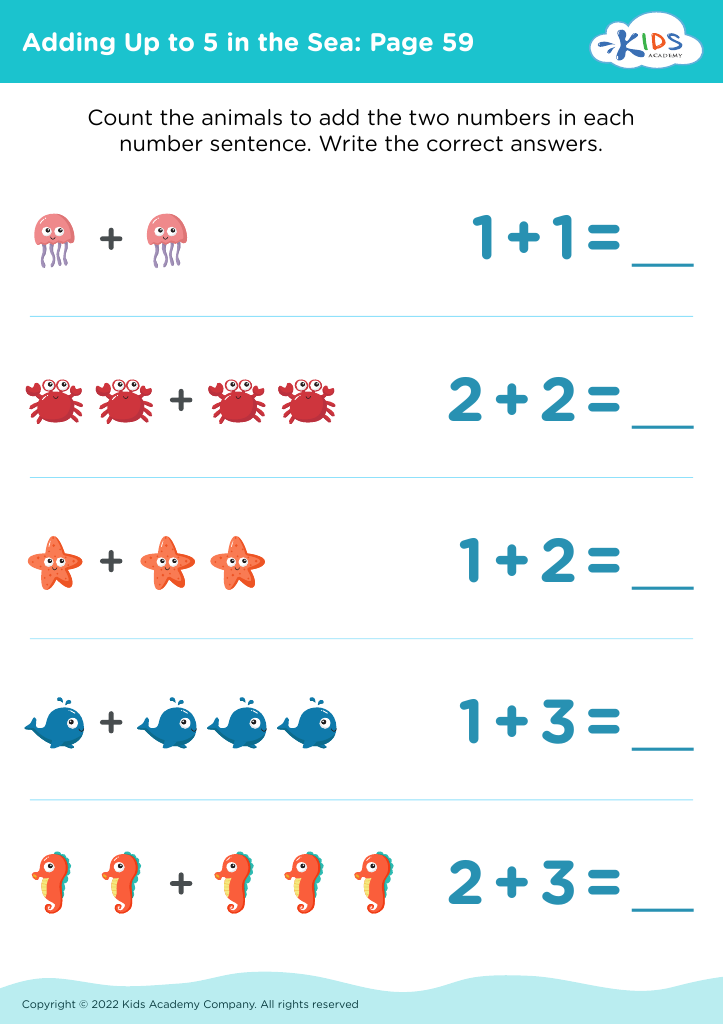
Adding Up to 5 in the Sea: Page 59
Worksheet
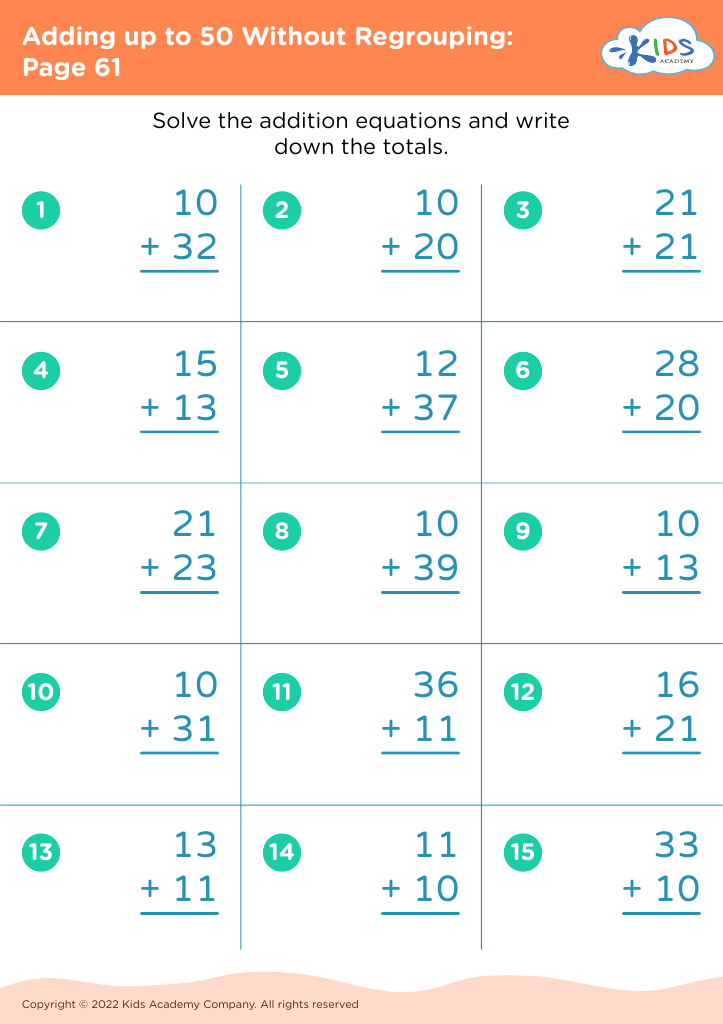
Adding up to 50 Without Regrouping: Page 61
Worksheet
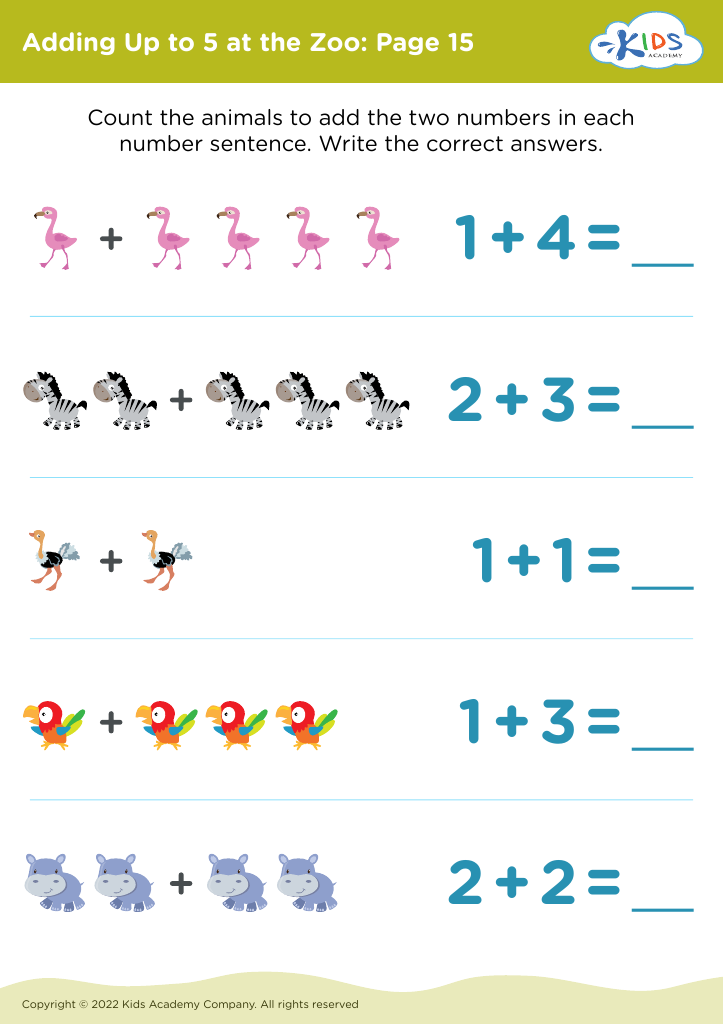
Adding Up to 5 at the Zoo: Page 15
Worksheet
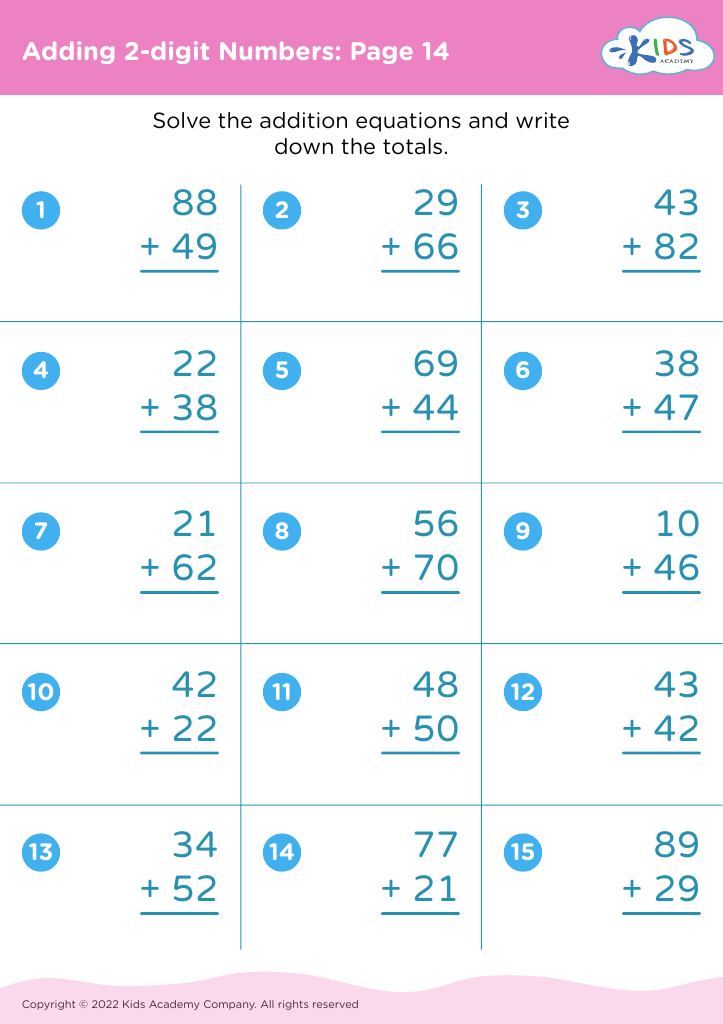
Adding 2-digit Numbers: Page 14

Adding 2-digit Numbers: Page 14

Adding 2-digit Numbers: Page 14
Worksheet
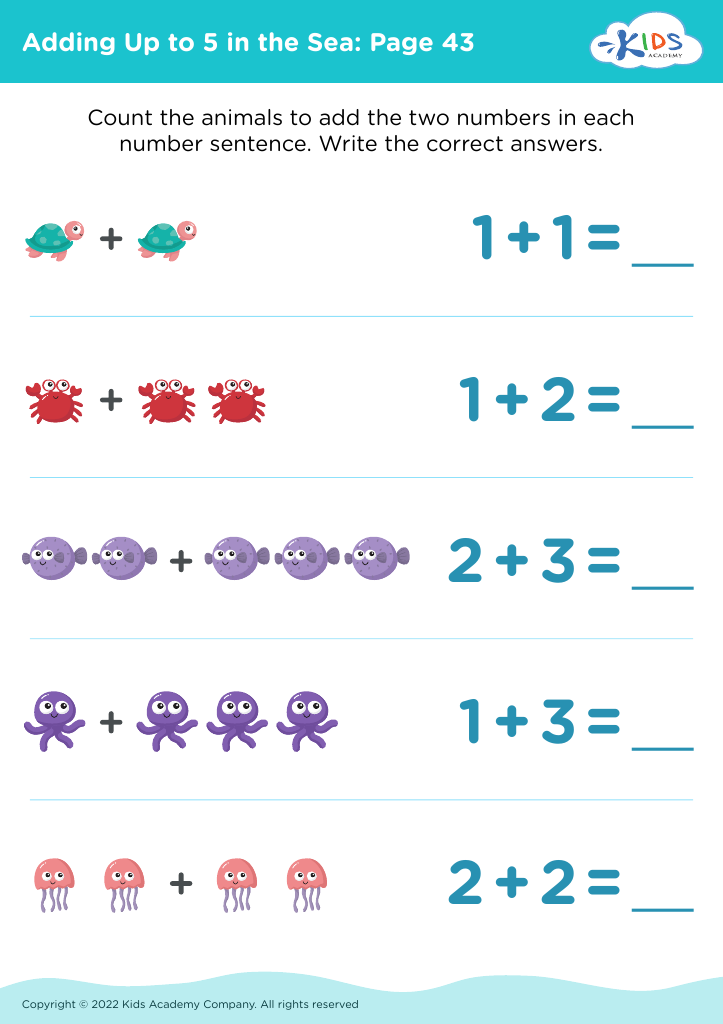
Adding Up to 5 in the Sea: Page 43
Worksheet
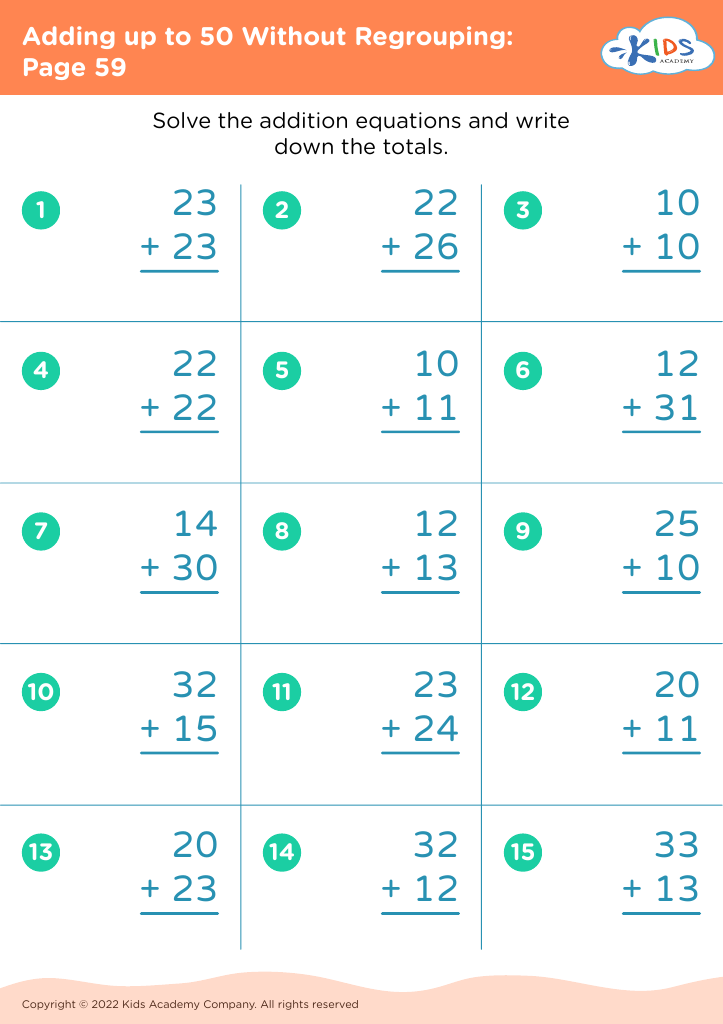
Adding up to 50 Without Regrouping: Page 59
Worksheet
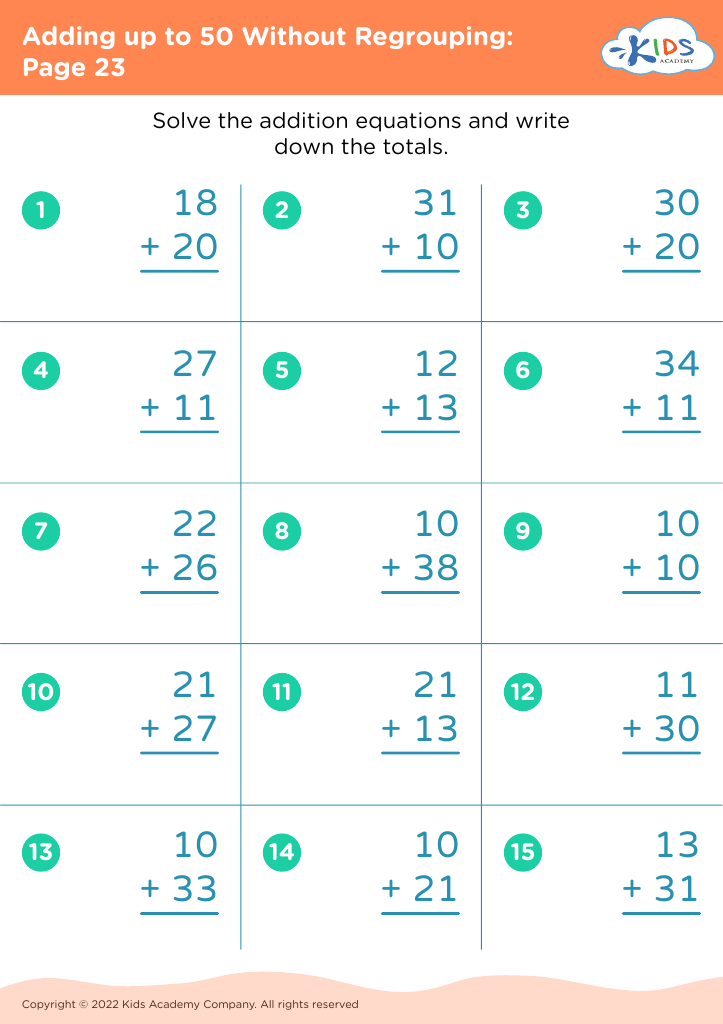
Adding up to 50 Without Regrouping: Page 23
Worksheet
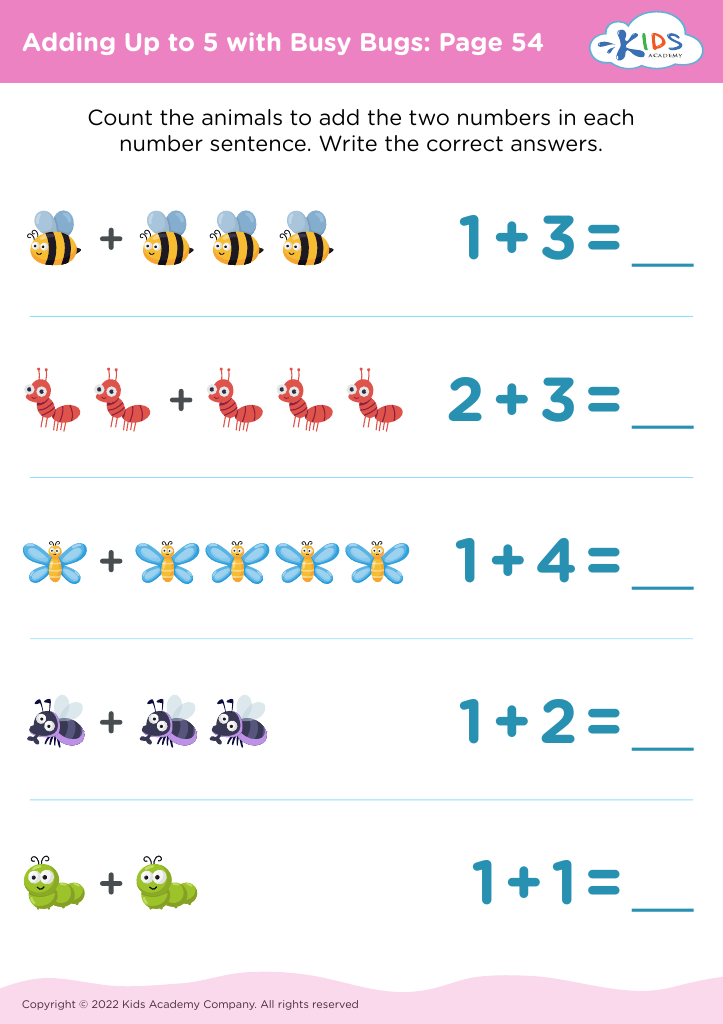
Adding Up to 5 with Busy Bugs: Page 54
Worksheet
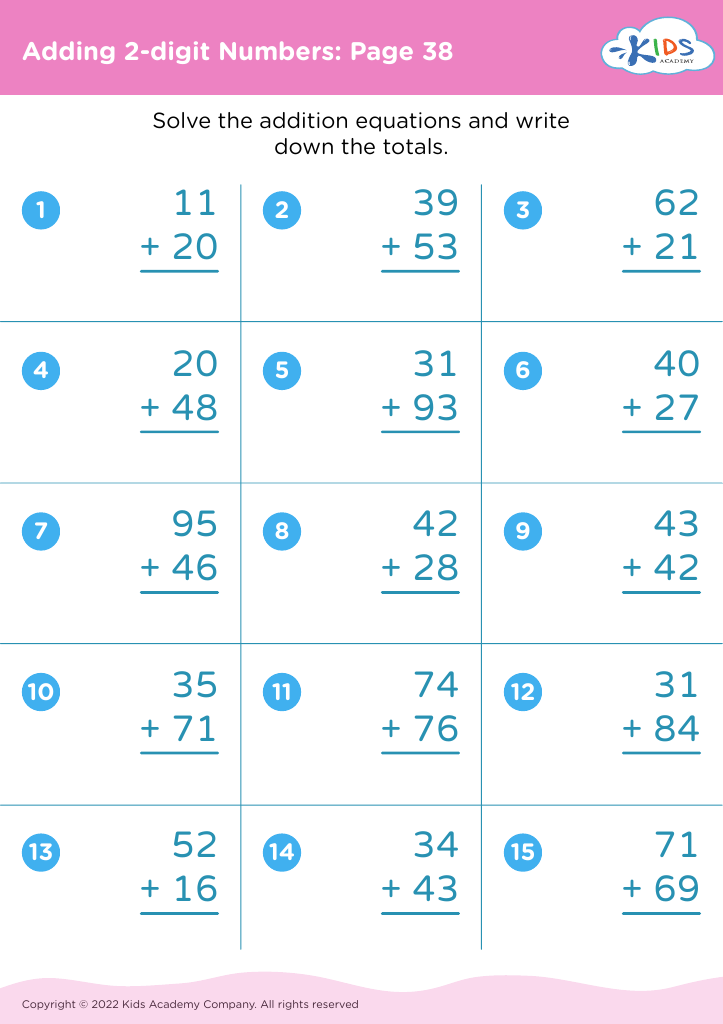
Adding 2-digit Numbers: Page 38

Adding 2-digit Numbers: Page 38

Adding 2-digit Numbers: Page 38
Worksheet
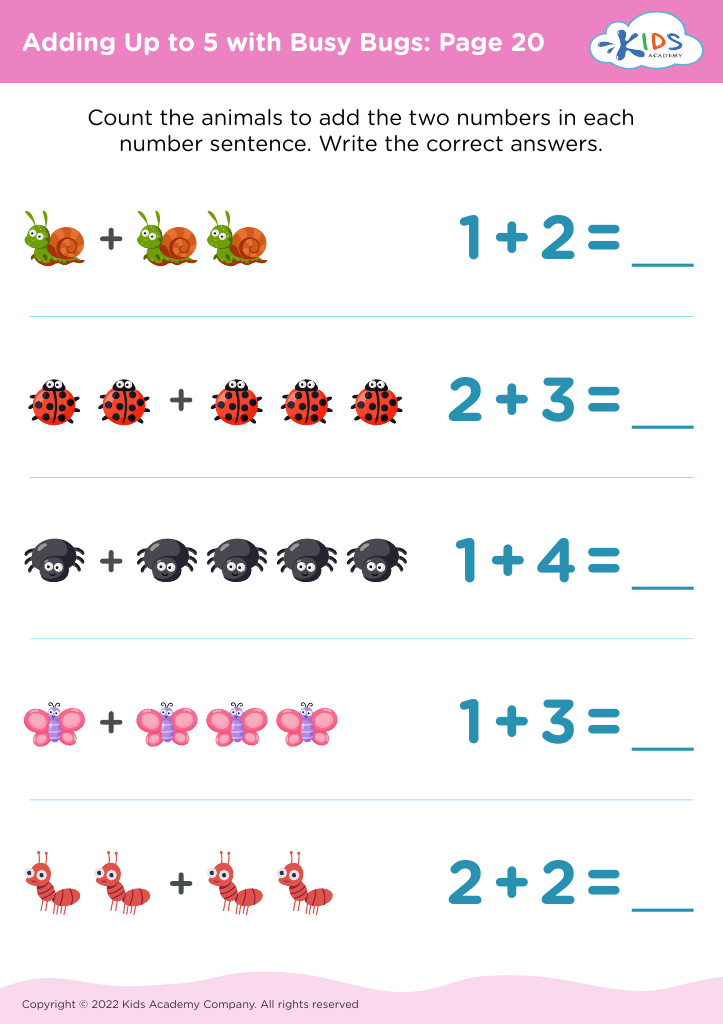
Adding Up to 5 with Busy Bugs: Page 20
Worksheet
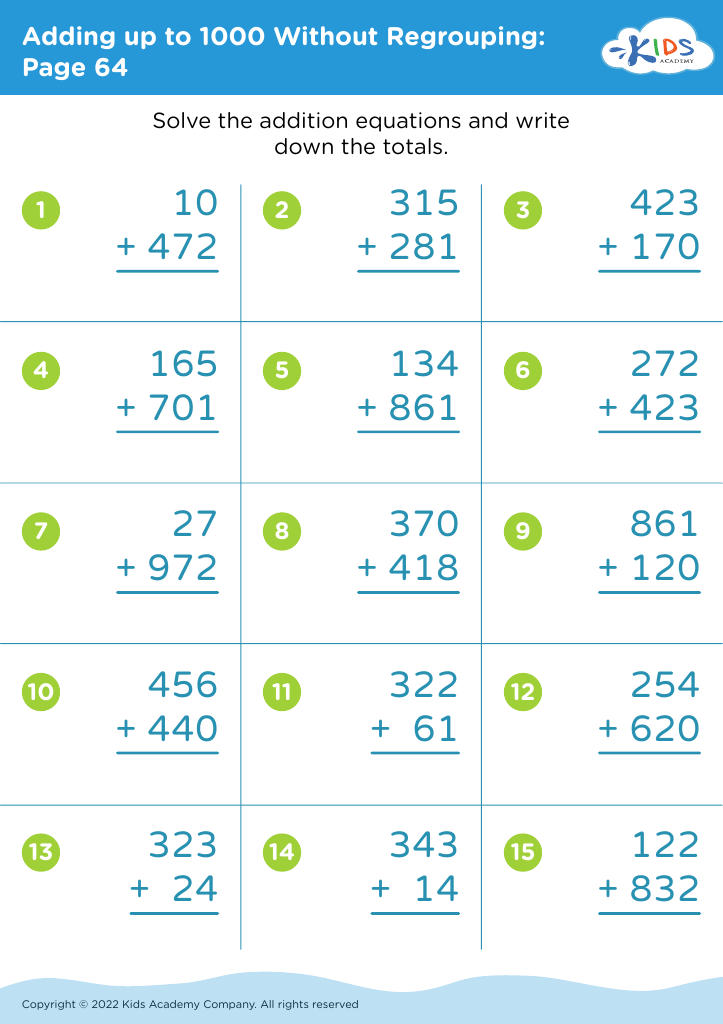
Adding up to 1000 Without Regrouping: Page 64
Worksheet
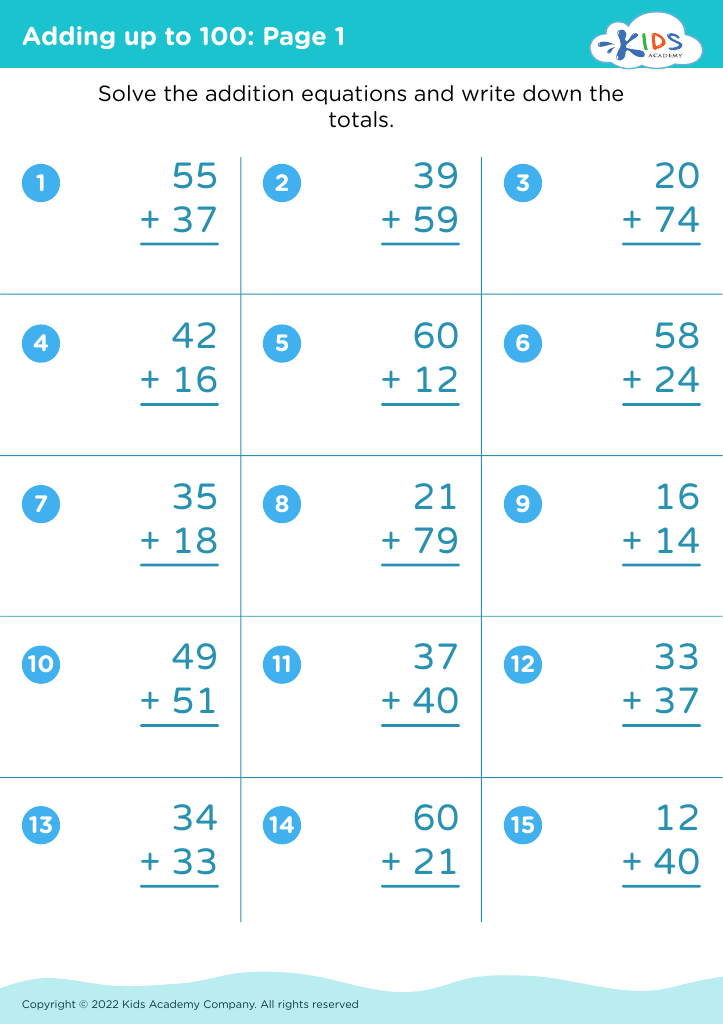
Adding up to 100: Page 1

Adding up to 100: Page 1

Adding up to 100: Page 1
Worksheet
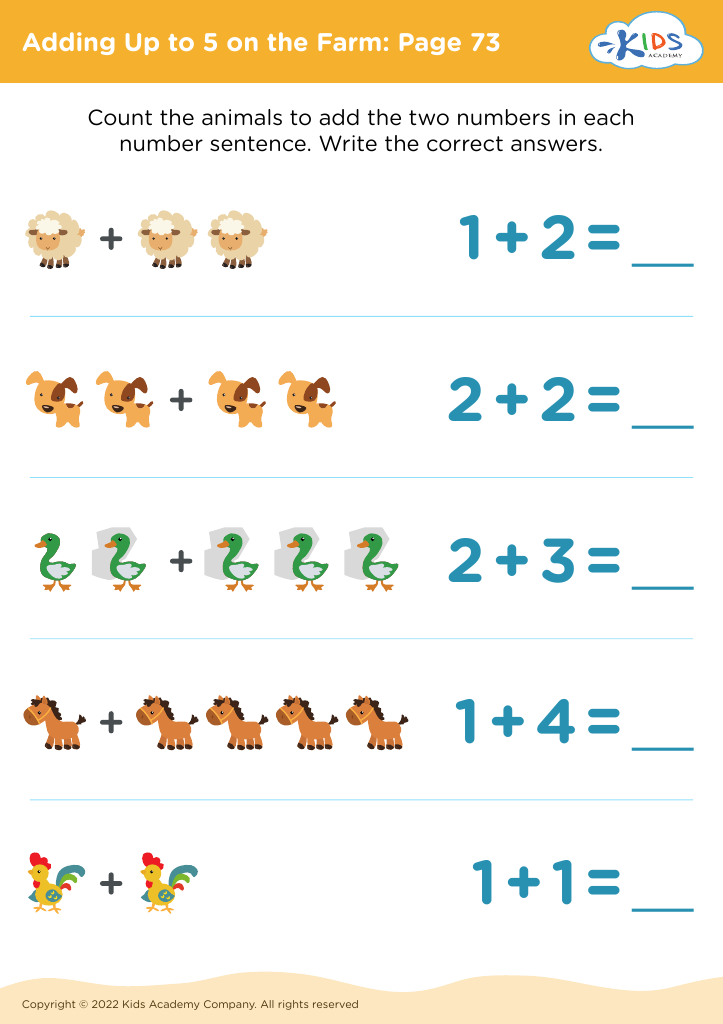
Adding Up to 5 on the Farm: Page 73
Worksheet


Ensuring that children grasp basic addition and subtraction between the ages of 4-7 is crucial for their cognitive and academic development. During these formative years, learners are in a pivotal developmental stage where their brains are especially receptive to foundational concepts in mathematics. Practice in these fundamental arithmetic skills lays the groundwork for more complex mathematical reasoning and problem-solving abilities later in their educational journey.

Regular practice of addition and subtraction helps to enhance number sense, the ability to understand and work with numbers, which is essential for everyday tasks and future learning. Mastering these skills builds children's confidence, encouraging a positive attitude towards mathematics. It also aids in the development of logical thinking and concentration—competencies that are transferable across various subjects.

Moreover, early proficiency in math has been linked to higher academic achievement in later years. This establishes that early intervention and support can significantly influence a child's long-term educational trajectory. Crucially, instilling these basic math skills also empowers children in practical, real-world situations, such as counting money or understanding measurements.

For these reasons, parents and teachers should prioritize consistent and engaging practices in basic addition and subtraction, helping children to establish a solid mathematical foundation while making learning enjoyable and accessible.