Comparing quantities Addition & Subtraction Worksheets for Ages 4-7
8 filtered results
-
From - To
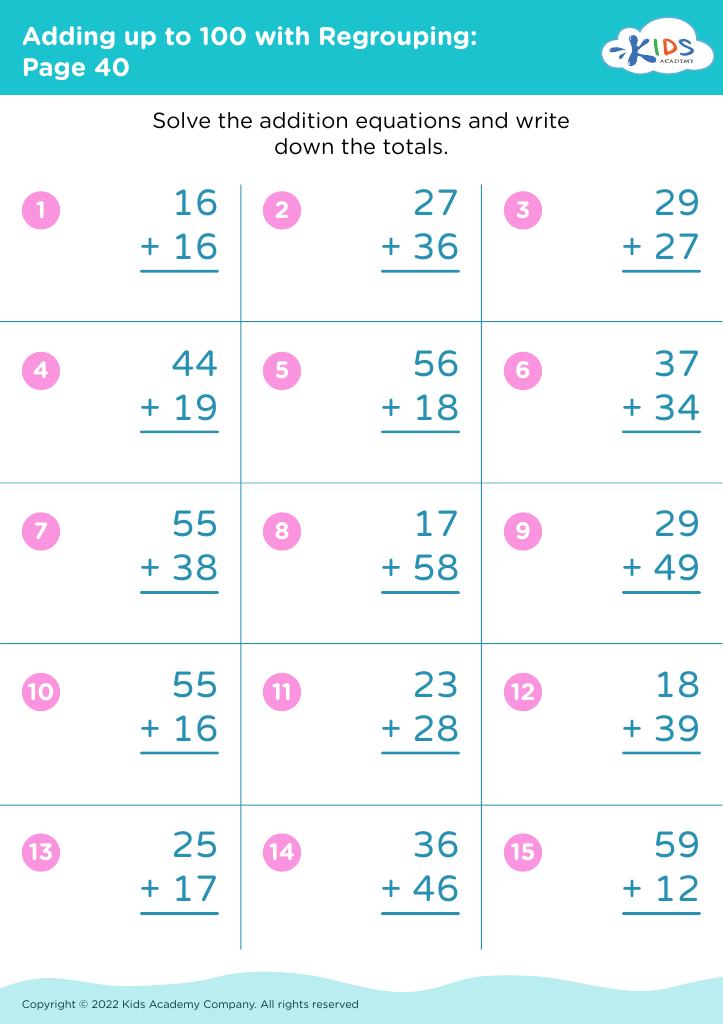
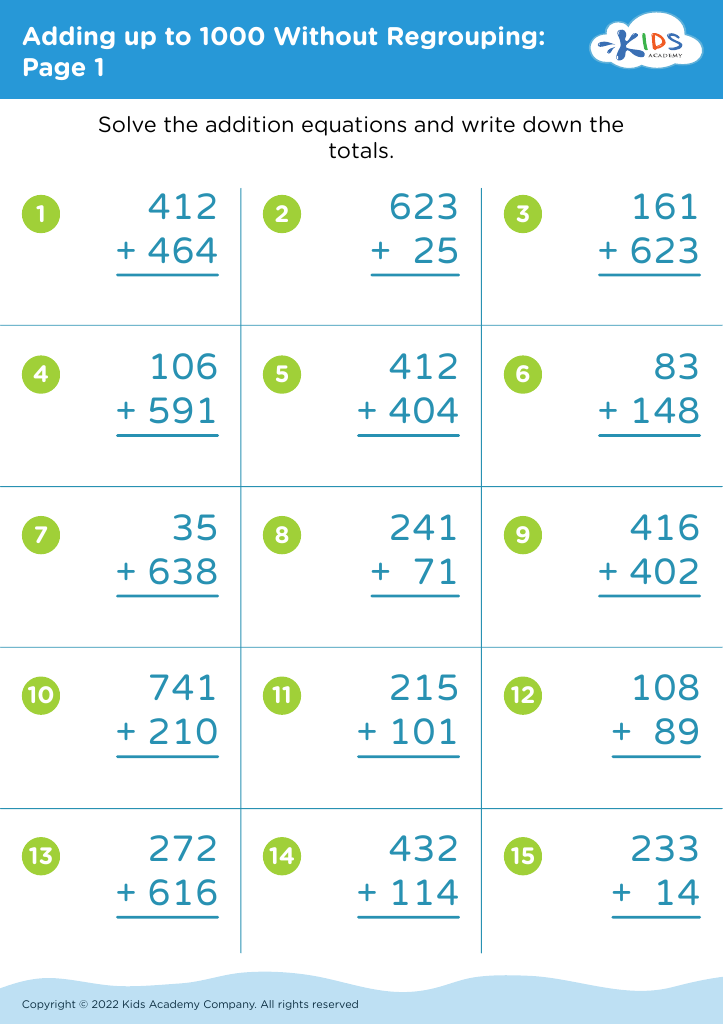
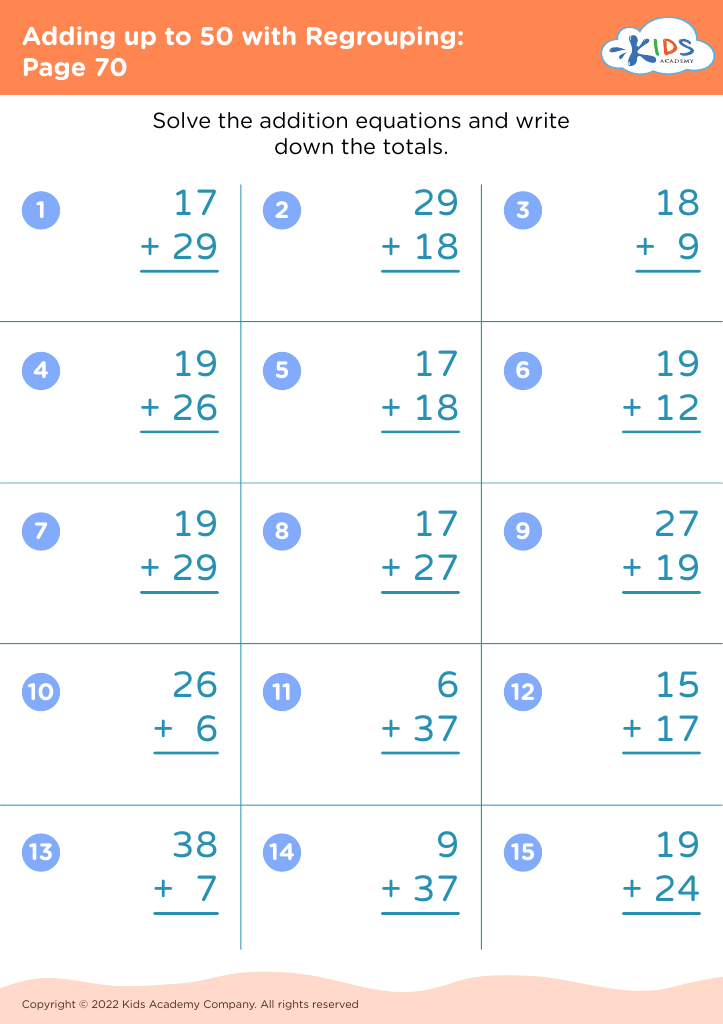
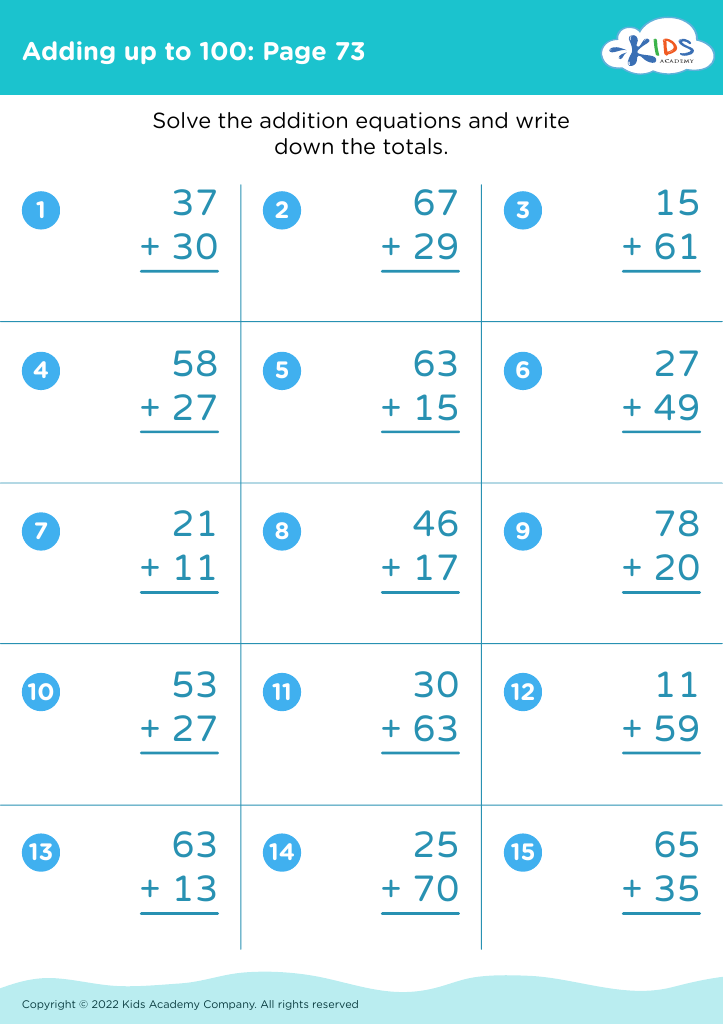
Explore our engaging "Comparing Quantities Addition & Subtraction Worksheets" designed for children aged 4-7. These worksheets aim to enhance early math skills by teaching kids how to compare quantities through fun and interactive exercises. Perfect for foundational learning, our activities help young learners grasp basic concepts of addition and subtraction while developing their problem-solving abilities. Each worksheet is colorful and thoughtfully crafted to maintain children's interest and foster a love for math. Whether used at home or in the classroom, these resources are ideal for reinforcing key mathematical concepts and ensuring a strong start in their educational journey!
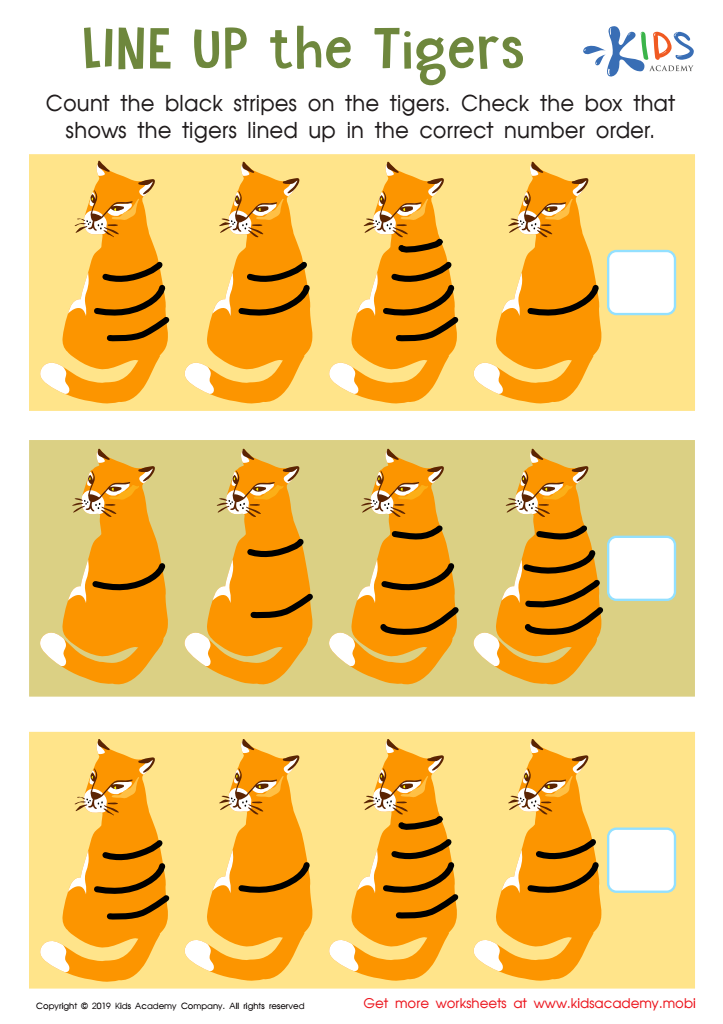
Line up the Tigers Worksheet
 Assign to My Students
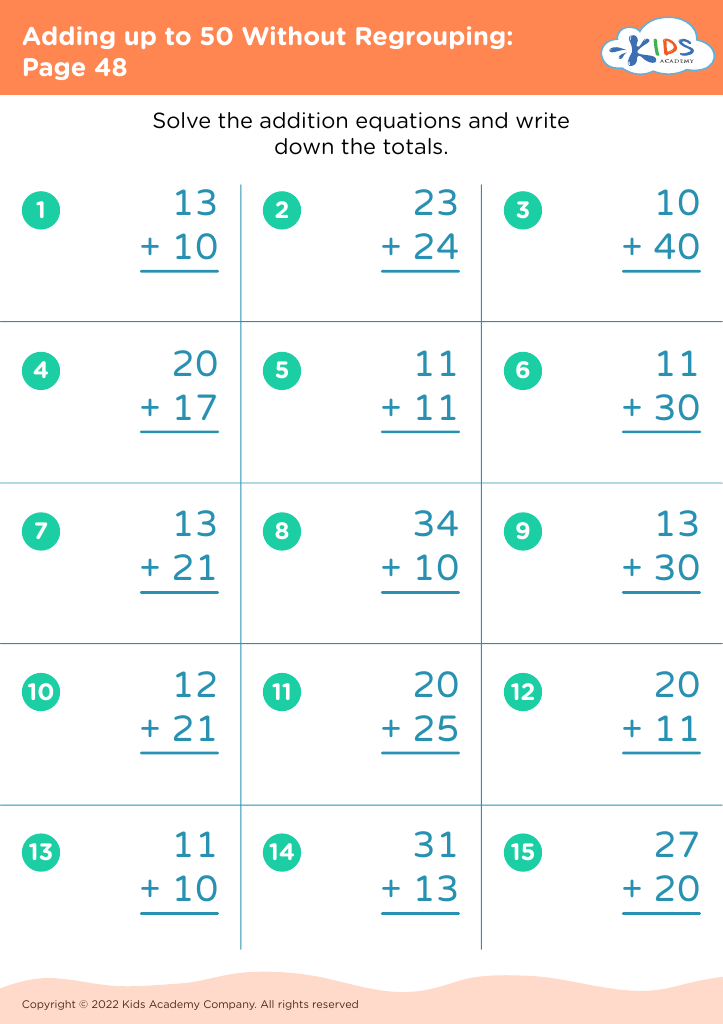
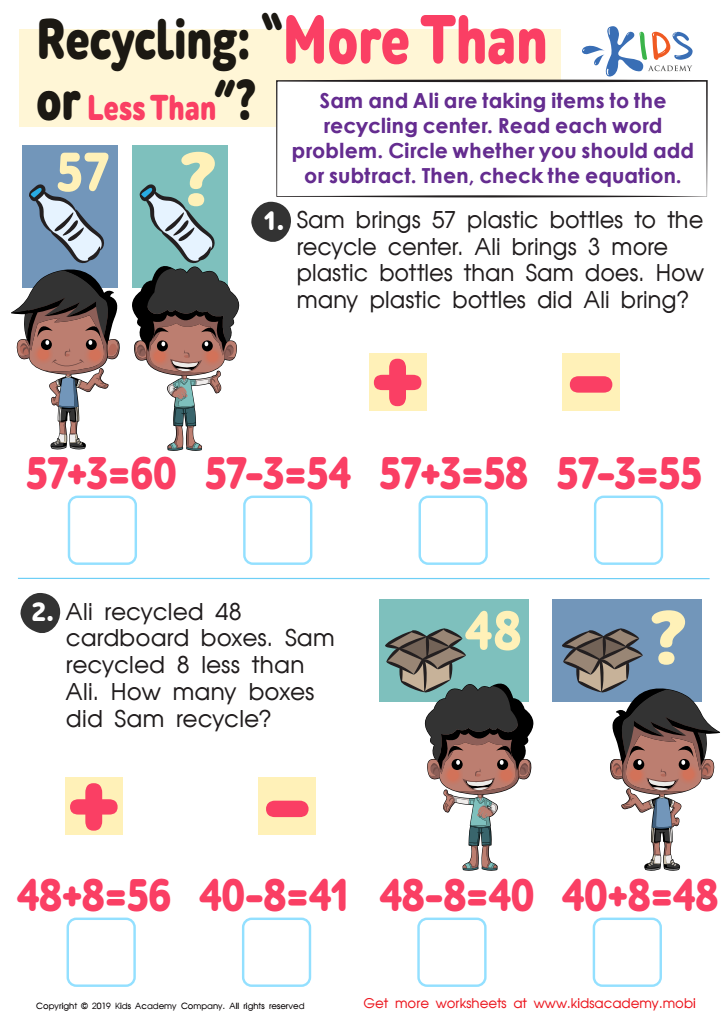
Recycling - More or Less Worksheet
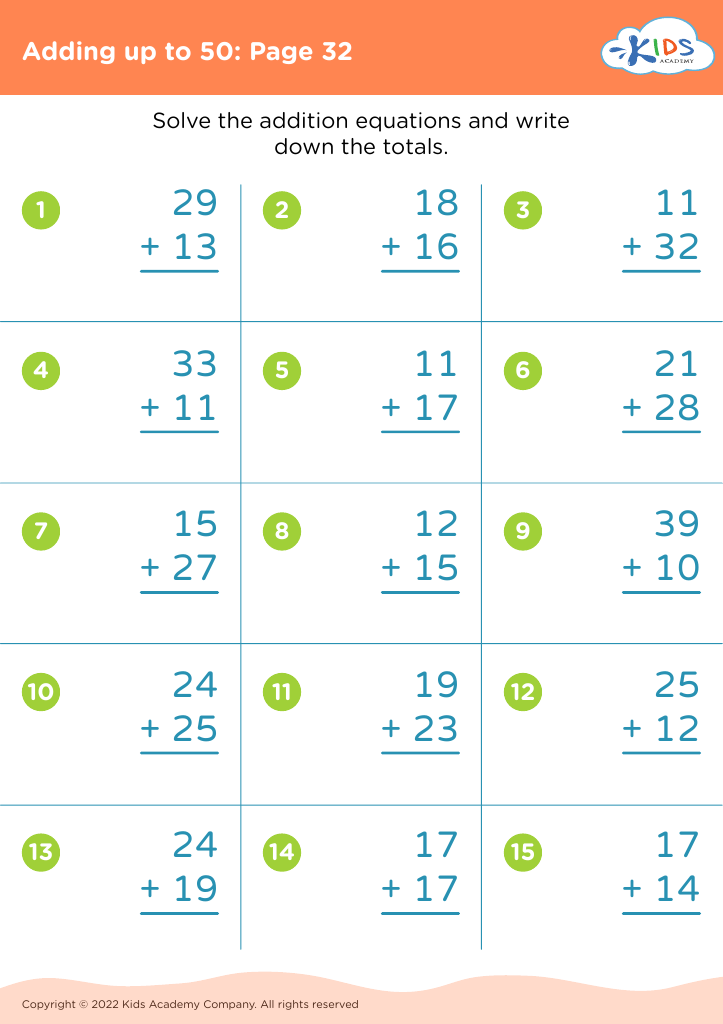








Comparing quantities through addition and subtraction is a foundational skill for children aged 4-7, and parents and teachers should prioritize this area of learning for several reasons. Firstly, this skill lays the groundwork for essential math proficiency, helping children understand numerical relationships and basic arithmetic operations. Mastery of addition and subtraction not only enhances computational skills but also bolsters critical thinking, as children learn to analyze and compare different quantities.
Moreover, understanding these concepts aids in everyday decision-making, allowing children to navigate their environment more effectively—for example, evaluating the number of toys they have compared to a friend. It nurtures a sense of confidence as they identify and solve problems. Encouraging these skills also fosters a growth mindset, promoting the idea that challenges in learning can be overcome with effort and practice.
Additionally, as children communicate about their comparisons, they develop oral language skills and learn to articulate their thought processes, enhancing overall literacy. By actively participating in comparing quantities, parents and teachers can create engaging, relevant, and interactive learning experiences, making math enjoyable, and instilling a positive attitude toward education. Ultimately, this holistic approach prepares children for future academic success and everyday situations.








