Discover our engaging "Counting Objects: Addition & Subtraction Worksheets" designed specifically for children ages 4 to 7. These interactive worksheets help young learners develop essential math skills by counting everyday objects to solve fun addition and subtraction problems. Each worksheet encourages kids to visualize numbers, improving their understanding of basic arithmetic concepts. With colorful illustrations and playful activities, children will enjoy practicing math while building a solid foundation for future learning. Perfect for home or classroom use, our worksheets provide a valuable resource for early education teachers and parents alike. Start your child's math adventure today!
Check out this FREE Trial Lesson on Addition & Subtraction for age 4-7!

T

Favorites
With answer key
Interactive
  • 4-7
  • Counting objects
  • Addition & Subtraction
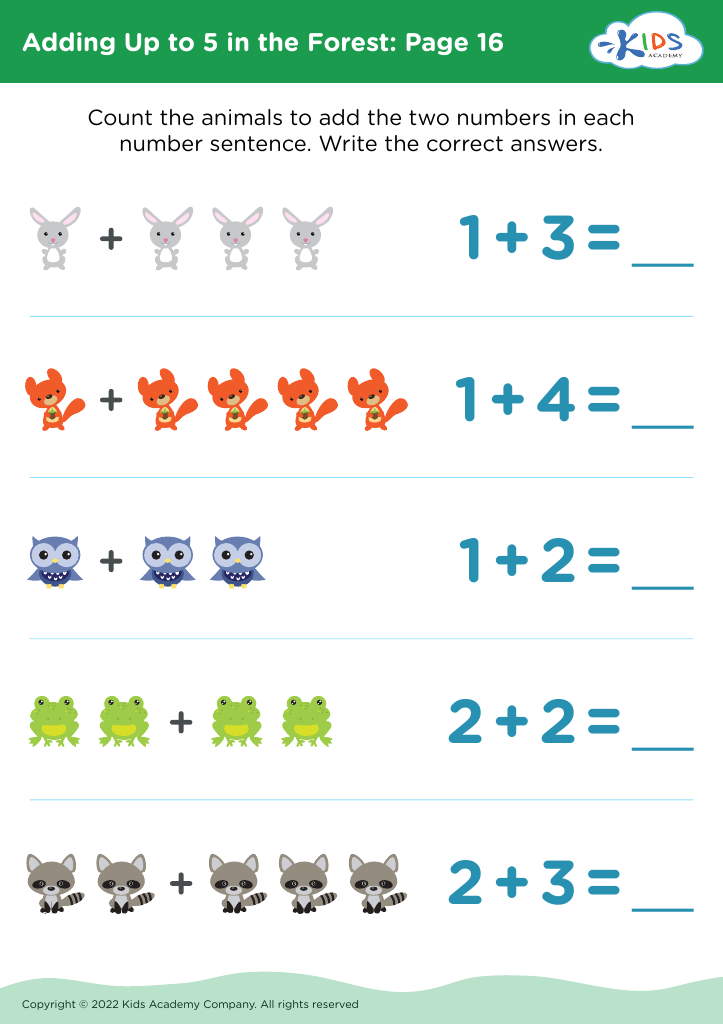
Adding Up to 5 in the Forest: Page 16
Worksheet
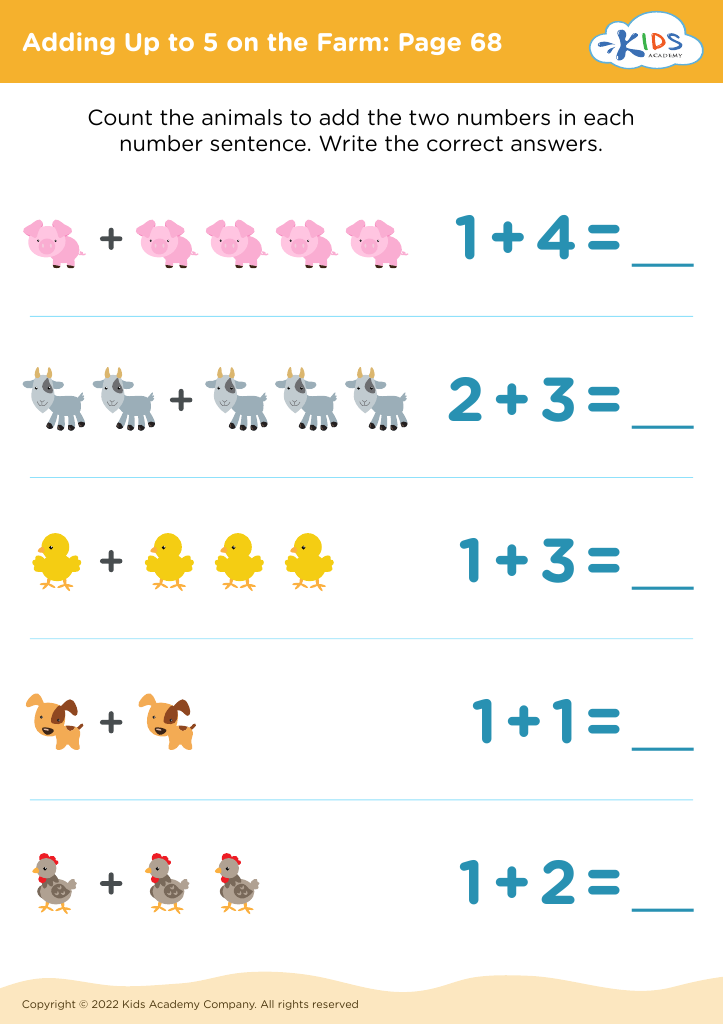
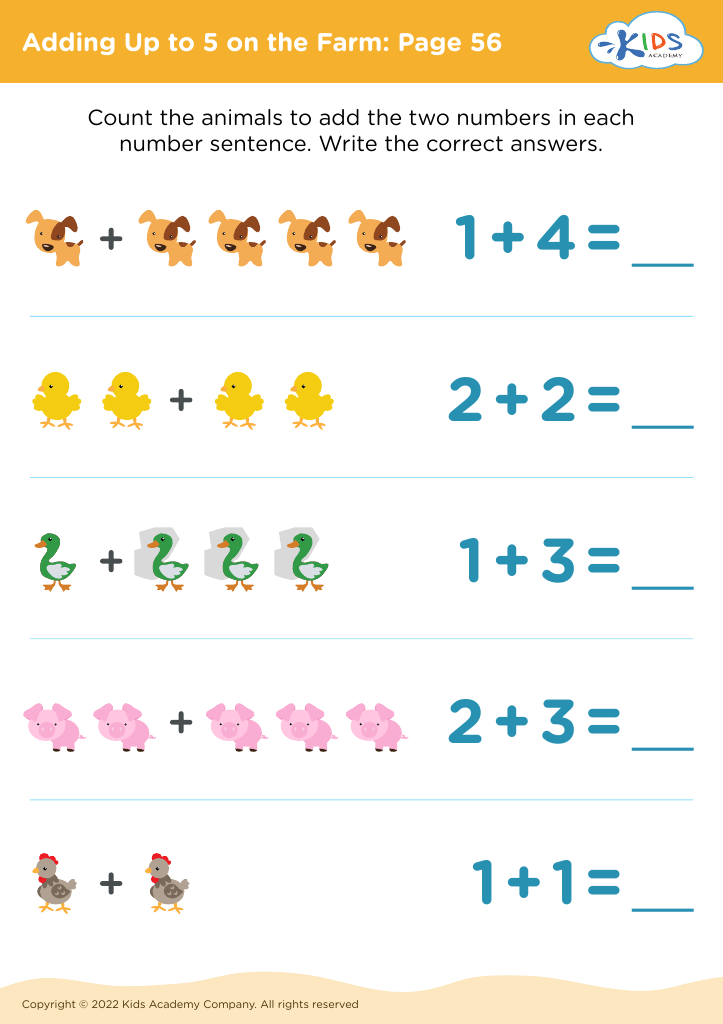
Adding Up to 5 on the Farm: Page 56
Worksheet
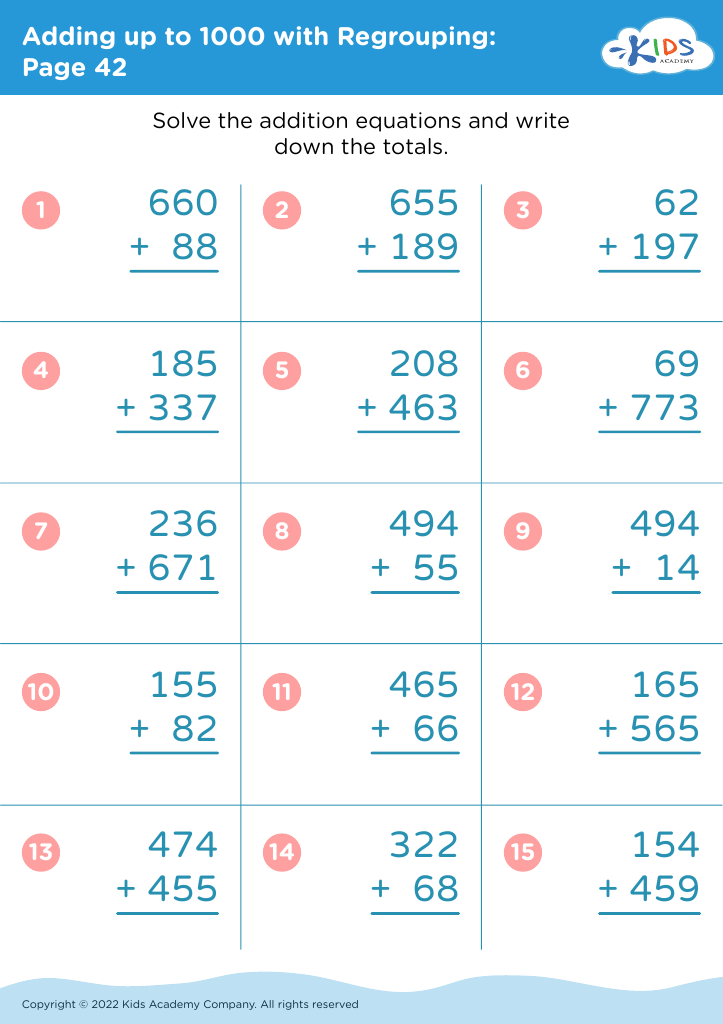
Adding up to 1000 with Regrouping: Page 42
Worksheet
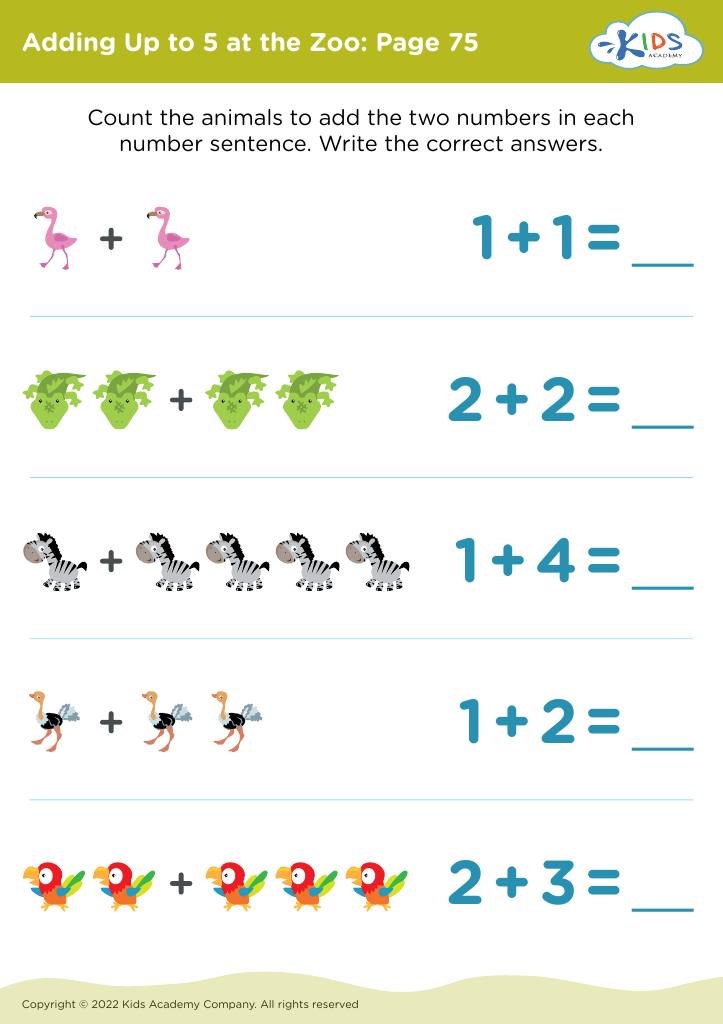
Adding Up to 5 at the Zoo: Page 75
Worksheet
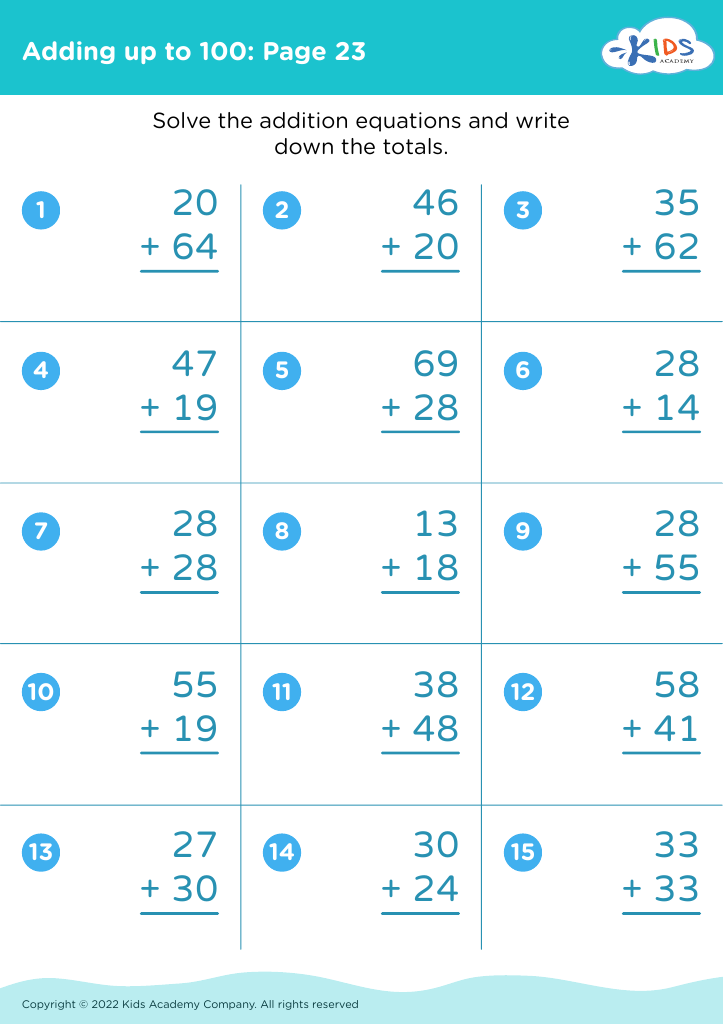
Adding up to 100: Page 23

Adding up to 100: Page 23

Adding up to 100: Page 23
Worksheet
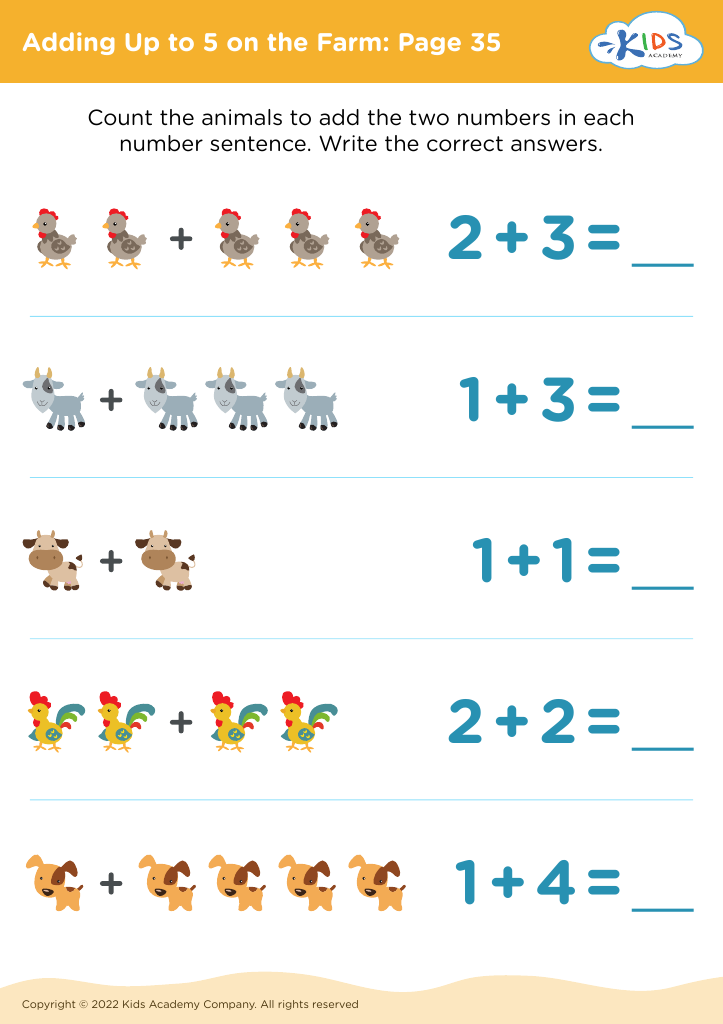
Adding Up to 5 on the Farm: Page 35
Worksheet
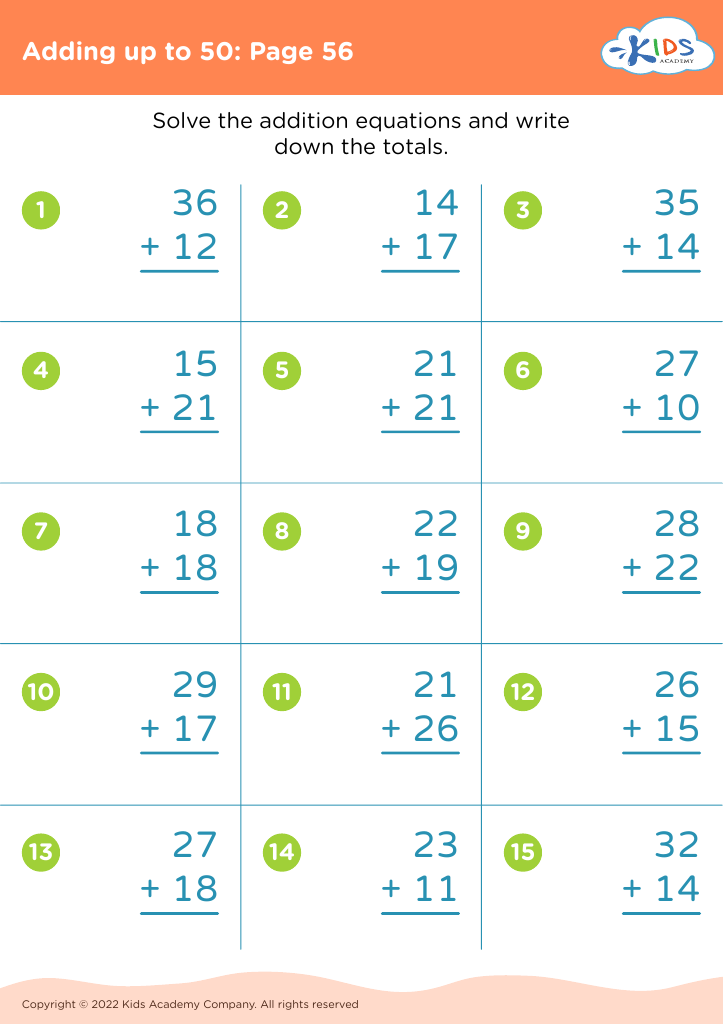
Adding up to 50: Page 56

Adding up to 50: Page 56

Adding up to 50: Page 56
Worksheet
Adding Up to 5 on the Farm: Page 68
Worksheet
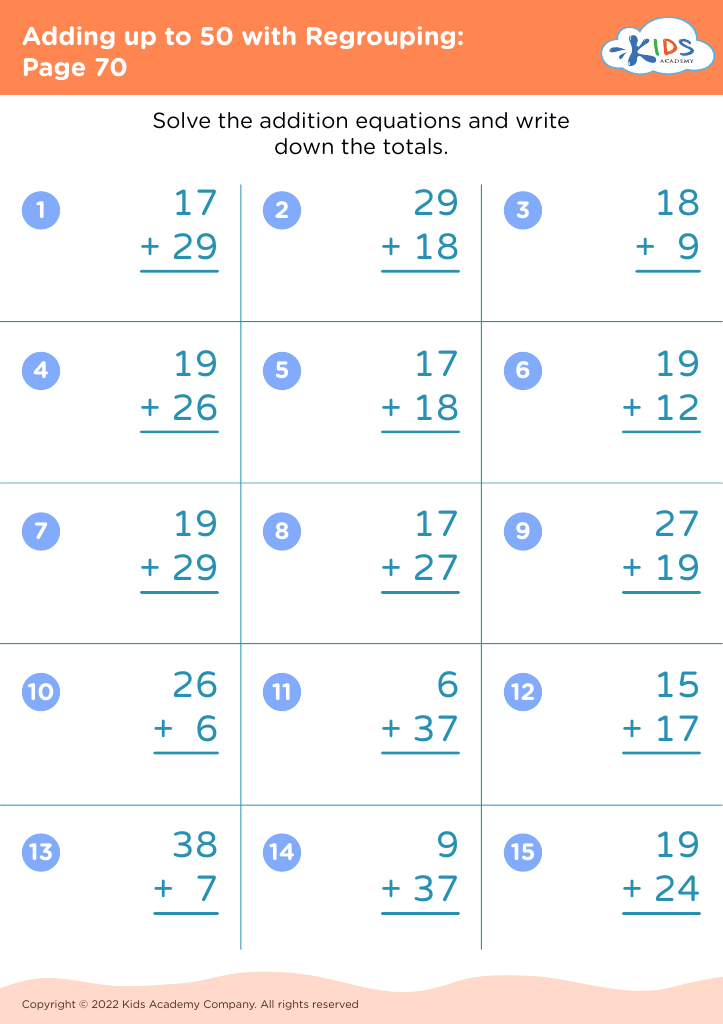
Adding up to 50 with Regrouping: Page 70
Worksheet
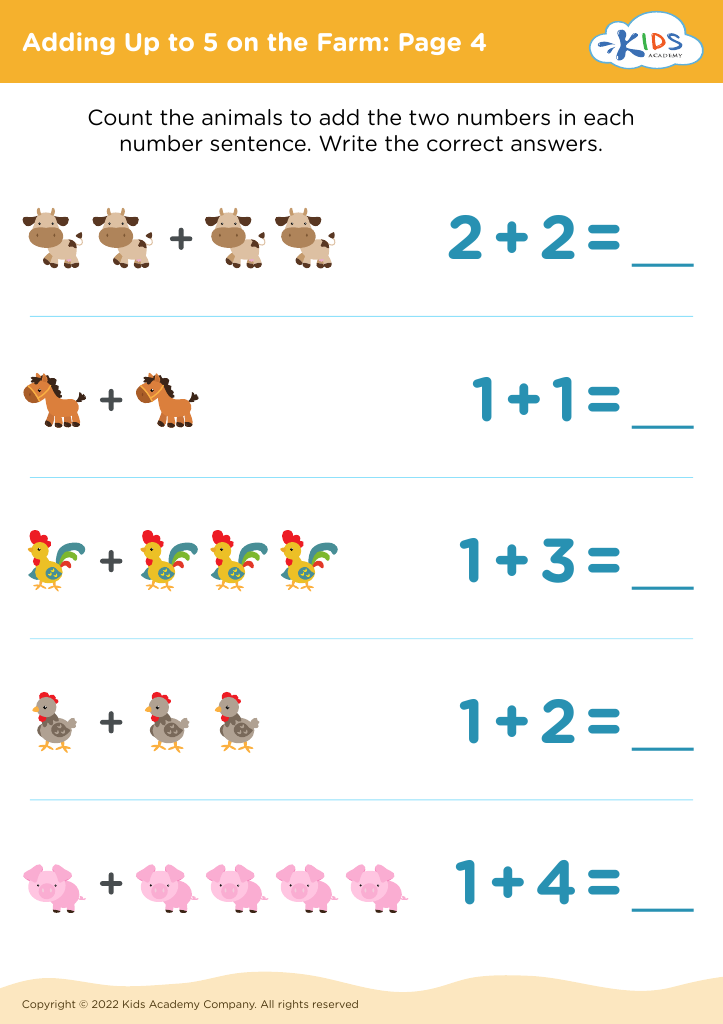
Adding Up to 5 on the Farm: Page 4
Worksheet
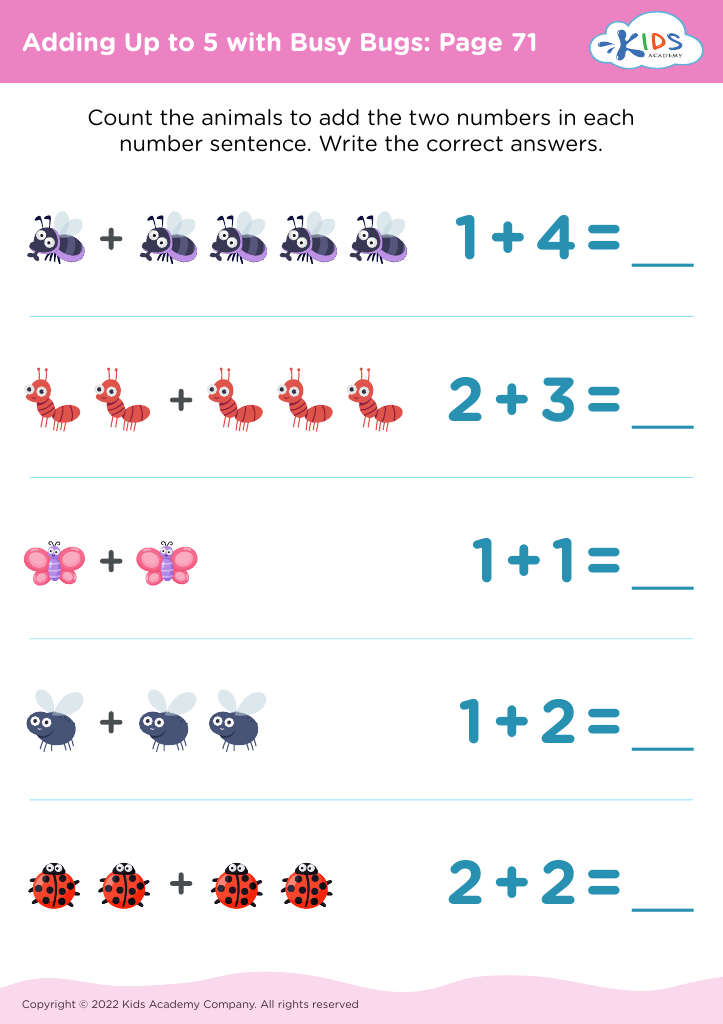
Adding Up to 5 with Busy Bugs: Page 71
Worksheet
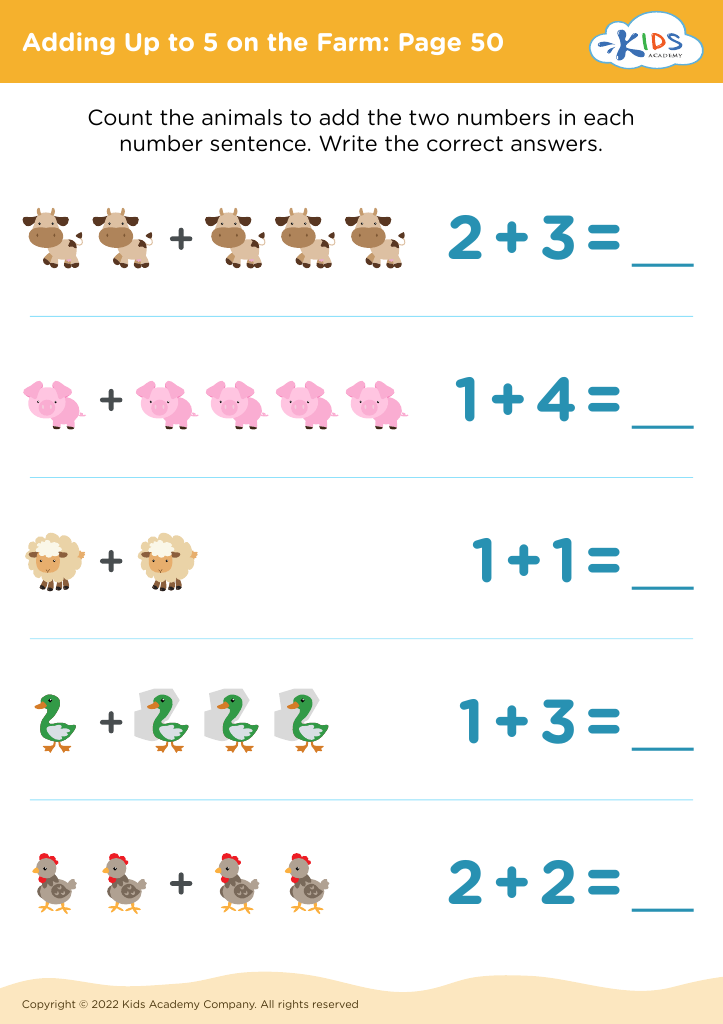
Adding Up to 5 on the Farm: Page 50
Worksheet
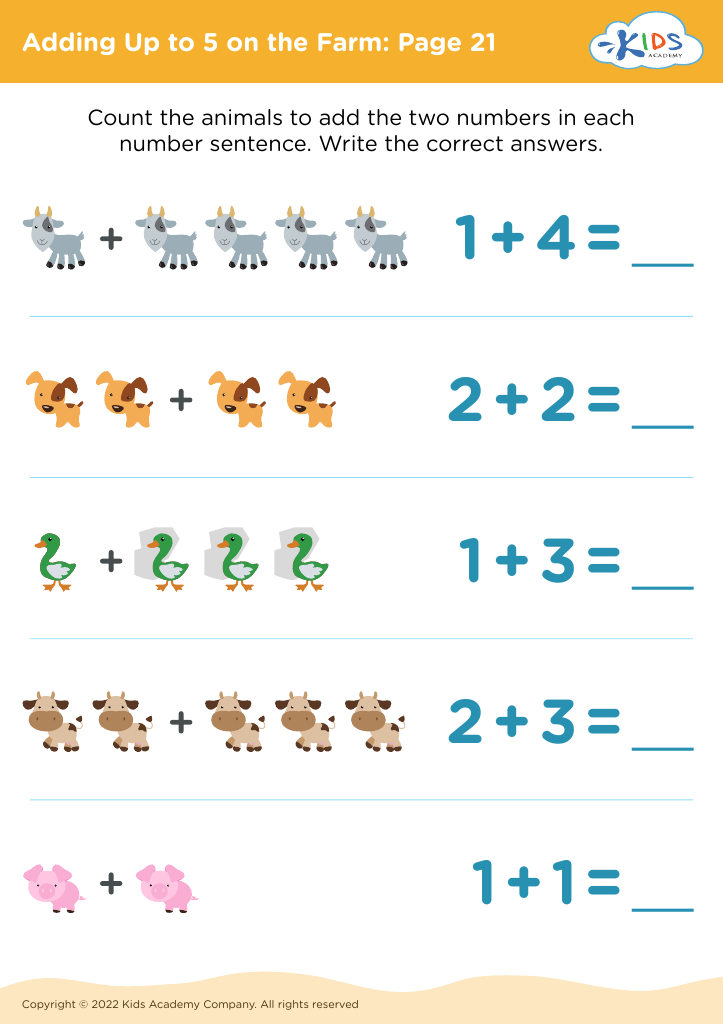
Adding Up to 5 on the Farm: Page 21
Worksheet
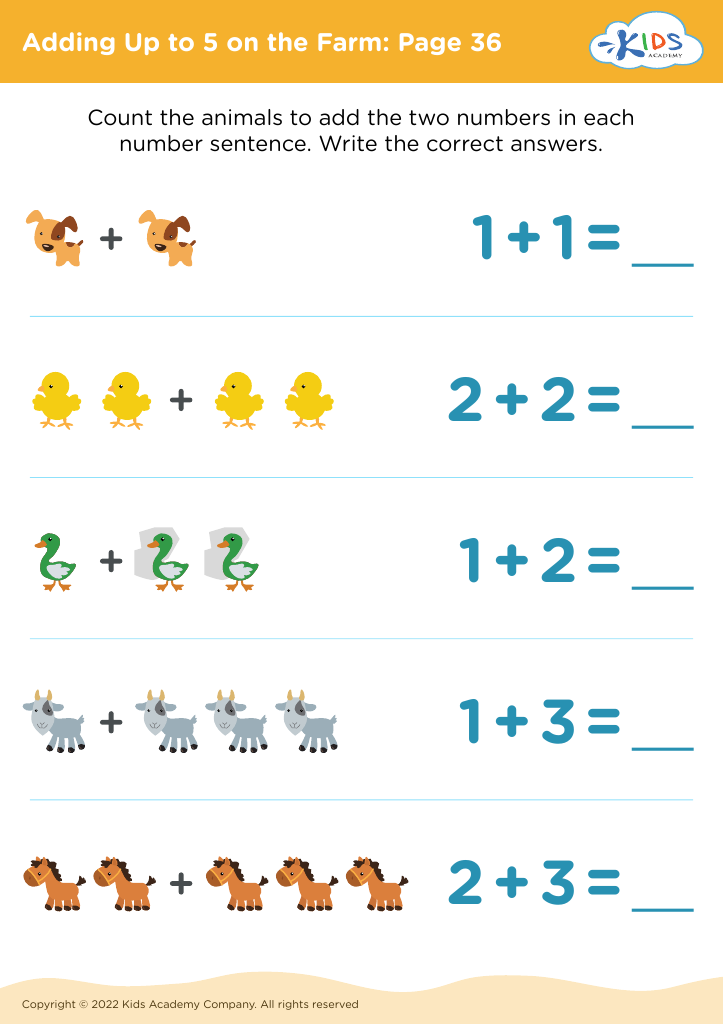
Adding Up to 5 on the Farm: Page 36
Worksheet
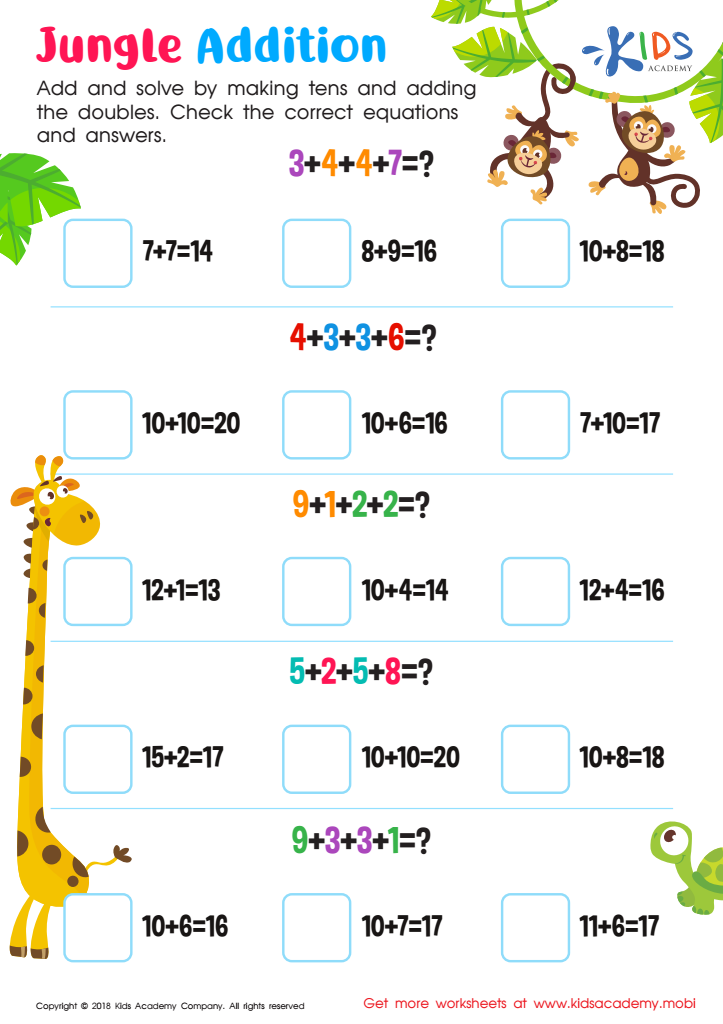
Jungle Addition Worksheet

Jungle Addition Worksheet

With this worksheet, kids can use the strategies of making tens and adding doubles to add numbers with more than three addends. They'll practice choosing the right method and become more confident in their calculations, enabling quicker, more efficient computation.
Jungle Addition Worksheet
Worksheet
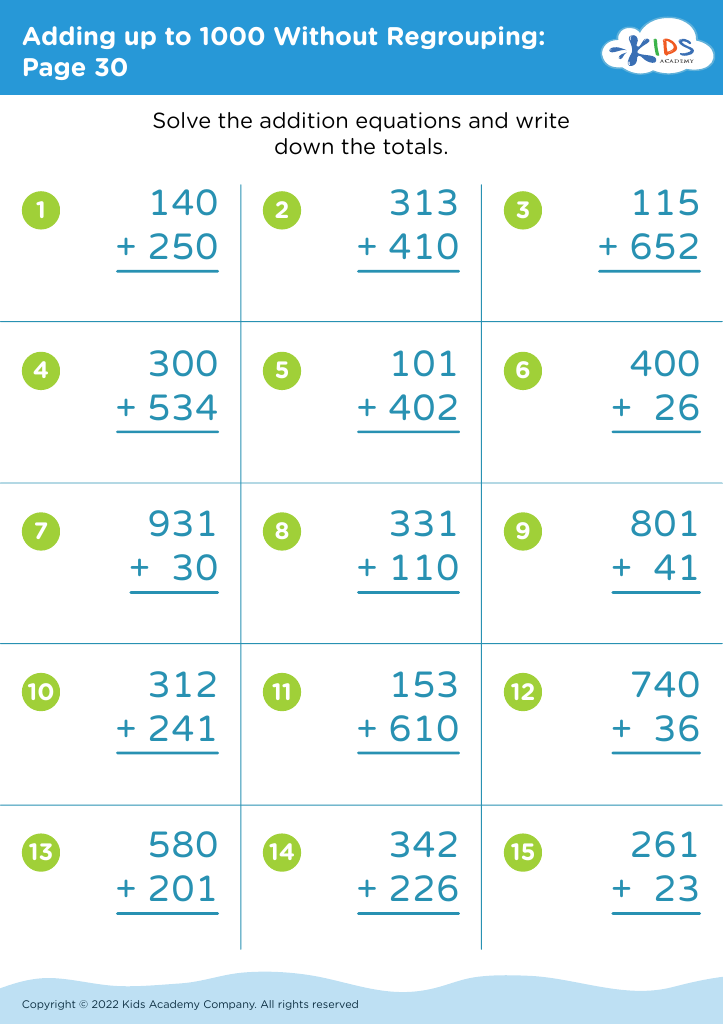
Adding up to 1000 Without Regrouping: Page 30
Worksheet
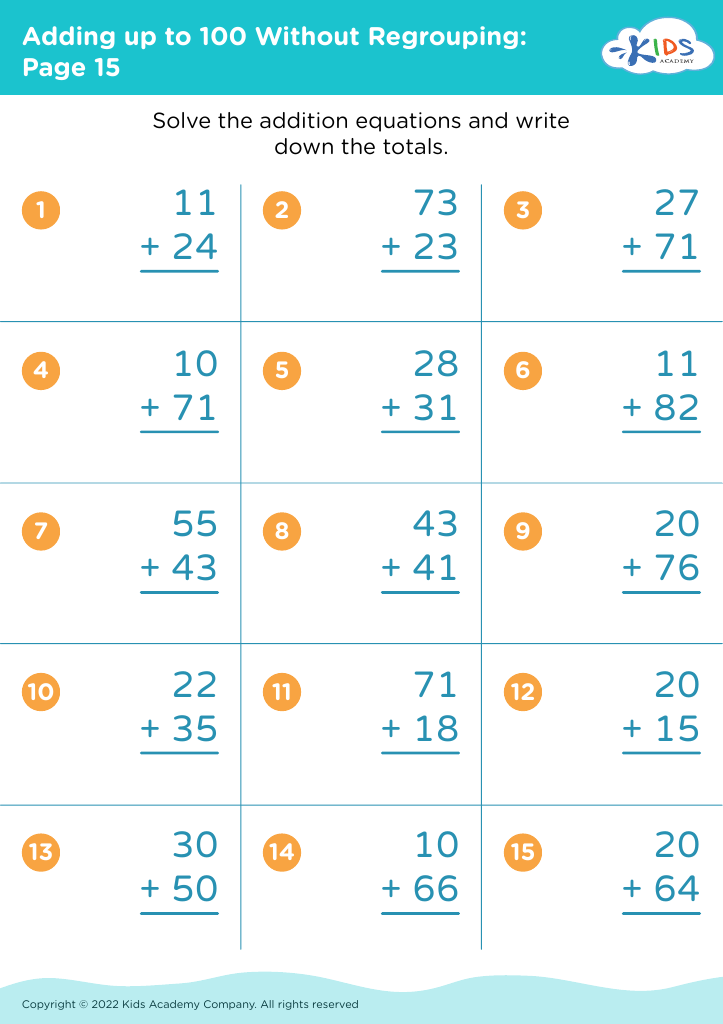
Adding up to 100 Without Regrouping: Page 15
Worksheet
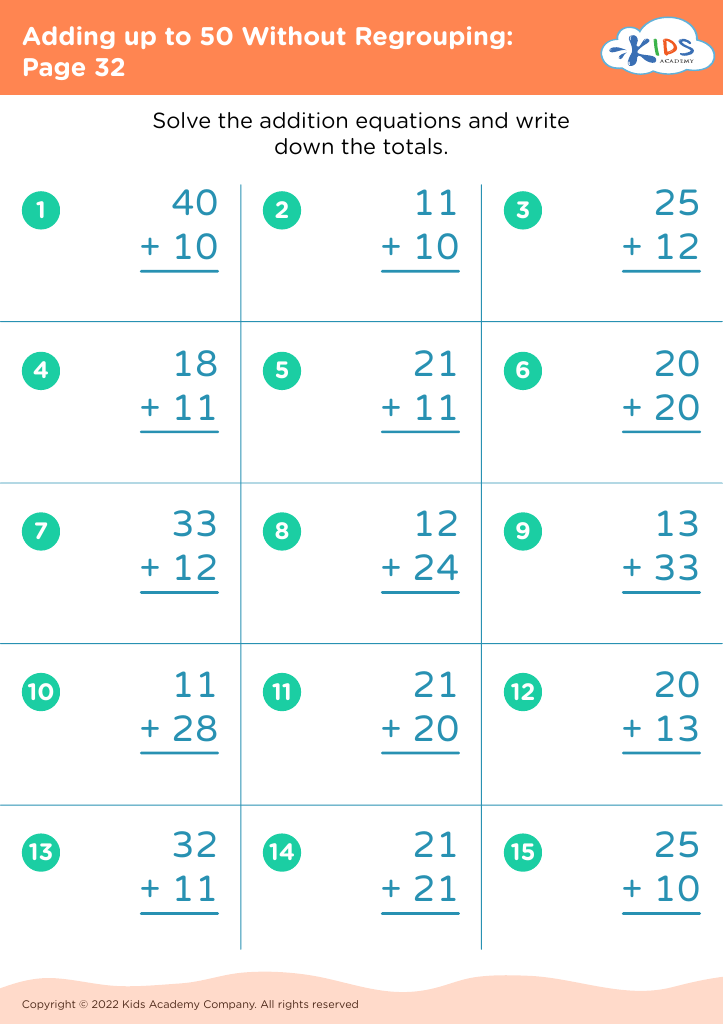
Adding up to 50 Without Regrouping: Page 32
Worksheet
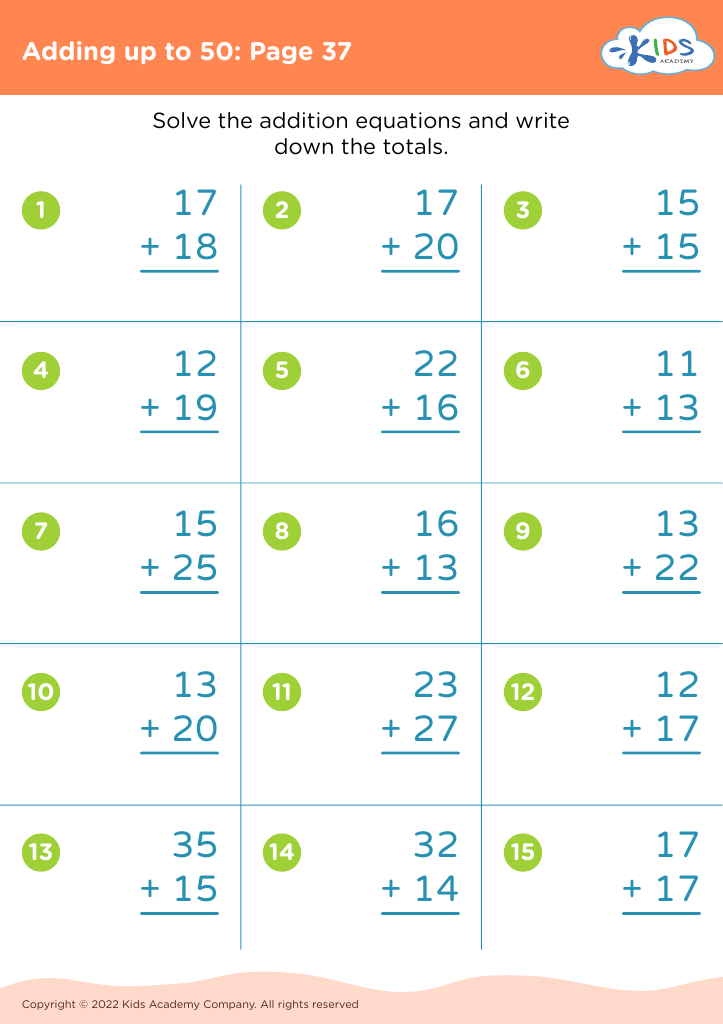
Adding up to 50: Page 37

Adding up to 50: Page 37

Adding up to 50: Page 37
Worksheet
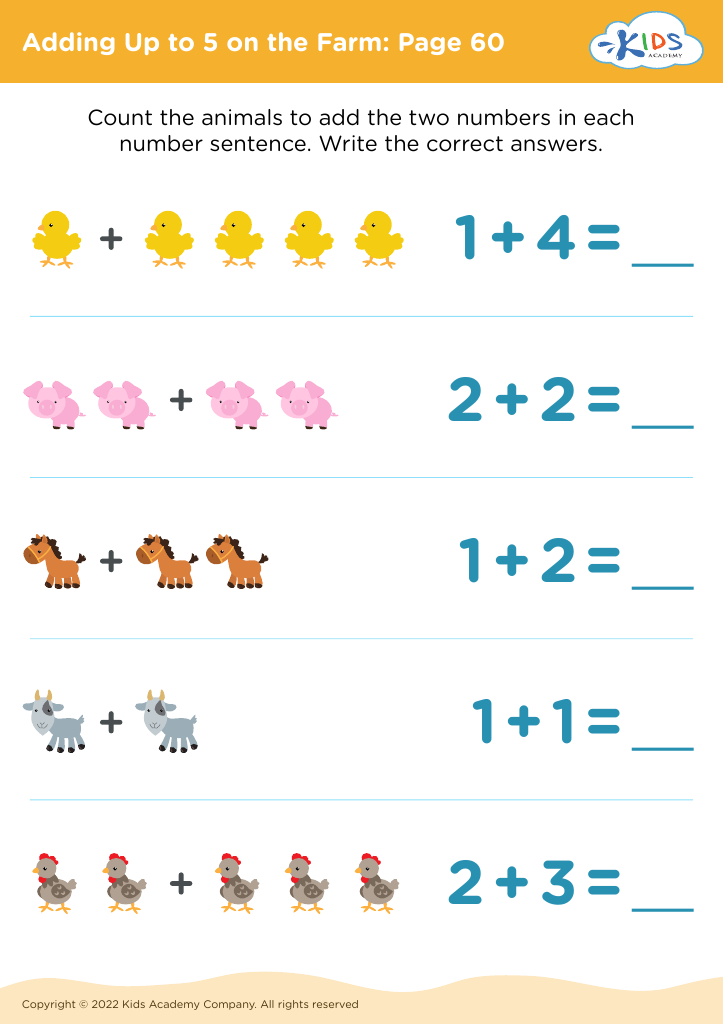
Adding Up to 5 on the Farm: Page 60
Worksheet


Counting objects and mastering addition and subtraction are foundational skills for children aged 4-7, crucial for their overall development. First, these skills form the building blocks of numeracy, essential for academic success in math and science. Understanding counting helps kids recognize quantities, develop critical thinking, and enhance problem-solving abilities.

Furthermore, when children engage in counting and basic operations like addition and subtraction, they learn to connect abstract mathematical concepts to real-world situations, enhancing their logical reasoning and comprehension. Additionally, these activities often involve hands-on experiences, making learning interactive and fun.

From a social-emotional perspective, successfully counting or solving a math problem provides a sense of achievement and builds confidence in their abilities. Parents and teachers play a vital role in creating engaging learning environments that promote math exploration. By integrating counting and simple arithmetic into daily routines—like cooking, shopping, or playing games—adults can instill a love for math in children.

Ultimately, prioritizing counting, addition, and subtraction not only paves the way for strong mathematical proficiency but also fosters curiosity, creativity, and a lifelong appreciation for learning. These skills are essential for navigating a world increasingly reliant on numeracy.