Developing fine motor skills Addition & Subtraction Worksheets for Ages 4-7
4 filtered results
-
From - To
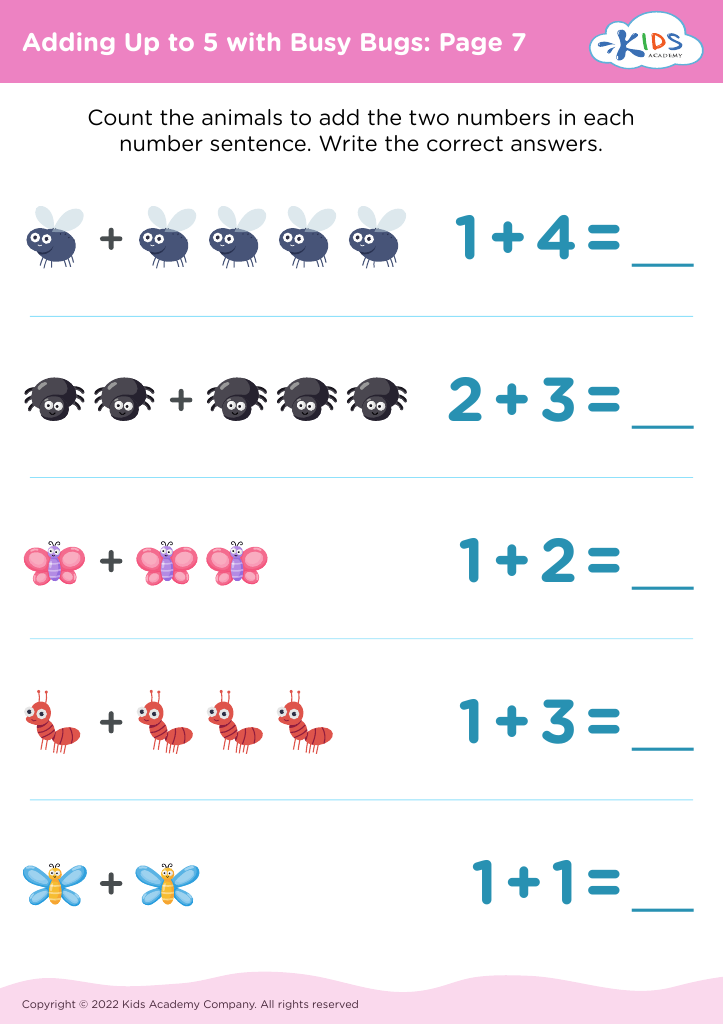
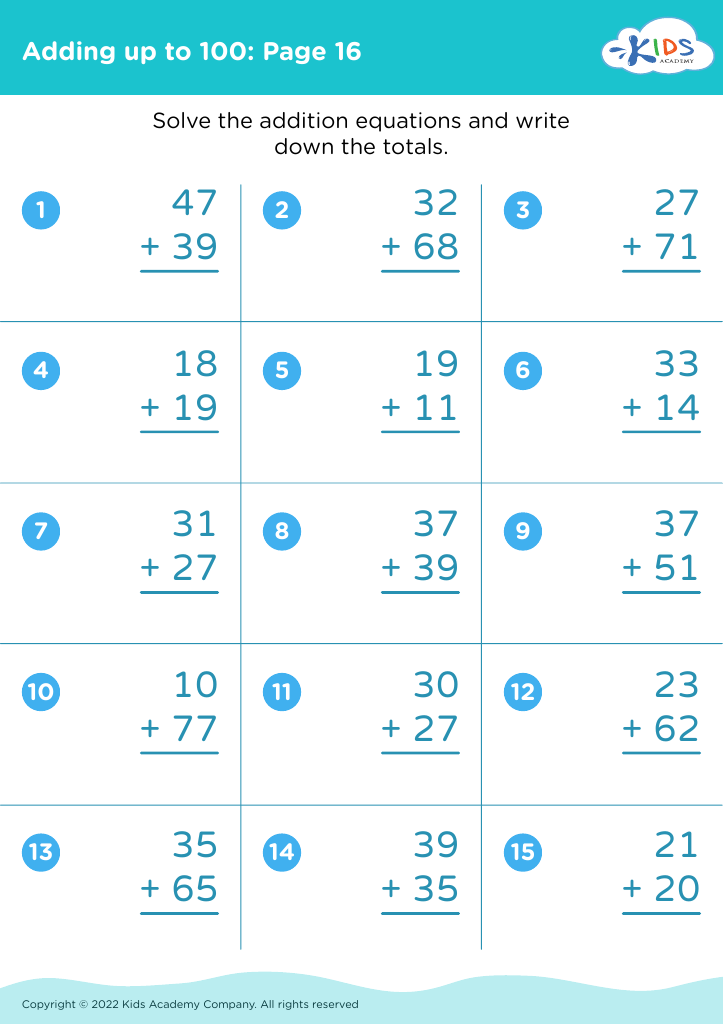
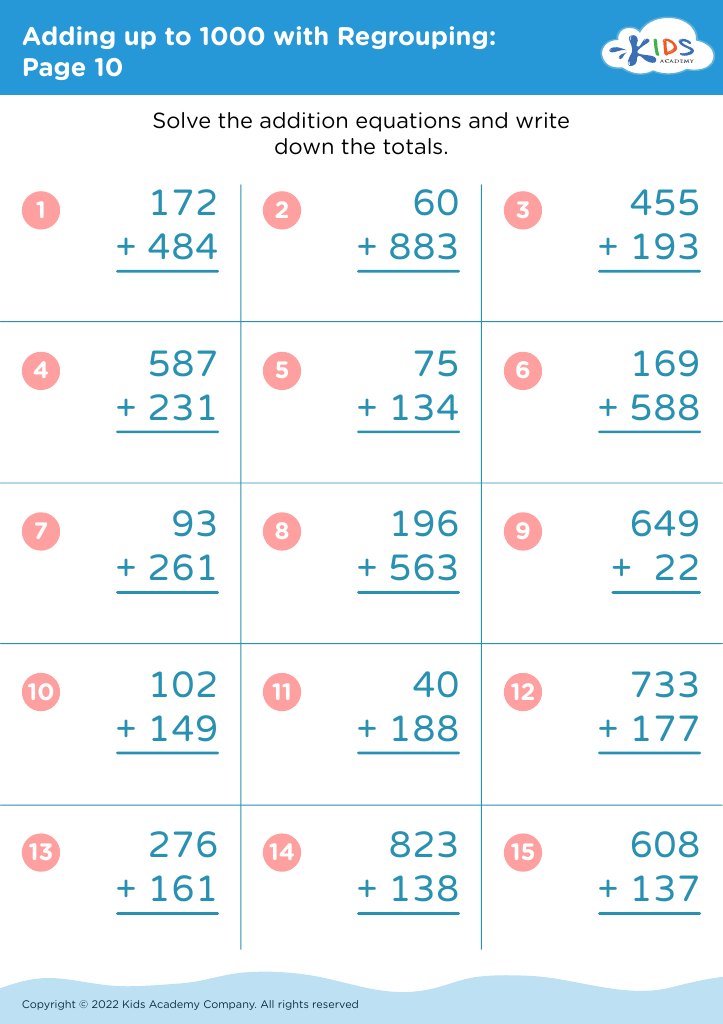
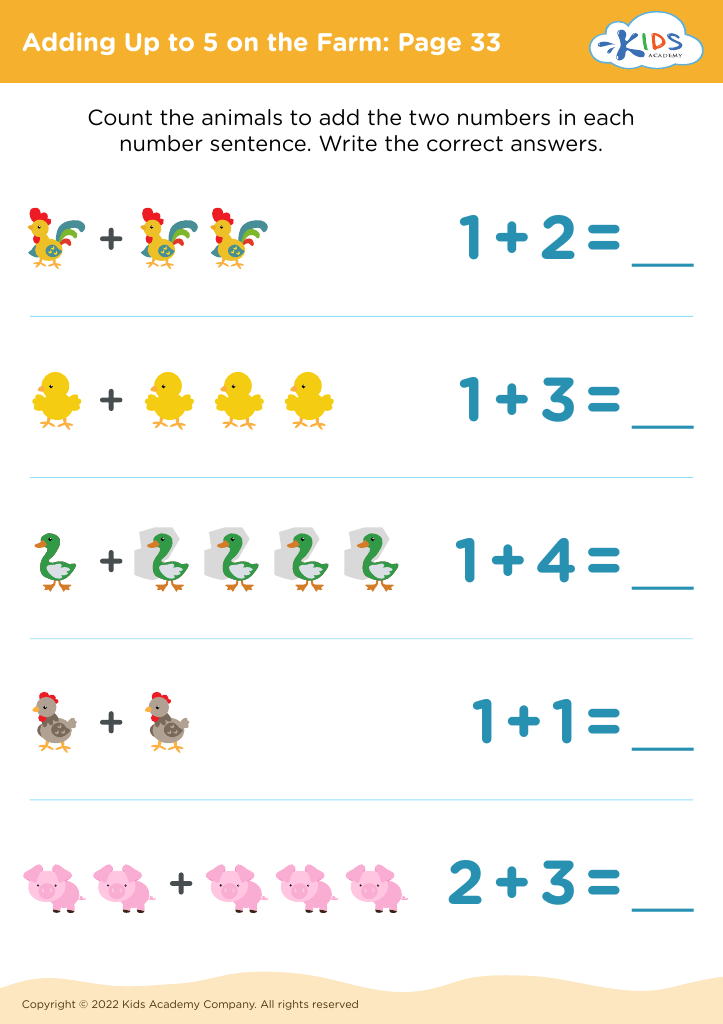
Discover a fun and interactive way to help your child develop fine motor skills with our Addition & Subtraction Worksheets for Ages 4-7. Designed to enhance hand-eye coordination while solidifying foundational math skills, these worksheets provide a blend of engaging activities and playful designs. With each sheet, your little learner will improve pencil control, precision, and dexterity. Perfect for homeschooling or supplementary practice, these resources from Kids Academy make learning enjoyable and effective. Encourage your child's growth in both math proficiency and motor skills with our carefully crafted, educational worksheets. Click to explore and download today!








Parents and teachers should prioritize developing fine motor skills and teaching addition and subtraction for children ages 4-7 because these components are pivotal in early childhood education. Fine motor skills involve the coordination of small muscles in the hands and fingers, essential for performing everyday tasks such as writing, buttoning clothes, and using utensils. Mastery of these skills boosts a child's independence and confidence, facilitating smoother transitions in their educational journey.
During the ages of 4-7, children experience rapid cognitive and physical development. Strengthening fine motor skills at this stage is crucial for early writing ability, crucial for academic success. Activities like playdough play, bead stringing, and drawing not only make learning fun but also reinforce motor skill development.
Simultaneously, building a strong foundation in basic arithmetic, particularly addition and subtraction, is vital. These fundamental math concepts are cornerstones for more complex mathematical understanding in the future. Early proficiency in these areas enhances problem-solving skills, logical thinking, and cognitive development, fostering a positive attitude towards mathematics.
By emphasizing fine motor skill development and basic numerical concepts in early education, parents and teachers set children up for long-term academic success, improved self-esteem, and a lifelong love of learning.








