Enhancing logical thinking Addition & Subtraction Worksheets for Ages 4-7
3 filtered results
-
From - To
Looking to boost your child's math skills while enhancing their logical thinking? Our Addition & Subtraction Worksheets for ages 4-7 are here to help! Designed with fun and engaging activities, these worksheets focus on strengthening fundamental math skills while promoting critical thinking. Each worksheet offers diverse challenges, from basic addition and subtraction problems to puzzles that stimulate logical reasoning. Ideal for young learners, our resources are perfect for home or classroom use. Equip your child with the tools they need to excel in math and develop a strong foundational understanding and logical thought process. Explore our worksheets today!
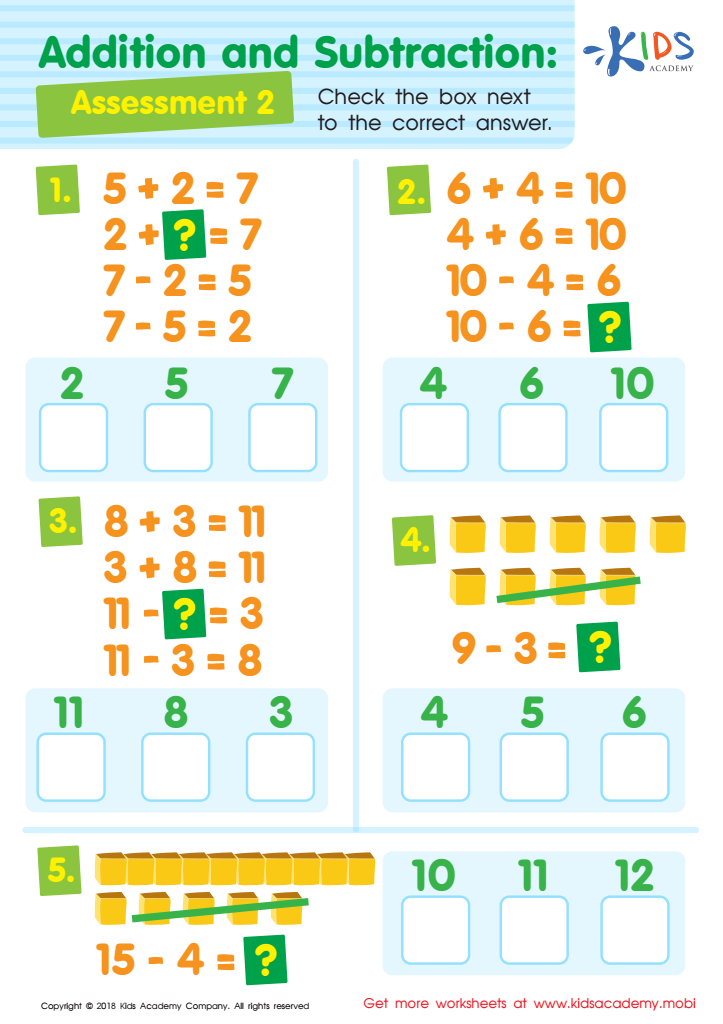
Addition and Subtraction Assessment 2 Worksheet
 Assign to My Students
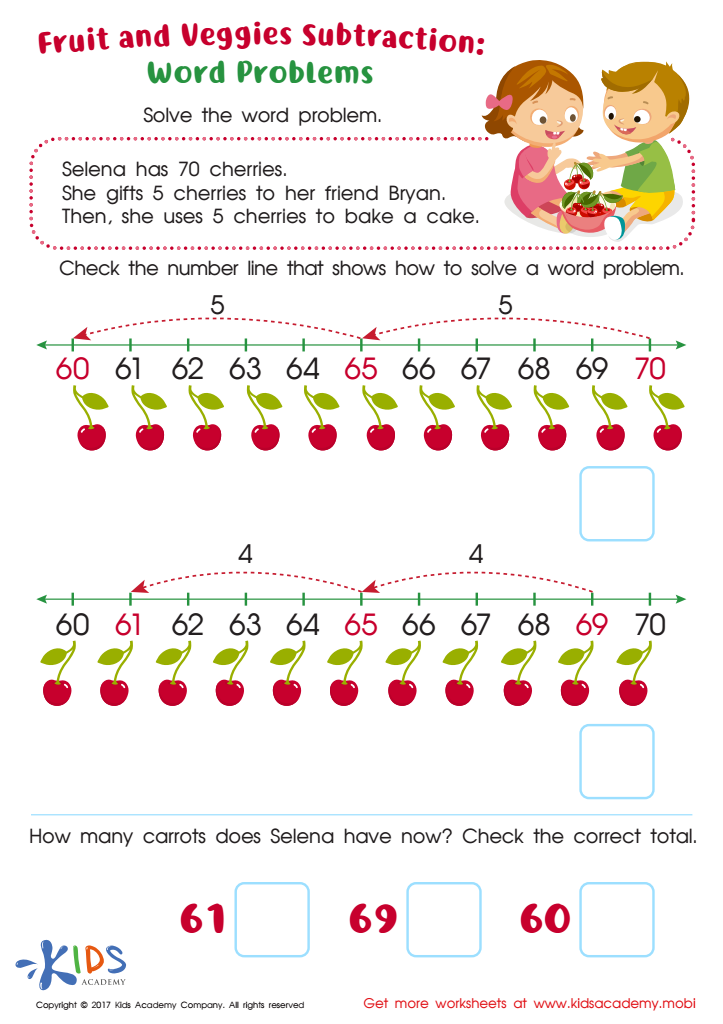
Subtraction Word Problems Free Printable
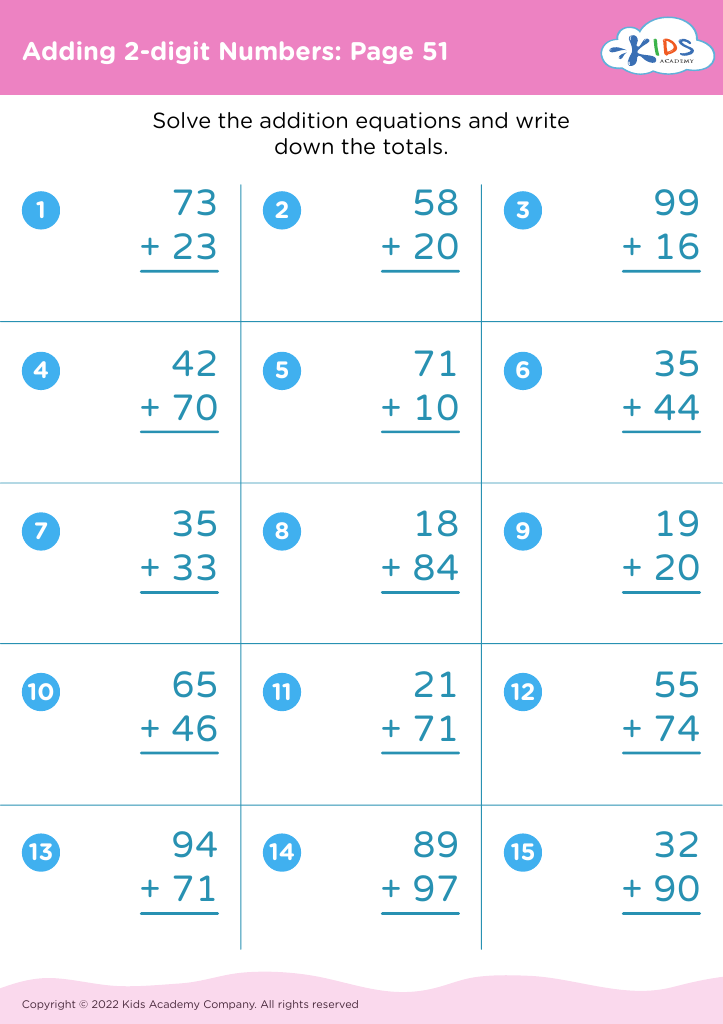








Enhancing logical thinking in addition and subtraction for ages 4-7 is crucial because it lays the foundation for future academic success and cognitive development. At this young age, children are developing critical thinking skills that will not only help them in mathematics but in problem-solving across various disciplines.
Firstly, introducing logical thinking early helps children understand the basic principles of mathematics. This fundamental understanding paves the way for grasping more complex mathematical concepts in later years. Children who master addition and subtraction can more easily transition to multiplying, dividing, and eventually tackling algebra and geometry.
Secondly, logical thinking enhances cognitive abilities such as memory, attention, and reasoning. When children solve addition and subtraction problems, they actively engage their brains, encouraging neural connections that aid in overall mental development.
Thirdly, these skills instill confidence and a can-do attitude in children. Success in early math encourages a positive mindset towards learning, leading to increased participation and curiosity. This growth mindset is vital for academic perseverance and resilience.
Lastly, logical thinking in math extends to daily life skills, such as budgeting allowance, telling time, and following recipes. Thus, by enhancing logical thinking in these fundamental areas, parents and teachers equip children with indispensable life skills, fostering well-rounded development.








