Enhancing problem-solving skills Addition & Subtraction Worksheets for Ages 4-7
9 filtered results
-
From - To
Boost your child's problem-solving abilities with our engaging Addition and Subtraction Worksheets designed for ages 4-7. These interactive and colorful resources make learning math enjoyable and effective, helping young learners develop essential skills while reinforcing foundational concepts. Our printable worksheets offer a variety of challenging exercises that encourage critical thinking and enhance mental math proficiency. As children work through fun problems, they gain confidence in their abilities and cultivate a love for math. Perfect for classroom use or homeschooling, our worksheets are tailored to support early learners on their educational journey. Start empowering your child’s problem-solving skills today!
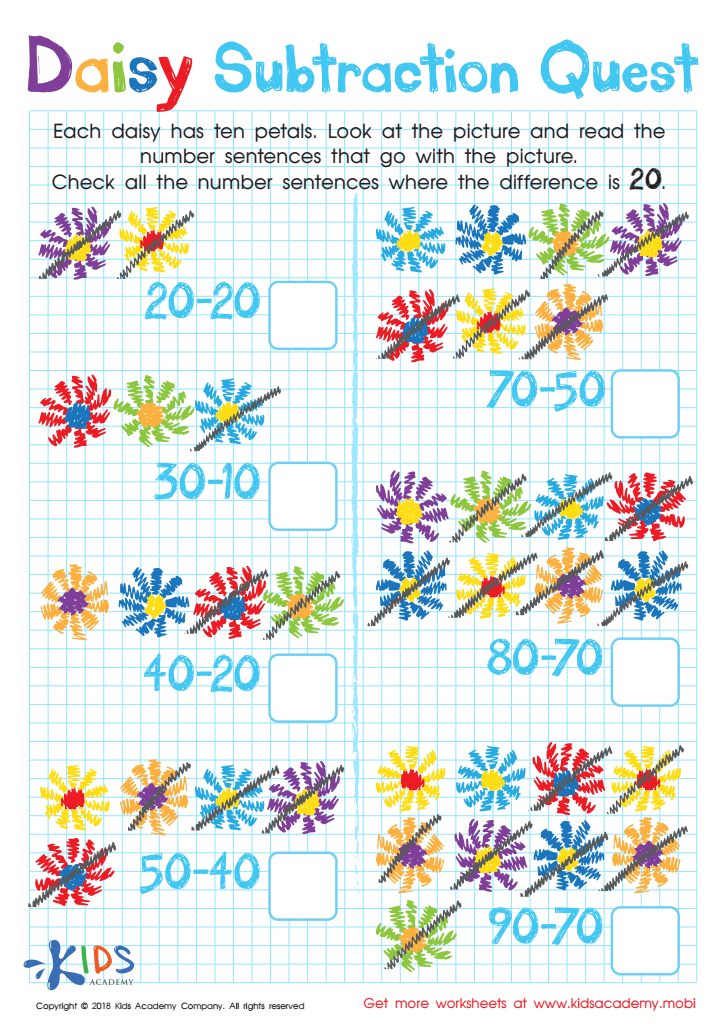
Daisy Subtraction Quest Worksheet
 Assign to My Students
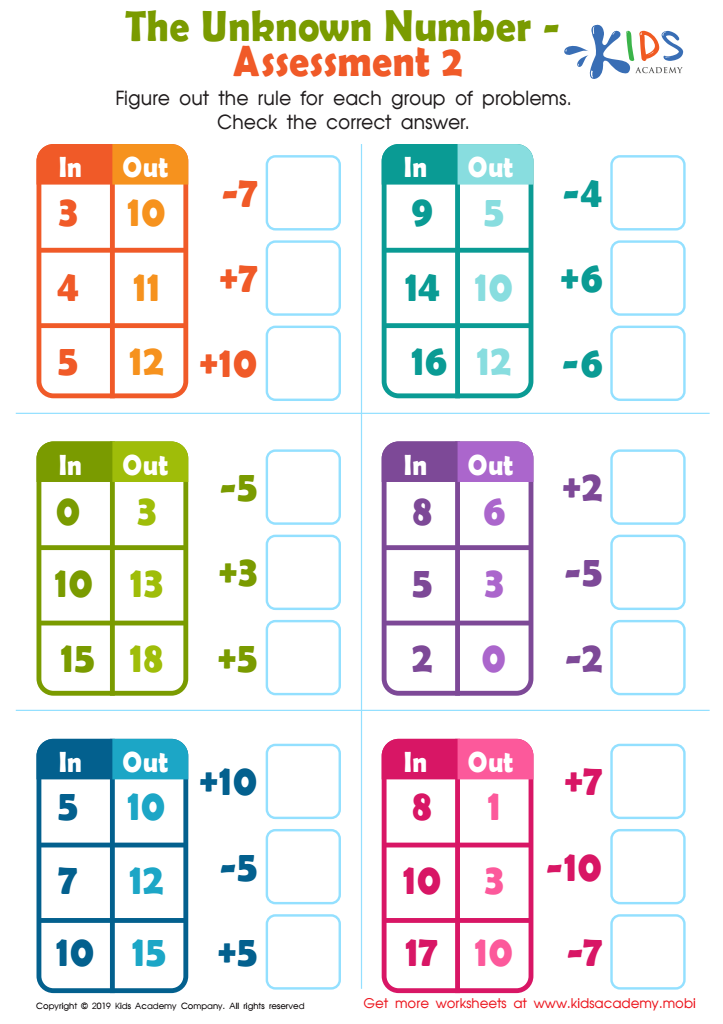
The Unknown Number - Assessment 2 Worksheet
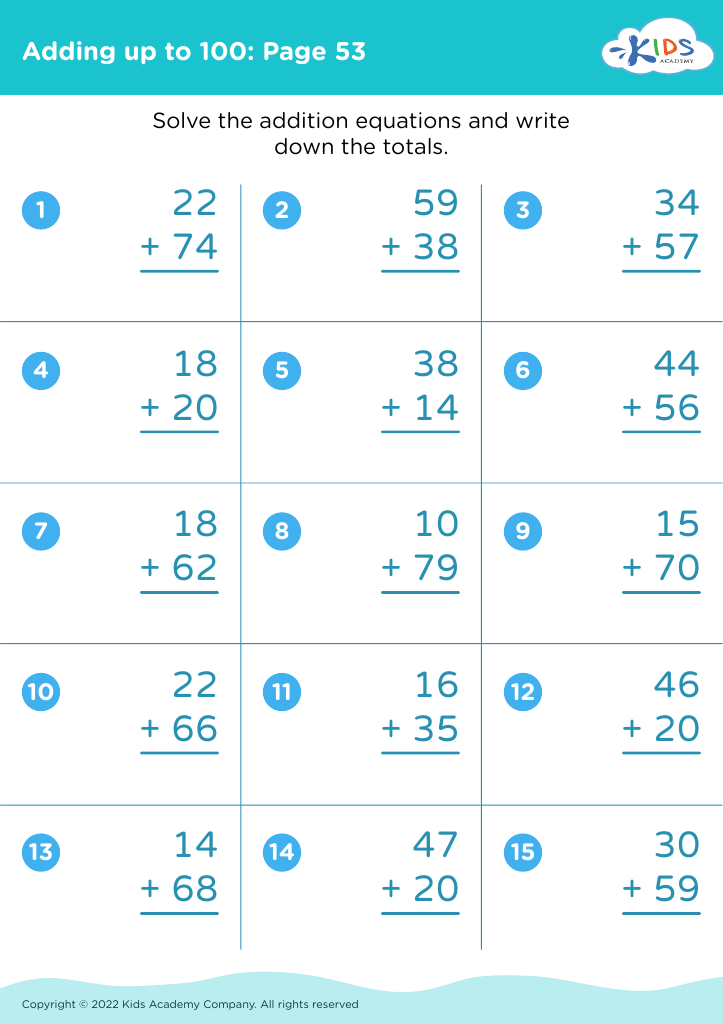
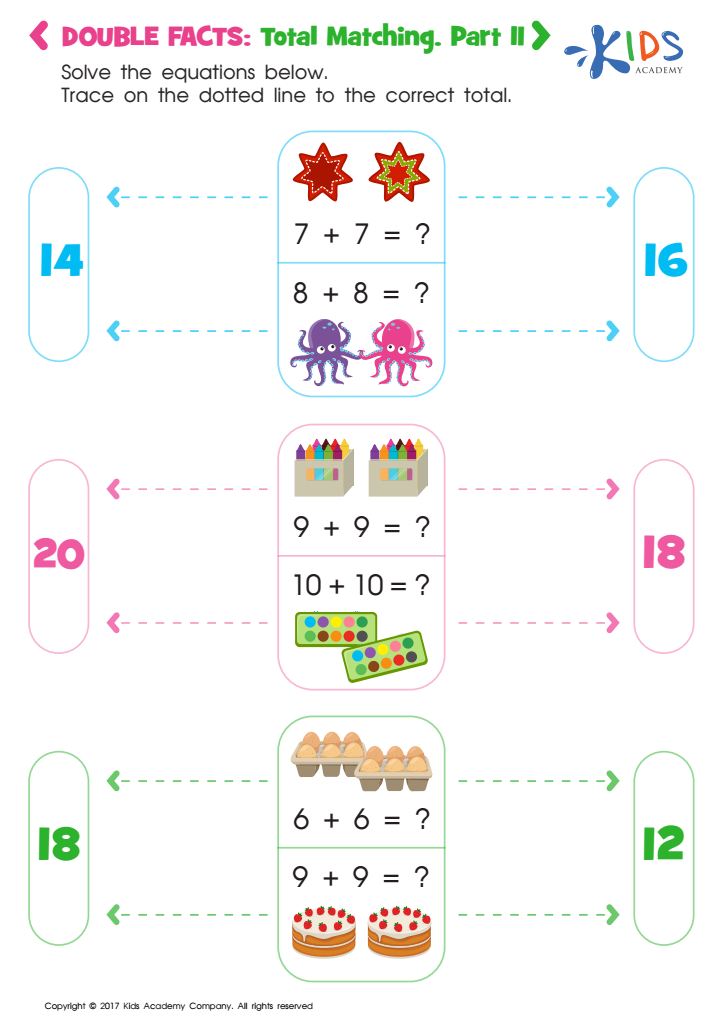
Double Facts: Total Matching 2 Worksheet
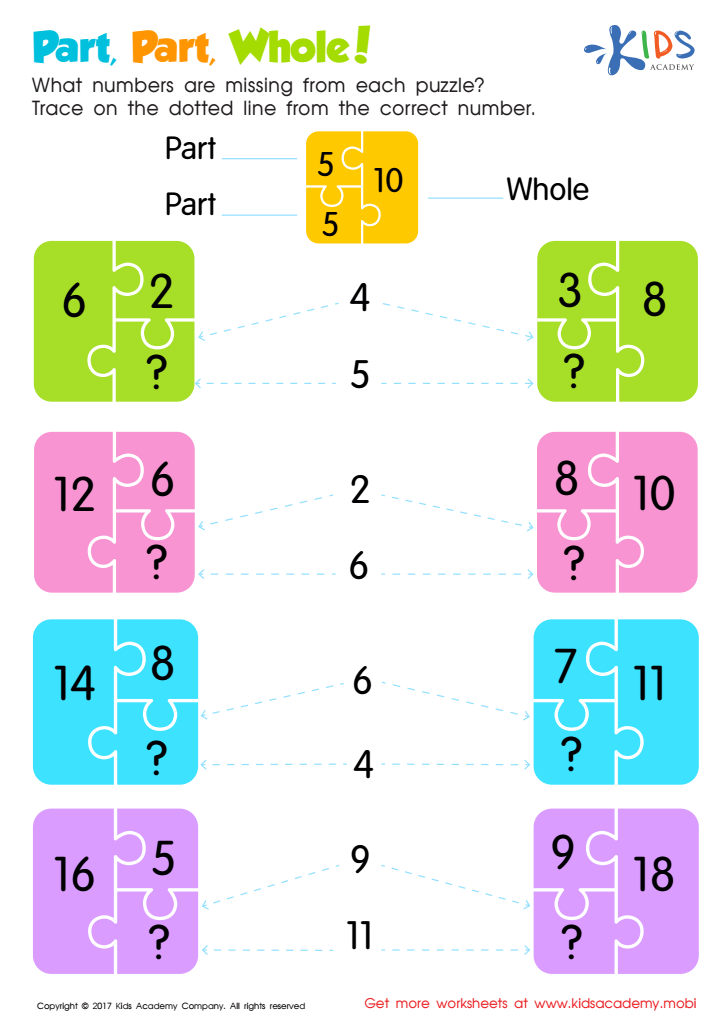
Part, Part, Whole Worksheet
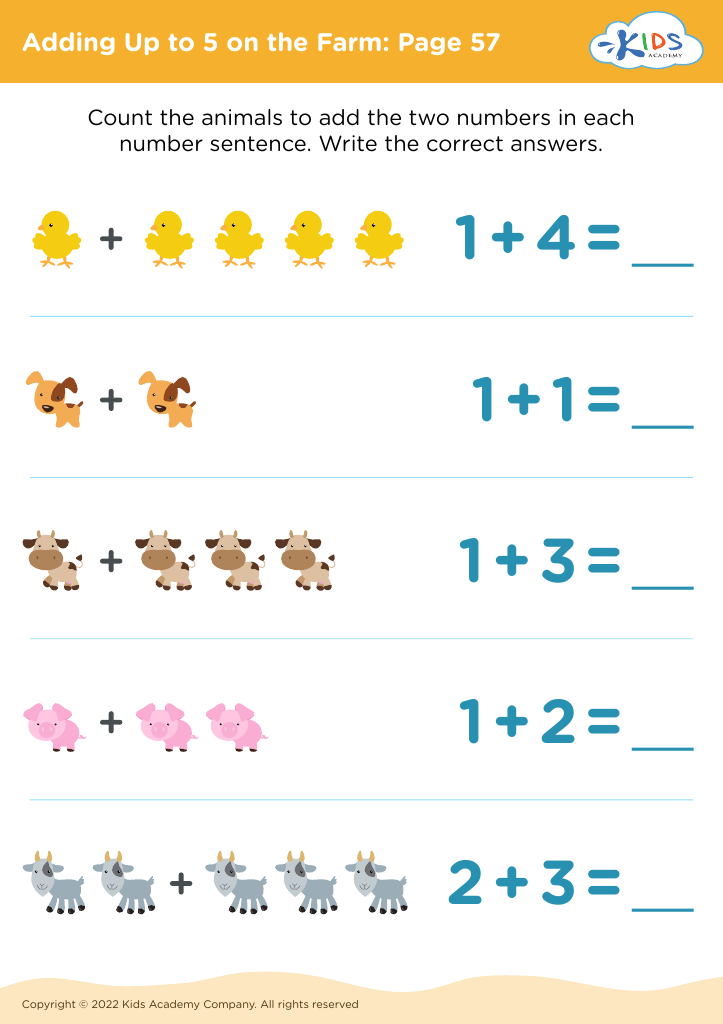








Enhancing problem-solving skills in addition and subtraction for children ages 4-7 is crucial for several reasons. At this developmental stage, children are laying the foundation for their mathematical understanding, and mastering these basic operations is essential for future academic success. Problem-solving skills not only involve arithmetic but also encourage critical thinking, analytical reasoning, and the ability to approach challenges creatively.
When parents and teachers focus on strengthening these skills, they help children develop resilience and confidence in their abilities. These foundational skills enable young learners to tackle more complex concepts later on, thereby fostering a growth mindset and a positive attitude toward math.
Additionally, incorporating problem-solving activities can make learning more engaging and interactive. By using real-world scenarios and hands-on manipulatives, children can connect abstract mathematical concepts to their everyday lives, making math relevant and enjoyable. This early engagement with problem-solving not only enhances mathematical competence but also nurtures curiosity and a love for learning.
Ultimately, strong problem-solving skills in addition and subtraction create a pathway for children to become self-sufficient learners, equipped to navigate both academic challenges and real-world situations effectively. Investment in early mathematical skills pays dividends throughout a child's educational journey.








