Fine motor skills (writing) Addition & Subtraction Worksheets for Ages 4-7 - Page 2
40 filtered results
-
From - To
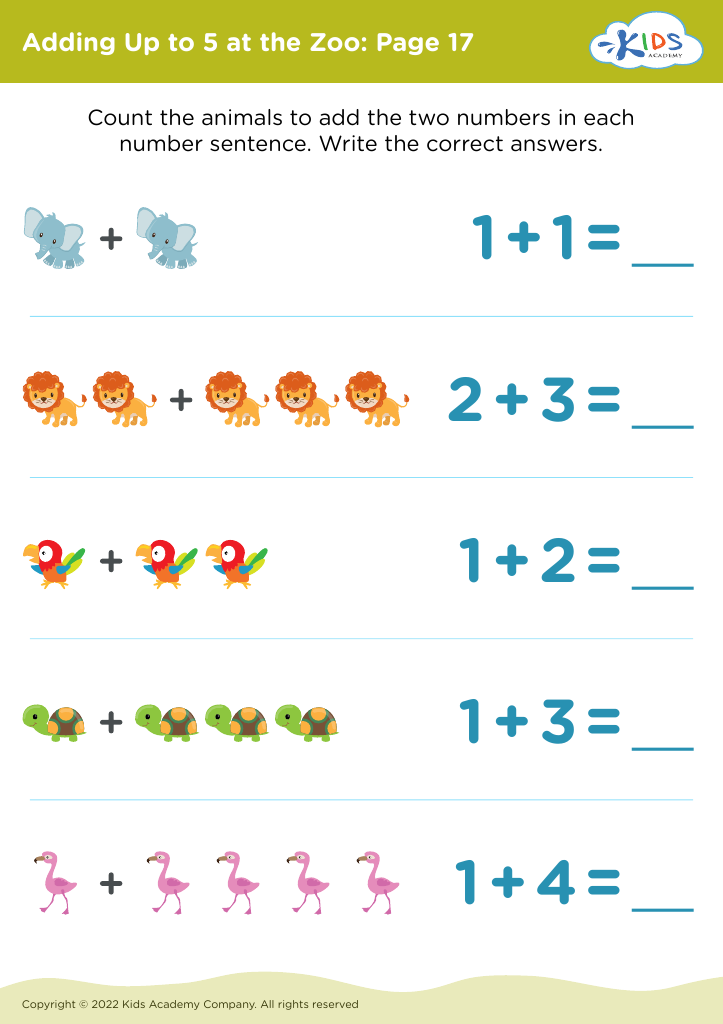
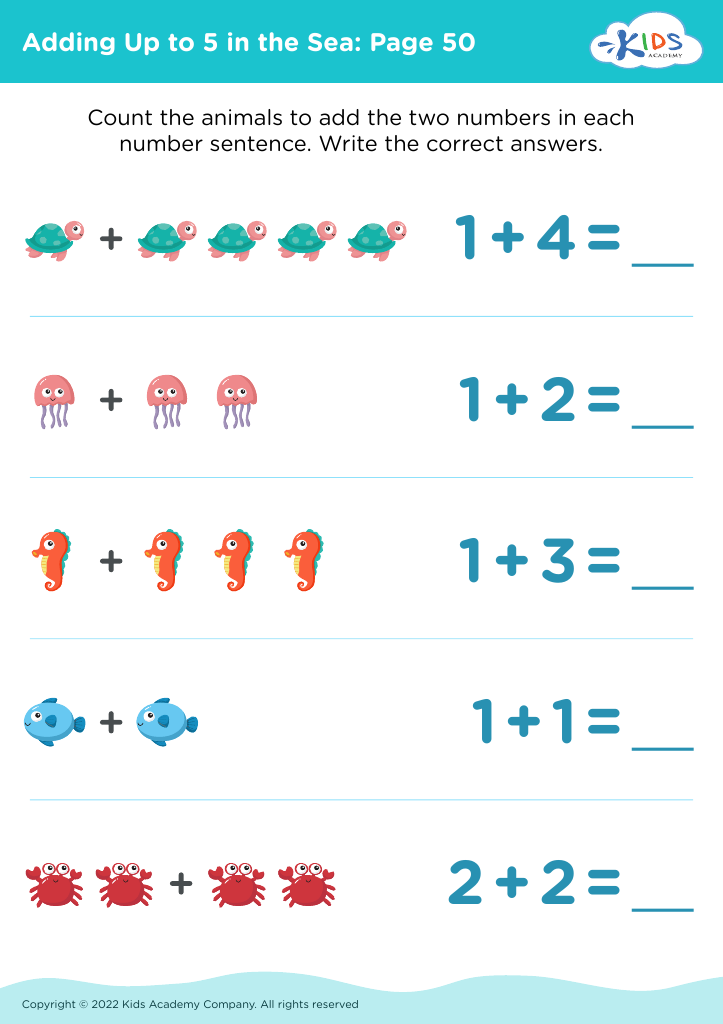
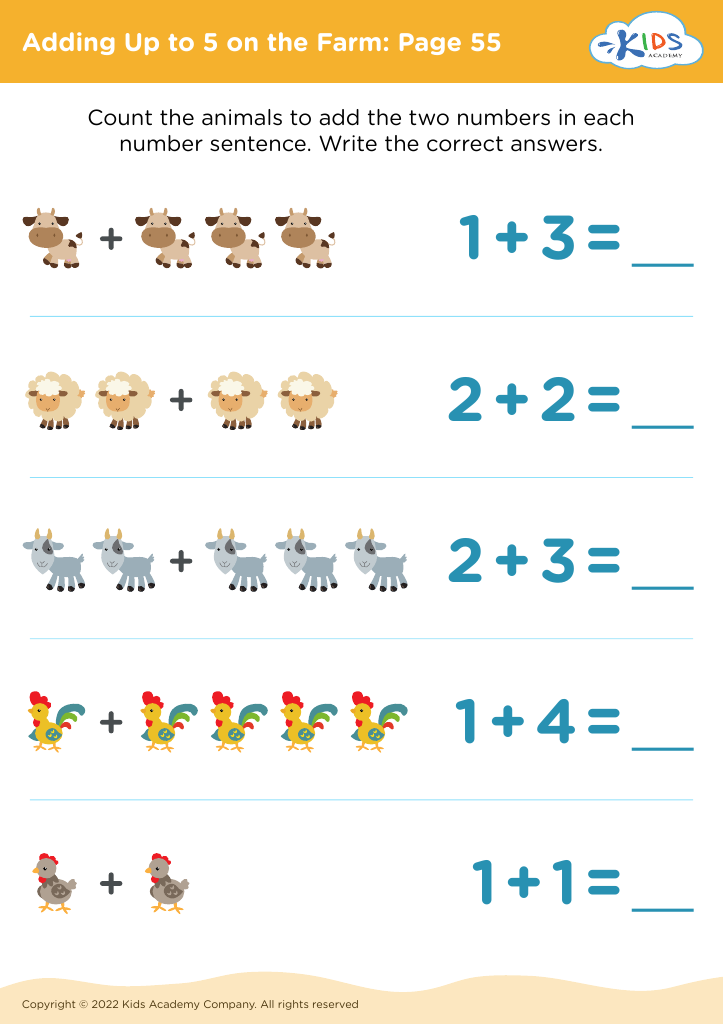
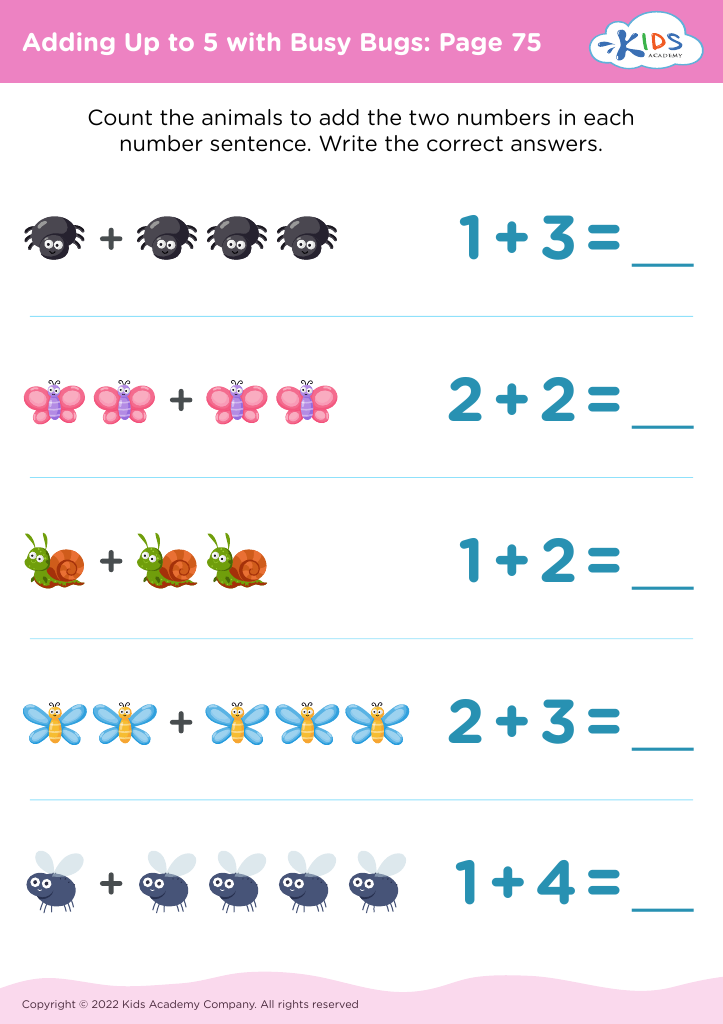
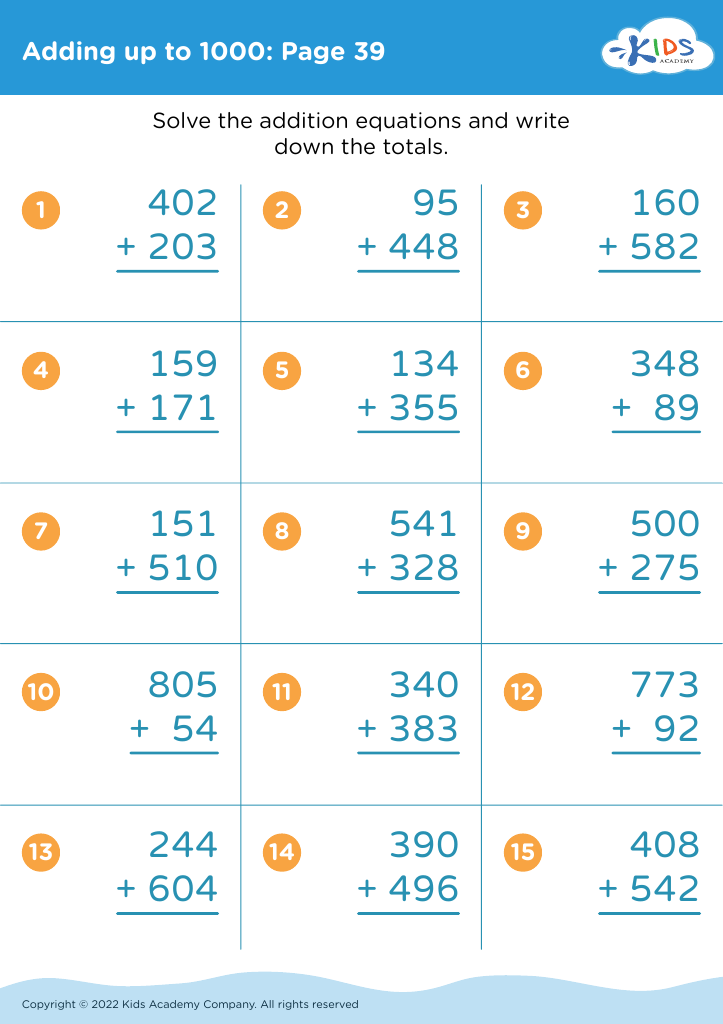
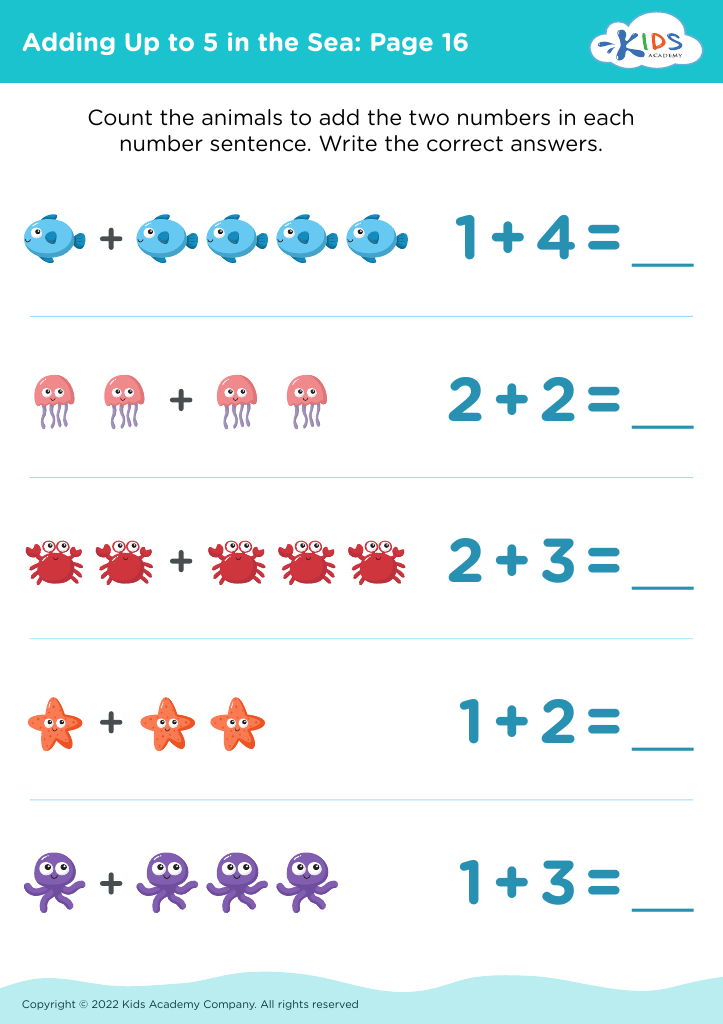
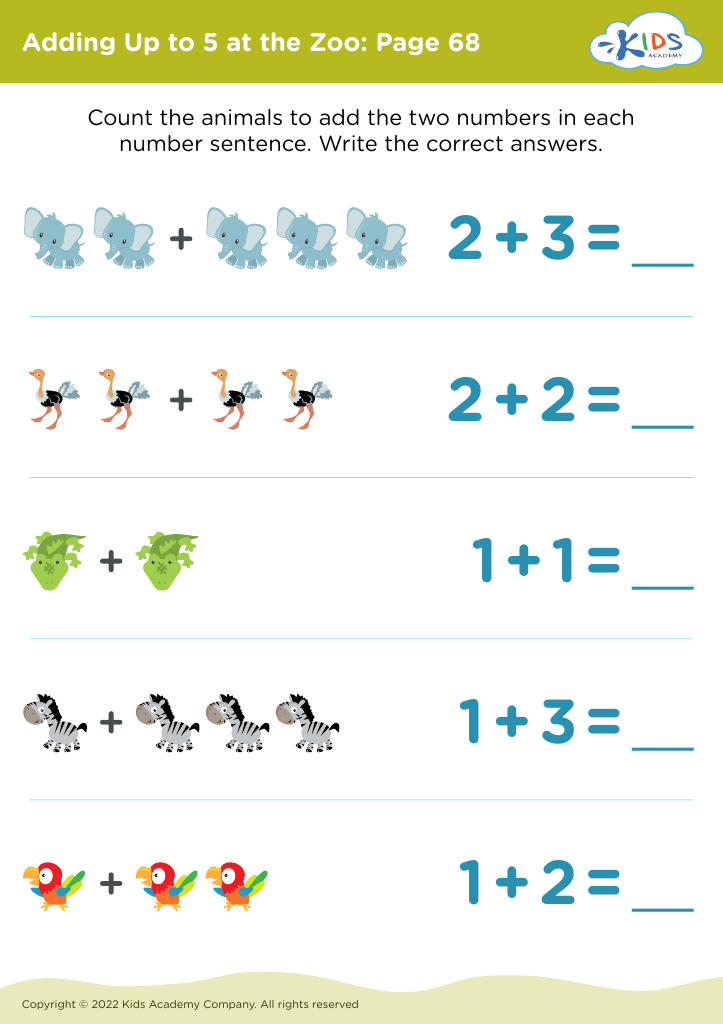
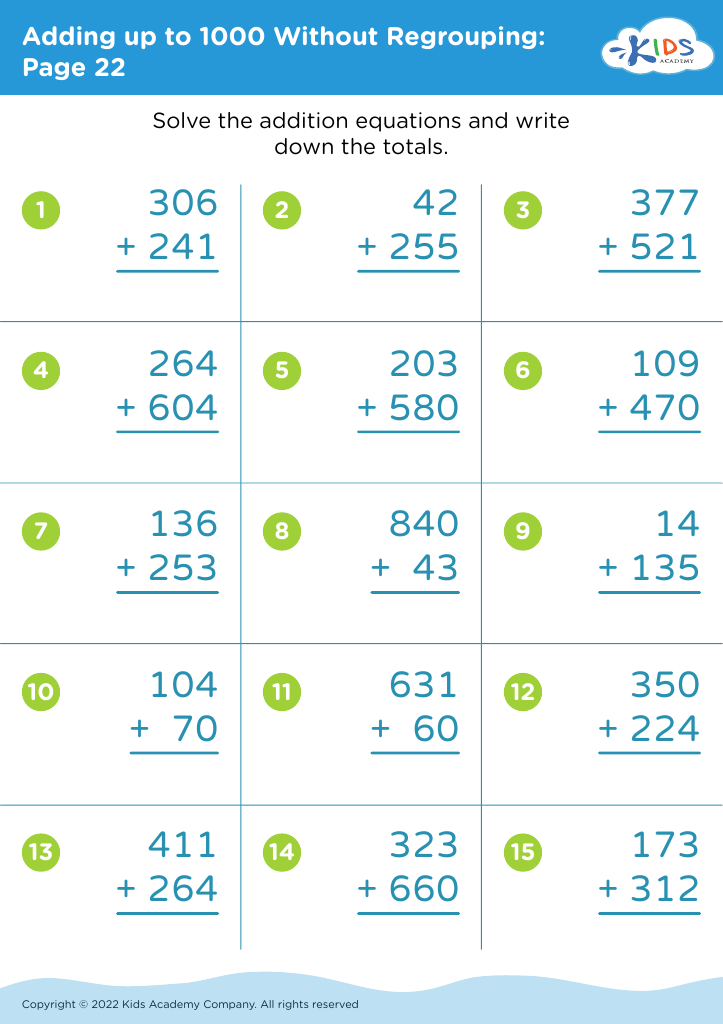
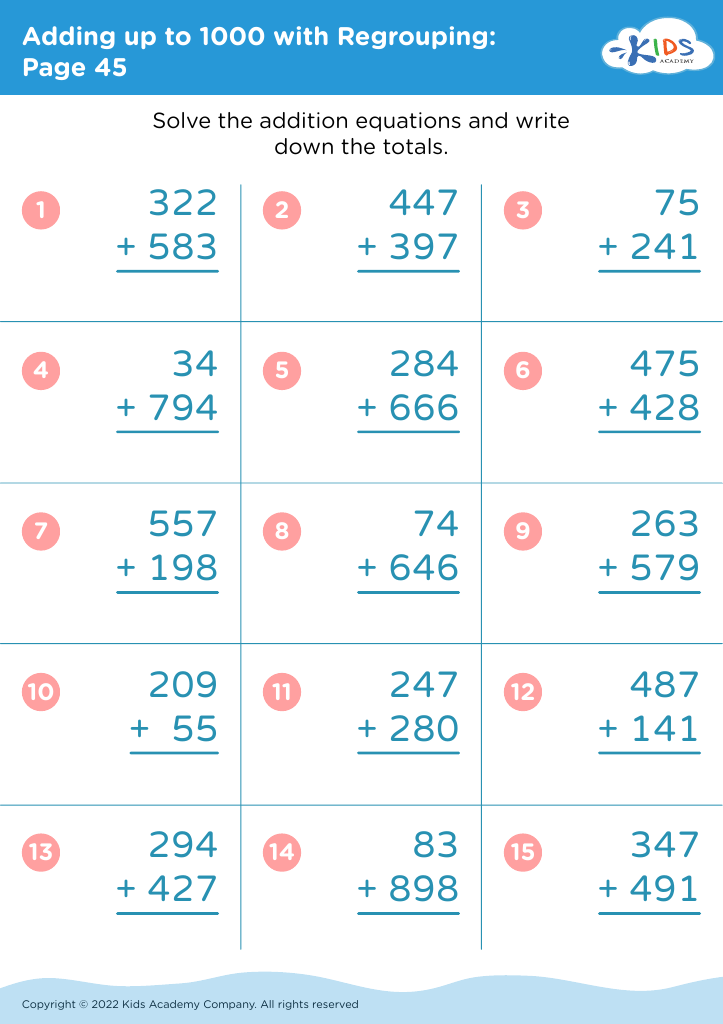
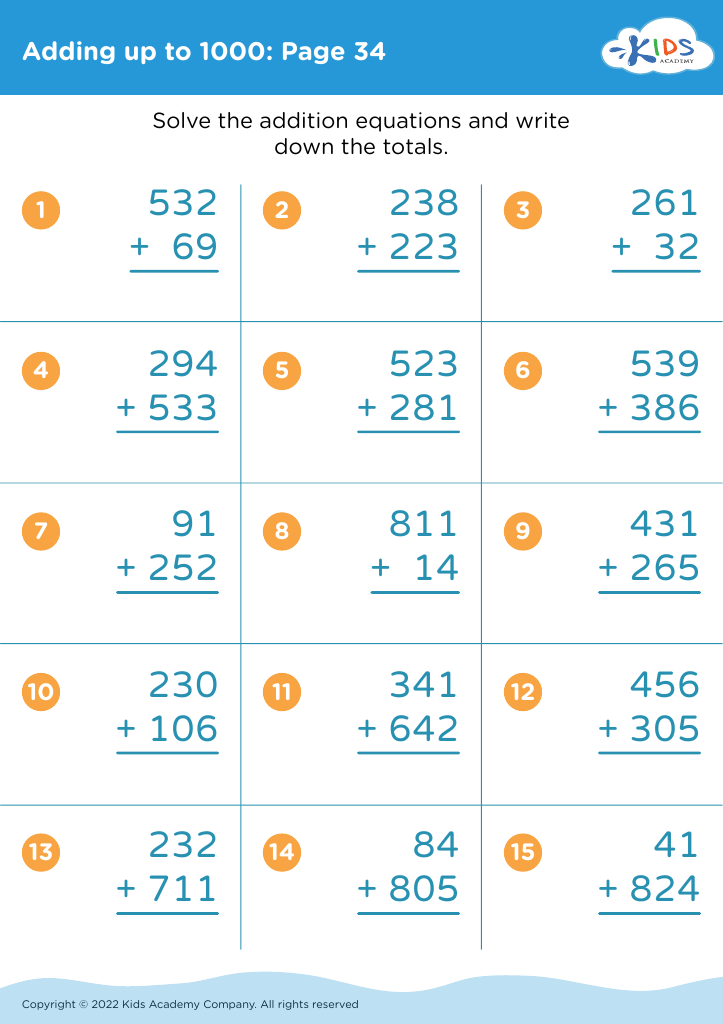
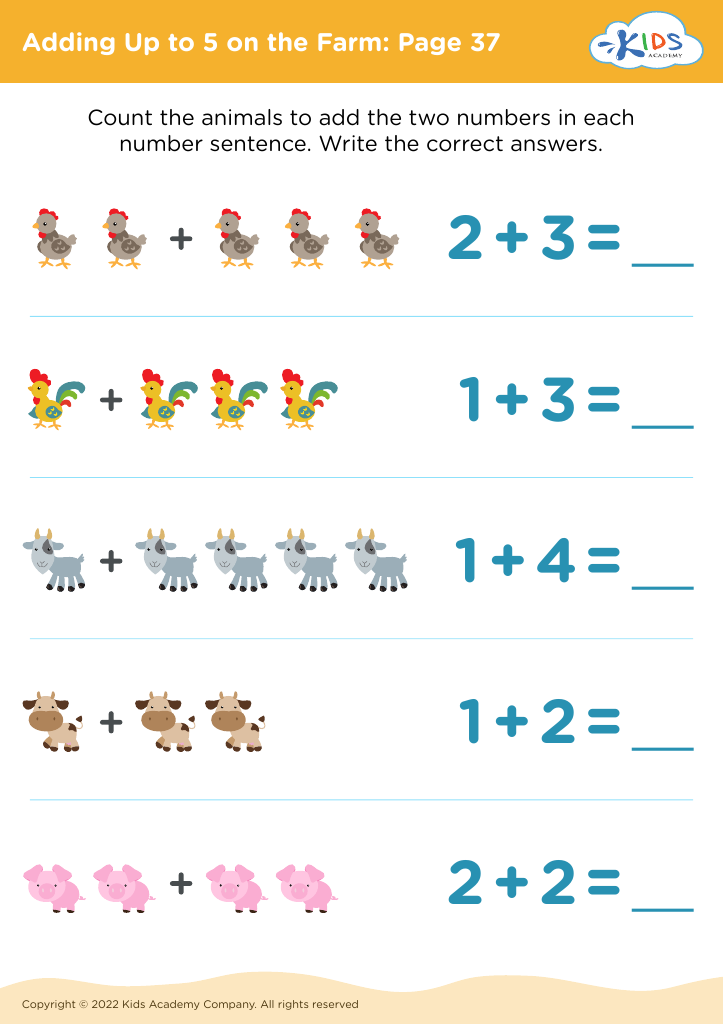
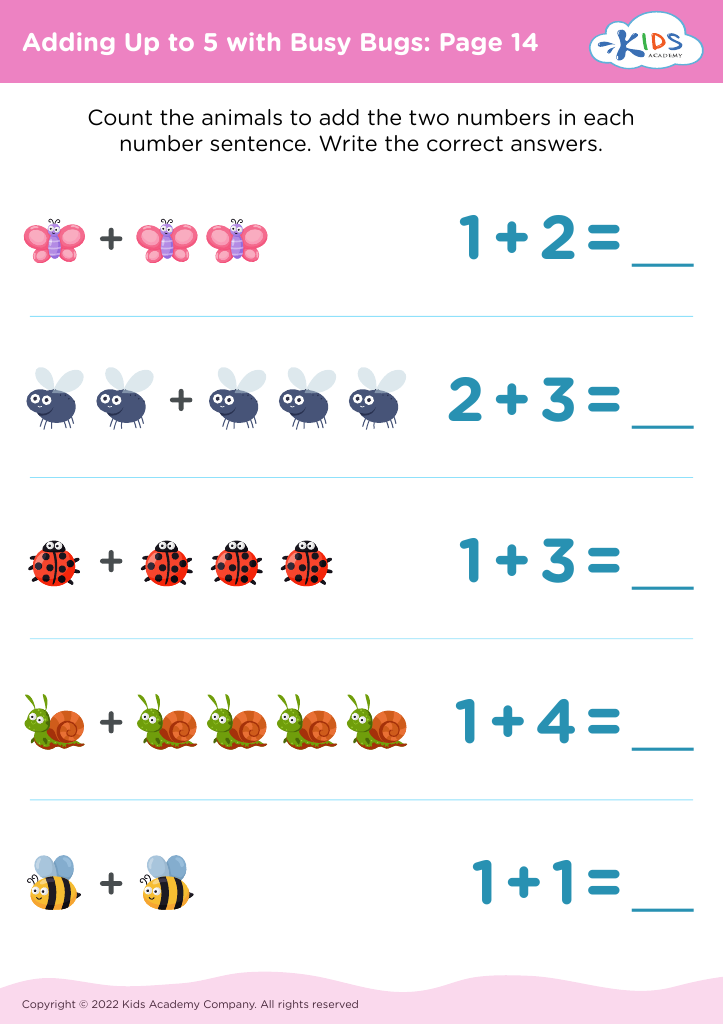
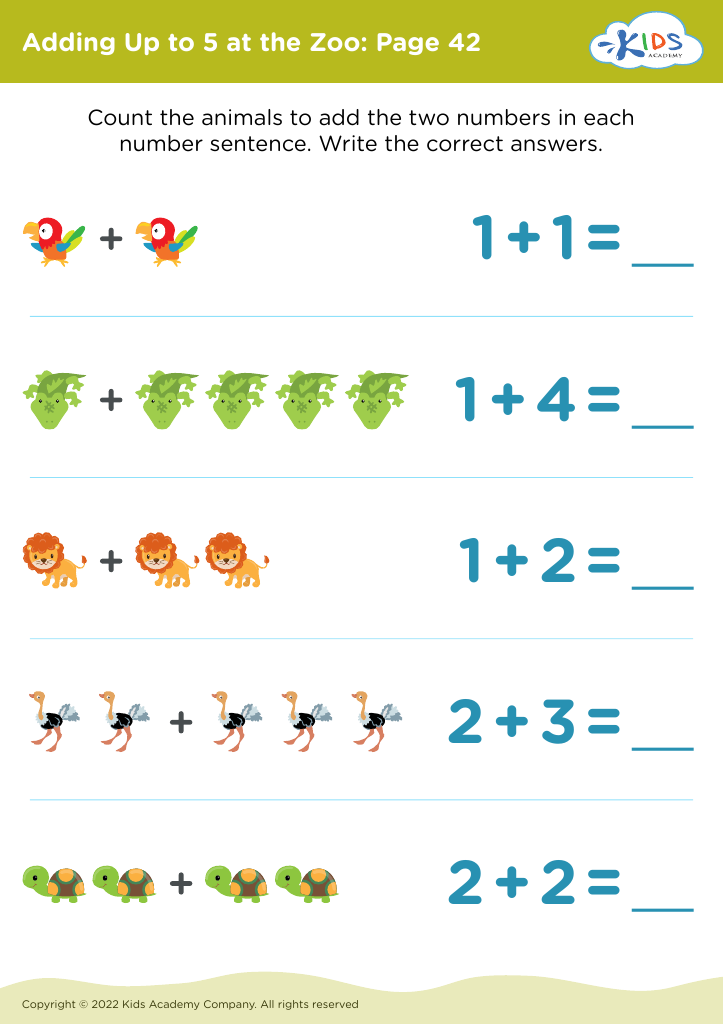
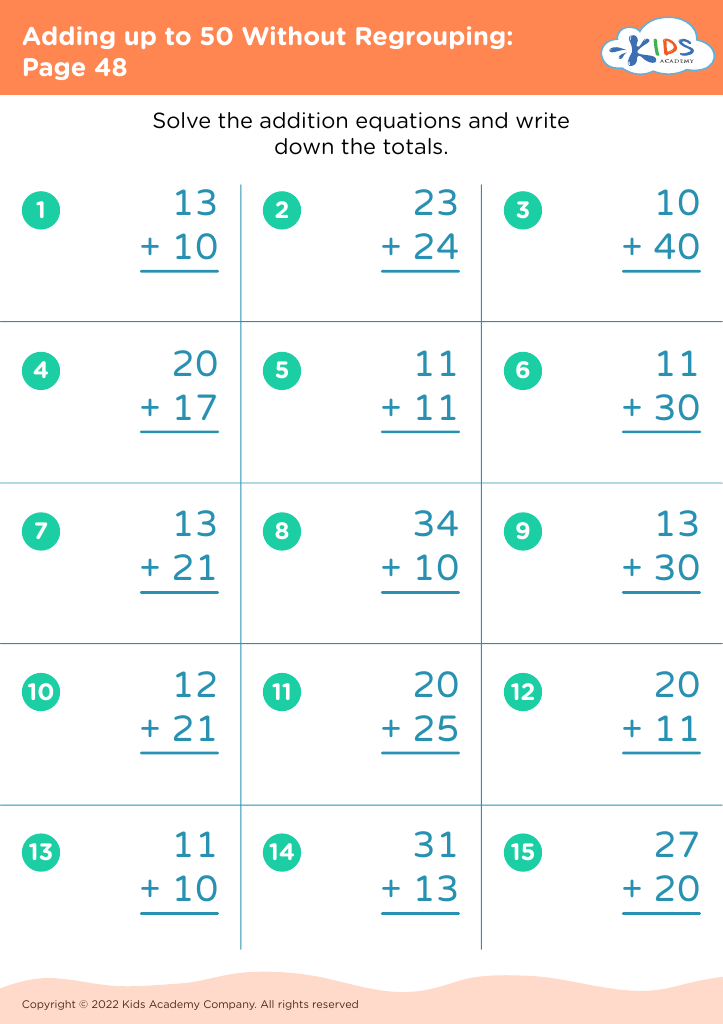
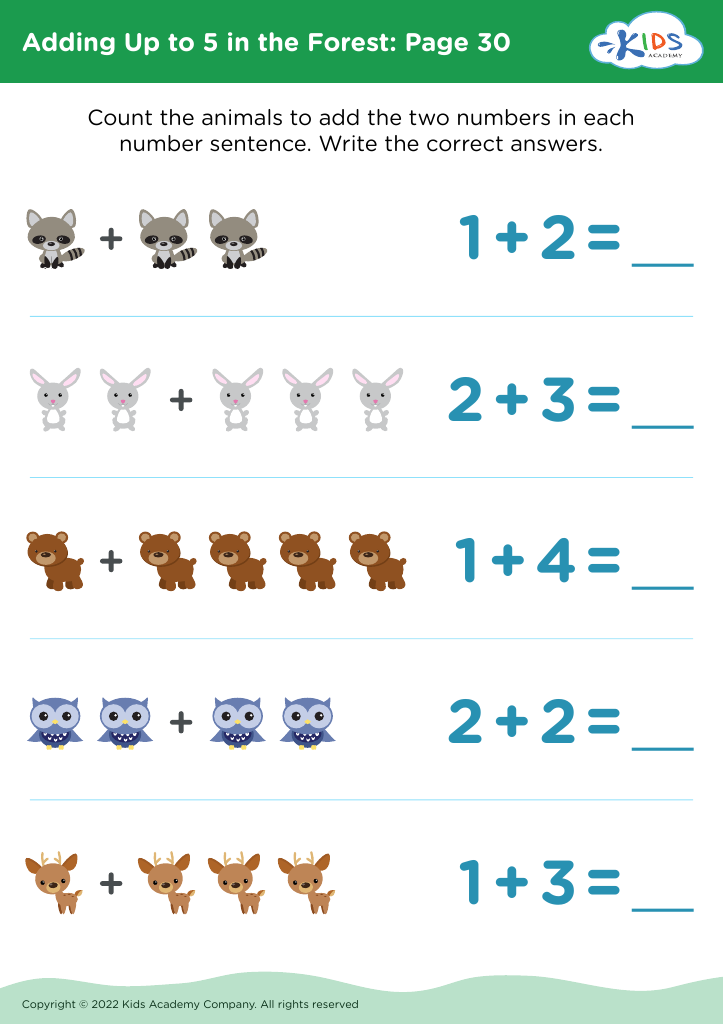
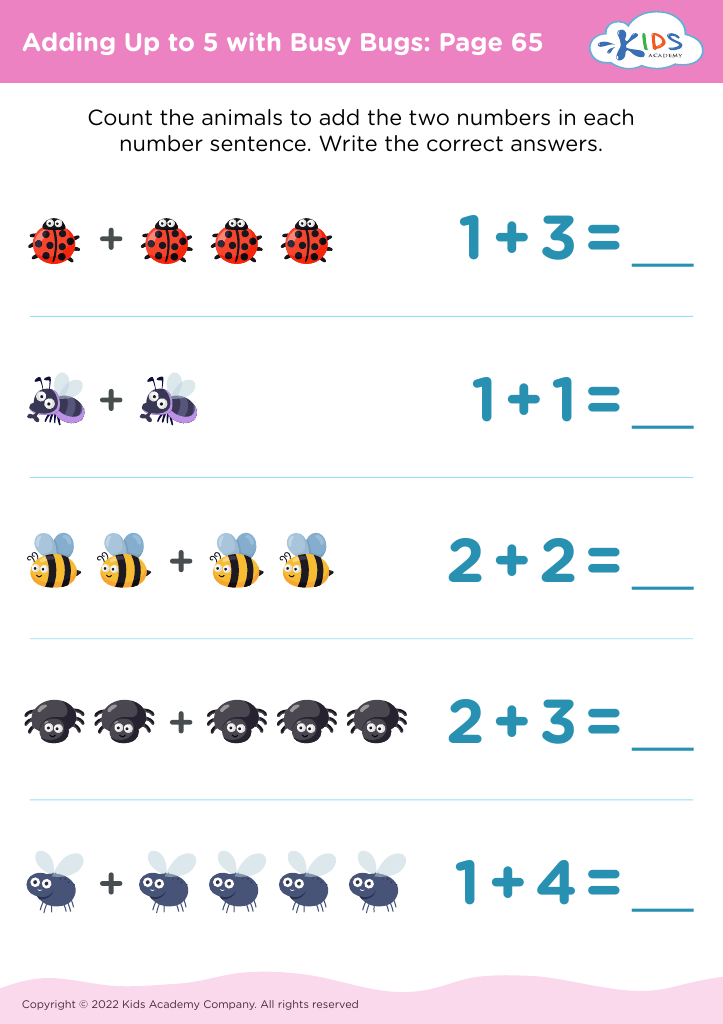








Parents and teachers should prioritize fine motor skills, specifically in writing, addition, and subtraction, for children aged 4-7 because these competencies are foundational for future academic success and daily living. Fine motor skills allow children to perform tasks that require hand-eye coordination and dexterity, such as holding a pencil correctly and forming letters or numbers with precision. As children learn to write, they develop not only the ability to communicate effectively but also critical cognitive skills by connecting symbols to sounds, aiding in their literacy development.
Moreover, basic arithmetic like addition and subtraction relies on these skills, as physically manipulating objects or drawing numbers enhances a child’s understanding of these concepts. It paves the way for problem-solving abilities and logical thinking that are essential as they advance in their education.
Fostering these skills at an early age also builds confidence and independence in children. When they can write and complete simple math problems, they feel empowered in their learning journey. Engaging in activities that strengthen fine motor skills, such as drawing, crafting, or playing games, also encourages creativity and teaches patience, setting a solid foundation for lifelong learning. Thus, focusing on these skills ensures holistic development during these crucial early years.








