Fraction simplification Addition & Subtraction Worksheets for Ages 4-7 - Page 3
58 filtered results
-
From - To
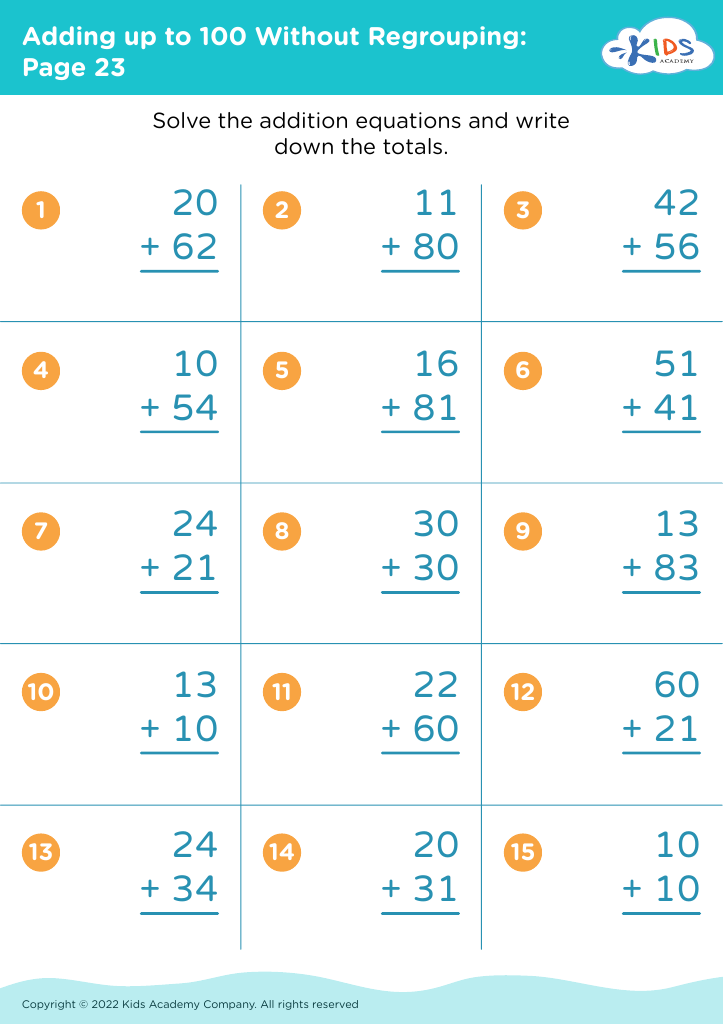
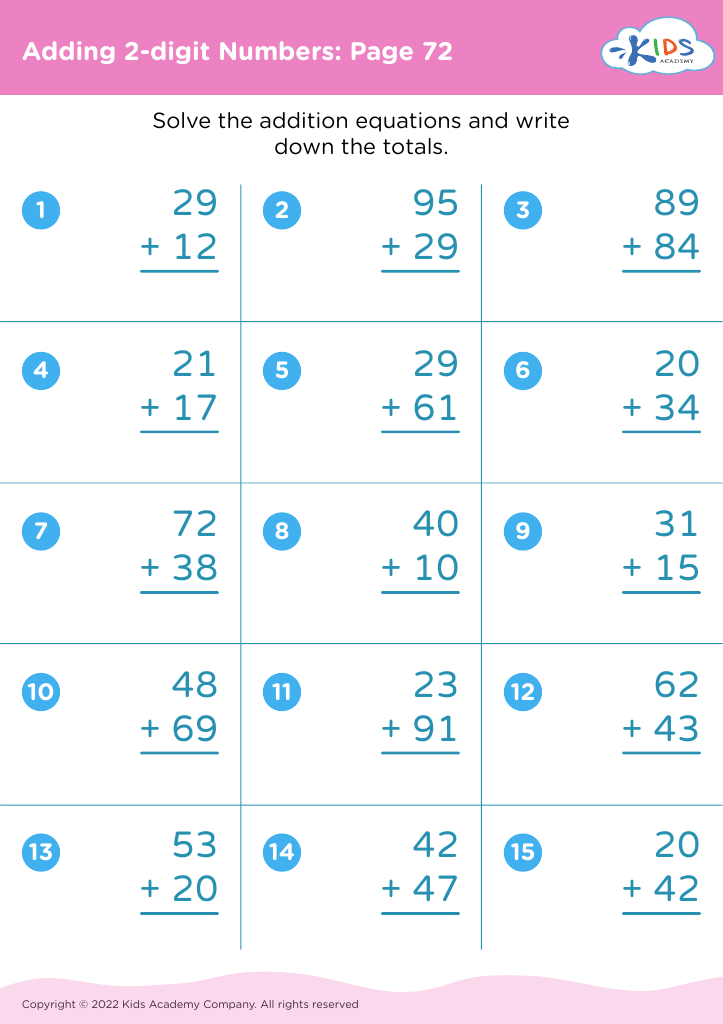
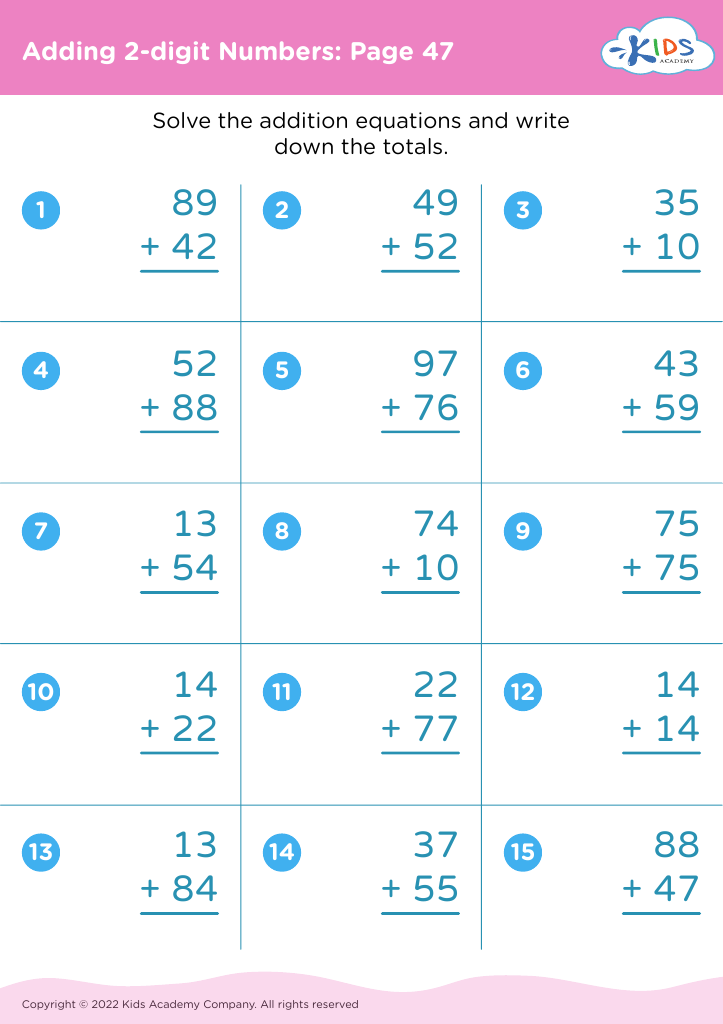
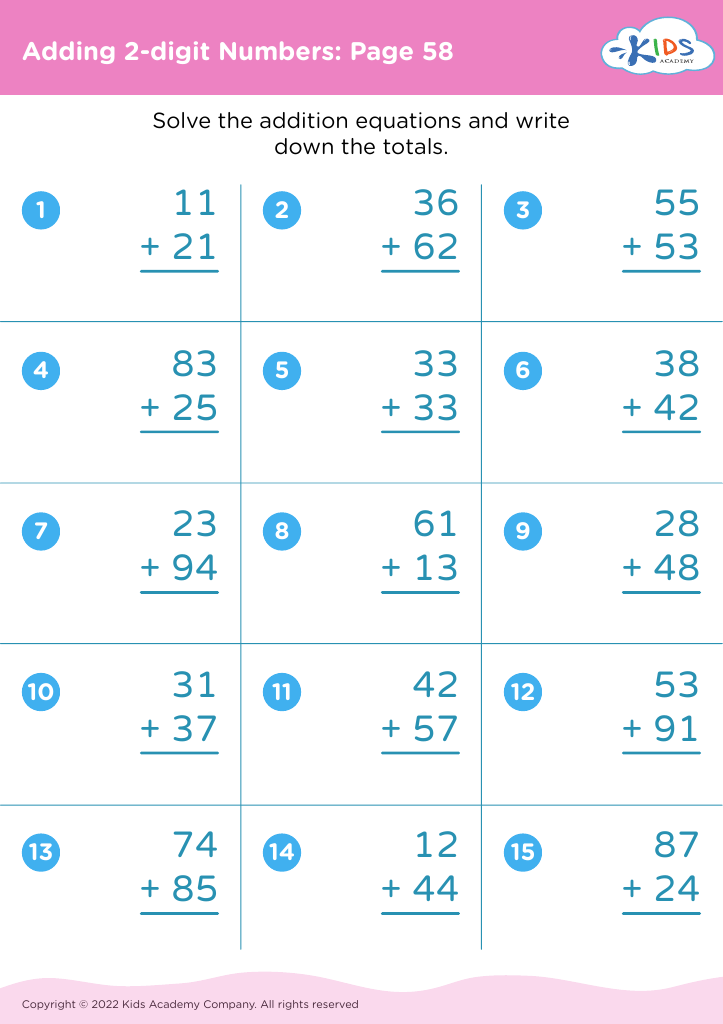
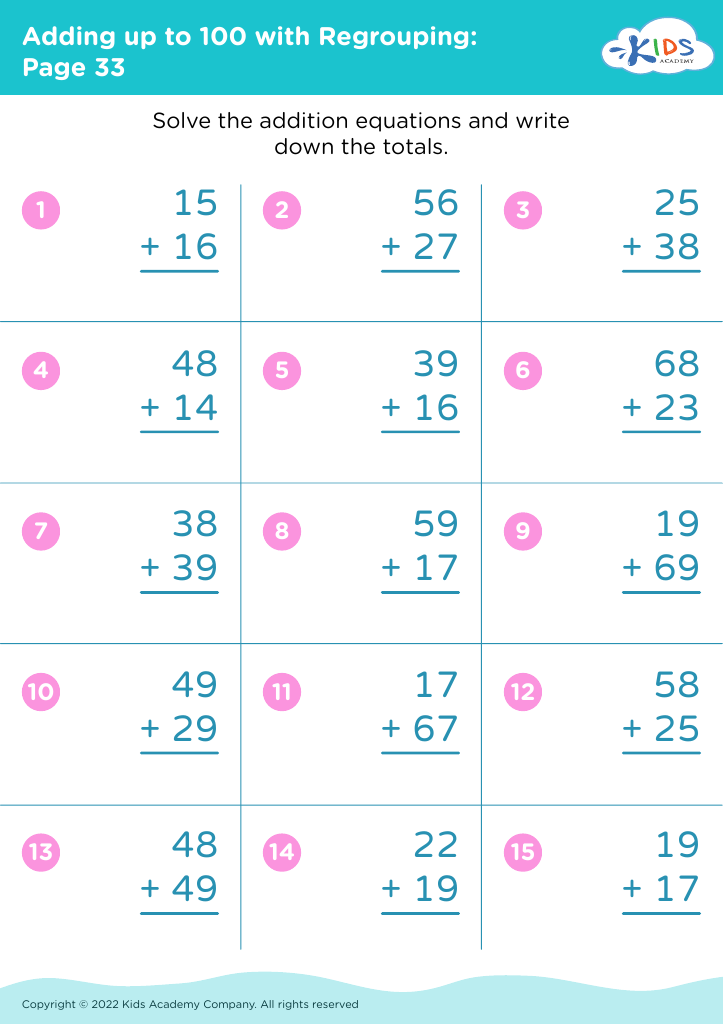
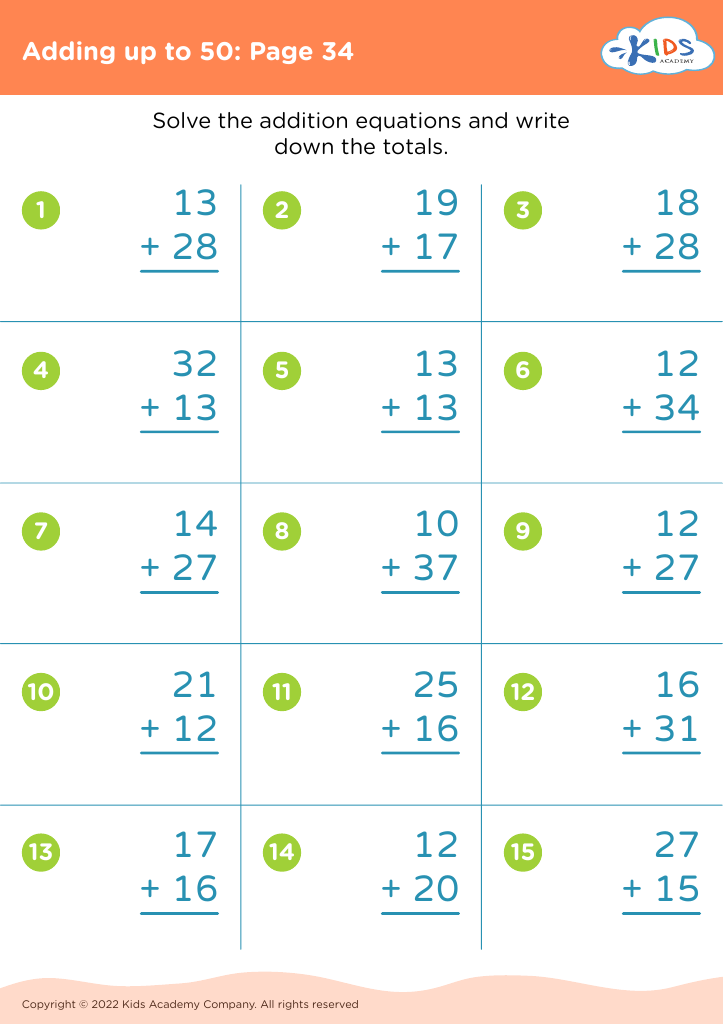








Introducing the concepts of fraction simplification, addition, and subtraction to children aged 4-7 lays a fundamental groundwork for their future mathematical understanding. At this tender age, children are developing critical thinking skills and the ability to recognize patterns. Mastering fractions boosts their numerical fluency and problem-solving capacity, essential for more advanced mathematical concepts they will encounter later.
Simplifying fractions helps children grasp the idea that different-looking fractions can represent the same quantity, an important step in promoting number sense. It also aids in making complex problems more manageable. For instance, knowing that 2/4 is the same as 1/2 helps clarify future arithmetic operations and compares quantities efficiently.
Adding and subtracting fractions teaches children to find common denominators and manipulate numbers flexibly. These operations extend their understanding of whole numbers to parts of a whole, making their mathematical perspective more comprehensive. It involves yet another layer of cognitive skills like comparing, contrasting, and equilibrium.
Moreover, these skills are intertwined with real-world applications. Whether it's dividing a pizza or measuring ingredients while cooking, the ability to understand and operate with fractions instills confidence in quotidian activities and enhances practical life skills.
Prioritizing these math concepts early not only bolsters academic success but also fosters a positive attitude towards learning and challenges throughout life.








