Improving counting skills Addition & Subtraction Worksheets for Ages 4-7
12 filtered results
-
From - To
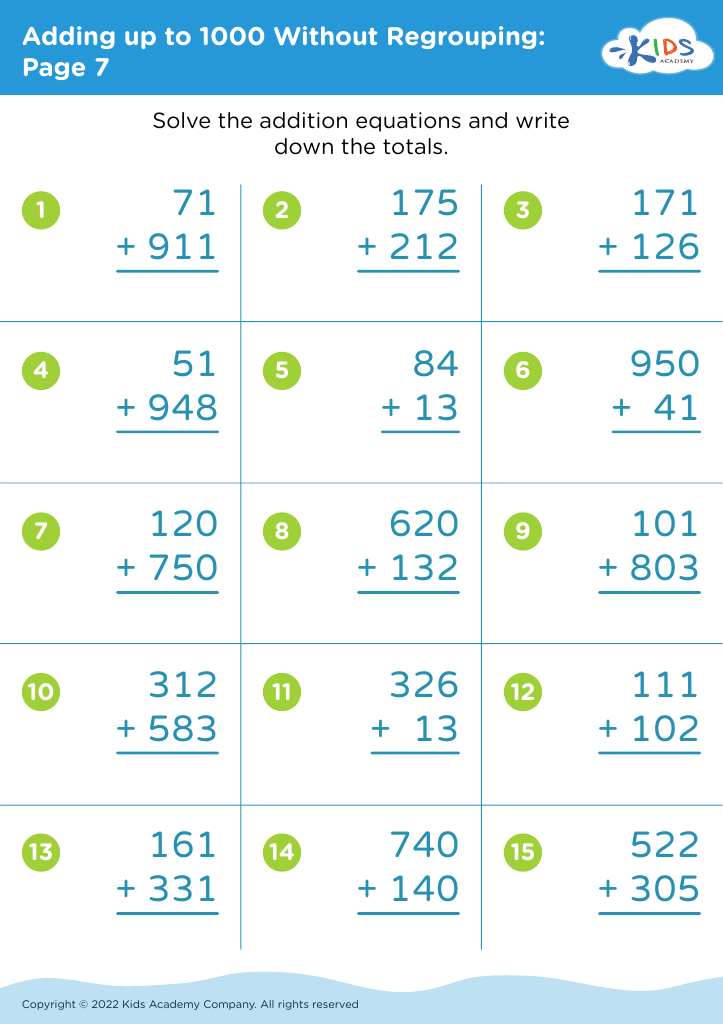
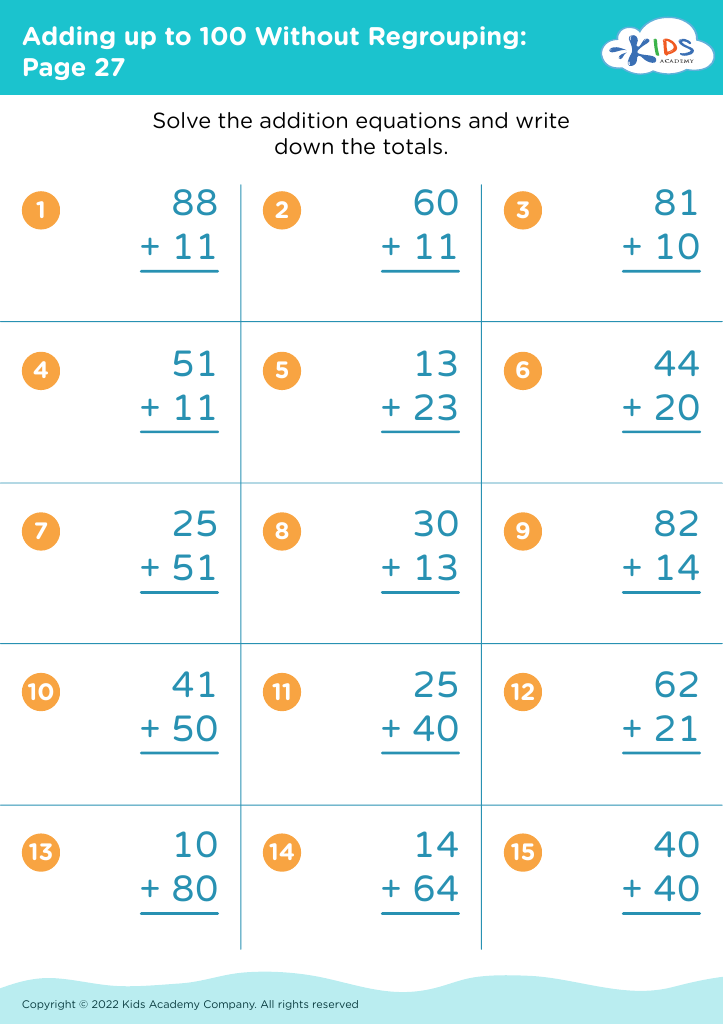
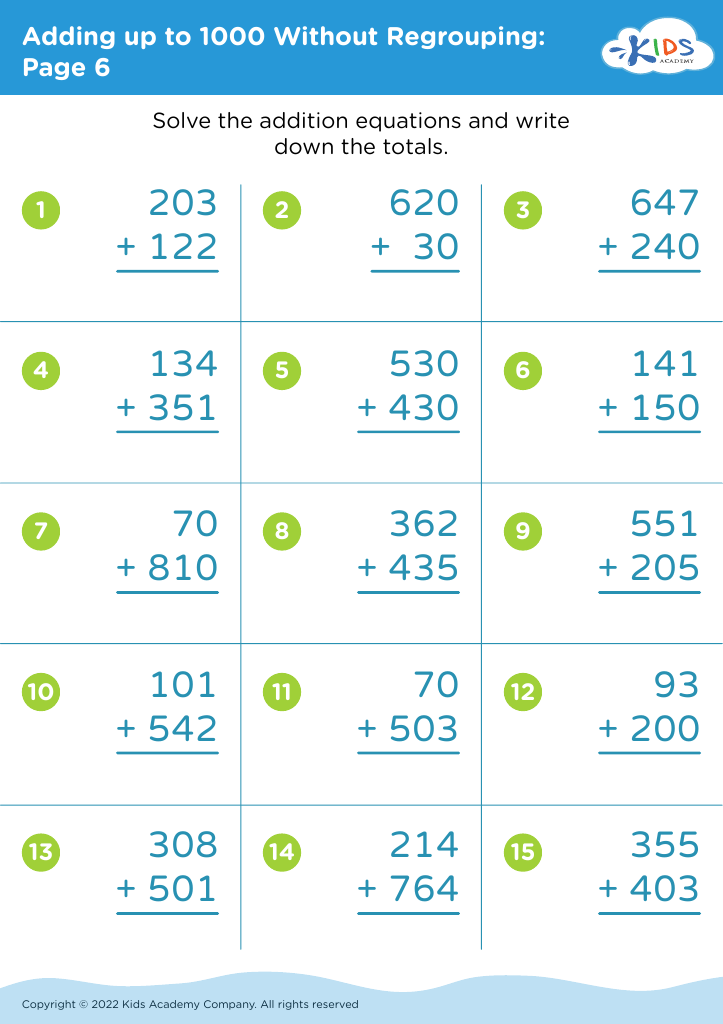
Enhance your child's counting abilities with our engaging Addition and Subtraction Worksheets designed specifically for ages 4-7. These fun and interactive activities make learning math enjoyable while laying a strong foundation in essential counting skills. Our worksheets are filled with colorful illustrations and age-appropriate exercises that encourage young learners to practice counting, addition, and subtraction in a playful way. Perfect for homeschooling or classroom settings, these resources provide endless opportunities for skill development and mastery. Help your child gain confidence in their math abilities and foster a love for numbers with our specially-crafted worksheets. Start improving counting skills today!
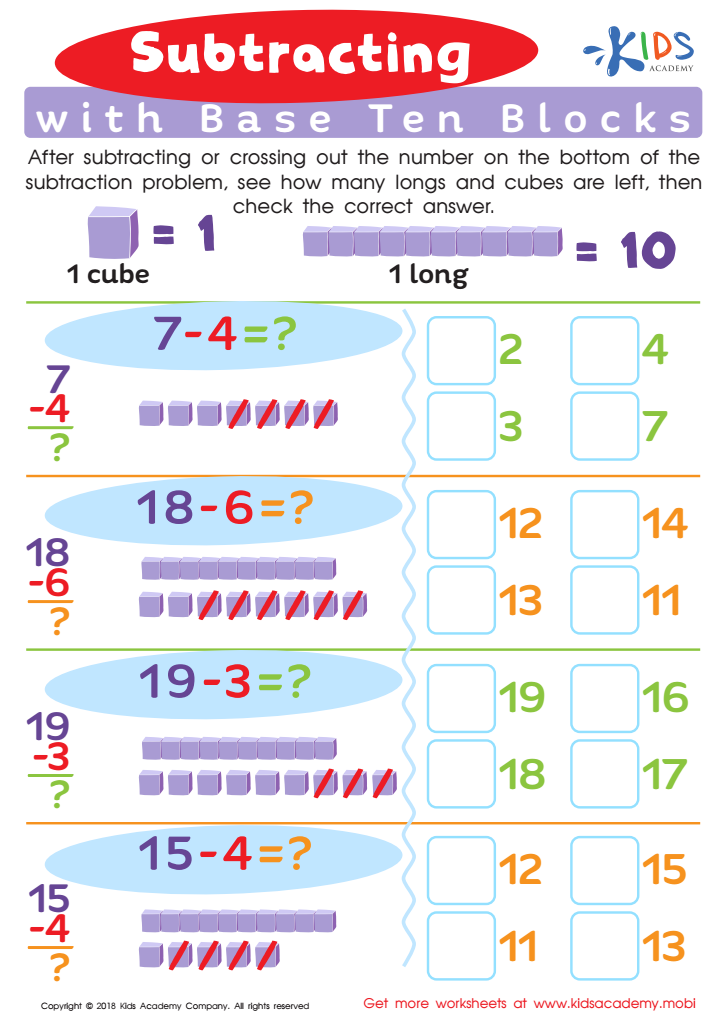
Subtracting With Base 10 Blocks Worksheet
 Assign to My Students
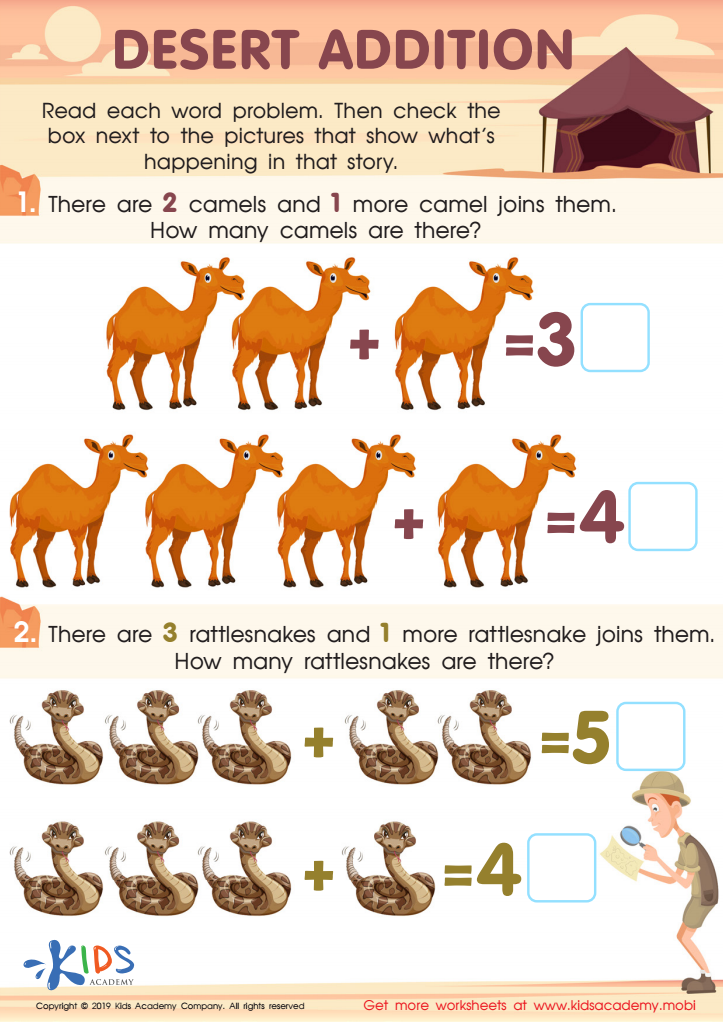
Desert Addition Worksheet
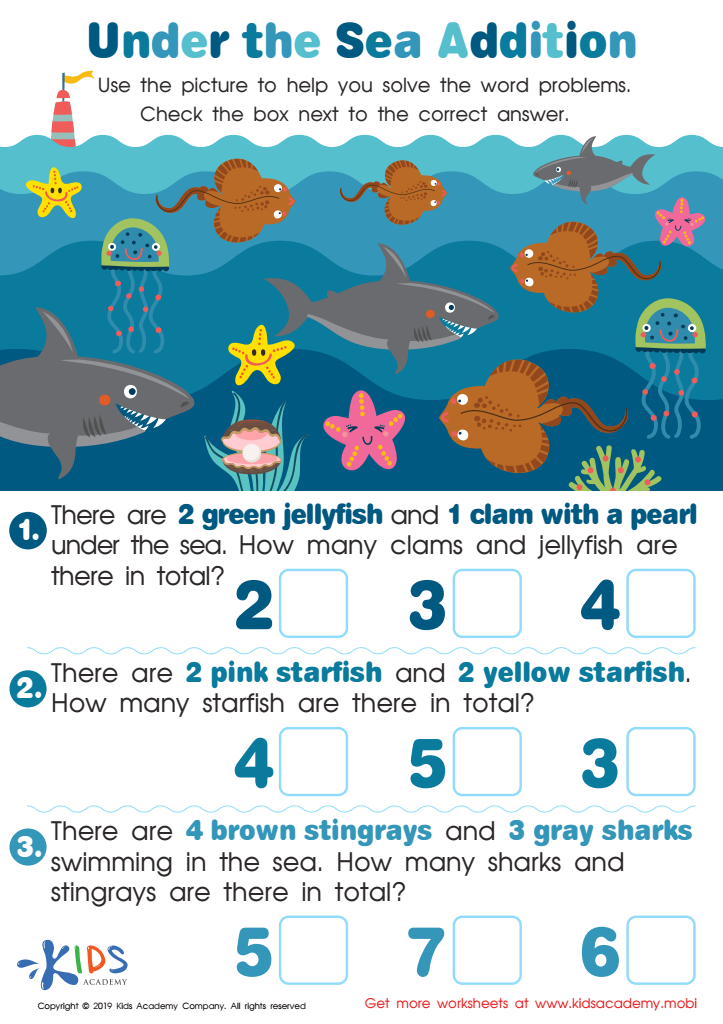
Under the Sea Addition Worksheet
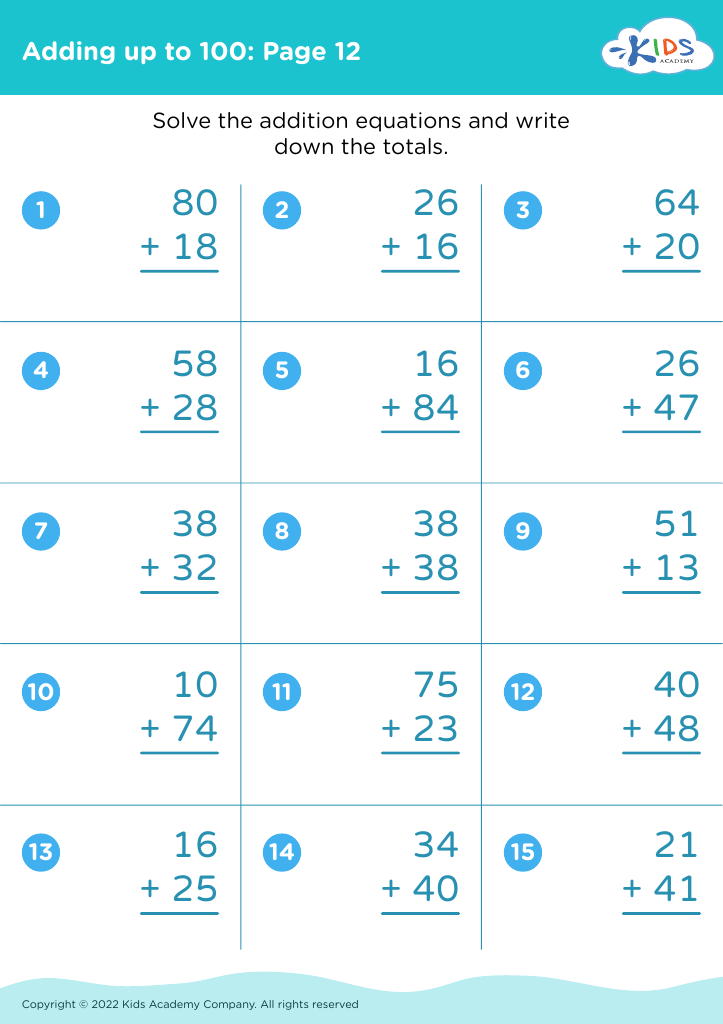
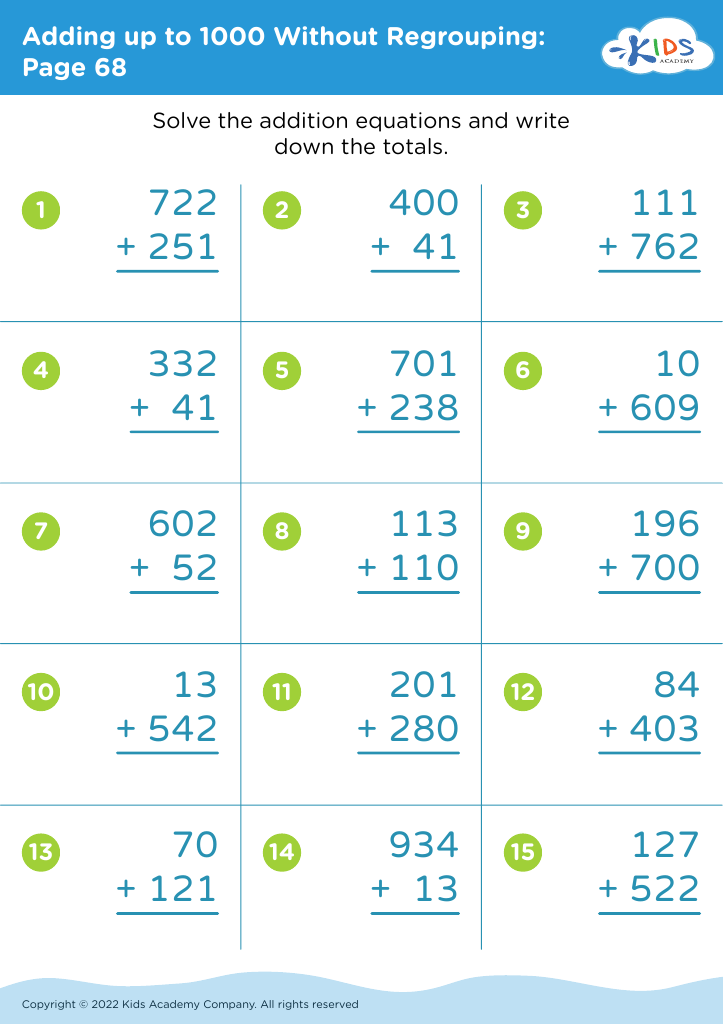
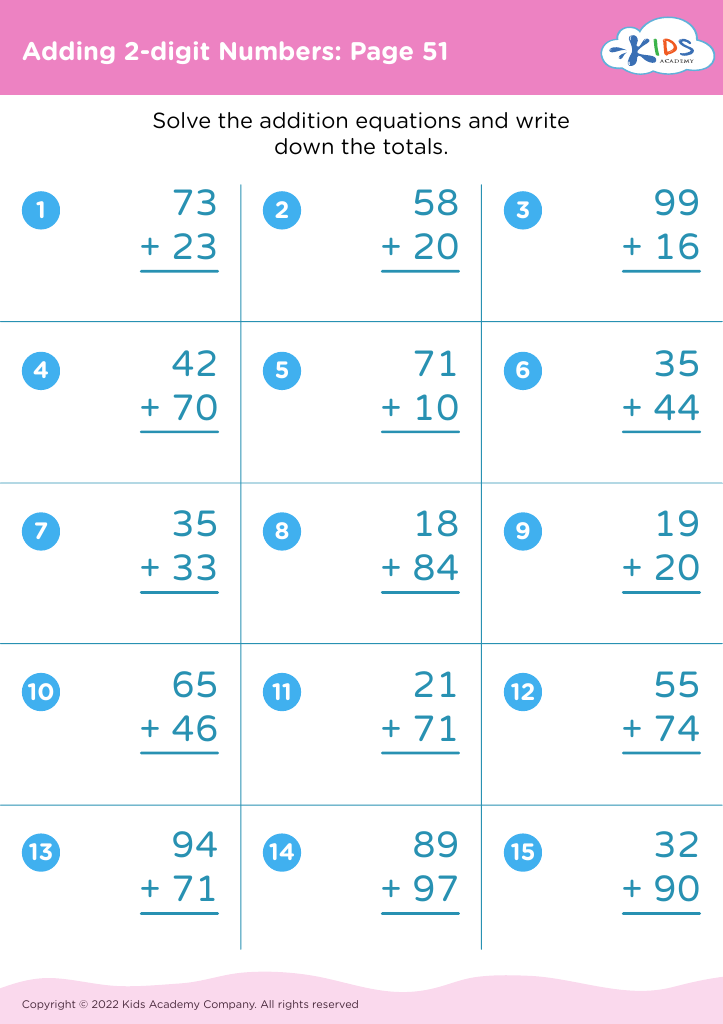
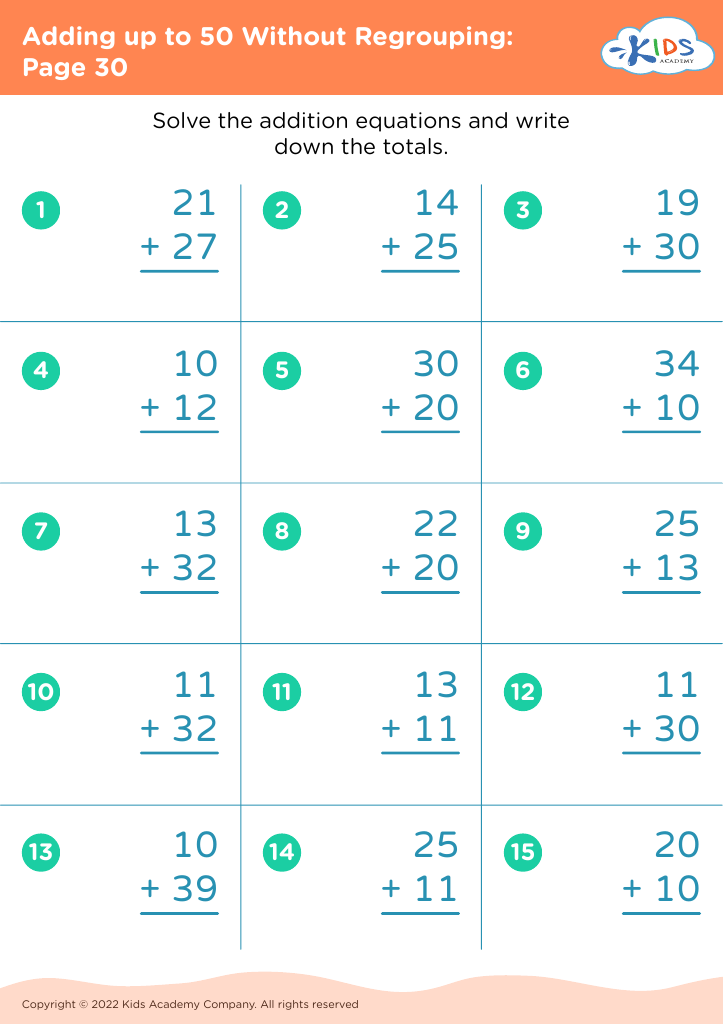








Improving counting skills, along with addition and subtraction, is essential for children aged 4-7 as it lays the foundation for their mathematical understanding. During these formative years, children encounter basic concepts that will support their future learning in math and problem-solving. Mastering counting helps young learners develop number sense, which is crucial for recognizing patterns, understanding quantities, and developing a positive attitude toward math.
Furthermore, addition and subtraction are foundational operations that children will encounter throughout their schooling. Parents and teachers play a critical role in helping children explore these concepts through engaging activities and play. When children can confidently count, add, and subtract, they build their self-esteem and foster a love for learning.
Moreover, strong counting and arithmetic skills facilitate logical thinking and reasoning, which are essential not just in math but across various subjects, including science and literacy. Engaging in everyday math activities – like counting objects, playing games, or problem-solving during routines – encourages children to apply what they've learned in real-life contexts. This makes math more meaningful and enjoyable, significantly impacting their overall educational journey and future success. Prioritizing these skills can nurture capable problem solvers who are prepared for more advanced concepts down the line.








