
Number Writing Practice Addition & Subtraction Worksheets for Ages 4-7
8 filtered results
Difficulty Level
Grade
Age
-
From - To
Subject
Activity
Standards
Welcome to our Number Writing Practice Addition & Subtraction Worksheets specifically designed for children ages 4-7! These engaging resources aim to enhance early math skills through fun and interactive activities. Our worksheets help young learners master number writing while developing a foundational understanding of addition and subtraction concepts. Each worksheet incorporates colorful visuals and playful themes, making learning a delightful experience. Whether in the classroom or at home, children will gain confidence in their number writing abilities as they practice essential math skills. Start your child's math journey today with our comprehensive and user-friendly worksheets, fostering a love for learning that lasts a lifetime!
Favorites
With answer key
Interactive
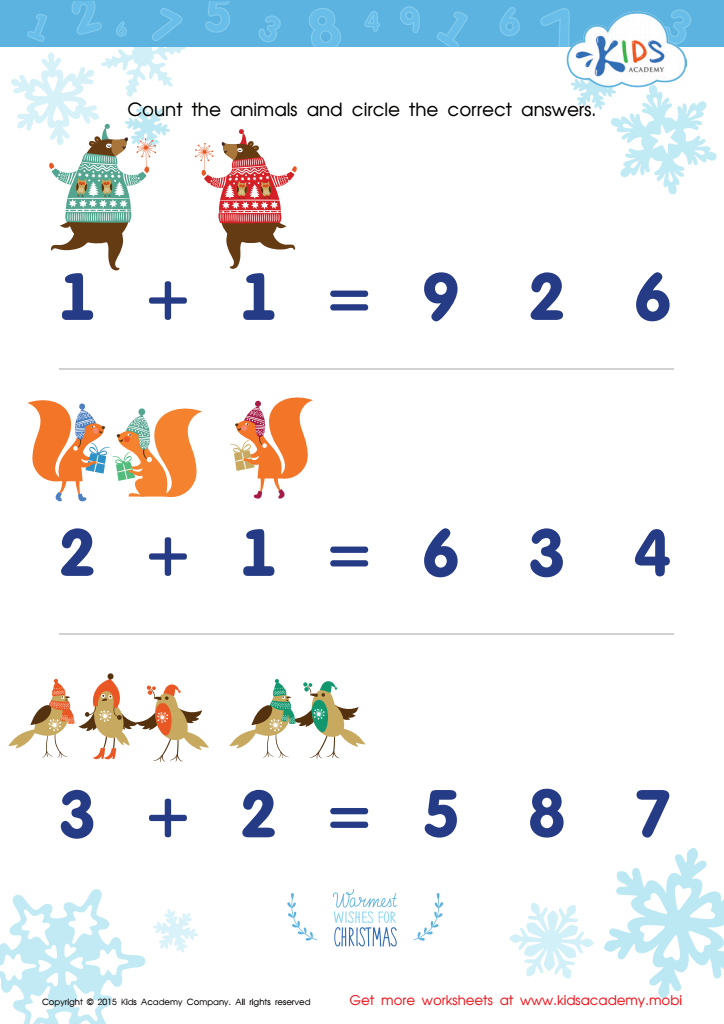
Count Funny Animals Worksheet
Get your kid in the Christmas spirit with this festive addition worksheet! They'll have fun counting the colorful animals and writing in the numbers. Our graphic layout makes it easy for them to visualize and solve the task. Print it out and help your kid keep their math skills sharp this winter with Kids Academy!
 Assign to My Students
Count Funny Animals Worksheet
Worksheet
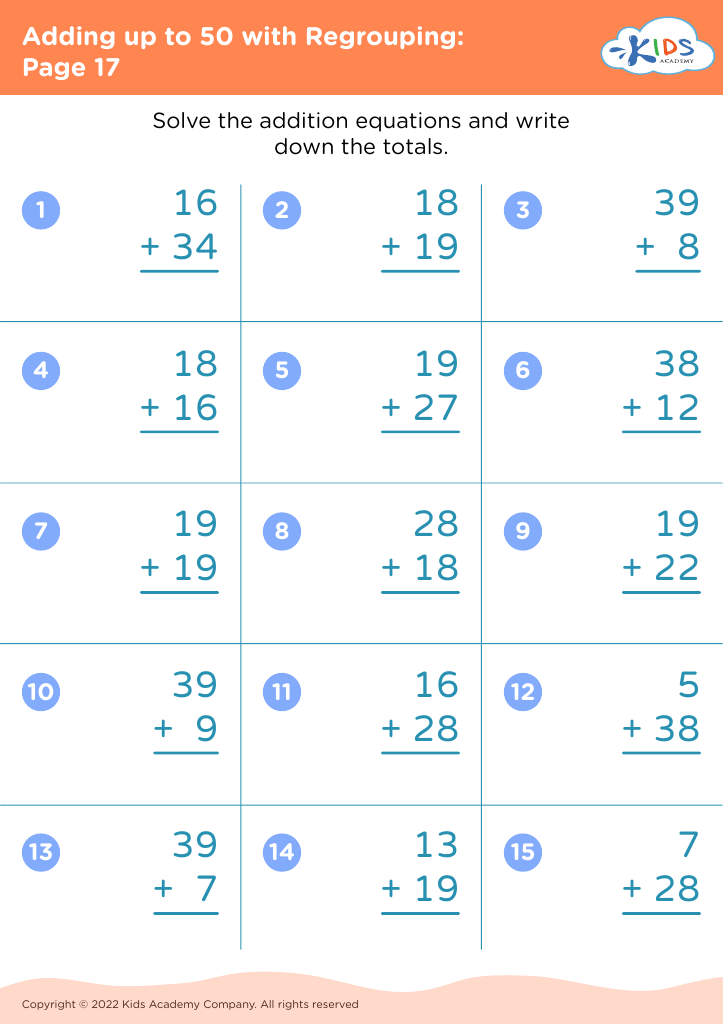
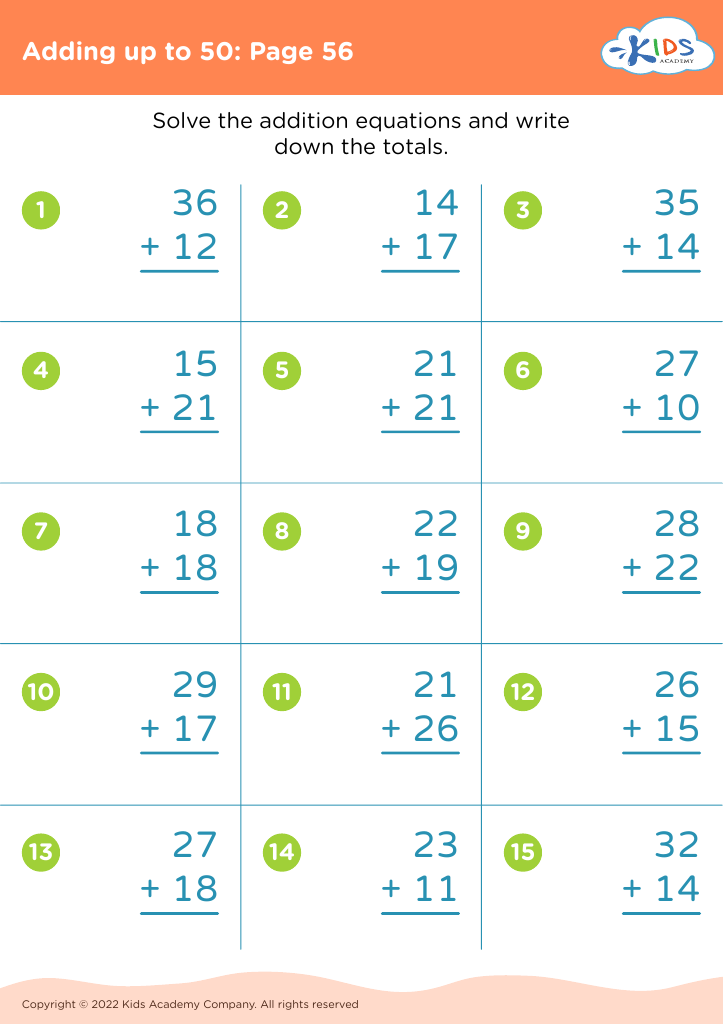
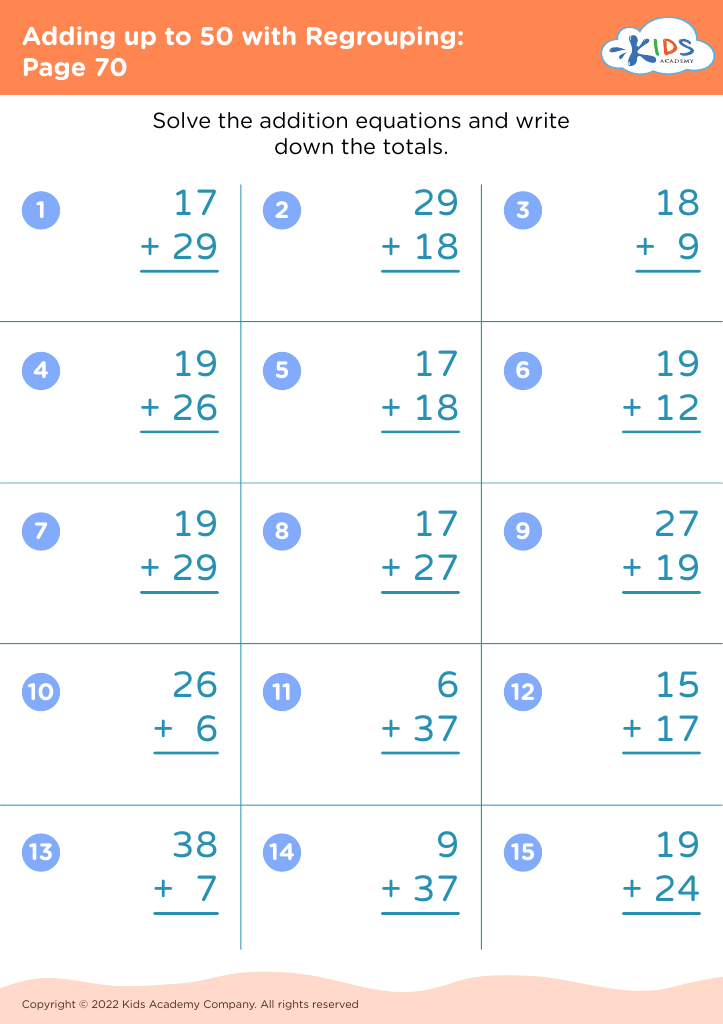
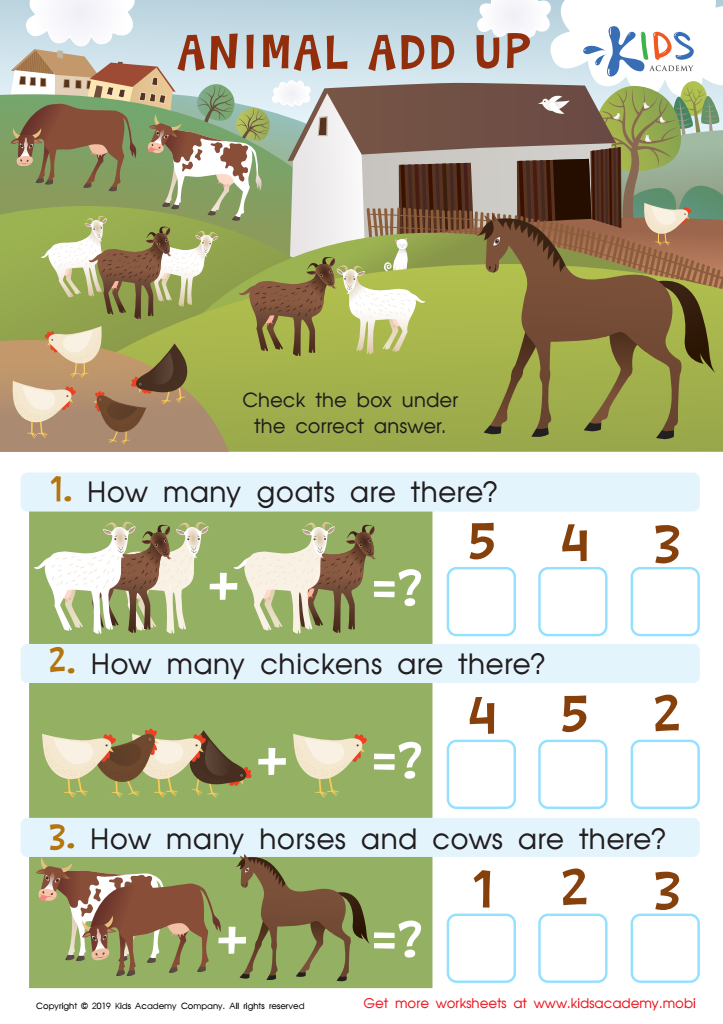
Animal Add Up Worksheet
Animals are fun to observe and interact with. They can be seen at the zoo, parks, farms and in homes with pets. This worksheet helps kids identify animals, and build addition skills. Look at the picture with them and help name each animal. After that, add the animals up and check the box for the correct answer. 80 words.
Animal Add Up Worksheet
Worksheet
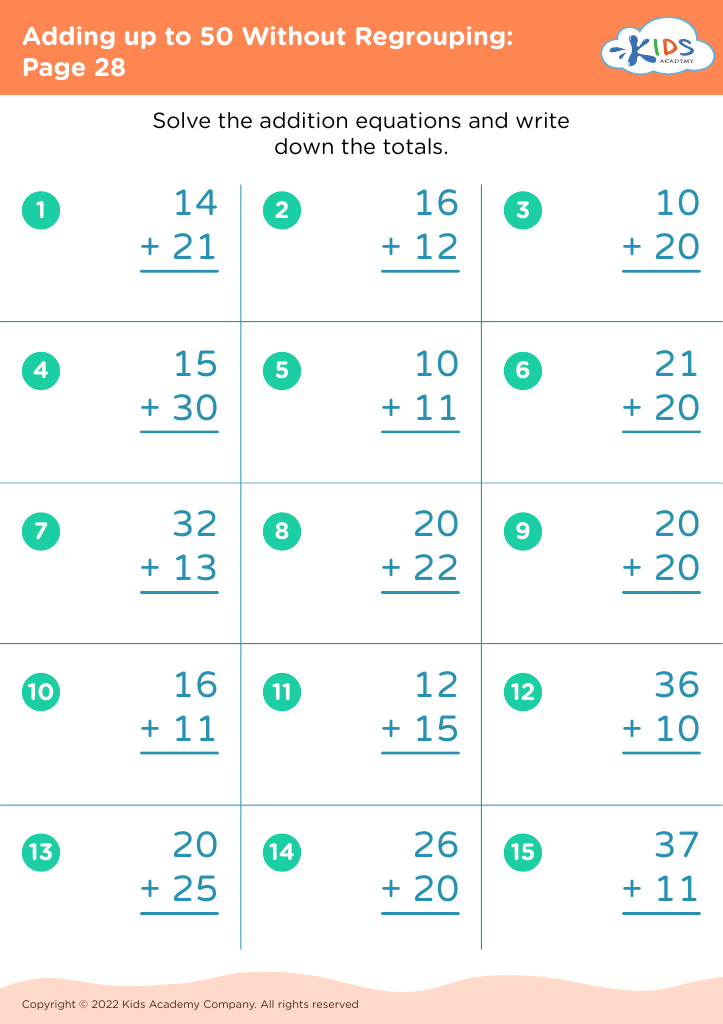
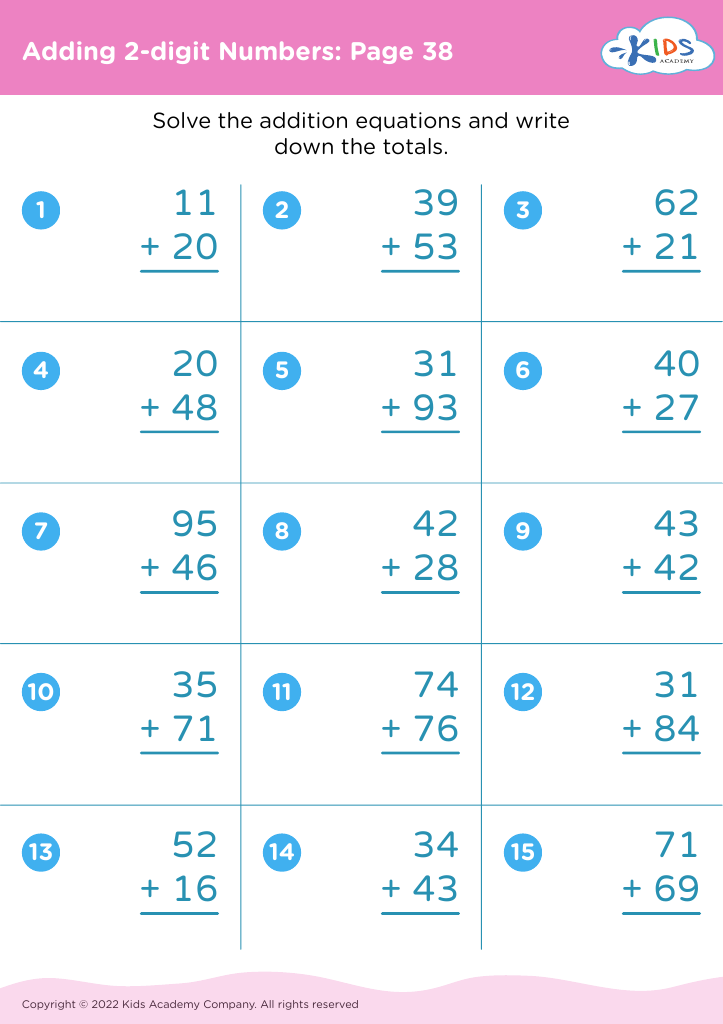
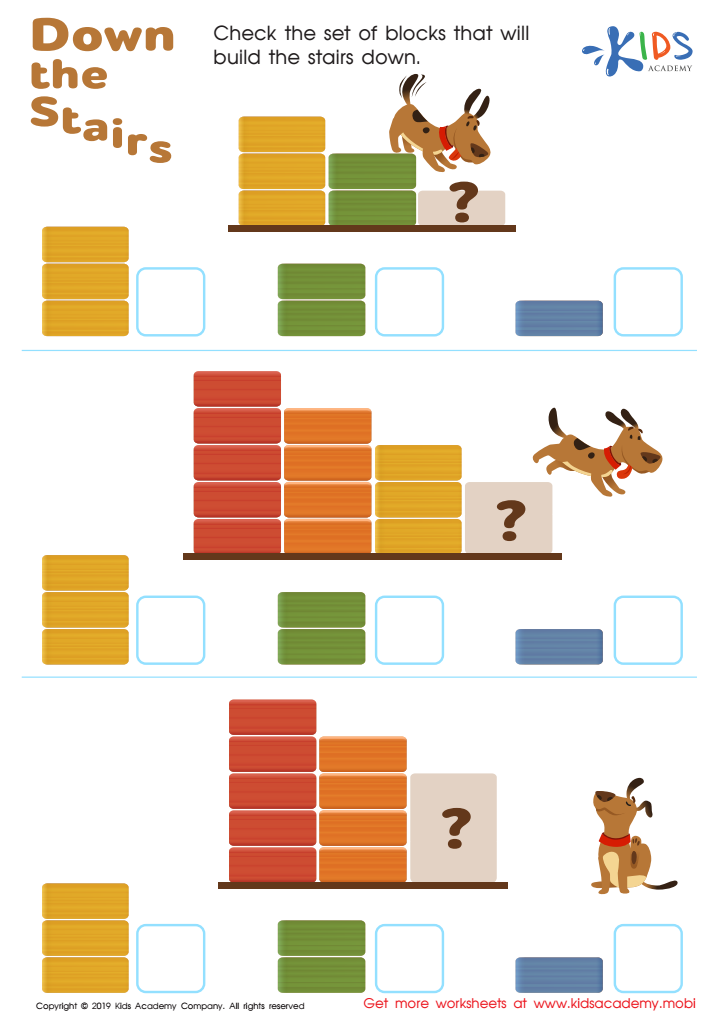
Down the Stairs Worksheet
Let your kids' imaginations run wild with this worksheet featuring a cute and friendly dog! Ask them to point out the dog in the printout, then help count the blocks in each set. Aim to stack them in descending order and build stairs for the pup to get down. Count each block and check the set - it's that easy!
Down the Stairs Worksheet
Worksheet
Join Kids Academy for Free
Who is primarily going to use this learning content?








Parents and teachers should prioritize number writing practice for addition and subtraction for ages 4-7 because it lays a critical foundation for mathematical skills and overall cognitive development. During these formative years, children are developing fine motor skills, and practicing writing numbers helps enhance their dexterity and coordination. As they engage with addition and subtraction, they not only learn how to perform basic operations but also begin to understand the concepts of quantity and value, essential for moving forward in mathematics.
Moreover, number writing and practice encourage problem-solving and logical thinking. As children learn to write numbers and solve simple equations, they develop persistence, creativity in finding solutions, and the ability to face challenges—skills that are highly valuable throughout life.
Additionally, early mastery of these skills fosters a positive attitude towards mathematics. When children are confident in their ability to perform basic calculations, they are more likely to approach more complex math concepts with enthusiasm instead of fear. Investing time in number writing practice also creates opportunities for parents and teachers to bond over learning, making education a positive experience. Ultimately, nurturing these skills early can set the stage for future academic success and a lifelong appreciation of mathematics.








