Problem Solving Addition & Subtraction Worksheets for Ages 4-7 - Page 2
28 filtered results
-
From - To
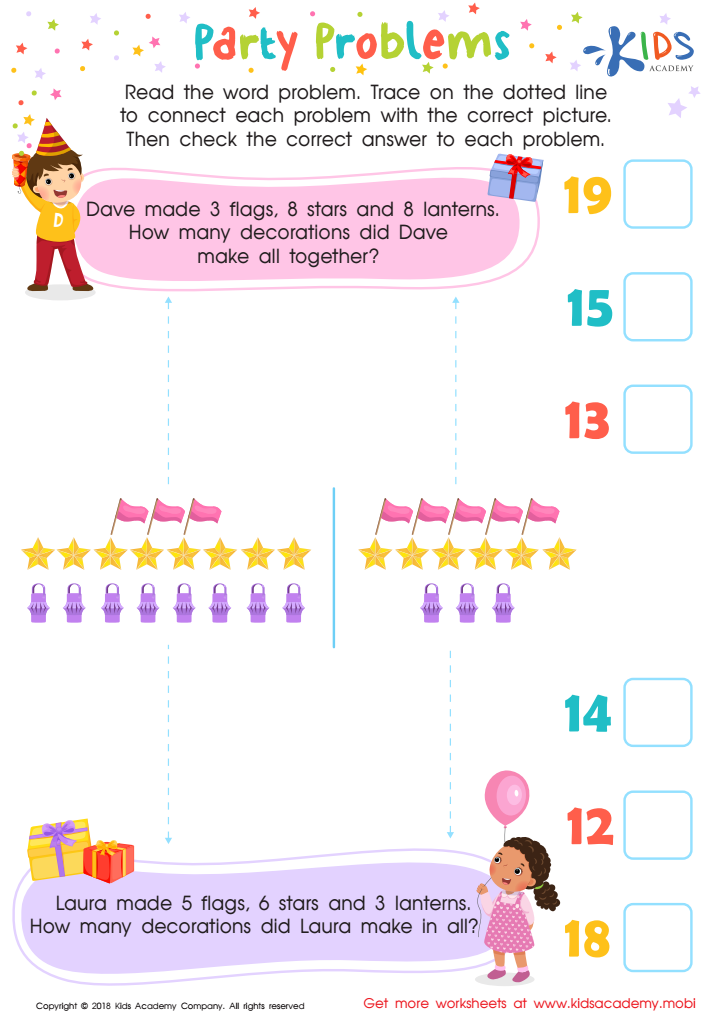
Party Problems Worksheet
 Assign to My Students
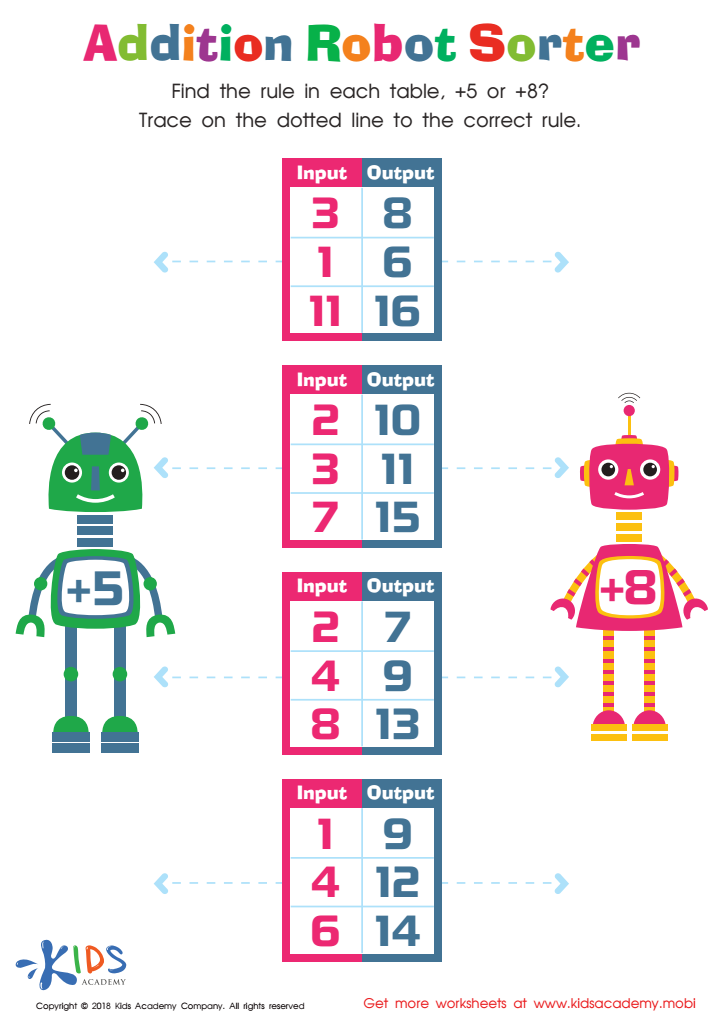
Addition Robot Sorter Worksheet
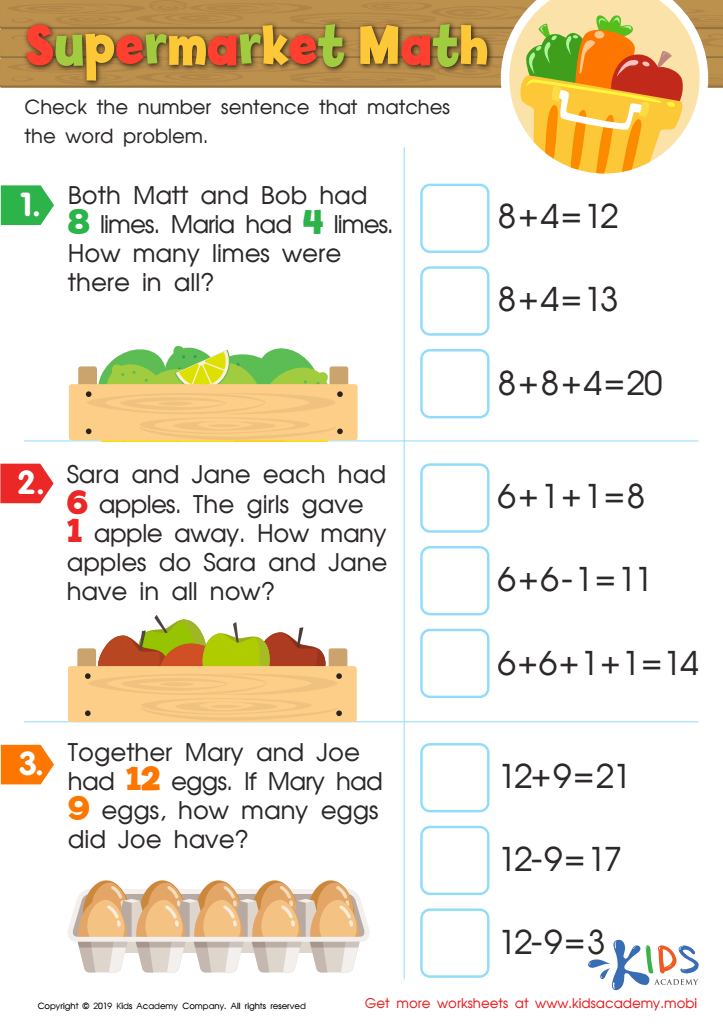
Supermarket Math Worksheet








Problem solving in addition and subtraction for children aged 4-7 is crucial for several reasons. First, these foundational math skills lay the groundwork for more complex mathematical reasoning later in life. When children learn to solve problems, they develop critical thinking and reasoning abilities that extend beyond mathematics.
Secondly, problem-solving encourages active engagement in learning. Children are more likely to understand and retain concepts when they can relate them to real-life situations. Incorporating relatable problems enhances their ability to navigate challenges and promotes perseverance.
Moreover, fostering problem-solving skills helps to build a child’s confidence. As they successfully tackle mathematical challenges, they develop a positive attitude towards learning and a growth mindset, leading to greater academic achievement across subjects.
Additionally, collaborative problem-solving activities can strengthen the bond between parents and children or approach-fostering interaction among peers in a classroom. This social aspect of learning teaches teamwork and communication skills.
Lastly, early exposure to problem-solving with addition and subtraction can significantly enhance cognitive abilities and prepare children for standardized testing. Parents and teachers should prioritize these skills to ensure holistic development and future academic success.








