Help your child develop essential math skills with our "Recognizing Patterns: Addition & Subtraction Worksheets" designed for ages 4-7. These worksheets offer engaging activities that blend fun with learning, focusing on identifying and creating patterns through addition and subtraction exercises. By practicing with these worksheets, early learners will enhance their problem-solving abilities, logical thinking, and number recognition. Perfect for classroom use or at-home practice, our carefully crafted worksheets make learning math exciting and accessible. Visit Kids Academy to download and print these valuable resources, and give your child the head start they deserve in math proficiency.
Check out this FREE Trial Lesson on Addition & Subtraction for age 4-7!

Sorting Objects into 3 Categories

Favorites
With answer key
Interactive
  • 4-7
  • Recognizing Patterns
  • Addition & Subtraction
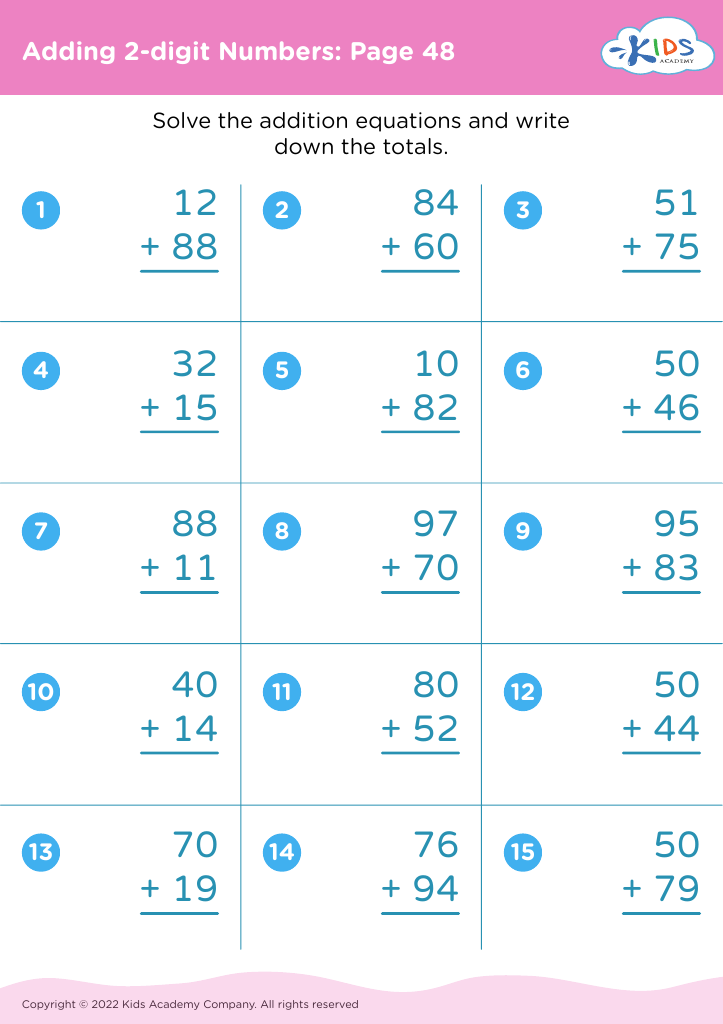
Adding 2-digit Numbers: Page 48

Adding 2-digit Numbers: Page 48

Adding 2-digit Numbers: Page 48
Worksheet
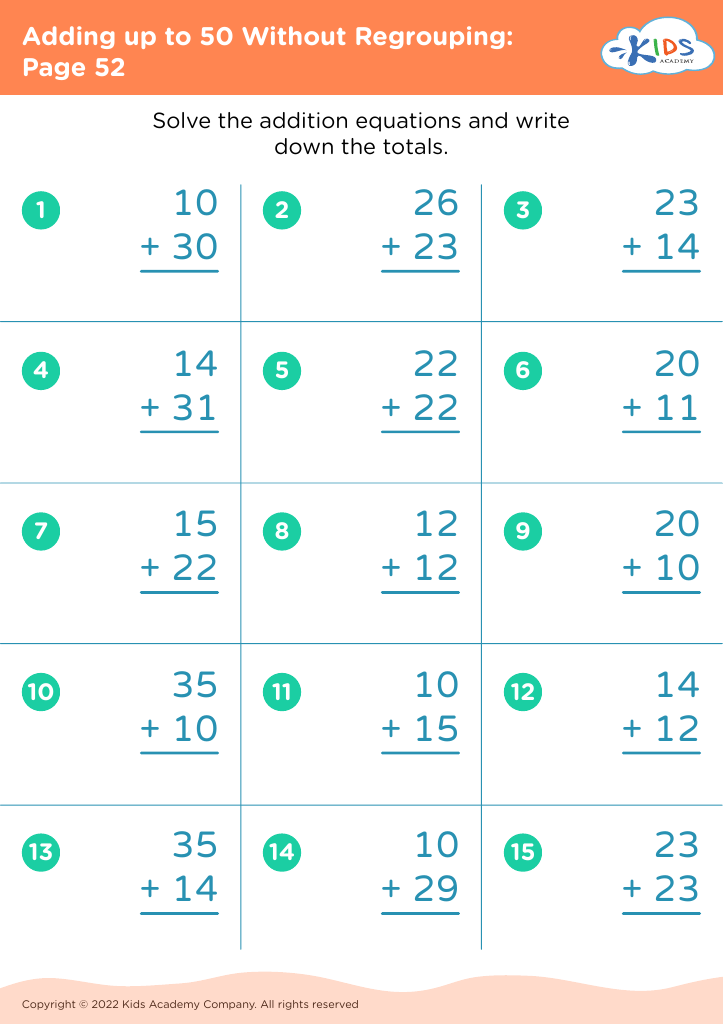
Adding up to 50 Without Regrouping: Page 52
Worksheet
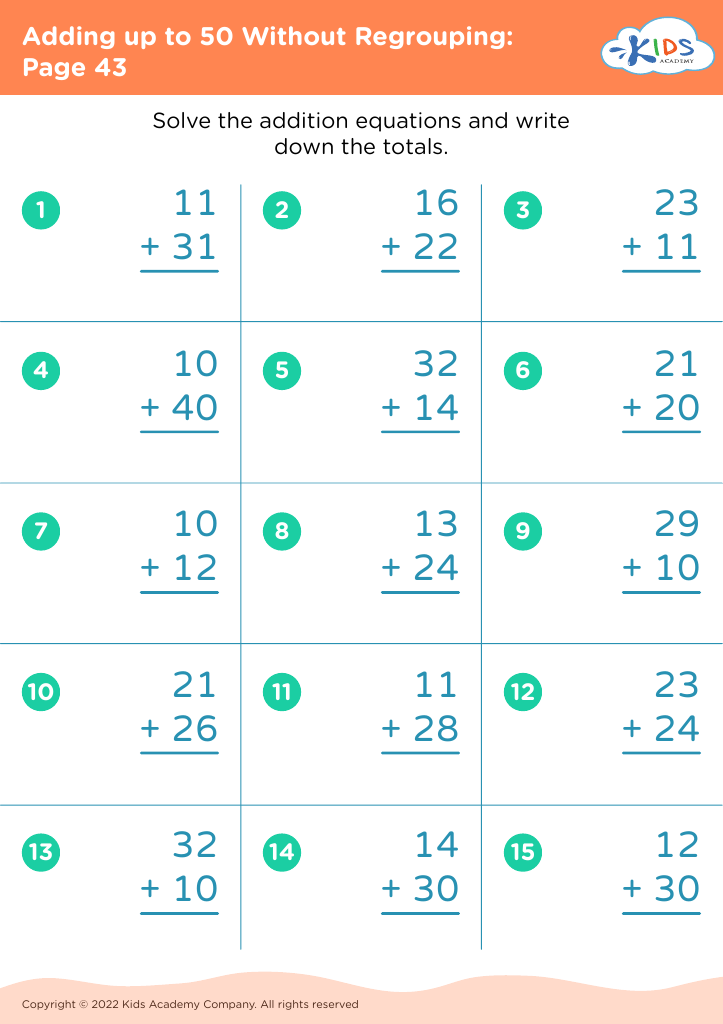
Adding up to 50 Without Regrouping: Page 43
Worksheet
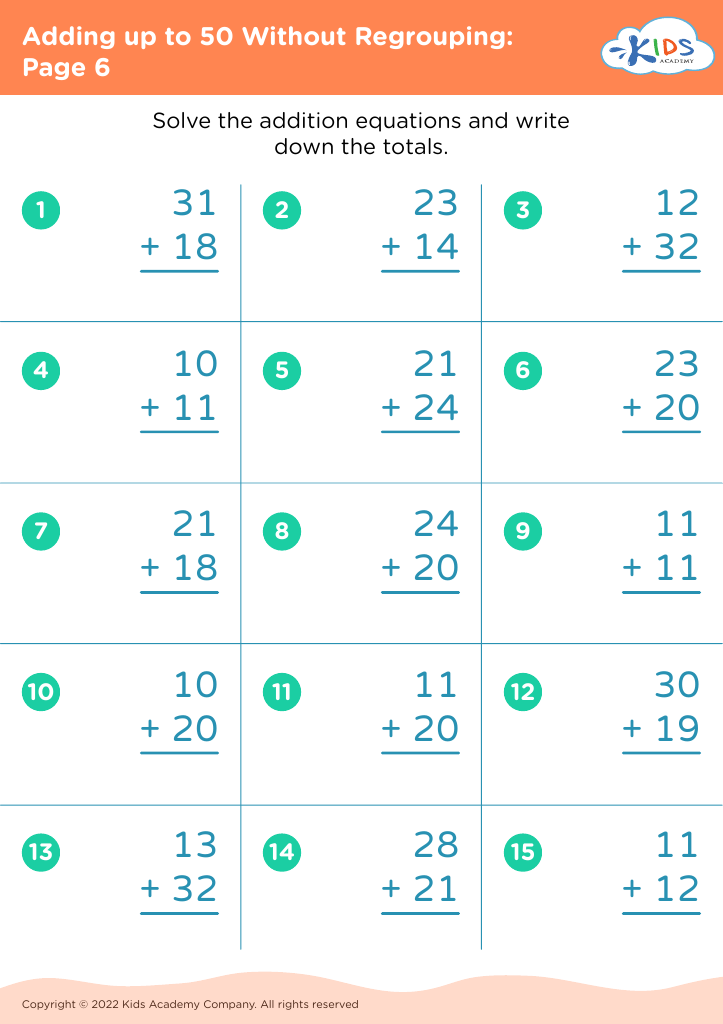
Adding up to 50 Without Regrouping: Page 6
Worksheet
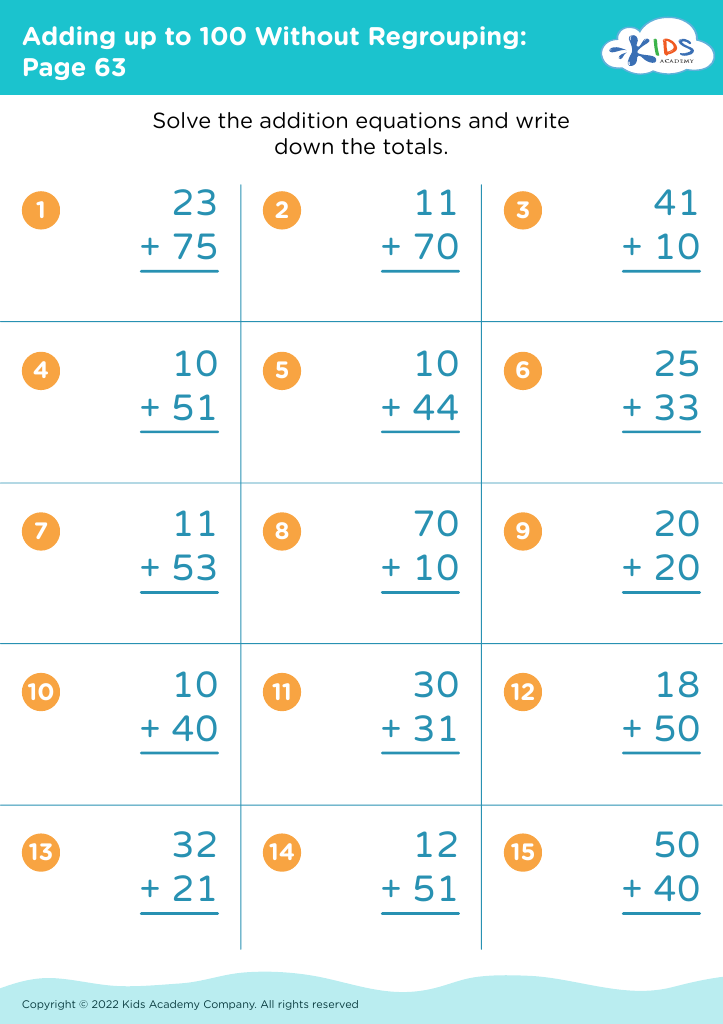
Adding up to 100 Without Regrouping: Page 63
Worksheet
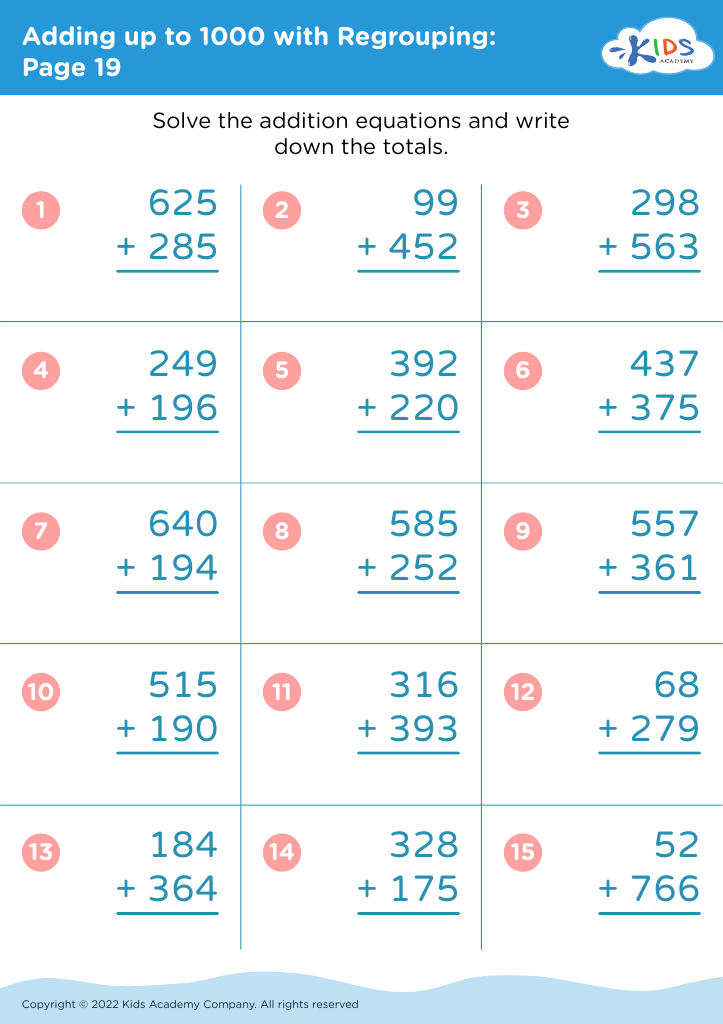
Adding up to 1000 with Regrouping: Page 19
Worksheet
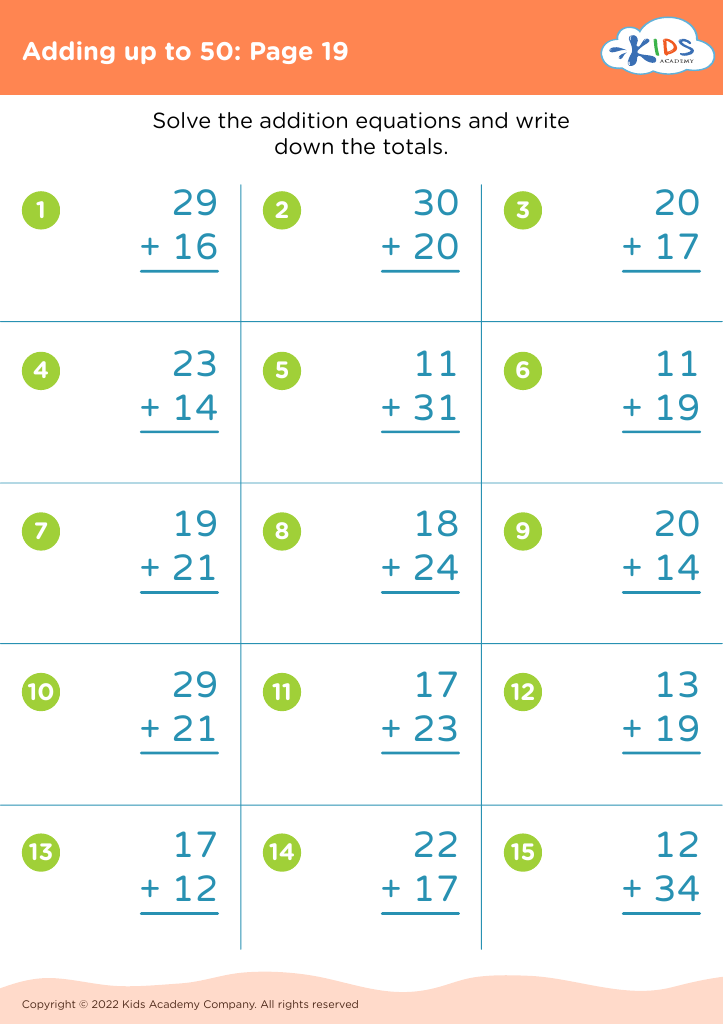
Adding up to 50: Page 19

Adding up to 50: Page 19

Adding up to 50: Page 19
Worksheet
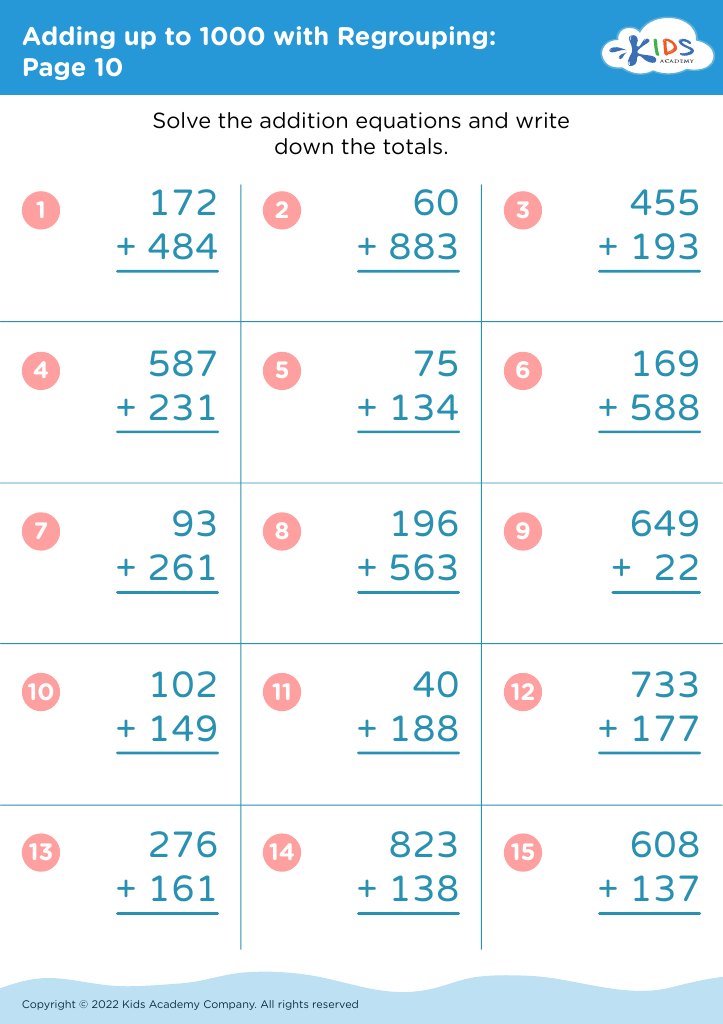
Adding up to 1000 with Regrouping: Page 10
Worksheet
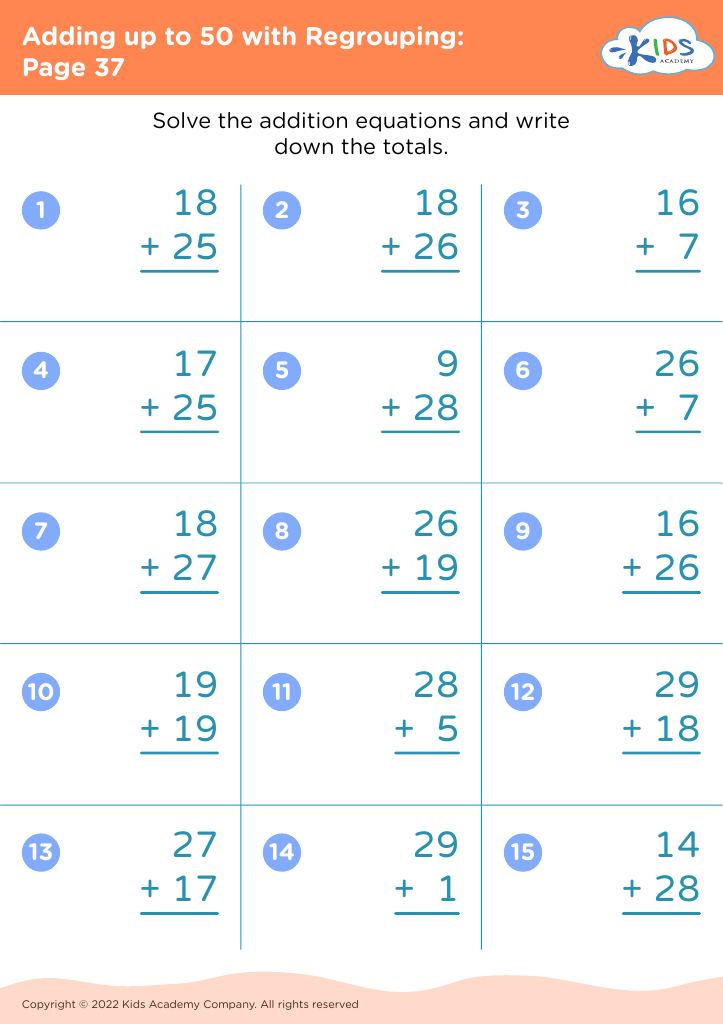
Adding up to 50 with Regrouping: Page 37
Worksheet
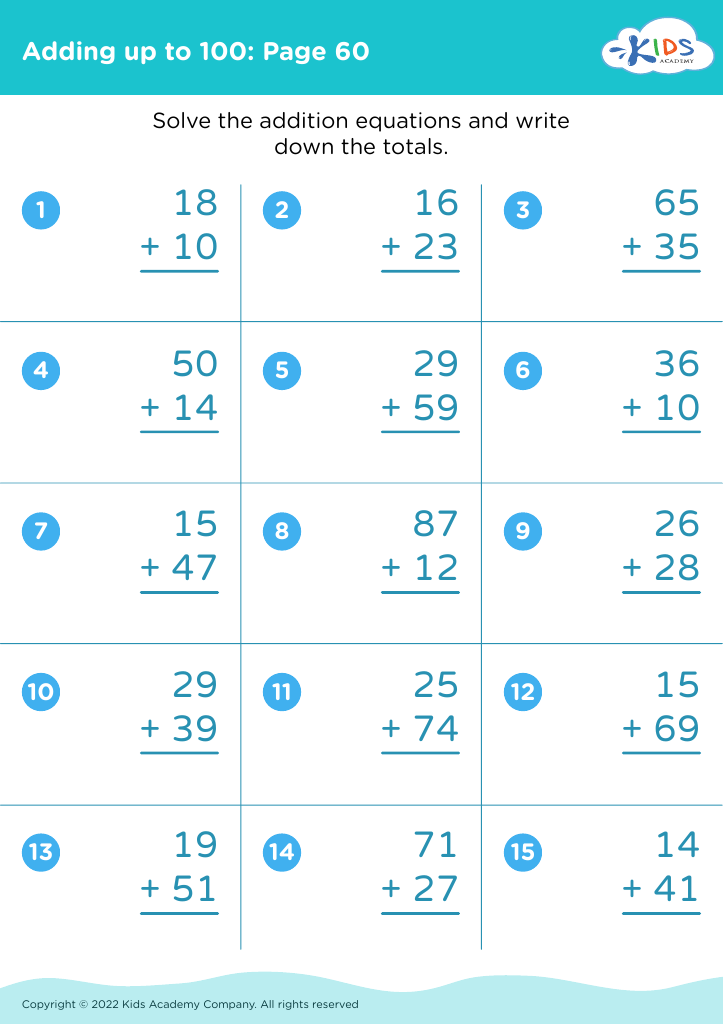
Adding up to 100: Page 60

Adding up to 100: Page 60

Adding up to 100: Page 60
Worksheet
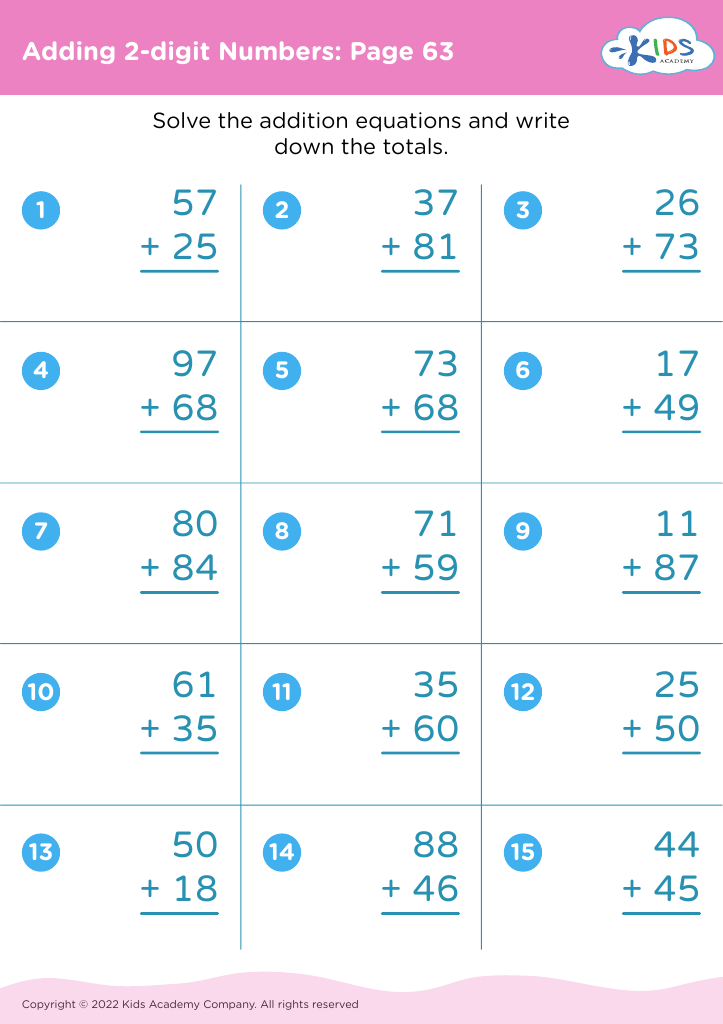
Adding 2-digit Numbers: Page 63

Adding 2-digit Numbers: Page 63

Adding 2-digit Numbers: Page 63
Worksheet
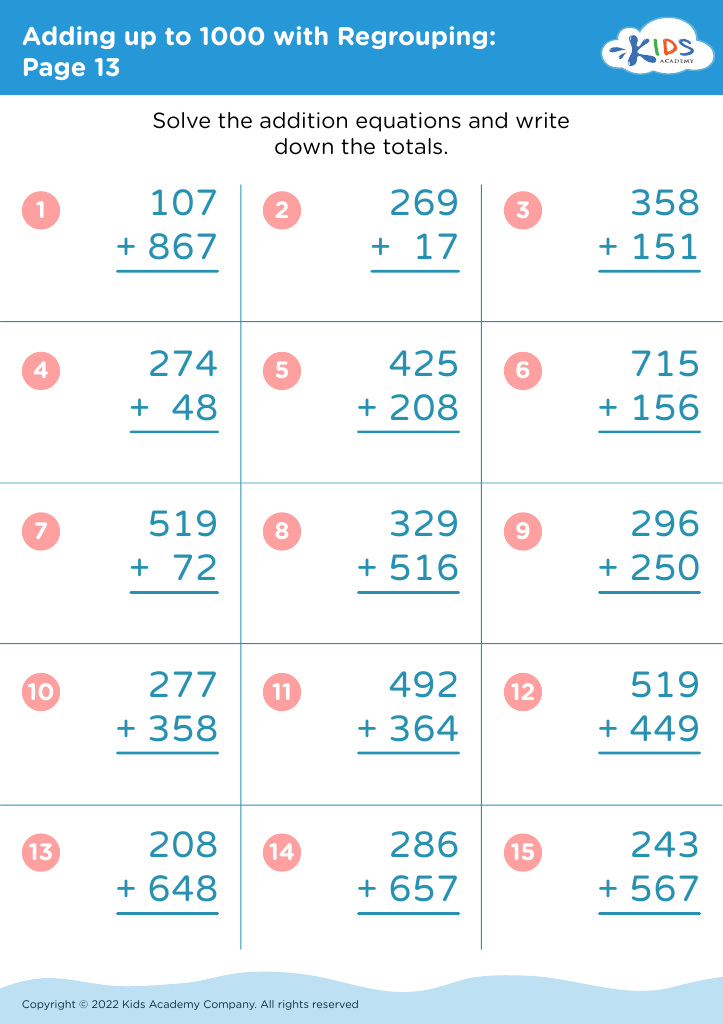
Adding up to 1000 with Regrouping: Page 13
Worksheet
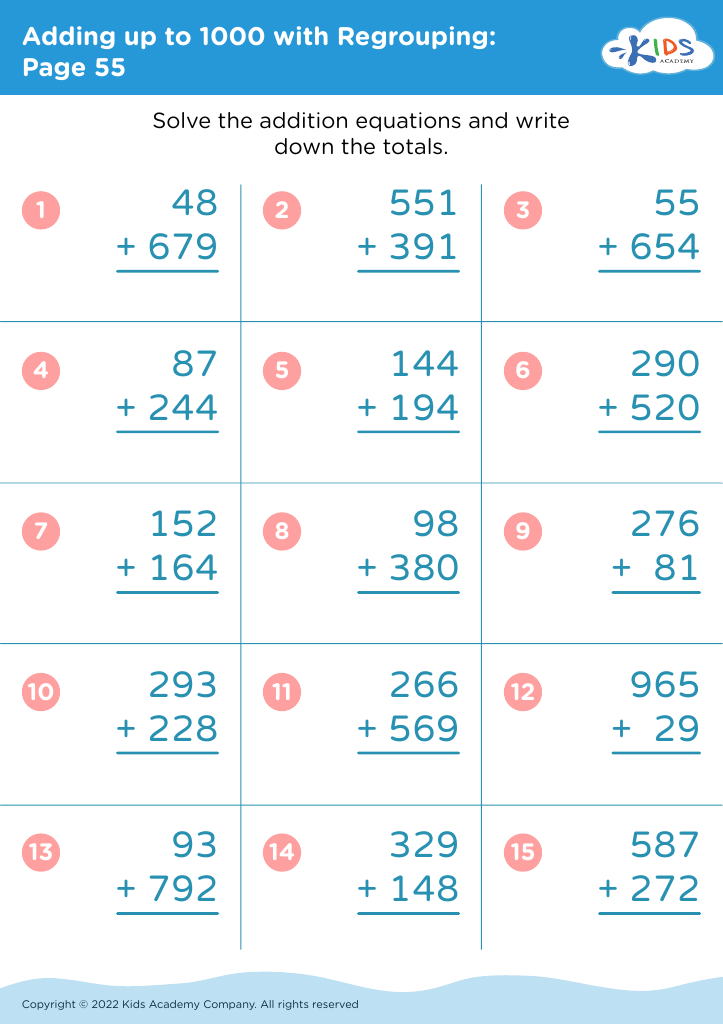
Adding up to 1000 with Regrouping: Page 55
Worksheet
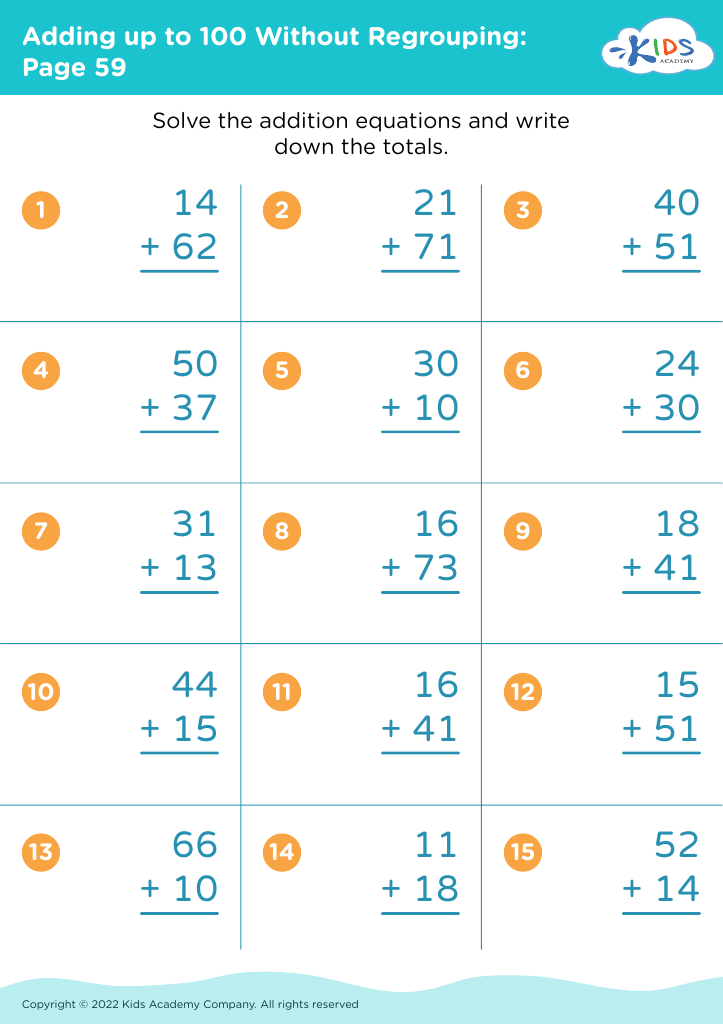
Adding up to 100 Without Regrouping: Page 59
Worksheet
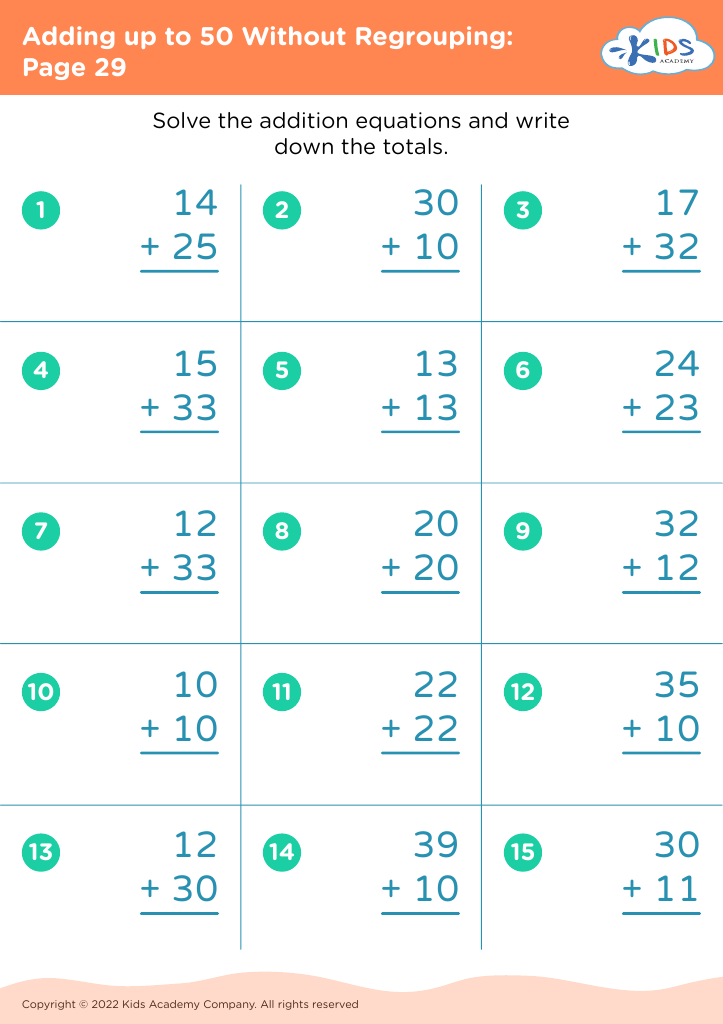
Adding up to 50 Without Regrouping: Page 29
Worksheet
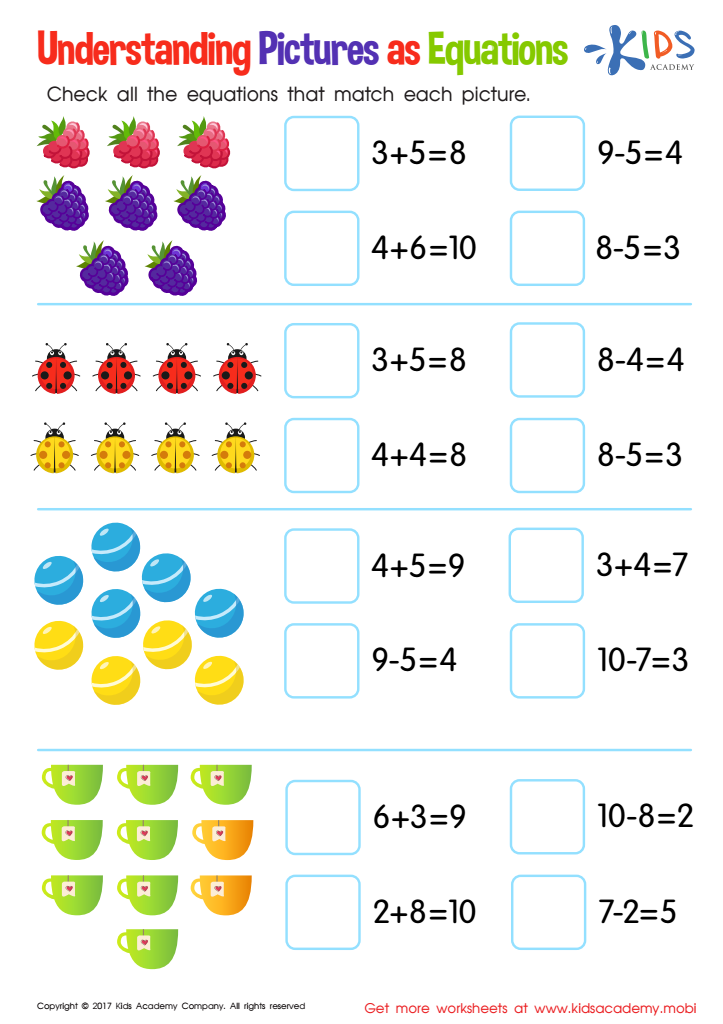
Understanding Pictures as Equations Worksheet

Understanding Pictures as Equations Worksheet

This worksheet helps your child interpret pictures into numbers and equations. Colourful grapes, ladybirds, balls and cups represent numbers which must be added to reach the total. Your child must also choose the equations that match the pictures correctly. A great way to practice math!
Understanding Pictures as Equations Worksheet
Worksheet
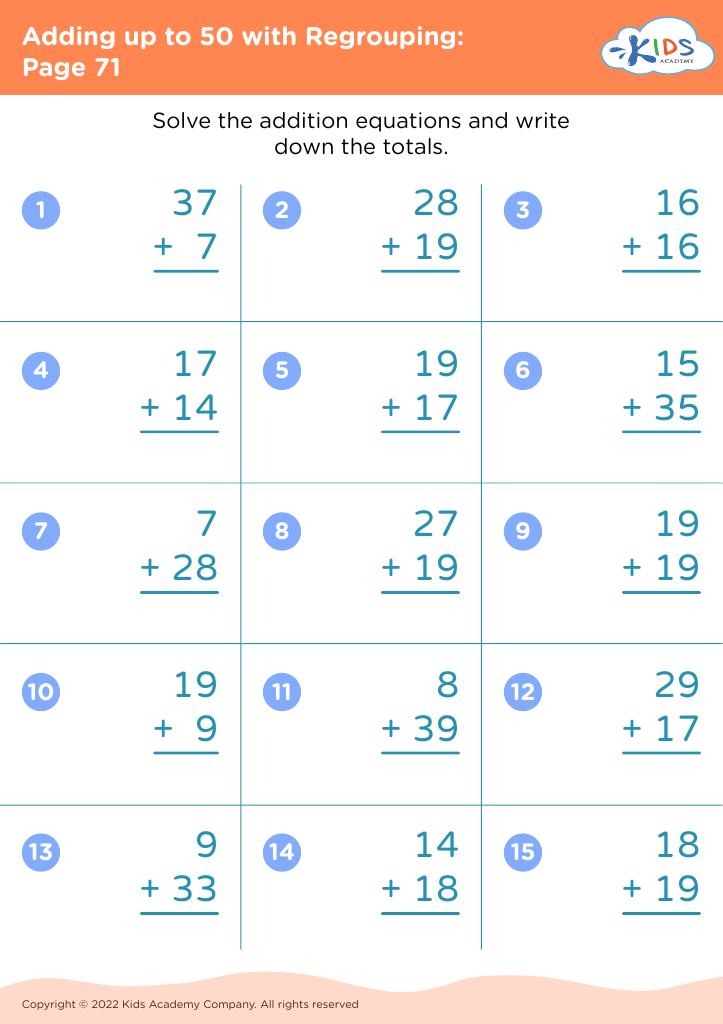
Adding up to 50 with Regrouping: Page 71
Worksheet
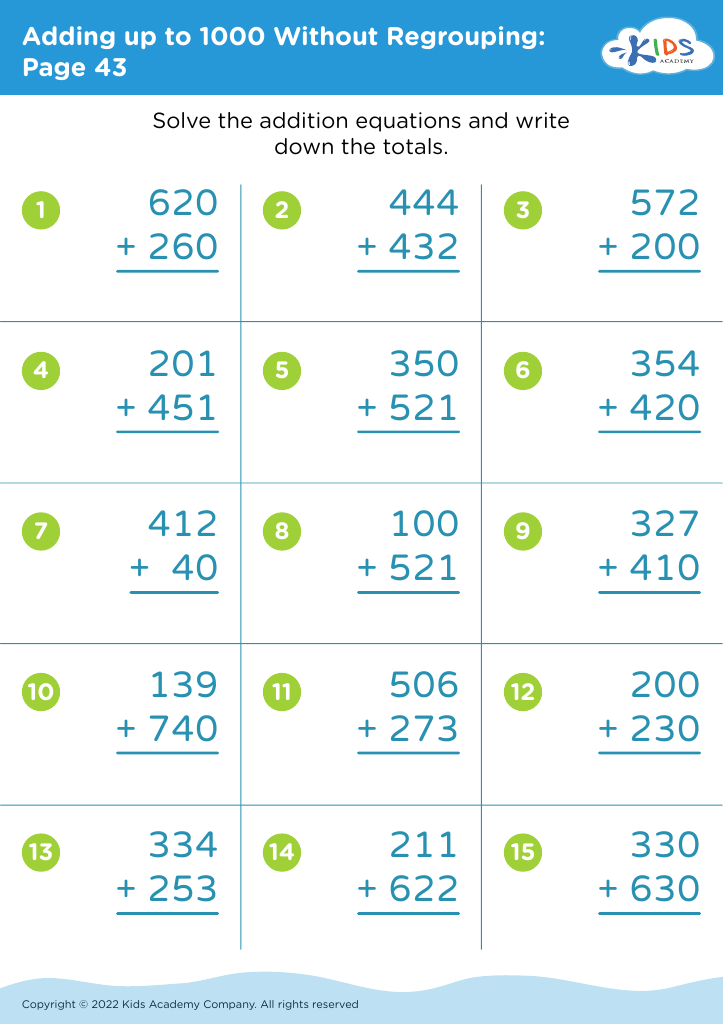
Adding up to 1000 Without Regrouping: Page 43
Worksheet
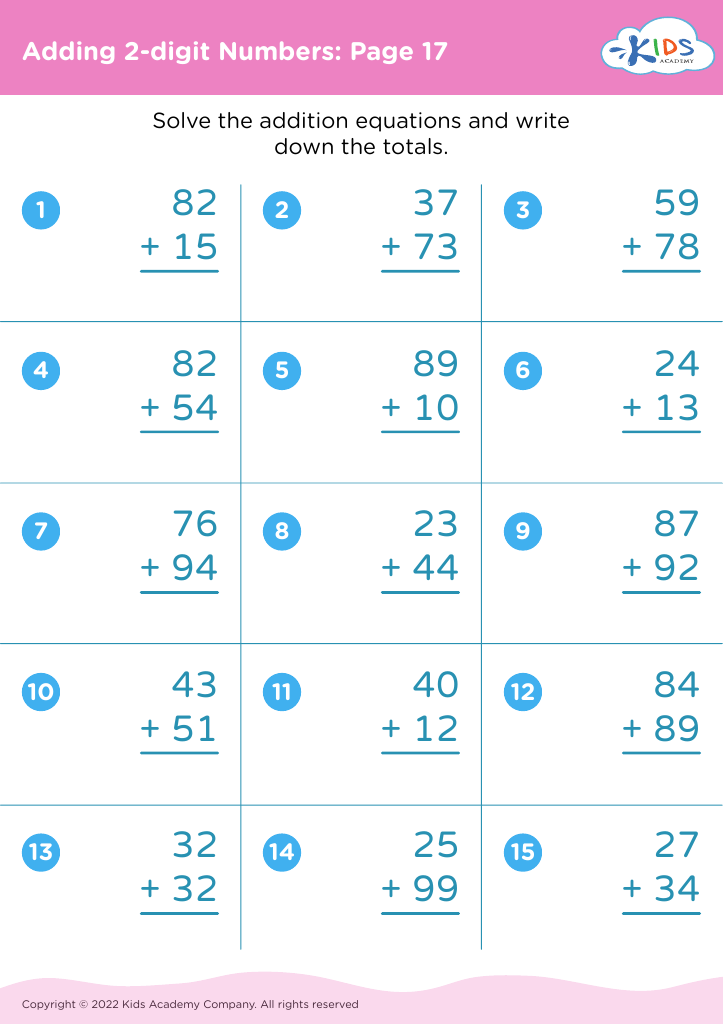
Adding 2-digit Numbers: Page 17

Adding 2-digit Numbers: Page 17

Adding 2-digit Numbers: Page 17
Worksheet
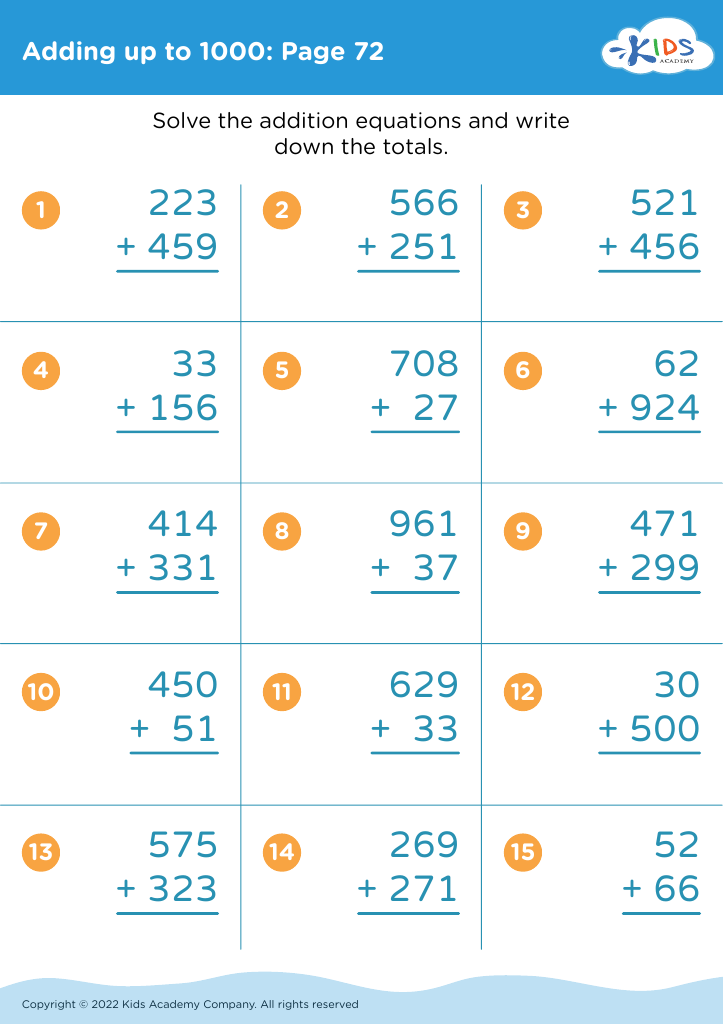
Adding up to 1000: Page 72

Adding up to 1000: Page 72

Adding up to 1000: Page 72
Worksheet
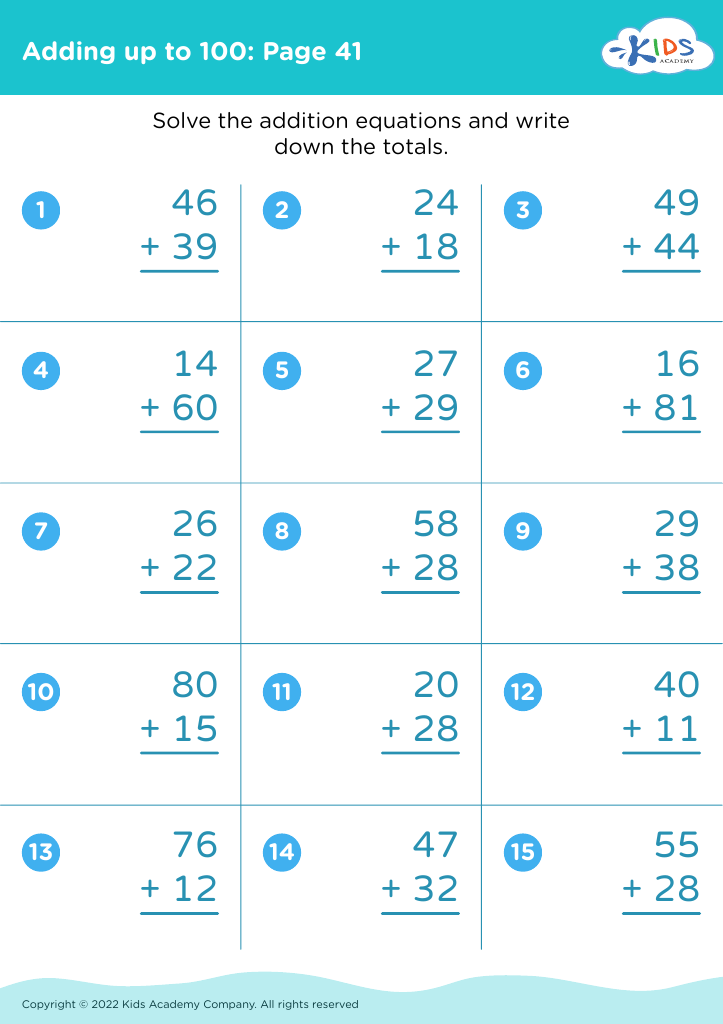
Adding up to 100: Page 41

Adding up to 100: Page 41

Adding up to 100: Page 41
Worksheet
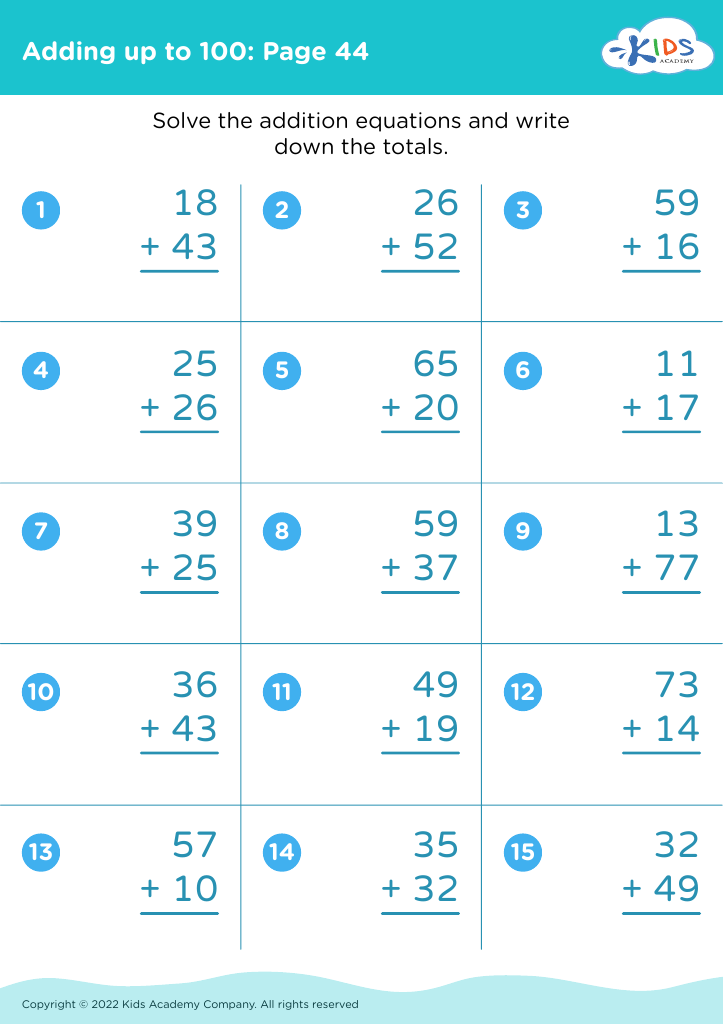
Adding up to 100: Page 44

Adding up to 100: Page 44

Adding up to 100: Page 44
Worksheet


Recognizing patterns in addition and subtraction is crucial for young learners, ages 4-7, as it forms the foundation for more advanced mathematical concepts. At this early stage, children's brains are highly receptive to recognizing relationships and consistencies, which can make math feel more approachable and intuitive. Patterns help them to understand how numbers work together, making addition and subtraction less abstract.

For parents and teachers, emphasizing pattern recognition can make learning more engaging and fun. Spotting patterns in numbers helps children to build their confidence, as they can predict outcomes and validate their guesses. For example, knowing that adding zero to any number gives the same number or recognizing that subtracting a smaller number from a bigger number always yields a positive result can simplify complex problems.

Moreover, this early skill is instrumental in developing logical thinking and problem-solving abilities. By spotting patterns, children learn to approach problems methodically, an ability that transcends math and is invaluable in everyday life.

Building a strong foundation in pattern recognition ensures long-term academic success. As they progress, learners apply these basic patterns to grasp multiplication, division, and algebra. Parents and teachers can foster a lifelong appreciation for math by nurturing these skills early on. Recognizing the importance and integrating it into daily lessons and activities pays dividends across a child's educational journey.