Check out this FREE Trial Lesson on Addition & Subtraction for age 4-7!

P

Favorites
With answer key
Interactive
  • 4-7
  • Understanding fractions
  • Addition & Subtraction
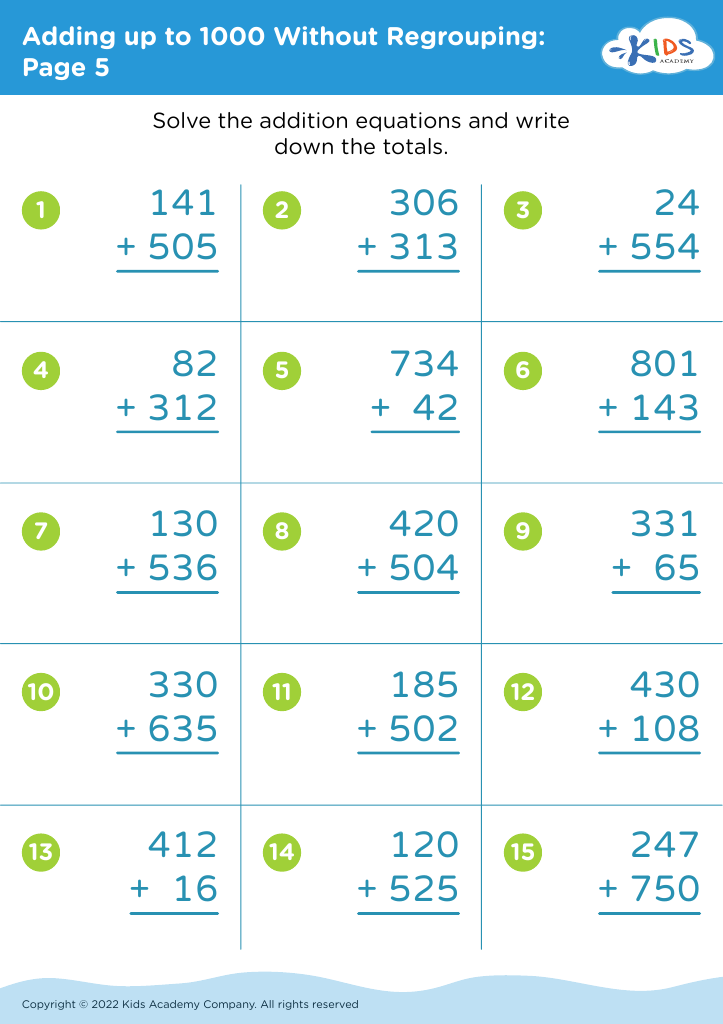
Adding up to 1000 Without Regrouping: Page 5
Worksheet
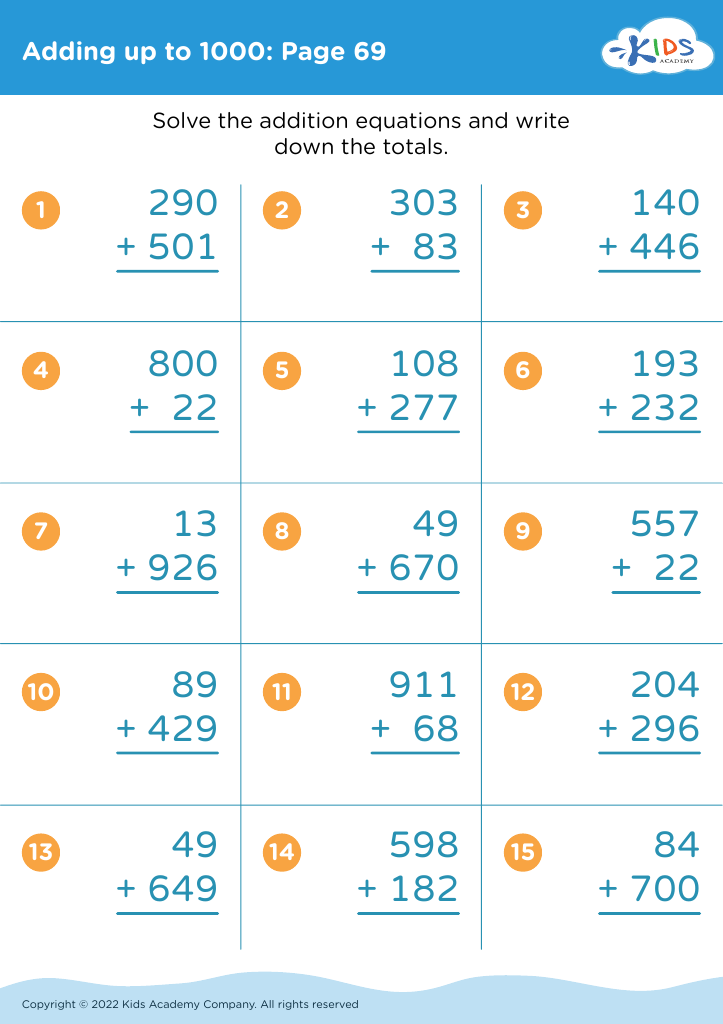
Adding up to 1000: Page 69

Adding up to 1000: Page 69

Adding up to 1000: Page 69
Worksheet
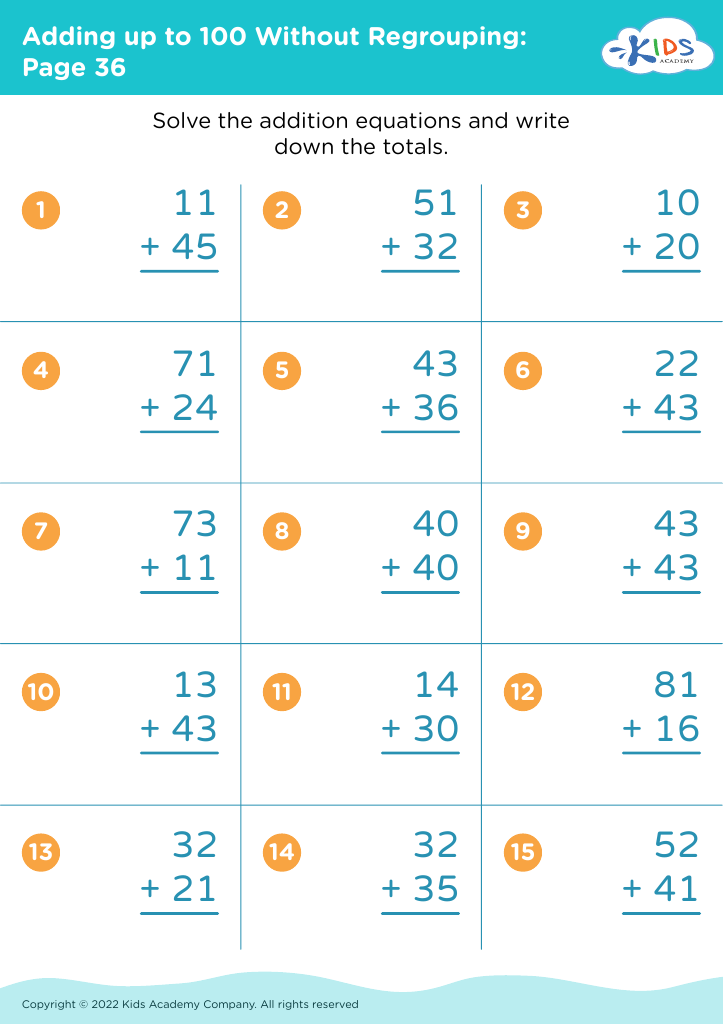
Adding up to 100 Without Regrouping: Page 36
Worksheet
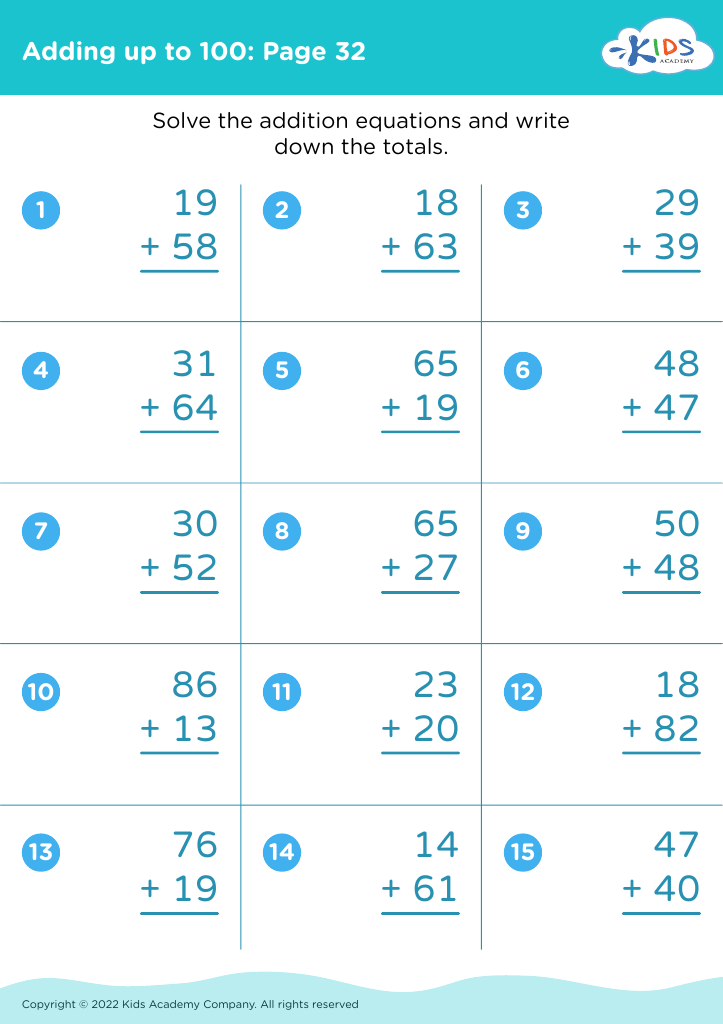
Adding up to 100: Page 32

Adding up to 100: Page 32

Adding up to 100: Page 32
Worksheet
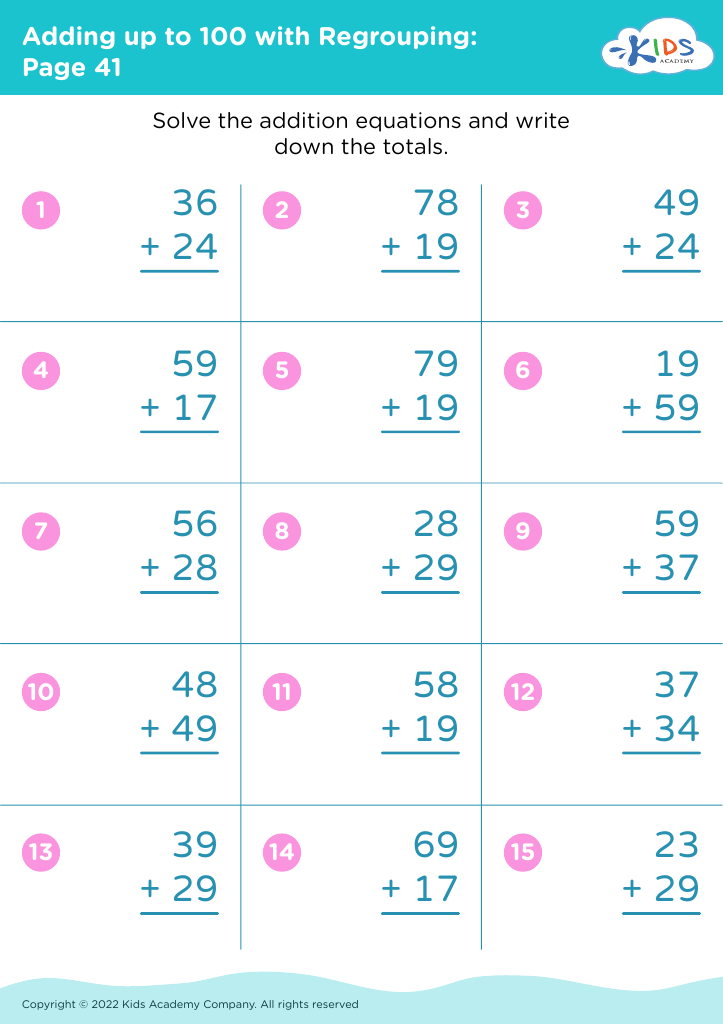
Adding up to 100 with Regrouping: Page 41
Worksheet
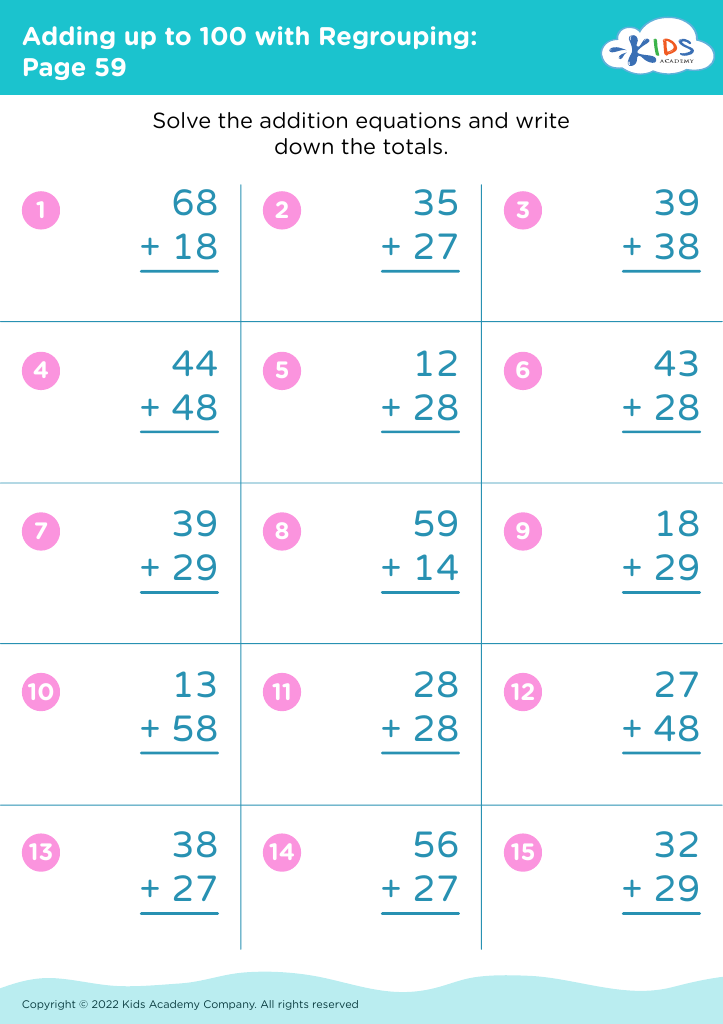
Adding up to 100 with Regrouping: Page 59
Worksheet
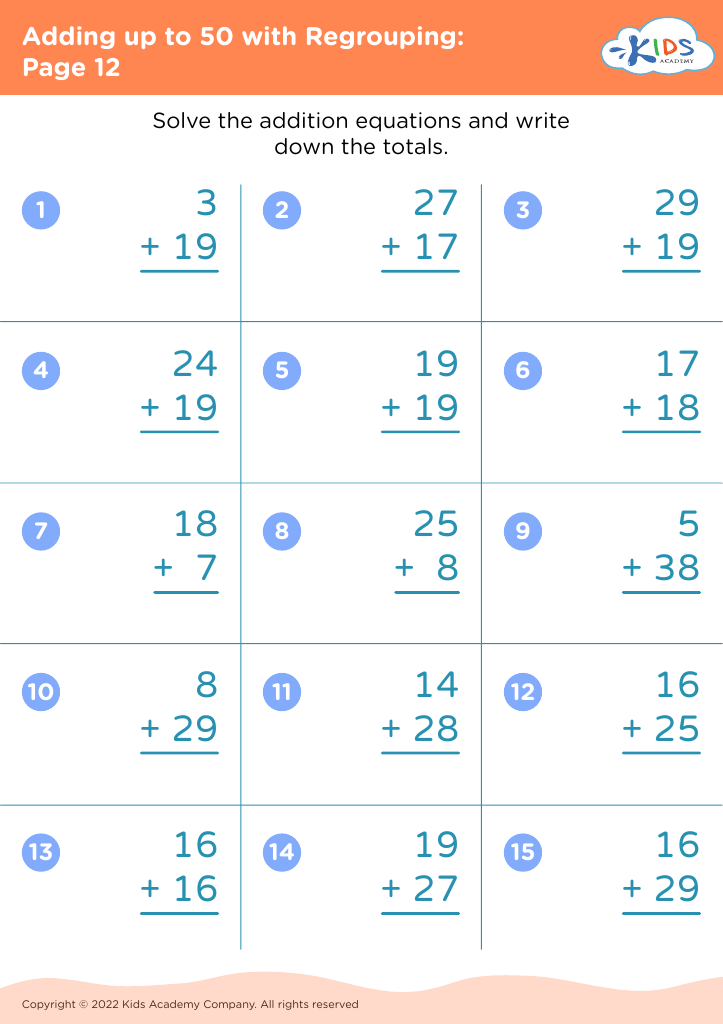
Adding up to 50 with Regrouping: Page 12
Worksheet
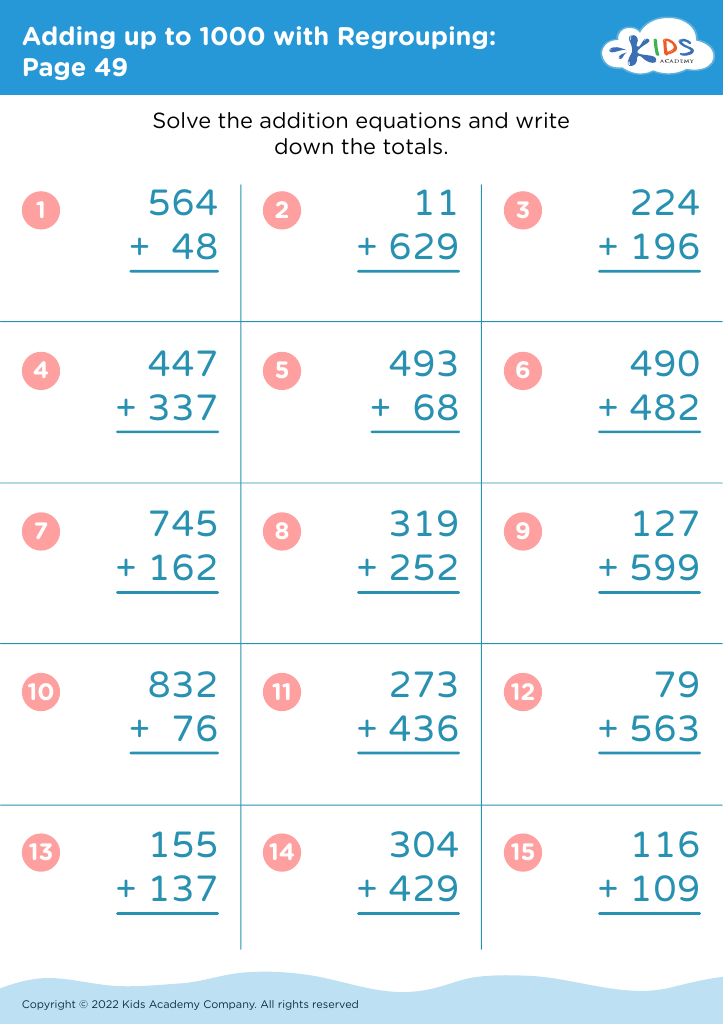
Adding up to 1000 with Regrouping: Page 49
Worksheet
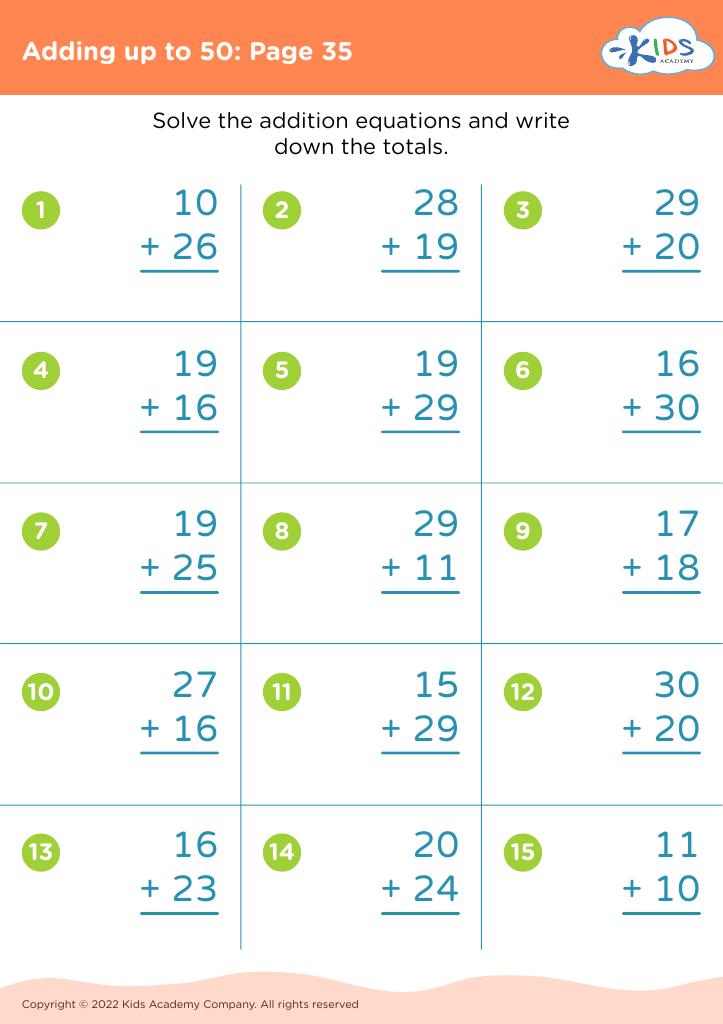
Adding up to 50: Page 35

Adding up to 50: Page 35

Adding up to 50: Page 35
Worksheet
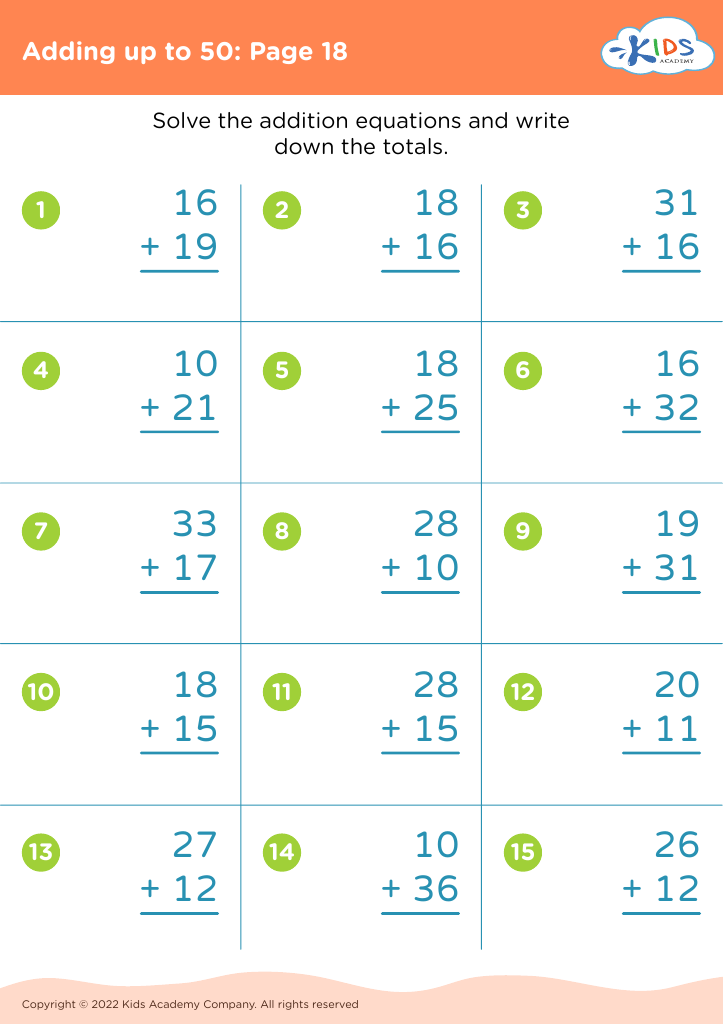
Adding up to 50: Page 18

Adding up to 50: Page 18

Adding up to 50: Page 18
Worksheet
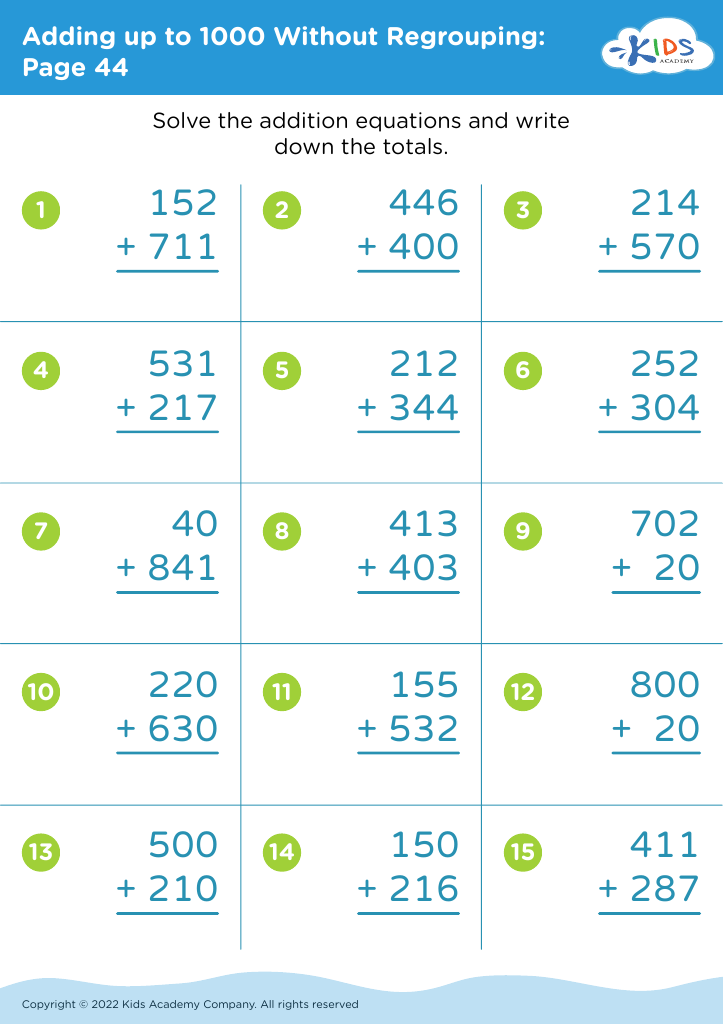
Adding up to 1000 Without Regrouping: Page 44
Worksheet
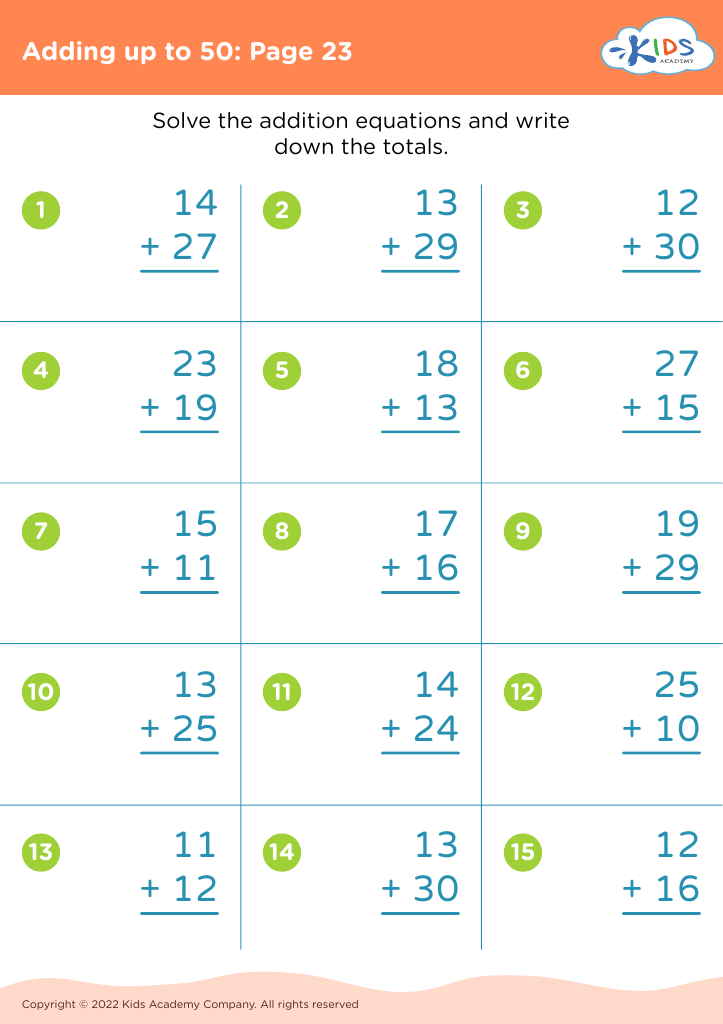
Adding up to 50: Page 23

Adding up to 50: Page 23

Adding up to 50: Page 23
Worksheet
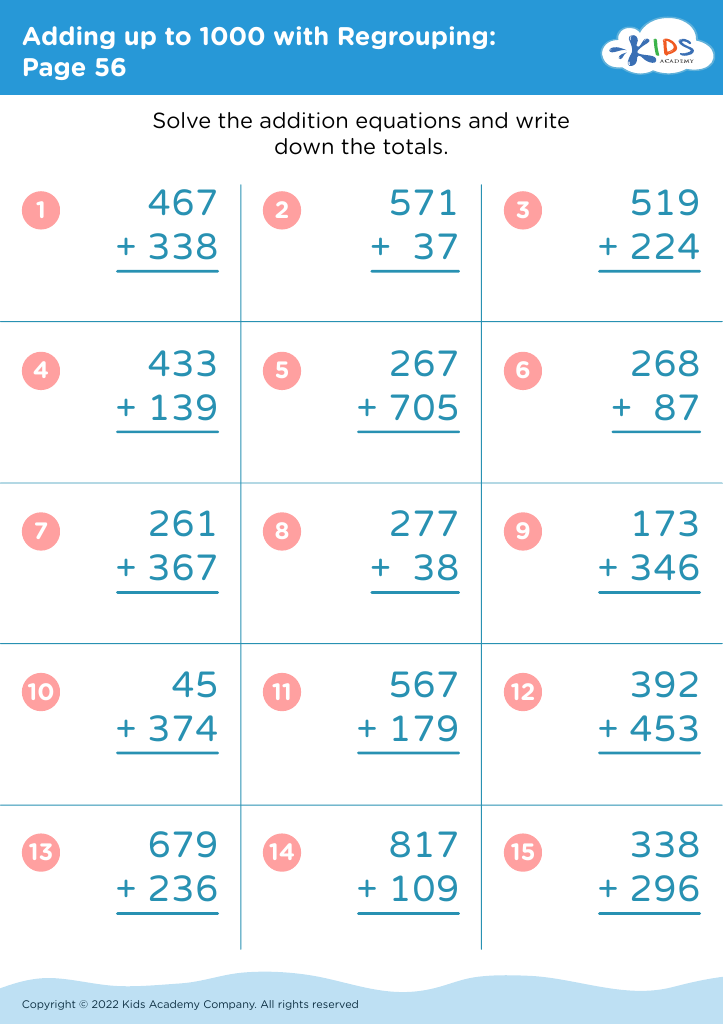
Adding up to 1000 with Regrouping: Page 56
Worksheet
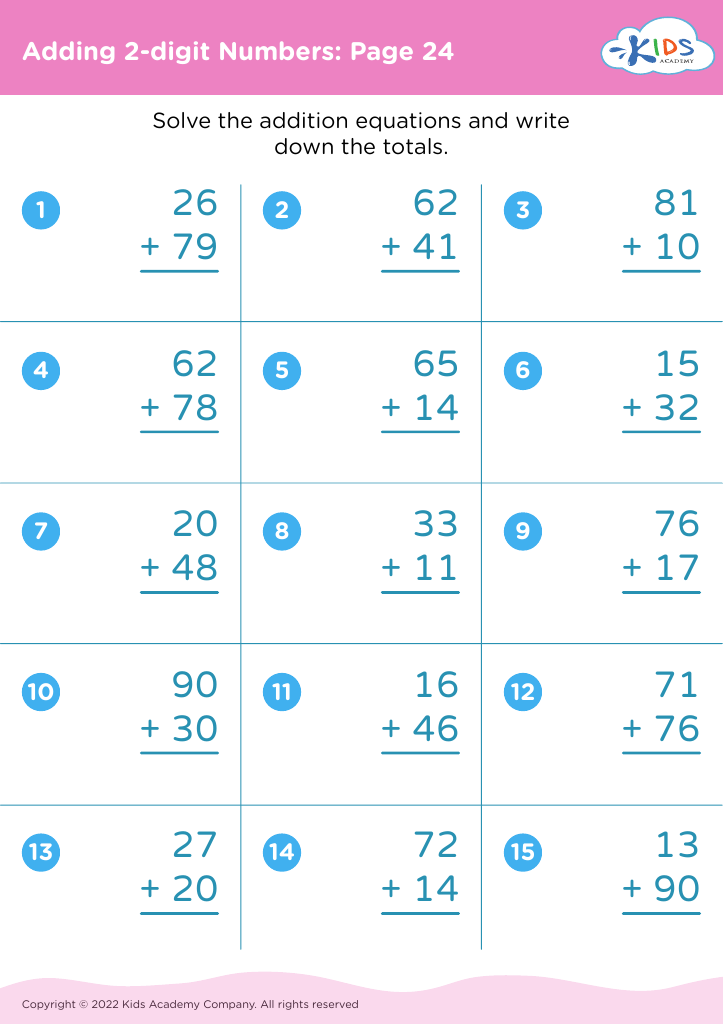
Adding 2-digit Numbers: Page 24

Adding 2-digit Numbers: Page 24

Adding 2-digit Numbers: Page 24
Worksheet
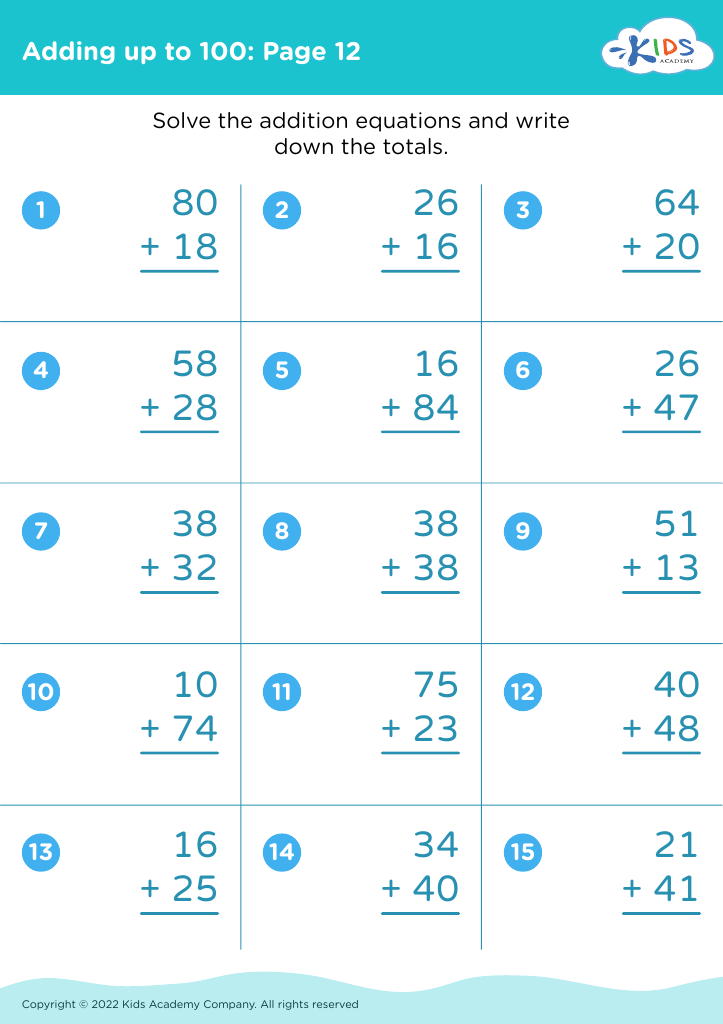
Adding up to 100: Page 12

Adding up to 100: Page 12

Adding up to 100: Page 12
Worksheet
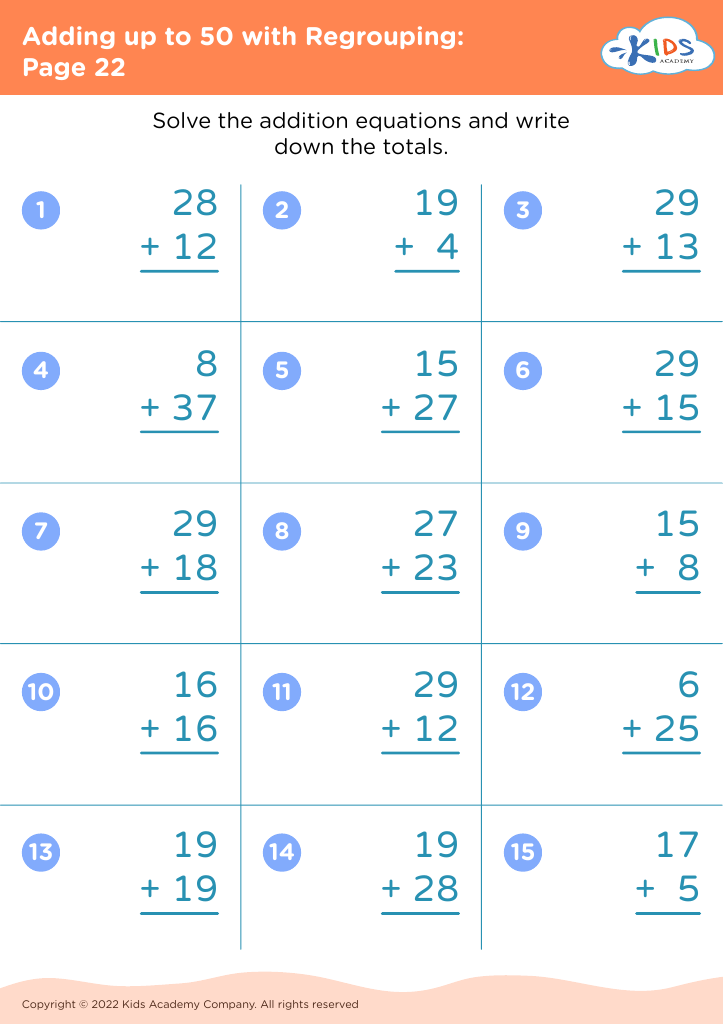
Adding up to 50 with Regrouping: Page 22
Worksheet
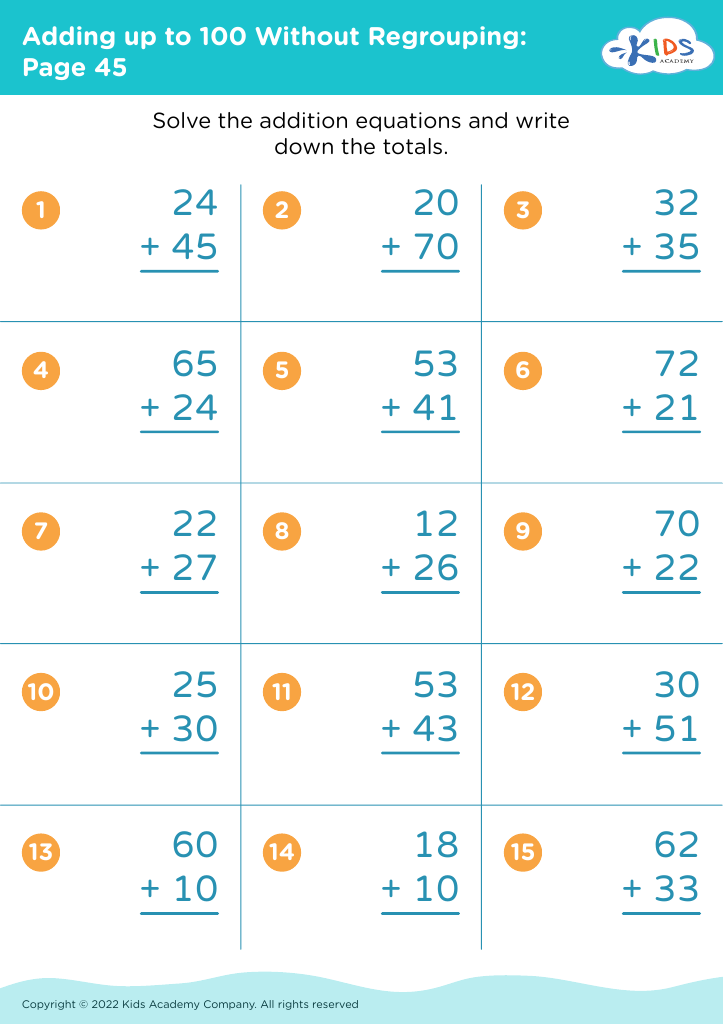
Adding up to 100 Without Regrouping: Page 45
Worksheet
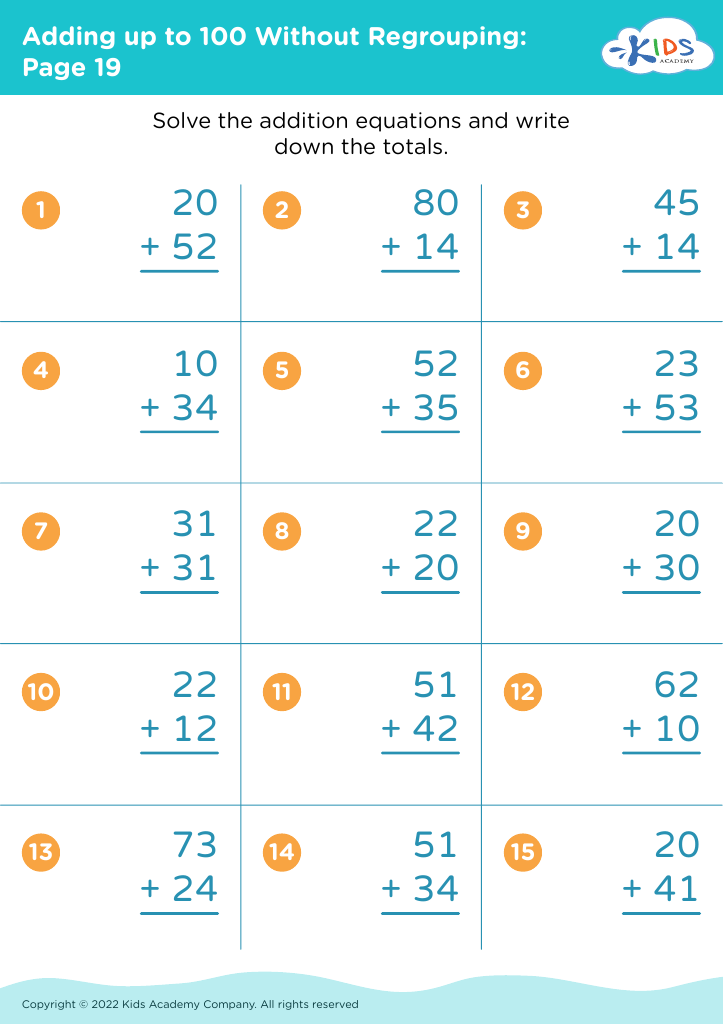
Adding up to 100 Without Regrouping: Page 19
Worksheet
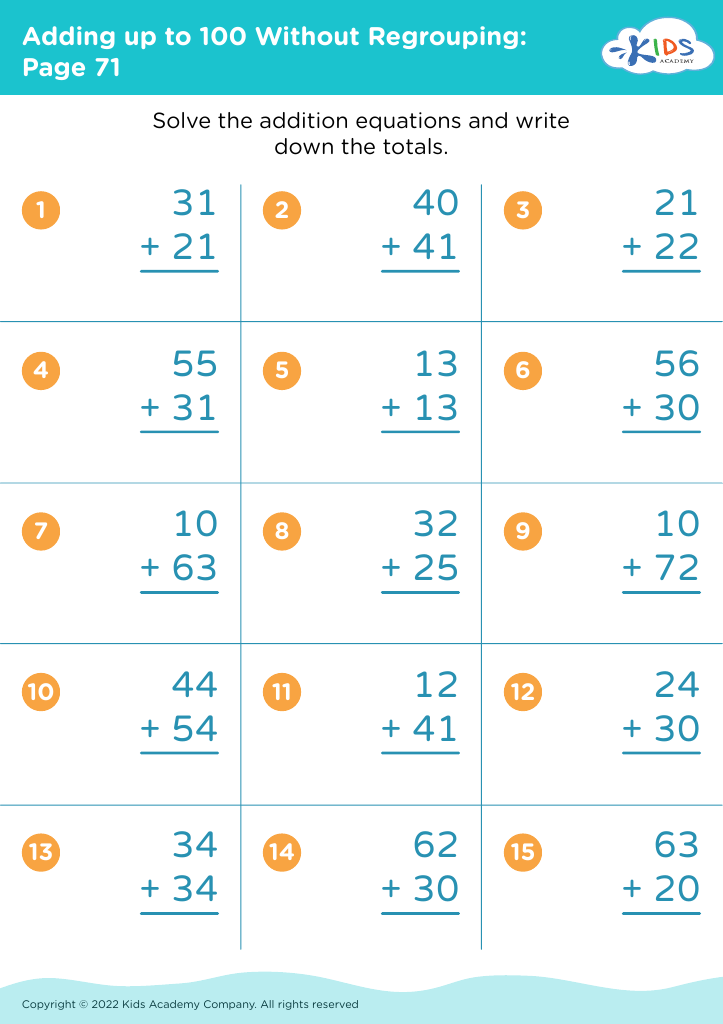
Adding up to 100 Without Regrouping: Page 71
Worksheet
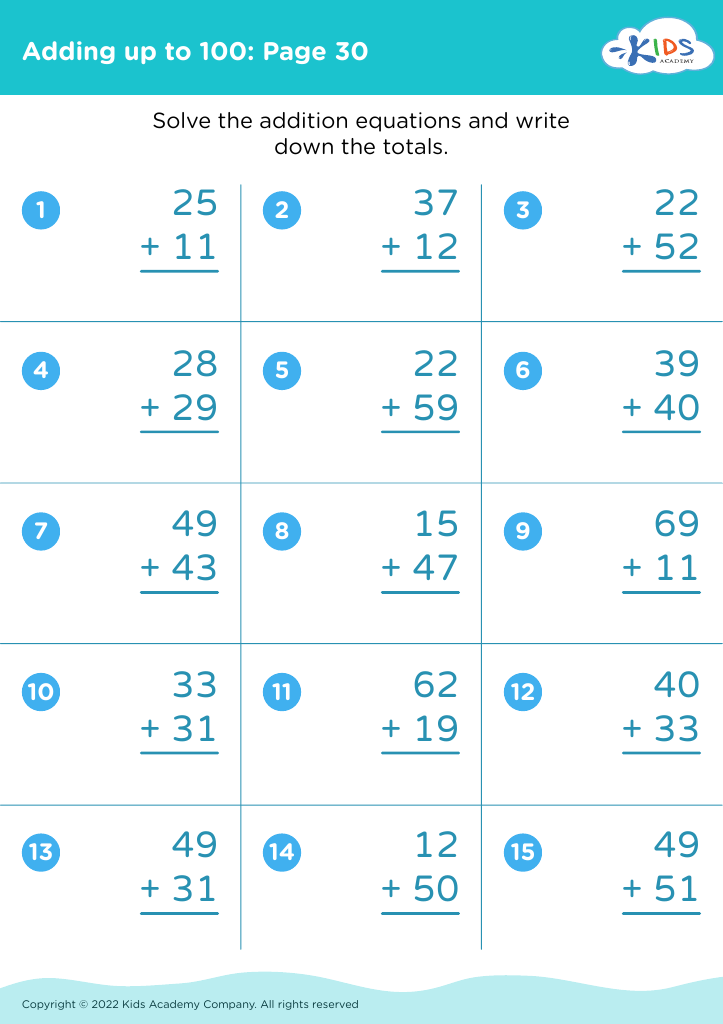
Adding up to 100: Page 30

Adding up to 100: Page 30

Adding up to 100: Page 30
Worksheet
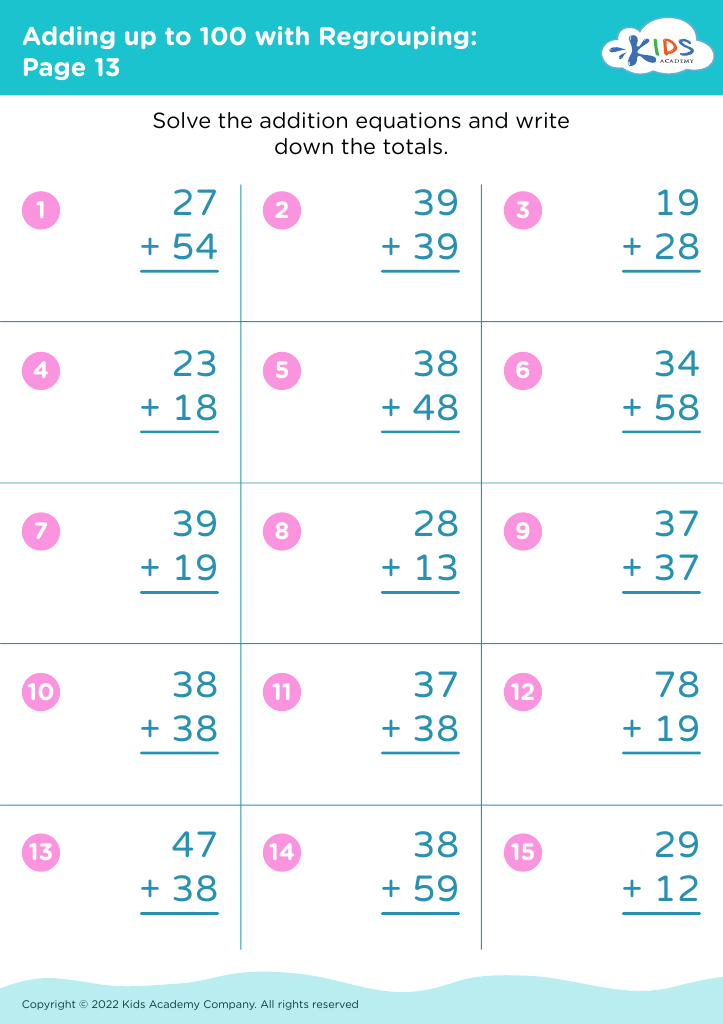
Adding up to 100 with Regrouping: Page 13
Worksheet
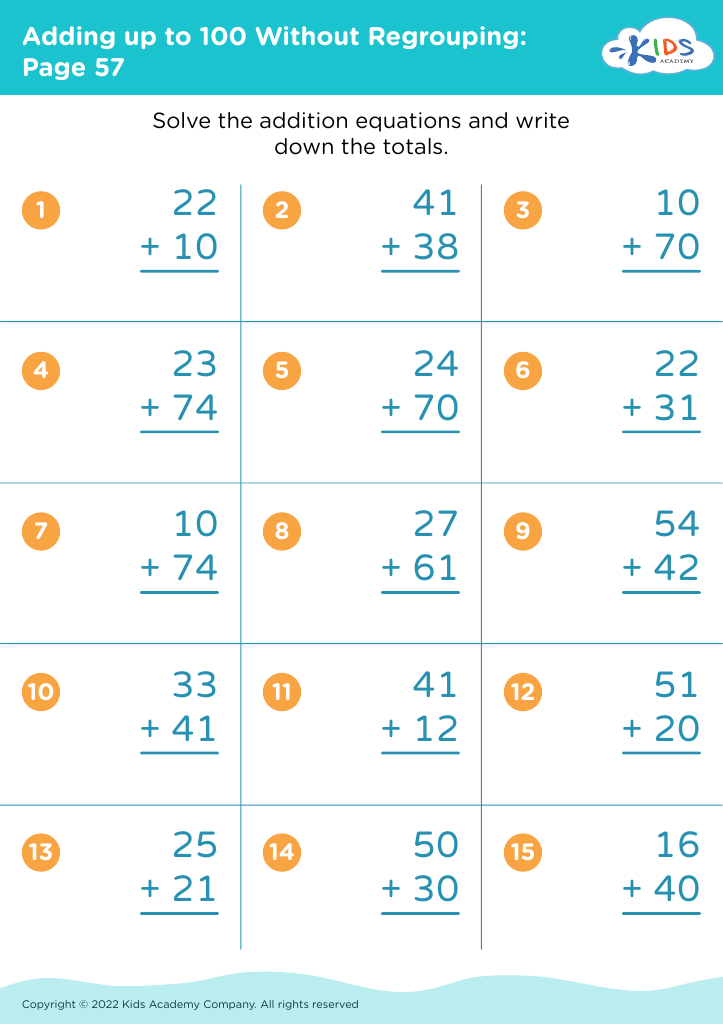
Adding up to 100 Without Regrouping: Page 57
Worksheet
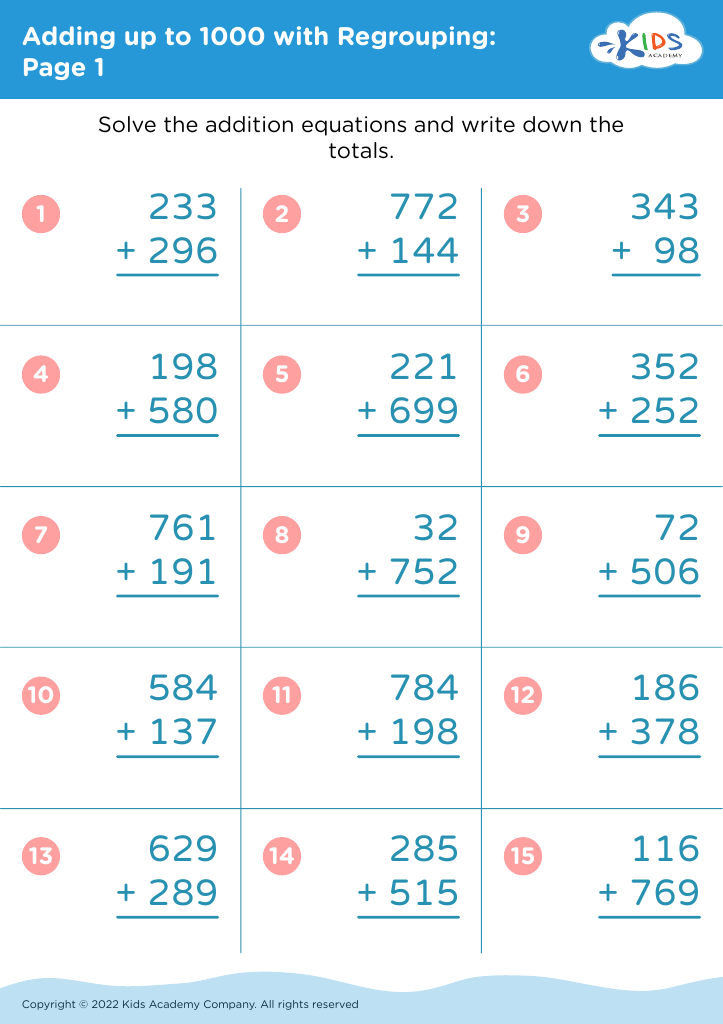
Adding up to 1000 with Regrouping: Page 1
Worksheet
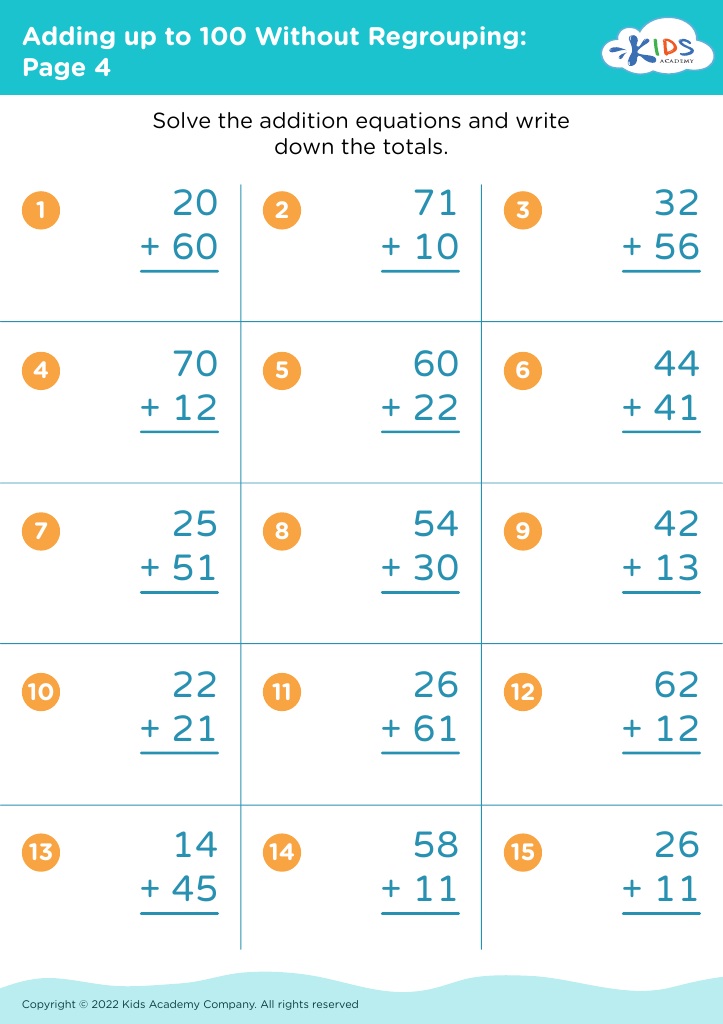
Adding up to 100 Without Regrouping: Page 4
Worksheet


Understanding fractions, particularly addition and subtraction, is crucial for children aged 4-7 as it lays the foundation for their mathematical skills and overall critical thinking. At this age, kids are naturally curious and eager to learn concepts that seem abstract, like fractions. Having a grasp of fractions helps them understand division, proportion, and the relationship between parts and wholes—skills necessary not just in math, but in everyday life.

Additionally, familiarity with fractions can enhance children's problem-solving abilities, as they learn to manipulate numbers in different ways. For teachers and parents, introducing fractions through engaging activities, like sharing snacks or using visual aids, can make learning enjoyable and relatable. This age is also when children develop self-confidence in their abilities; mastering fractions can make them feel accomplished, motivating them to tackle more complex concepts.

Moreover, a strong foundation in basic mathematical concepts energizes a child’s future learning journey, ensuring academic success in higher grades. To conclude, nurturing an understanding of fraction addition and subtraction is vital, not just academically, but for life skills, making it an essential focus for parents and teachers alike.