Filters

18 filtered results

Clear all filters
Favorites
With answer key
Interactive

18 filtered results

Difficulty Level

Grade


Welcome to our Basic Addition Practice Worksheets designed for children aged 4 to 7! These engaging worksheets provide a fun and effective way for young learners to master addition skills. Each worksheet features colorful illustrations and intuitive exercises, helping children to develop their mathematical understanding in a playful manner. From single-digit problems to simple word problems, our resources cater to diverse learning styles. Perfect for classroom use or at-home practice, these worksheets support early math skills essential for future success. Download our versatile addition worksheets today and give your child the tools they need to build a strong foundation in math!
Check out this FREE Trial Lesson on Addition for age 4-7!

My Family

Favorites
With answer key
Interactive
  • 4-7
  • Basic addition practice
  • Addition
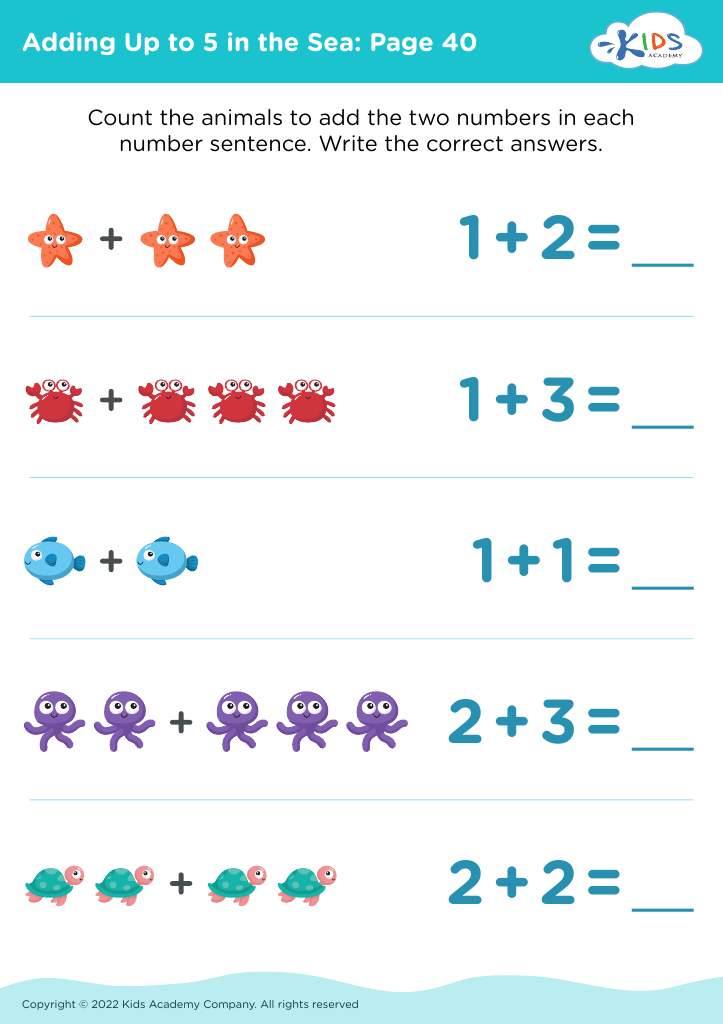
Adding Up to 5 in the Sea: Page 40
Worksheet
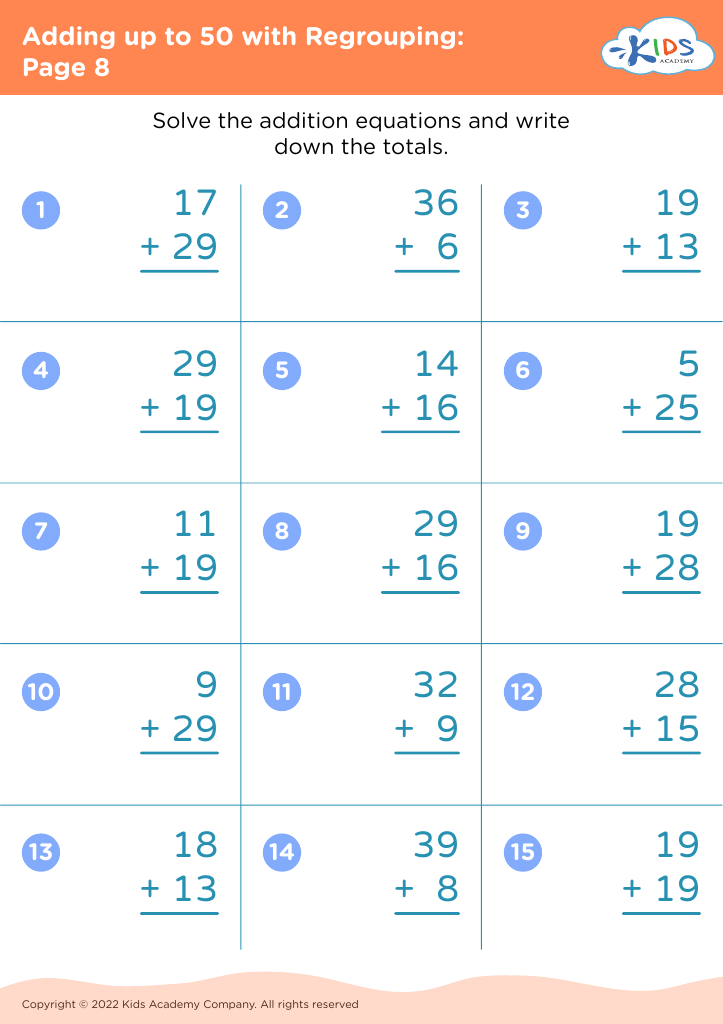
Adding up to 50 with Regrouping: Page 8
Worksheet
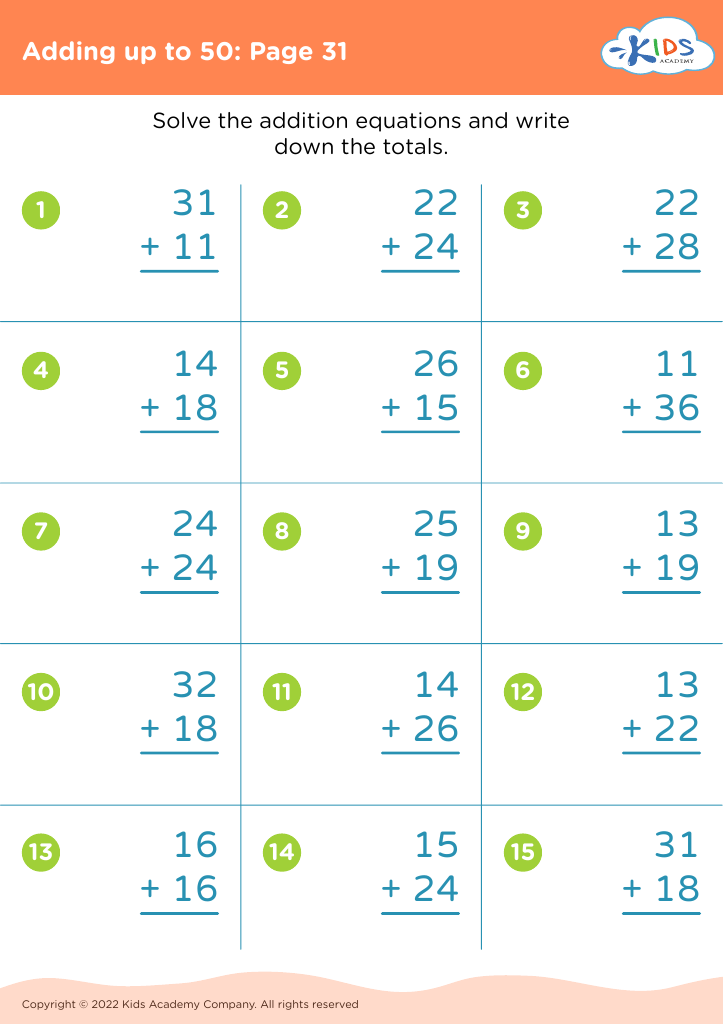
Adding up to 50: Page 31

Adding up to 50: Page 31

Adding up to 50: Page 31
Worksheet
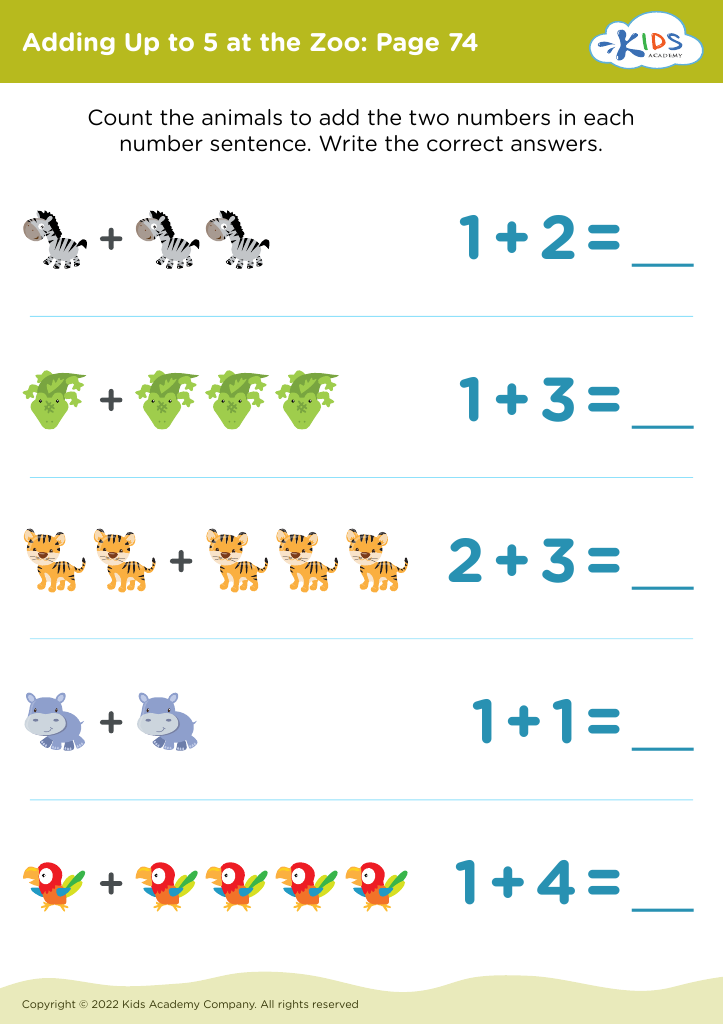
Adding Up to 5 at the Zoo: Page 74
Worksheet
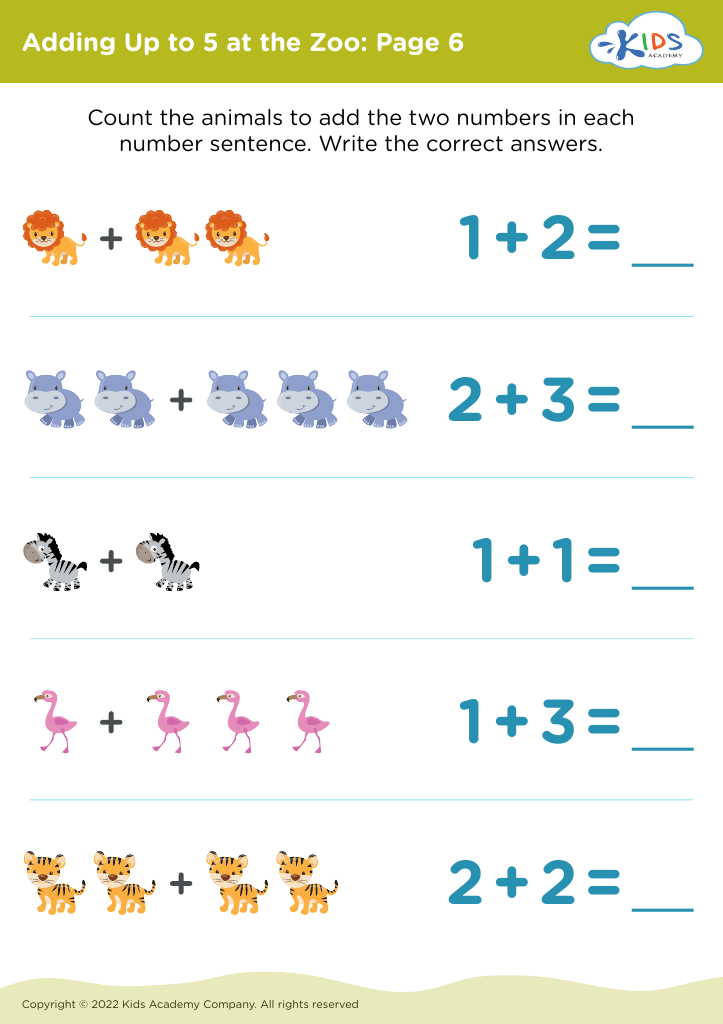
Adding Up to 5 at the Zoo: Page 6

Adding Up to 5 at the Zoo: Page 6

Adding Up to 5 at the Zoo: Page 6
Worksheet
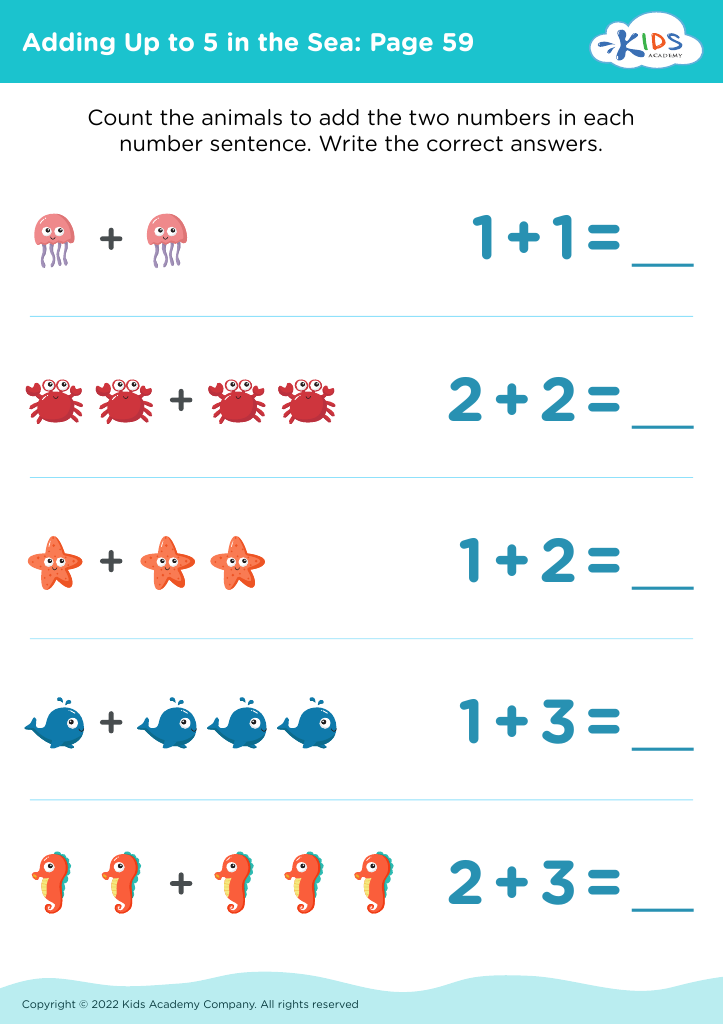
Adding Up to 5 in the Sea: Page 59
Worksheet
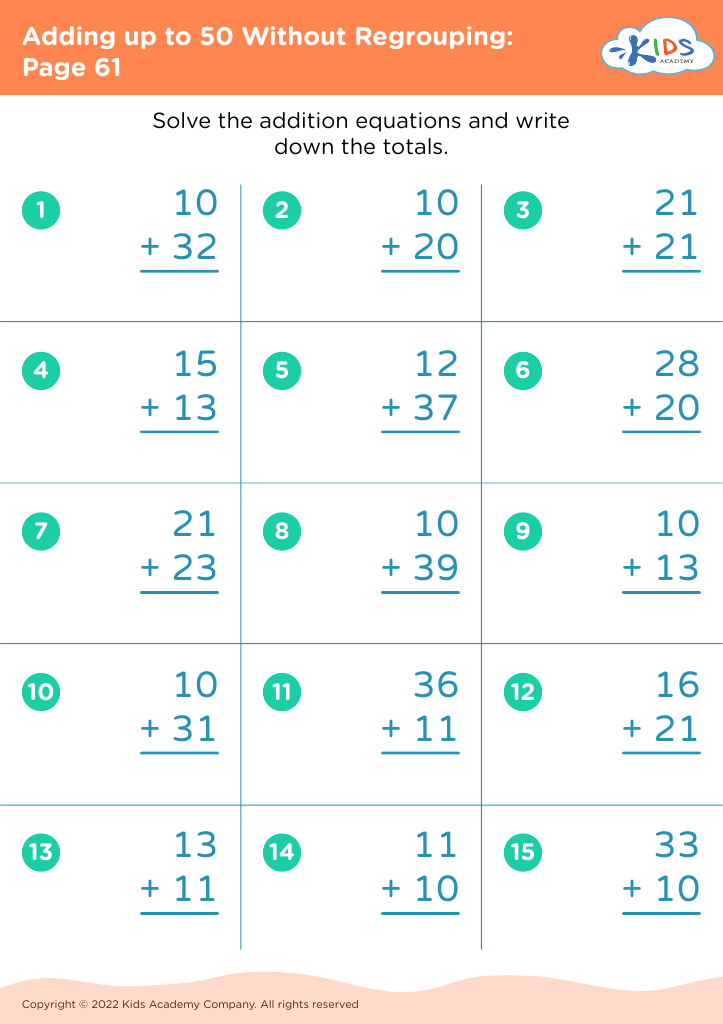
Adding up to 50 Without Regrouping: Page 61
Worksheet
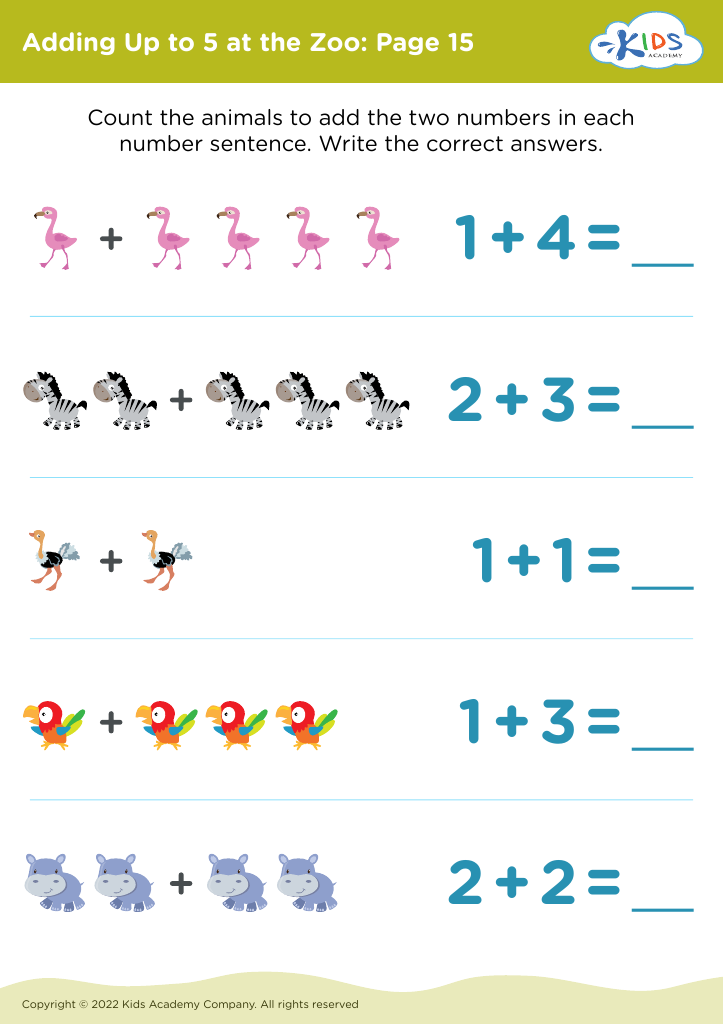
Adding Up to 5 at the Zoo: Page 15
Worksheet
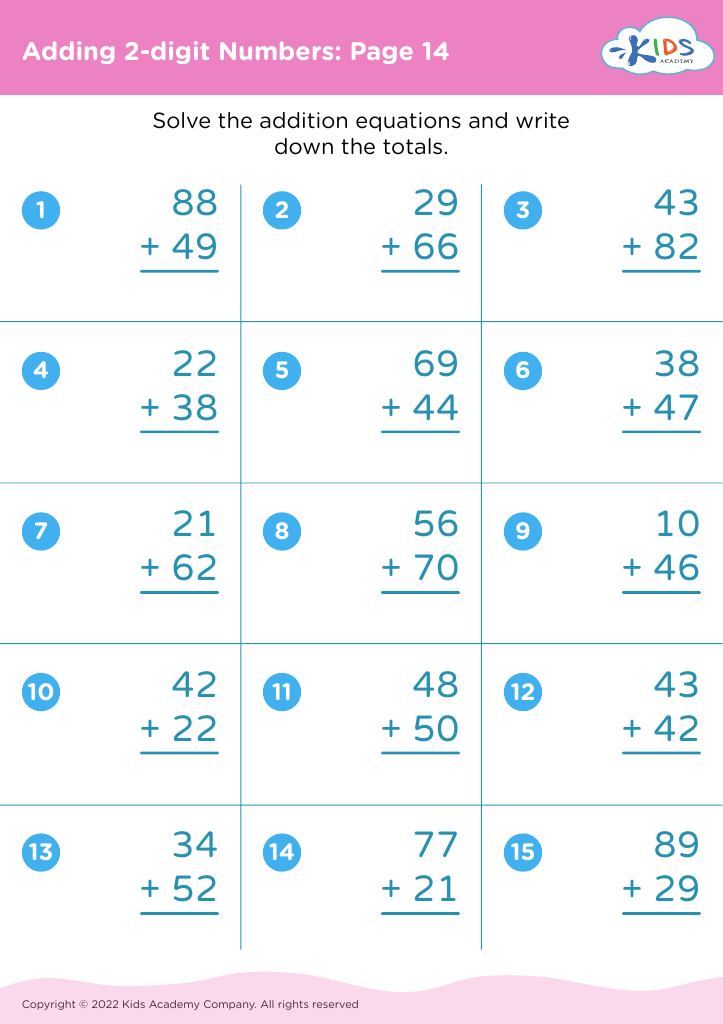
Adding 2-digit Numbers: Page 14

Adding 2-digit Numbers: Page 14

Adding 2-digit Numbers: Page 14
Worksheet
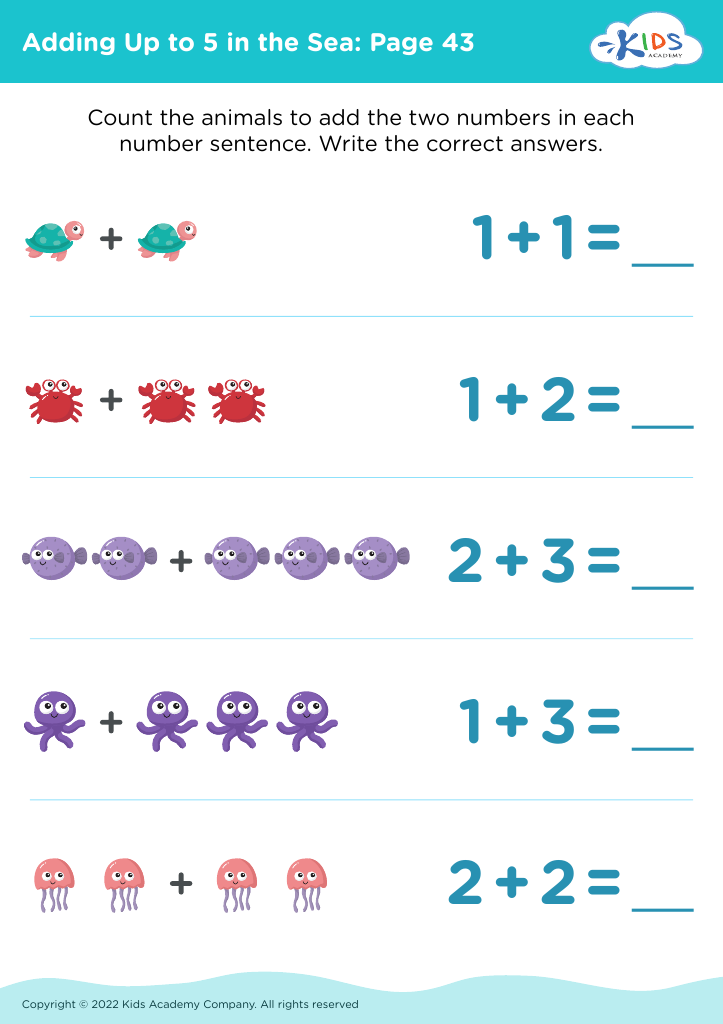
Adding Up to 5 in the Sea: Page 43
Worksheet
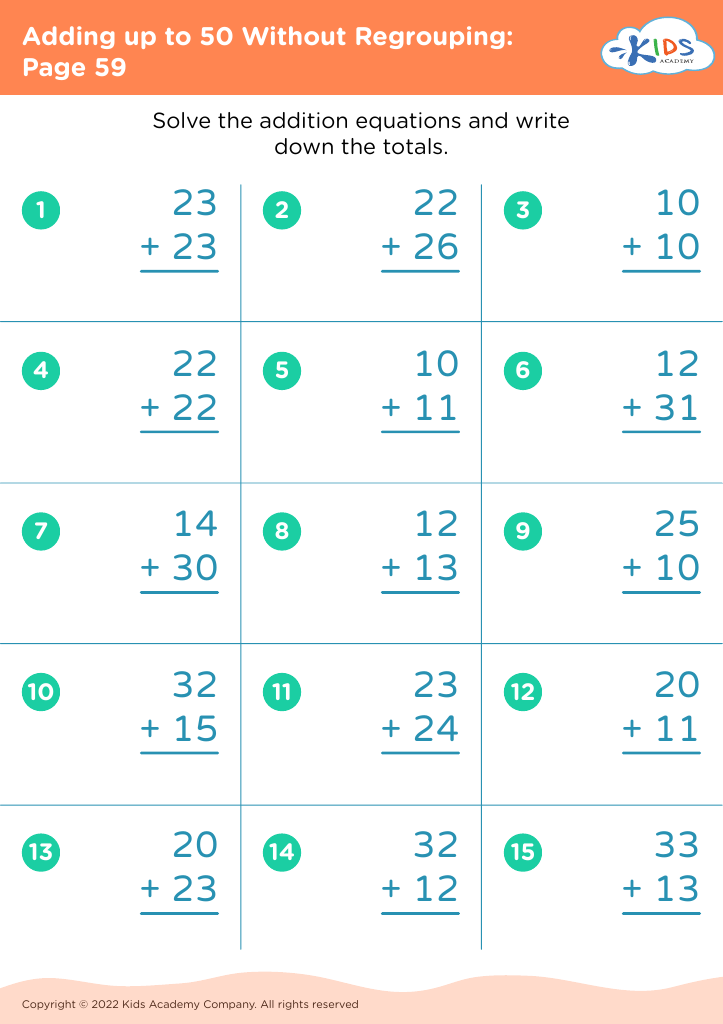
Adding up to 50 Without Regrouping: Page 59
Worksheet
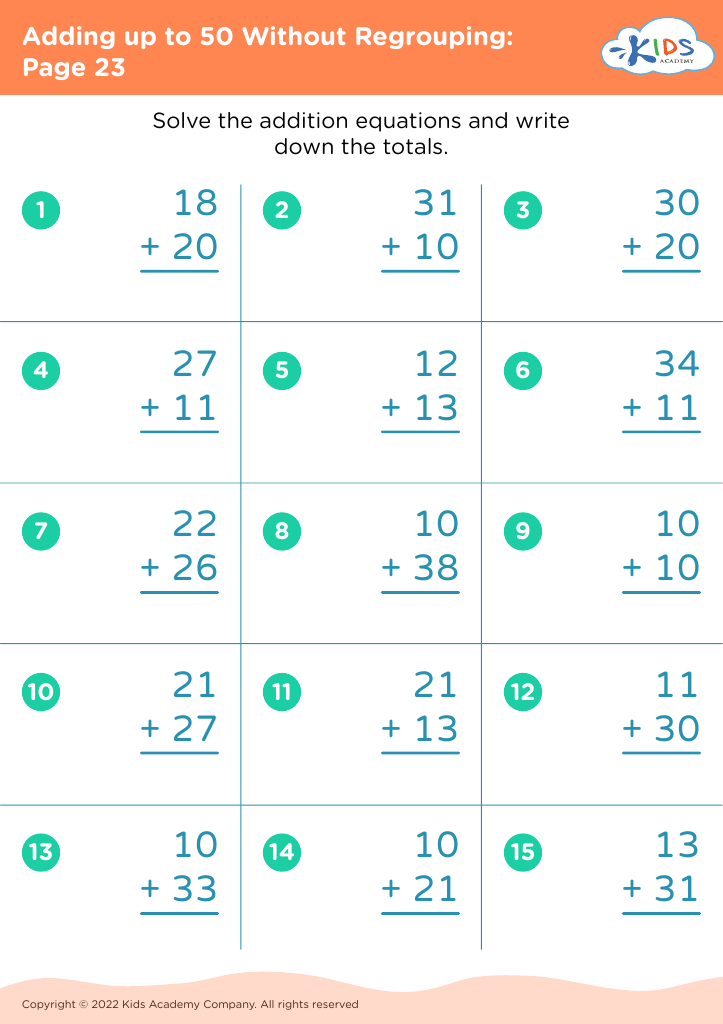
Adding up to 50 Without Regrouping: Page 23
Worksheet
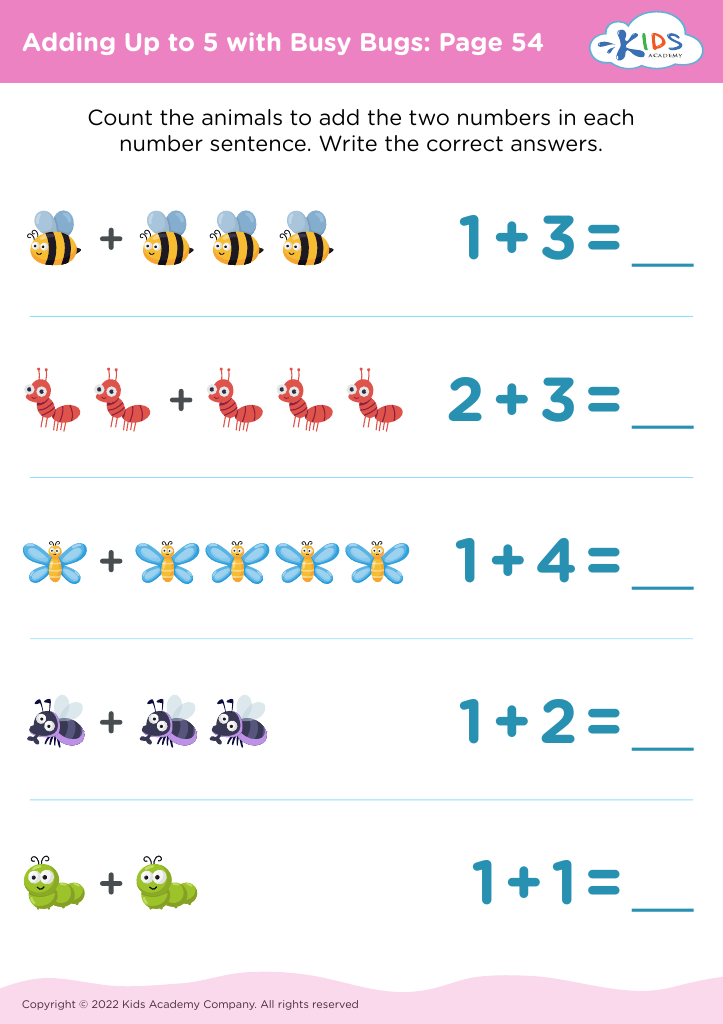
Adding Up to 5 with Busy Bugs: Page 54
Worksheet
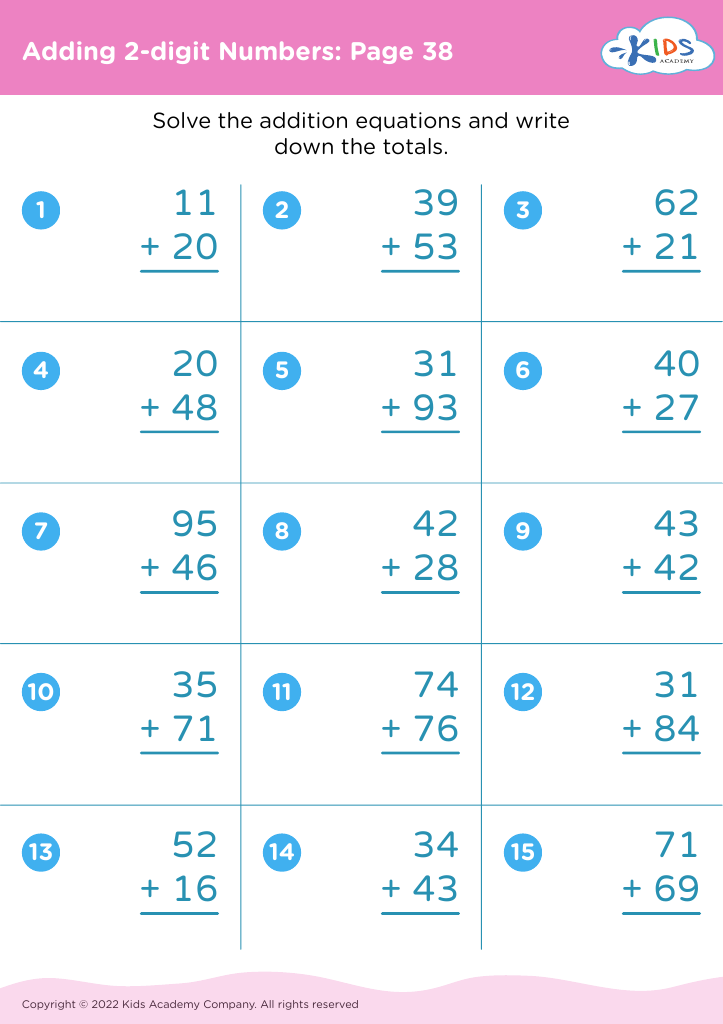
Adding 2-digit Numbers: Page 38

Adding 2-digit Numbers: Page 38

Adding 2-digit Numbers: Page 38
Worksheet
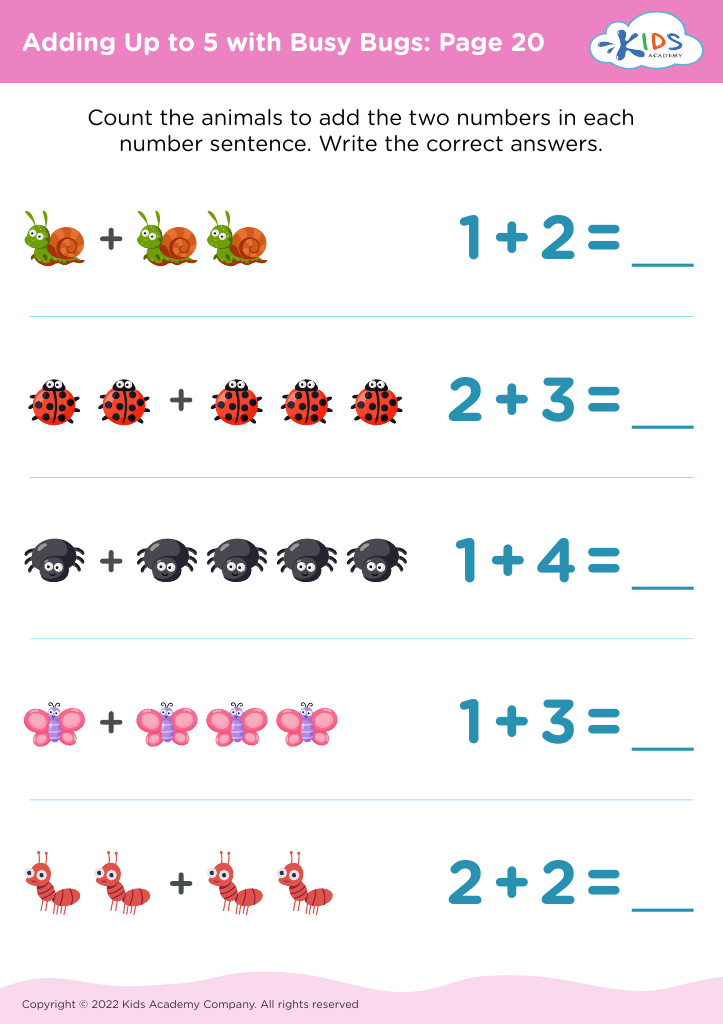
Adding Up to 5 with Busy Bugs: Page 20
Worksheet
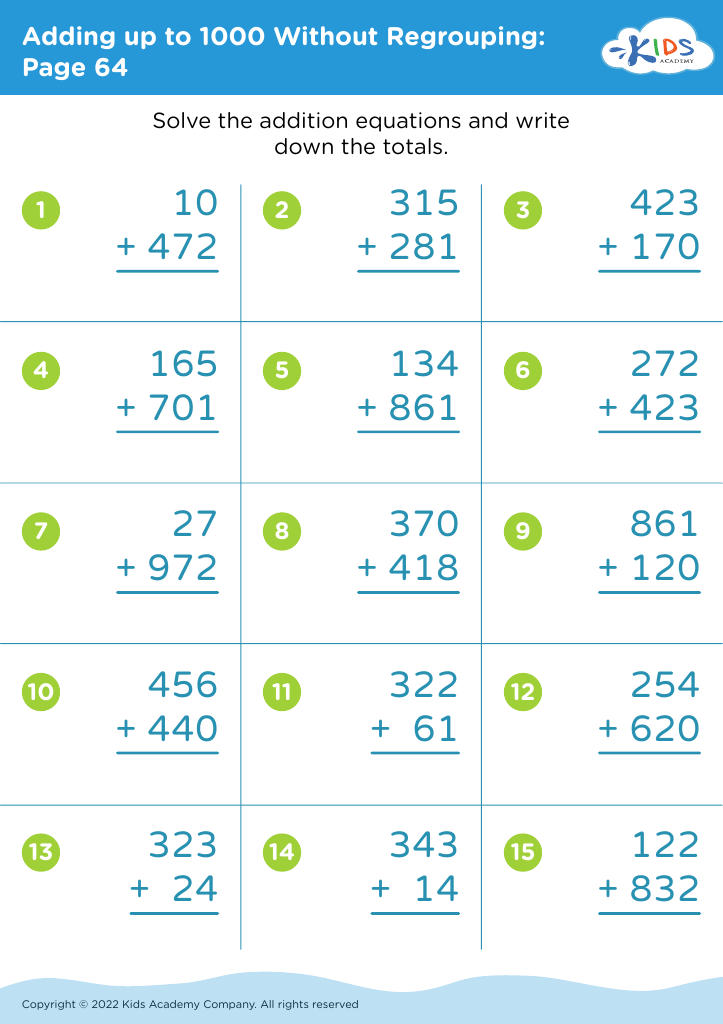
Adding up to 1000 Without Regrouping: Page 64
Worksheet
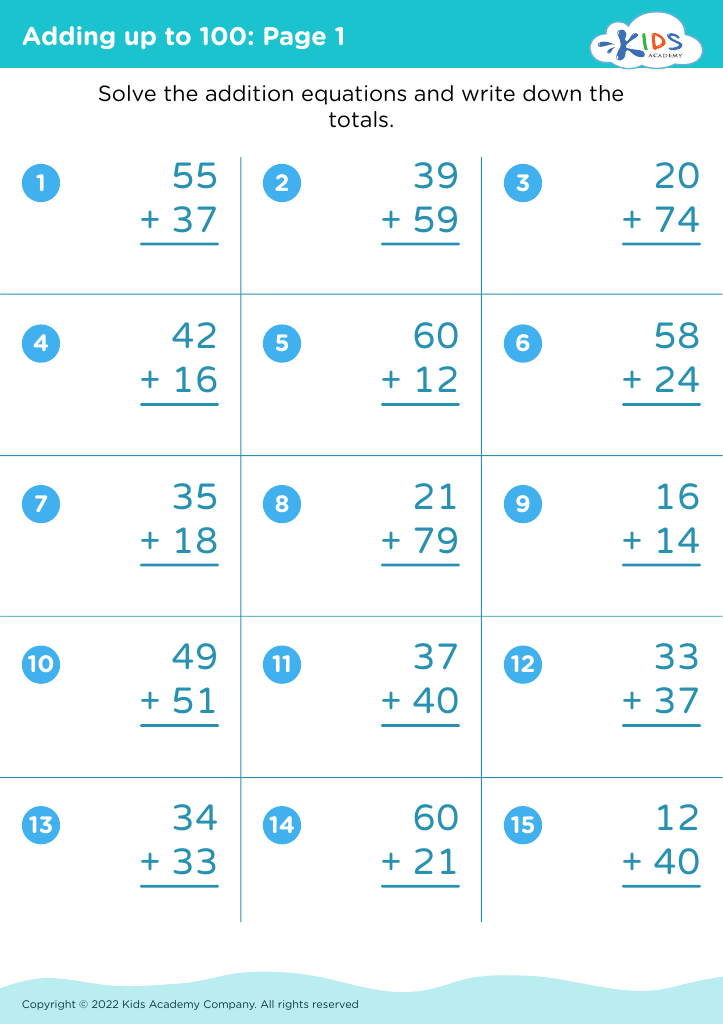
Adding up to 100: Page 1

Adding up to 100: Page 1

Adding up to 100: Page 1
Worksheet
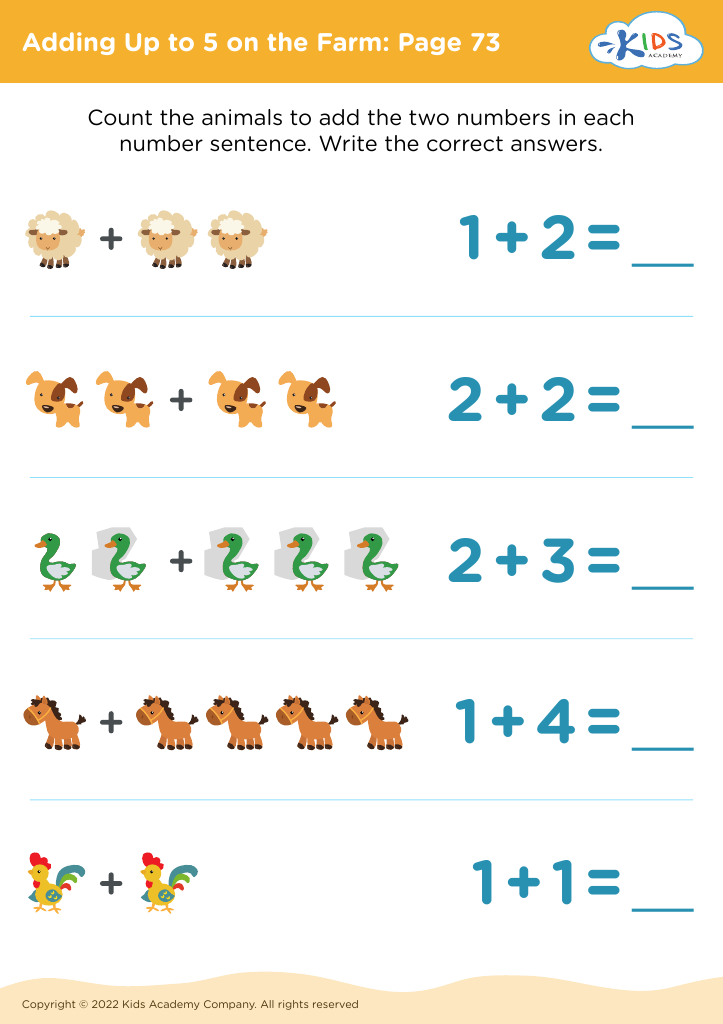
Adding Up to 5 on the Farm: Page 73
Worksheet


Basic addition practice for ages 4-7 is crucial for several reasons. First, it lays the foundation for future mathematical concepts. At this age, children are highly receptive to learning, and developing strong addition skills can foster a positive attitude towards math, making it less intimidating as they progress.

Second, mastering basic addition helps enhance problem-solving skills. Children learn to approach problems logically and think critically, skills that are essential not just in math but across all subjects and life experiences.

Moreover, consistent practice builds confidence. When children successfully grasp addition, their self-esteem grows, encouraging them to tackle more complex topics as they advance in their education. Additionally, addition practice supports cognitive development, enhancing memory and concentration.

Furthermore, parents and teachers play a vital role in this learning journey by providing engaging activities that make math fun, like games and interactive applications. This can turn mundane practice into an enjoyable experience.

Ultimately, by investing time and effort into basic addition skills, parents and teachers set children up for academic success and lifelong learning, ensuring they have the necessary tools to navigate both mathematical challenges and everyday situations effectively.