Filters

19 filtered results

Clear all filters
Favorites
With answer key
Interactive

19 filtered results

Difficulty Level

Grade


Introduce your little learners to the world of addition with our Counting Objects Addition Worksheets designed for ages 4-7! These engaging worksheets make math fun by allowing children to count and visually identify objects, helping them grasp basic addition concepts. With colorful illustrations and interactive activities, young minds will enjoy learning how to combine quantities, enhancing their counting and problem-solving skills. Perfect for classroom use or homeschooling, our resources cater to various learning styles, making math approachable and enjoyable. Start building a strong foundation in math for your child today with our printable addition worksheets!
Check out this FREE Trial Lesson on Addition for age 4-7!

T

Favorites
With answer key
Interactive
  • 4-7
  • Counting objects
  • Addition
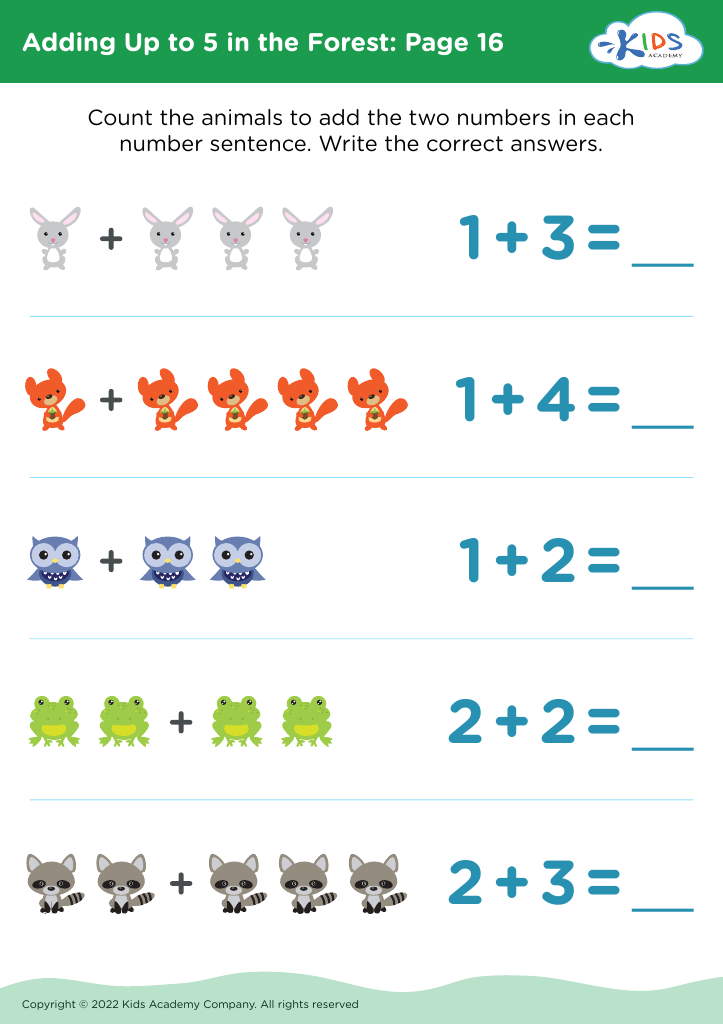
Adding Up to 5 in the Forest: Page 16
Worksheet
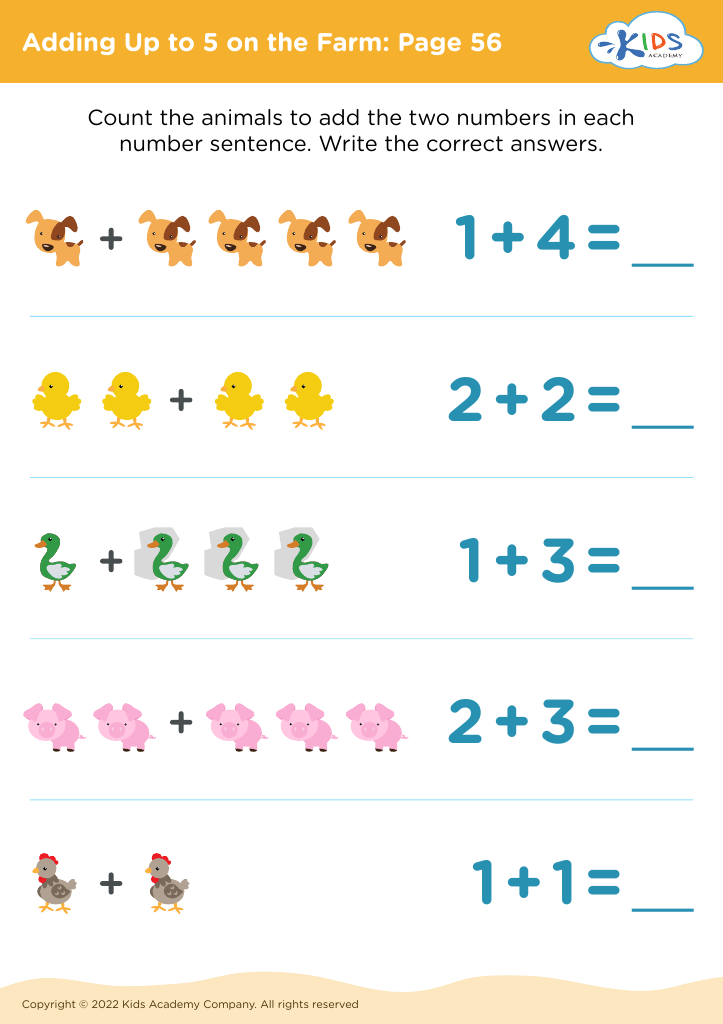
Adding Up to 5 on the Farm: Page 56
Worksheet
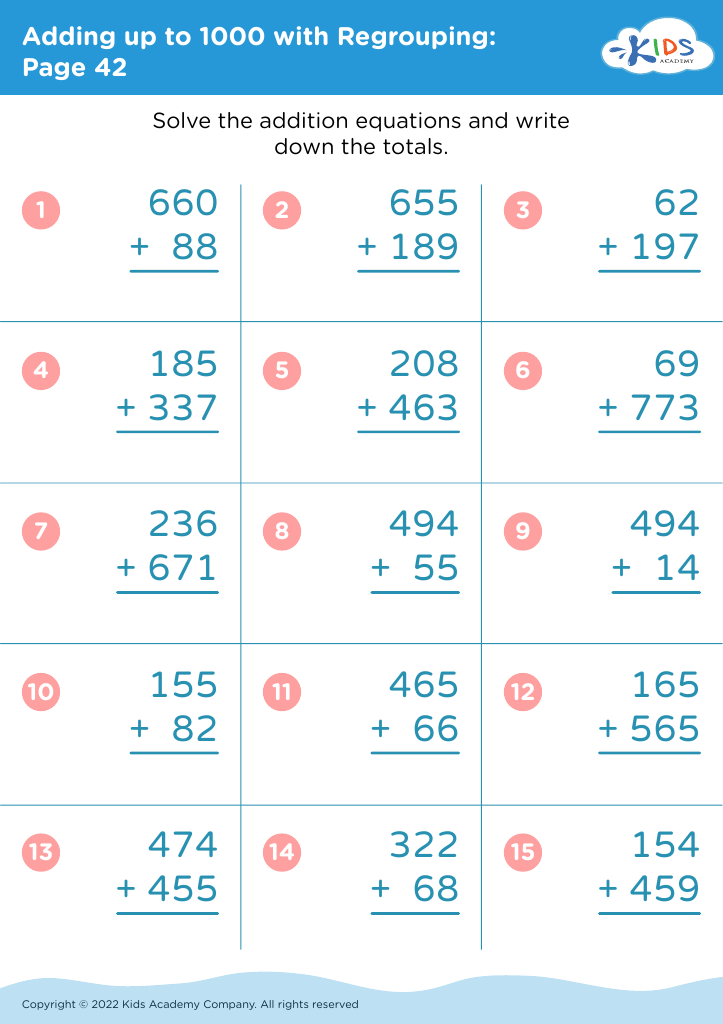
Adding up to 1000 with Regrouping: Page 42
Worksheet
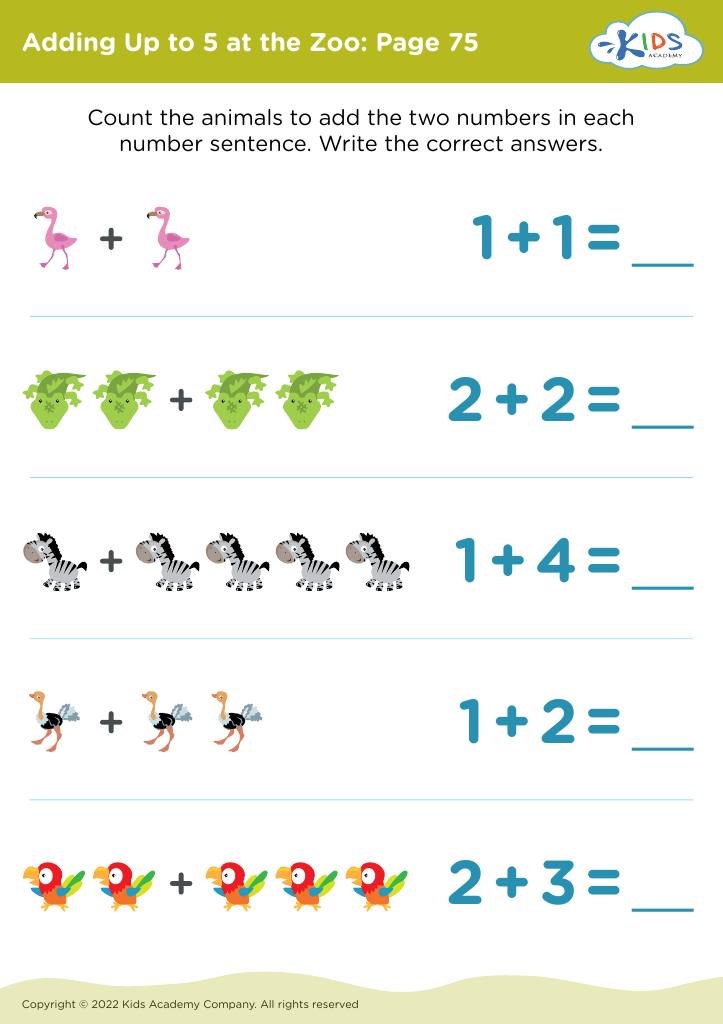
Adding Up to 5 at the Zoo: Page 75
Worksheet
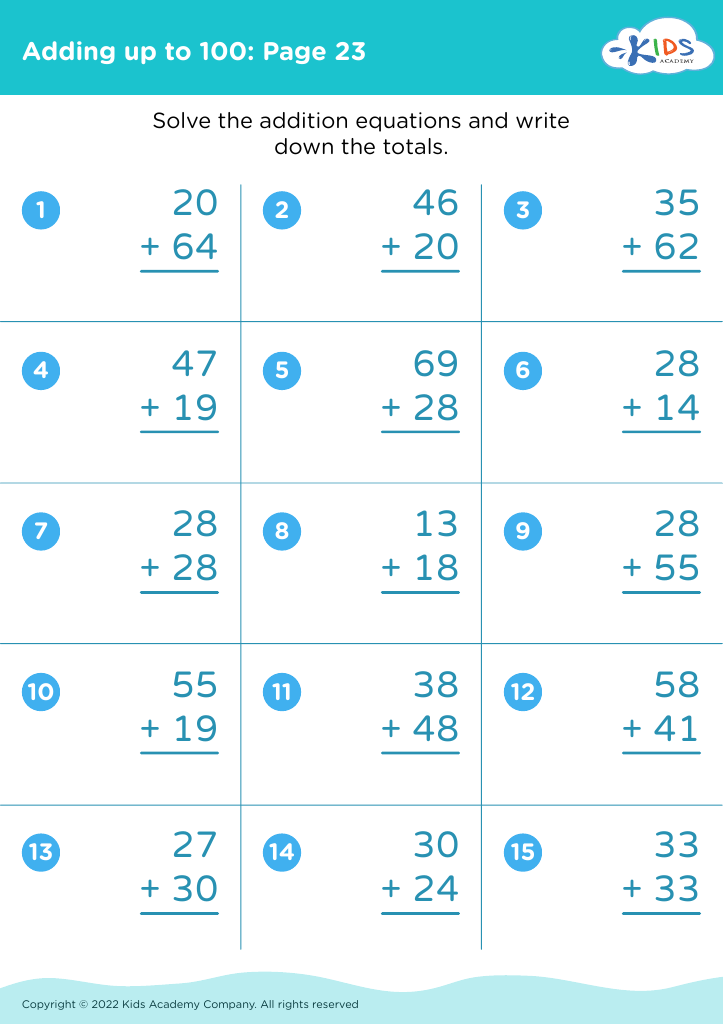
Adding up to 100: Page 23

Adding up to 100: Page 23

Adding up to 100: Page 23
Worksheet
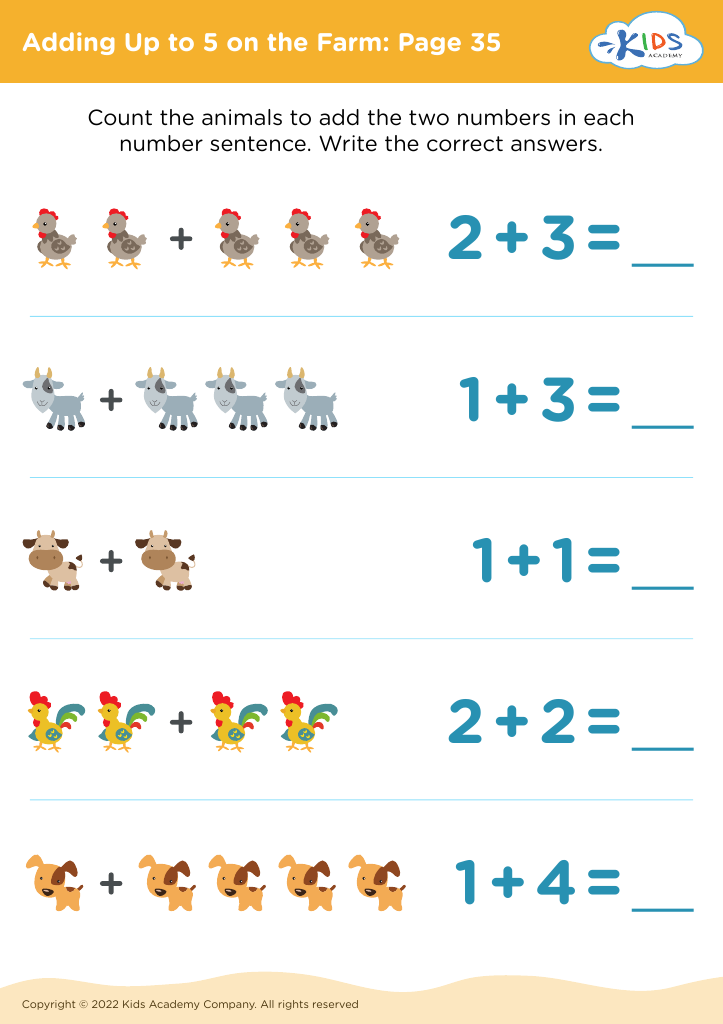
Adding Up to 5 on the Farm: Page 35
Worksheet
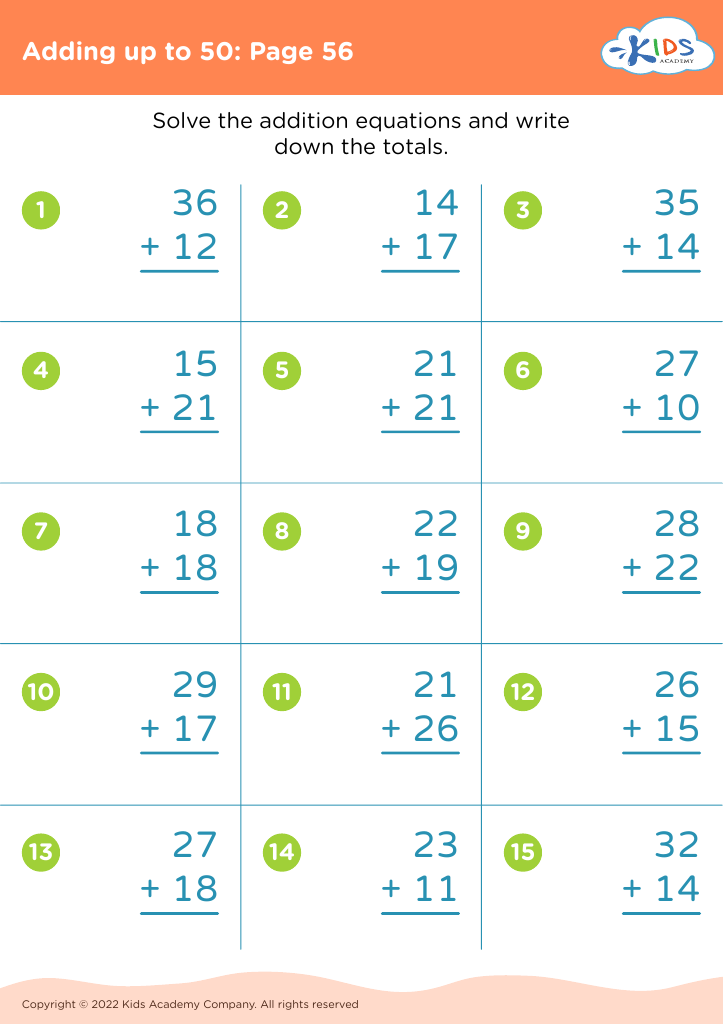
Adding up to 50: Page 56

Adding up to 50: Page 56

Adding up to 50: Page 56
Worksheet
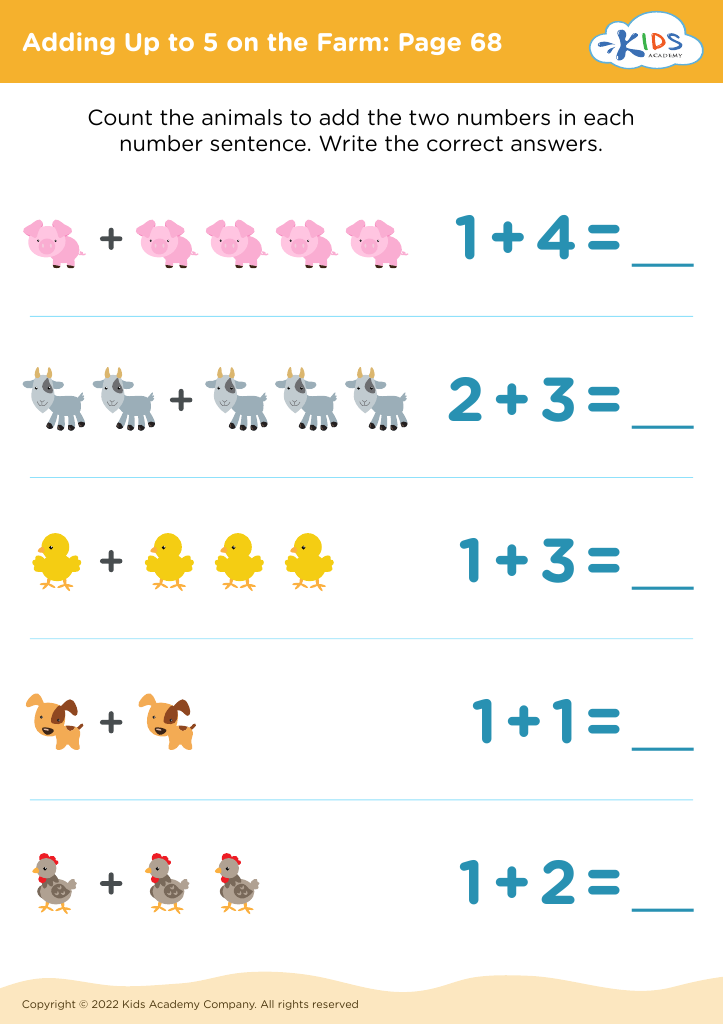
Adding Up to 5 on the Farm: Page 68
Worksheet
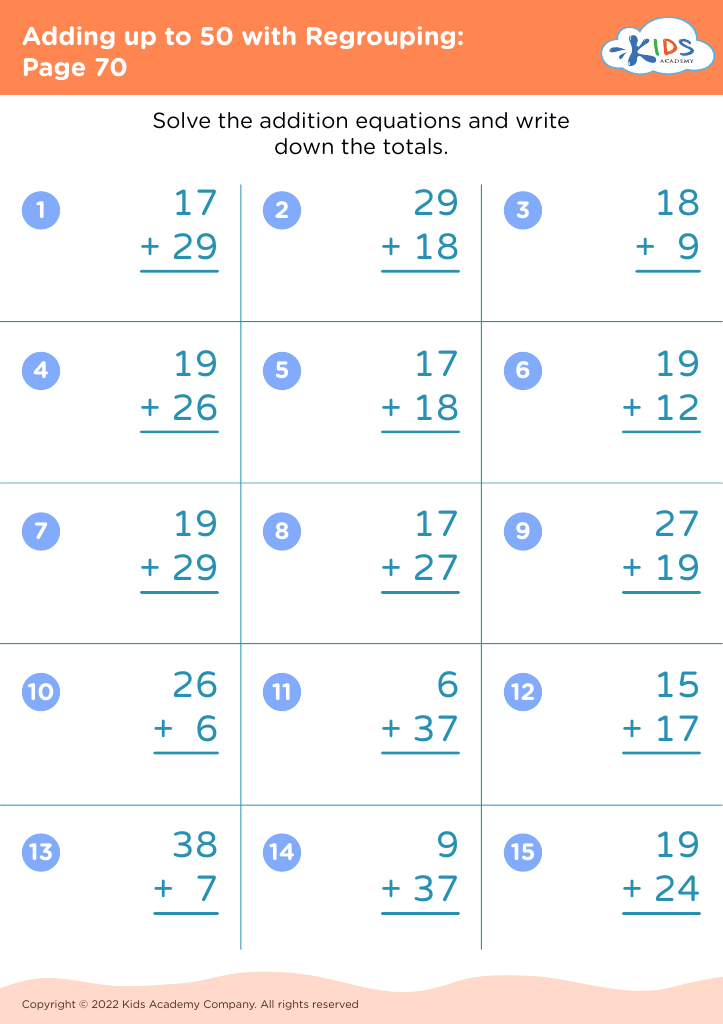
Adding up to 50 with Regrouping: Page 70
Worksheet
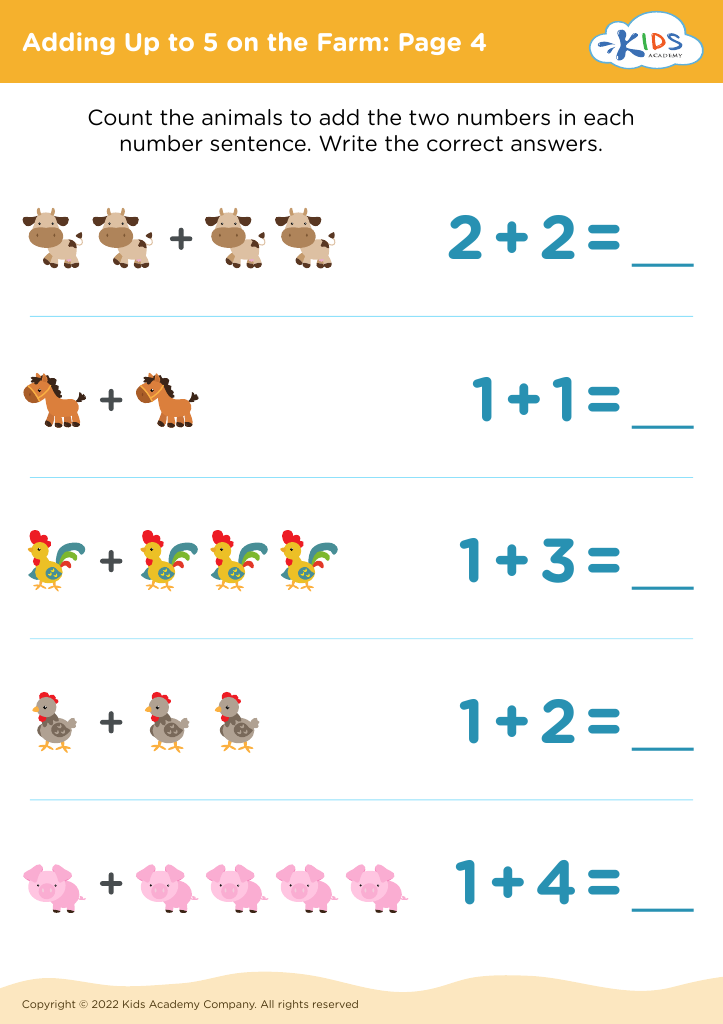
Adding Up to 5 on the Farm: Page 4
Worksheet
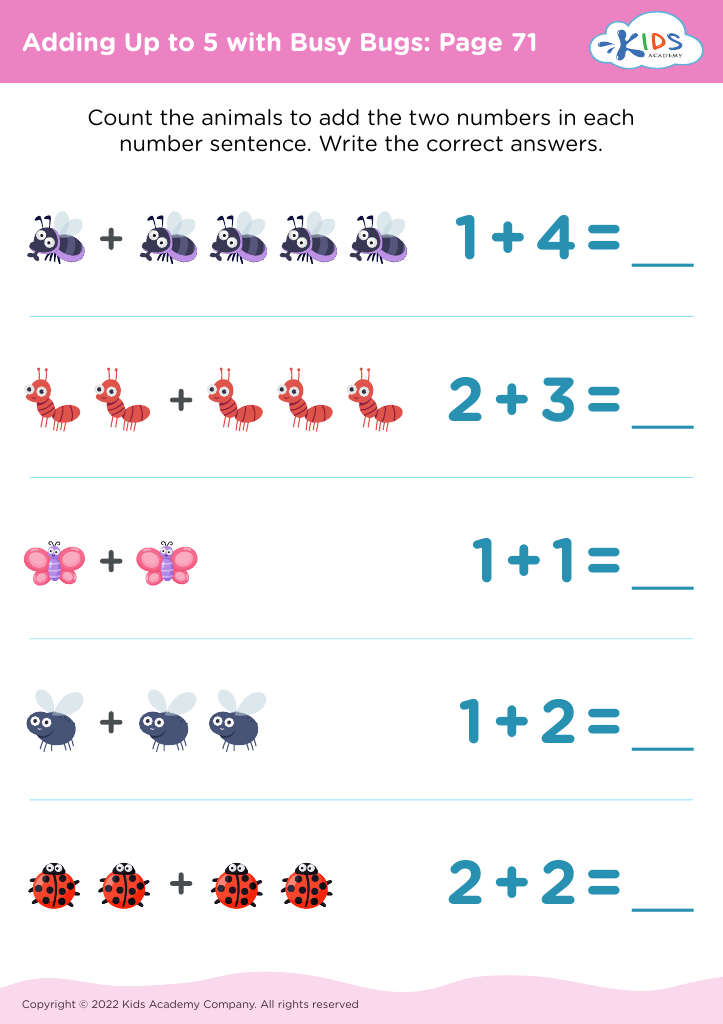
Adding Up to 5 with Busy Bugs: Page 71
Worksheet
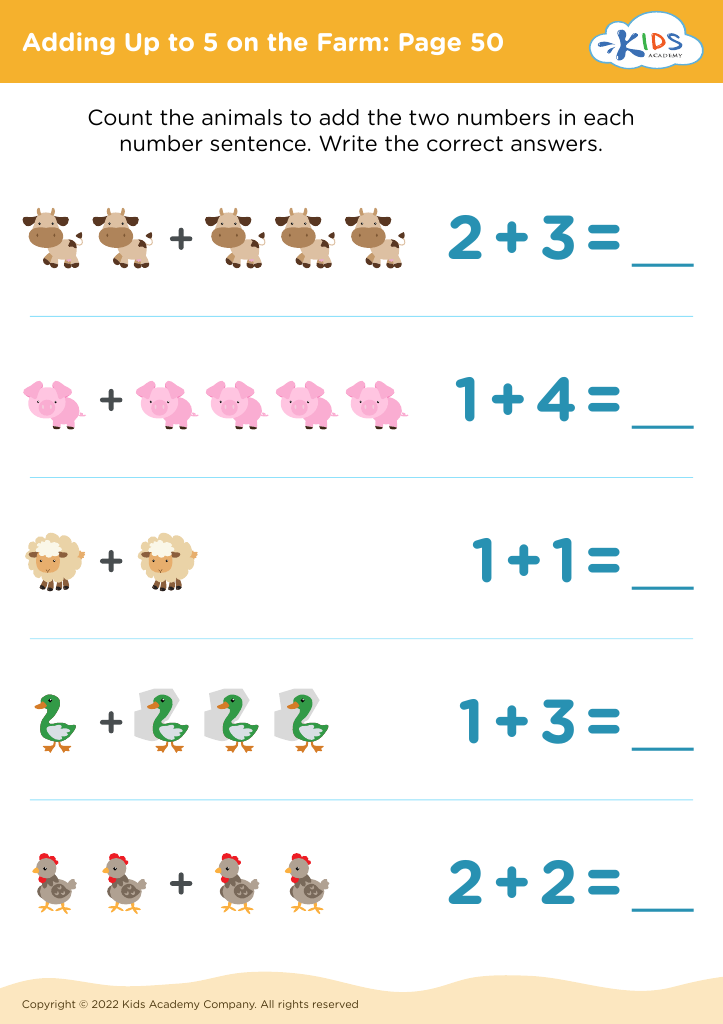
Adding Up to 5 on the Farm: Page 50
Worksheet
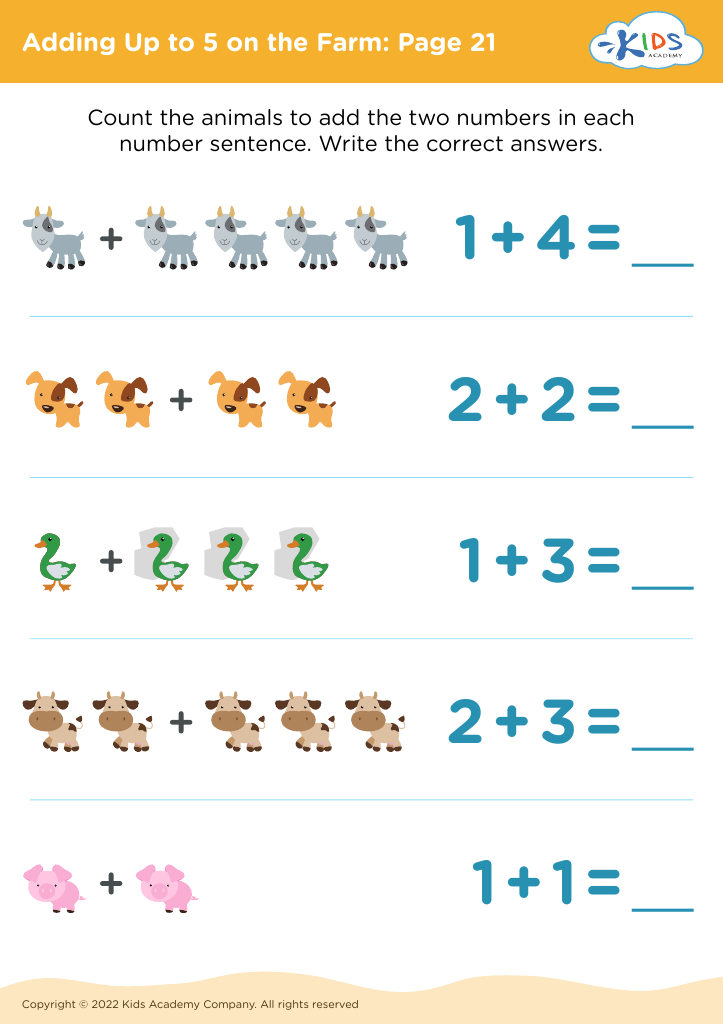
Adding Up to 5 on the Farm: Page 21
Worksheet
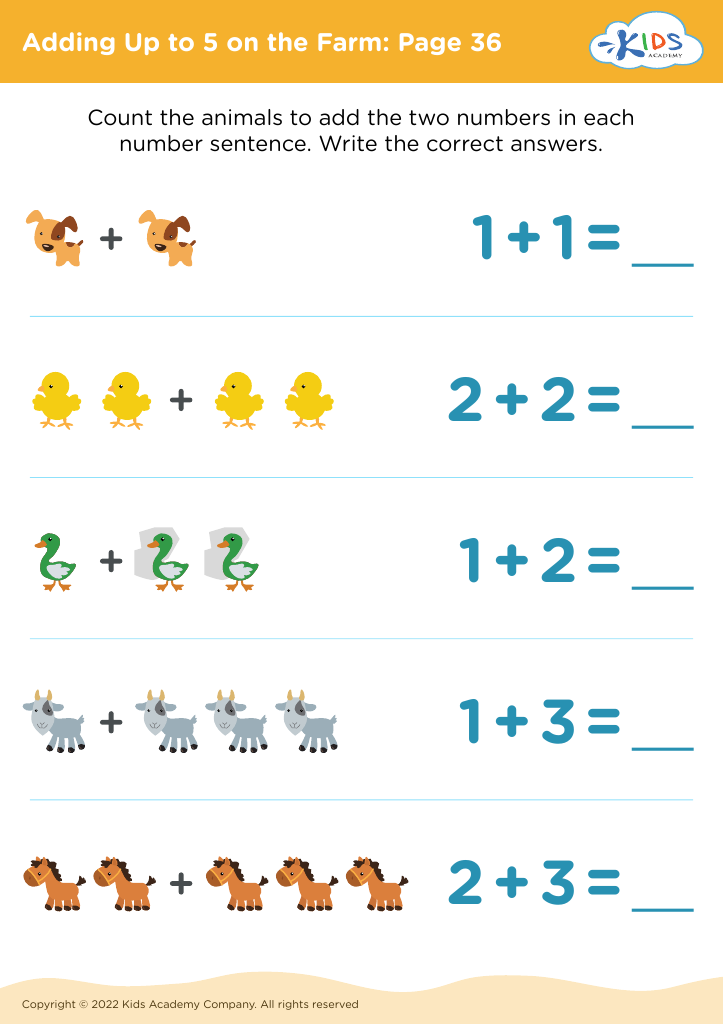
Adding Up to 5 on the Farm: Page 36
Worksheet
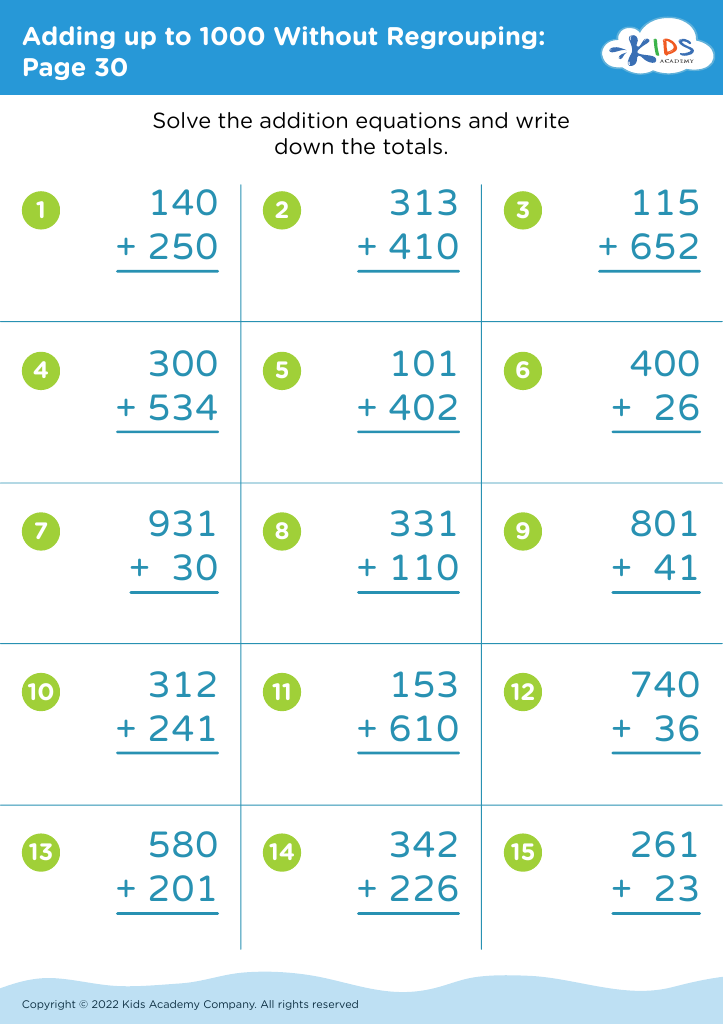
Adding up to 1000 Without Regrouping: Page 30
Worksheet
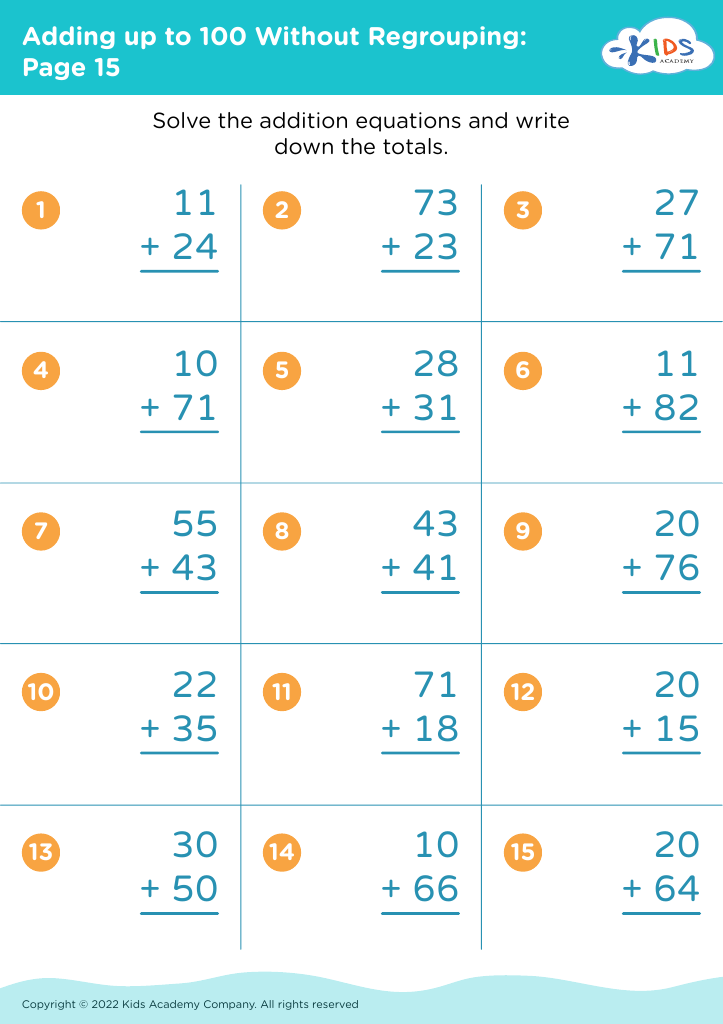
Adding up to 100 Without Regrouping: Page 15
Worksheet
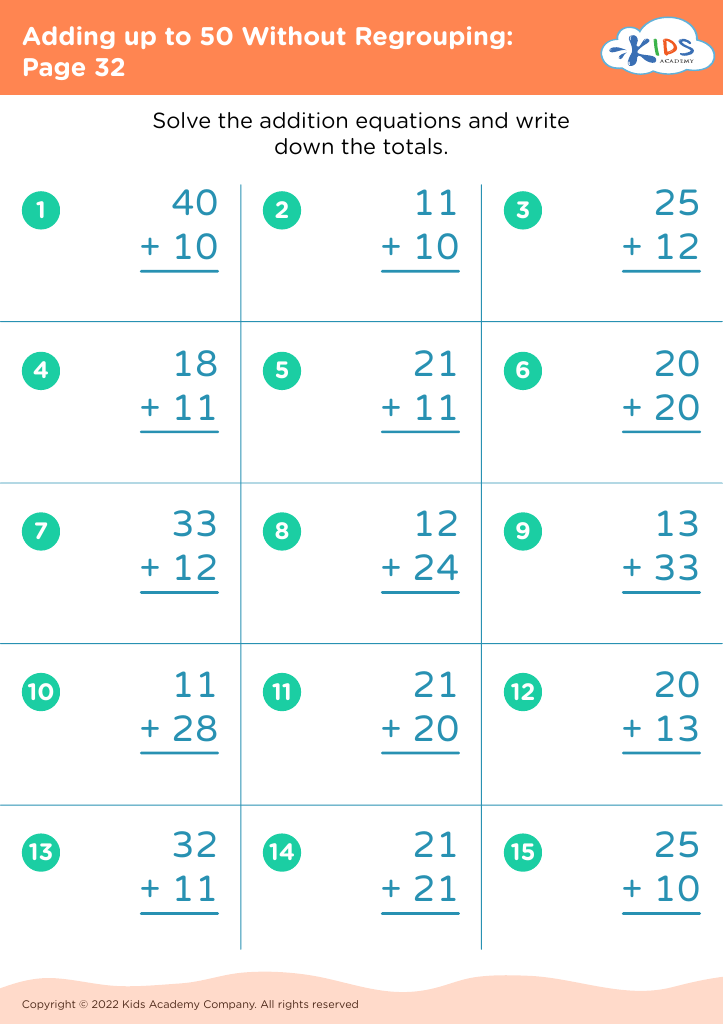
Adding up to 50 Without Regrouping: Page 32
Worksheet
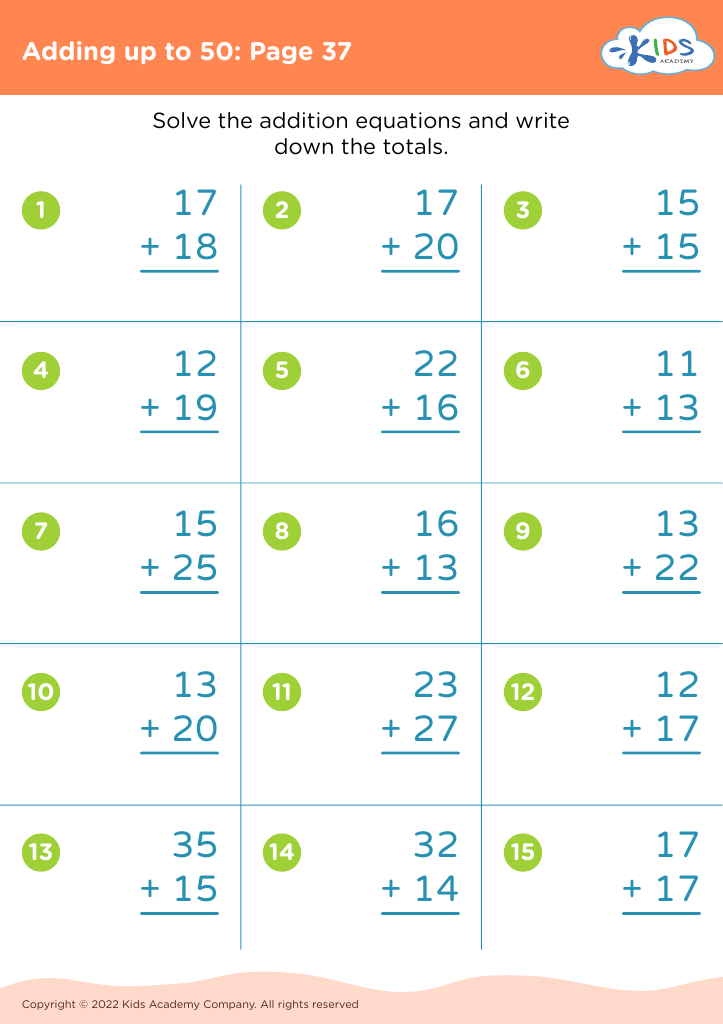
Adding up to 50: Page 37

Adding up to 50: Page 37

Adding up to 50: Page 37
Worksheet
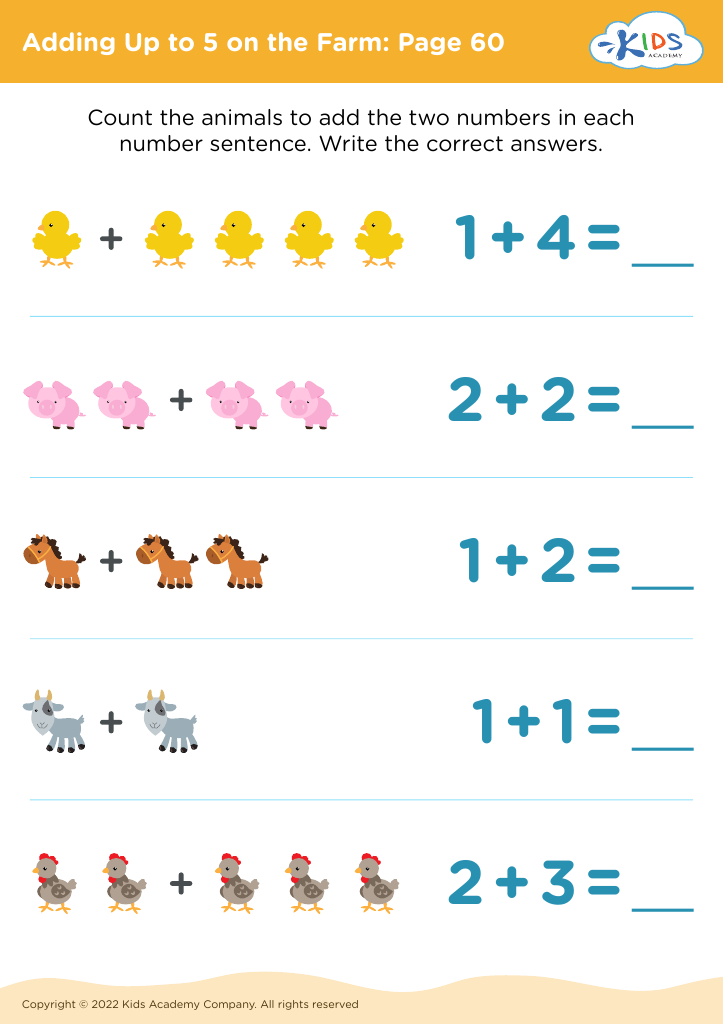
Adding Up to 5 on the Farm: Page 60
Worksheet


Counting objects and understanding addition is crucial for children aged 4-7, laying the groundwork for their mathematical development. This stage is vital as children transition from recognizing numbers to comprehending their value and relationships. Engaging in counting activities helps enhance their number recognition, fosters a sense of quantity, and develops essential problem-solving skills.

For parents and teachers, encouraging counting and addition offers numerous benefits. First, it instills a strong number sense, which serves as a critical foundation for later math concepts, such as subtraction, multiplication, and division. Furthermore, hands-on counting activities, like using tangible objects, can make learning engaging and interactive, promoting a positive attitude towards mathematics.

In addition, mastering these skills in early years can boost a child’s confidence and motivation in their academic journey. As they gain competence, they are more likely to participate actively in classroom discussions and share newfound knowledge with peers. Lastly, understanding these basic math concepts fosters critical thinking, helping children understand their world better. Therefore, investing time in counting and addition activities is essential for shaping a well-rounded, proficient numeral user ready to tackle future mathematical challenges.