
Critical thinking development Addition Worksheets for Ages 4-7
3 filtered results
Difficulty Level
Grade
Age
-
From - To
Subject
Activity
Standards
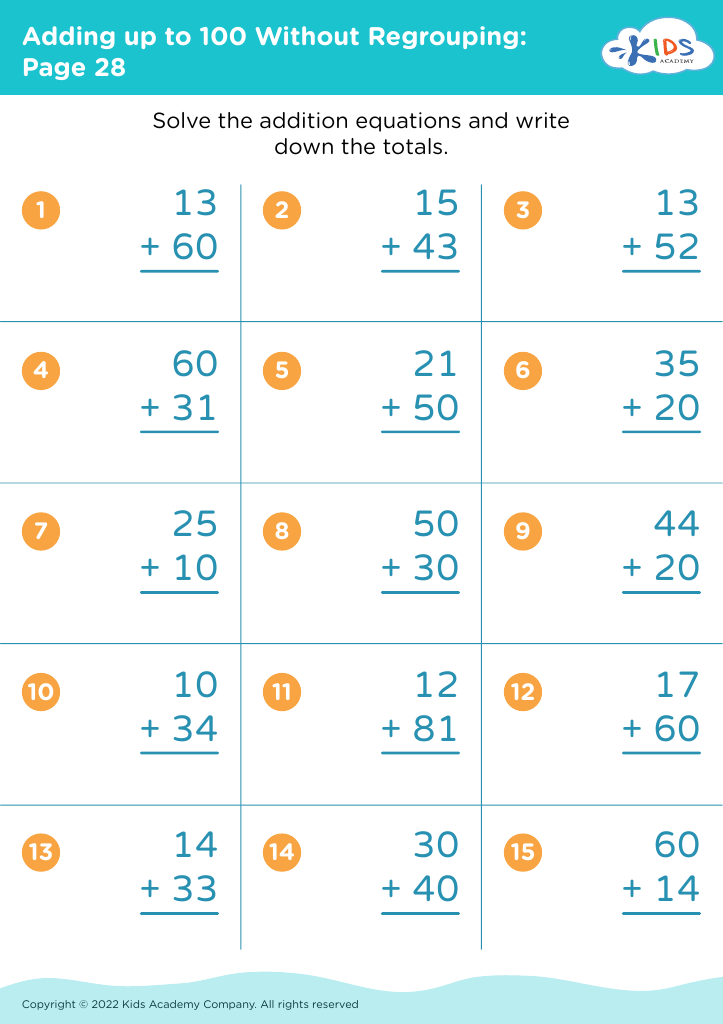
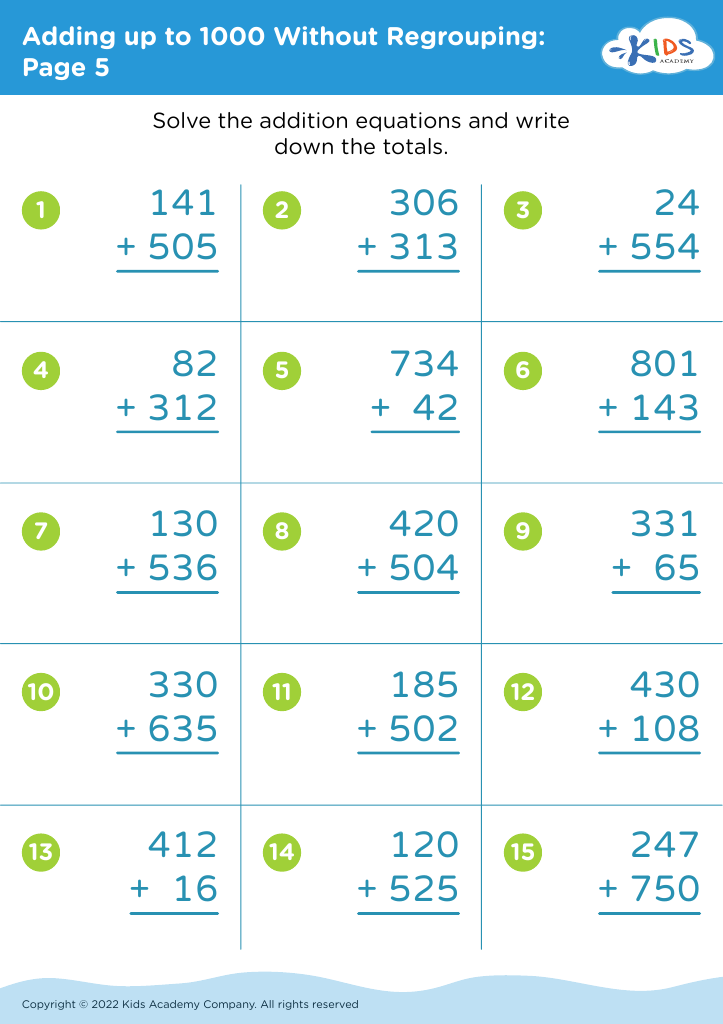
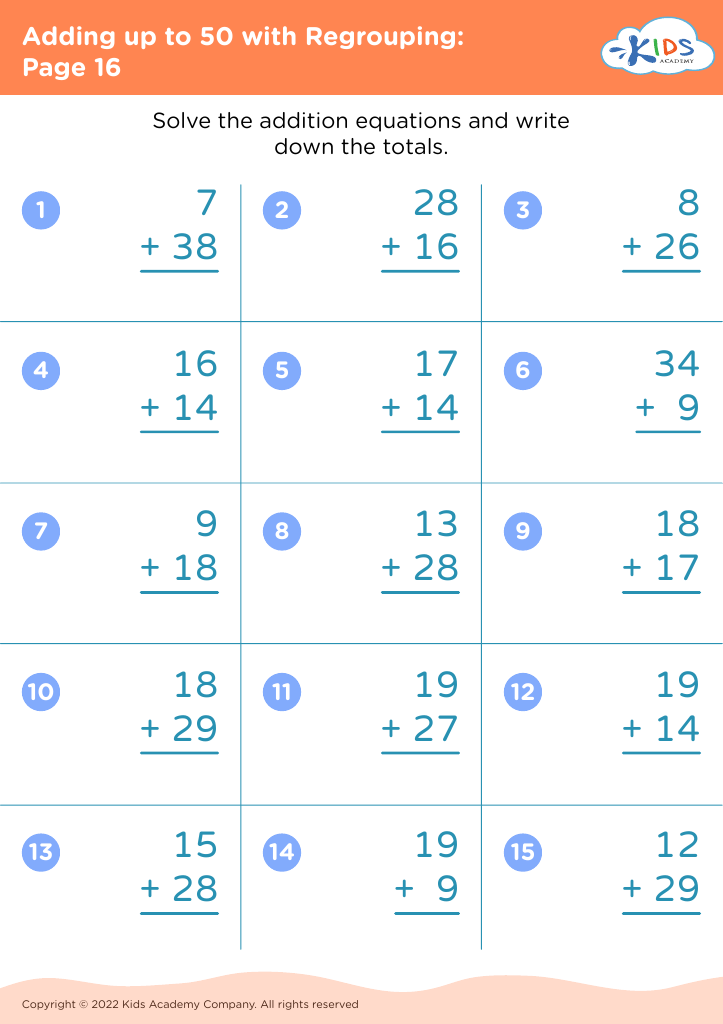
Foster critical thinking skills in young learners with our engaging addition worksheets designed for ages 4-7. These carefully crafted resources encourage children to explore mathematical concepts and develop problem-solving abilities through fun, interactive exercises. Our worksheets not only focus on basic addition facts, but also promote analytical thinking, number sense, and logical reasoning. As children work through various challenges, they'll enhance their cognitive skills while enjoying the process. Perfect for home or classroom use, these materials provide a solid foundation in mathematics, setting the stage for future academic success. Empower your child's critical thinking development with our addition worksheets today!
Favorites
With answer key
Interactive
Join Kids Academy for Free
Who is primarily going to use this learning content?








Critical thinking is a vital skill for children aged 4 to 7 as it lays the foundation for future academic success and social development. At this age, children are naturally curious and often ask numerous questions about the world around them. By fostering critical thinking skills, parents and teachers can engage this curiosity, encouraging children to analyze information, question assumptions, and develop reasoning skills.
Encouraging critical thinking helps children make informed decisions, solve problems creatively, and understand different perspectives. This skill set not only aids in their educational journey—supporting subjects like math, science, and reading—but also cultivates emotional intelligence and empathy, essential traits for social interactions.
Moreover, critical thinking enables children to navigate an increasingly complex world. In an era of abundant information, being able to discern credible sources, think independently, and challenge biases is crucial. Parents and teachers who prioritize critical thinking development empower children to become confident learners and effective communicators.
In summary, grounding students in critical thinking from an early age enhances their cognitive abilities, emotional growth, and prepares them for lifelong learning, making it an essential focus for educators and caregivers alike.








