Develop analytical thinking Addition Worksheets for Ages 4-7
3 filtered results
-
From - To
Unlock your child's potential with our "Develop Analytical Thinking Addition Worksheets" for ages 4-7, thoughtfully designed to sharpen young minds. These engaging worksheets blend fun and education, helping children grasp essential addition concepts while fostering analytical skills. Featuring a variety of exercises, from simple sums to more challenging problems, our worksheets are perfect for building a solid math foundation. Delightful illustrations and interactive formats keep kids motivated and curious. Ideal for home or classroom use, our printable worksheets ensure personalized learning experiences. Empower your child to think critically and set the stage for future success in math.
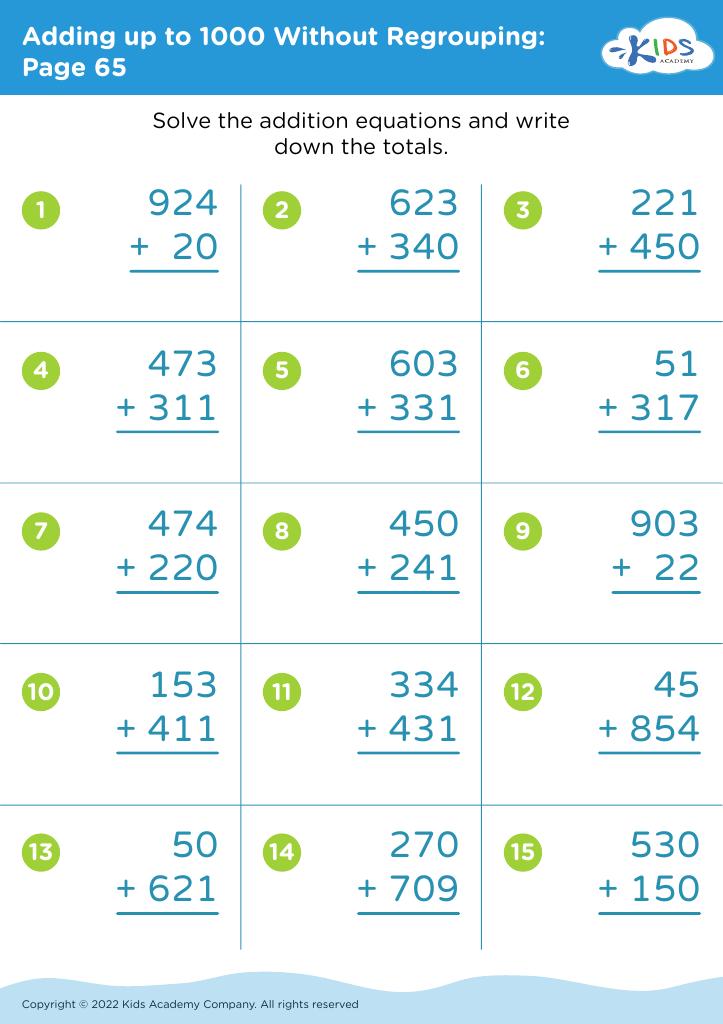
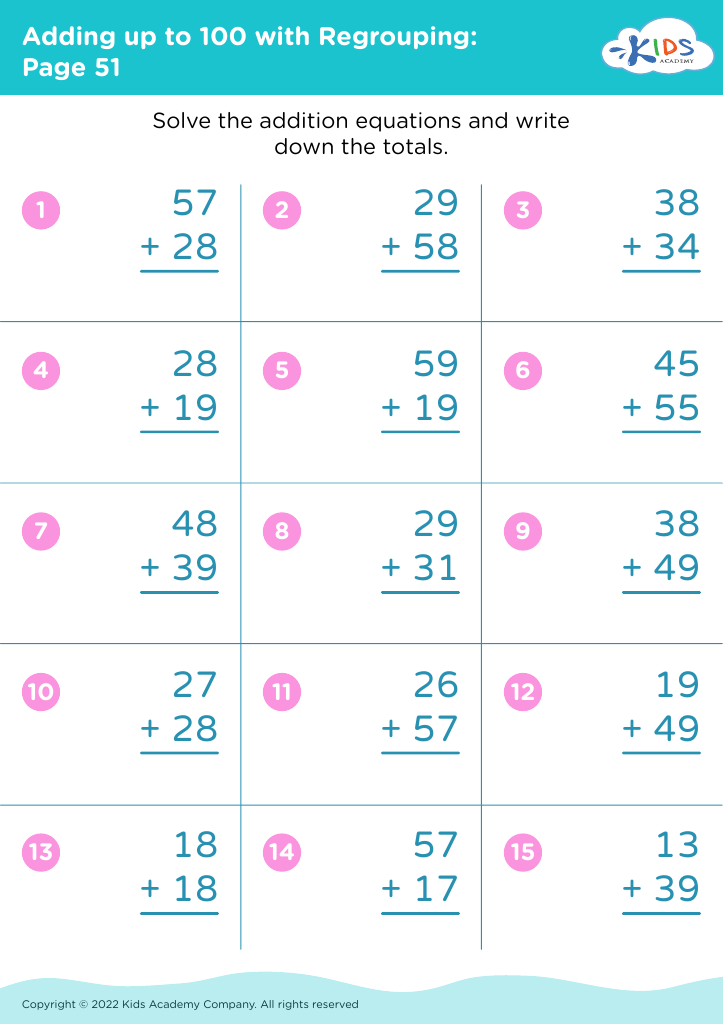
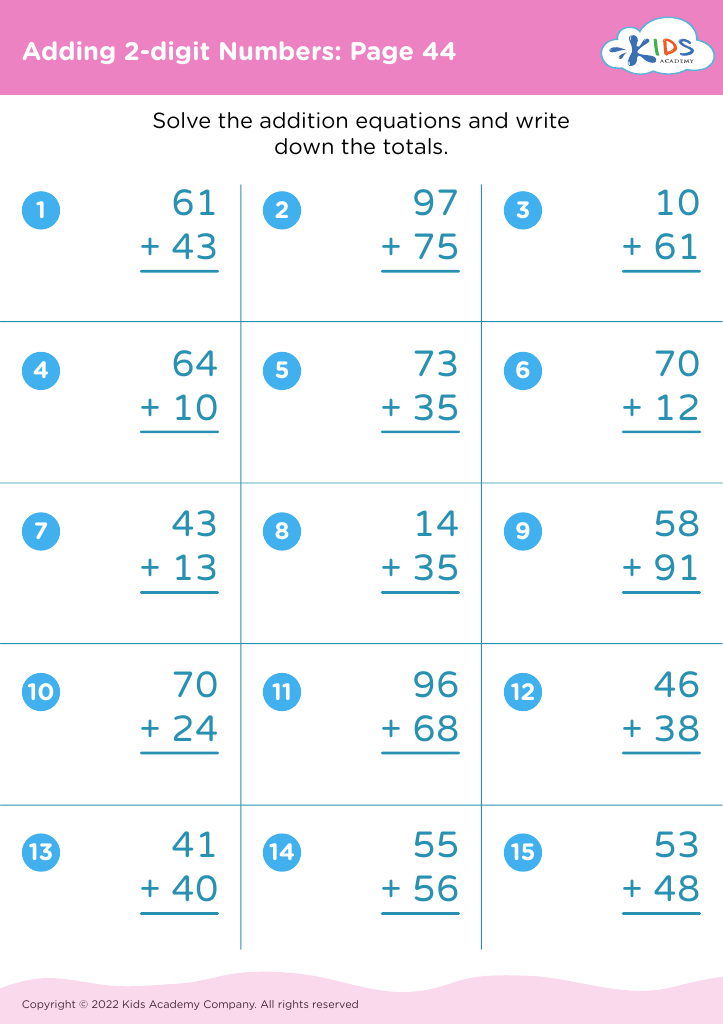








Developing analytical thinking in children ages 4-7 is crucial as it lays the foundation for cognitive and problem-solving skills they will use throughout their lives. During these formative years, young minds are particularly receptive to learning and can absorb new concepts quickly. Encouraging analytical thinking through activities like simple addition helps children understand patterns, relationships, and logical processes.
For parents and teachers, fostering these skills at an early age can lead to better academic performance in the future. Children who are introduced to analytical thinking early on are more likely to excel in subjects like mathematics, science, and even reading comprehension, as they can more easily make connections and understand complex ideas.
Moreover, analytical thinking helps in daily life problem-solving and decision making. These are not merely academic skills but are essential in navigating everyday situations effectively. Simple addition exercises can make these concepts tangible for young learners, setting the groundwork for more advanced analytical capabilities as they grow.
In addition to cognitive benefits, engaging children in analytical thinking tasks also enhances their confidence and independent thinking. They learn to approach problems with curiosity and innovation, fostering a mindset that is prepared to tackle challenges head-on. This preparation is invaluable as they progress through their educational journeys and ultimately enter the broader world.








