Developing math skills Addition Worksheets for Ages 4-7
7 filtered results
-
From - To
Boost your child's mathematical journey with our specially designed Addition Worksheets for Ages 4-7. These engaging, age-appropriate printables make learning addition a fun and interactive experience. Kids will build foundational skills through colorful exercises that promote understanding and confidence in basic arithmetic. By completing these worksheets, children learn to solve problems efficiently, grasp key concepts, and develop a love for math. Perfect for home or classroom use, our worksheets support early math proficiency, paving the way for future academic success. Empower your little ones with the essential tools they need to excel in math today!
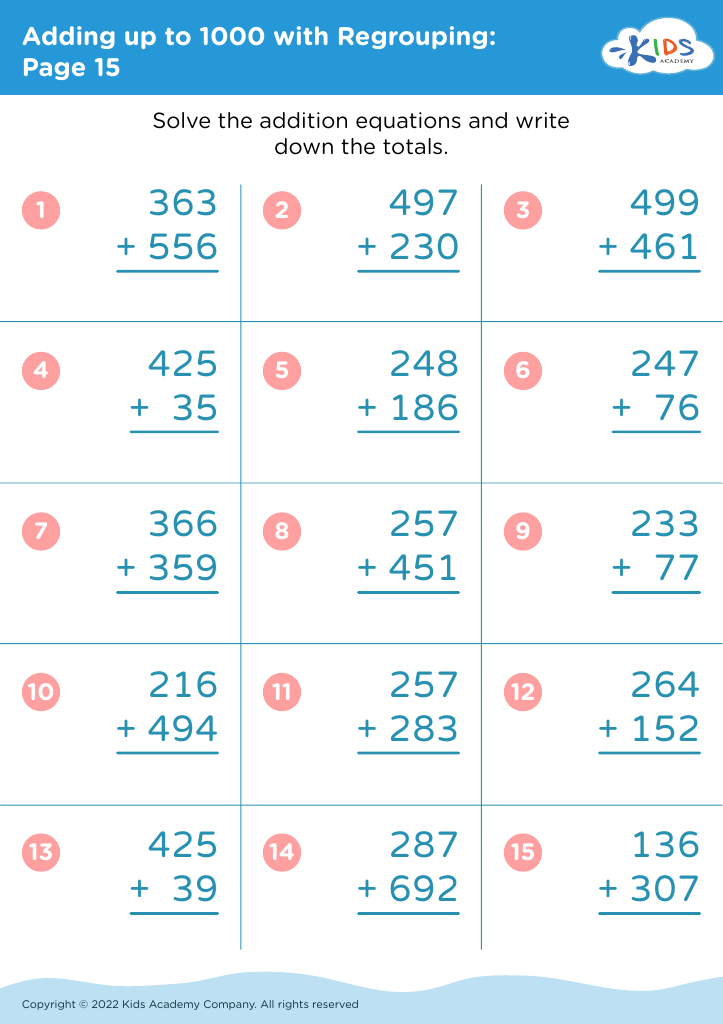
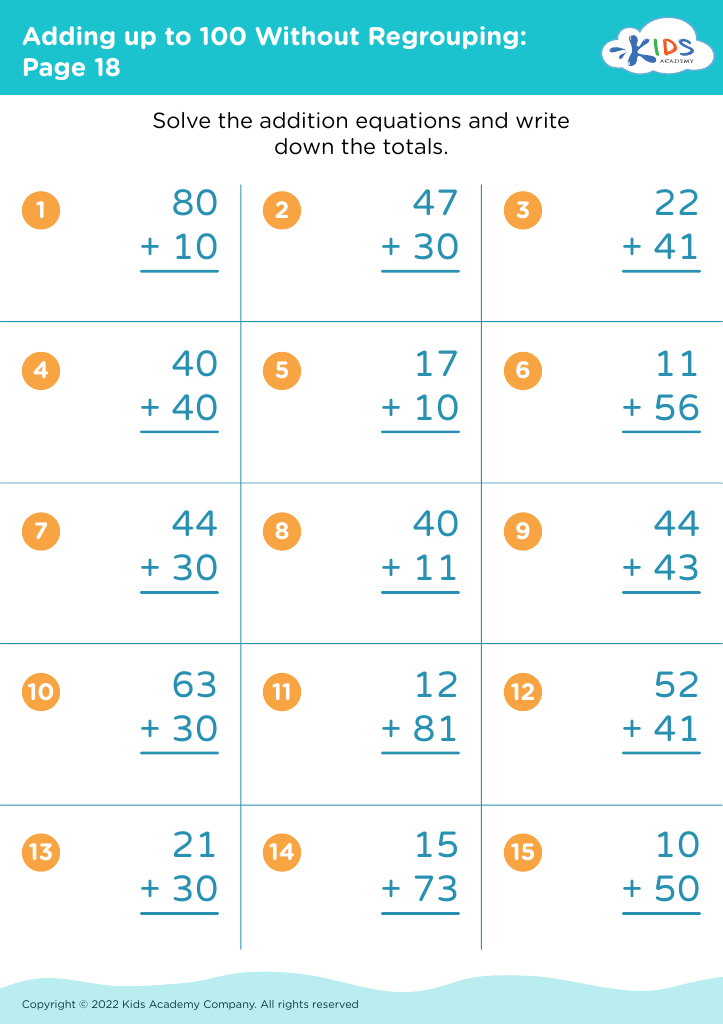
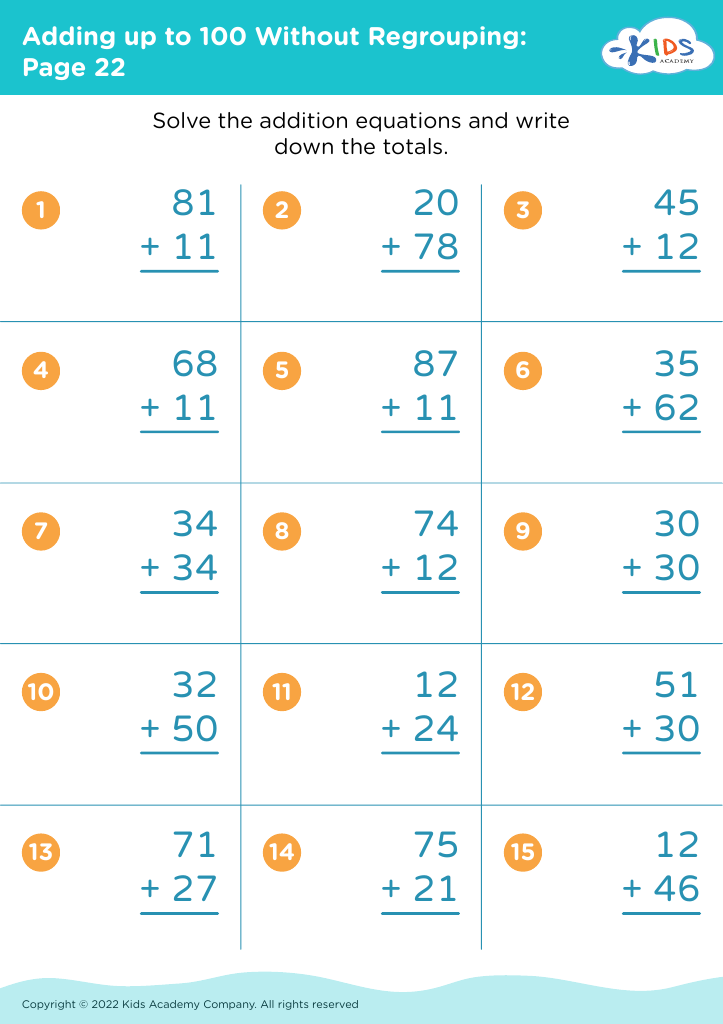
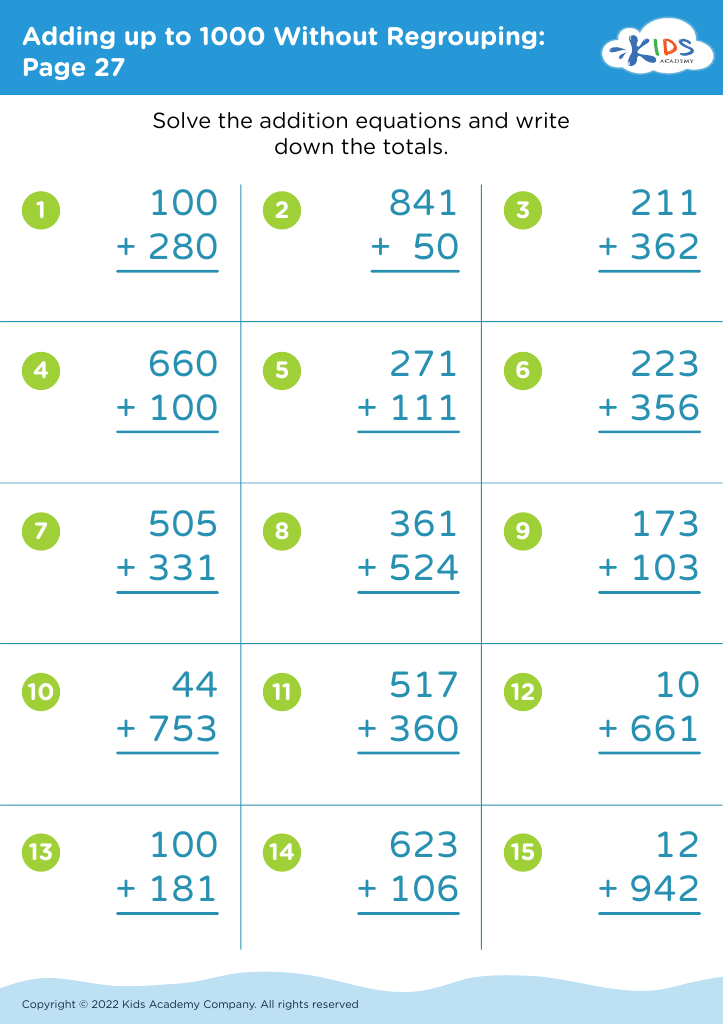
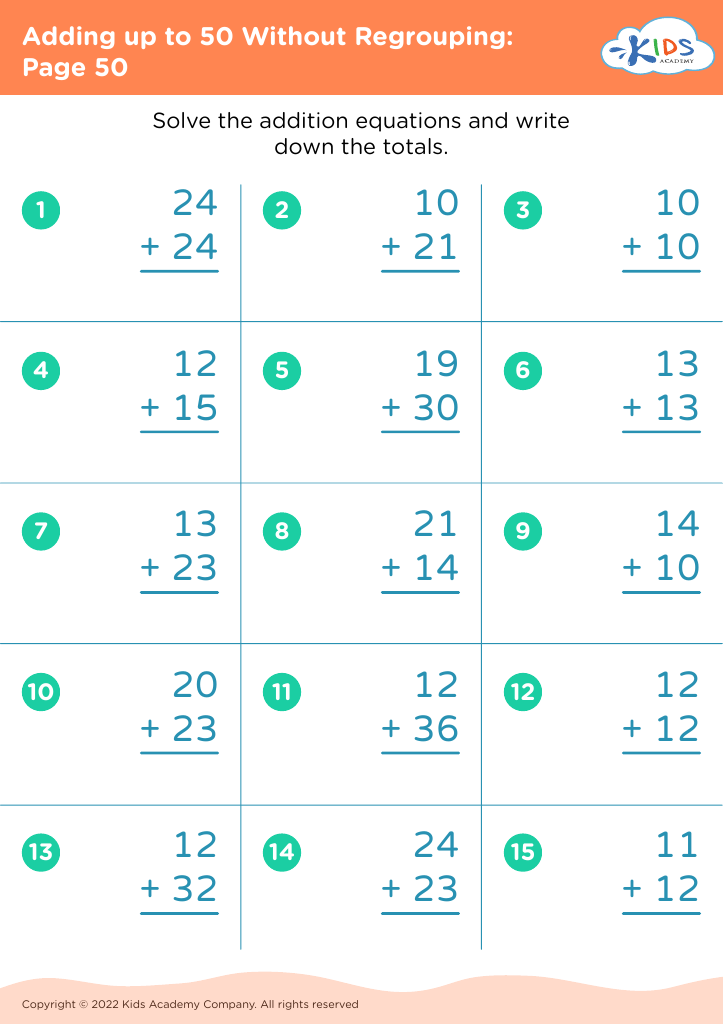
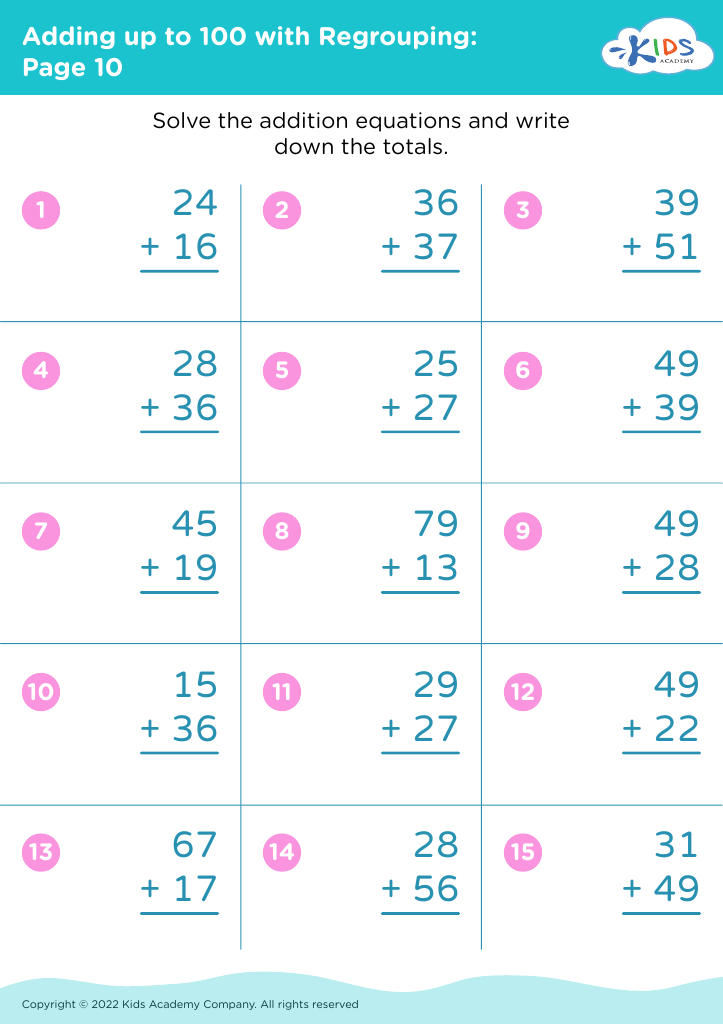
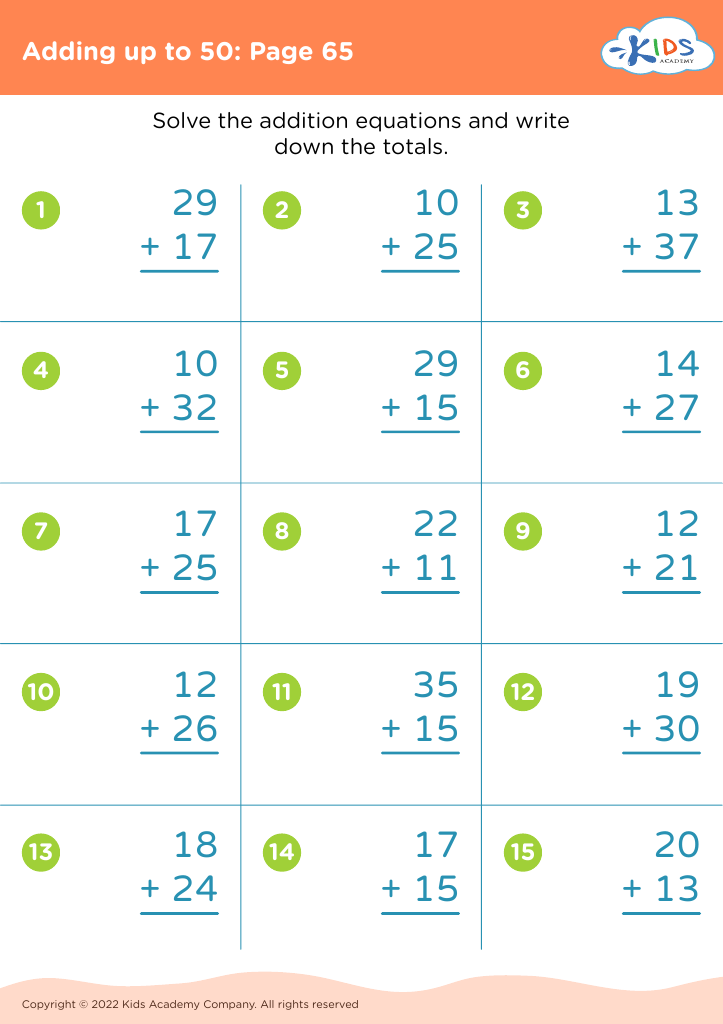






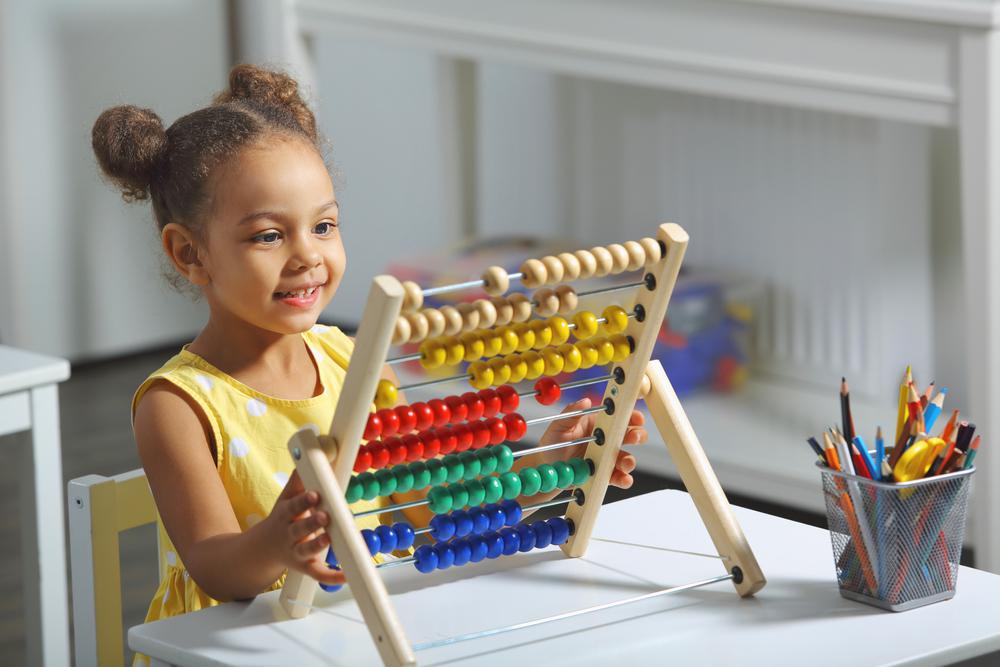

Developing math skills, particularly addition, is crucial for children ages 4-7 as it lays the foundation for their future academic success and daily life skills. At this developmental stage, children's brains are primed for learning fundamental concepts that will support more complex mathematical thinking later on. Learning addition helps in nurturing critical thinking, problem-solving skills, and logical reasoning.
For parents, fostering these skills early supports children in building confidence and a positive attitude toward math, which can impact their performance through their school years and beyond. By engaging in fun, interactive activities together, parents can reinforce the importance of math and show that it can be enjoyable and relevant.
Teachers play a vital role by introducing these basic skills in a structured yet engaging way. Early exposure to addition in the classroom can ensure that children grasp the concept thoroughly, preventing struggles as the math curriculum becomes more demanding. Additionally, mastering addition fosters a sense of accomplishment in young learners, paving the way for a love of learning.
Ultimately, solid math skills, starting with addition, are essential as they enable children to enjoy everyday activities like playing games involving numbers, counting money, and recognizing patterns. Caring about this aspect of educational development ensures children are prepared and excited for future learning adventures.








