Enhancing Counting Skills Addition Worksheets for Ages 4-7
9 filtered results
-
From - To
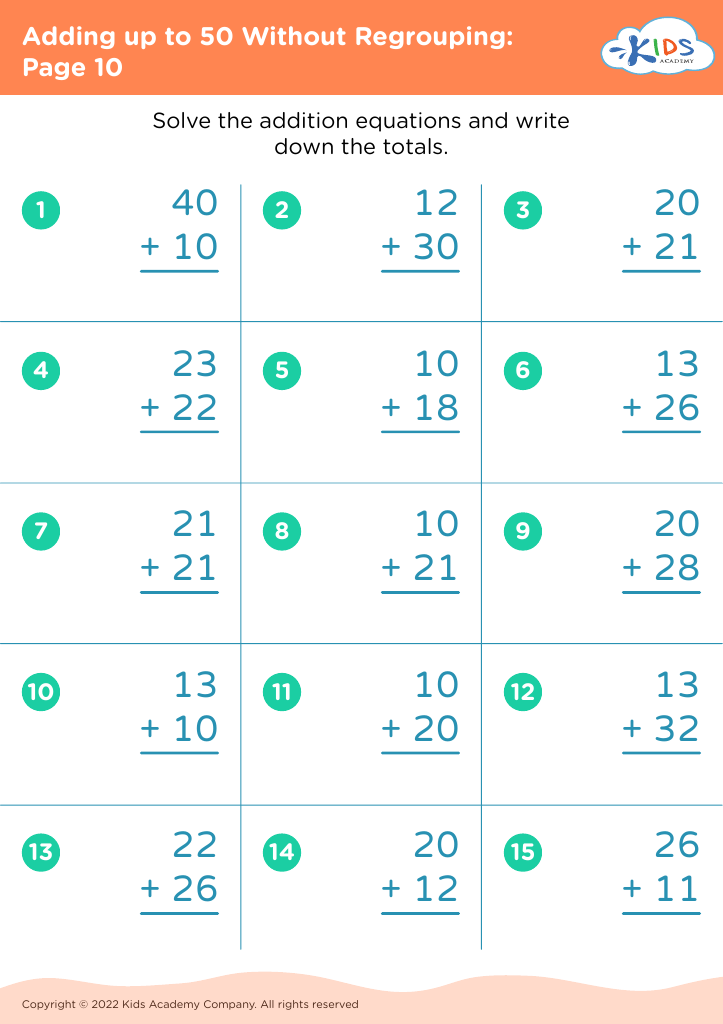
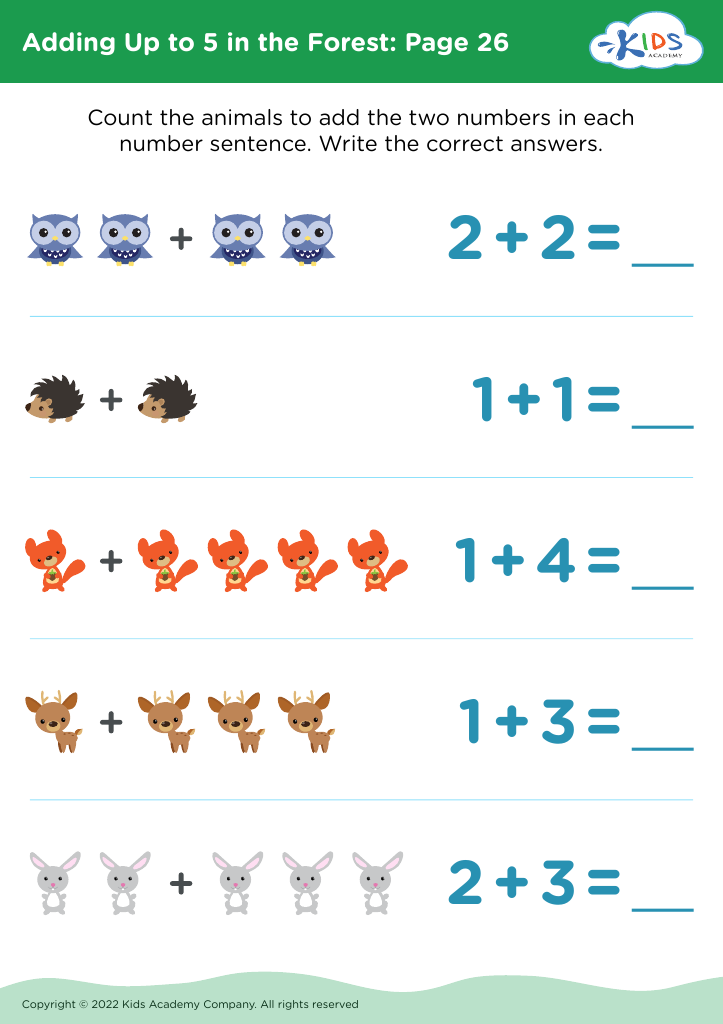
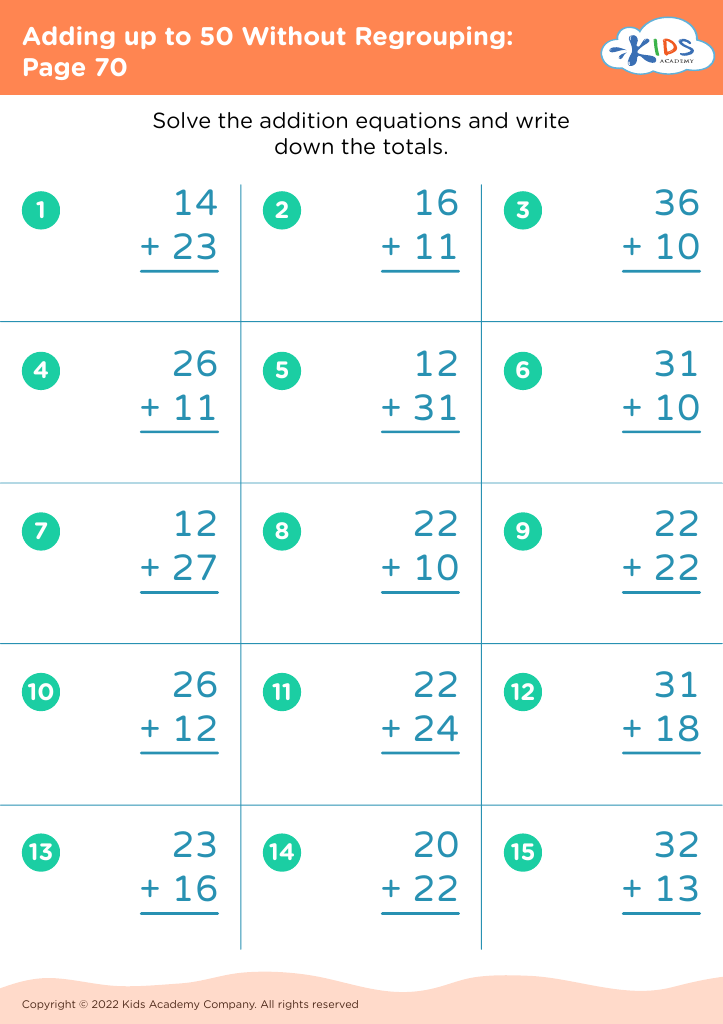
Enhance your child's counting skills with our engaging Addition Worksheets designed for ages 4-7! Our printable resources focus on improving foundational math abilities through fun and interactive activities. Each worksheet features colorful illustrations and age-appropriate challenges that make learning to count enjoyable and effective. By practicing simple addition tasks, children will build confidence in their math skills while developing essential number recognition and problem-solving abilities. Perfect for teachers, parents, and homeschoolers, these worksheets provide a solid introduction to addition that encourages exploration and learning at their own pace. Start your child's counting journey today with our thoughtful, educational materials!
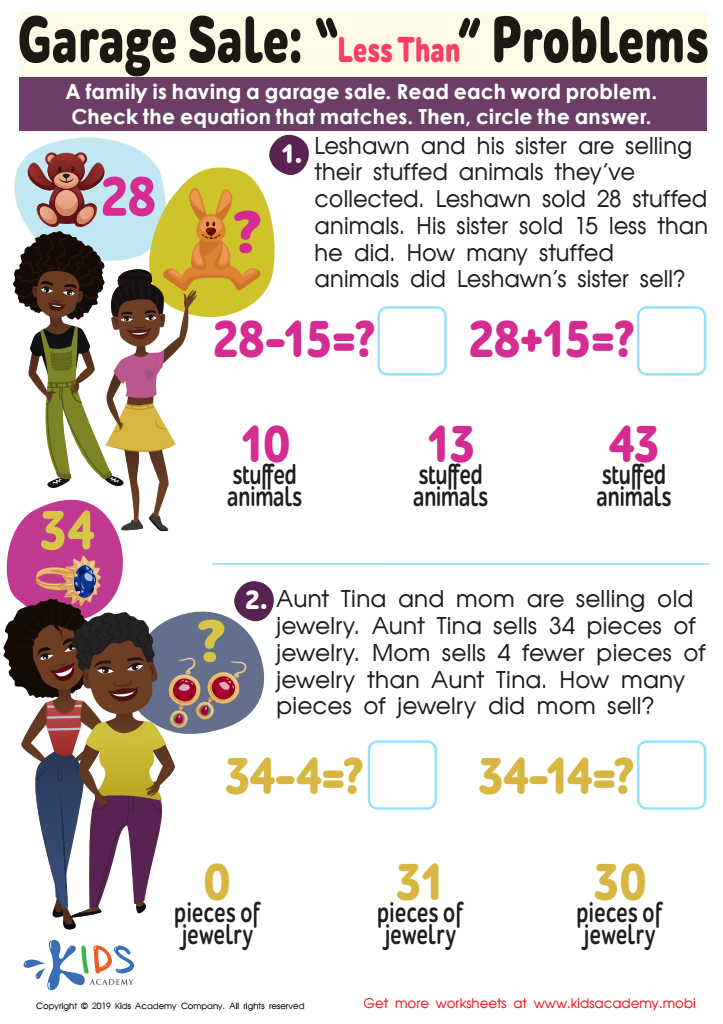
Garage Sale Less Than Worksheet
 Assign to My Students
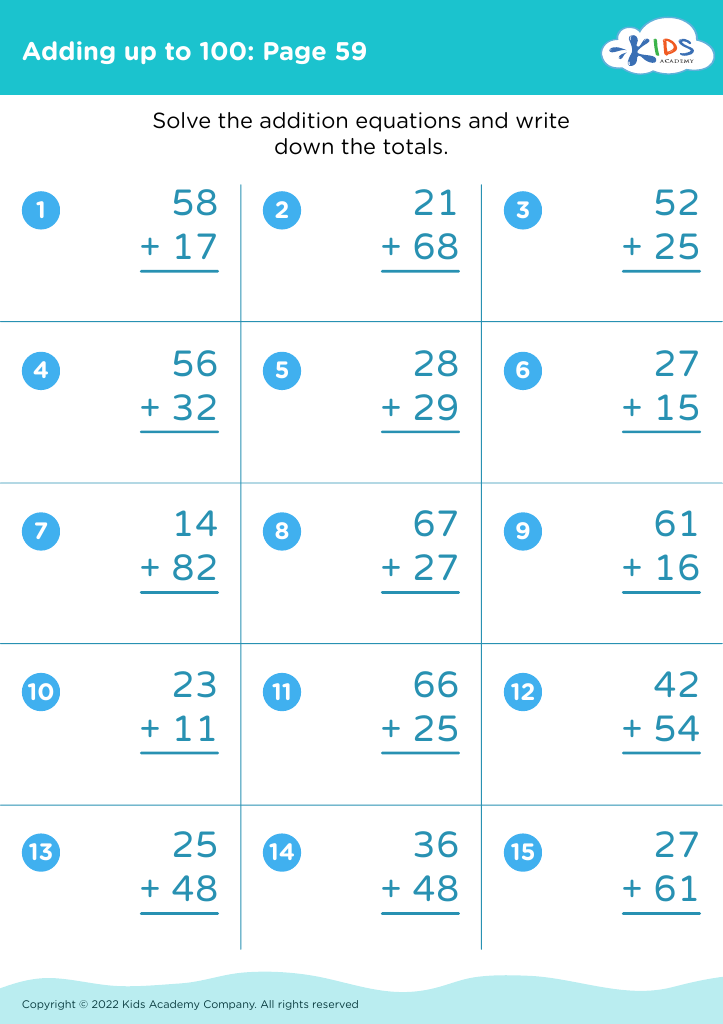
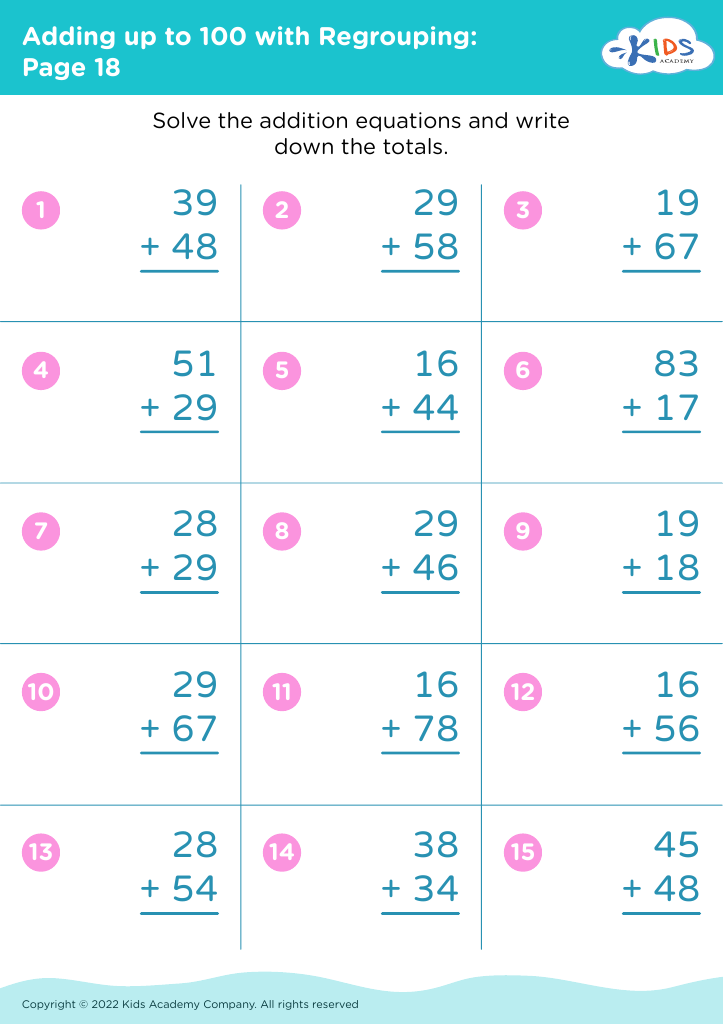
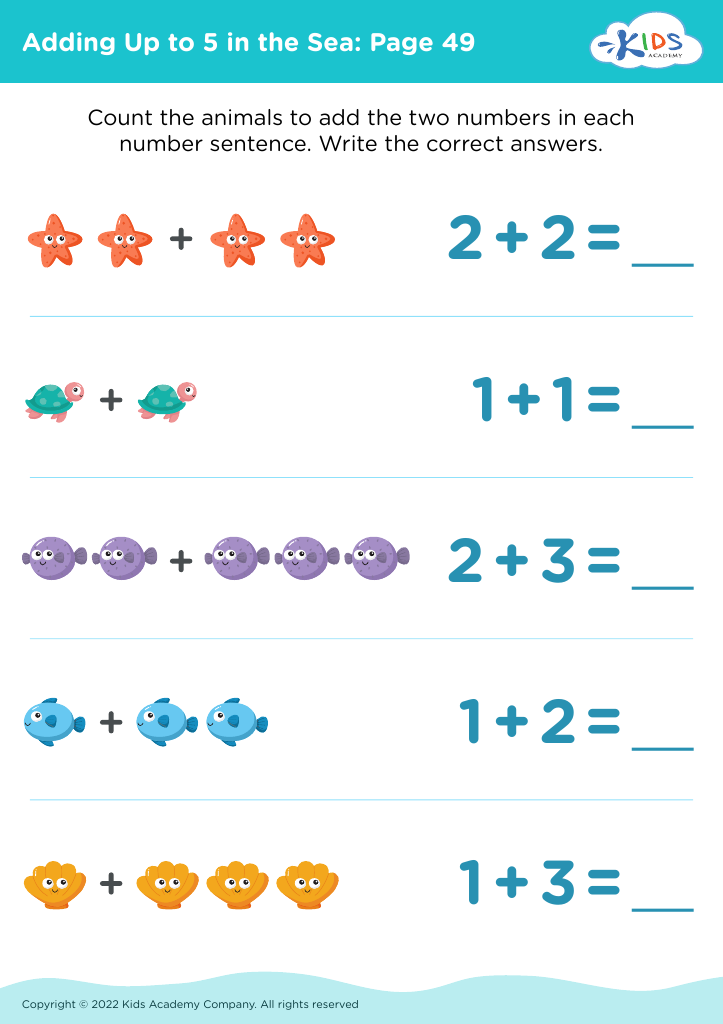
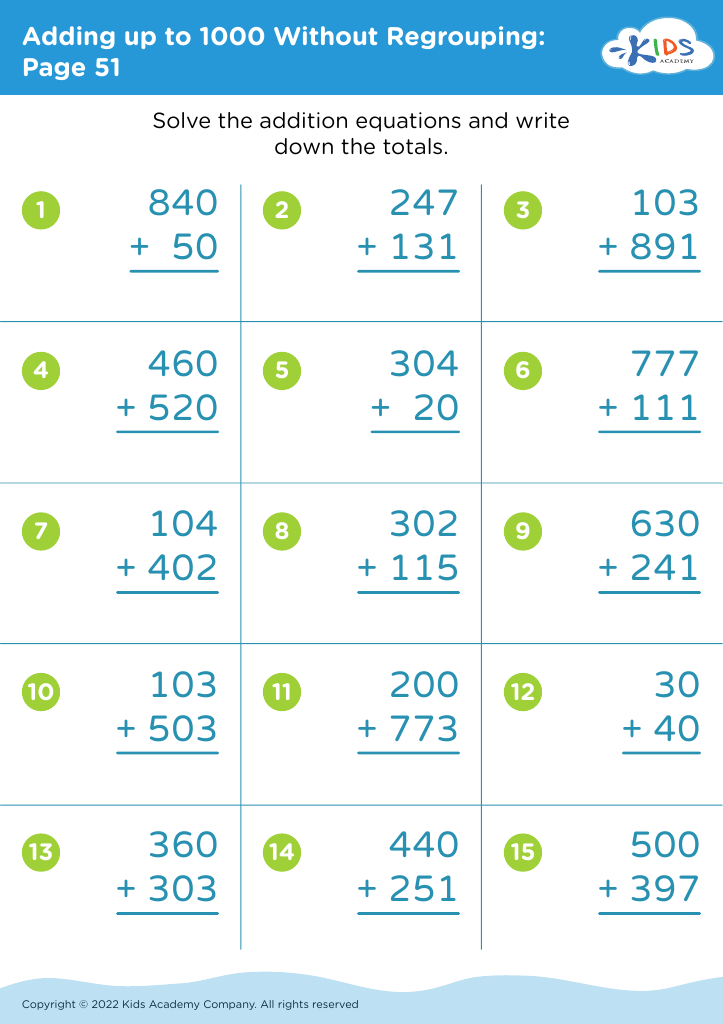
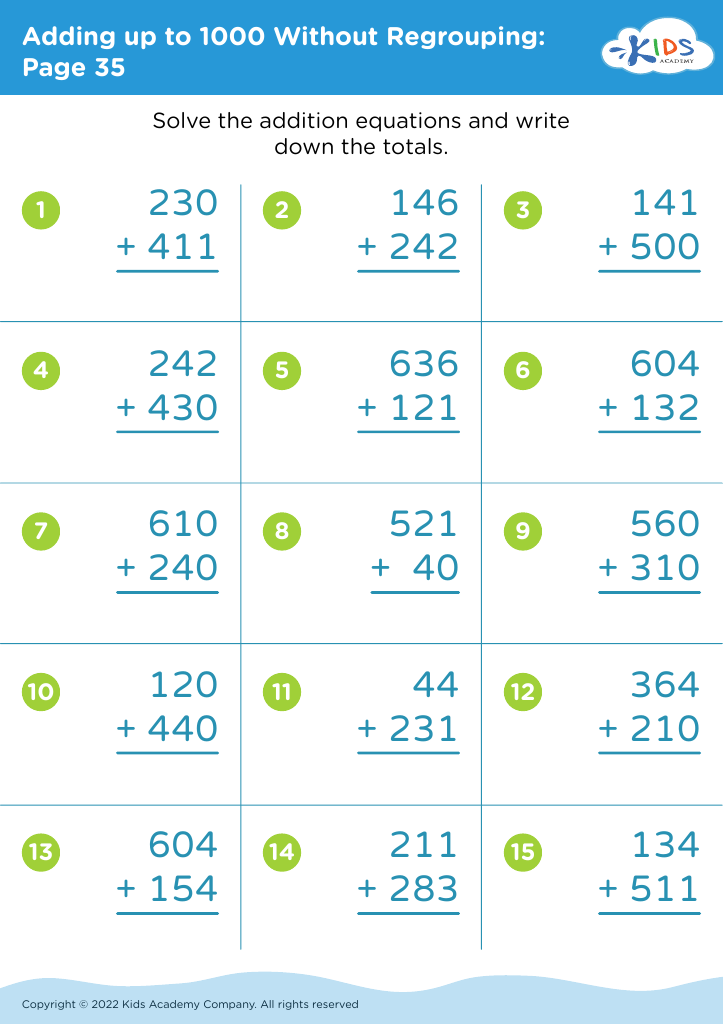








Enhancing counting skills and addition for children aged 4-7 is crucial for foundational mathematics development. During these formative years, children are naturally curious, and their cognitive abilities are rapidly growing. Strengthening counting skills equips them with the necessary tools to understand numbers, quantities, and basic arithmetic concepts.
When children master counting, they build confidence in their ability to tackle more complex mathematical challenges later on. Addition, as a building block for arithmetic, helps children develop critical thinking and problem-solving skills. It encourages them to think logically and engage in relationships between numbers, thereby fostering a deeper understanding of the world around them.
Parents and teachers should care about enhancing these skills because early intervention can prevent future difficulties in math. A strong foundational knowledge helps students perform better academically, reduces anxiety towards math subjects, and fosters a positive attitude towards learning. Moreover, engaging in counting and addition activities promotes collaboration and communication, encouraging social interaction among peers.
Ultimately, by prioritizing counting and addition skills, we empower young learners to become confident, capable individuals, ready to navigate more complex mathematical concepts as they progress in their education. This ensures a well-rounded approach that supports lifelong learning and problem-solving abilities.








