Mental math skills Addition Worksheets for Ages 4-7
6 filtered results
-
From - To
Enhance your child's mathematical abilities with our engaging Mental Math Skills Addition Worksheets for ages 4-7! Designed to promote quick thinking and problem-solving, these worksheets provide a variety of exercises that encourage children to perform addition without relying on paper and pencil. Tailored to suit early learners, each worksheet features fun visuals and captivating challenges that make math enjoyable. As children practice mental addition, they'll build confidence, improve concentration, and develop a strong mathematical foundation. Perfect for home or classroom use, our worksheets are an essential resource for nurturing essential math skills while fostering a love for learning!
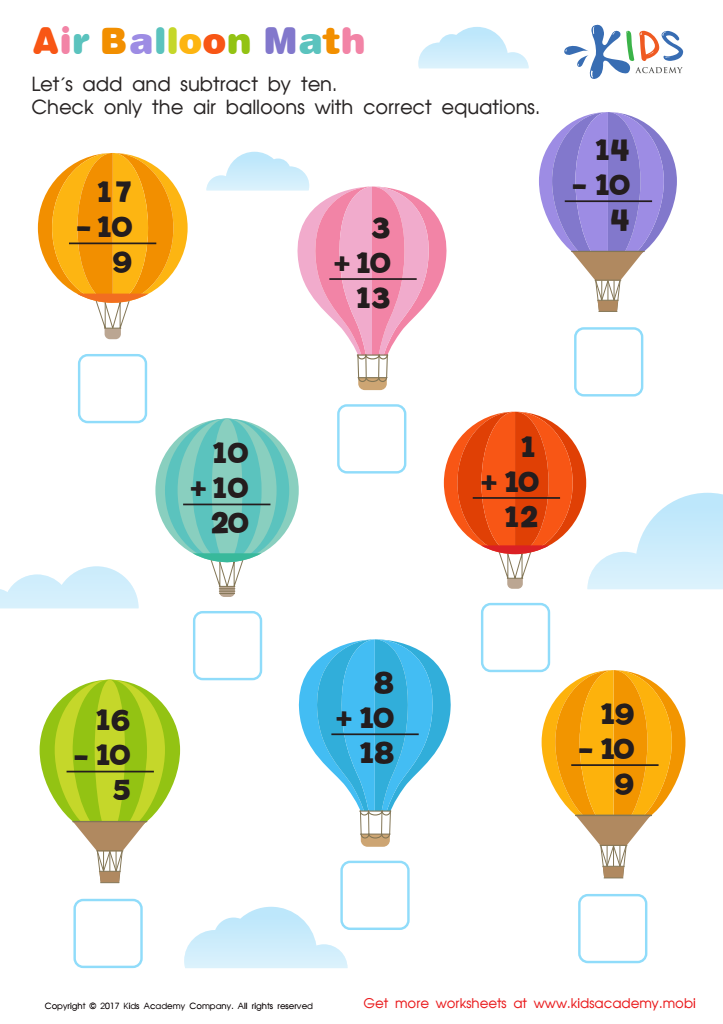
Air Balloon Math Worksheet
 Assign to My Students
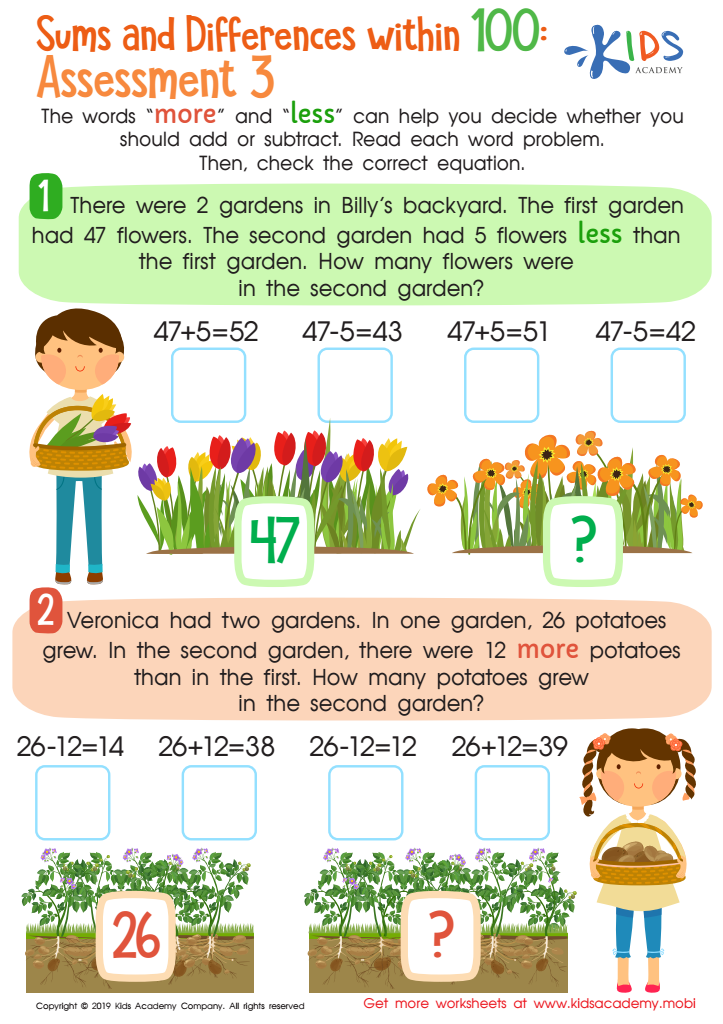
Sums and Differences Within 1 - Assessment 1 Worksheet
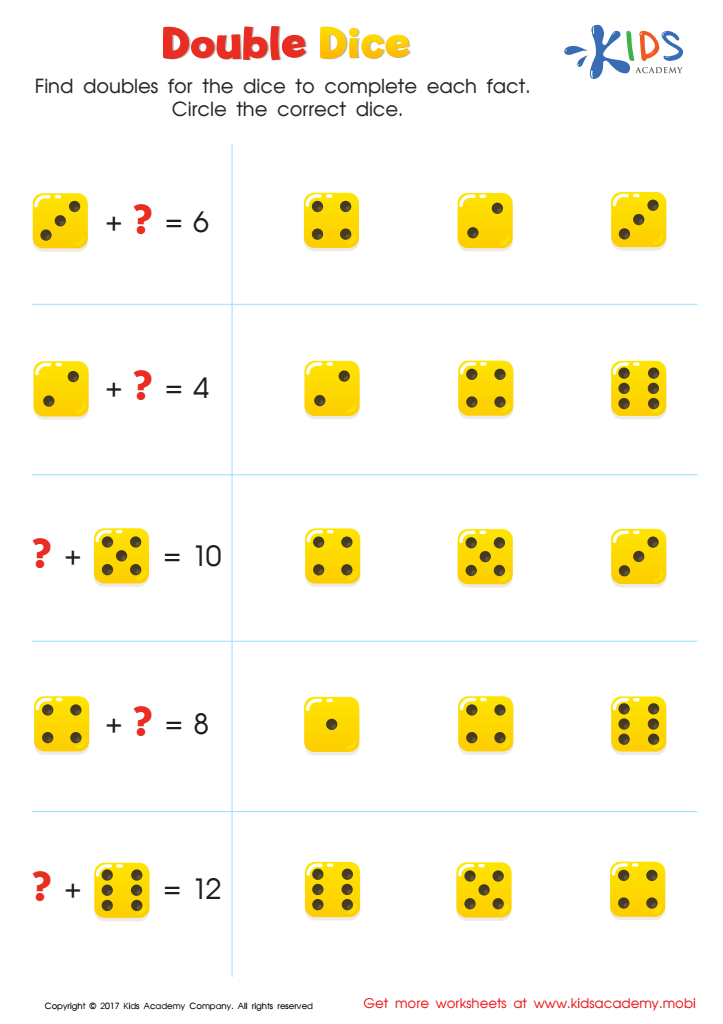
Addition Facts: Double Dice Worksheet
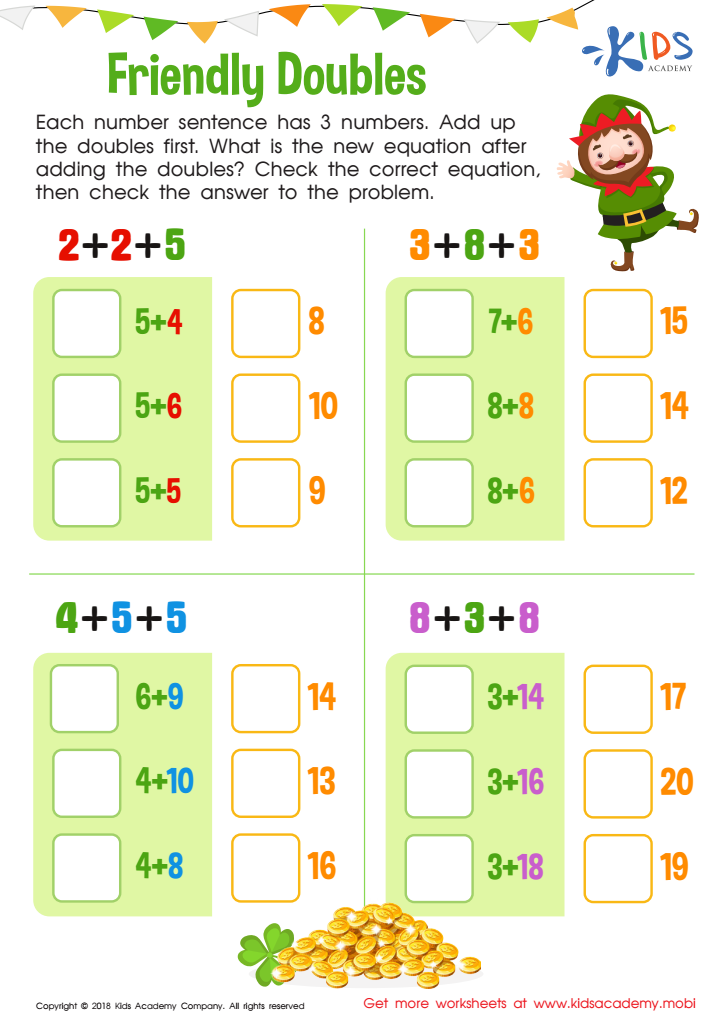
Friendly Doubles Worksheet
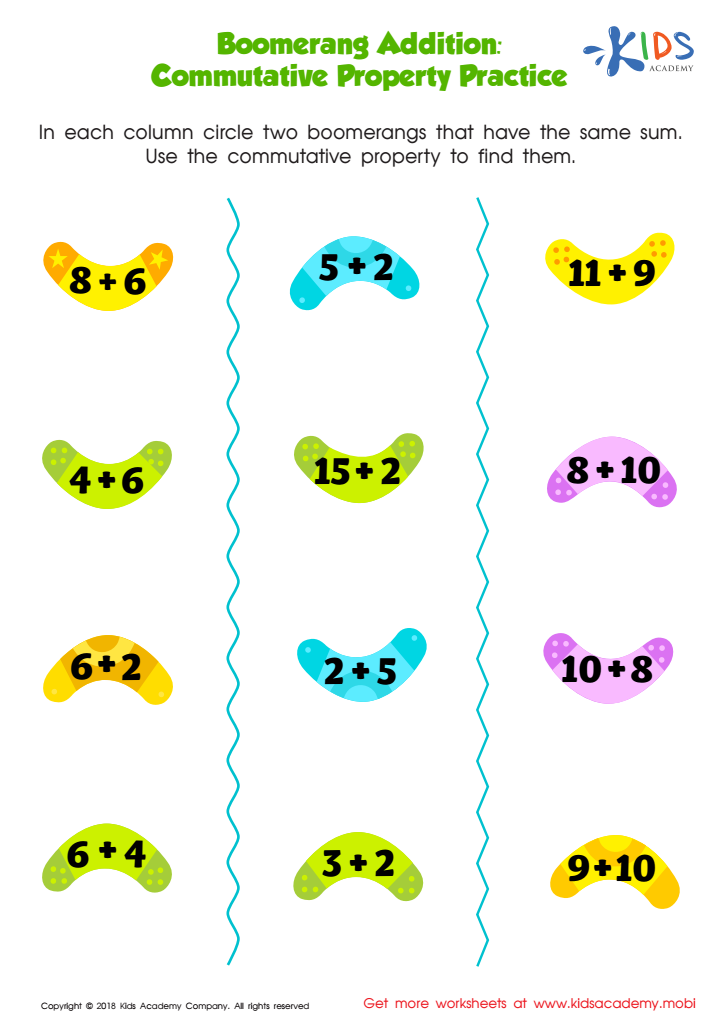
Boomerang Addition Worksheet
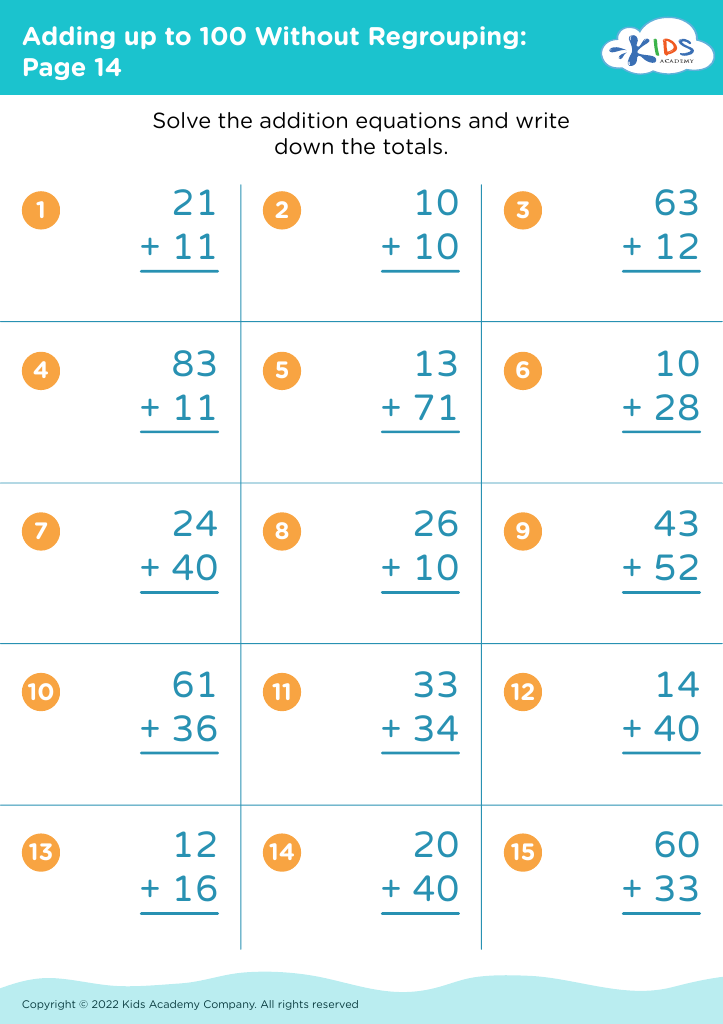








Mental math skills, particularly in addition, are crucial for children aged 4-7, and it is essential for both parents and teachers to prioritize their development. During this formative stage, children's cognitive abilities are rapidly evolving, and strong mental math skills lay a foundational understanding of mathematics. When children engage in mental addition, they enhance their problem-solving abilities and improve their overall numerical fluency.
Additionally, mastering mental math boosts children’s confidence in their mathematical abilities, helping them to approach challenges with a positive mindset. This adaptability is vital for lifelong learning, as new mathematical concepts become increasingly complex as they progress in their education. Moreover, mental addition encourages the use of various strategies, such as visualization or grouping, fostering critical thinking skills.
Furthermore, engaging in exercises that strengthen mental arithmetic can transform math into a fun and interactive experience for young learners. Activities involving games or practical applications in everyday life help to reinforce these skills. By prioritizing mental math in early education, parents and teachers not only prepare children for academic success but also empower them with essential life skills that transcend the classroom, thus recognizing the broader implications of mathematical competence in everyday situations.








