
Reading clocks Addition Worksheets for Ages 4-7
3 filtered results
Difficulty Level
Grade
Age
-
From - To
Subject
Activity
Standards
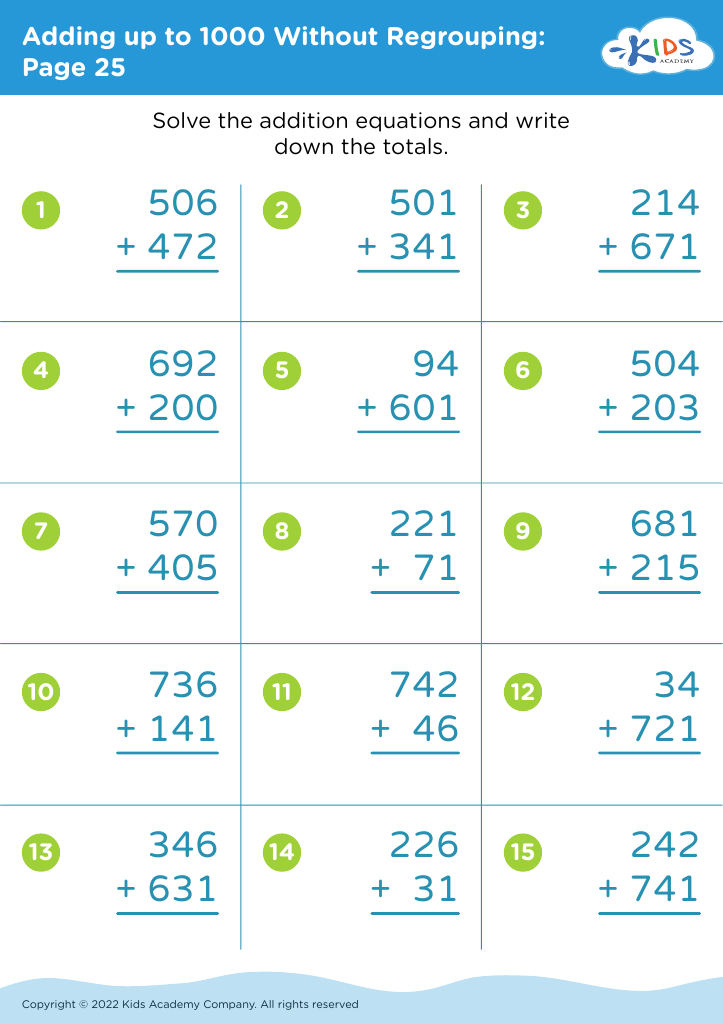
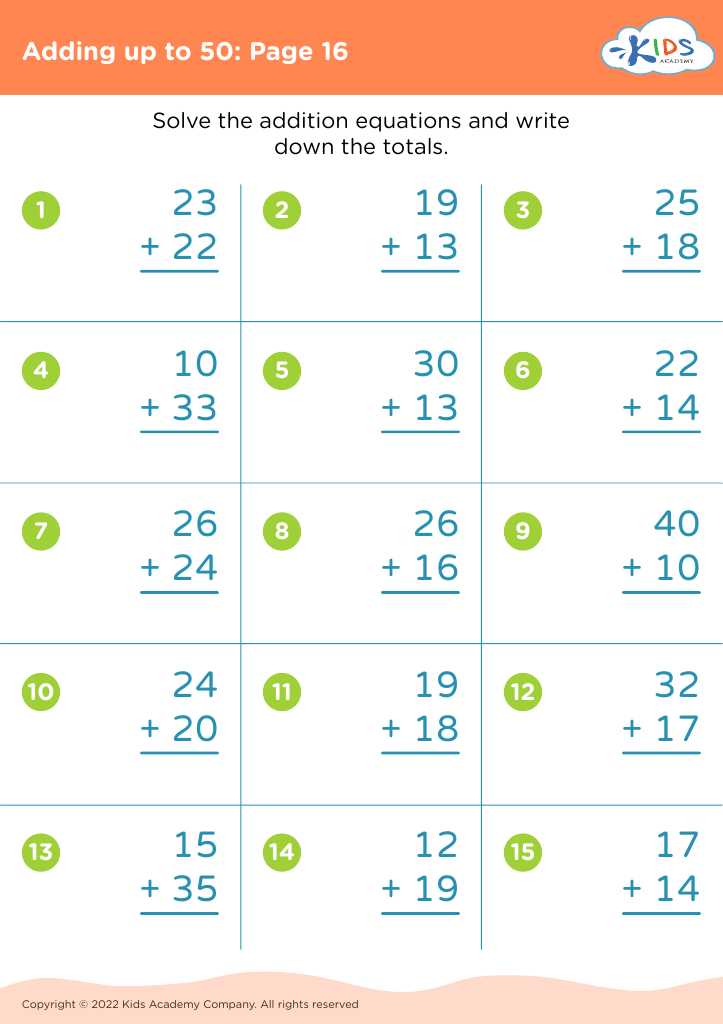
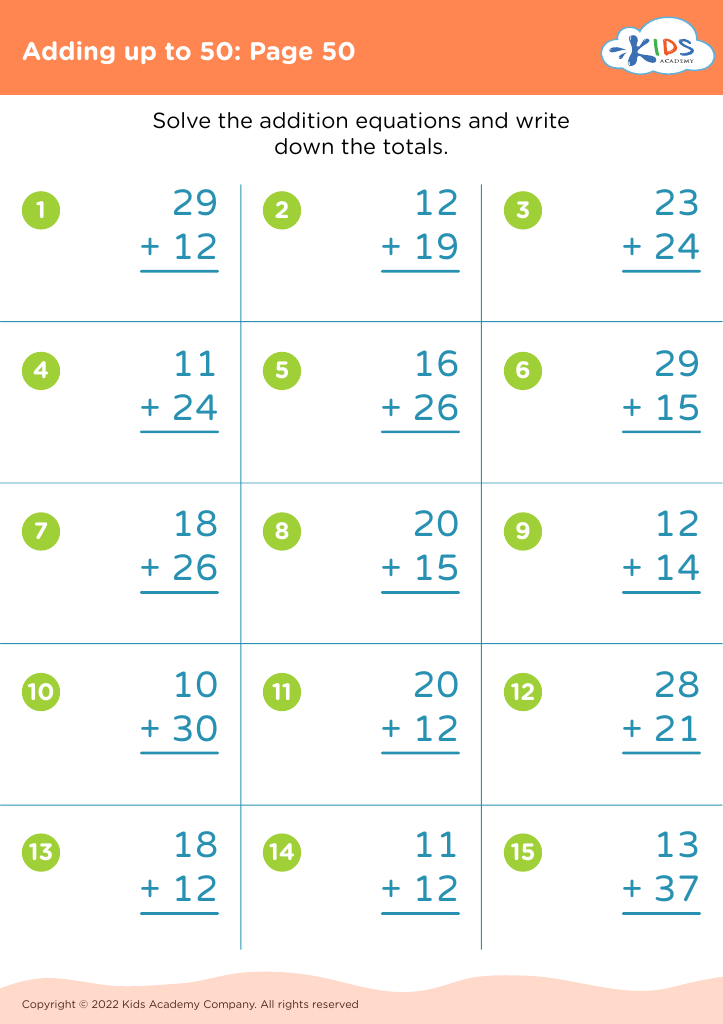
Introduce your young learners to the world of time with our engaging "Reading Clocks Addition Worksheets" designed for children ages 4-7. These worksheets seamlessly blend essential addition skills with the fascinating concepts of telling time on analog clocks. Each carefully crafted activity encourages kids to enhance their math abilities while learning to read both hour and minute hands. With colorful visuals and age-appropriate challenges, children will develop confidence in their arithmetic skills as they grasp the importance of time management. Perfect for classrooms or at-home learning, these worksheets make mastering addition fun and interactive, fostering a love for learning in early education.
Favorites
With answer key
Interactive
Join Kids Academy for Free
Who is primarily going to use this learning content?








Understanding how to read clocks and perform addition is crucial for children aged 4-7, and parents and teachers should prioritize this skill for several reasons.
Firstly, reading clocks enhances children’s sense of time, which is essential for their daily routines and responsibilities. Understanding both digital and analog clocks fosters independence as they learn to manage their time effectively. This skill builds confidence and promotes self-regulation in activities like homework and playtime.
Secondly, incorporating addition into time-telling helps solidify fundamental mathematical concepts early on. By engaging with activities that involve adding minutes to hours or discussing durations of events, children strengthen their addition skills in a practical context. This makes learning more relatable and enjoyable.
Additionally, mastering these skills can contribute to better academic performance down the road. Early exposure to both time concepts and math creates a strong foundation for future learning in mathematics, geometry, and reasoning.
Involving them in fun auditory and visual activities can also strengthen family bonds and collaborations with teachers. Thus, nurturing these skills not only enriches a child's cognitive development but also builds confidence, independence, and fosters a supportive environment in their early educational journey.








