Filters

21 filtered results

Clear all filters
Favorites
With answer key
Interactive

21 filtered results

Difficulty Level

Grade


Explore our engaging "Recognizing Patterns Addition Worksheets" designed for ages 4-7! These worksheets provide young learners with a unique approach to mastering addition through pattern recognition. By identifying sequences and relationships, children enhance their problem-solving skills and build a strong mathematical foundation. Our fun and colorful activities encourage creativity while reinforcing essential math concepts. Perfect for at-home practice or classroom use, these worksheets help children develop confidence in their arithmetic abilities. With varying levels of difficulty, these resources cater to all learning paces, making math both enjoyable and accessible. Start your child's journey to math fluency today!
Check out this FREE Trial Lesson on Addition for age 4-7!

P

Favorites
With answer key
Interactive
  • 4-7
  • Recognizing Patterns
  • Addition
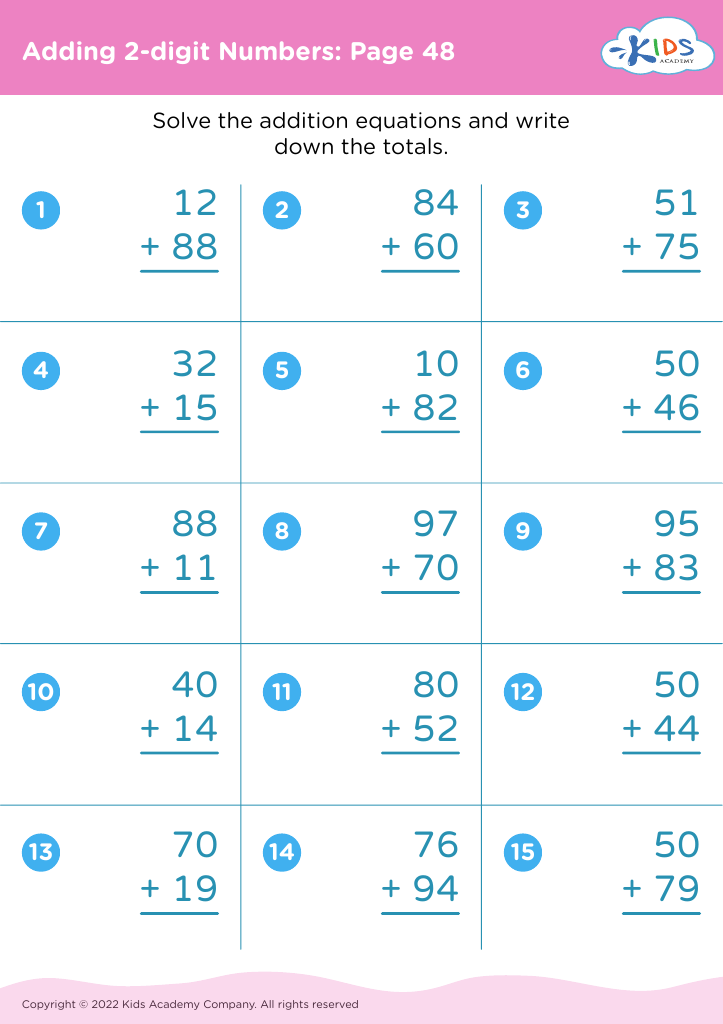
Adding 2-digit Numbers: Page 48

Adding 2-digit Numbers: Page 48

Adding 2-digit Numbers: Page 48
Worksheet
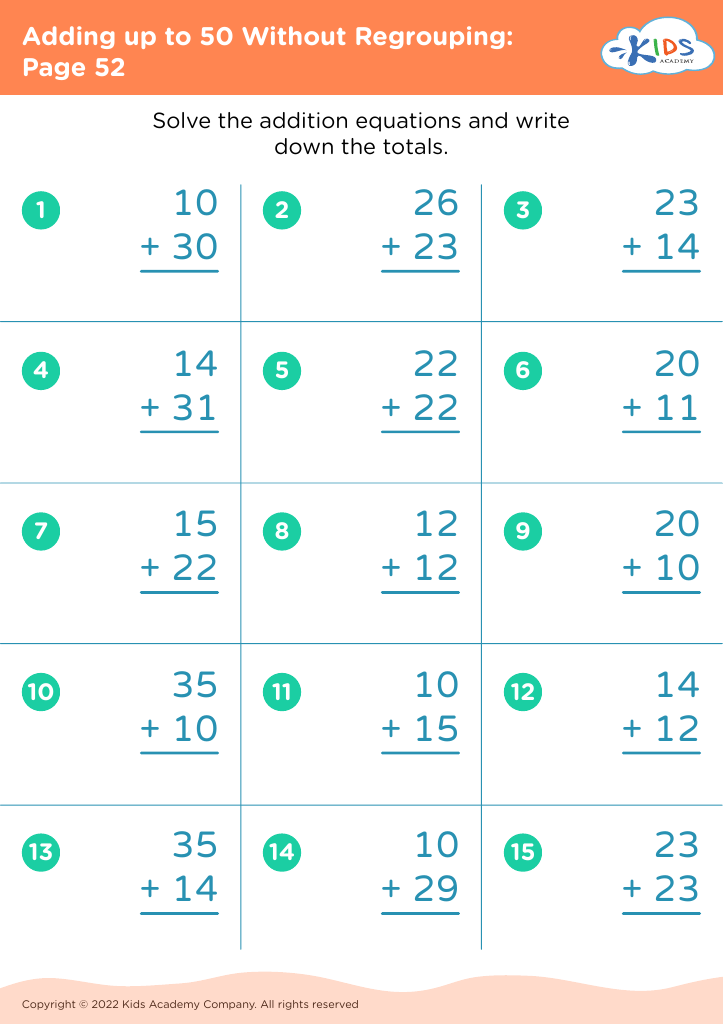
Adding up to 50 Without Regrouping: Page 52
Worksheet
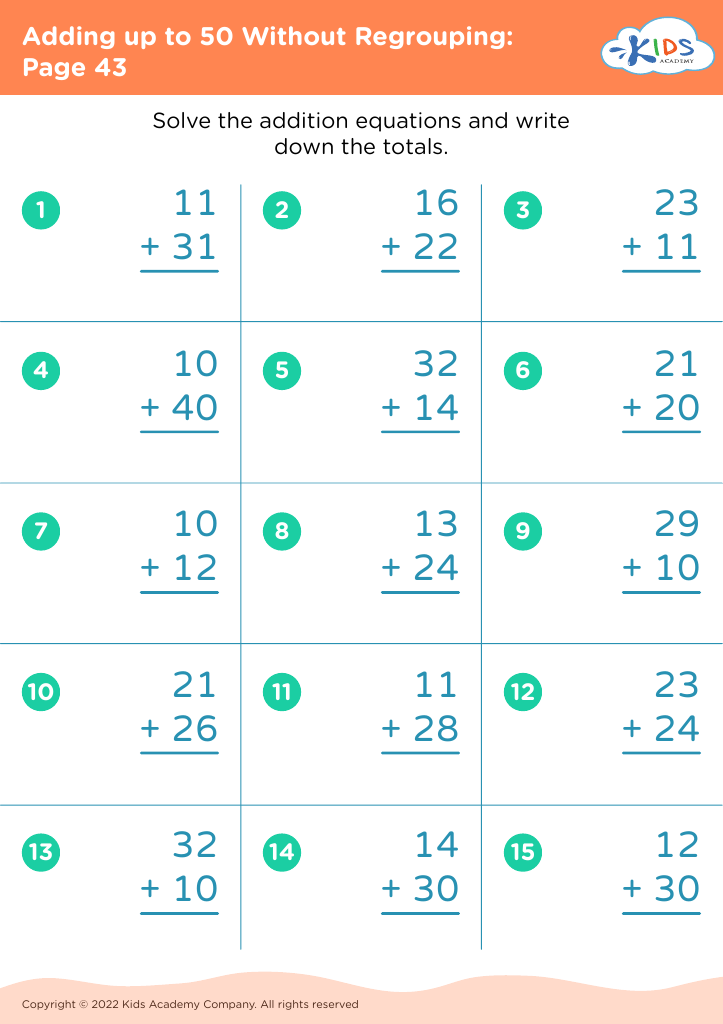
Adding up to 50 Without Regrouping: Page 43
Worksheet
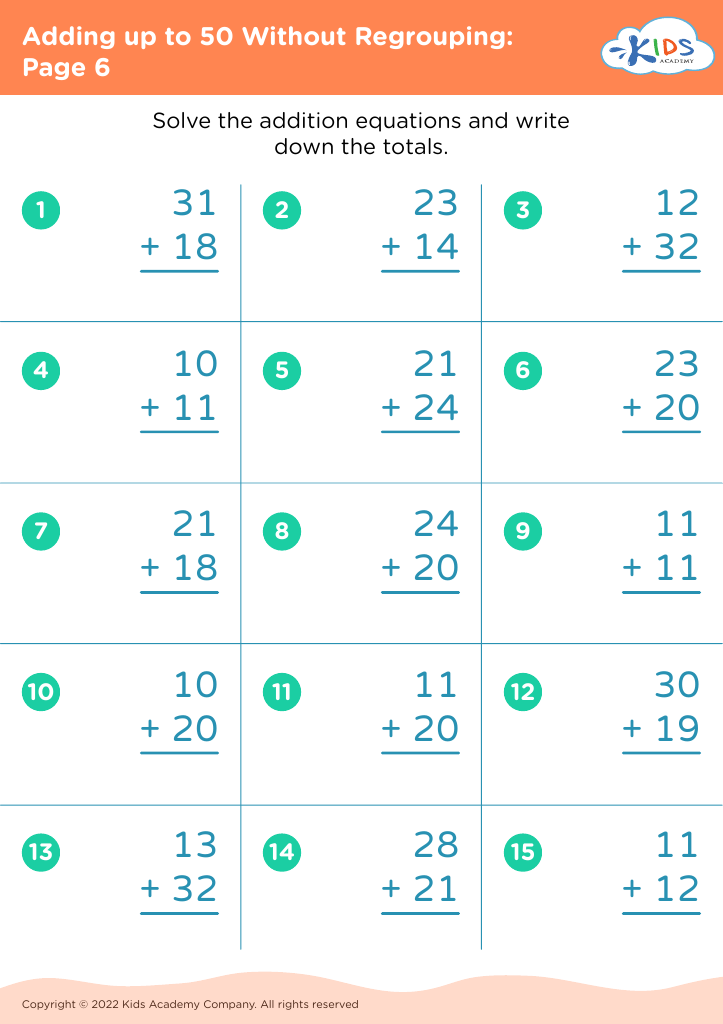
Adding up to 50 Without Regrouping: Page 6
Worksheet
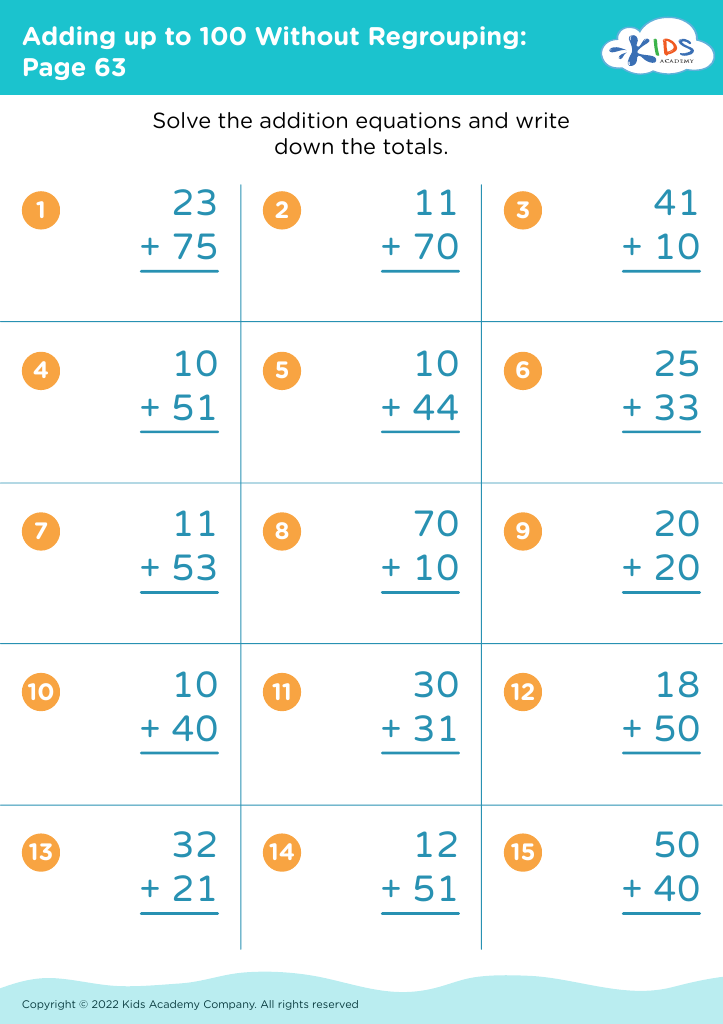
Adding up to 100 Without Regrouping: Page 63
Worksheet
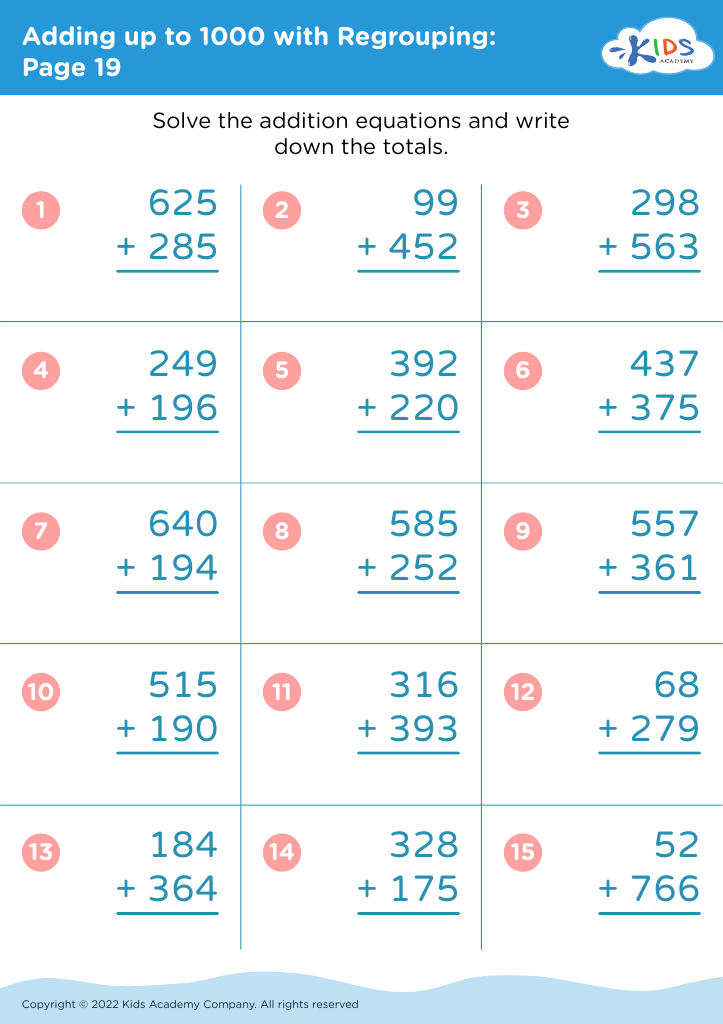
Adding up to 1000 with Regrouping: Page 19
Worksheet
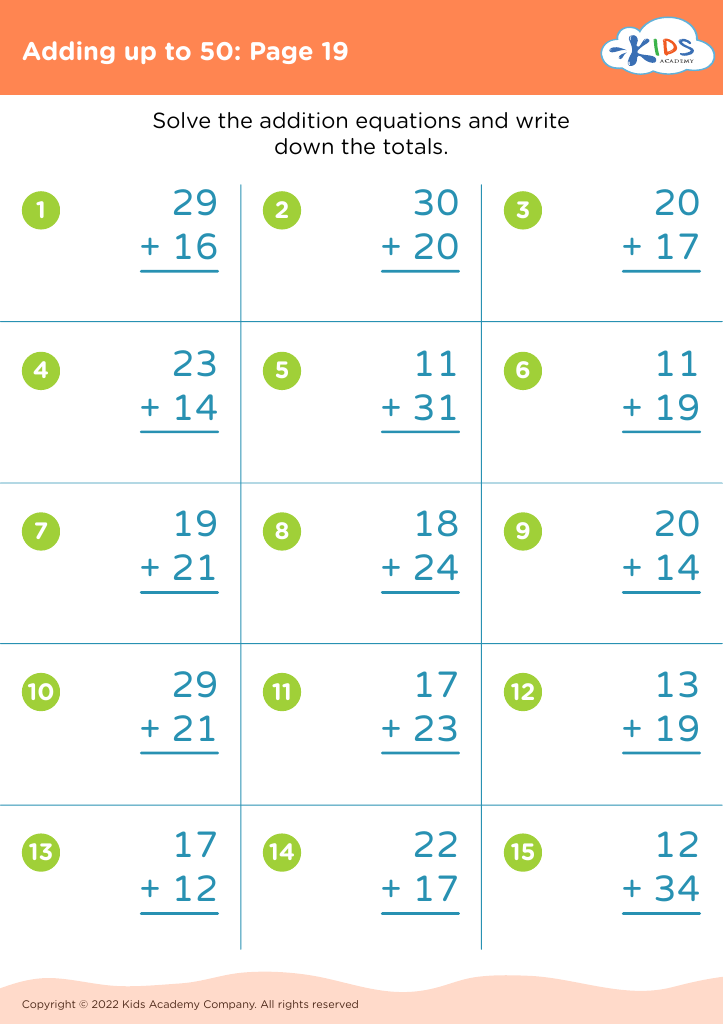
Adding up to 50: Page 19

Adding up to 50: Page 19

Adding up to 50: Page 19
Worksheet
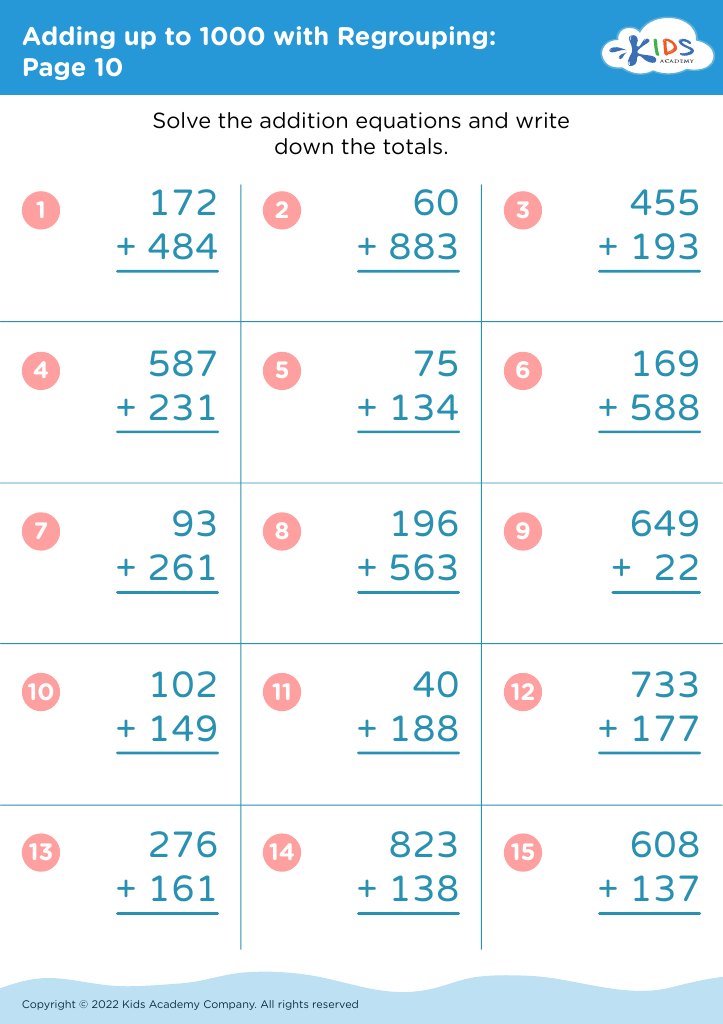
Adding up to 1000 with Regrouping: Page 10
Worksheet
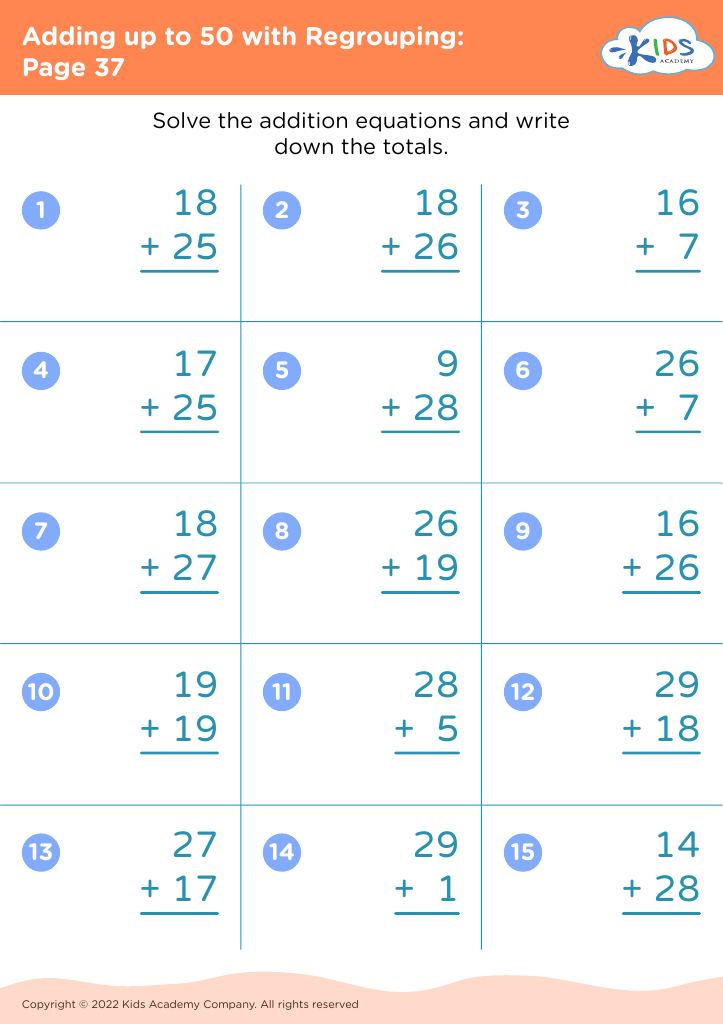
Adding up to 50 with Regrouping: Page 37
Worksheet
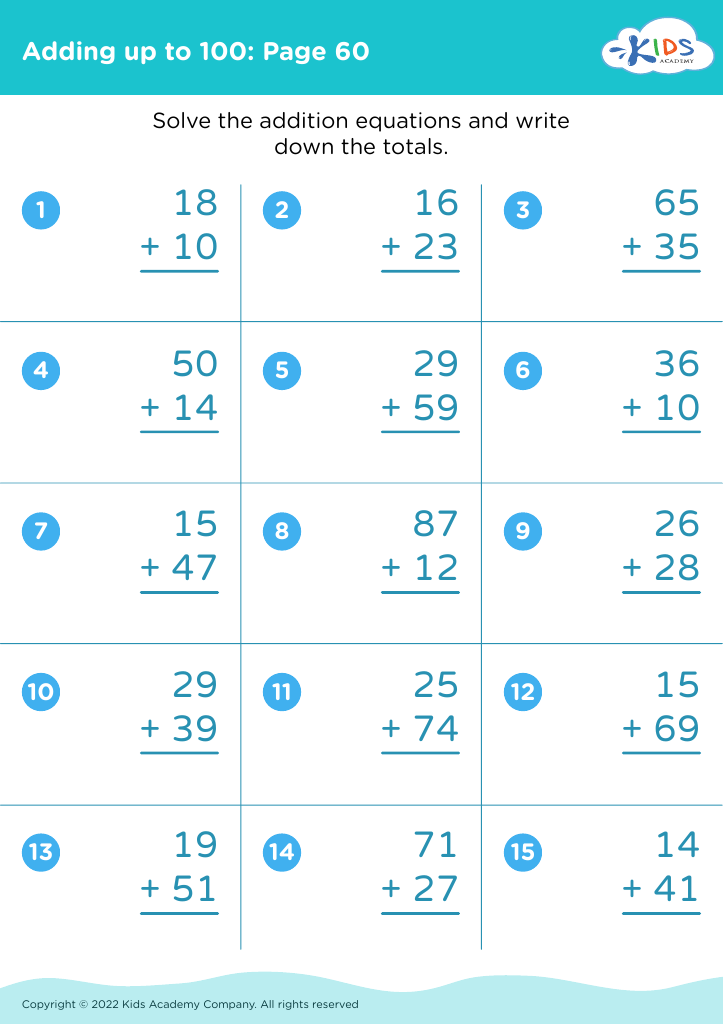
Adding up to 100: Page 60

Adding up to 100: Page 60

Adding up to 100: Page 60
Worksheet
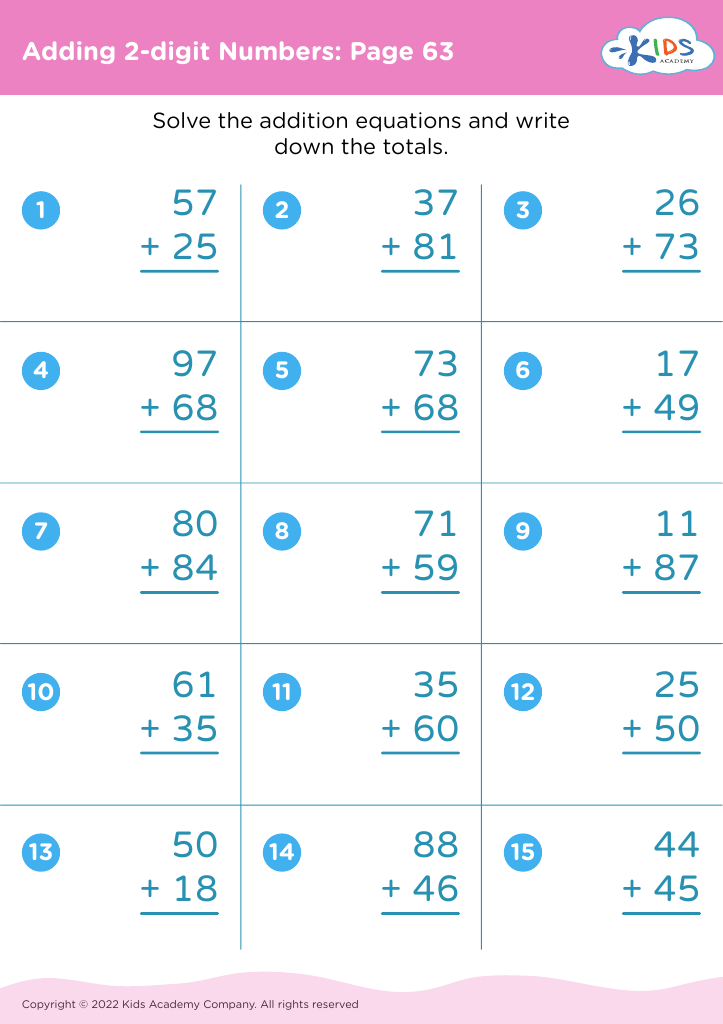
Adding 2-digit Numbers: Page 63

Adding 2-digit Numbers: Page 63

Adding 2-digit Numbers: Page 63
Worksheet
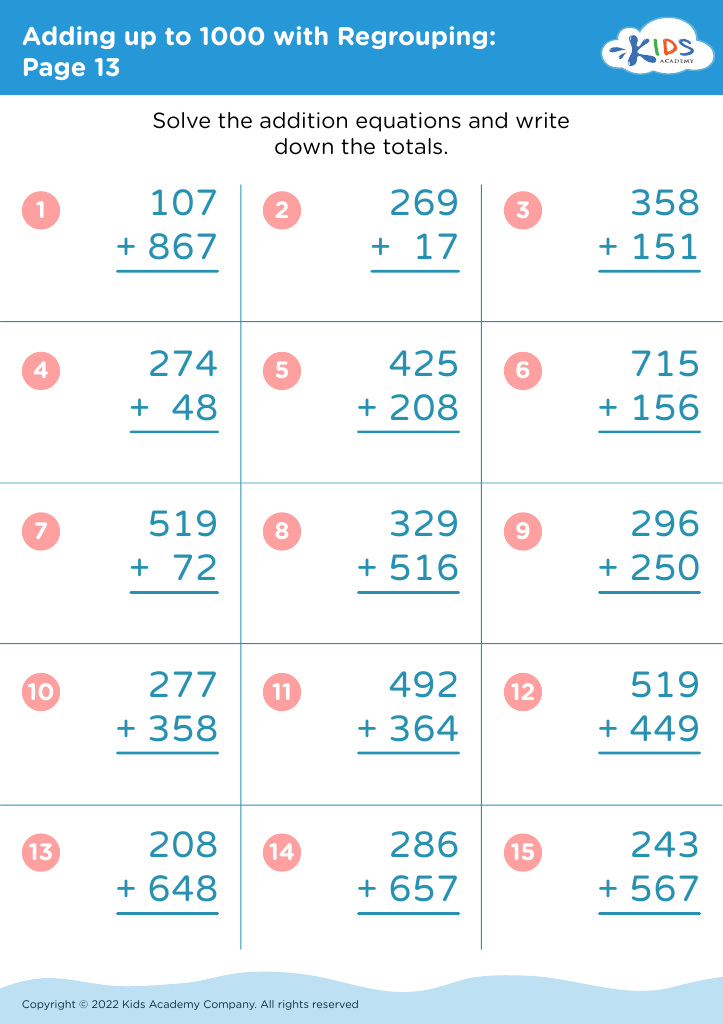
Adding up to 1000 with Regrouping: Page 13
Worksheet
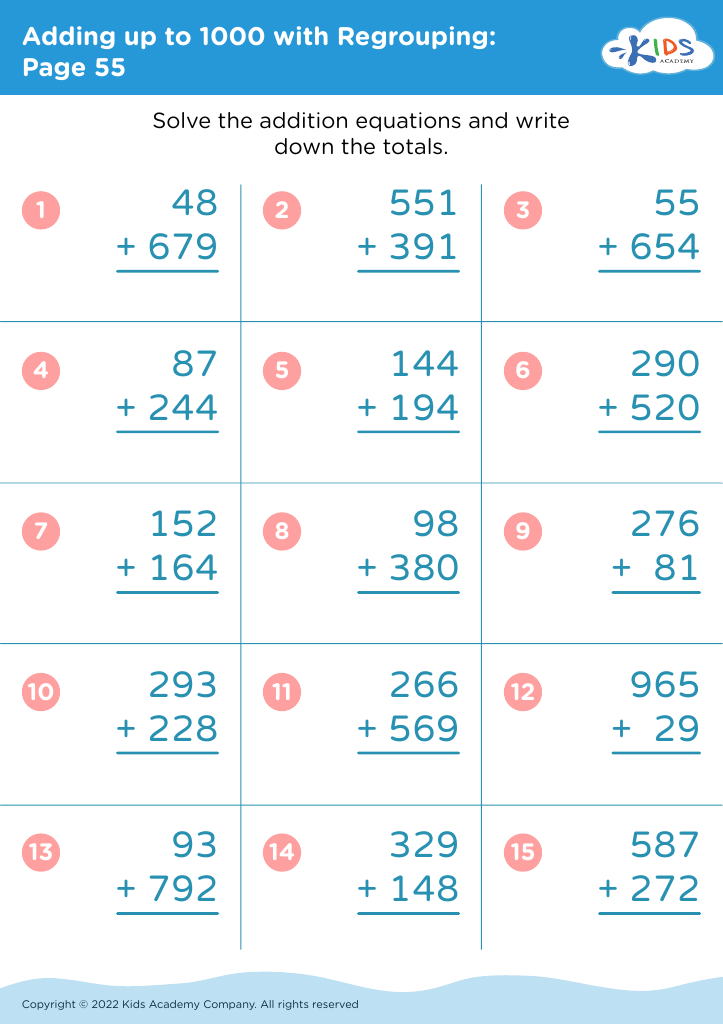
Adding up to 1000 with Regrouping: Page 55
Worksheet
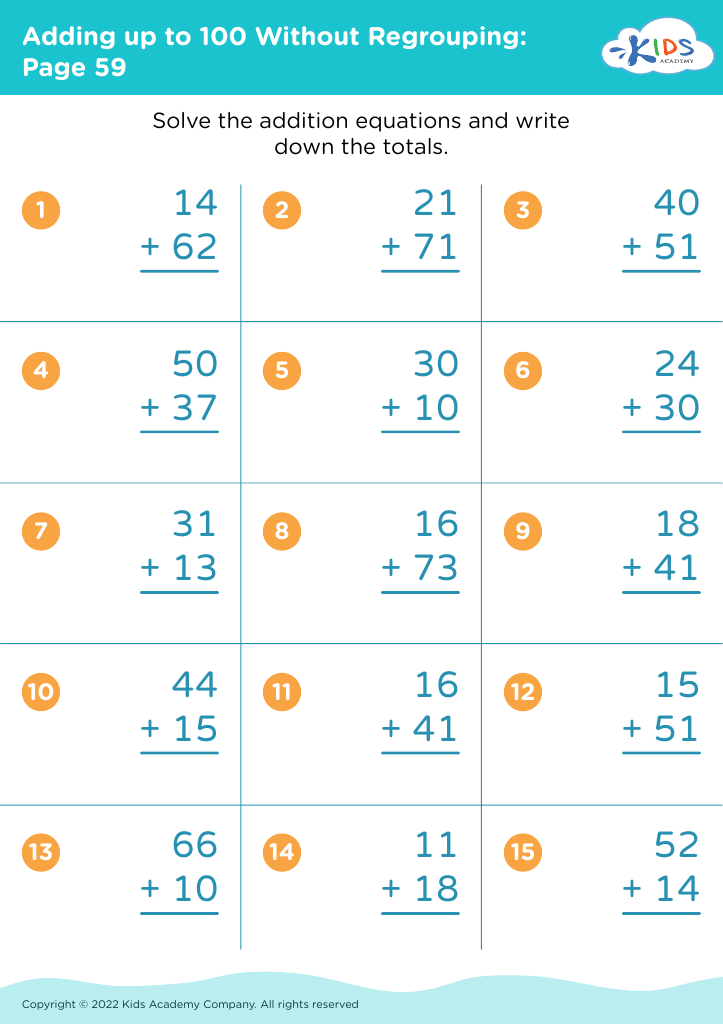
Adding up to 100 Without Regrouping: Page 59
Worksheet
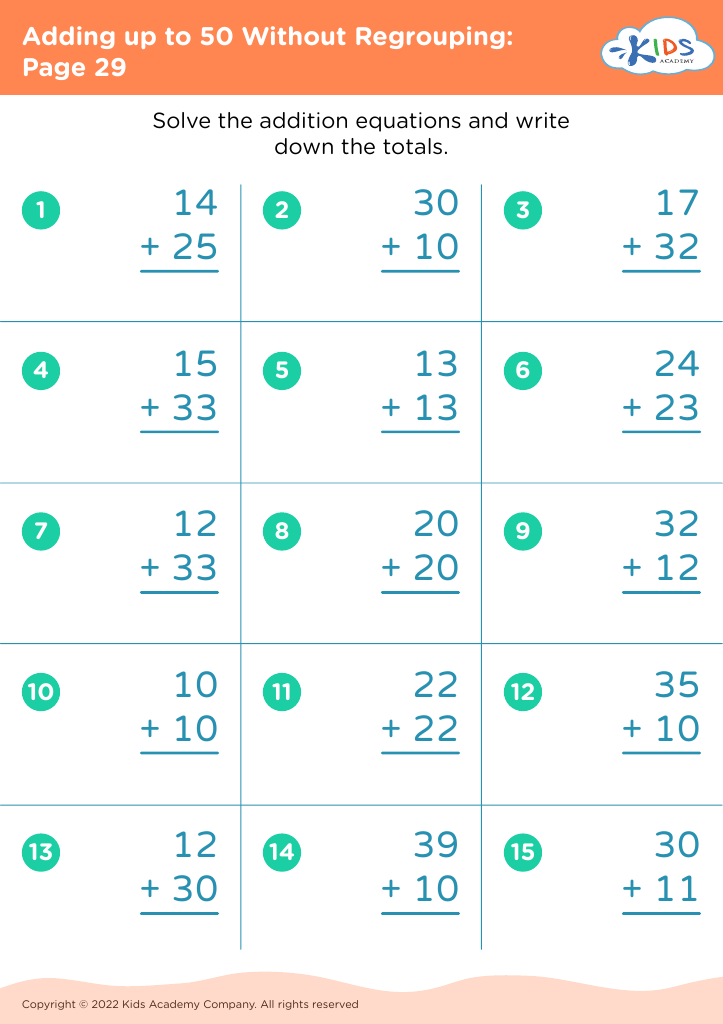
Adding up to 50 Without Regrouping: Page 29
Worksheet
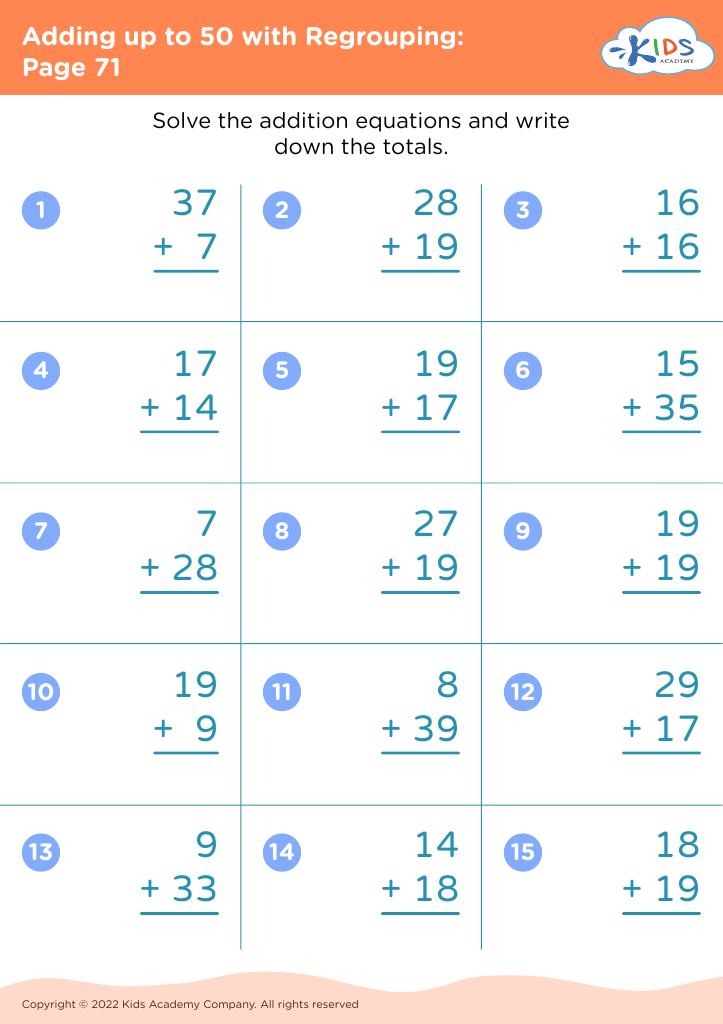
Adding up to 50 with Regrouping: Page 71
Worksheet
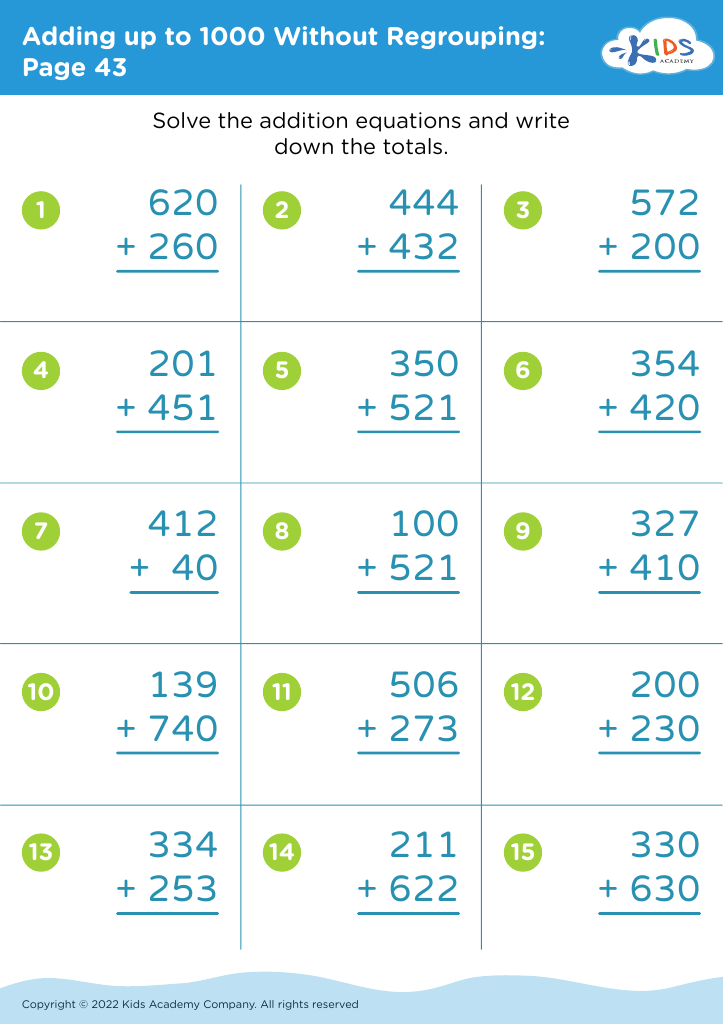
Adding up to 1000 Without Regrouping: Page 43
Worksheet
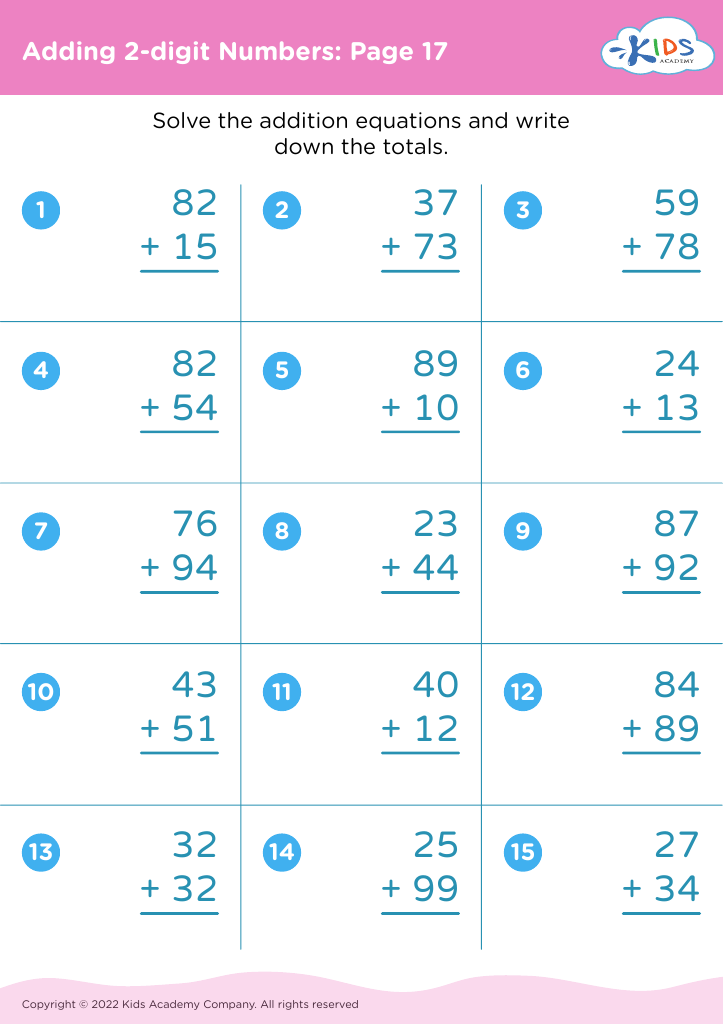
Adding 2-digit Numbers: Page 17

Adding 2-digit Numbers: Page 17

Adding 2-digit Numbers: Page 17
Worksheet
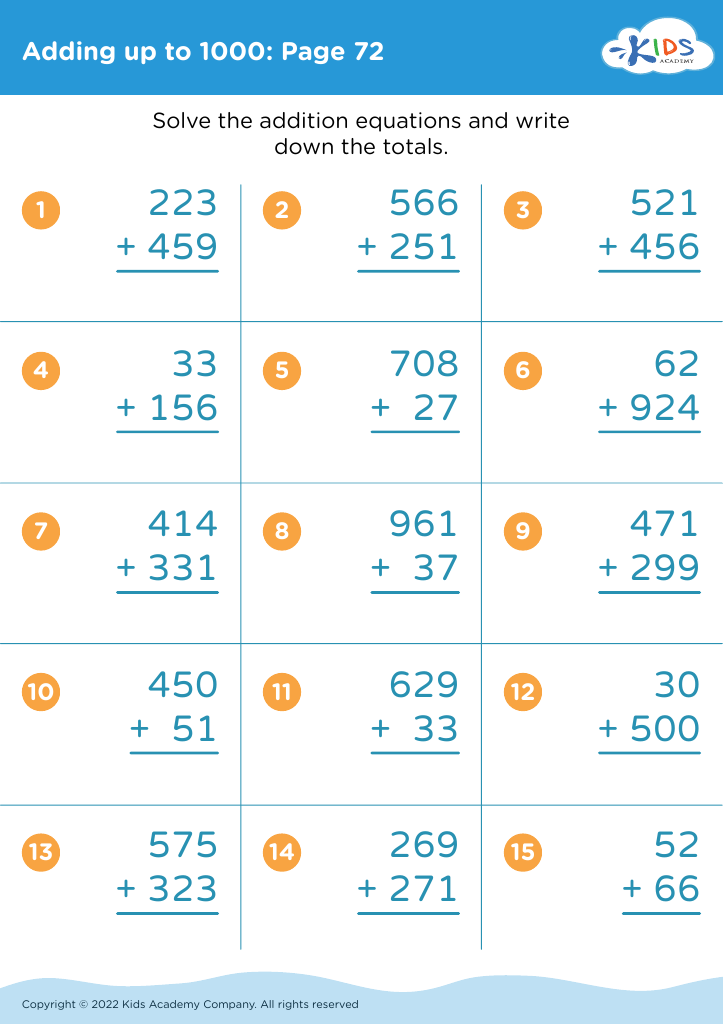
Adding up to 1000: Page 72

Adding up to 1000: Page 72

Adding up to 1000: Page 72
Worksheet
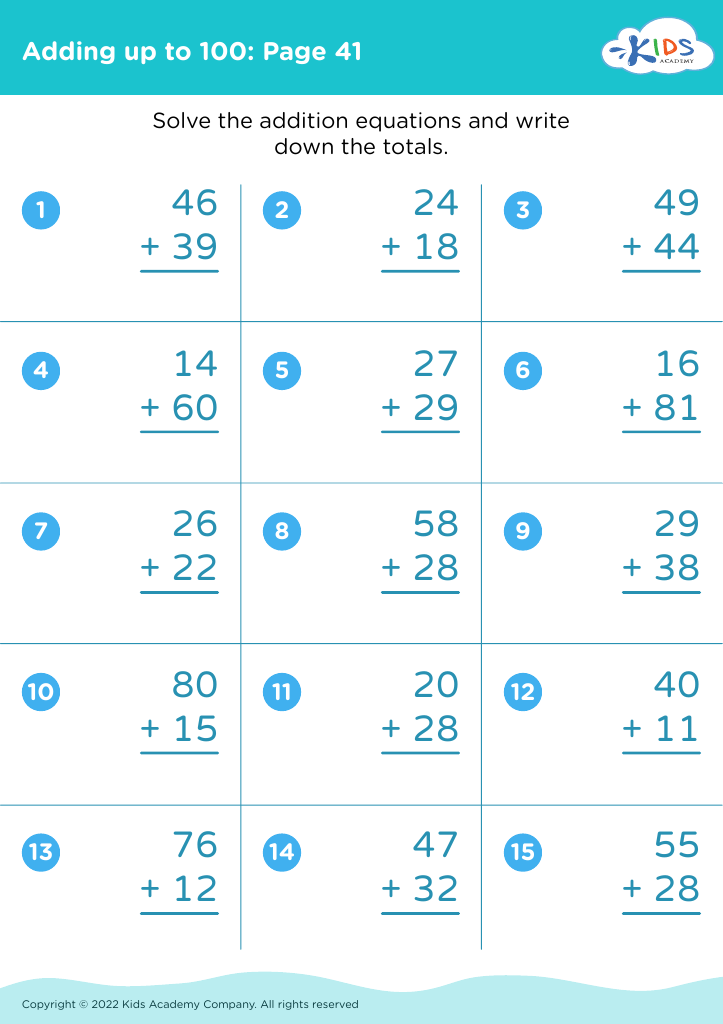
Adding up to 100: Page 41

Adding up to 100: Page 41

Adding up to 100: Page 41
Worksheet
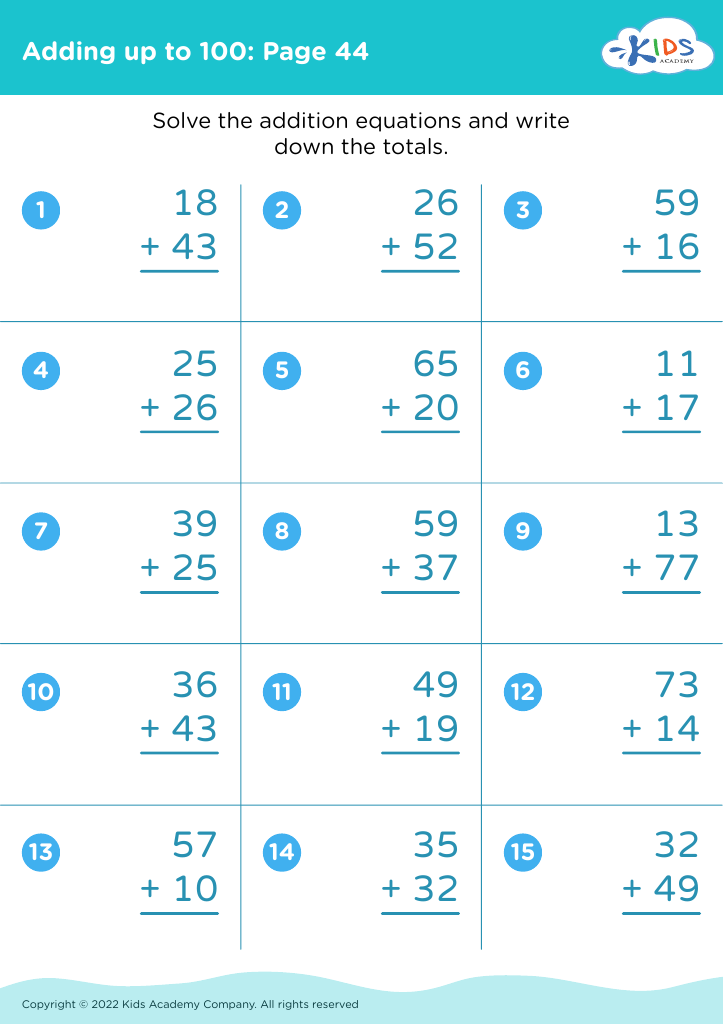
Adding up to 100: Page 44

Adding up to 100: Page 44

Adding up to 100: Page 44
Worksheet


Recognizing patterns in addition is a fundamental skill that sets the stage for future mathematical understanding. For children aged 4-7, developing this ability enhances cognitive processes and promotes mathematical fluency. When parents and teachers focus on teaching patterns in addition, they help children build a strong foundation by linking concepts of addition and subtraction, which is vital for recognizing relationships between numbers.

Understanding patterns encourages critical thinking and problem-solving skills. For instance, when children notice that adding two then three consistently equals five, they're not just memorizing; they’re understanding the relationships and structures in mathematics. This ability to discern patterns supports more complex operations as they progress, making advanced math concepts easier to grasp.

Furthermore, recognizing patterns is crucial for early intervention and identifying areas where a child may struggle. Through games and hands-on activities, both parents and teachers can make learning fun, ensuring engagement and retention. By highlighting the importance of recognizing patterns in addition, educators and caregivers empower children to see mathematics not merely as abstract numbers, but as a relatable and integral part of their world, laying down the groundwork for lifelong numeracy skills.