Welcome to our "Simplifying Fractions Addition Worksheets" designed specifically for children aged 4-7! These engaging and interactive worksheets help young learners grasp the foundational concepts of adding fractions in a fun and approachable way. With colorful illustrations and easy-to-understand instructions, each worksheet encourages children to practice their fraction addition skills while simplifying them for easier understanding. Our resources foster enthusiasm for math and enhance problem-solving abilities, making learning an enjoyable adventure. Ideal for both classroom and at-home learning, these worksheets will ensure that your child builds confidence and competence in their mathematical journey. Start learning and simplifying today!
Check out this FREE Trial Lesson on Addition for age 4-7!

A

Favorites
With answer key
Interactive
  • 4-7
  • Simplifying Fractions
  • Addition
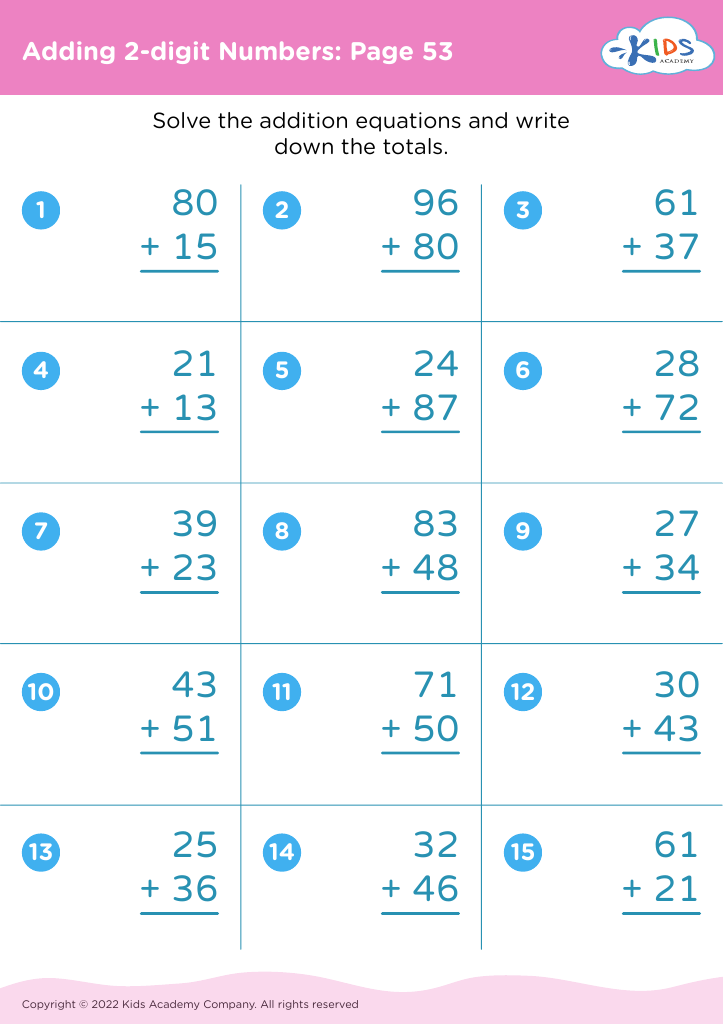
Adding 2-digit Numbers: Page 53

Adding 2-digit Numbers: Page 53

Adding 2-digit Numbers: Page 53
Worksheet
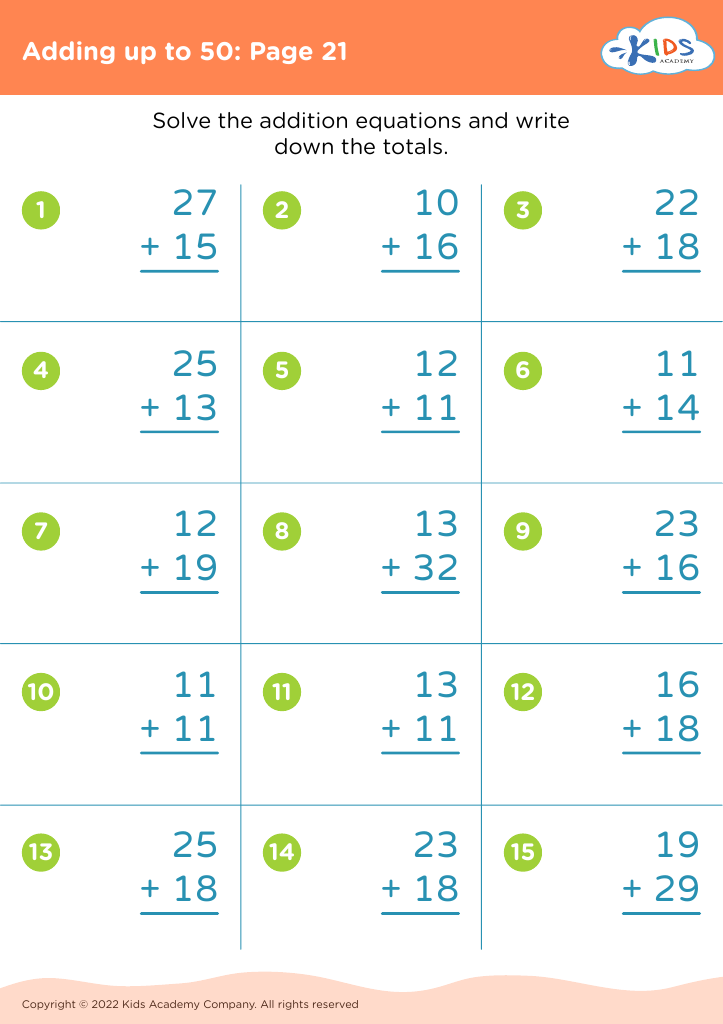
Adding up to 50: Page 21

Adding up to 50: Page 21

Adding up to 50: Page 21
Worksheet
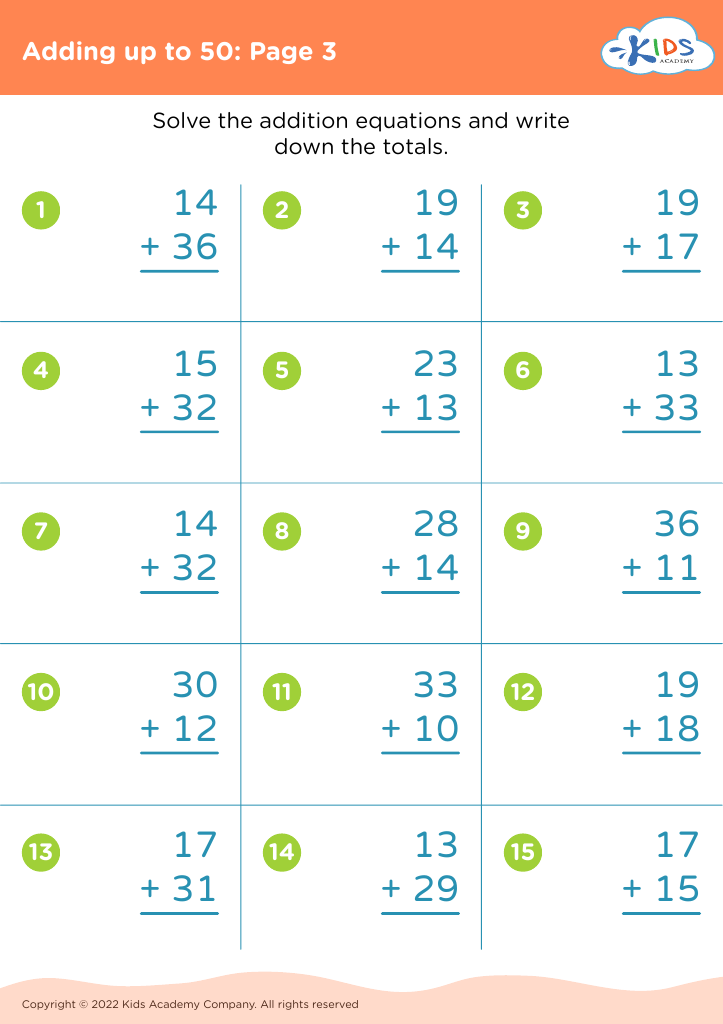
Adding up to 50: Page 3

Adding up to 50: Page 3

Adding up to 50: Page 3
Worksheet
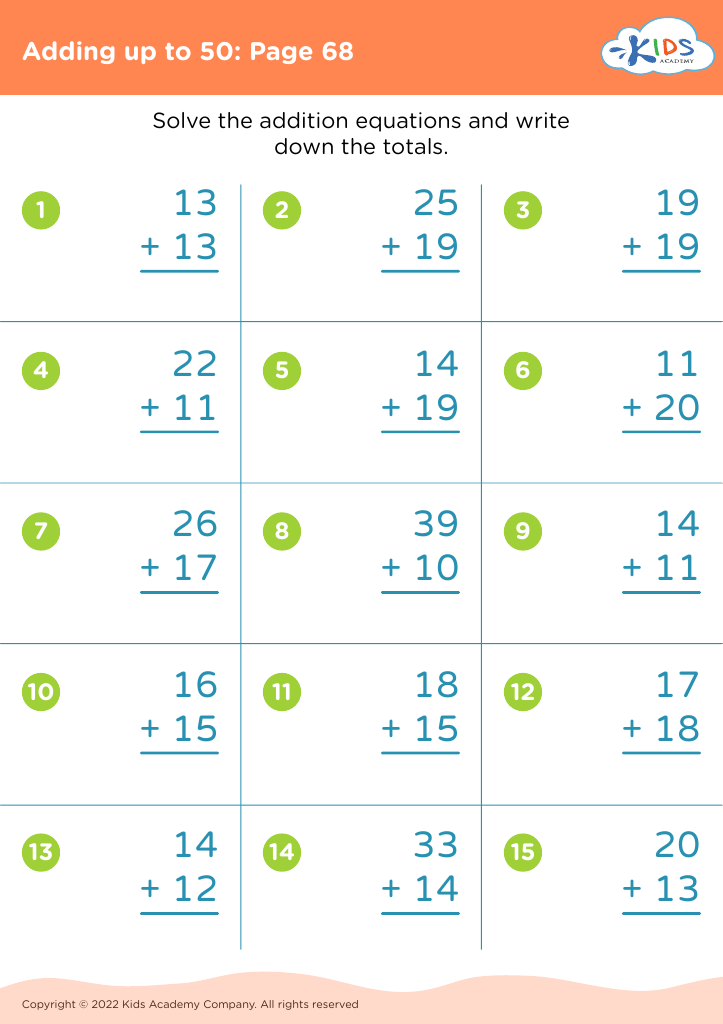
Adding up to 50: Page 68

Adding up to 50: Page 68

Adding up to 50: Page 68
Worksheet
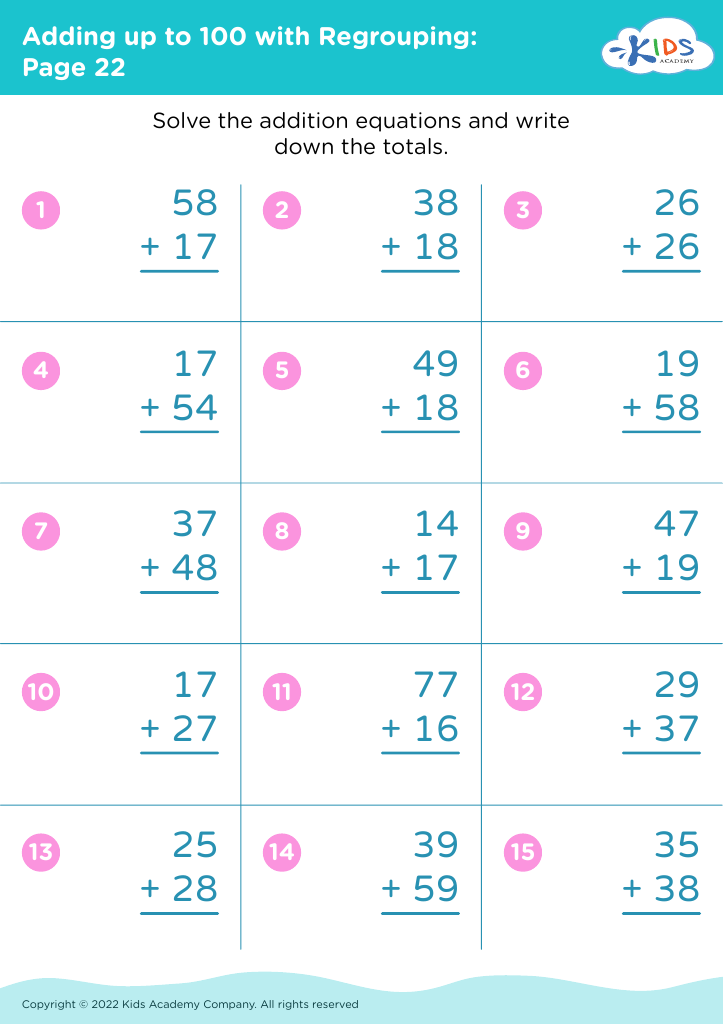
Adding up to 100 with Regrouping: Page 22
Worksheet
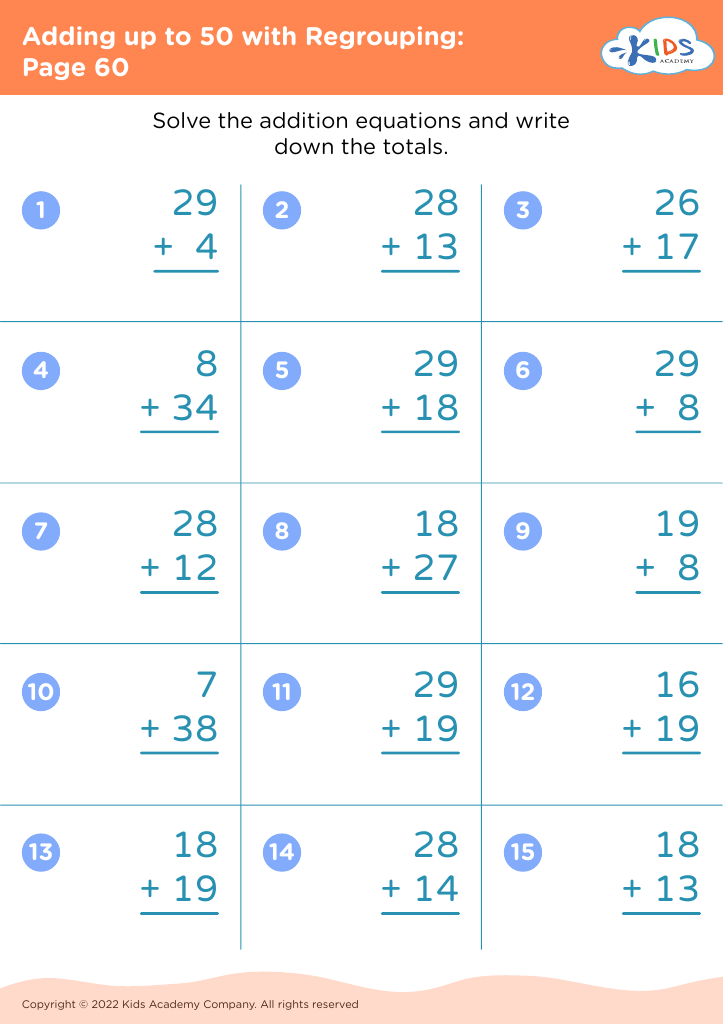
Adding up to 50 with Regrouping: Page 60
Worksheet
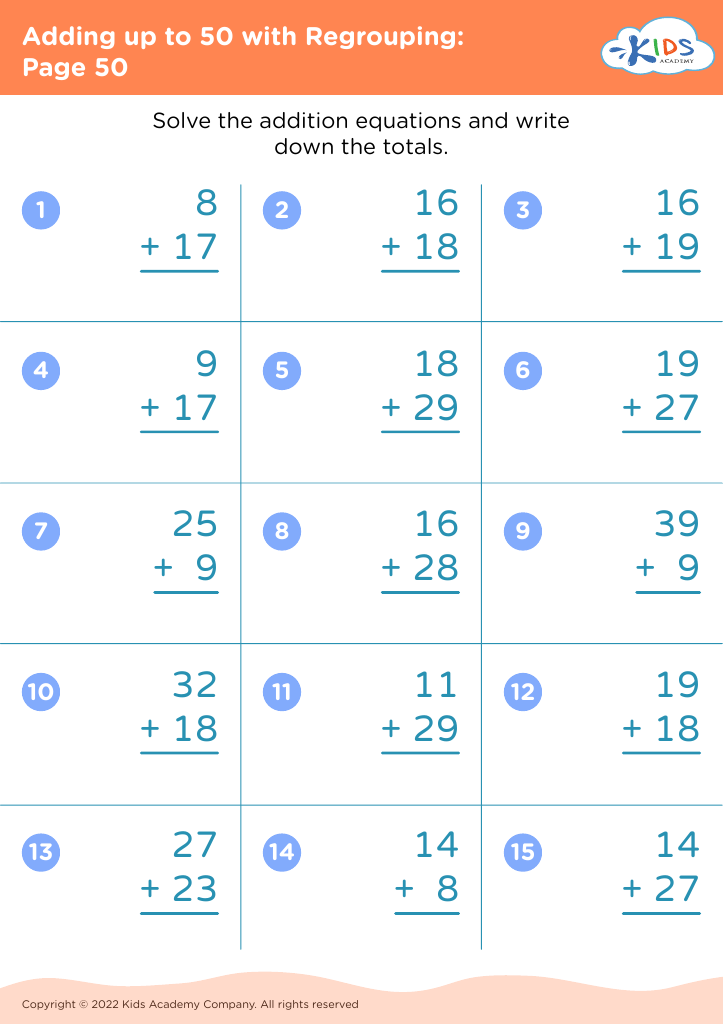
Adding up to 50 with Regrouping: Page 50
Worksheet
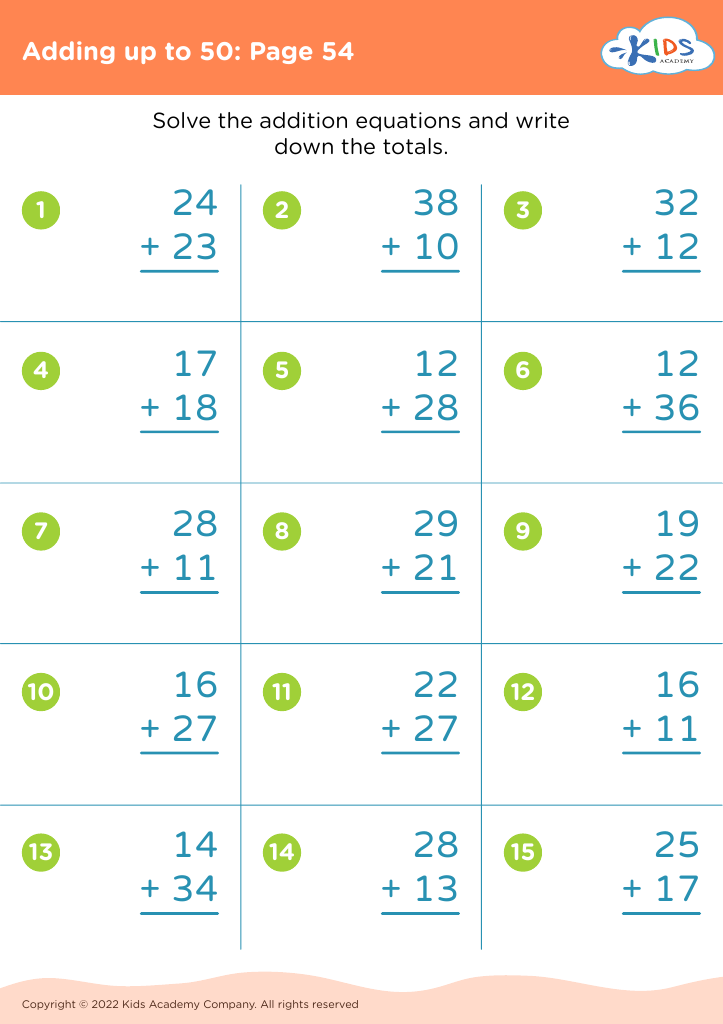
Adding up to 50: Page 54

Adding up to 50: Page 54

Adding up to 50: Page 54
Worksheet
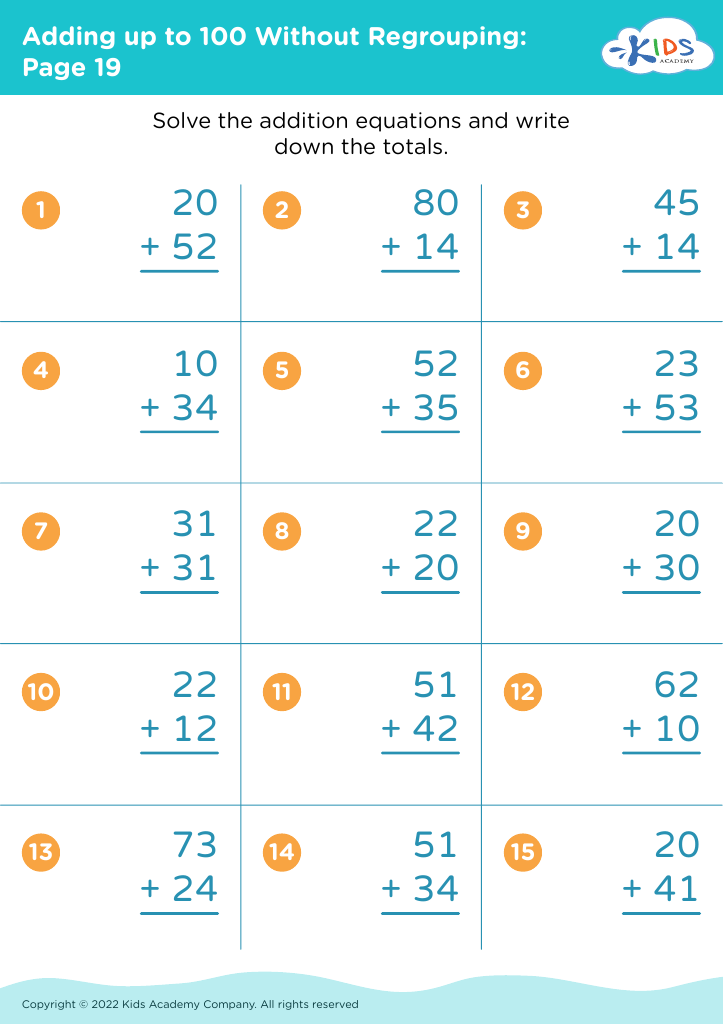
Adding up to 100 Without Regrouping: Page 19
Worksheet
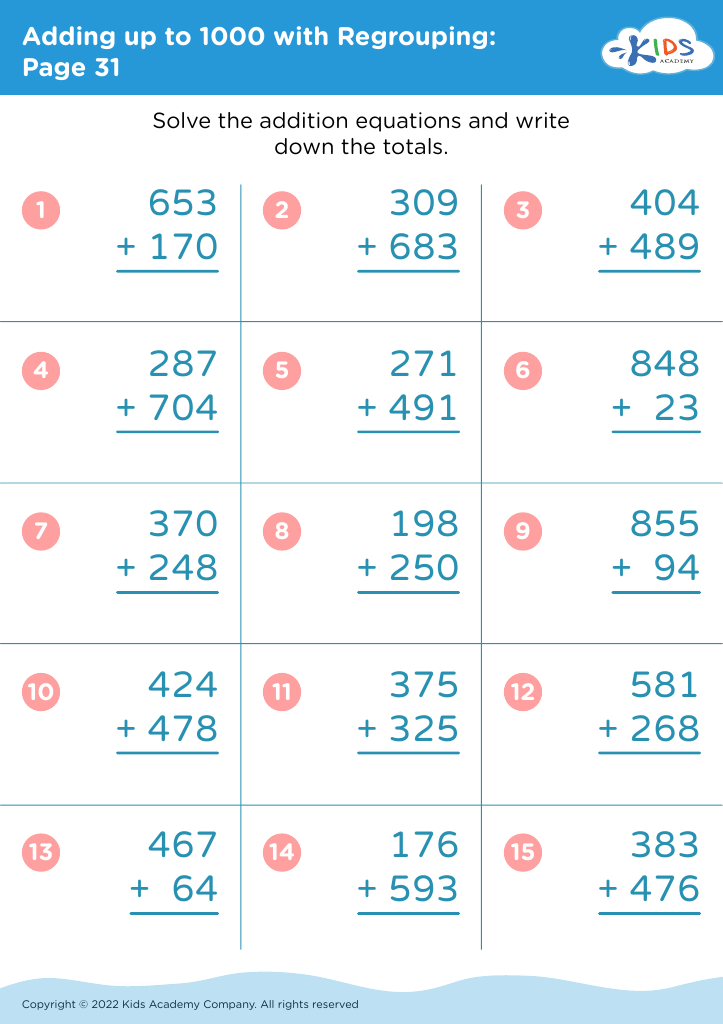
Adding up to 1000 with Regrouping: Page 31
Worksheet
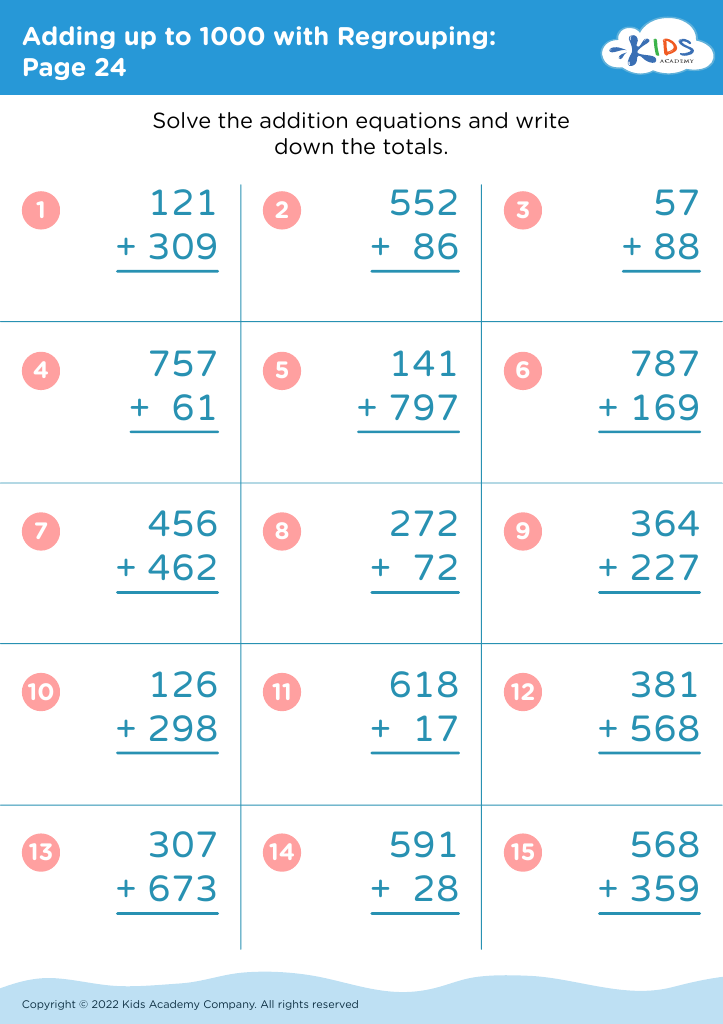
Adding up to 1000 with Regrouping: Page 24
Worksheet
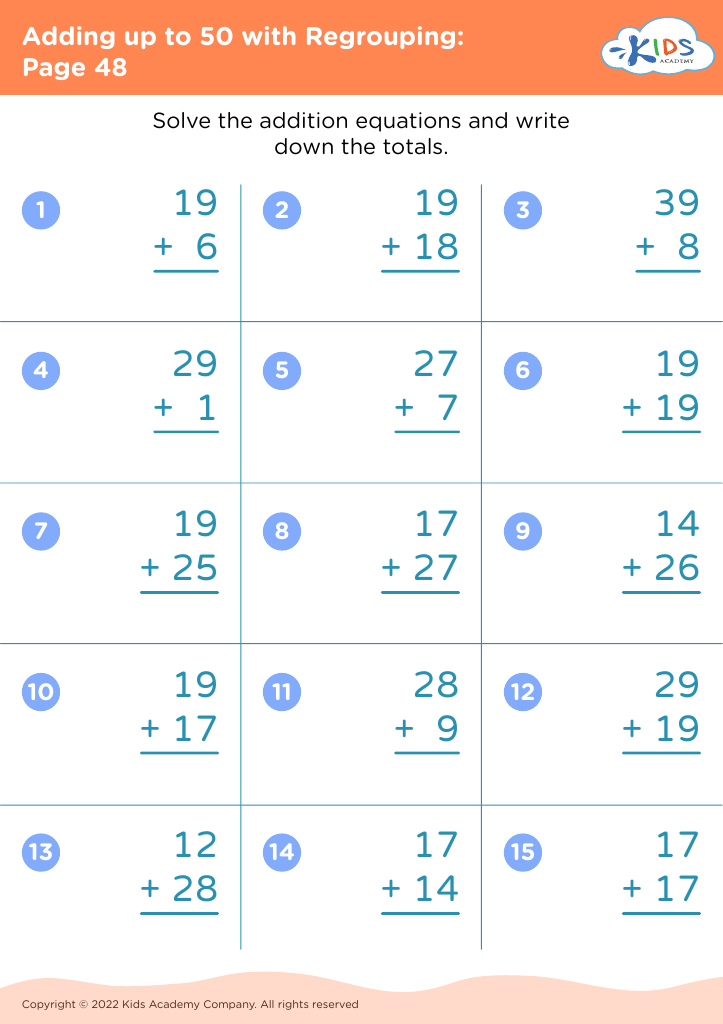
Adding up to 50 with Regrouping: Page 48
Worksheet
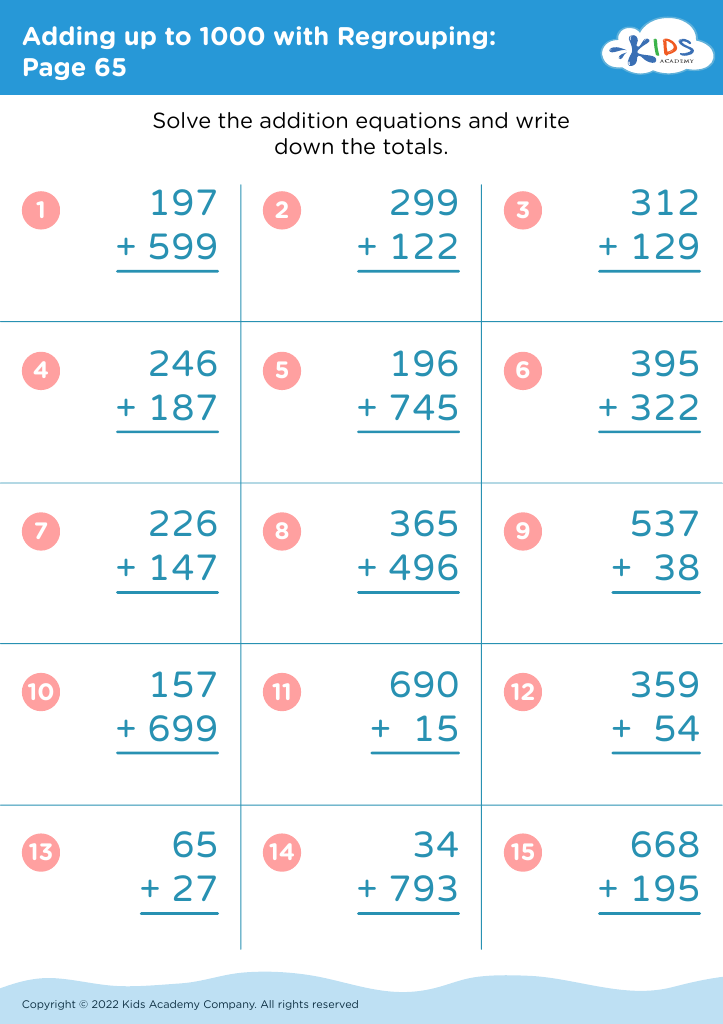
Adding up to 1000 with Regrouping: Page 65
Worksheet
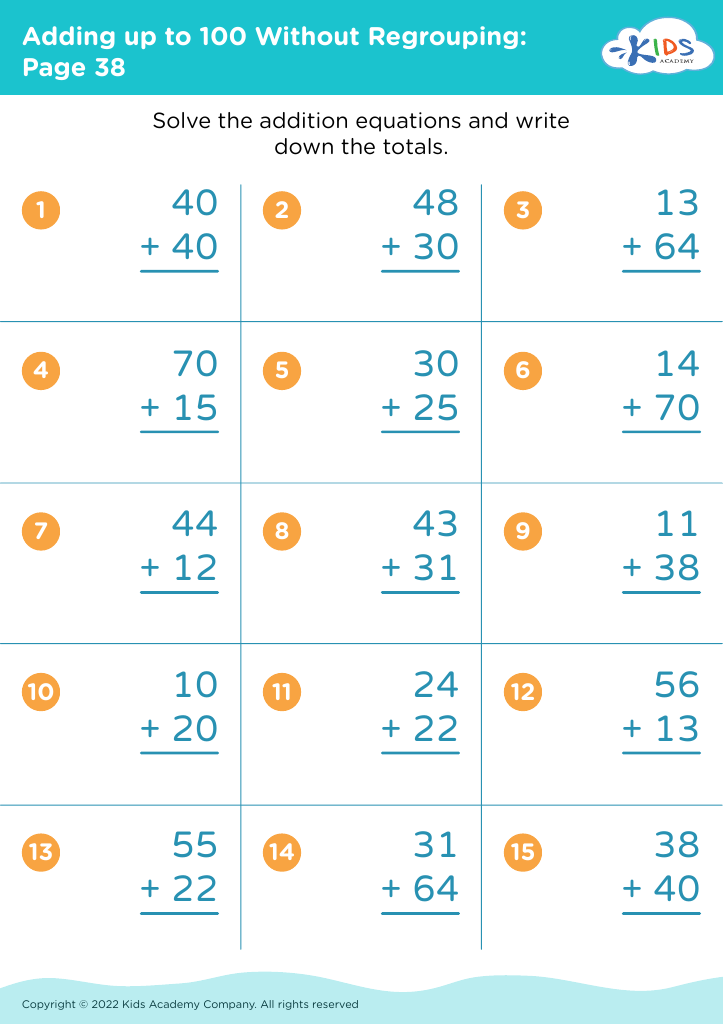
Adding up to 100 Without Regrouping: Page 38
Worksheet
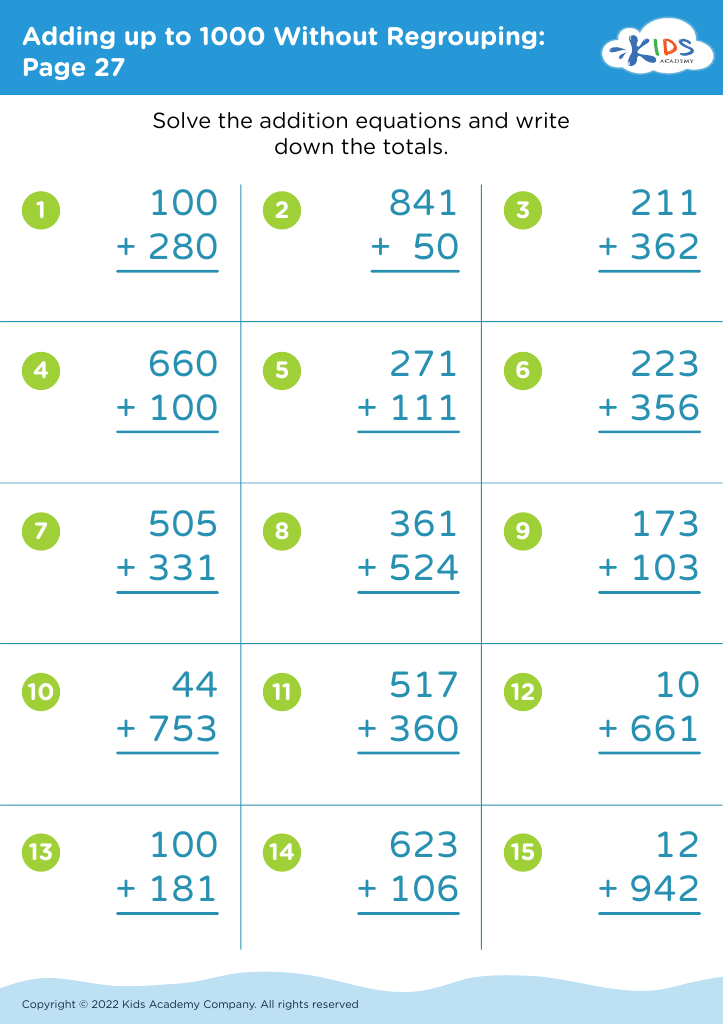
Adding up to 1000 Without Regrouping: Page 27
Worksheet
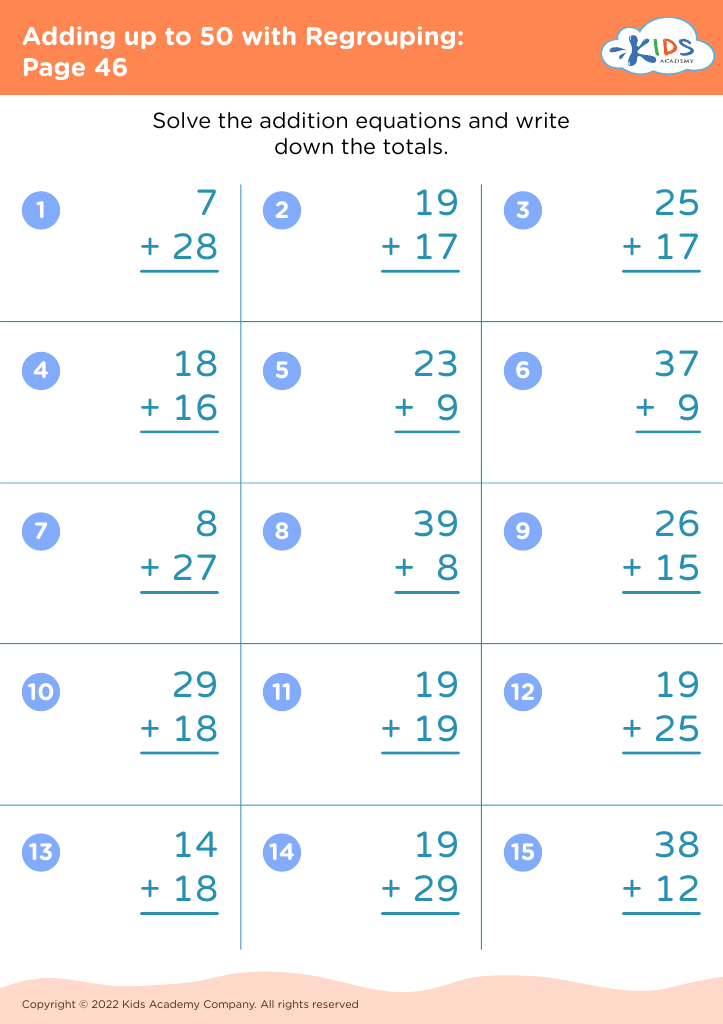
Adding up to 50 with Regrouping: Page 46
Worksheet
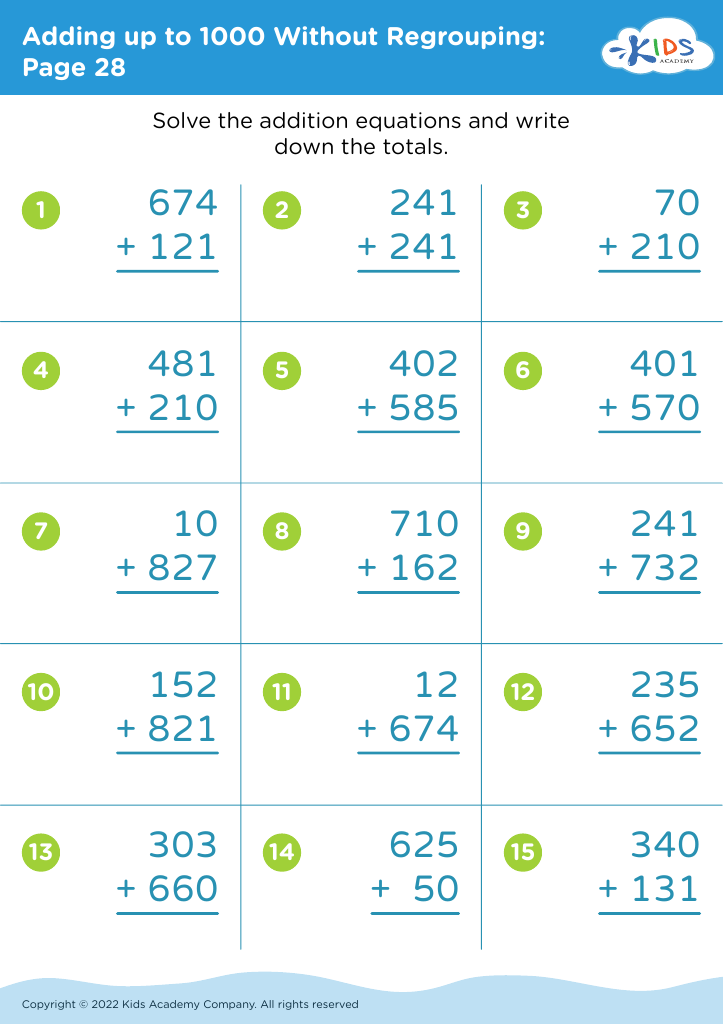
Adding up to 1000 Without Regrouping: Page 28
Worksheet
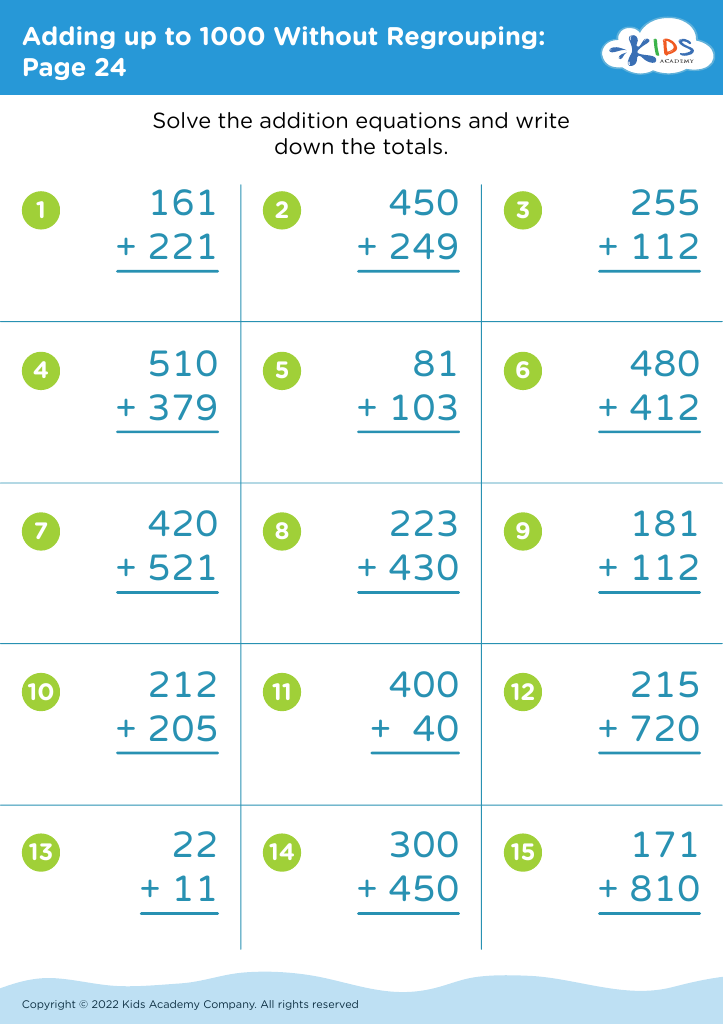
Adding up to 1000 Without Regrouping: Page 24
Worksheet


Simplifying Fractions Addition is an essential concept for children aged 4-7, forming a foundational mathematical skill that benefits their overall intellectual development. At this age, children begin to understand fractions and need clear strategies to add them together. Simplifying fractions helps young learners grasp the idea of parts of a whole while promoting critical thinking and problem-solving skills.

When parents and teachers emphasize simplification, they assist children in identifying common denominators, which lays the groundwork for understanding equivalency and proportions. This skill is particularly important in enhancing numeracy, preparing kids for more complex mathematical concepts in later grades.

Moreover, an early focus on fractions encourages collaborative learning, as children can engage in group activities that involve tangible examples, like sharing food items or dividing shapes. This not only makes learning fun but also relatable.

By concentrating on these basic skills, adults can cultivate a positive attitude toward mathematics in children, reducing the anxiety often associated with numbers. Ultimately, when parents and teachers actively engage with simplifying fractions, they help create a solid mathematical foundation that inspires confidence and curiosity in young learners as they embark on their educational journey.