Filters

12 filtered results

Clear all filters
Favorites
With answer key
Interactive

12 filtered results

Difficulty Level

Grade


Our "Subtraction Skills Addition Worksheets for Ages 4-7" are designed to build a solid foundation in both addition and subtraction! These engaging, age-appropriate worksheets offer fun activities that reinforce essential arithmetic skills. Ideal for young learners, each worksheet combines colorful visuals with easy-to-follow instructions. Your child will practice basic subtraction while solidifying their addition knowledge, setting them up for future math success. Perfect for home or school use, these worksheets make learning math enjoyable and rewarding. Boost your child's confidence and number fluency with our expertly crafted subtraction and addition practice activities!
Check out this FREE Trial Lesson on Addition for age 4-7!

Match Exactly the Same

Favorites
With answer key
Interactive
  • 4-7
  • Subtraction skills
  • Addition
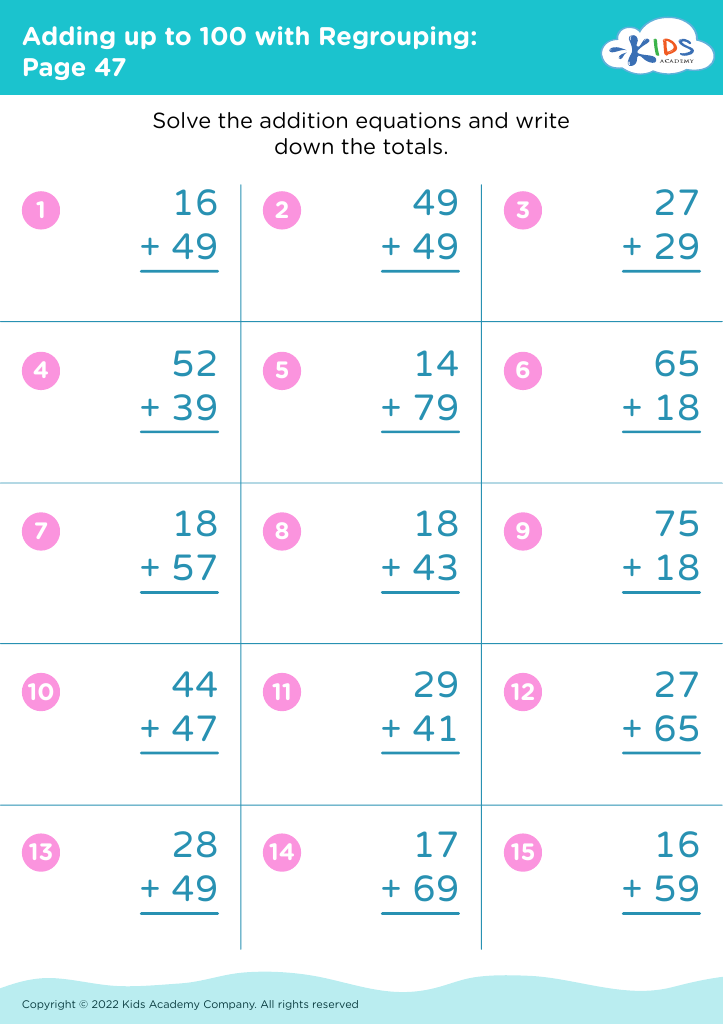
Adding up to 100 with Regrouping: Page 47
Worksheet
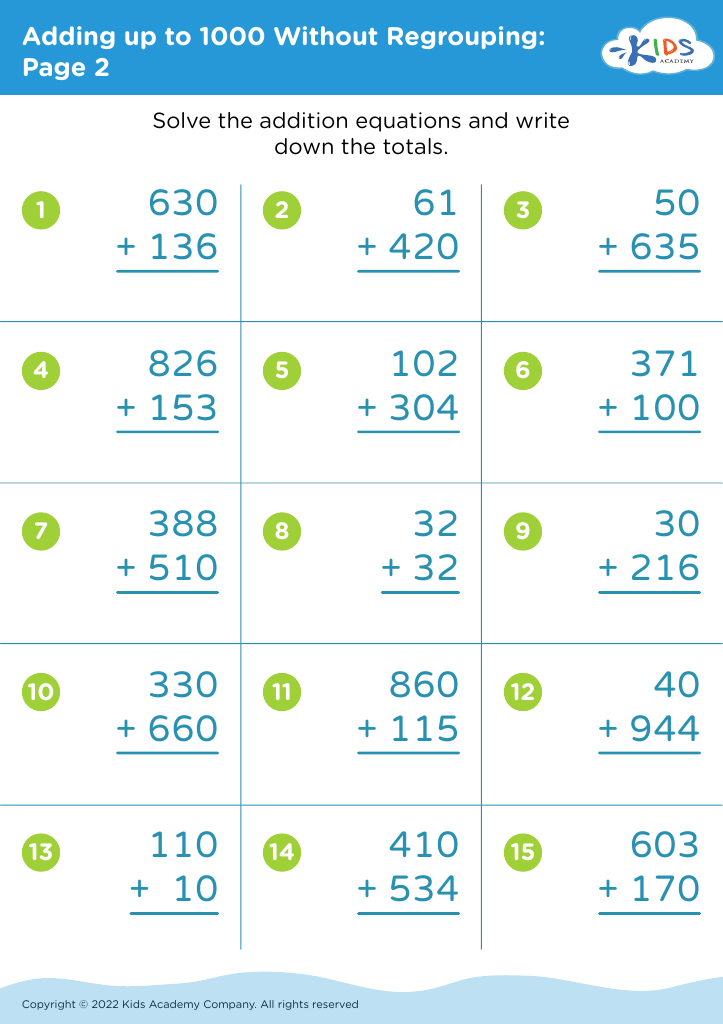
Adding up to 1000 Without Regrouping: Page 2
Worksheet
Sums and Differences Within 1 - Assessment 2 Worksheet

Sums and Differences Within 1 - Assessment 2 Worksheet

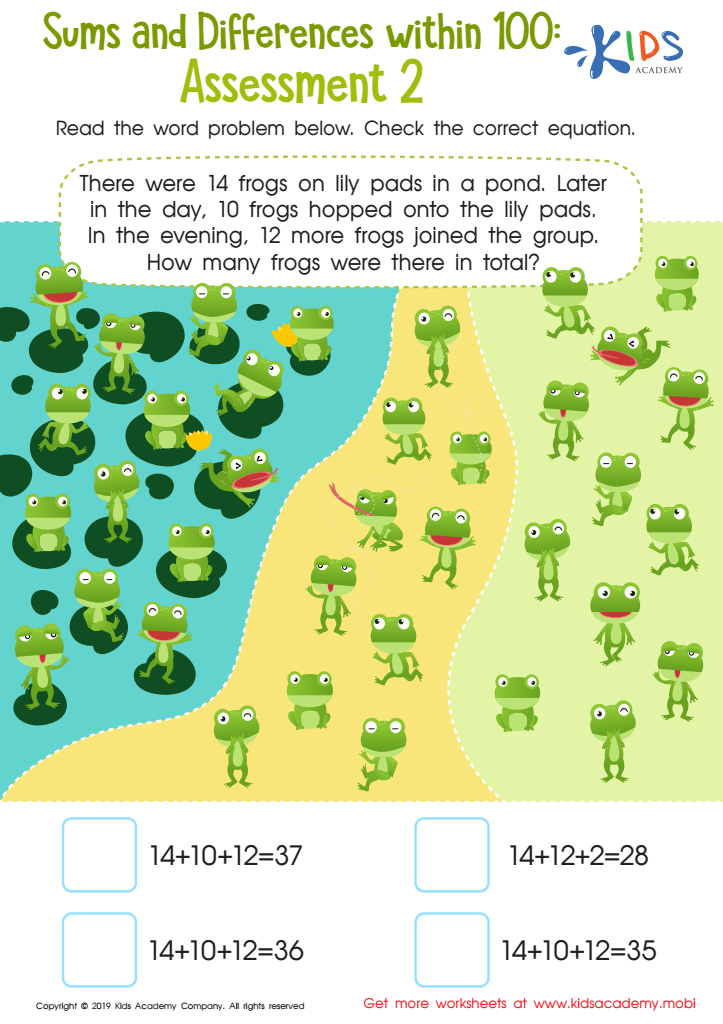
Help your kids practice math with these simple word problems. Read the question, discuss with them to form the equation and then check the answer. Give them a chance to sharpen their math skills!
Sums and Differences Within 1 - Assessment 2 Worksheet
Worksheet
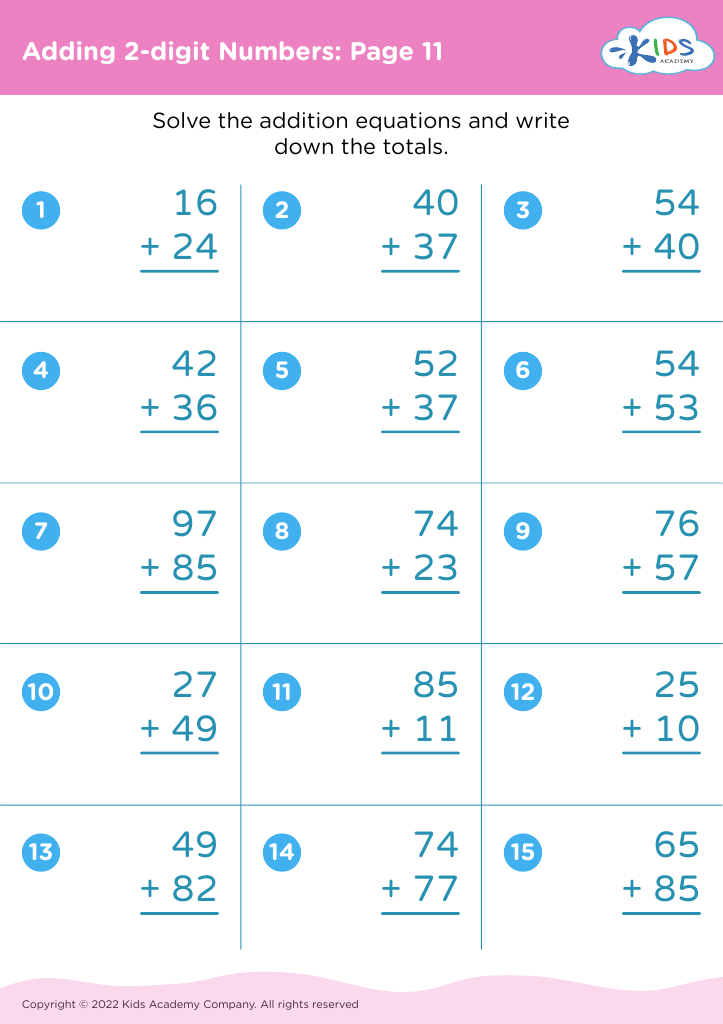
Adding 2-digit Numbers: Page 11

Adding 2-digit Numbers: Page 11

Adding 2-digit Numbers: Page 11
Worksheet
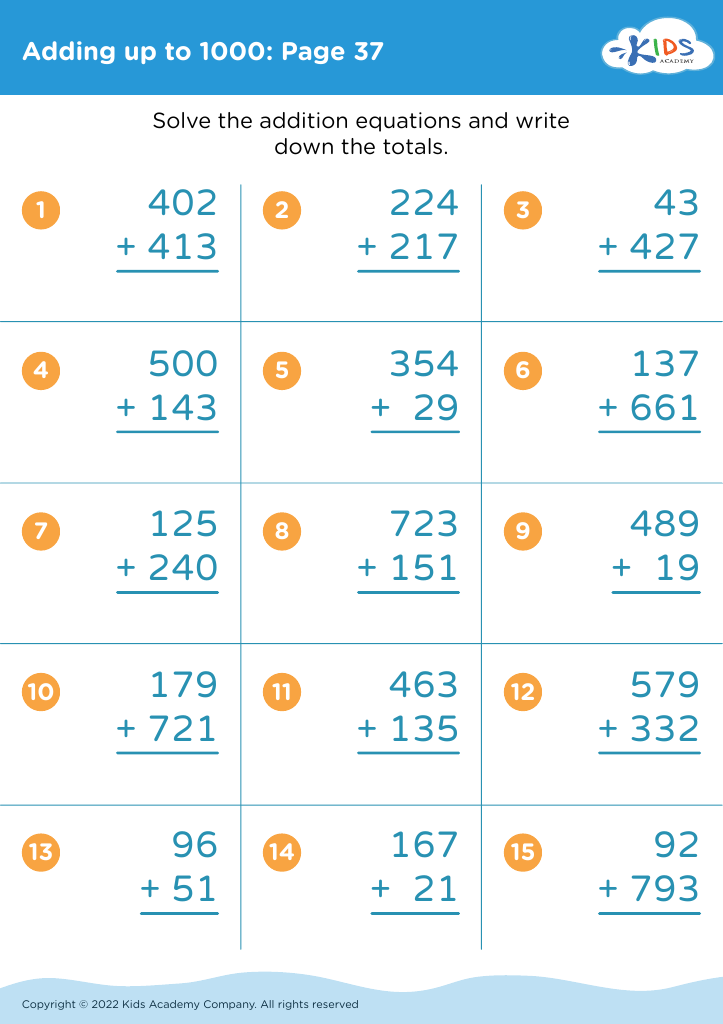
Adding up to 1000: Page 37

Adding up to 1000: Page 37

Adding up to 1000: Page 37
Worksheet
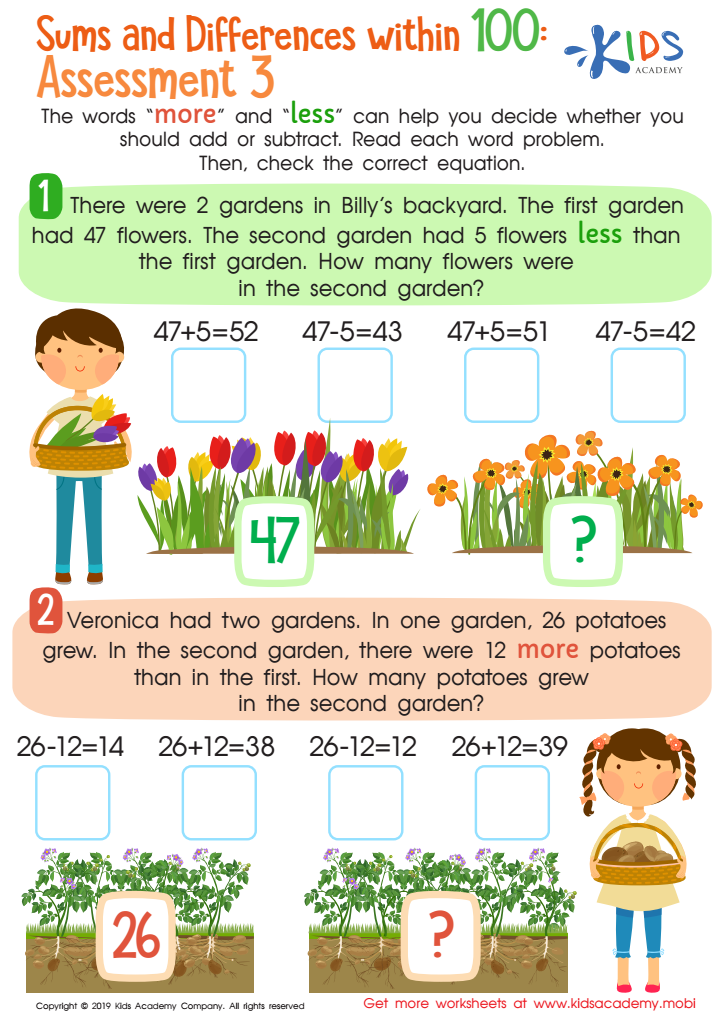
Sums and Differences Within 1 - Assessment 3 Worksheet
Sums and Differences Within 1 - Assessment 3 Worksheet
When we see 'more' or 'less', they usually refer to quantity. In Math, they indicate addition or subtraction. Help kids read aloud two simple word problems and figure out the correct equations for each. Check the correct equation afterwards.
Sums and Differences Within 1 - Assessment 3 Worksheet
Worksheet
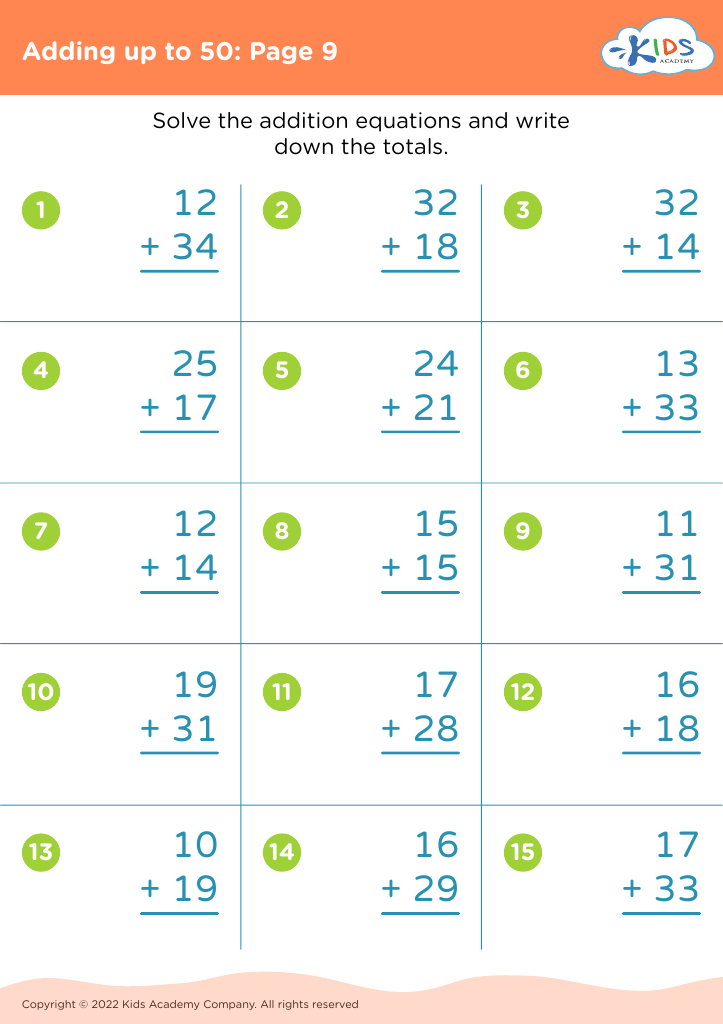
Adding up to 50: Page 9

Adding up to 50: Page 9

Adding up to 50: Page 9
Worksheet
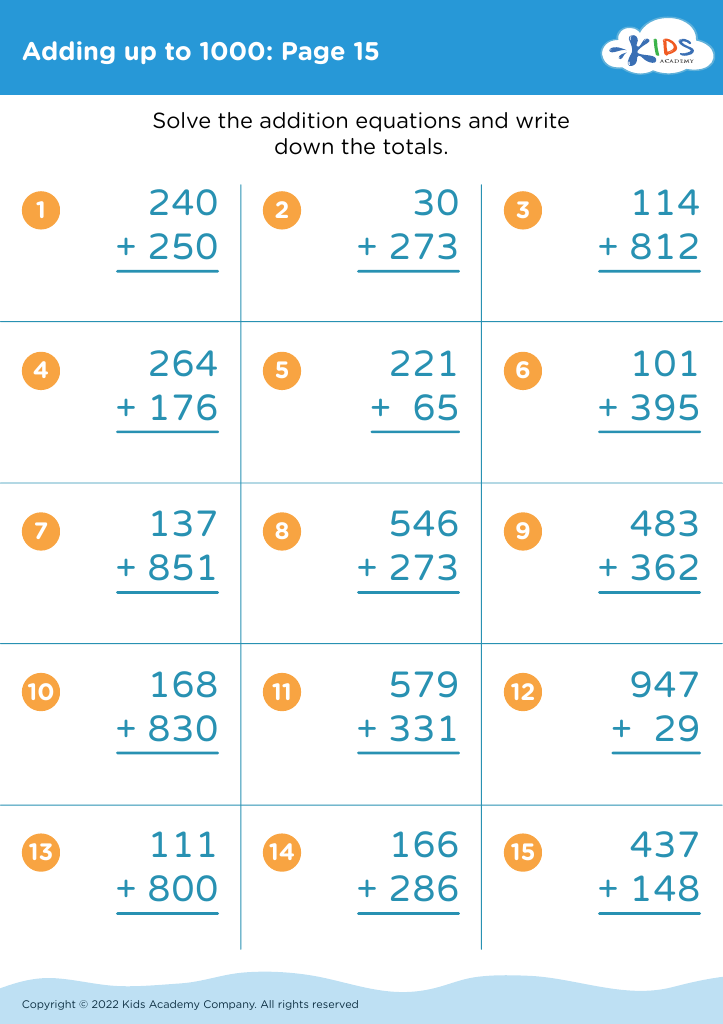
Adding up to 1000: Page 15

Adding up to 1000: Page 15

Adding up to 1000: Page 15
Worksheet
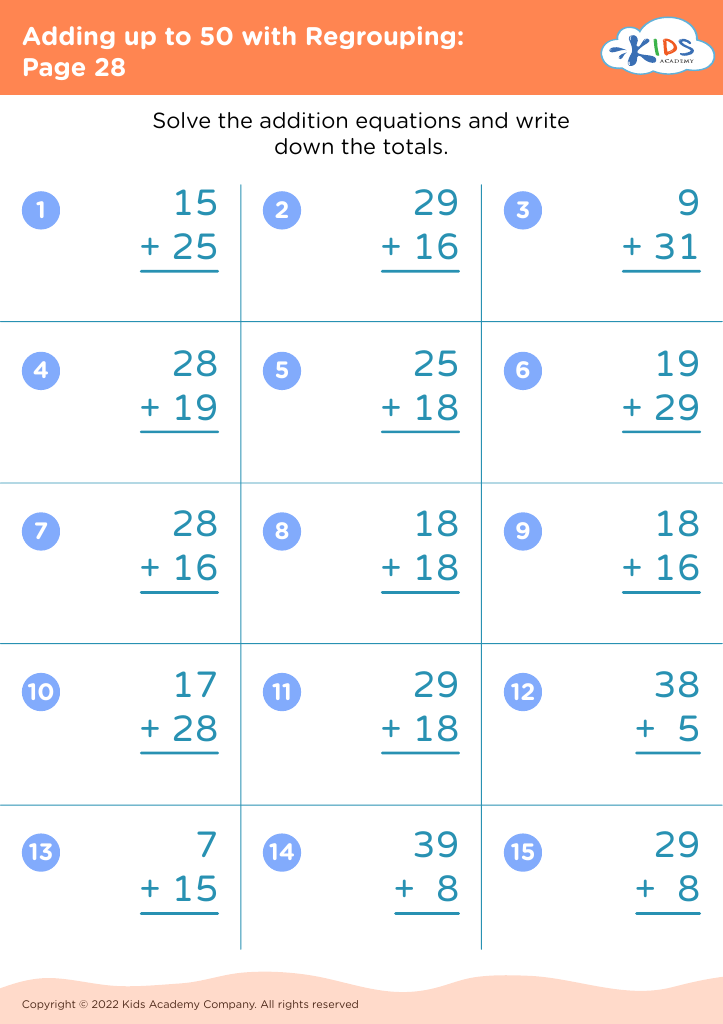
Adding up to 50 with Regrouping: Page 28
Worksheet
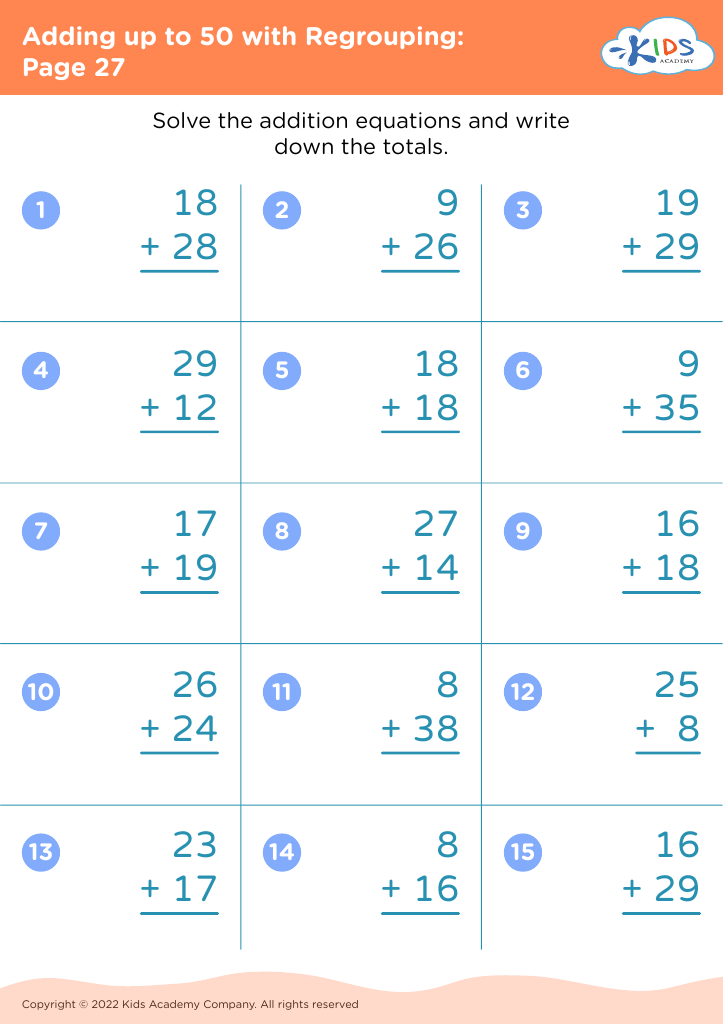
Adding up to 50 with Regrouping: Page 27
Worksheet
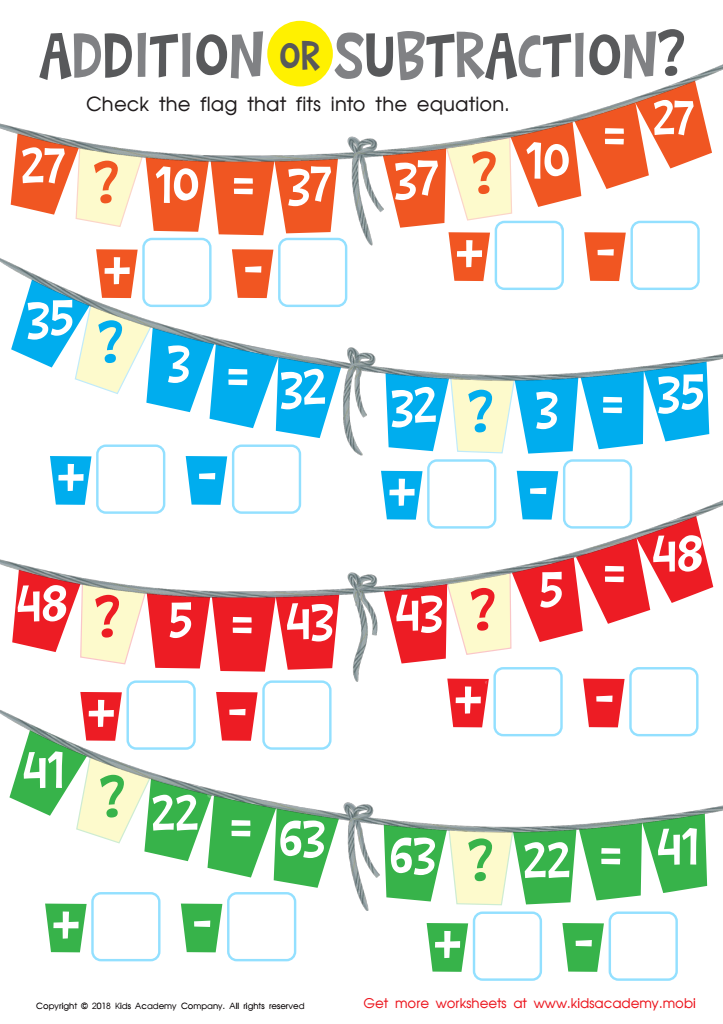
Addition or Subtraction? Worksheet

Addition or Subtraction? Worksheet

Help your math whiz's number skills advance with these colorful flag equations! With the free PDF, they'll learn to solve addition and subtraction facts by following the correct orders of operation. And the best part? They'll develop a deeper understanding of how the different operations work together within equations. Give it a try and watch their skills soar!
Addition or Subtraction? Worksheet

Worksheet
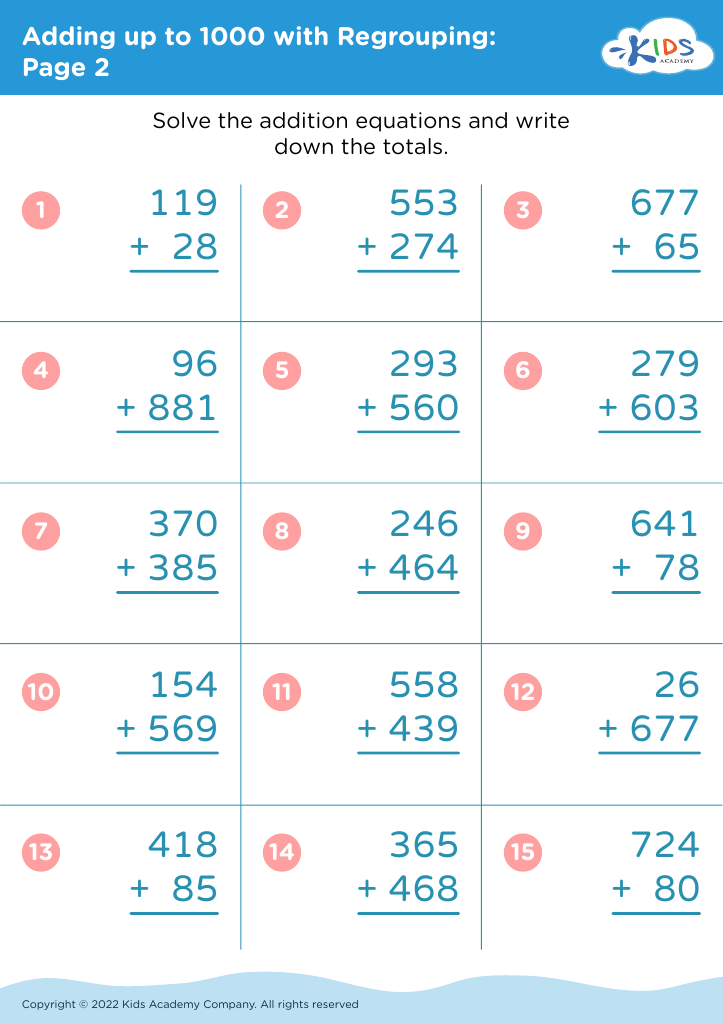
Adding up to 1000 with Regrouping: Page 2
Worksheet


Developing subtraction and addition skills in children aged 4-7 is fundamental for their early academic success and overall cognitive development. At this stage, children are in a crucial period of growth where they rapidly absorb new information and concepts. Mastery of these basic arithmetic operations forms the foundation for all future math learning, including more complex operations such as multiplication, division, and problem-solving.

Firstly, addition and subtraction teach children the concepts of quantity and number relationships, which are essential for understanding mathematics. These skills promote logical thinking and reasoning, helping kids to follow sequences and recognize patterns, which is vital for other subjects and everyday problem-solving scenarios.

Secondly, proficiency in these skills boosts children's confidence in their abilities. Successfully understanding and performing addition and subtraction tasks instill a sense of achievement, fostering a positive attitude towards learning and perseverance when encountering challenges. This mindset can be immensely beneficial across various areas of life and education.

Moreover, competency in basic arithmetic lays the groundwork for real-life applications such as managing money, measuring ingredients in cooking, and telling time, thereby fostering practical life skills. Therefore, parents and teachers should prioritize the development of subtraction and addition skills during these formative years to ensure well-rounded cognitive and practical capabilities in their children.