Filters

20 filtered results

Clear all filters
Favorites
With answer key
Interactive

20 filtered results

Difficulty Level

Grade


Discover fun and engaging "Understanding Multiplication through Addition Worksheets" designed for children ages 4-7 at Kids Academy! Our printable worksheets introduce young learners to the concept of multiplication by using simple addition strategies, making learning enjoyable and effective. With vibrant visuals and interactive tasks, kids will sharpen their math skills while building a strong foundation for advanced concepts. Perfect for classroom activities or supplemental home practice, these worksheets help young minds grasp multiplication effortlessly, ensuring a smooth progression in their mathematical journey. Dive into our diverse collection and watch your child's confidence in math grow!
Check out this FREE Trial Lesson on Addition for age 4-7!

Short and Long Vowel Sort

Favorites
With answer key
Interactive
  • 4-7
  • Understanding multiplication
  • Addition
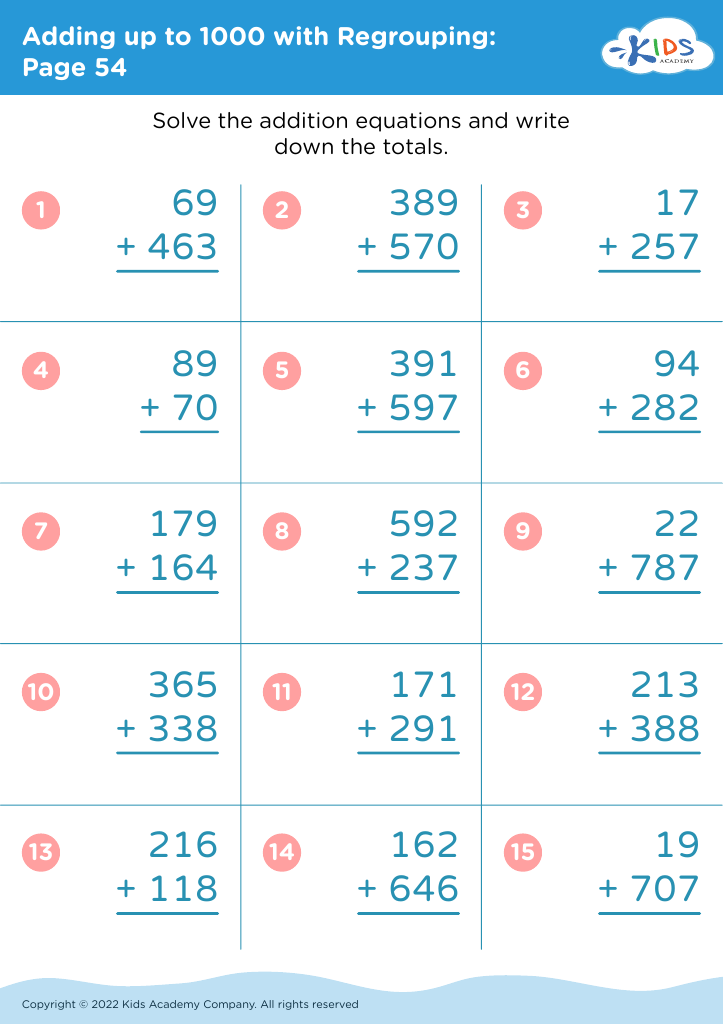
Adding up to 1000 with Regrouping: Page 54
Worksheet
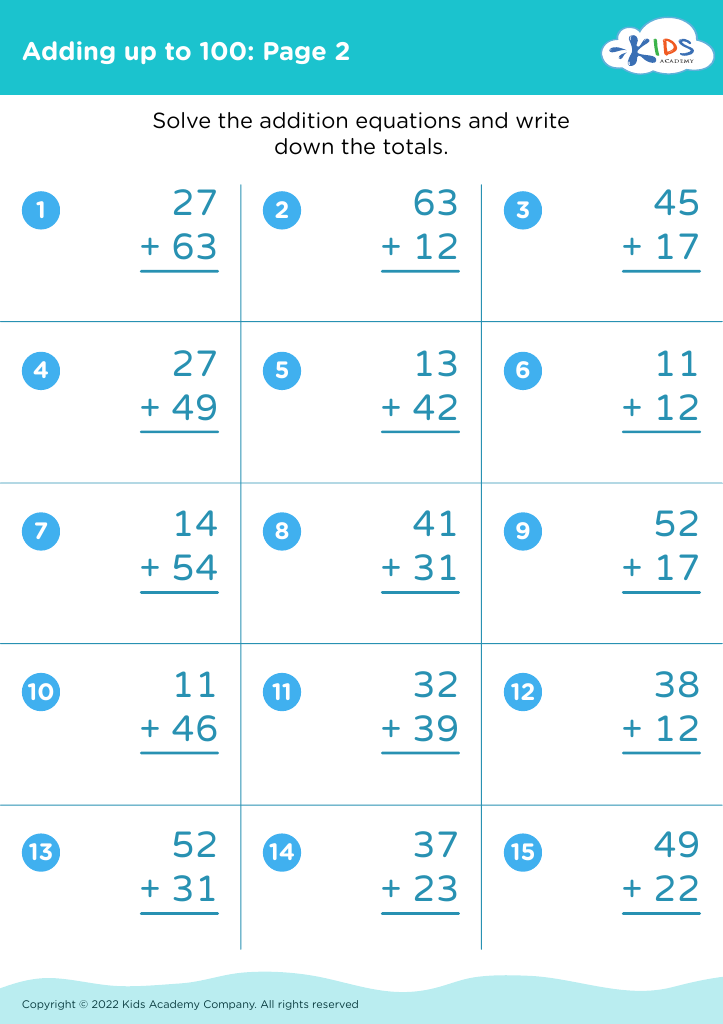
Adding up to 100: Page 2

Adding up to 100: Page 2

Adding up to 100: Page 2
Worksheet
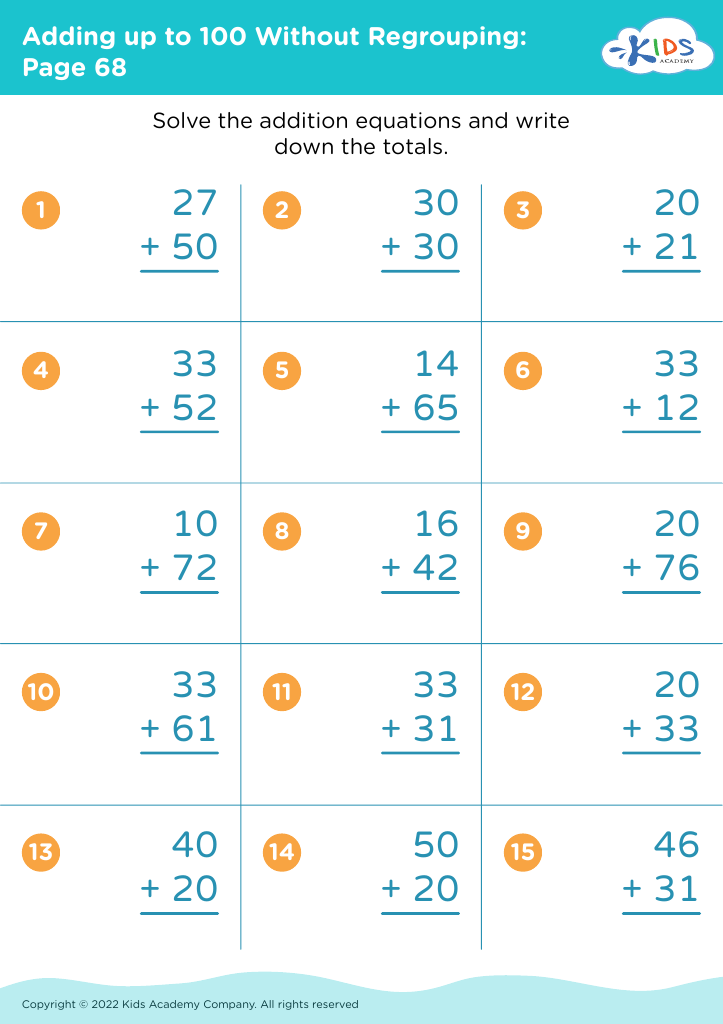
Adding up to 100 Without Regrouping: Page 68
Worksheet
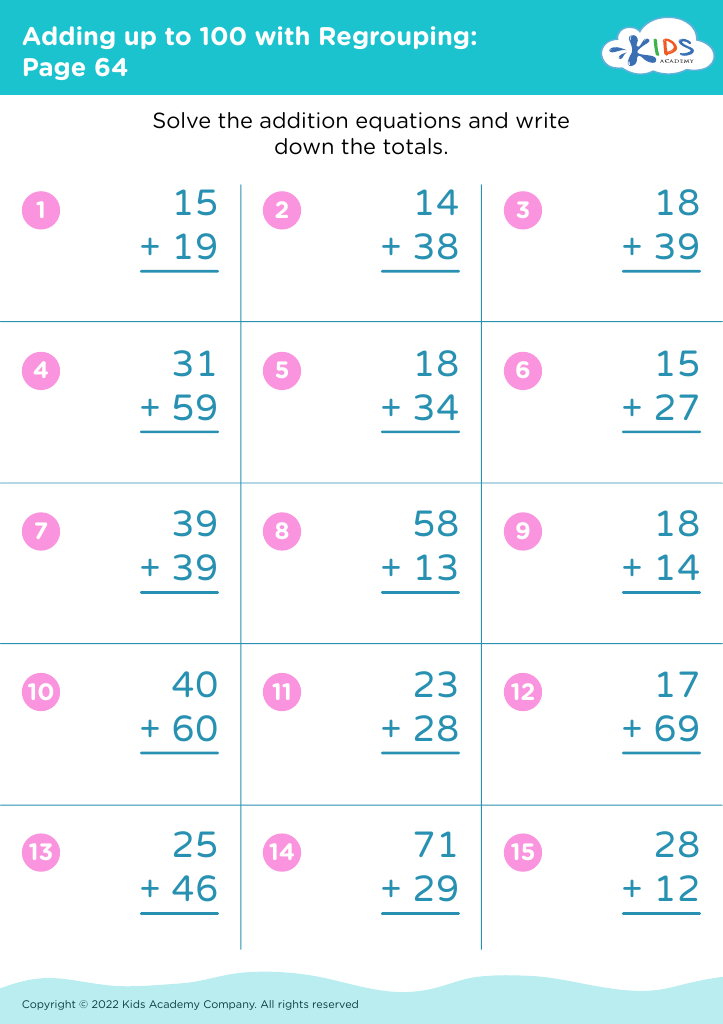
Adding up to 100 with Regrouping: Page 64
Worksheet
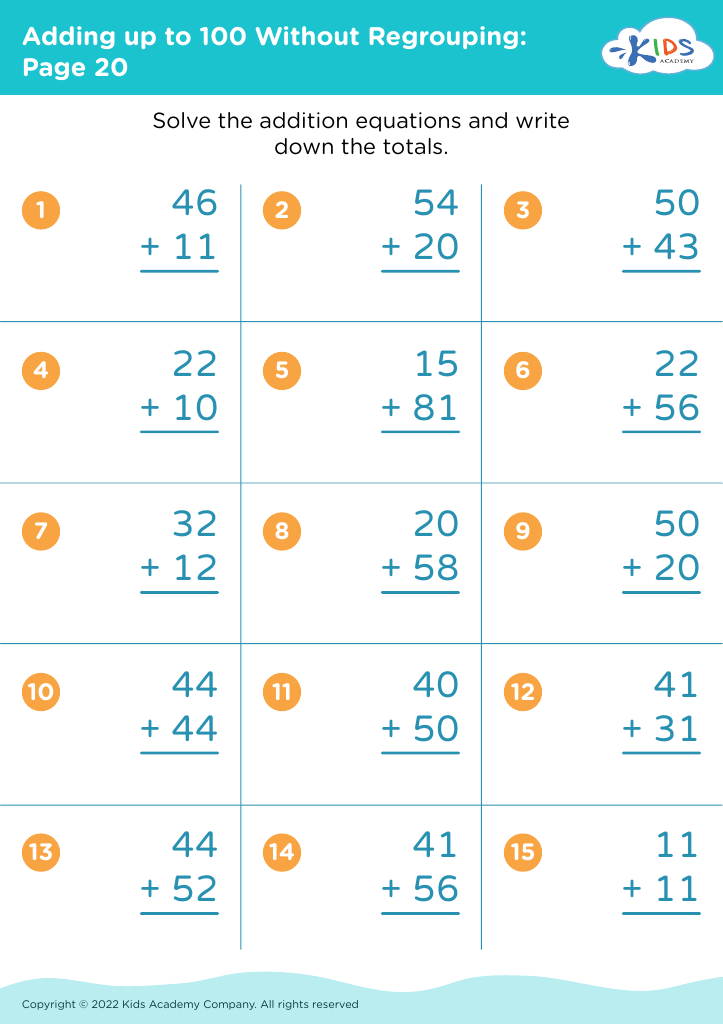
Adding up to 100 Without Regrouping: Page 20
Worksheet
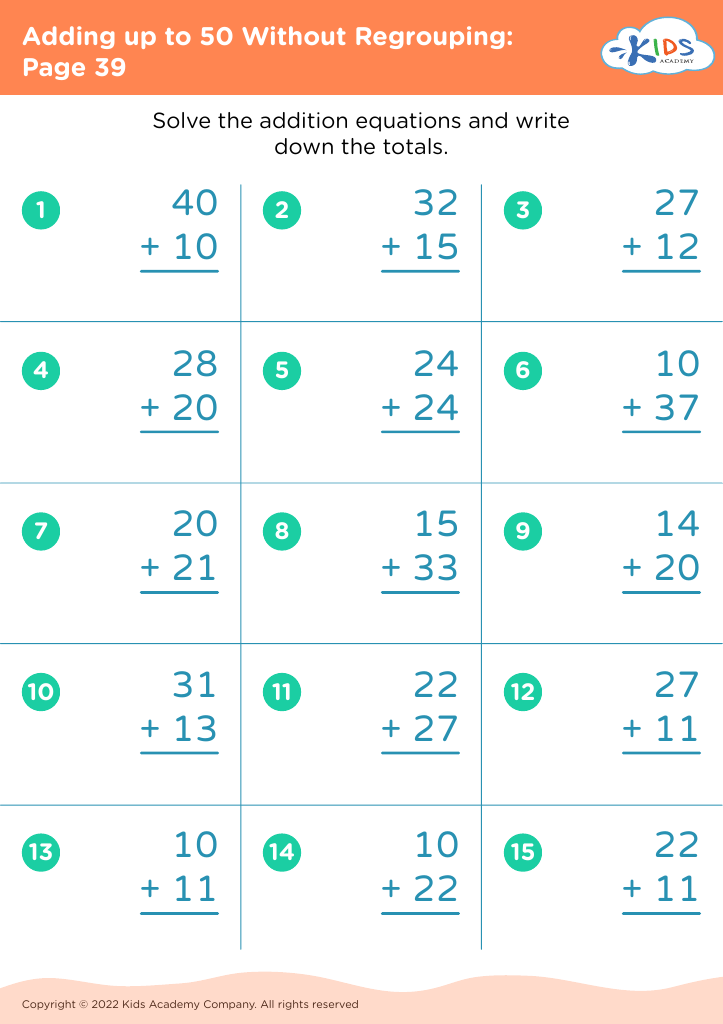
Adding up to 50 Without Regrouping: Page 39
Worksheet
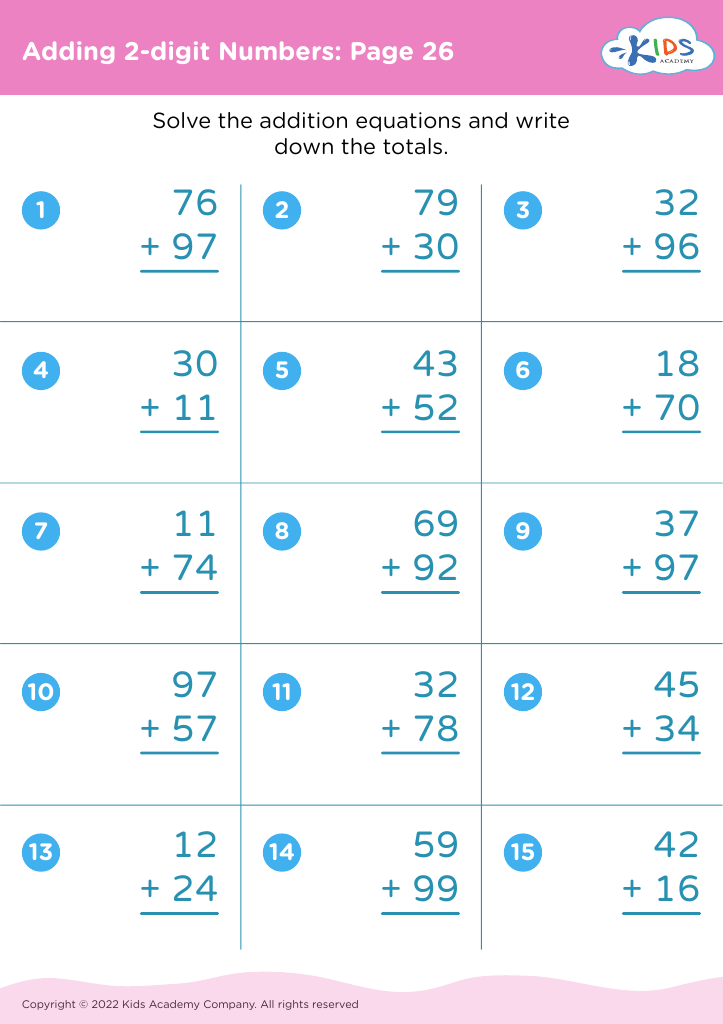
Adding 2-digit Numbers: Page 26

Adding 2-digit Numbers: Page 26

Adding 2-digit Numbers: Page 26
Worksheet
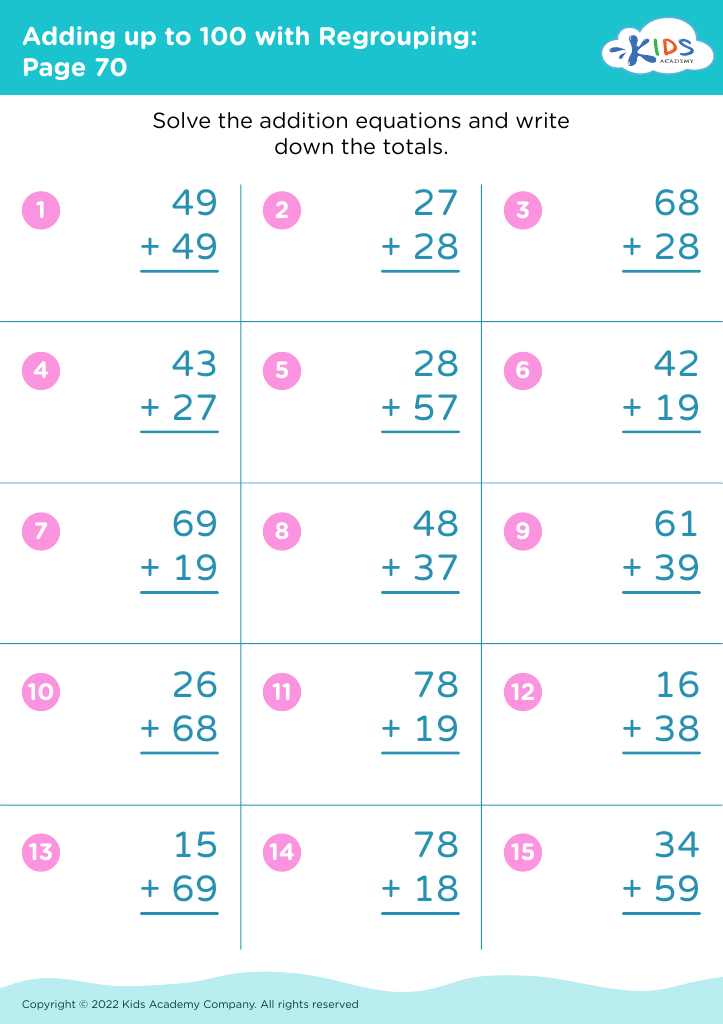
Adding up to 100 with Regrouping: Page 70
Worksheet
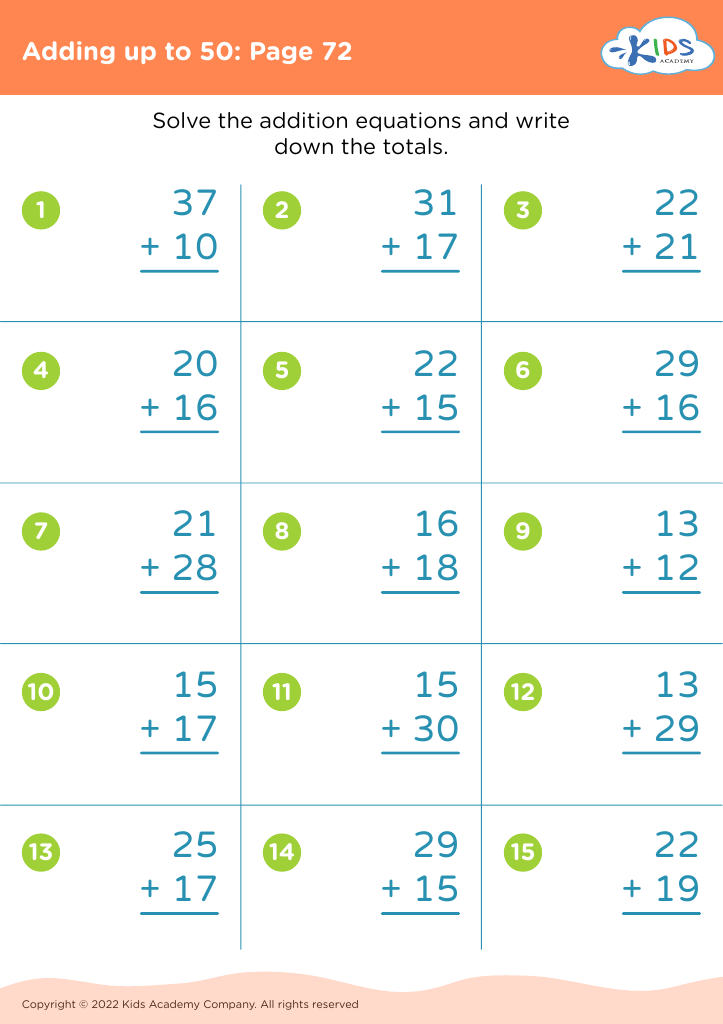
Adding up to 50: Page 72

Adding up to 50: Page 72

Adding up to 50: Page 72
Worksheet
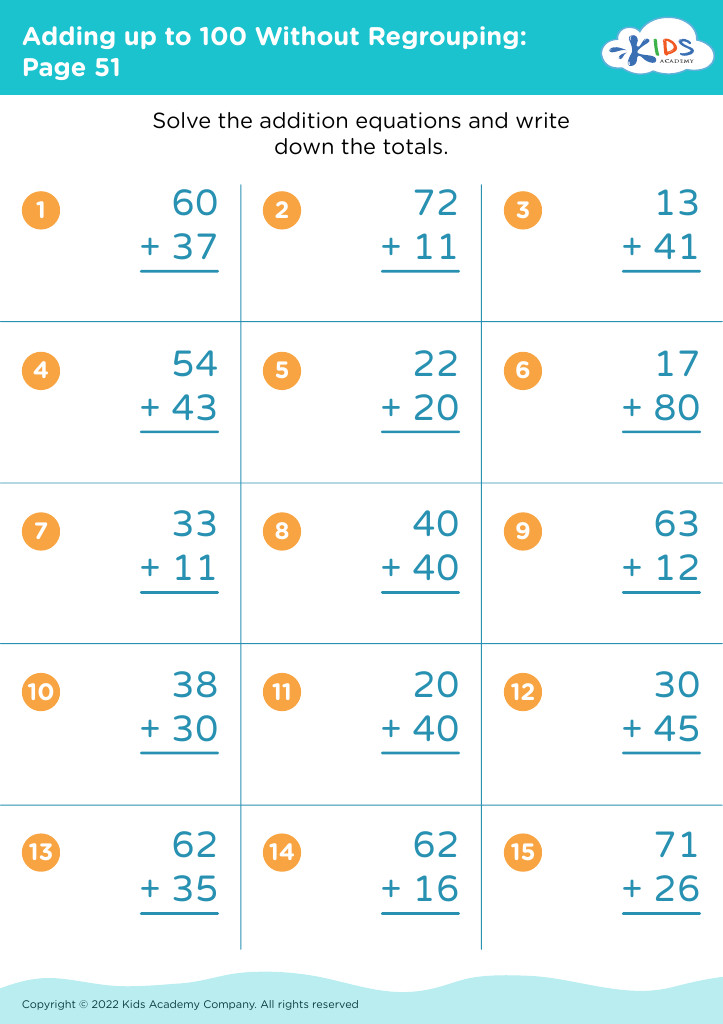
Adding up to 100 Without Regrouping: Page 51
Worksheet
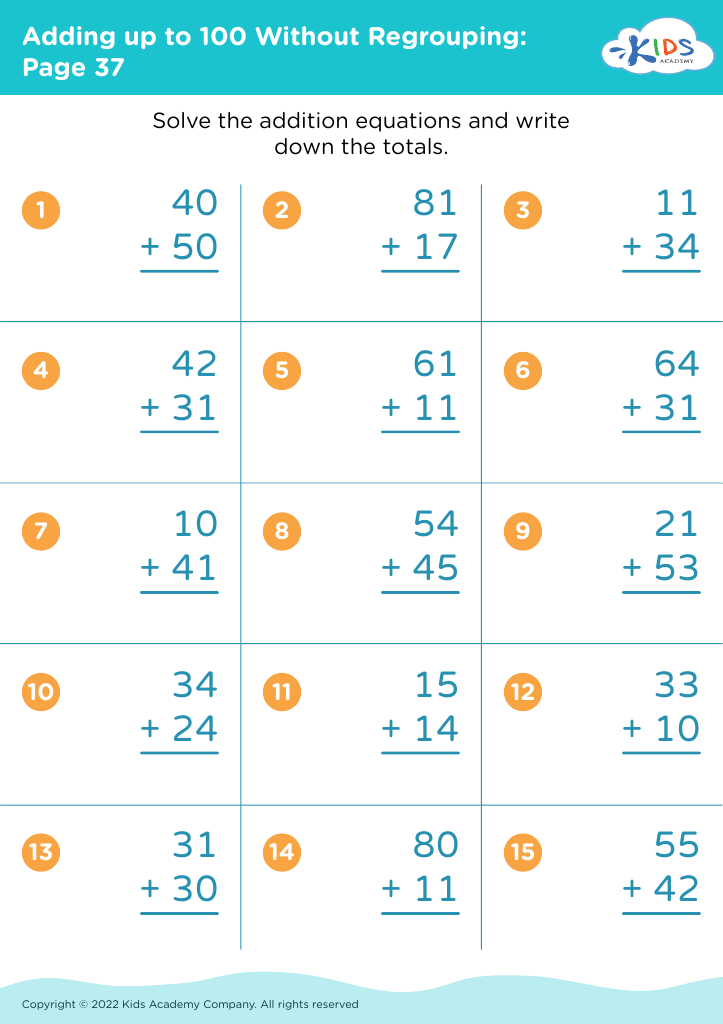
Adding up to 100 Without Regrouping: Page 37
Worksheet
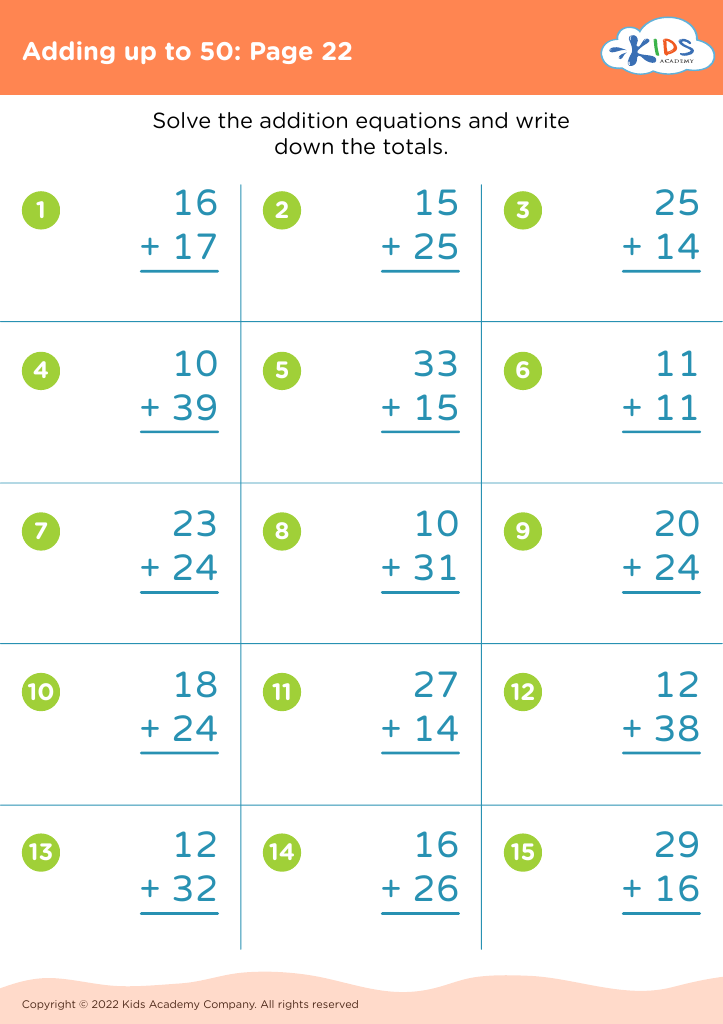
Adding up to 50: Page 22

Adding up to 50: Page 22

Adding up to 50: Page 22
Worksheet
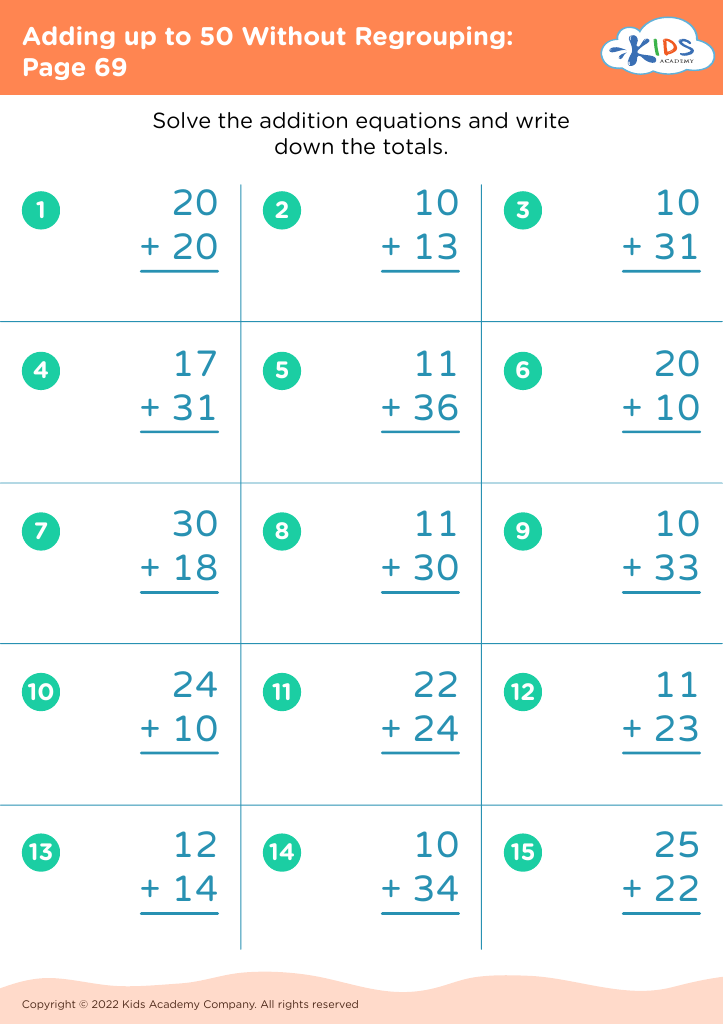
Adding up to 50 Without Regrouping: Page 69
Worksheet
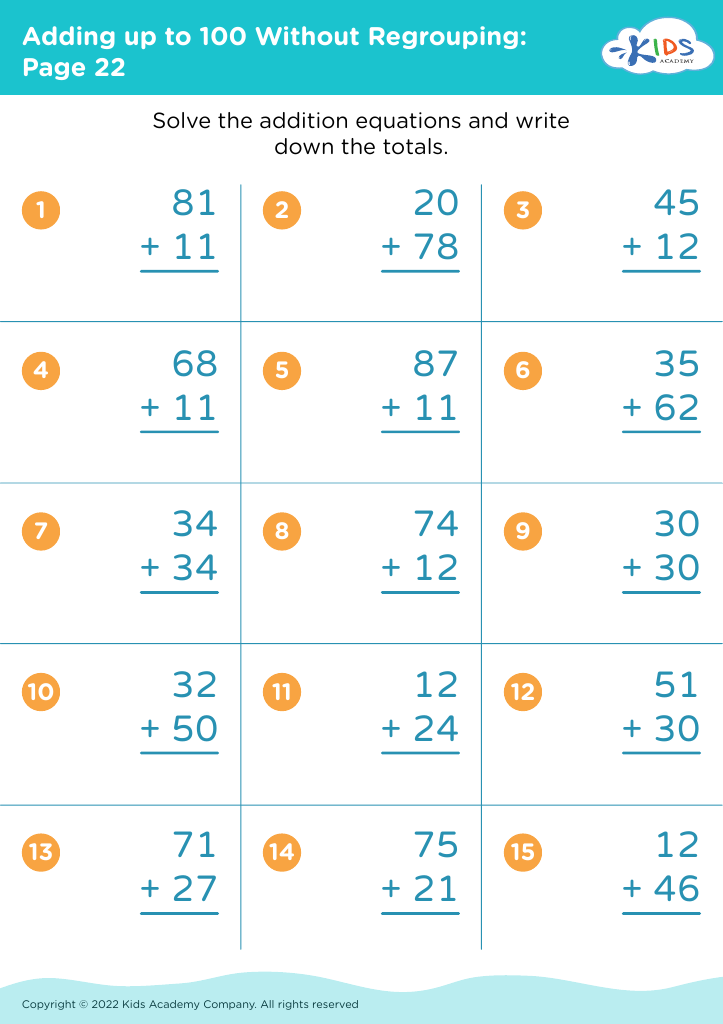
Adding up to 100 Without Regrouping: Page 22
Worksheet
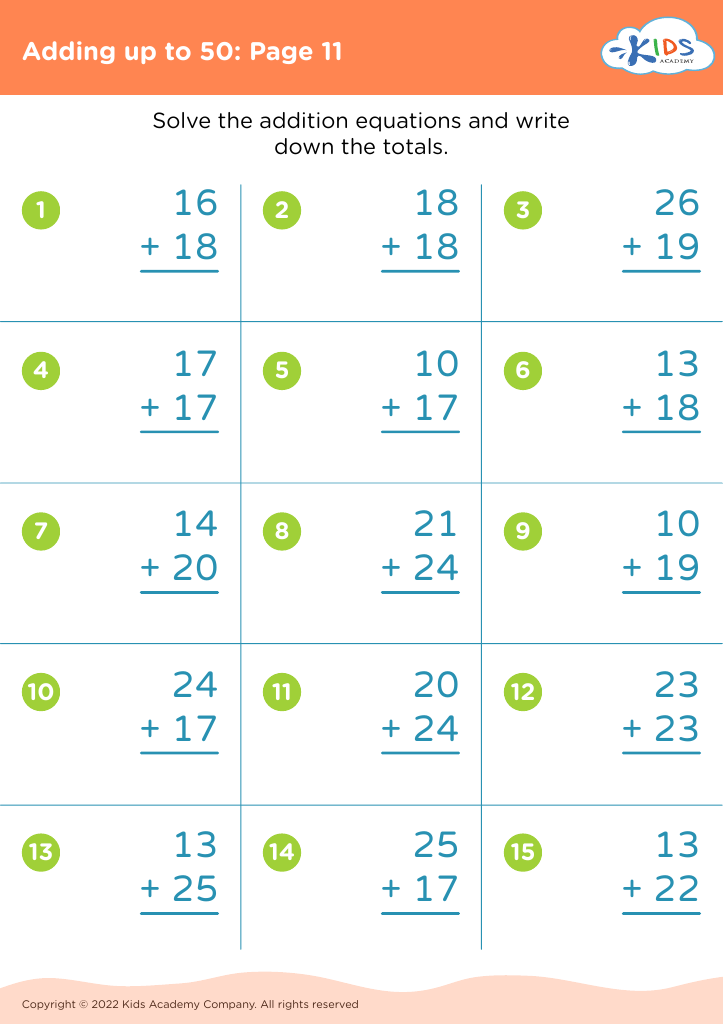
Adding up to 50: Page 11

Adding up to 50: Page 11

Adding up to 50: Page 11
Worksheet
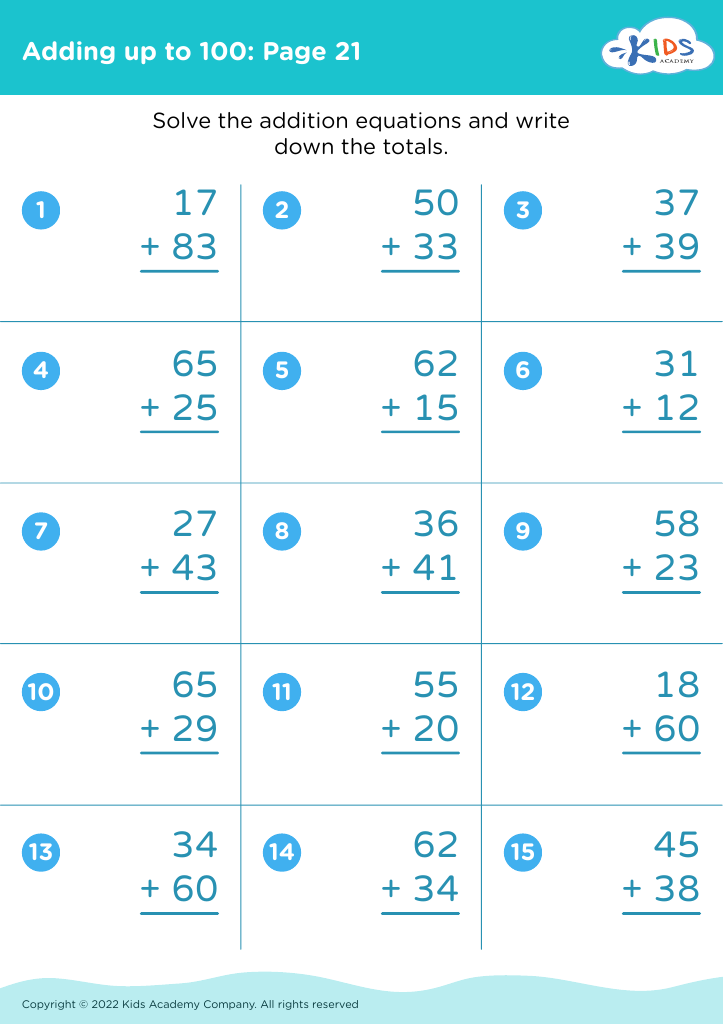
Adding up to 100: Page 21

Adding up to 100: Page 21

Adding up to 100: Page 21
Worksheet
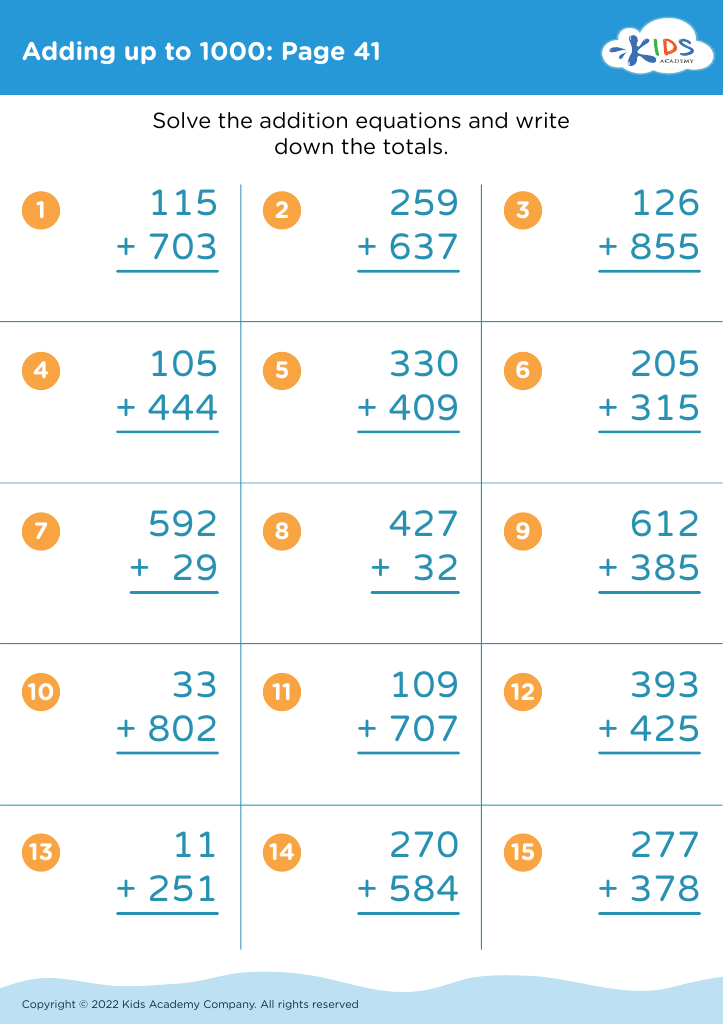
Adding up to 1000: Page 41

Adding up to 1000: Page 41

Adding up to 1000: Page 41
Worksheet
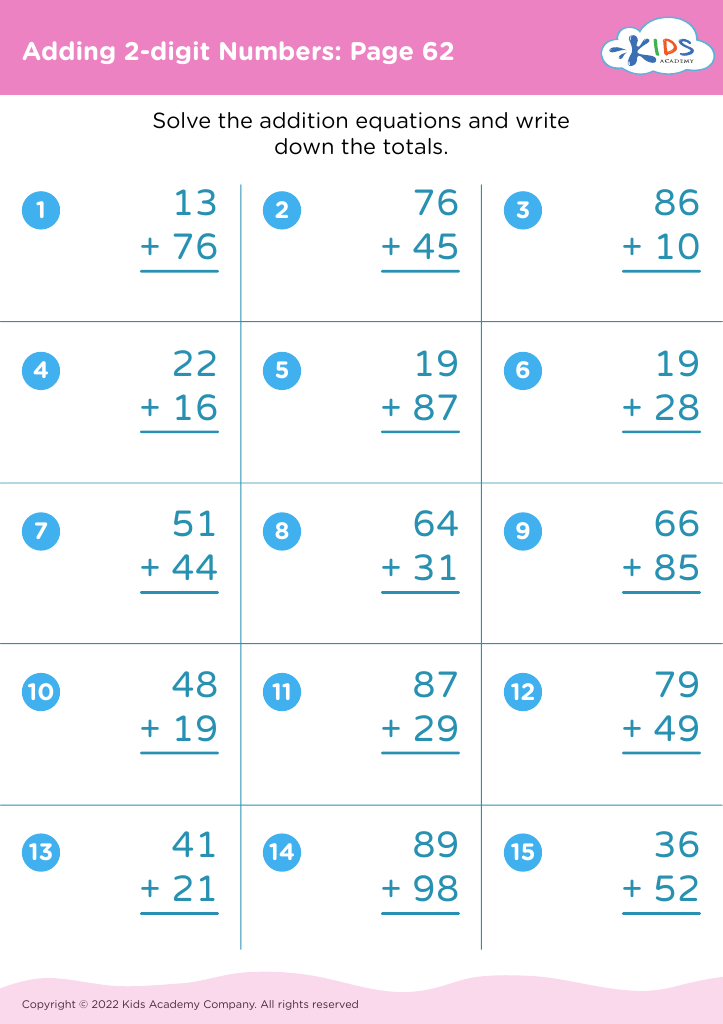
Adding 2-digit Numbers: Page 62

Adding 2-digit Numbers: Page 62

Adding 2-digit Numbers: Page 62
Worksheet
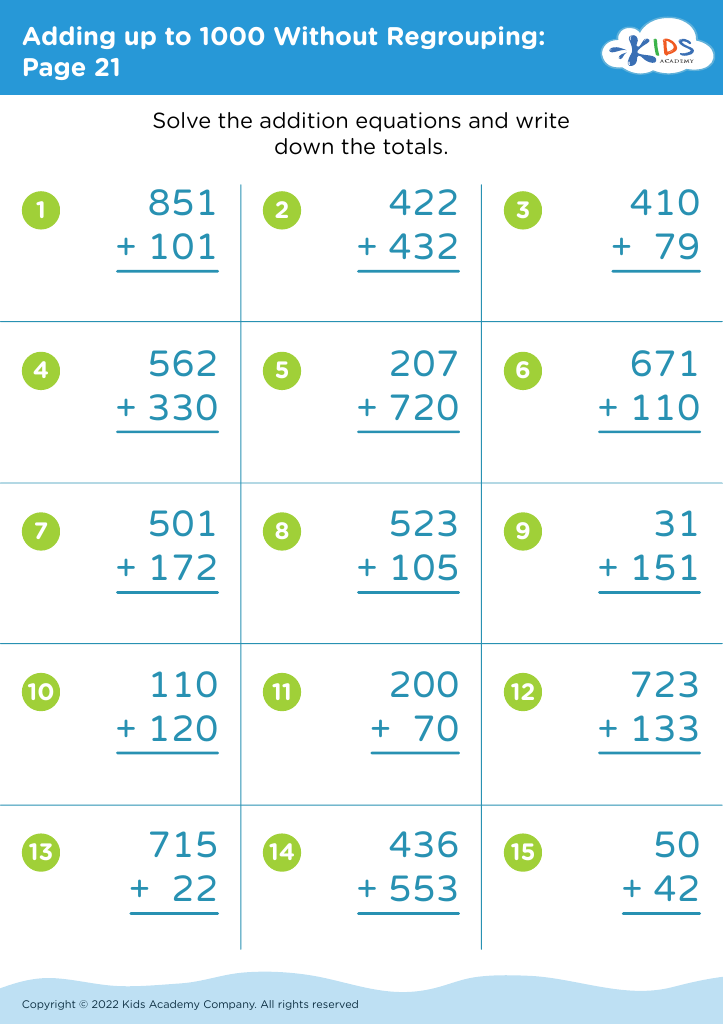
Adding up to 1000 Without Regrouping: Page 21
Worksheet
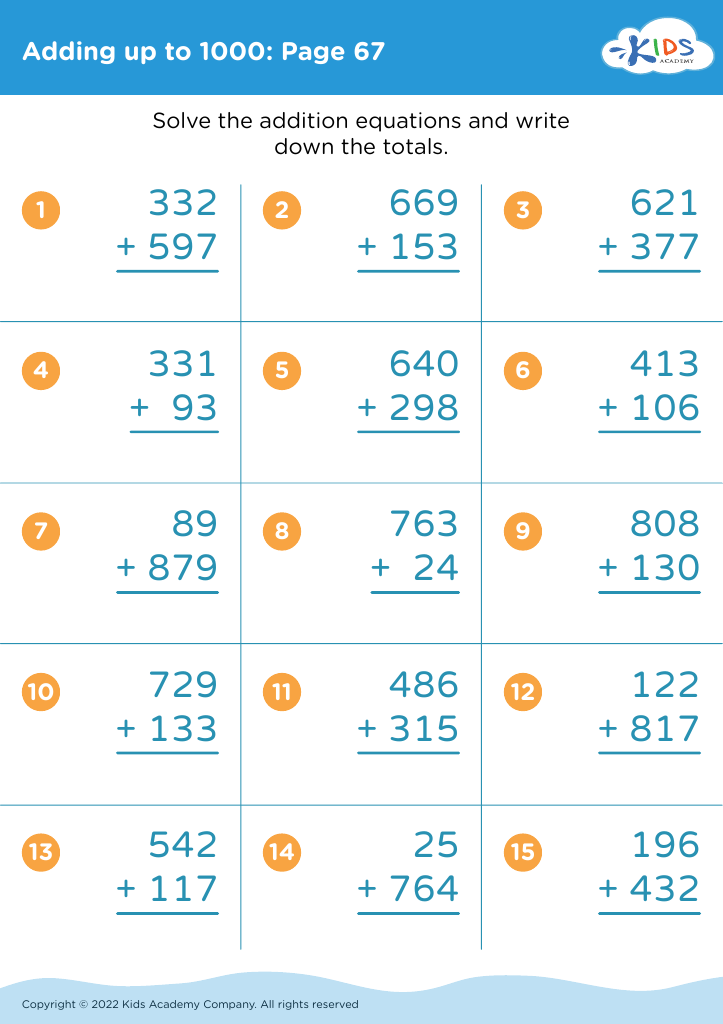
Adding up to 1000: Page 67

Adding up to 1000: Page 67

Adding up to 1000: Page 67
Worksheet


Understanding multiplication and addition at an early age is crucial for several reasons. First, these fundamental mathematical concepts form the building blocks for more complex problem-solving and reasoning skills. When children ages 4-7 grasp addition, they begin to visualize combining groups, which aids in the development of numerical fluency and mental math abilities. Introducing multiplication early on, even in a basic form, can demystify the concept and help children comprehend that it’s essentially repeated addition. This paves the way for easier learning of times tables and division later on.

Moreover, early proficiency in math contributes significantly to self-confidence. When children feel comfortable with math operations, they are more likely to view math positively, reducing anxiety and fostering a growth mindset toward learning. Both teachers and parents should also recognize that early math skills are predictive of future academic success. Young learners with a strong foundation in addition and early multiplication are better prepared for higher-level mathematical concepts and other STEM-related subjects.

By embedding these basics within engaging and relatable activities, parents and teachers not only support cognitive development but also encourage a lifelong appreciation for math. This balanced understanding lays a solid foundation for educational achievement and practical life skills.