Understanding sequence Addition Worksheets for Ages 4-7
4 filtered results
-
From - To
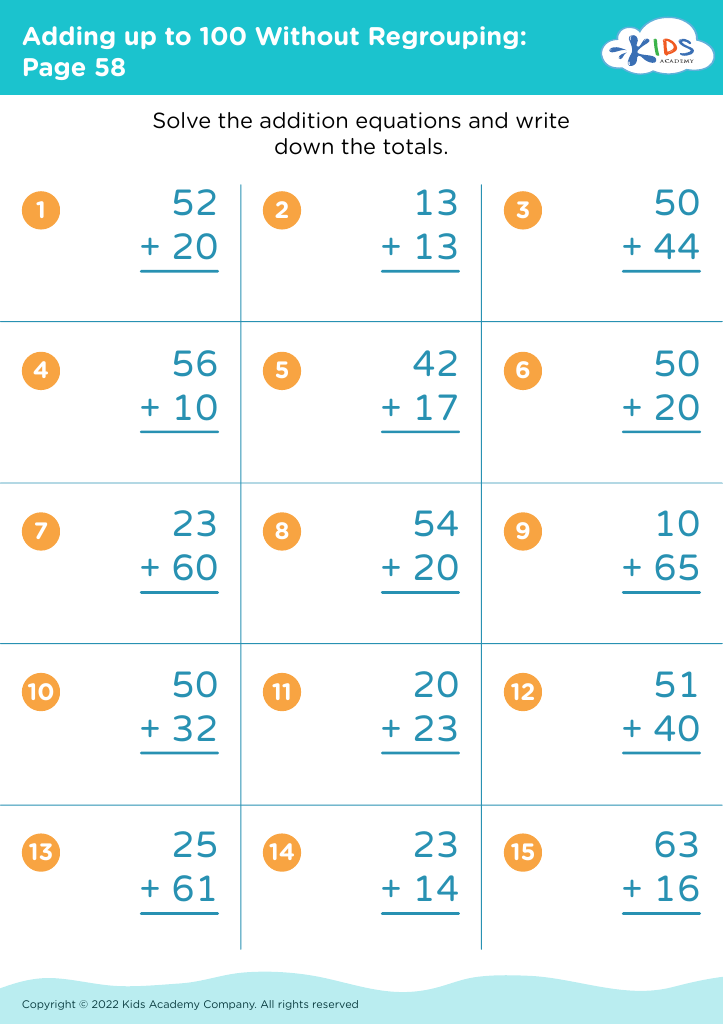
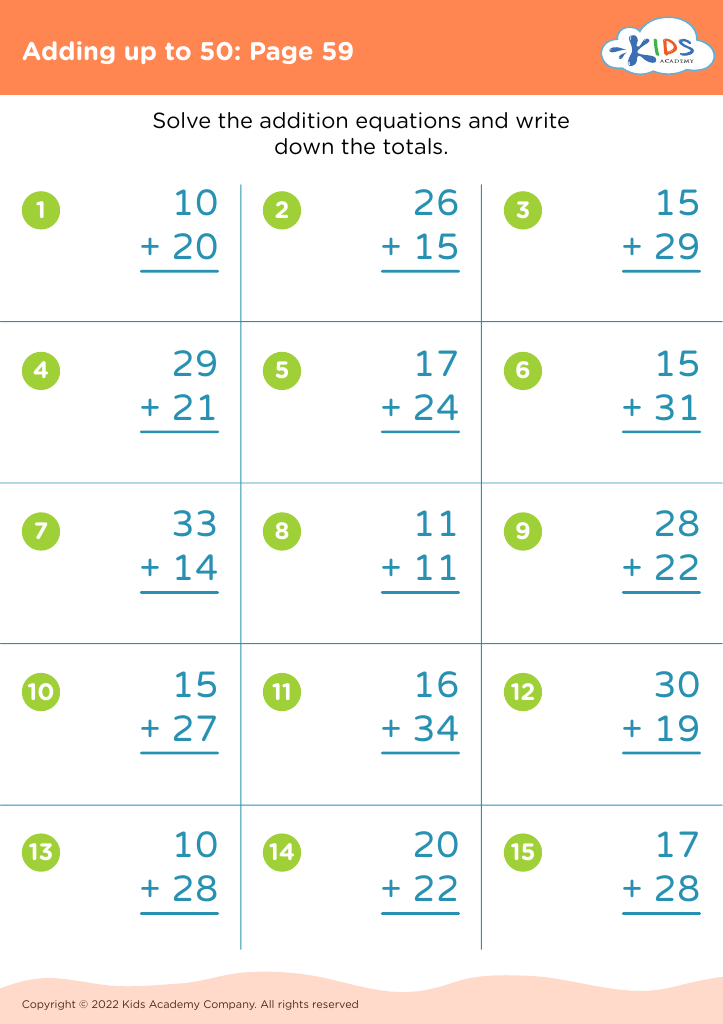
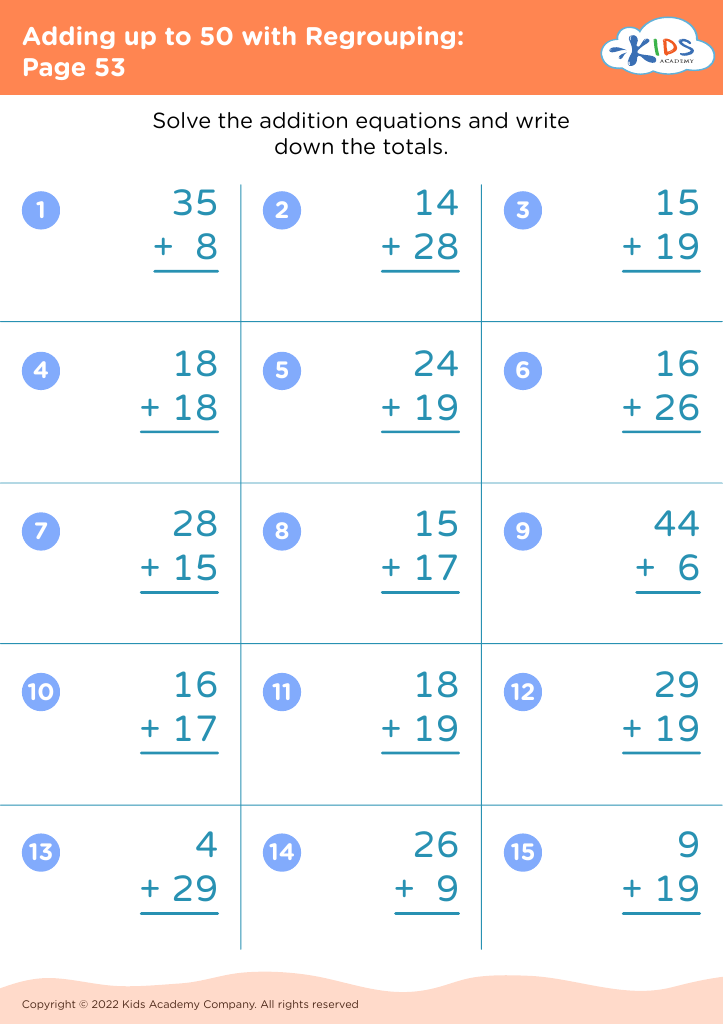
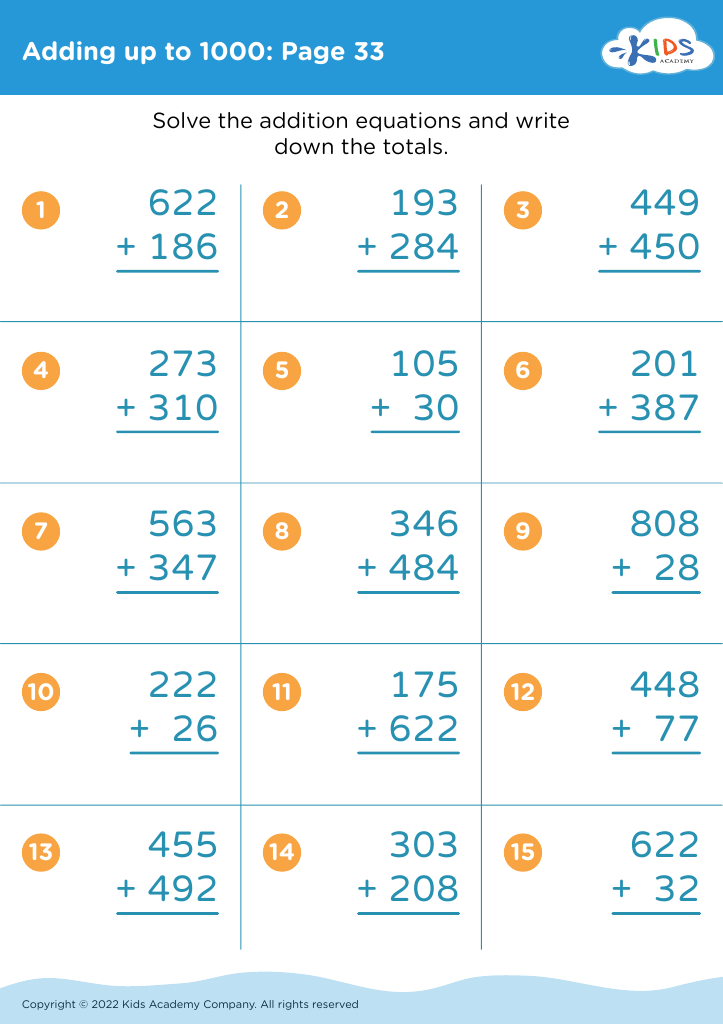
Explore our engaging "Understanding Sequence Addition Worksheets" designed for children aged 4-7. These worksheets help young learners grasp the concept of addition through structured sequences. With vibrant illustrations and age-appropriate exercises, kids can practice their math skills in a fun and interactive way. The worksheets encourage recognizing patterns and logical thinking, laying a solid foundation for future math success. Perfect for home or classroom use, these resources support early math education and boost confidence in young learners. Discover how these worksheets can cultivate a love for learning while making math enjoyable and accessible for your child!








Understanding sequence addition is crucial for children aged 4-7, as it lays the foundation for their mathematical skills. At this early developmental stage, children are not merely learning to add numbers; they are acquiring the essential cognitive skills necessary for logical reasoning and problem-solving. Sequencing helps children understand that addition is not just about combining quantities but also about recognizing patterns and relationships between numbers.
When parents and teachers encourage the mastery of sequence addition, they are promoting critical thinking. Children learn to see how numbers relate to one another, enhancing their ability to visualize problems and find solutions efficiently. Furthermore, mastering sequence addition contributes to their comfort with numbers, helping demystify mathematics and reducing math anxiety as they advance in later grades.
Socially, activities related to sequence addition allow for cooperative learning. Children often work together in games or group tasks, fostering teamwork and communication skills. Additionally, understanding sequence addition helps children grasp the concept of time, as seen in sequences, fostering their overall cognitive growth.
Overall, prioritizing sequence addition equips children not only with necessary math skills but also with foundational abilities that will serve them across disciplines and throughout their lives. Parents and teachers should recognize its importance and facilitate engaging learning experiences around this concept.








