Vocabulary Building Addition Worksheets for Ages 4-7
5 filtered results
-
From - To
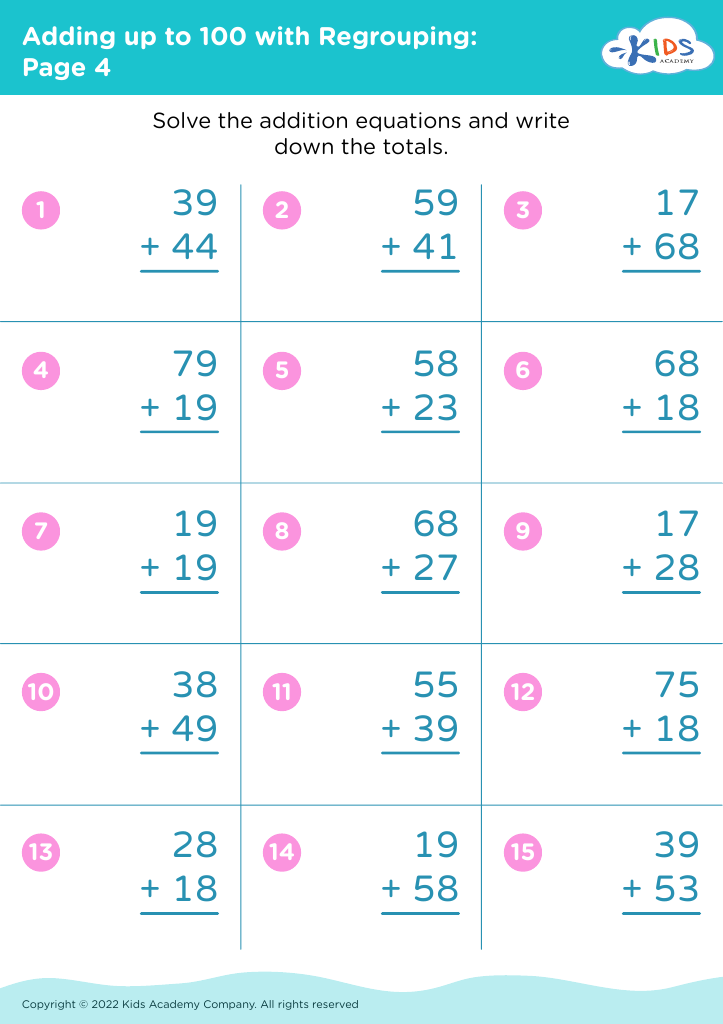
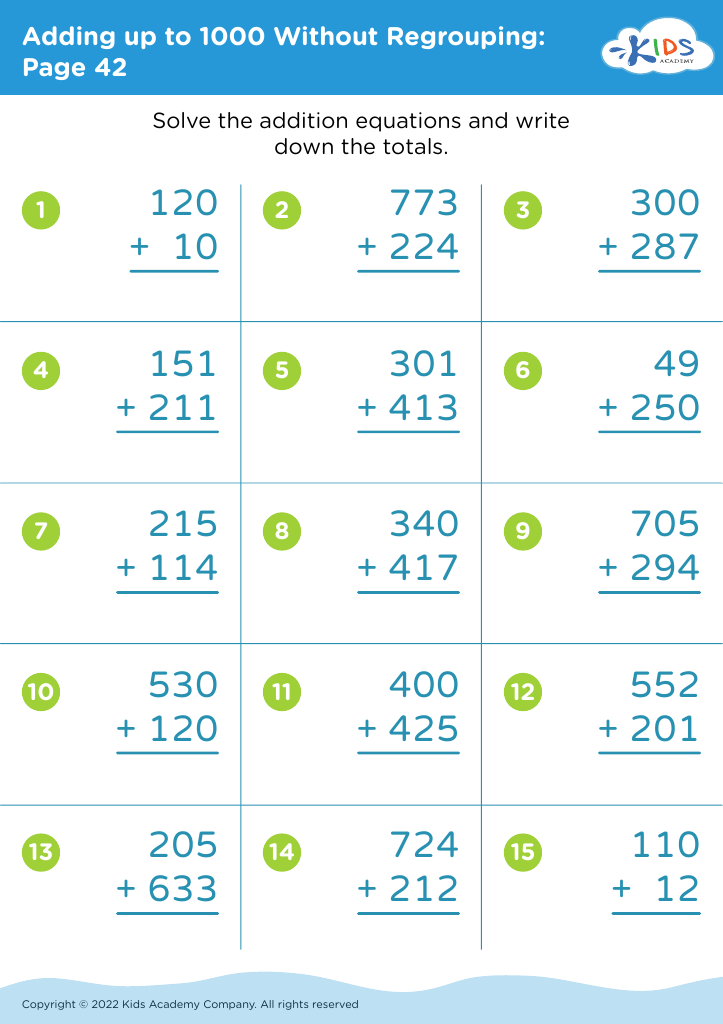
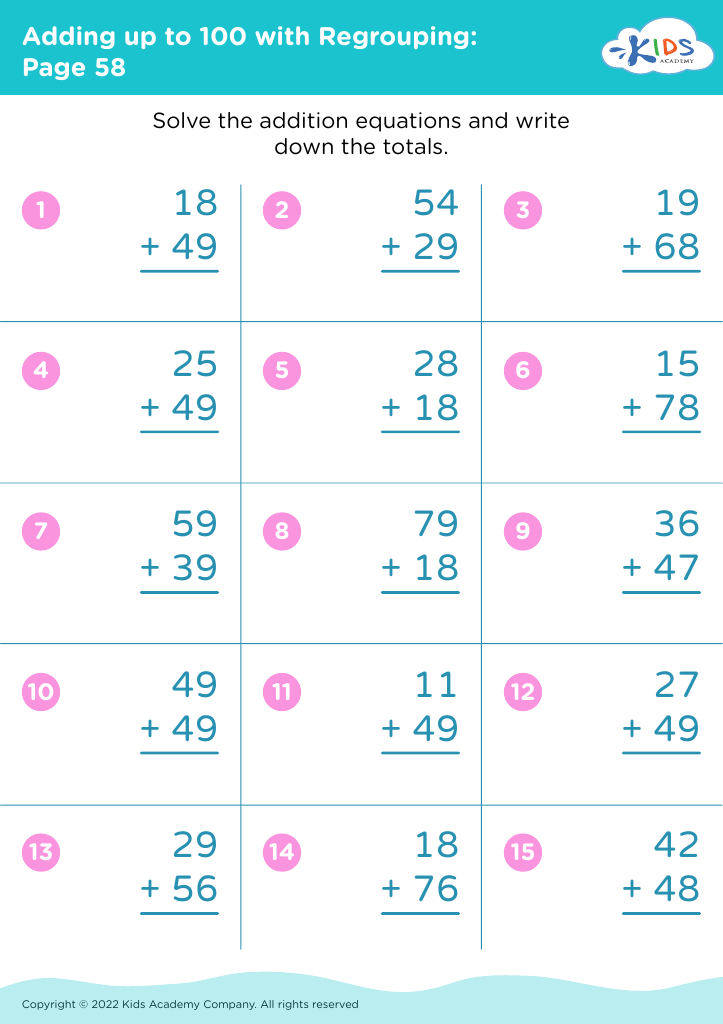
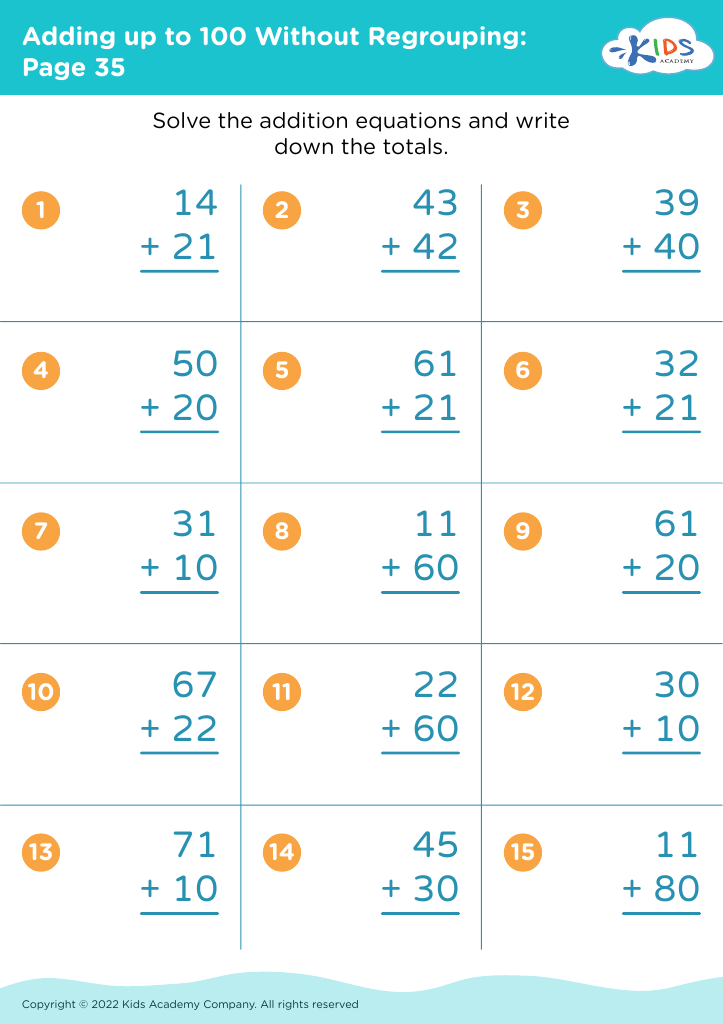
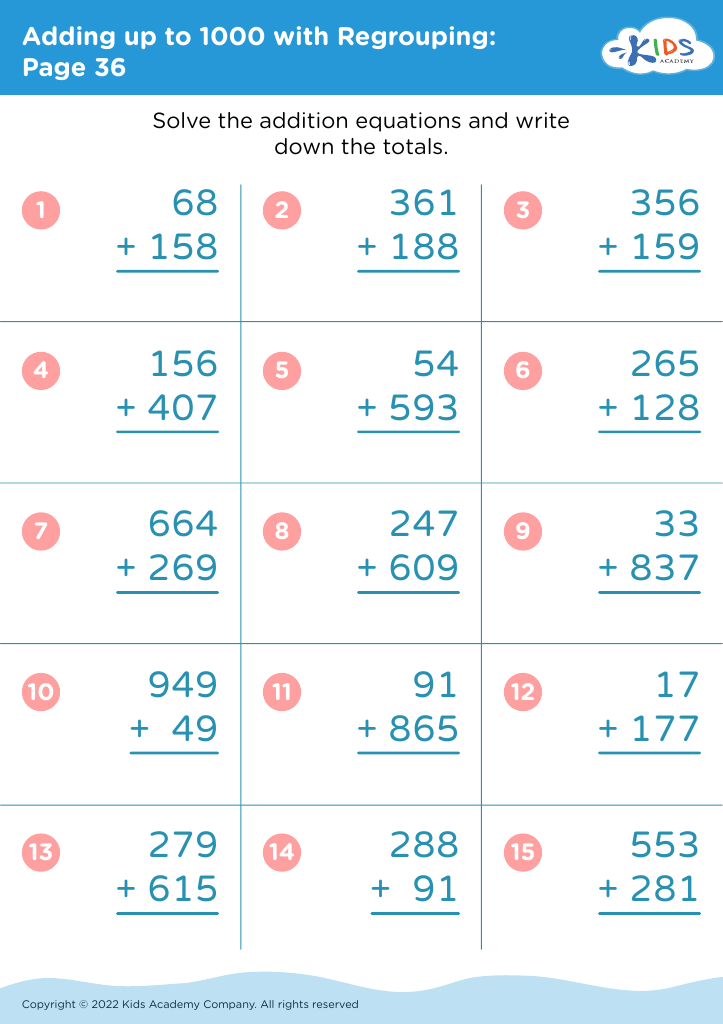
Enhance your child's vocabulary and math skills with our "Vocabulary Building Addition Worksheets" designed for ages 4-7. These engaging worksheets seamlessly combine basic addition concepts with vocabulary development, encouraging young learners to identify and use words while solving math problems. Each activity is crafted to make learning fun, ensuring that children build their language skills through practice. Our resources promote critical thinking, enhance comprehension, and foster a love for learning. Perfect for at-home practice or classroom use, these worksheets are a valuable tool for educators and parents alike. Start building a strong foundation in both math and language today!








Vocabulary building for children aged 4 to 7 is crucial for their cognitive and social development. During these formative years, children are like sponges, soaking up language and concepts that lay the foundation for future academic success. A robust vocabulary enables them to express their thoughts, understand instructions, and engage in conversations more effectively.
Parents and teachers play vital roles in this development. By focusing on vocabulary building, they provide children with the tools needed for reading comprehension and critical thinking. These skills are essential as children transition into more complex subjects in school. Enhanced vocabulary also promotes better communication skills, allowing children to articulate their emotions and ideas, which fosters social interactions and emotional intelligence.
Increased vocabulary knowledge contributes to increased confidence in social situations and classroom participation. Furthermore, engaging children in fun, interactive vocabulary-building activities can stimulate their interest in learning and education, creating lifelong learners.
By staying invested in vocabulary development, parents and teachers equip children with essential skills for navigating their world. Supporting word acquisition fosters a love for language, significantly influencing their ability to excel academically and socially throughout their lives.








