
Word Recognition Addition Worksheets for Ages 4-7
5 filtered results
Difficulty Level
Grade
Age
-
From - To
Subject
Activity
Standards
Introducing our engaging Word Recognition Addition Worksheets, specially designed for children aged 4-7! These worksheets combine word recognition and basic addition, making learning both fun and educational. Young learners will enhance their vocabulary while practicing essential math skills, fostering a well-rounded approach to early learning. Each worksheet features vibrant illustrations and age-appropriate problems that capture children's interest and stimulate their minds. Parents and educators can easily incorporate these resources into home or classroom activities, ensuring that students build confidence in both language and math. Help your child embark on an exciting educational journey with our interactive and exciting addition worksheets today!
Favorites
With answer key
Interactive
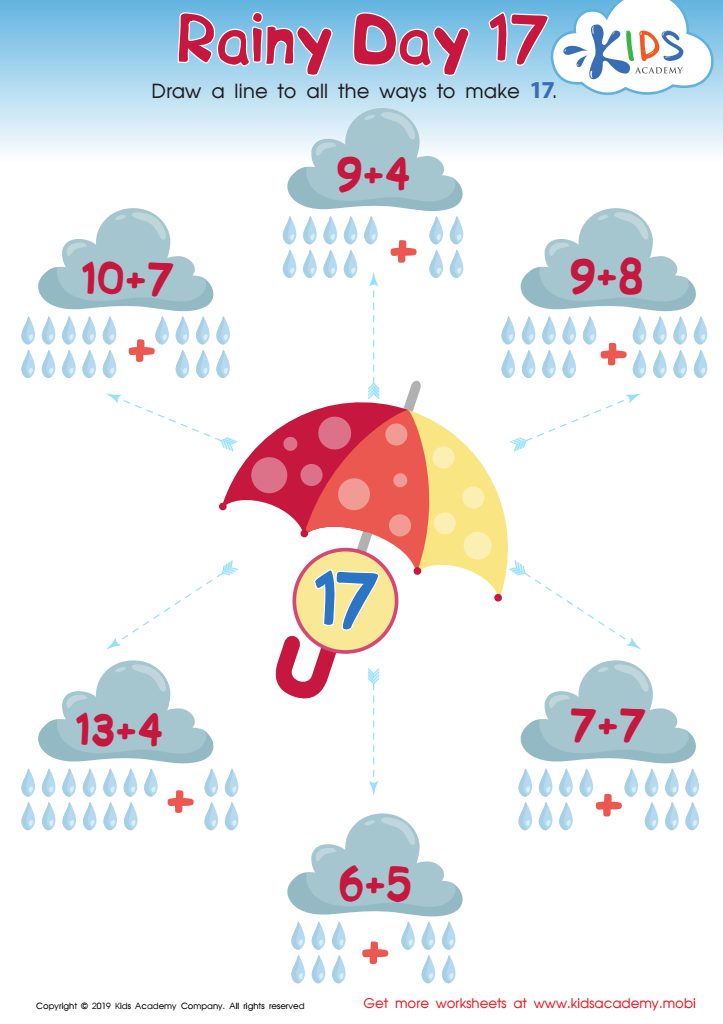
Rainy Day 17 Worksheet
Assist your kids with the 6 equations given. Each cloud displays the sum of two numbers, some of which make 17. Guide them to figure out the total of both numbers when added and draw a line to the umbrella in the center to illustrate the different ways to make 17. This activity will sharpen their addition skills.
 Assign to My Students
Rainy Day 17 Worksheet
Worksheet
Join Kids Academy for Free
Who is primarily going to use this learning content?







.jpg)
Word recognition is a vital skill for children aged 4 to 7, serving as a foundational element of literacy development. At this critical stage, children are developing the ability to quickly and accurately identify words, which significantly impacts their reading comprehension and overall academic success. Parents and teachers should care about word recognition because it lays the groundwork for lifelong learning and literacy.
Improving word recognition helps children decode words effortlessly, allowing them to focus on understanding the meaning of texts rather than struggling with pronunciation. This skill fosters confidence and encourages a love for reading, essential for overall educational success. Moreover, strong word recognition skills are closely linked to higher achievement in other subject areas as reading proficiency is fundamental to accessing and understanding content in all fields.
Furthermore, early interventions in word recognition can help identify learning difficulties, enabling timely support and tailored instruction. Reading together at home and incorporating engaging activities in the classroom can strengthen these skills, creating a positive cycle of learning. Involving parents and teachers in this aspect of literacy not only accelerates children’s progress but also promotes a collaborative approach to education, benefiting the child's social, emotional, and cognitive development.








