Filters

31 filtered results

Clear all filters
Favorites
With answer key
Interactive

31 filtered results

Difficulty Level

Grade


Check out this FREE Trial Lesson on Numbers for age 4-7!

Add using Place Value

Favorites
With answer key
Interactive
  • 4-7
  • Addition Practice
  • Numbers
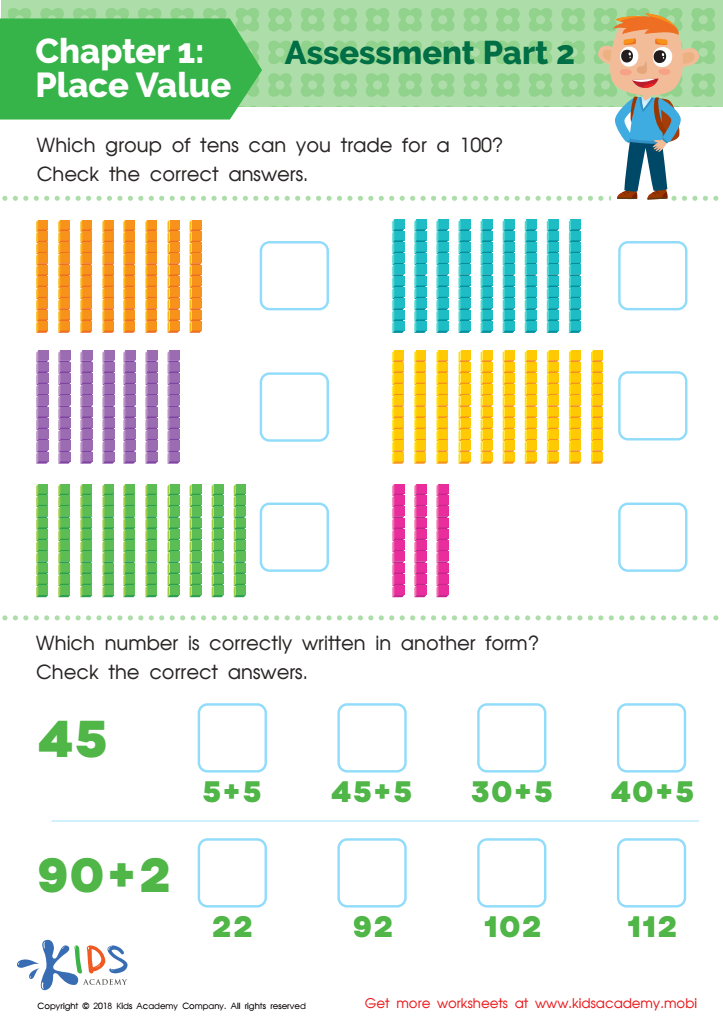
Place Value: Chapter 2 Worksheet

Place Value: Chapter 2 Worksheet

Place value is a key math topic. If your child needs more practice, use this worksheet. It challenges them to figure out which group of tens equals a 100, then check the answer and move to the next question.
Place Value: Chapter 2 Worksheet
Worksheet
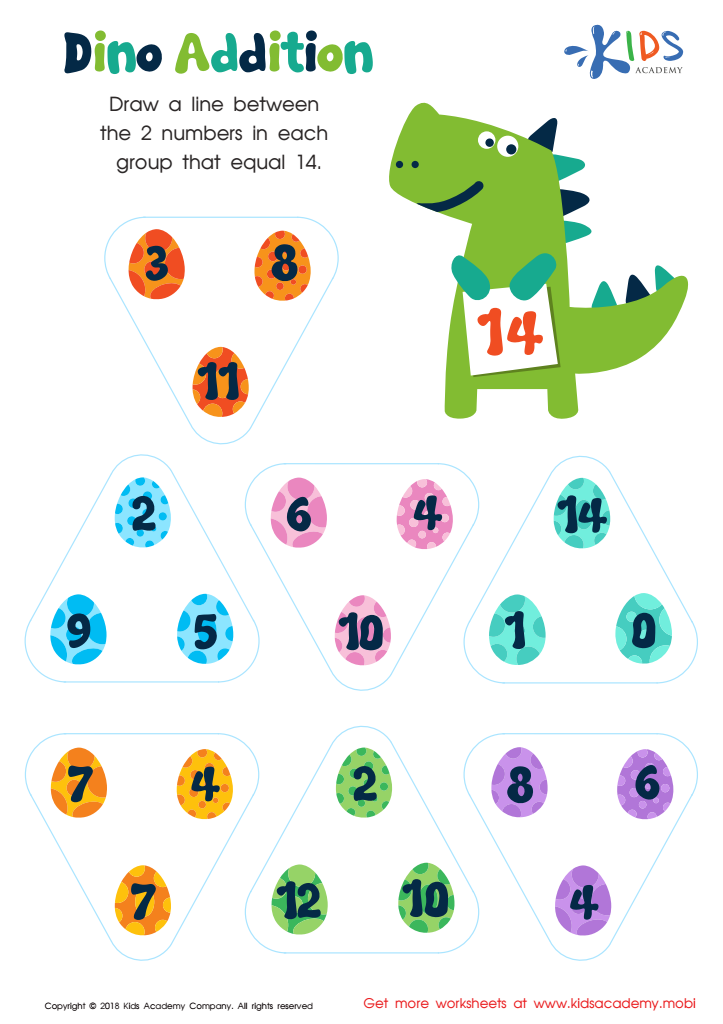
Dino Addition Worksheet

Dino Addition Worksheet

Kids can have fun with math with this cute PDF worksheet! Each triangle contains three eggs; by adding pairs of eggs together, kids can find the right combination that equals 14 and draw a line linking them. The goal is to help our playful dinosaur find the right eggs to make 14! It's a great way to practice addition and have a motivating purpose.
Dino Addition Worksheet
Worksheet
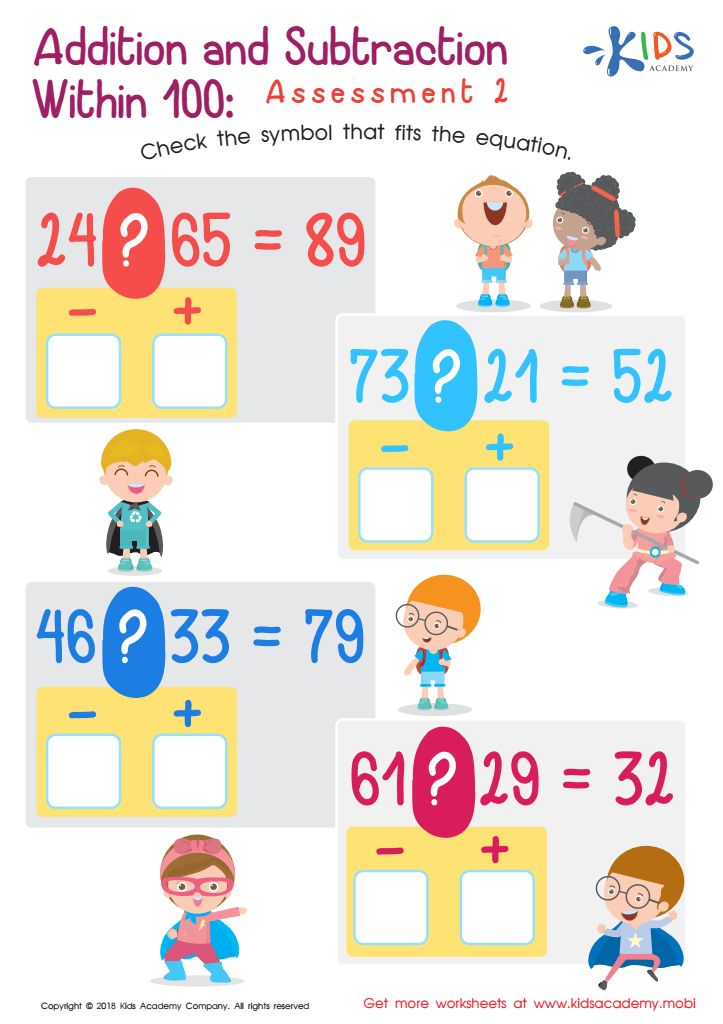
Addition and Subtraction Within 1: Assessment 2 Worksheet

Addition and Subtraction Within 1: Assessment 2 Worksheet

This worksheet is a great tool to help your students learn addition and subtraction. It contains four equations in a printable pdf. Ask your students to review the equation and determine if the symbol between them is a '+' or '-'. Guide them in selecting the correct symbols for each equation.
Addition and Subtraction Within 1: Assessment 2 Worksheet
Worksheet
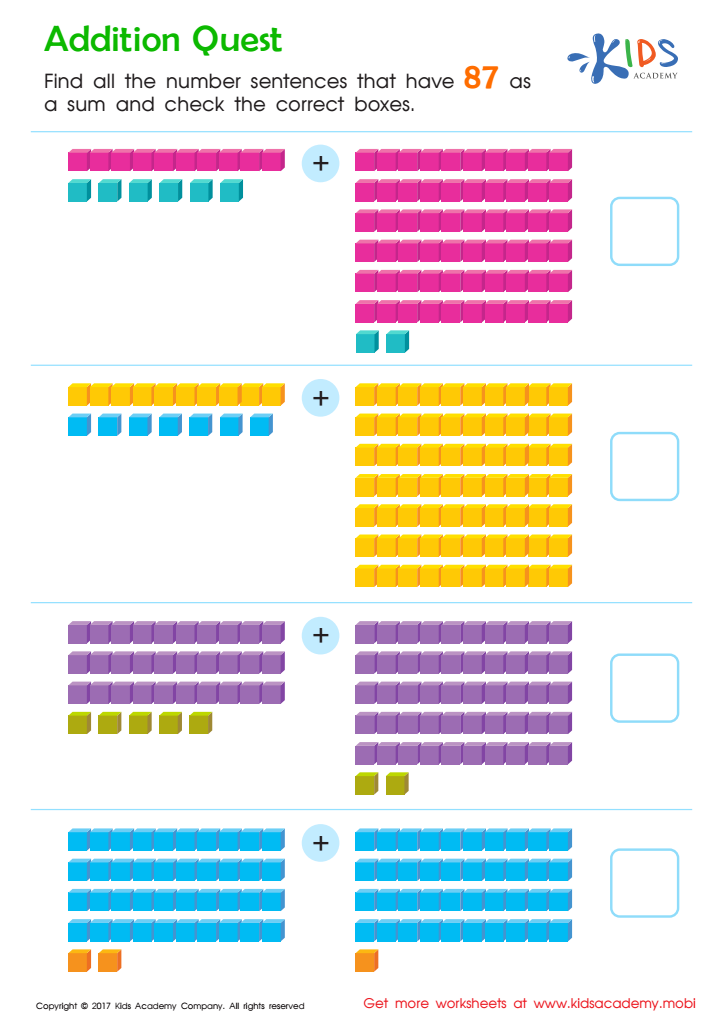
Addition Quest Worksheet: Part 1

Addition Quest Worksheet: Part 1

Send your child on a mission to find the equations that equal 87 with base ten blocks! Download the worksheet to help them add each grouping of blocks and check the correct boxes for the answers. Fun and educational!
Addition Quest Worksheet: Part 1
Worksheet
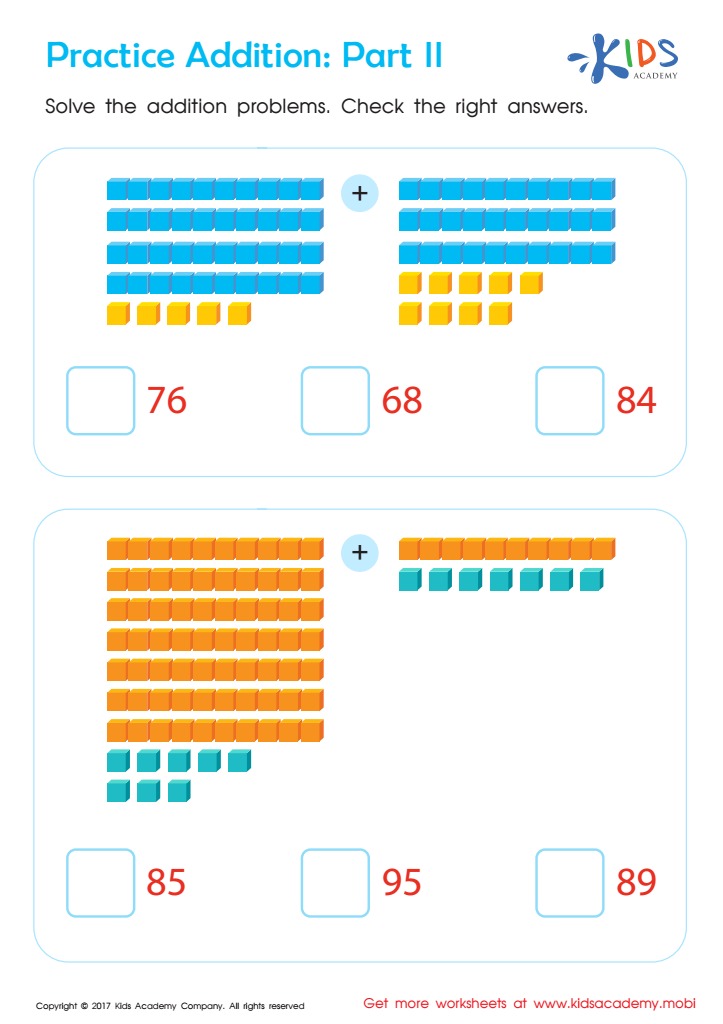
Practice Addition: Part 2 Worksheet

Practice Addition: Part 2 Worksheet

Try this printable worksheet to practice addition! It contains longer, tougher addition equations for 1st graders. Colorful blocks give kids the opportunity to visualize how big numbers are combined. Multiple choice answers help kids gain confidence in problem solving.
Practice Addition: Part 2 Worksheet
Worksheet
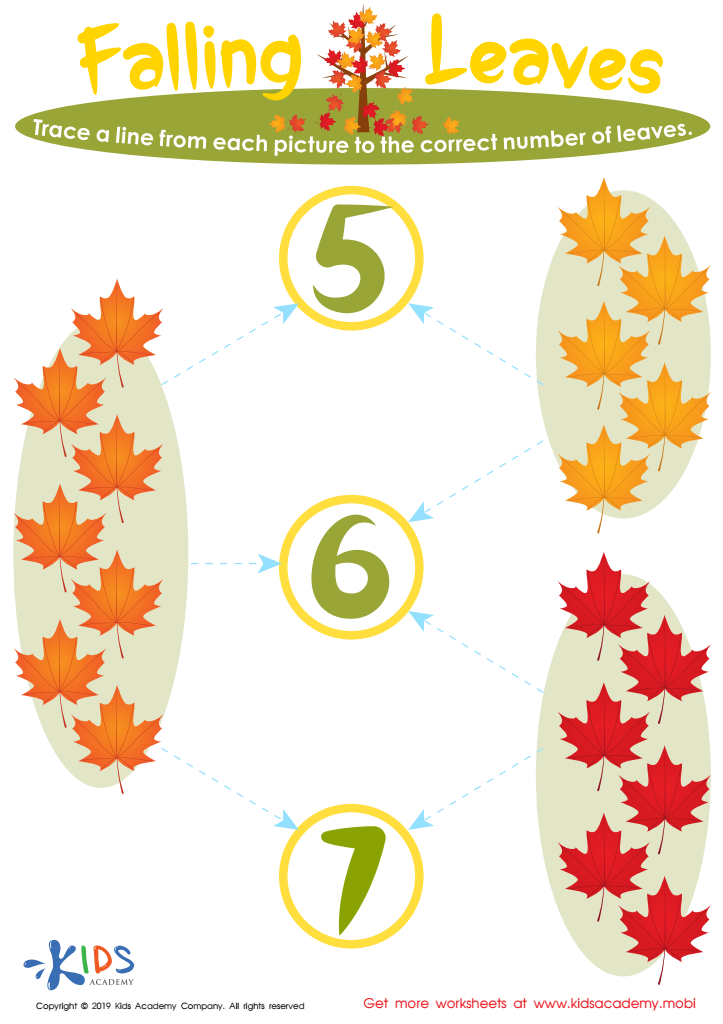
Falling Leaves Worksheet

Falling Leaves Worksheet

Do your kids know the seasons? Ask them to name each one, then test their counting skills with a fun worksheet. Have them count from 1 to 10, then trace a line from each picture to the corresponding number of leaves. It's a great way to check their counting ability!
Falling Leaves Worksheet
Worksheet
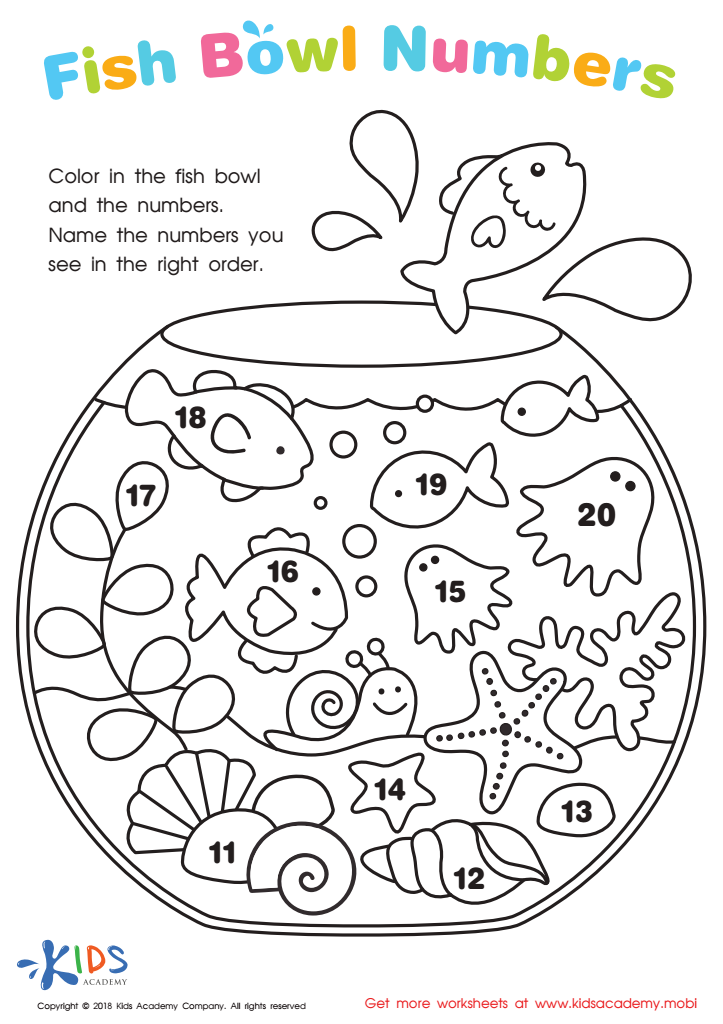
Fish Bowl Numbers Worksheet

Fish Bowl Numbers Worksheet

Let your kids count and color with this fun exercise! Ask them to read out the numbers in the fish bowl in order, then help them pick out colors for the fish bowl and numbers. An easy-peasy activity for kids who can count - they'll have lots of fun!
Download (PDF)
Assign to My Students
Fish Bowl Numbers Worksheet
Worksheet


Parents and teachers should care about addition practice numbers for ages 4-7 because these formative years are crucial for building a strong foundation in mathematical understanding. Developing basic addition skills early contributes significantly to a child's number sense, which is the ability to understand numbers and their relationships. This foundational skill is not only vital for future mathematical learning but also for daily life activities, like telling time, cooking, or budgeting.

Young children are naturally curious about numbers, and structured addition practice can harness this curiosity and turn it into a love for learning. Consistent practice ensures that children gain confidence as they experience the pride of mastering new skills. Importantly, early success in math can foster a positive attitude towards the subject, countering anxiety or resistance that might arise in later grades.

Moreover, addition practice aids in cognitive development by enhancing memory and problem-solving skills. It helps children learn how to approach challenges systematically and persistently, qualities that are beneficial beyond mathematics. For teachers, such practice can be monitored to identify individual strengths and weaknesses, allowing for tailored instruction that can close learning gaps early. In summary, investing effort into addition practice during these years is a strategic move to promote long-term academic achievement and life skills.