Improving math skills Numbers Worksheets for Ages 4-7
4 filtered results
-
From - To
Unlock your child’s number potential with our expertly crafted "Improving Math Skills Numbers Worksheets" for ages 4-7. Designed to make learning fun and engaging, our worksheets are tailored to boost math confidence through colorful and interactive exercises. Let Kids Academy help your little ones build a solid foundation in counting, number recognition, and basic arithmetic. Each worksheet is thoughtfully developed to nurture a love for math in young learners while fostering important critical thinking skills. Perfect for both at-home practice and classroom use, these resources make learning numbers an exciting adventure!
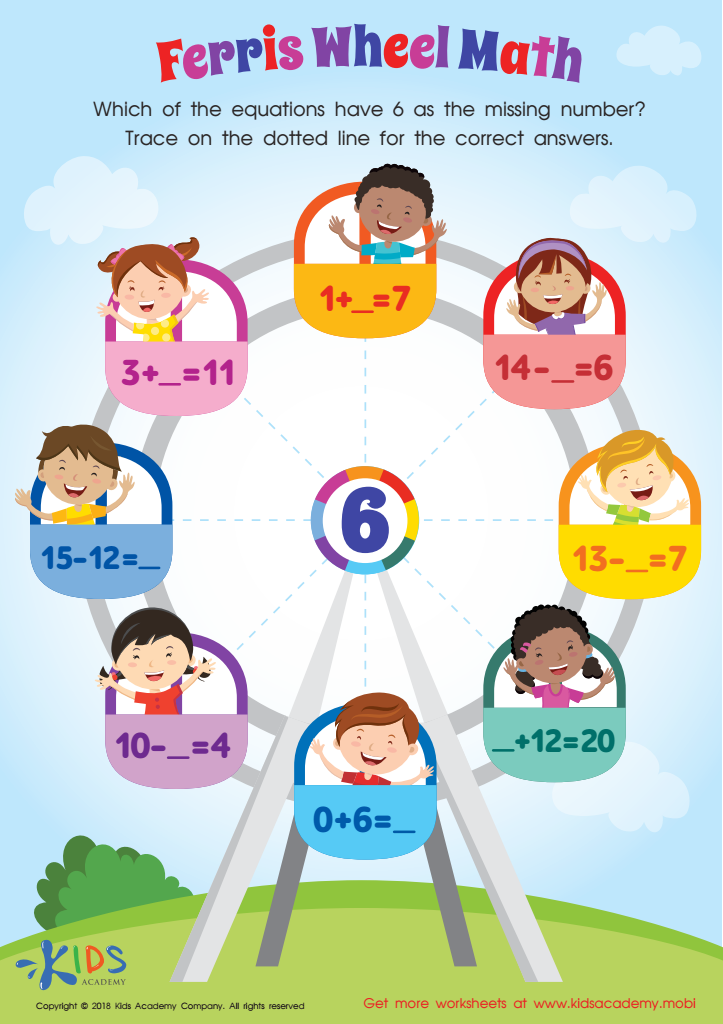
Missing Number: Ferris Wheel Math Worksheet
 Assign to My Students
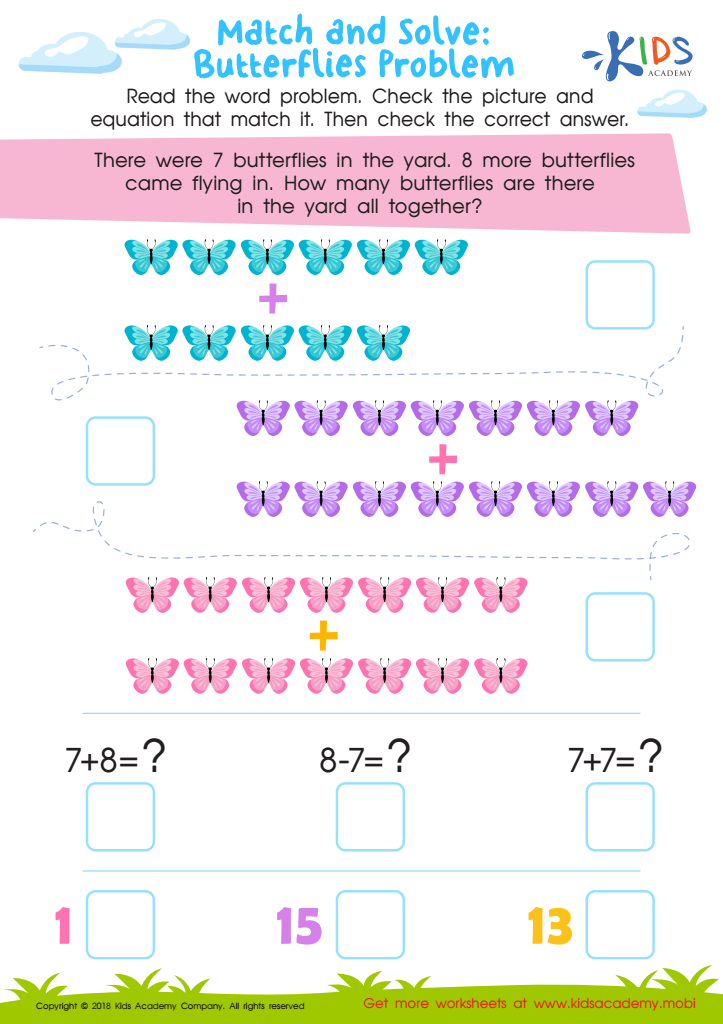
Match and Solve: Butterfly Problem Worksheet
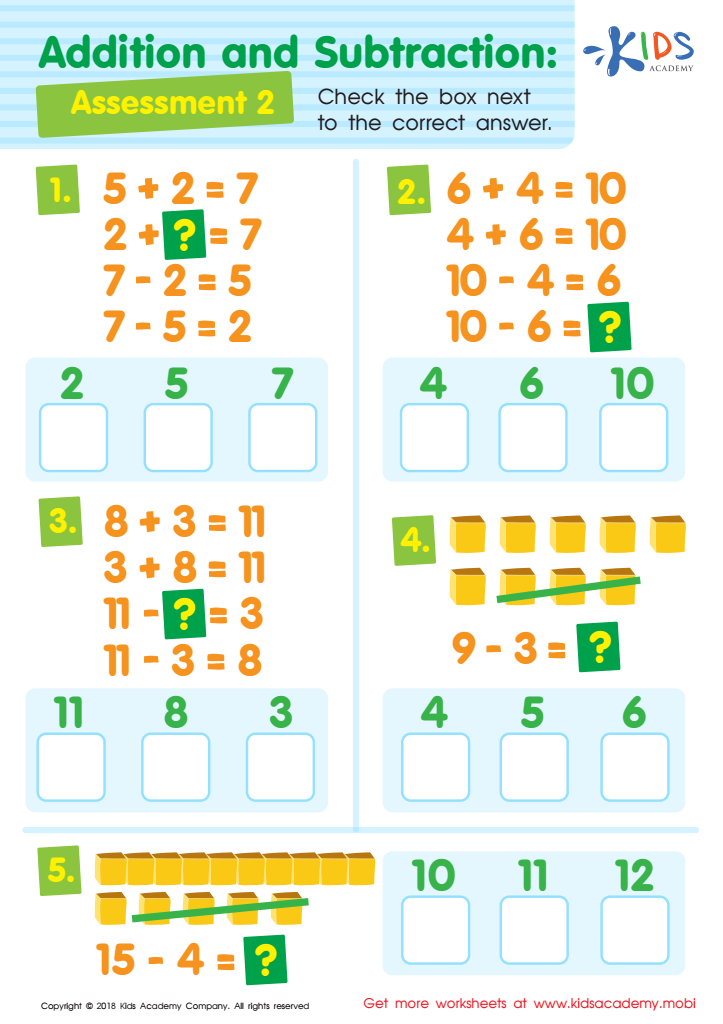
Addition and Subtraction Assessment 2 Worksheet
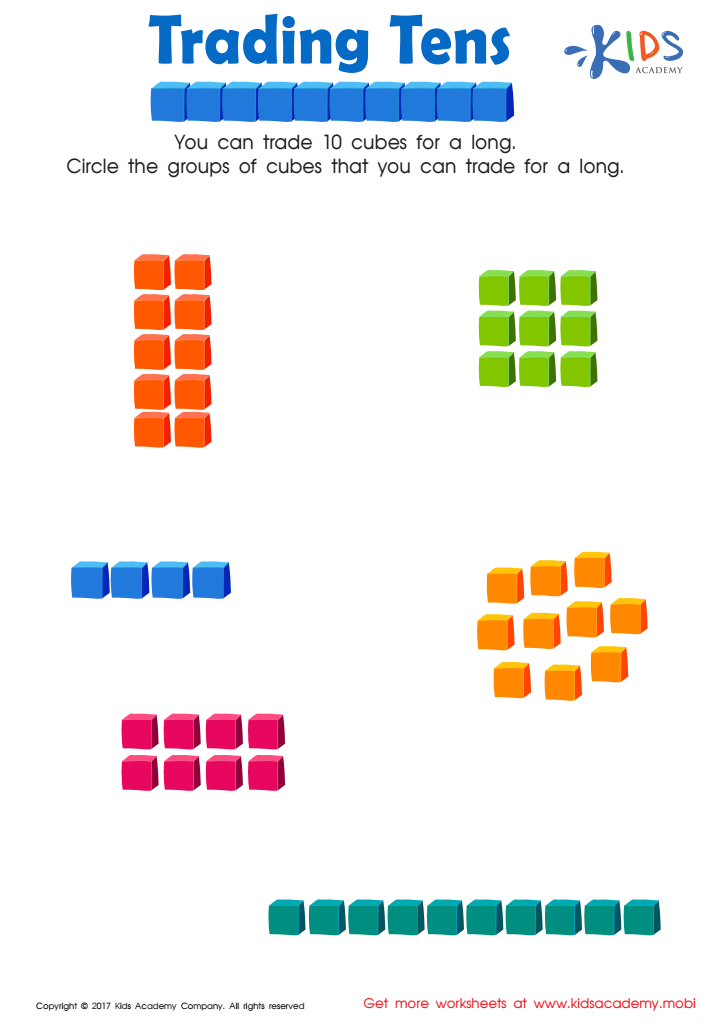
Trading Tens Worksheet


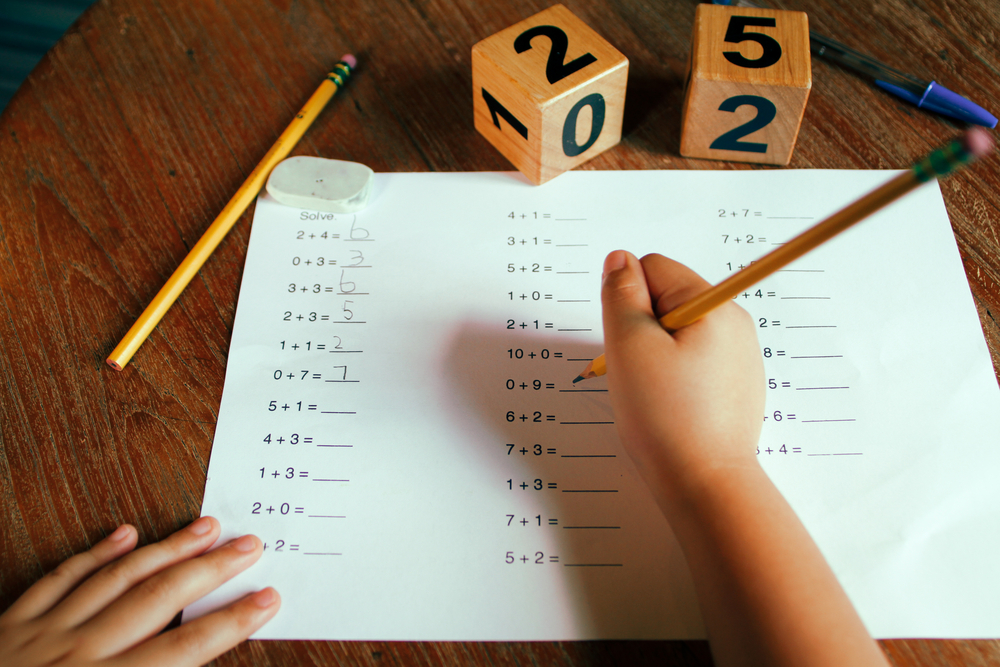





Improving math skills in children aged 4-7 is crucial for their cognitive and academic development. During these early years, children's brains are highly receptive and adaptable, making it an optimal time to introduce foundational concepts in mathematics. By engaging with numbers and basic math skills, children develop critical thinking and problem-solving abilities that extend beyond the realm of mathematics.
For parents and teachers, focusing on early math skills helps to instill confidence in children. When young learners grasp basic math concepts like counting, addition, and subtraction, they build a sense of achievement and self-efficacy that can positively influence their attitude towards more complex subjects in the future. Early exposure to math not only prepares children for academic success but also encourages a lifelong curiosity and enjoyment for learning.
Additionally, early math skills are deeply intertwined with other areas of learning. Understanding numbers enhances a child's ability to comprehend science, technology, engineering, and even literacy. For example, recognizing patterns and sequencing in math can improve a child's reading skills, while counting can support fine motor skills when paired with physical activities like sorting objects.
In summary, parents and teachers should prioritize developing math skills in children aged 4-7 to foster a strong educational foundation, boost self-confidence, and facilitate overall cognitive growth that prepares them for the challenges ahead.








