Improving number sense Numbers Worksheets for Ages 4-7
3 filtered results
-
From - To
Enhance your child's number sense with our engaging worksheets designed for ages 4-7! Our "Improving Number Sense" collection offers a variety of fun, educational activities that encourage young learners to explore numbers in a playful way. From counting exercises to matching activities, these worksheets promote number recognition, basic addition, and sequencing skills. Tailored to develop critical thinking and problem-solving abilities, each worksheet fosters a solid foundation in mathematics. Perfect for homeschooling or supplemental learning, our resources are easy to print and align with early math standards. Help your child unlock their mathematical potential while having fun!
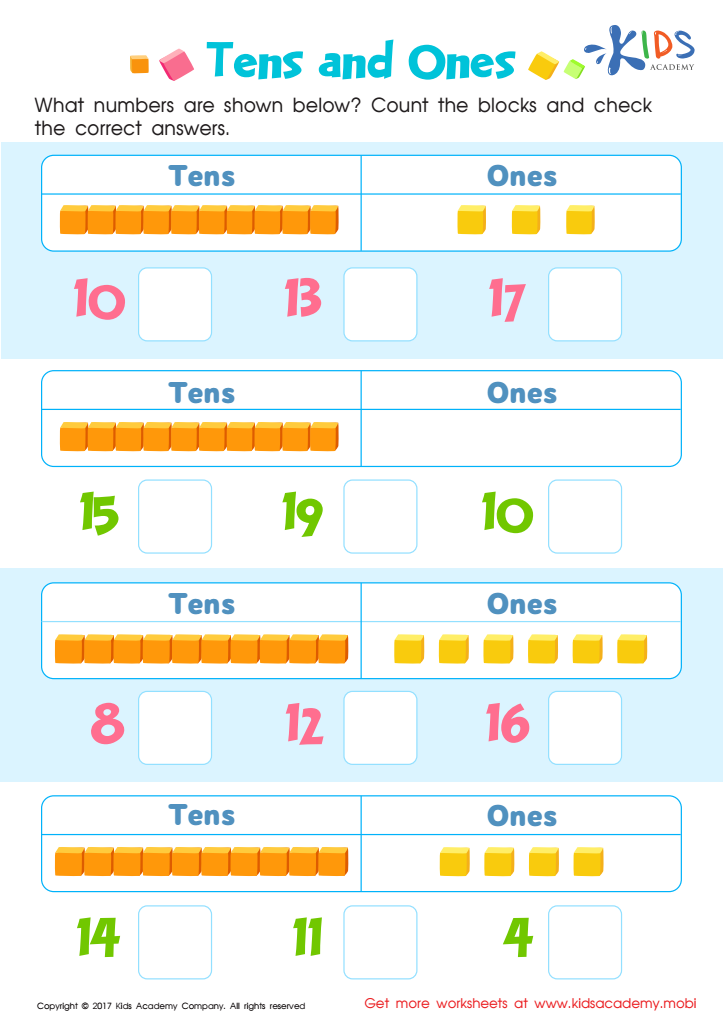
Tens and Ones Worksheet
 Assign to My Students
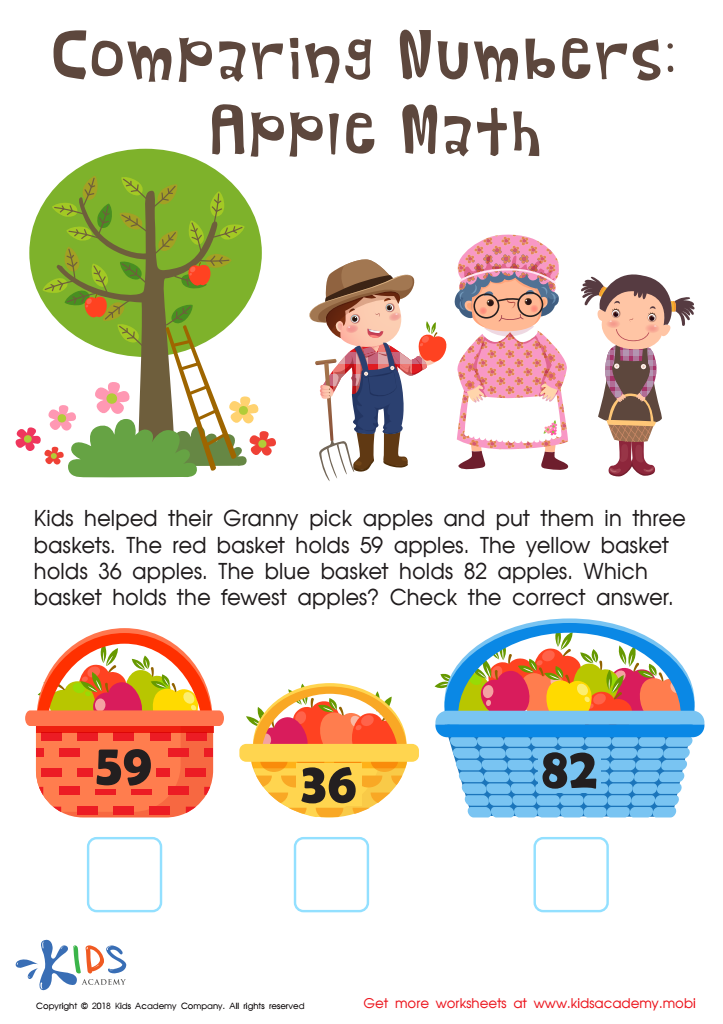
Apple Math Worksheet
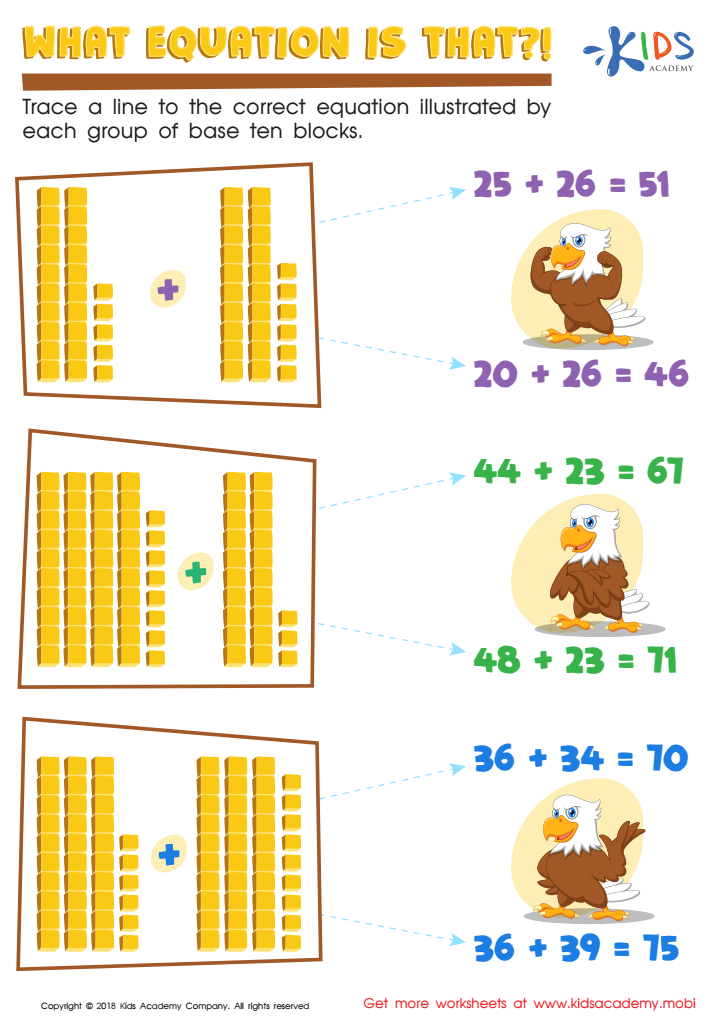
What Equation Is That? Worksheet








Improving number sense in children aged 4-7 is vital for their overall mathematical development and future success in school. At this stage, children are forming foundational concepts of numbers, counting, and basic operations that will shape their understanding of more complex mathematics later on. Number sense is not just about memorizing numbers; it involves recognizing patterns, understanding quantities, and applying this knowledge in everyday situations.
For parents and teachers, fostering number sense can encourage a love for math and build confidence. Engaging children in hands-on activities—like counting objects, grouping, and simple addition or subtraction—makes learning more tangible and less intimidating. Moreover, early development of number sense correlates with better performance in advanced math skills later on, creating a solid educational trajectory.
Additionally, number sense contributes to critical thinking and problem-solving abilities. By instilling these skills early, parents and educators prepare children to navigate a world increasingly reliant on analytical skills. Overall, emphasizing number sense sets the foundation for lifelong learning, promotes cognitive flexibility, and equips young learners with essentials that will benefit their academic journey and daily life. Investing in this critical aspect is an investment in their future.








