Multiplication practice Numbers Worksheets for Ages 4-7
5 filtered results
-
From - To
Enhance your child’s math skills with our engaging Multiplication Practice Worksheets designed for ages 4-7. These worksheets focus on introducing foundational multiplication concepts in a fun and interactive way, perfect for young learners. Each worksheet features colorful illustrations and simple exercises that promote understanding through hands-on activities. Watch your child develop confidence as they practice multiplying numbers with enjoyable exercises that cater to their learning pace. Ideal for home schooling, supplemental practice, or classroom activities, our resources provide the perfect blend of education and fun. Start your child on their math journey today with our carefully crafted multiplication worksheets!
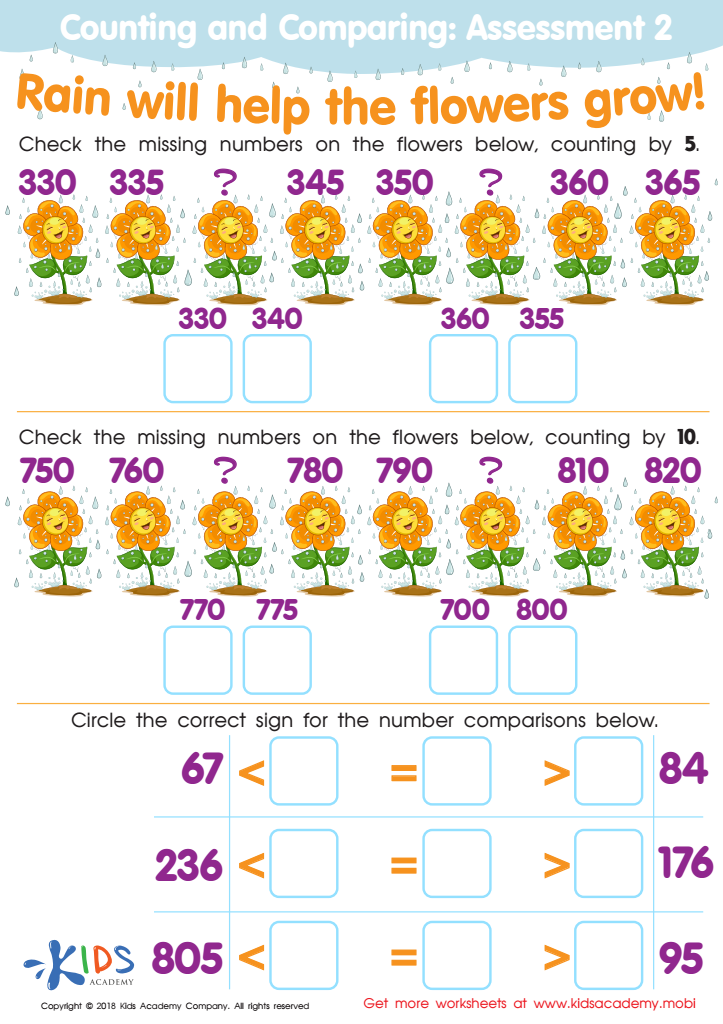
Counting and Comparing: Assessment 2 Worksheet
 Assign to My Students
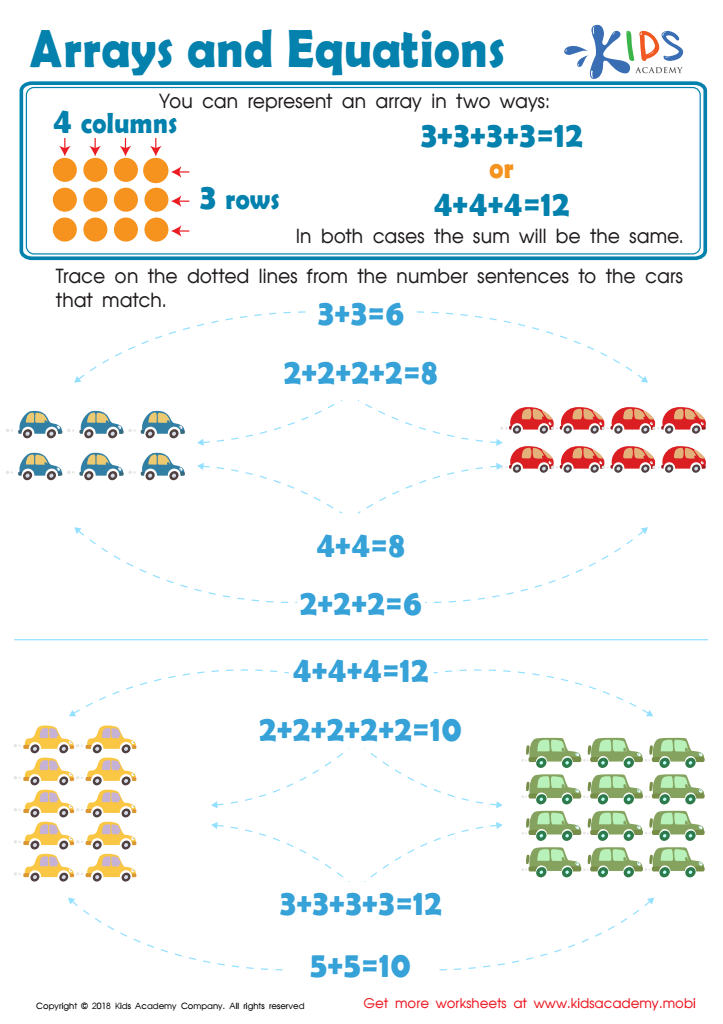
Arrays and Equations Worksheet
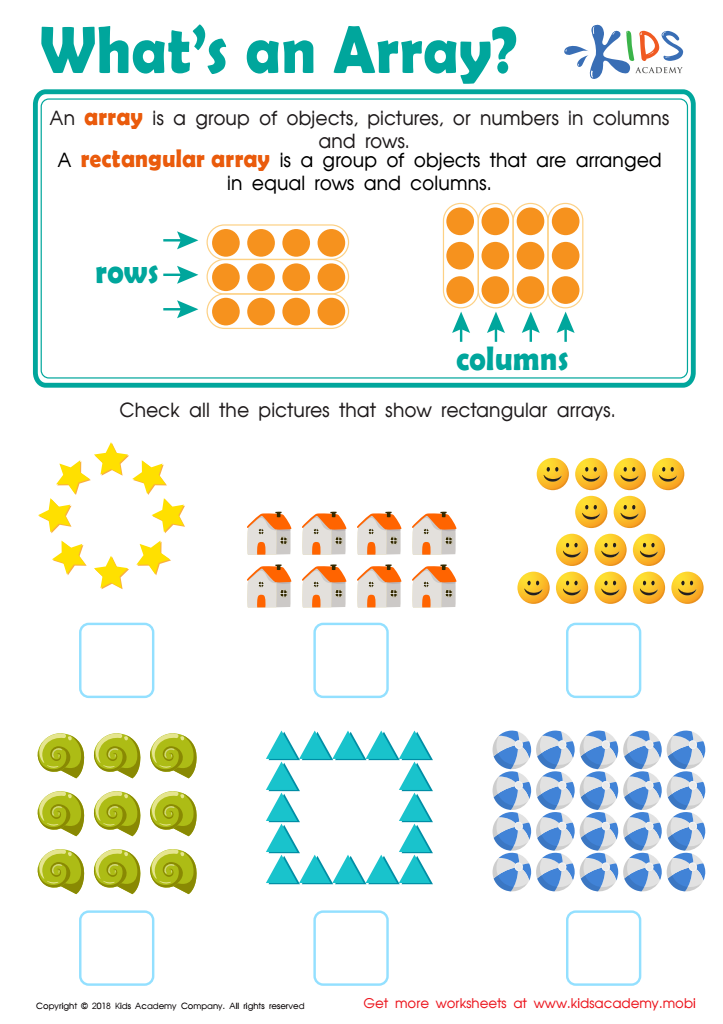
What's an Array? Worksheet
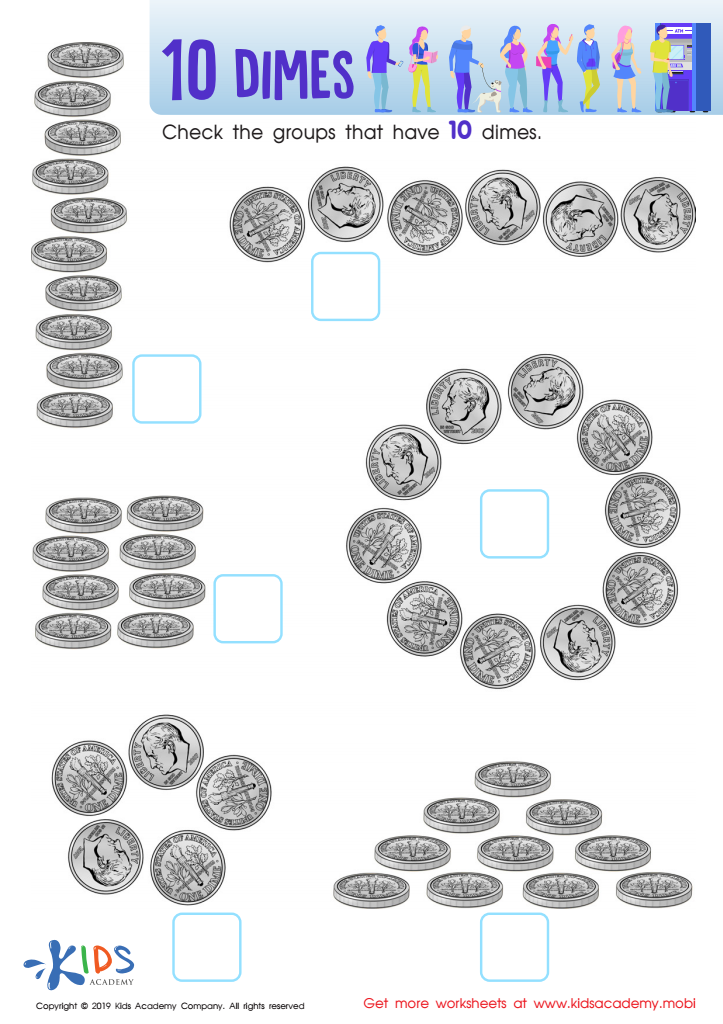
10 Dimes Worksheet
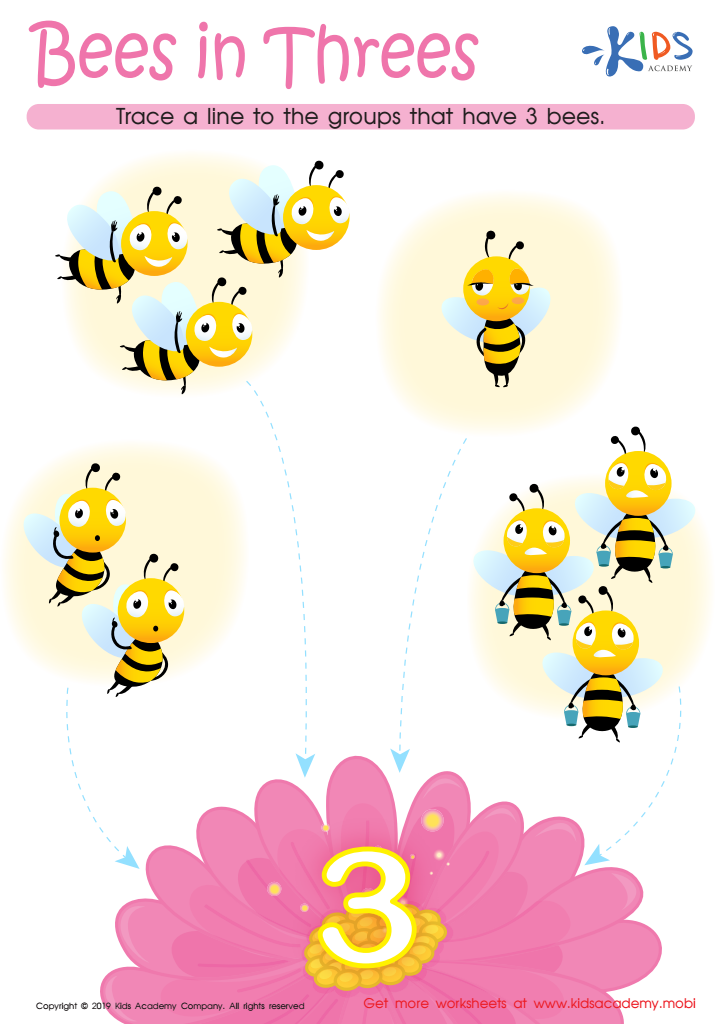
Bees in Threes Worksheet







Multiplication practice for children aged 4 to 7 is crucial for several reasons. First, it lays a strong foundation for future mathematical learning. Understanding multiplication not only enhances children's arithmetic skills but also improves their ability to grasp more complex concepts such as division, fractions, and percentages later on. Early exposure to multiplication fosters a positive attitude towards math, building confidence and making math less intimidating as they grow.
Additionally, multiplication practice aids cognitive development. It encourages critical thinking and problem-solving skills that are valuable beyond the classroom. Engaging with numbers in a fun, interactive way can also improve memory and attention span, as children learn to recall multiplication facts.
Moreover, consistent practice helps students develop fluency and fosters independence in their learning journey. Parents and teachers can incorporate games, songs, and hands-on activities to make this process enjoyable and effective.
Finally, multiplication is part of everyday life—whether it's sharing snacks, grouping toys, or even budgeting allowance. By instilling these fundamental skills at a young age, we prepare children for academic success and equip them with tools they’ll use throughout their lives.








