
Shape identification Numbers Worksheets for Ages 4-7
3 filtered results
Difficulty Level
Grade
Age
-
From - To
Subject
Activity
Standards
Discover our engaging Shape Identification Numbers Worksheets, designed specifically for children aged 4-7! These worksheets combine shape recognition and number identification to create a fun and educational experience. Kids will enjoy colorful activities that enhance their understanding of geometric shapes while simultaneously mastering numbers. Our user-friendly format encourages independent learning, making it perfect for both classroom settings and home practice. Watch your little learners develop essential math skills as they explore various shapes and numbers through interactive exercises. Start nurturing their cognitive development and foundational math abilities today with our delightful worksheets! Visit our site for printable resources tailored just for them.
Favorites
With answer key
Interactive
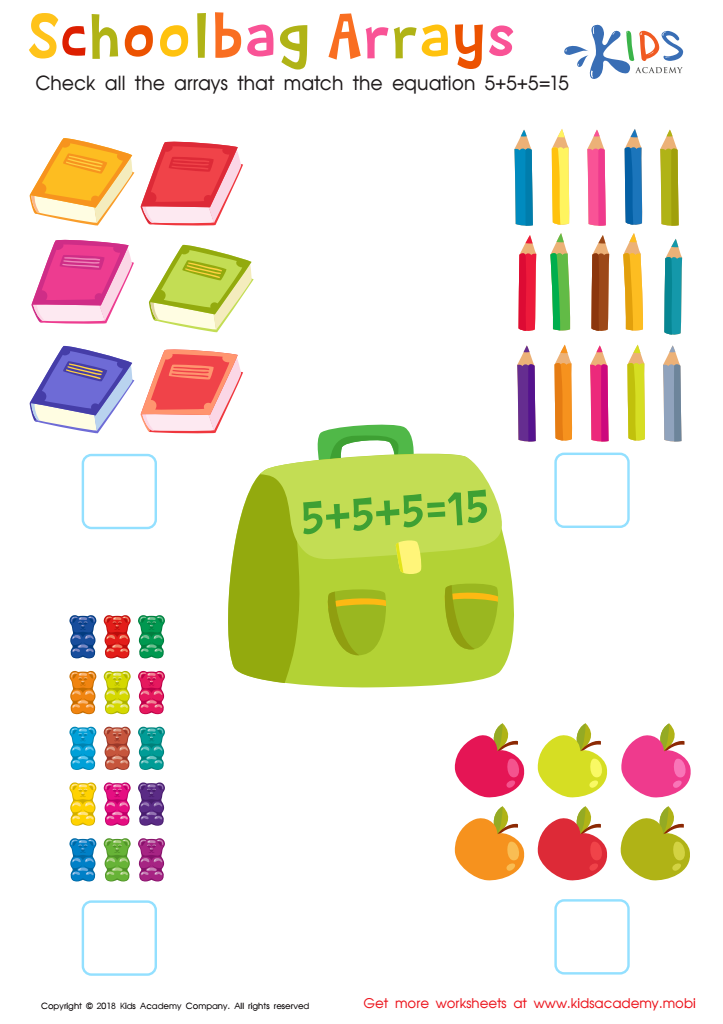
Schoolbag Arrays Worksheet
Help your child spot the correct arrays in this worksheet: having them count the items in each and check the boxes for the ones with 15 objects. Ask them to differentiate between rows and columns and explain which ones match the equation 5+5+5=15.
Schoolbag Arrays Worksheet
Worksheet
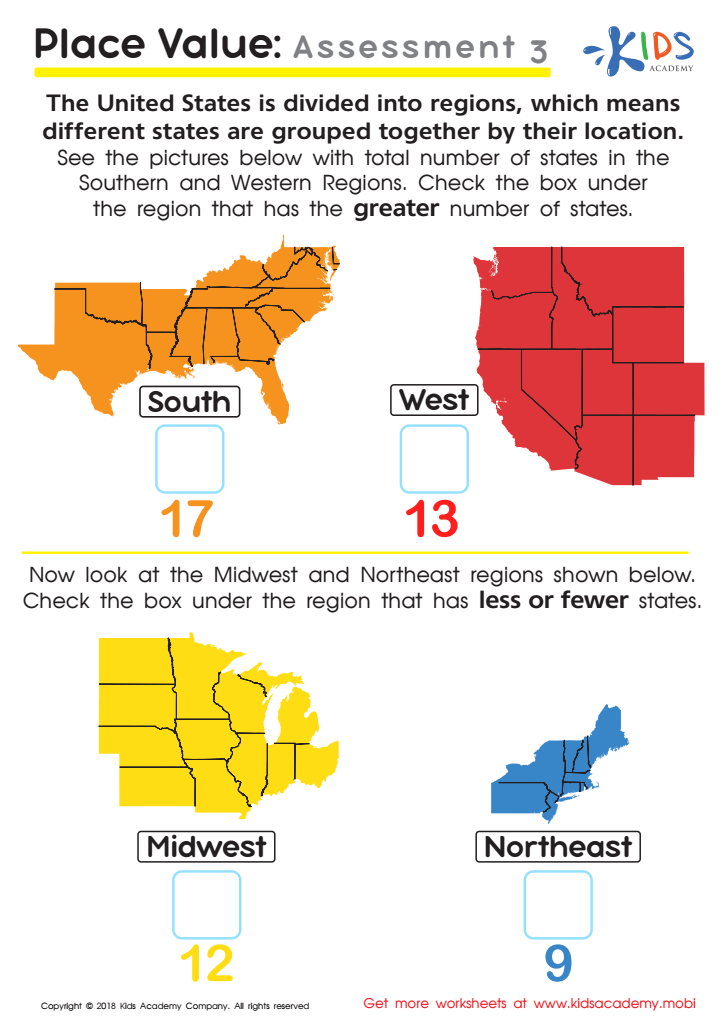
Place Value: Assessment 3 Worksheet
Test your child's math skills without them realizing it! This fun worksheet looks at the states and regions of the U.S. and your child can compare numbers greater or lesser than the other. It's the perfect way to assess your child's number sense without them knowing.
Place Value: Assessment 3 Worksheet
Worksheet
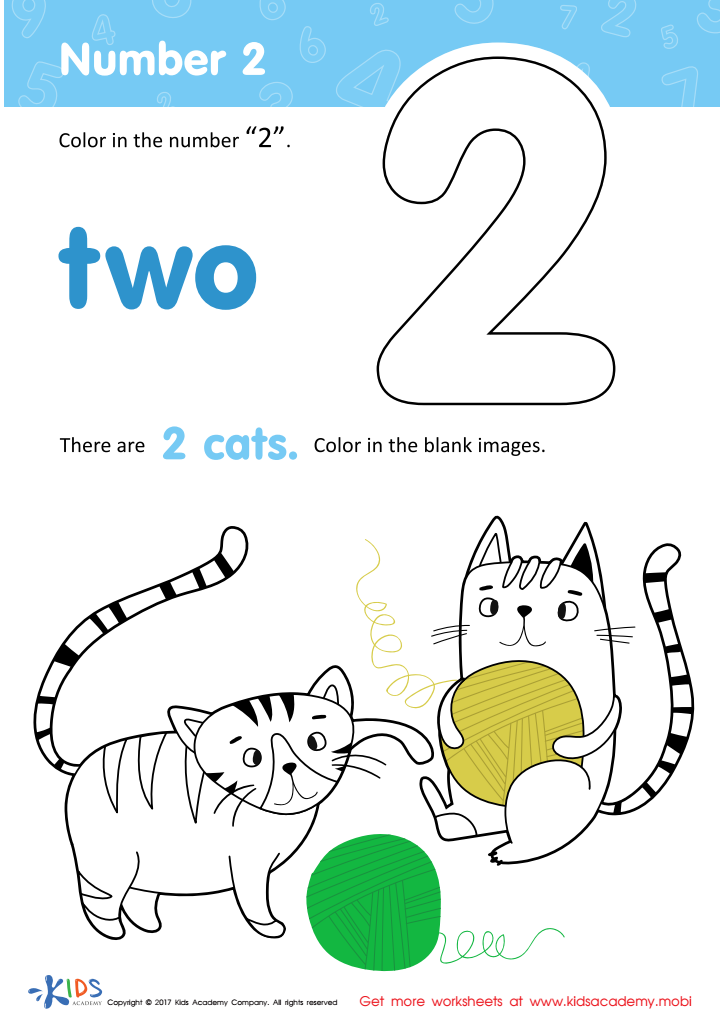
Number 2 Printable
Help your child learn to recognize the number two with these cats and their yarn balls. Print this coloring page – it's great for counting and coloring fun! Your child will develop basic numeracy skills as they visually see numbers in action.
Download (PDF)
 Assign to My Students
Assign to My Students
Number 2 Printable
Worksheet
Join Kids Academy for Free
Who is primarily going to use this learning content?








Shape identification is a crucial skill for children aged 4-7, and parents and teachers should prioritize it for several reasons. First, understanding shapes helps children develop their spatial awareness, which is foundational for future math skills, including geometry. When children can recognize and classify shapes, they lay the groundwork for using shapes in problem-solving and critical thinking activities.
Additionally, shape identification enhances cognitive development. At this age, children are naturally curious and eager to explore their environment. By introducing them to shapes through hands-on activities, like shape sorting and art projects, educators can foster creativity and encourage exploration, making learning engaging and enjoyable.
Moreover, learning about shapes aids in the development of language skills. As children identify and describe shapes, they expand their vocabulary, learning words like "triangle," "rectangle," or "circle," which contributes to their overall literacy progress.
In social settings, recognizing shapes can improve cooperative play, as children often work together on building, crafting, or solving puzzles. Ultimately, shape identification nurtures cognitive, linguistic, and social development, providing a well-rounded educational foundation that will benefit children as they progress through school and beyond. Engaging in this learning process early sets them up for academic success.








