Sorting skills Numbers Worksheets for Ages 4-7
5 filtered results
-
From - To
Enhance your child's sorting skills with our engaging Numbers Worksheets, designed specifically for ages 4-7. These fun and interactive worksheets are perfect for developing foundational math abilities through sorting activities. Kids will enjoy categorizing numbers, recognizing patterns, and organizing various objects, all while building their confidence in math. Our visually appealing printables stimulate critical thinking and boost fine motor skills, making learning enjoyable. Whether in the classroom or at home, these Sorting Skills Worksheets offer a perfect blend of education and entertainment, ensuring that your little ones master essential sorting techniques while having a blast! Start fostering math readiness today!
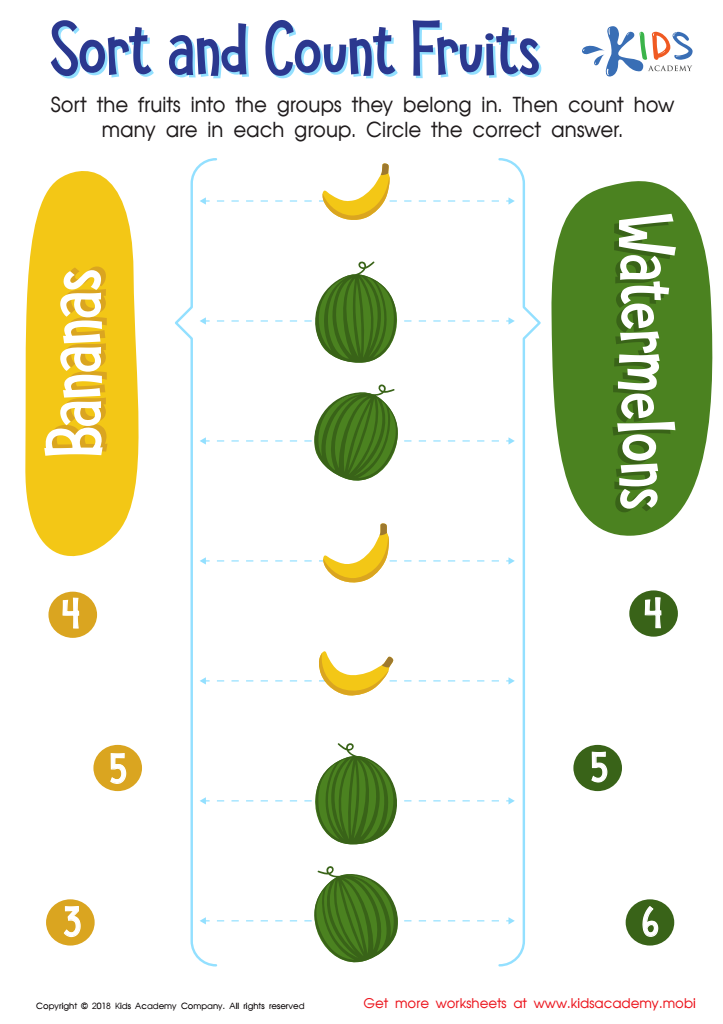
Sort and Count Fruits Worksheet
 Assign to My Students
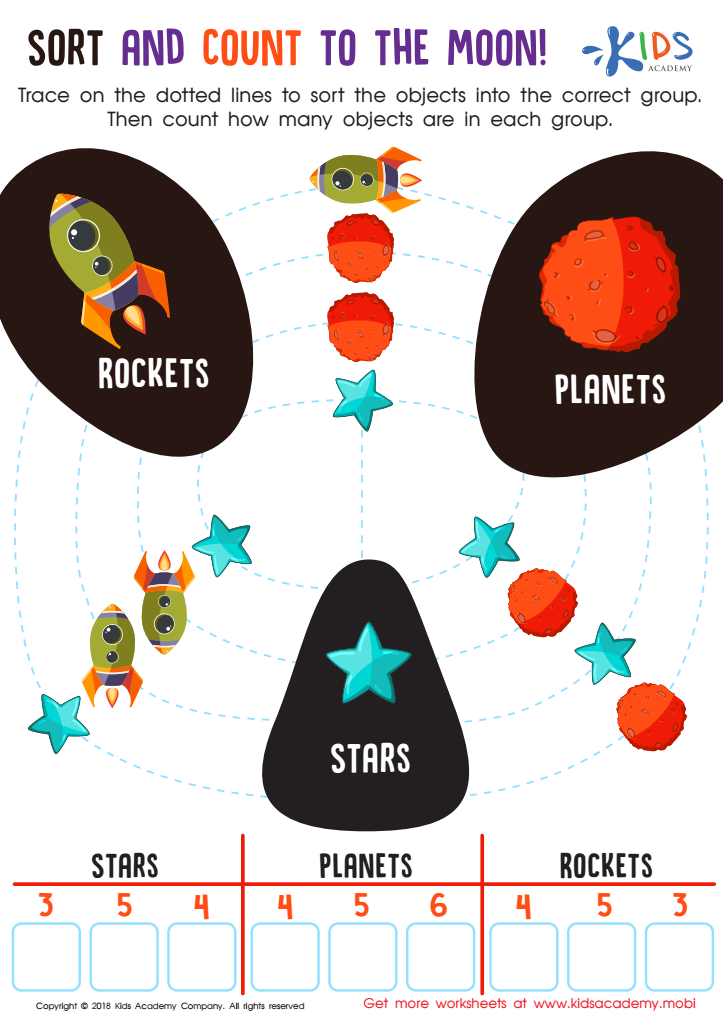
Sort and Count to the Moon Worksheet
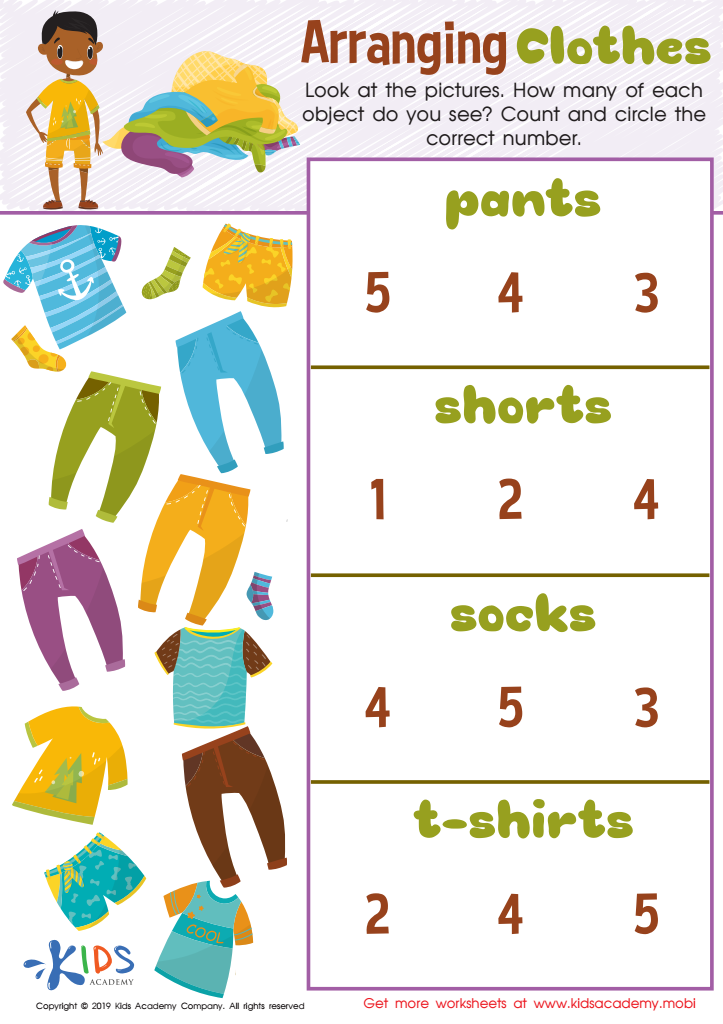
Arranging Clothes Worksheet
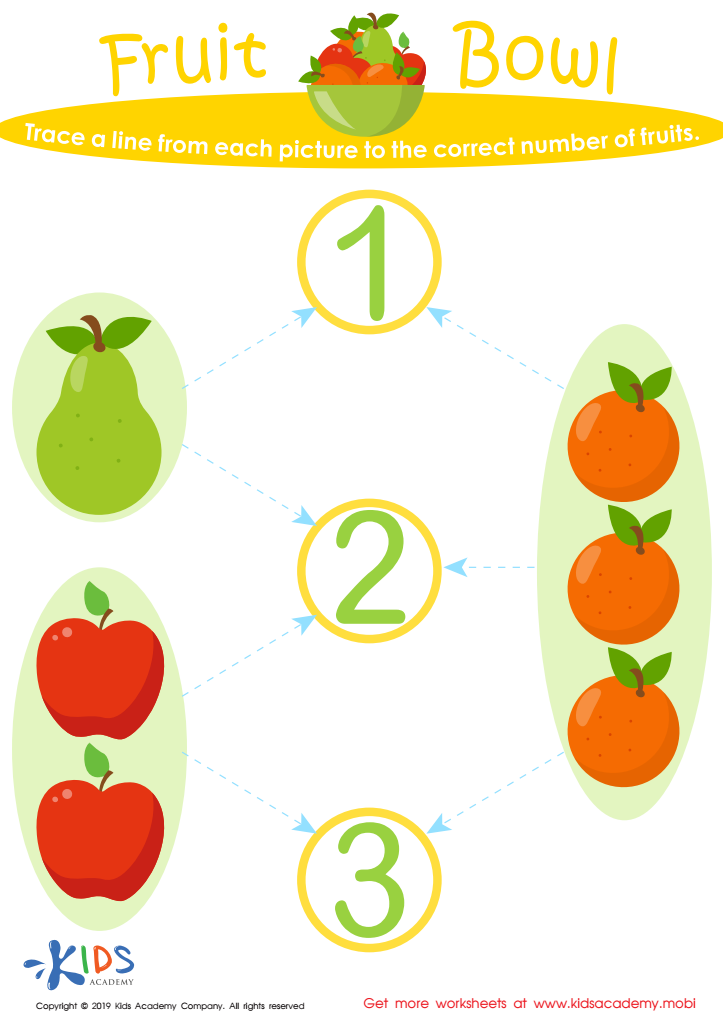
Fruit Bowl Worksheet
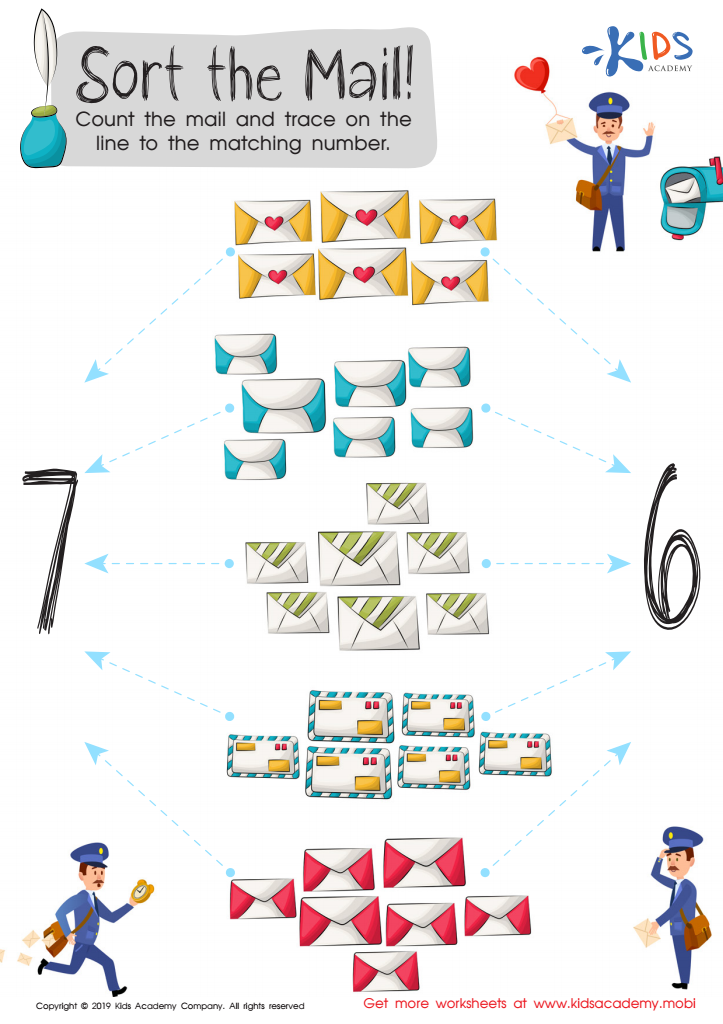
Sort the Mail Worksheet




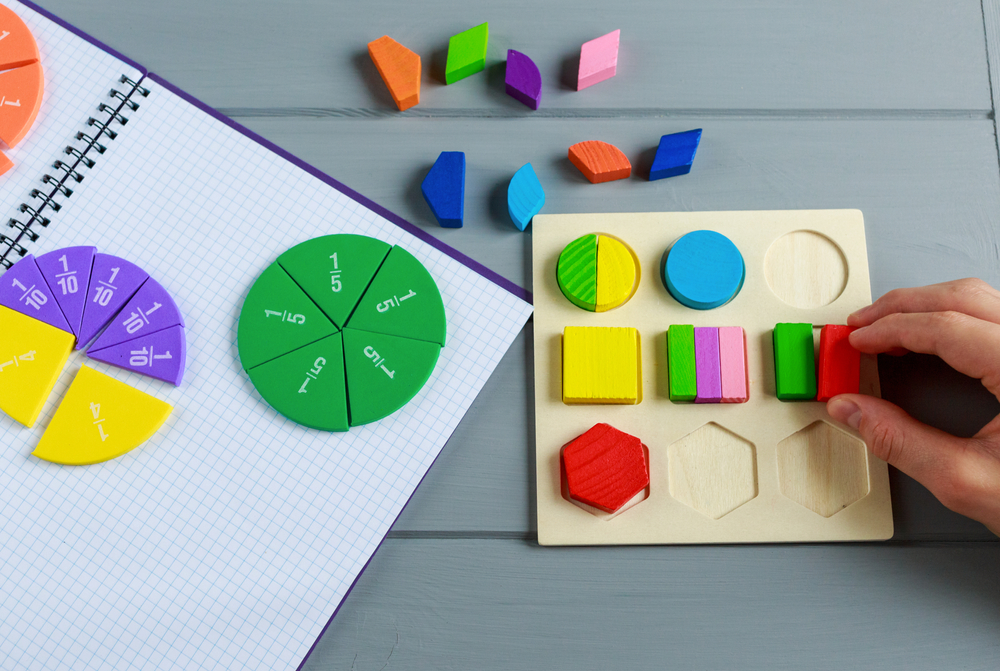



Sorting skills are vital for children aged 4 to 7 because they lay the groundwork for essential cognitive and academic abilities. At this stage of development, kids are naturally curious and eager to explore their surroundings. Sorting objects by various attributes—such as color, size, shape, or function—enhances their observational skills and encourages critical thinking.
When children engage in sorting activities, they learn to categorize information, a foundational skill for understanding mathematical concepts. For instance, sorting introduces the idea of groups and sets, which are essential for future lessons in addition, subtraction, and even more complex problem-solving tasks. Additionally, sorting supports language development, as children learn to articulate their reasoning and describe their choices based on certain criteria.
Moreover, sorting fosters social skills, as collaborative sorting activities can promote teamwork and communication among peers. Teachers and parents can create a rich learning environment by integrating everyday sorting tasks, whether through play, games, or household chores. By caring about and fostering sorting skills, parents and educators guide children in developing a love for learning, enhancing their ability to navigate both academic challenges and everyday life experiences.








