Understanding patterns Numbers Worksheets for Ages 4-7
6 filtered results
-
From - To
Understanding Patterns Numbers Worksheets for Ages 4-7 by Kids Academy are designed to spark young minds’ curiosity and enhance their mathematical skills. These engaging, age-appropriate worksheets help children recognize and predict number sequences, fostering critical thinking and problem-solving abilities. With colorful visuals, fun activities, and thoughtful progression, kids learn to identify numerical patterns, count objects, and develop foundational math skills essential for future learning. Tailored specifically for early learners, these printable worksheets cater to the individual needs of children, ensuring they grasp fundamental concepts in an enjoyable and interactive way. Prepare your child for math success today!
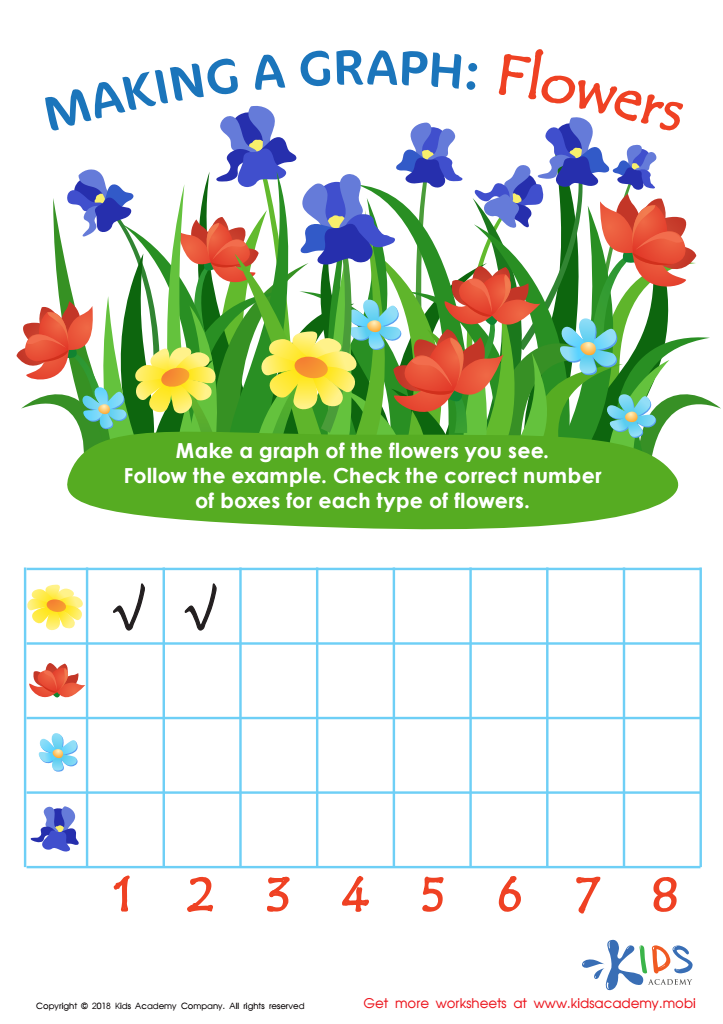
Making a Graph: Flowers Worksheet
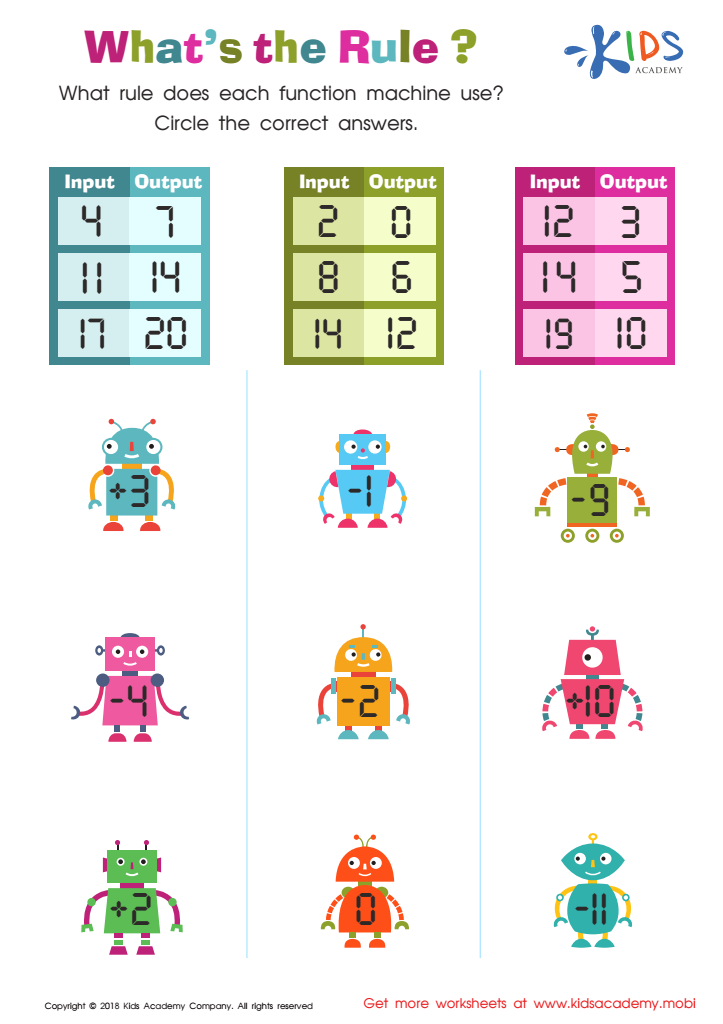
What's the Rule Worksheet
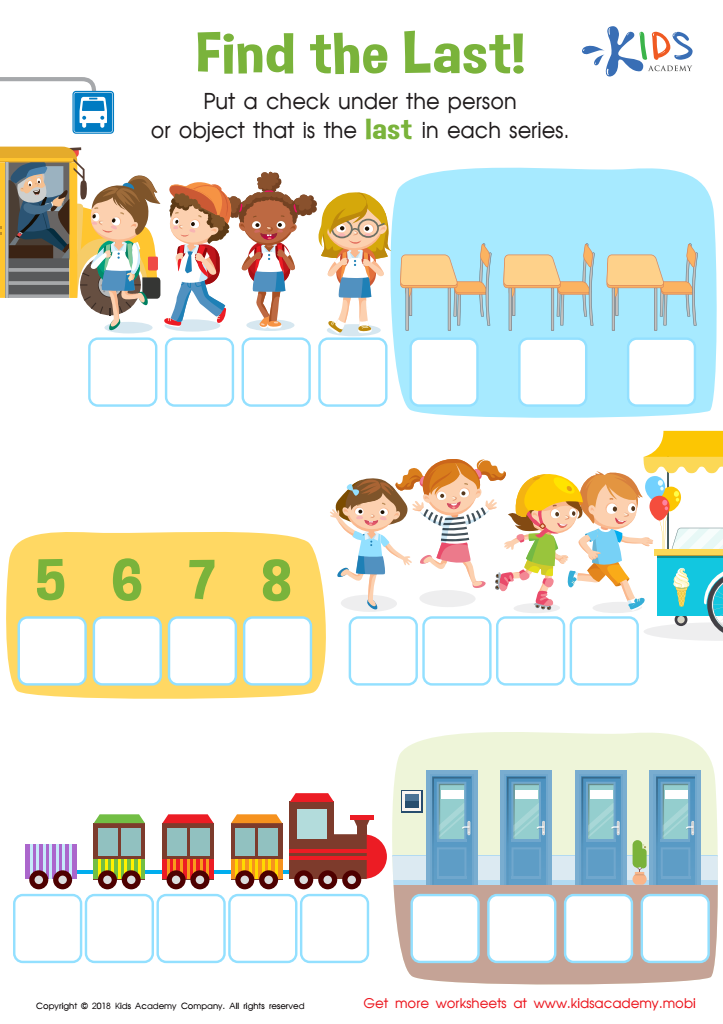
Find the Last! Worksheet
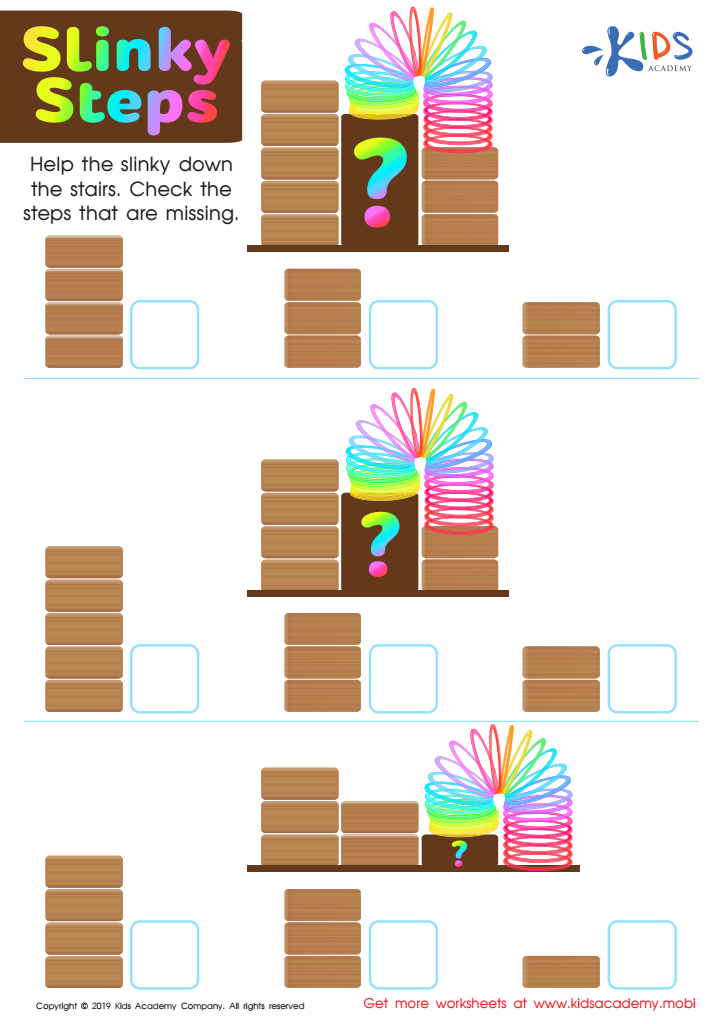
Slinky Steps Worksheet
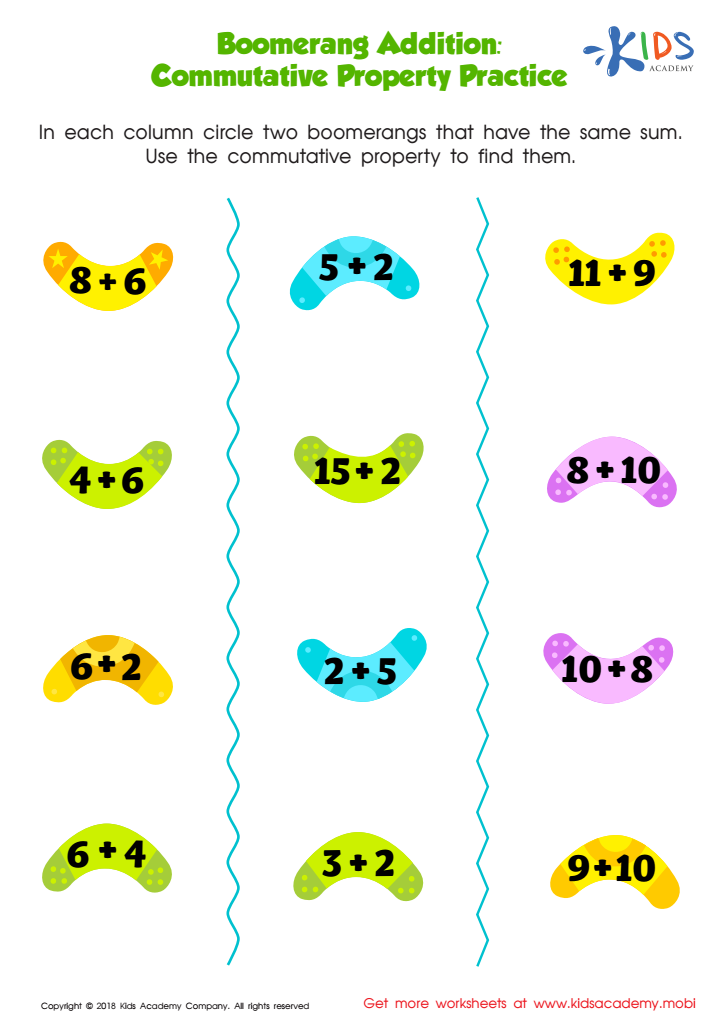
Boomerang Addition Worksheet
Magic Numbers Worksheet
 Assign to My Students




%20(1).jpg)



Understanding patterns in numbers is crucial for children ages 4-7 as it forms the foundation for their future mathematical learning. First and foremost, recognizing patterns helps kids develop critical thinking skills and logical reasoning. For instance, identifying a sequence like 2, 4, 6, 8 teaches children to anticipate what comes next based on regular intervals, fostering their ability to predict outcomes and solve problems systematically.
Moreover, pattern recognition aids in the internalization of basic arithmetic concepts. When children understand patterns, they grasp the structure of the number system, making it easier for them to learn addition, subtraction, multiplication, and division later on. For example, recognizing that every even number ends in 0, 2, 4, 6, or 8 simplifies the task of identifying even and odd numbers.
In addition, engaging with patterns enhances cognitive and memory skills by encouraging children to remember sequences and structures. This activity conditions the brain to recognize order in chaos, a skill applicable beyond math to reading, science, and daily life interactions.
Finally, learning patterns improves organizational skills and attention to detail. As children sense order in number sequences, they tend to apply the same structured approach to other aspects of learning and living. Thus, understanding numerical patterns equips young learners with the essential tools they need for academic and life success.








