
Addition skills Math Worksheets for Ages 4-7
134 filtered results
Difficulty Level
Grade
Age
-
From - To
Subject
Activity
Standards
Our "Addition Skills Math Worksheets for Ages 4-7" are designed to make learning math fun and engaging for young learners. Tailored to early grade students, these printable worksheets introduce basic addition concepts through vibrant visuals and interactive activities. Each worksheet aims to develop essential addition skills, enhancing numerical understanding and confidence. These resources align with educational standards, ensuring age-appropriate content that supports in-class learning and at-home practice. Whether you're a teacher or a parent, our expertly crafted worksheets are the perfect tool to inspire a love for math and build a strong arithmetic foundation in your child.
Favorites
With answer key
Interactive
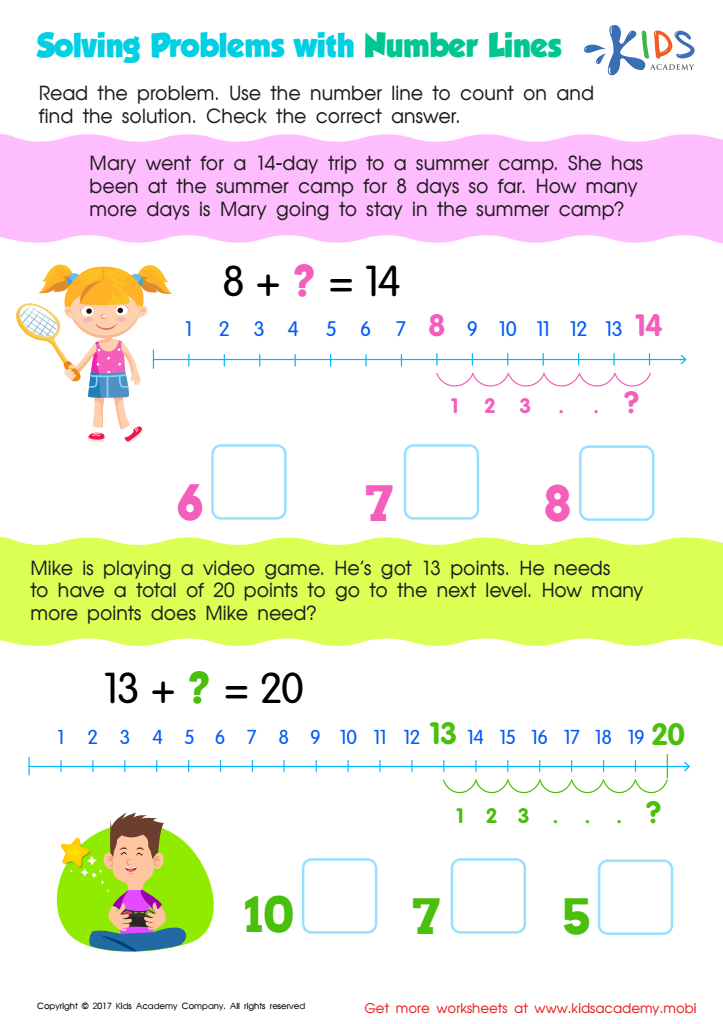
Solving Problems: Number Lines Worksheet
Number lines are fun and help build number sense and reasoning. This worksheet uses them to help students count on to find a solution to an equation. They'll have fun counting with familiar numbers and 10-bases, while also working on algebraic reasoning.
 Assign to My Students
Solving Problems: Number Lines Worksheet
Worksheet
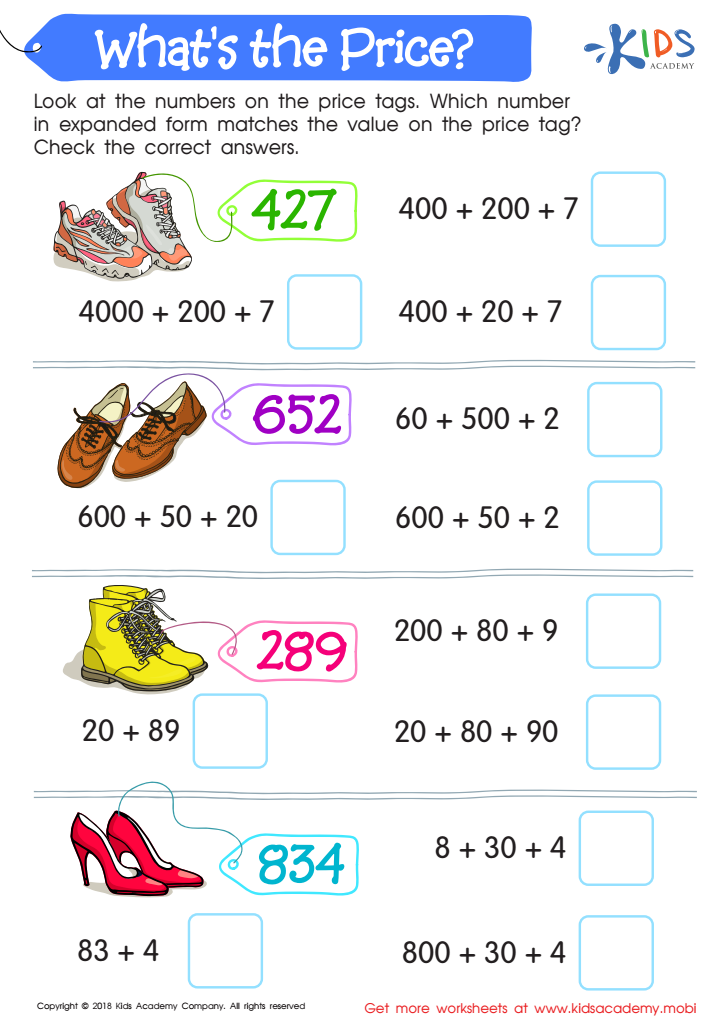
What's the Price? Worksheet
With this price tag worksheet, you and your kids can have some educational fun! Check the numbers on the tags, ask your child to work out their expanded form, and circle the correct answers. It's a great way to teach math and keep them entertained!
What's the Price? Worksheet
Worksheet
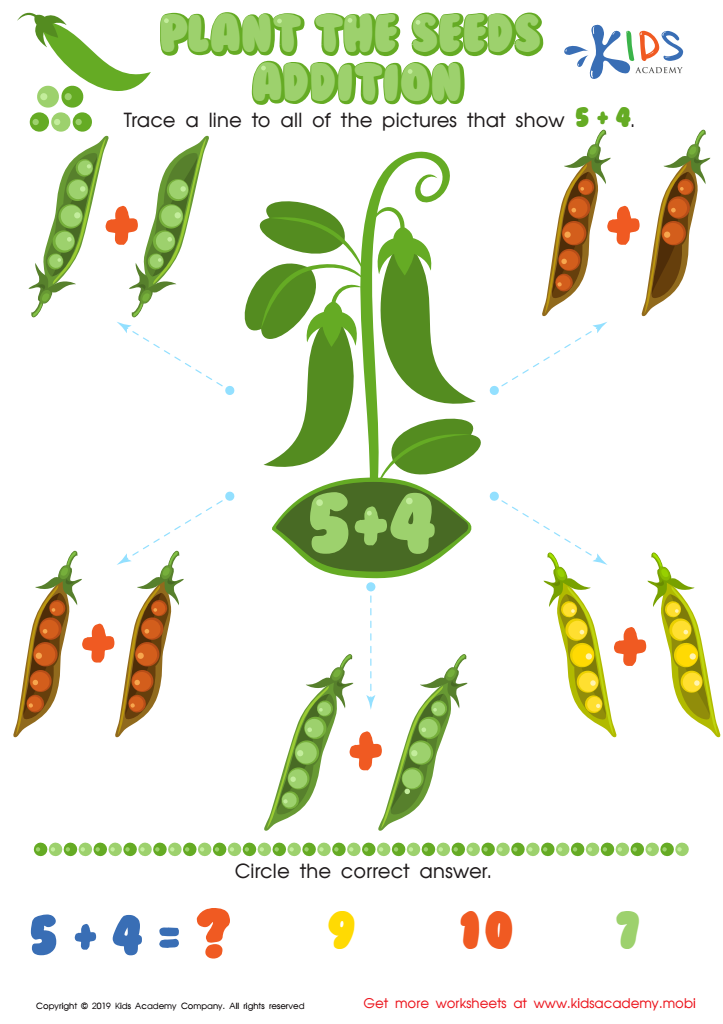
Plant the Seeds Addition Worksheet
This worksheet combines math and learning about plants. Ask kids to name their favorite plants and which ones they see the most. Have them trace a line to all pictures in the middle which show the equation 5+4. Enjoy the beauty of plants while introducing math skills!
Plant the Seeds Addition Worksheet
Worksheet
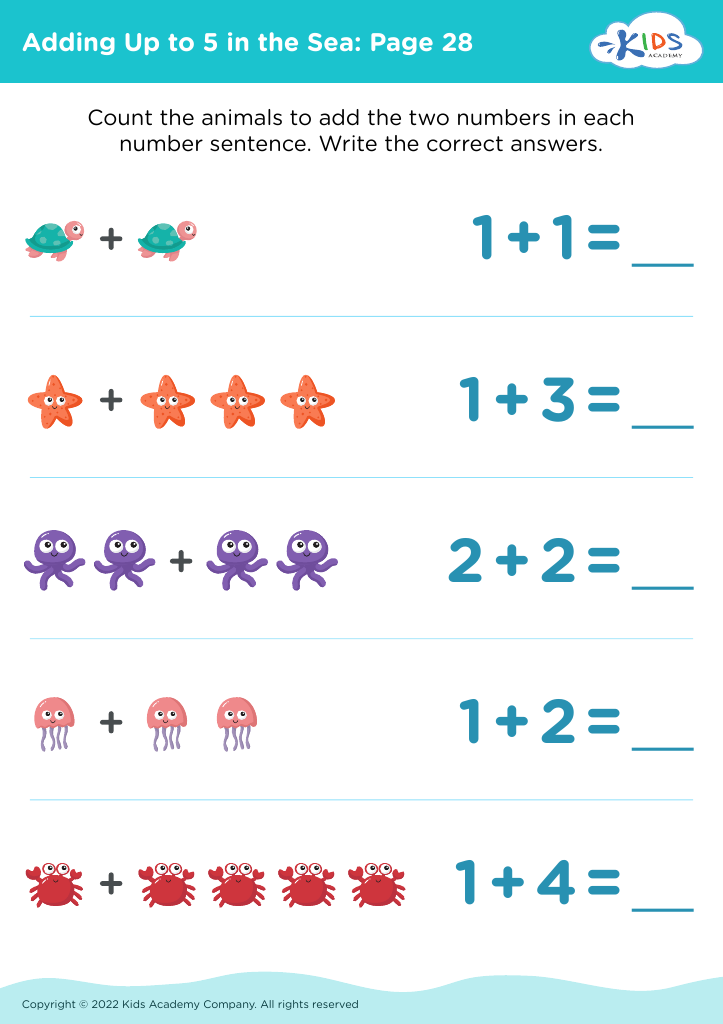
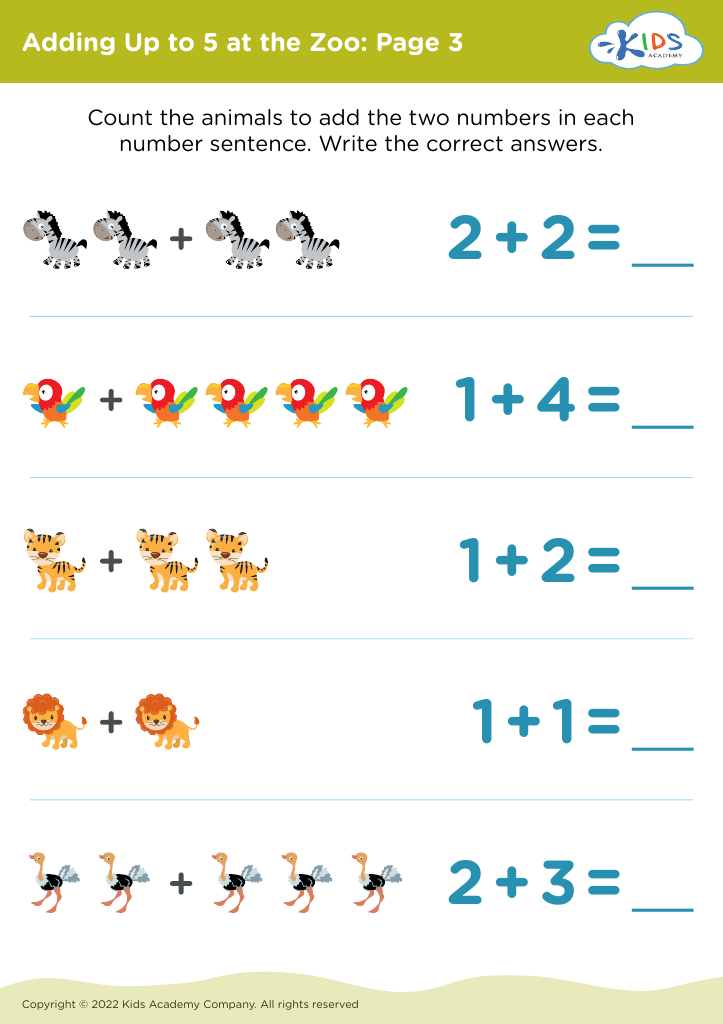
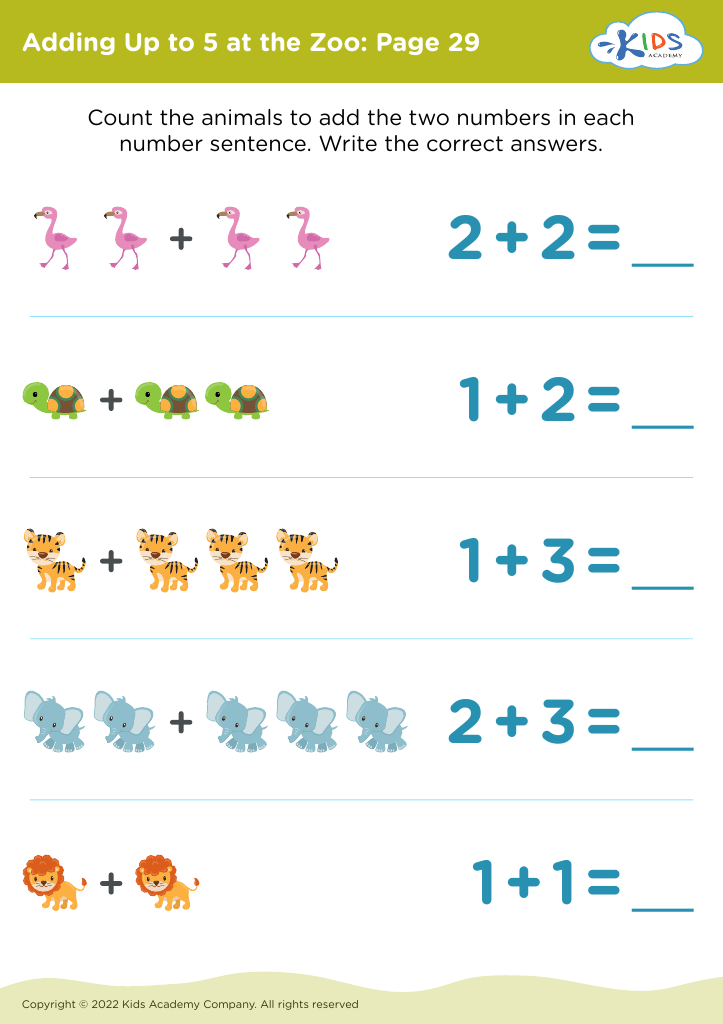
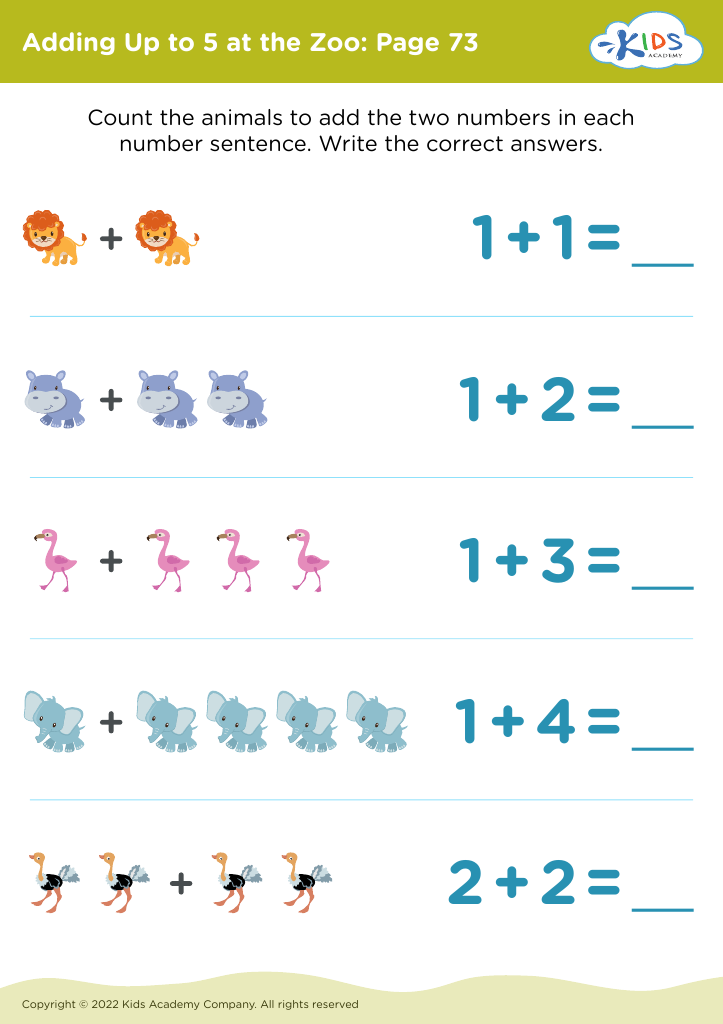
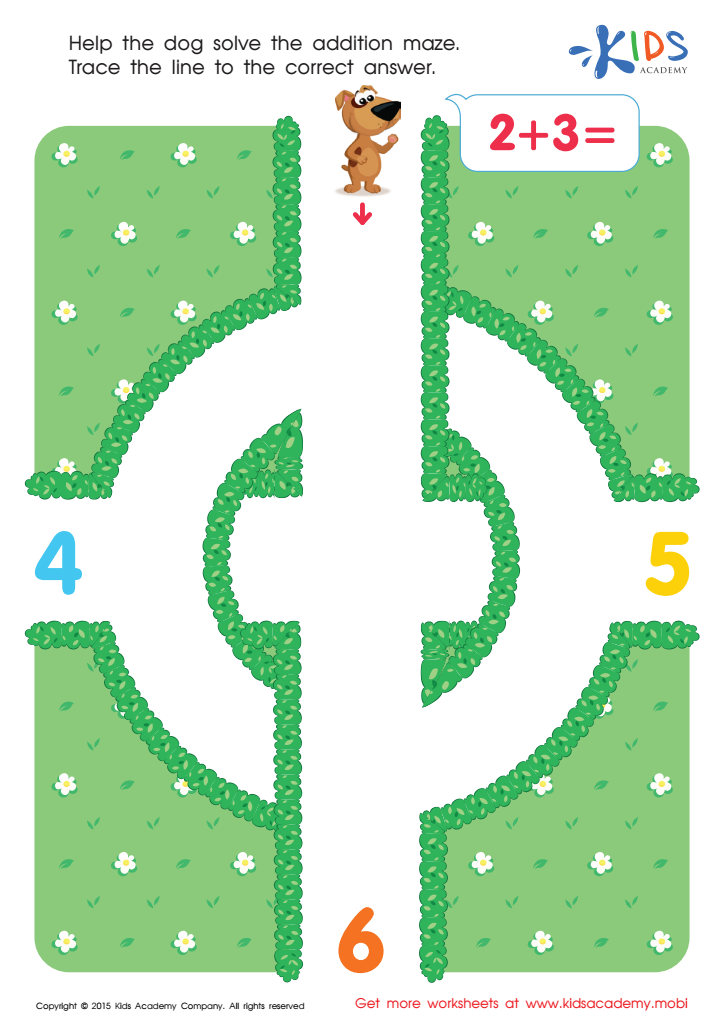
Two And Three Addition Worksheet
Give your children the task and let them find the path to the right answer while they make their way through the maze, and don't forget to let them trace the path.
Two And Three Addition Worksheet
Worksheet
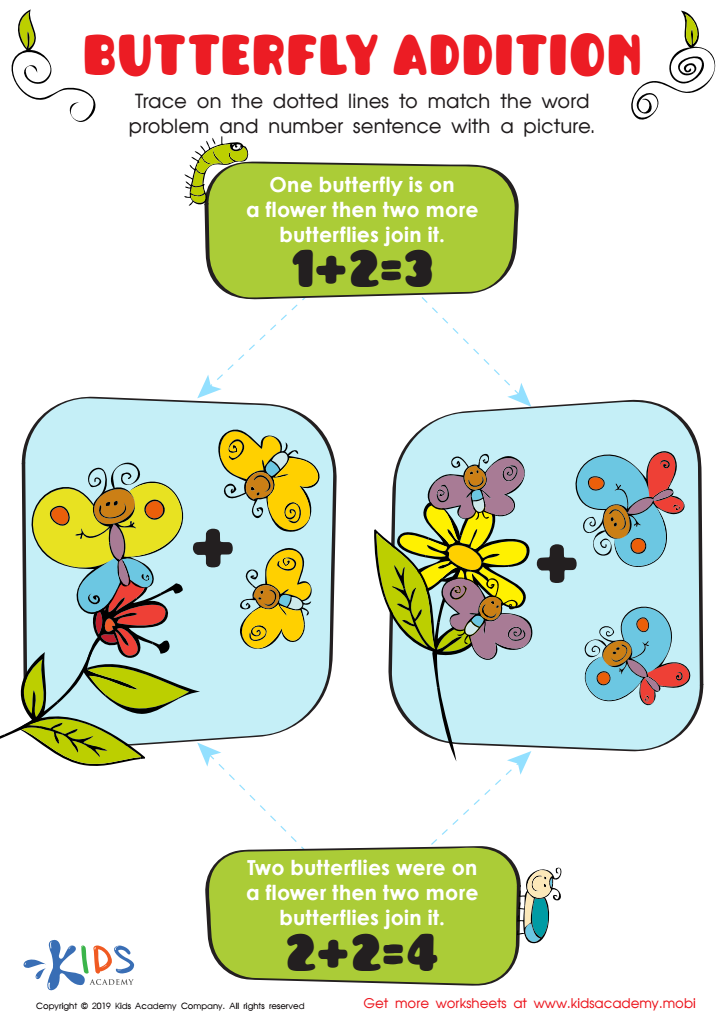
Butterfly Addition Worksheet
This tracing sheet is great for kids to work on math skills and have fun too. Read the word problems to them, then help them trace the dotted lines to match the problem and number sentence to a picture. Not only is it educational, it's beautiful too - your kids will love learning about butterflies!
Butterfly Addition Worksheet
Worksheet
Join Kids Academy for Free
Who is primarily going to use this learning content?


.jpg)





Addition skills are crucial for children aged 4-7 because they lay the foundation for all future mathematical concepts and number sense. During these formative years, children's brains are highly receptive to learning new skills, and understanding addition prepares them for more complex arithmetic, algebra, and real-world problem-solving.
Firstly, mastering addition fosters cognitive development and enhances problem-solving abilities. It helps children grasp the concept of numbers, which in turn improves their counting, organization, and pattern recognition skills. These competencies are essential not only in math but across various subjects and daily activities.
Secondly, proficiency in early math, including addition, builds confidence. When children understand basic addition, they are more likely to approach other subjects and challenges with a positive and determined mindset. This confidence can lead to a long-term love for learning and academic success.
Furthermore, addition is a practical life skill. Whether budgeting an allowance, sharing toys, or figuring out the total number of items at the grocery store, addition skills are used daily. By ensuring children have a solid grasp of addition at an early age, parents and teachers are equipping them with essential tools for everyday life.
In conclusion, developing addition skills in early childhood is fundamental. It supports academic growth, boosts self-esteem, and provides practical life skills, all of which contribute to well-rounded, capable individuals.








