
Analog clock reading Math Worksheets for Ages 4-7
4 filtered results
Difficulty Level
Grade
Age
-
From - To
Subject
Activity
Standards
Mastering the skill of reading an analog clock is key for young learners, and our Math Worksheets for ages 4-7 provide the perfect introduction. Our engaging and vibrant worksheets help children recognize the positions of the minute and hour hands, understand time increments, and improve their time-telling confidence. Designed by educational experts, these printables blend fun visuals with practical exercises to make learning to tell time enjoyable and effective. Ideal for preschool to second grade, these resources lay a strong foundation for math success while enhancing critical thinking and problem-solving skills. Download today for interactive time-telling practice!
Favorites
With answer key
Interactive
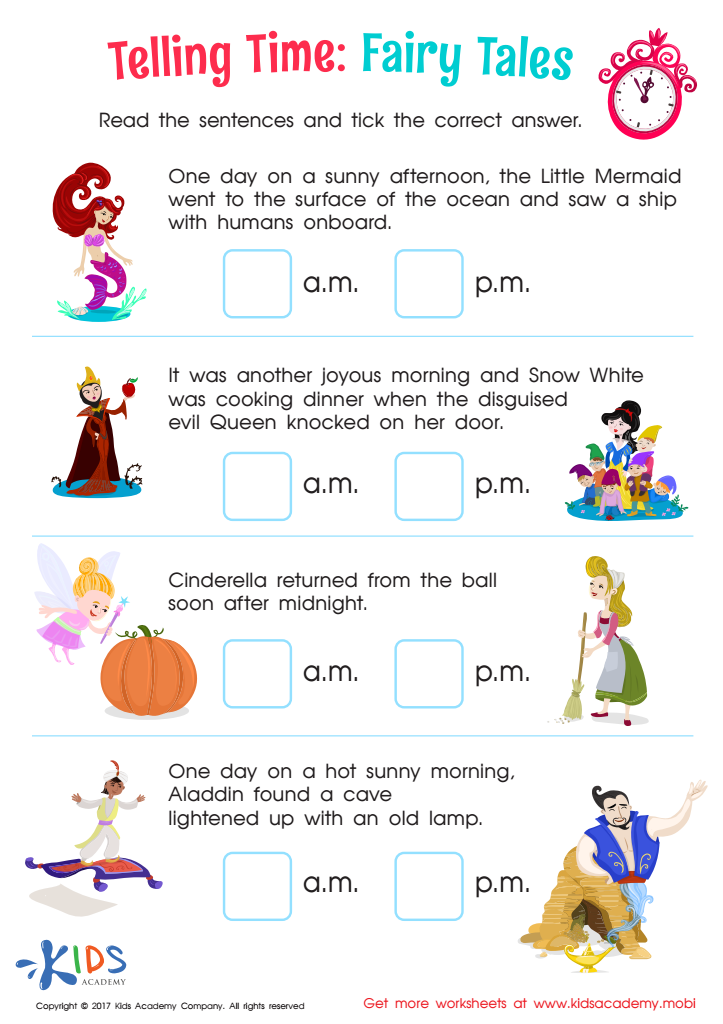
Telling Time: Fairy Tales Worksheet
Bring your child's imagination to life with classic fairy tales! This colorful telling time worksheet has it all: The Little Mermaid, Cinderella, and more! Plus, your child will have fun learning to distinguish a.m. from p.m. with this charming worksheet.
 Assign to My Students
Telling Time: Fairy Tales Worksheet
Worksheet
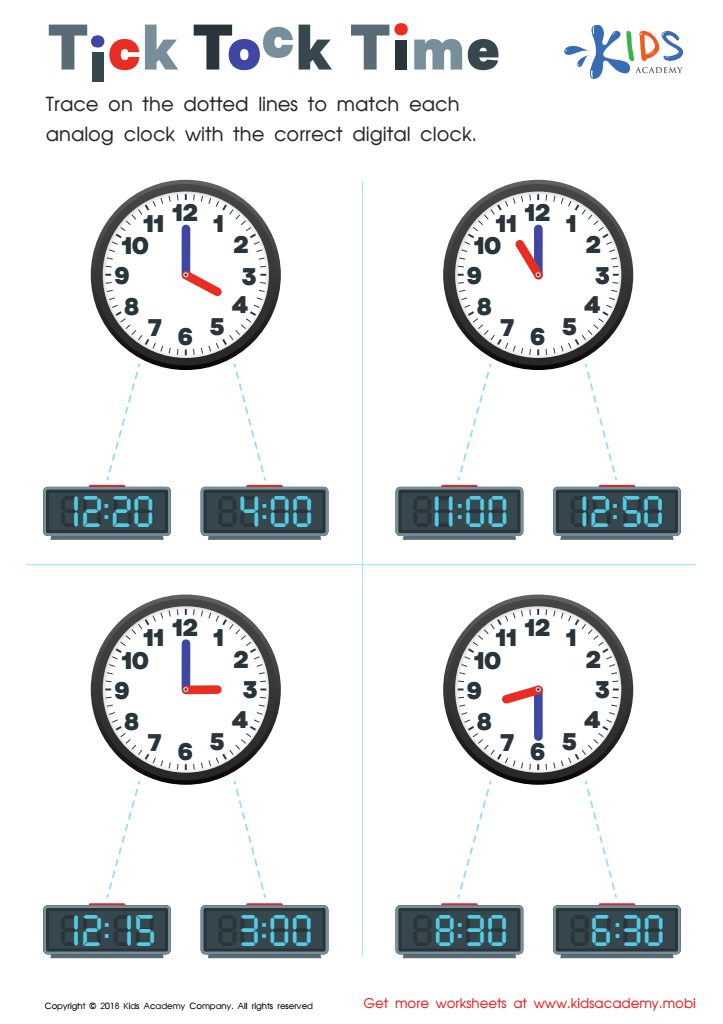
Tick Tock Time Worksheet
Trace the dotted lines on this worksheet to match analog and digital clocks! It's a great way to help your kids learn time-telling. They'll get better at converting analog to digital, and vice versa. Get your children to try it - it's a fun way to practice!
Tick Tock Time Worksheet
Worksheet
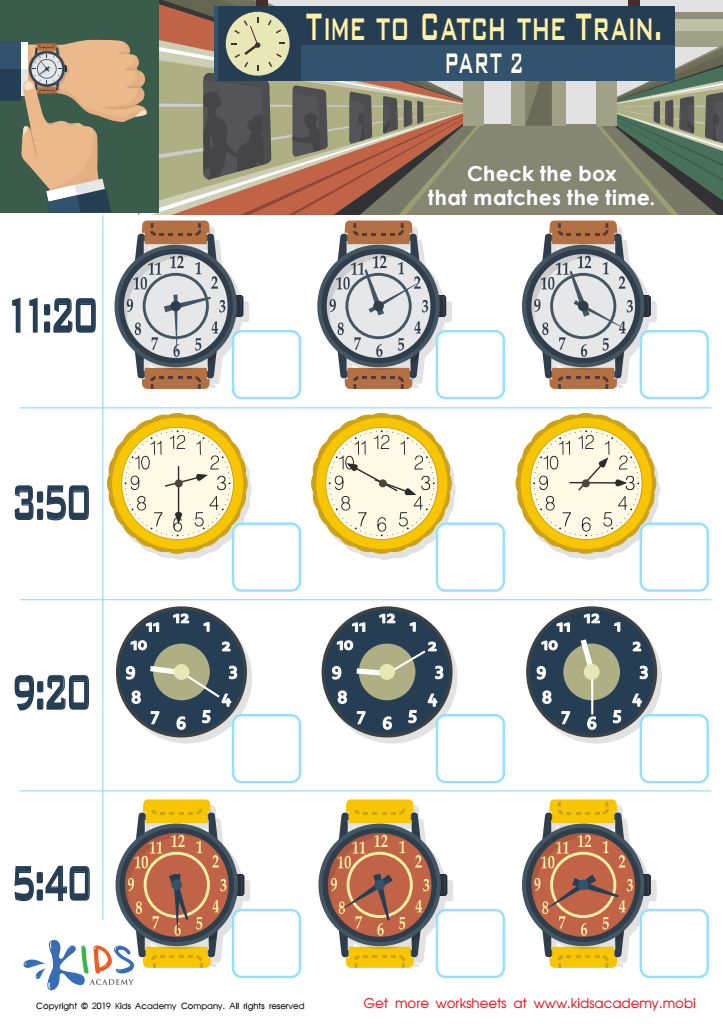
Time to Catch the Train Part 2 Worksheet
Teach your kids the importance of telling time and how to do it. Explain that there are multiple ways to show the time, such as written on the left side or watches in the picture. Guide them to check the box that matches the time. Knowing the time is essential to get things done and create order. Ensure your kids understand this and they will reap the benefits.
Time to Catch the Train Part 2 Worksheet
Worksheet
Join Kids Academy for Free
Who is primarily going to use this learning content?








Teaching children ages 4-7 to read an analog clock is important for several reasons. Firstly, understanding analog clocks helps kids grasp the concept of time beyond just memorizing numbers on a digital display. It enables them to understand the movement of time, hours, and minutes, giving them the ability to visualize how time progresses throughout the day.
Secondly, learning how to read an analog clock reinforces basic math skills. It promotes number recognition, counting by fives, and an understanding of fractions as children figure out the relationship between the hour, minute, and second hands.
Analog clocks also teach essential life skills. Children learn punctuality, understanding routines, and managing their daily activities. This ability helps them develop a sense of responsibility and independence as they grow older.
Moreover, engaging with analog clocks can help improve children's fine motor skills and hand-eye coordination, as they adjust the mechanical parts of a clock during learning activities.
Lastly, analog clocks are still widely used despite the prevalence of digital devices. Ensuring that children understand how to read them means they are prepared for various real-world situations, from reading classroom clocks to following schedules in places that use analog timers.
In sum, teaching young children to read an analog clock is a multifaceted educational tool that enhances their mathematical understanding, life skills, and cognitive development.








