Animal recognition Math Worksheets for Ages 4-7
111 filtered results
-
From - To
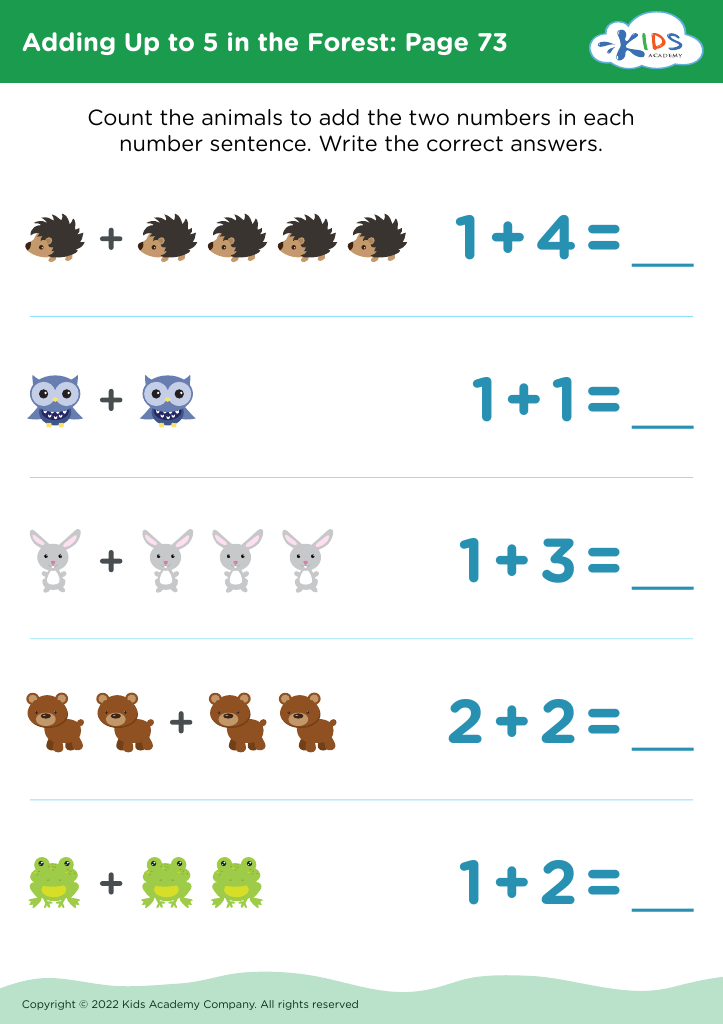
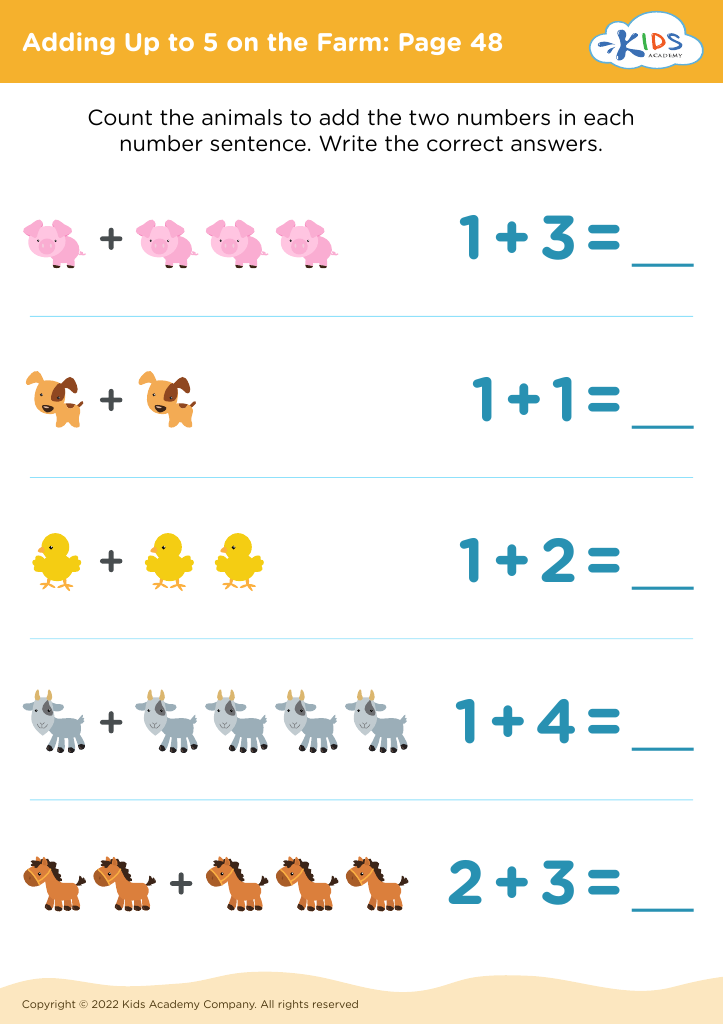
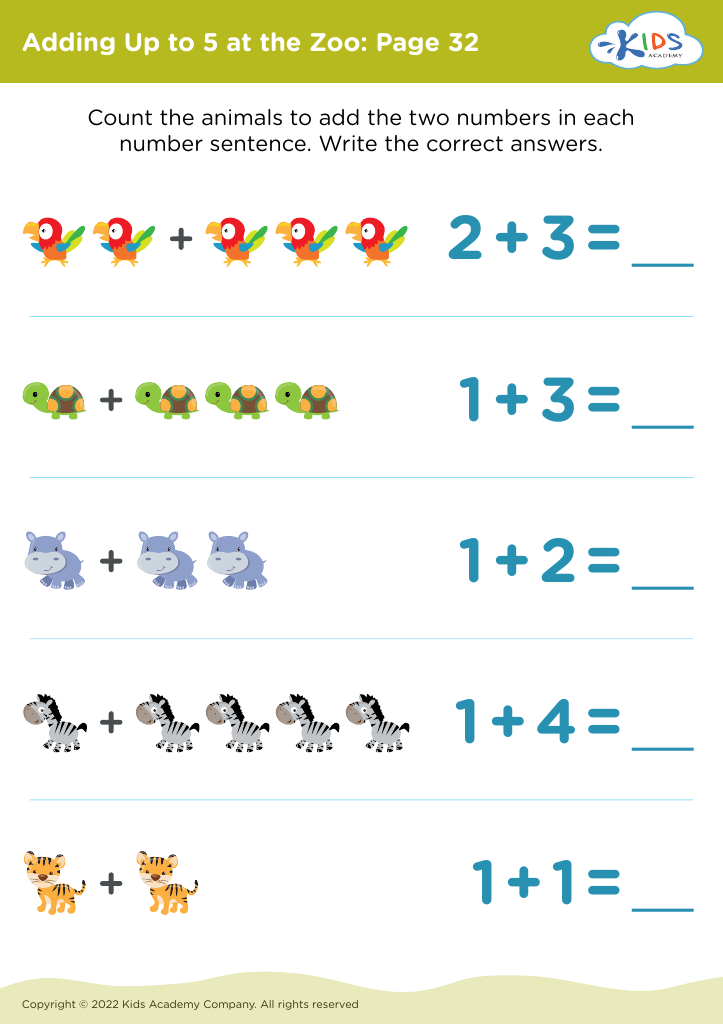
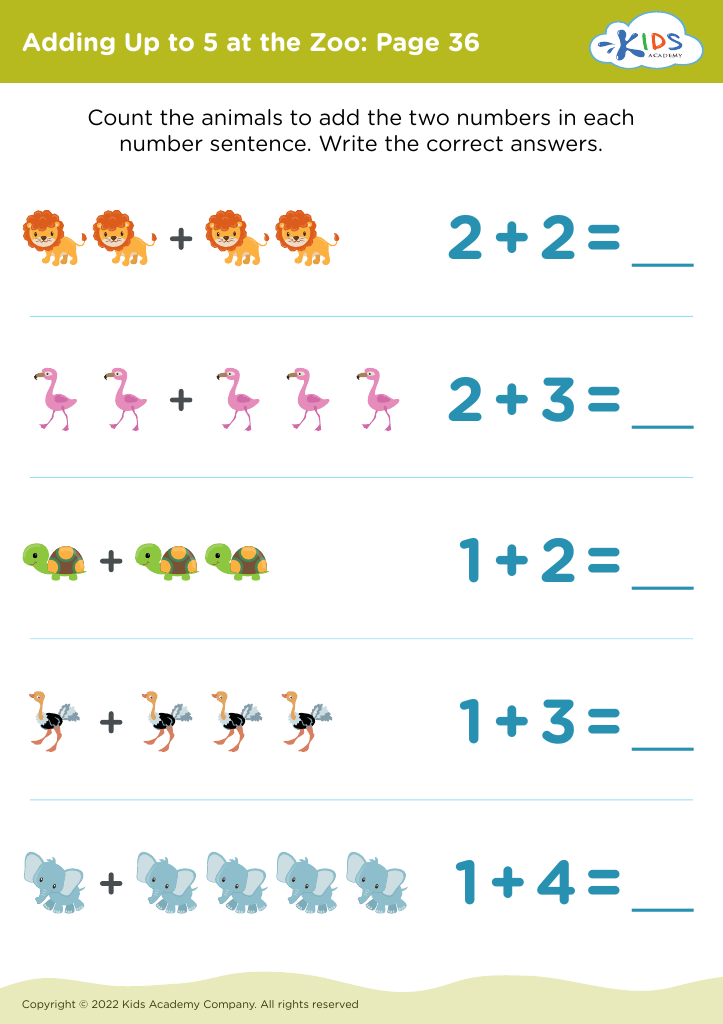
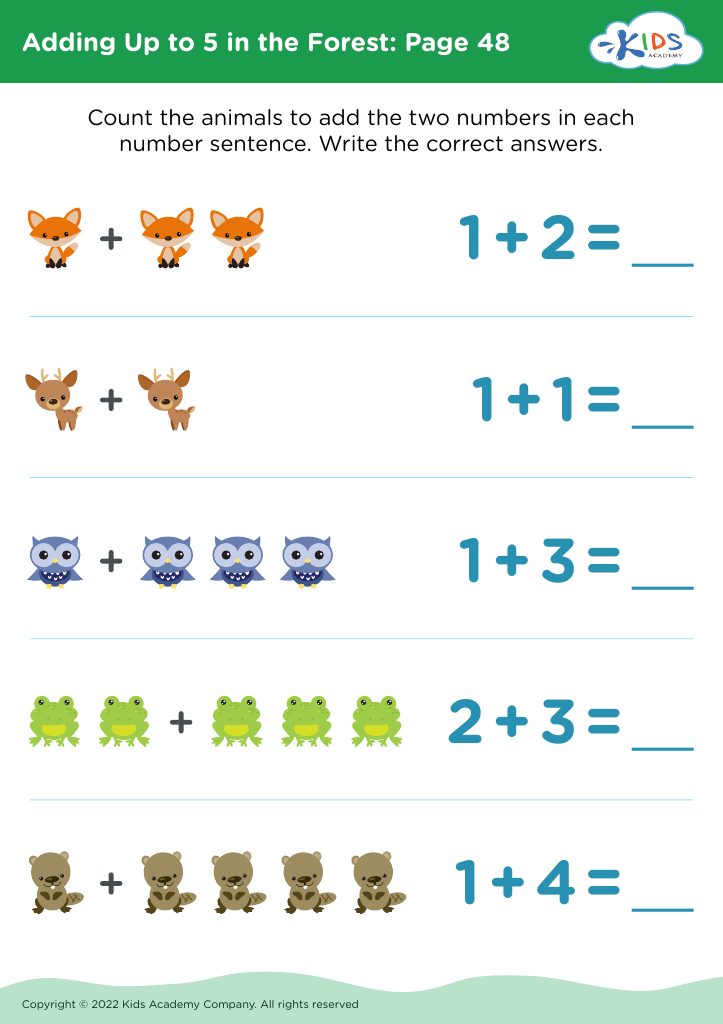
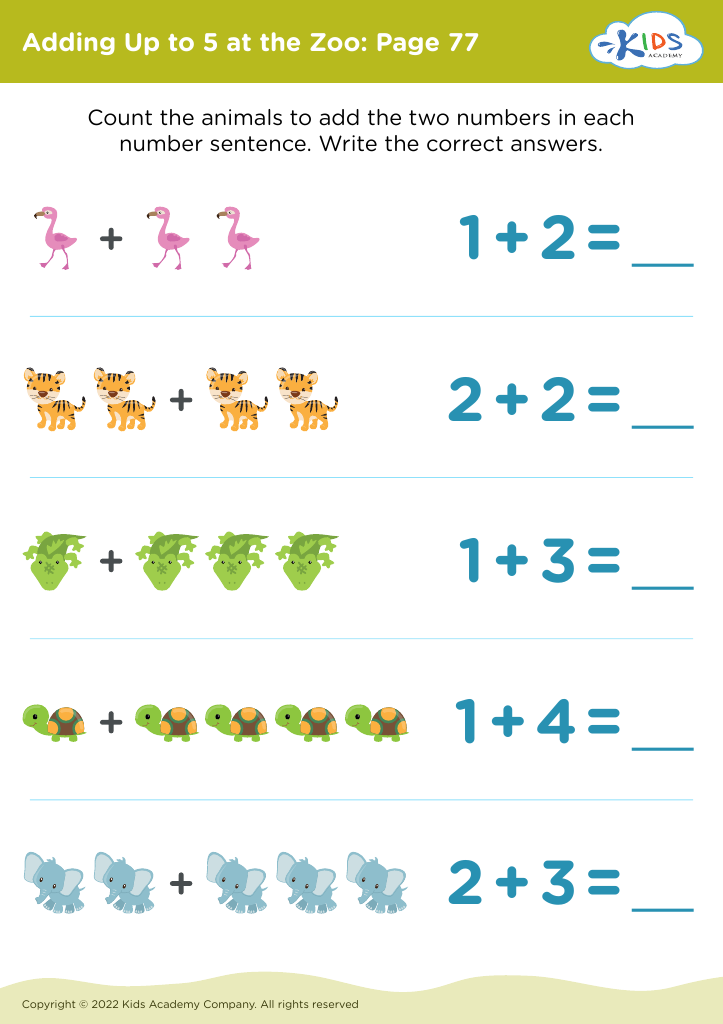
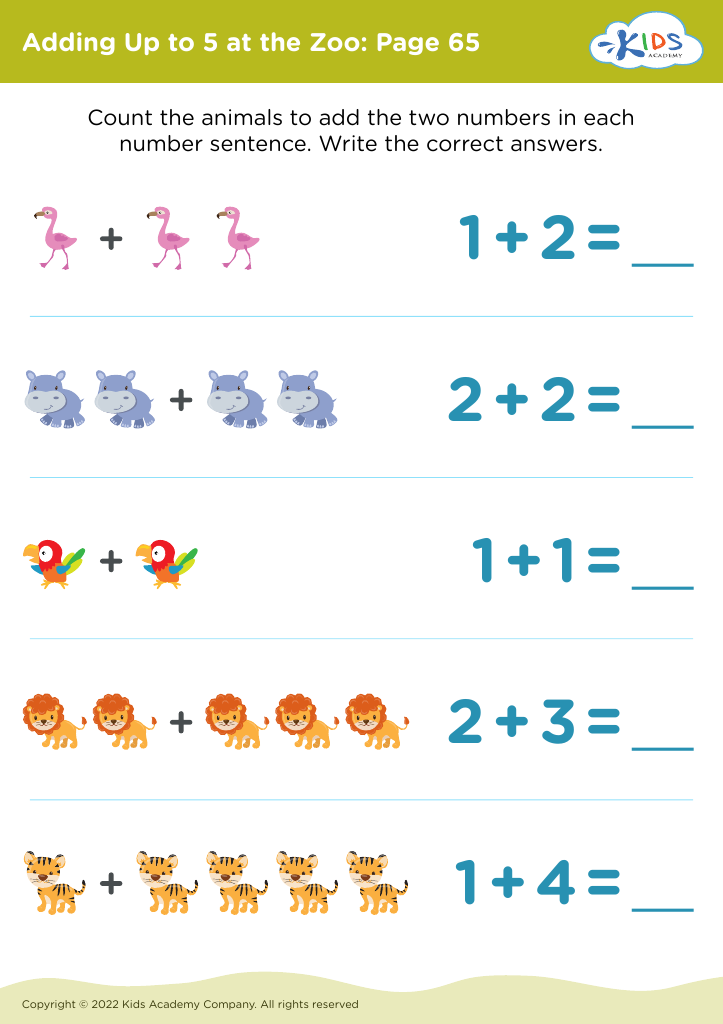
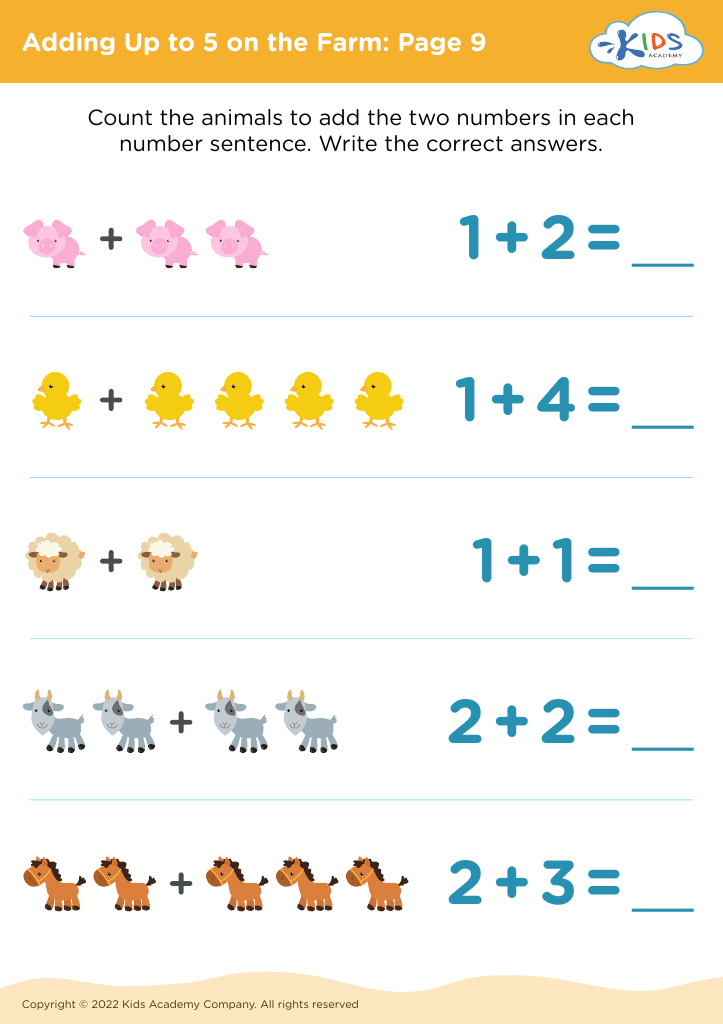
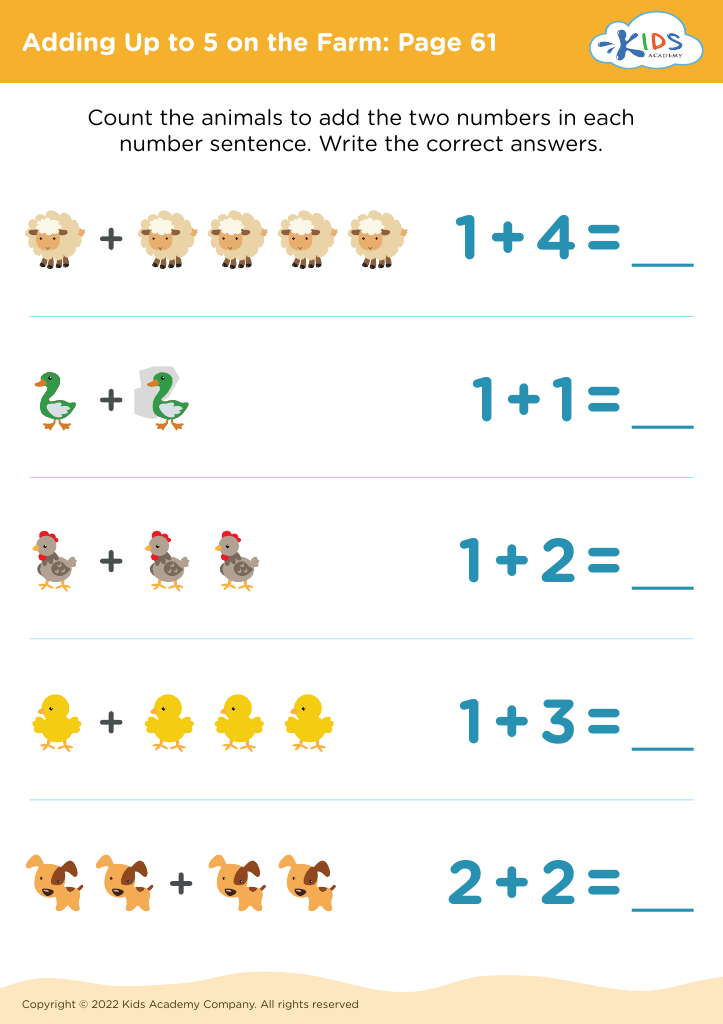
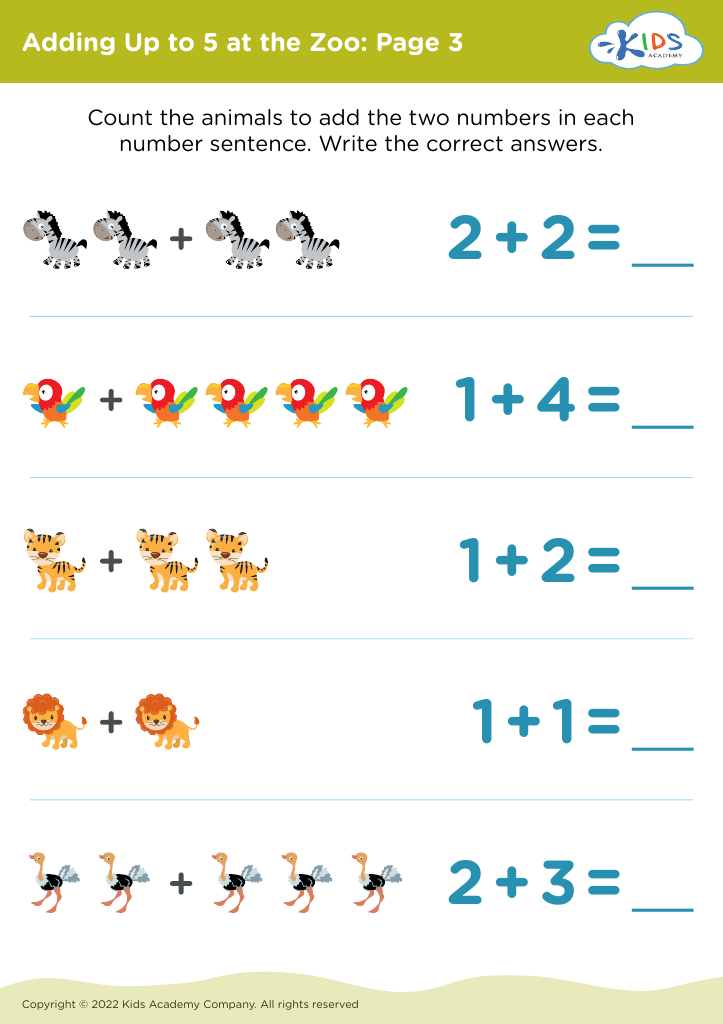
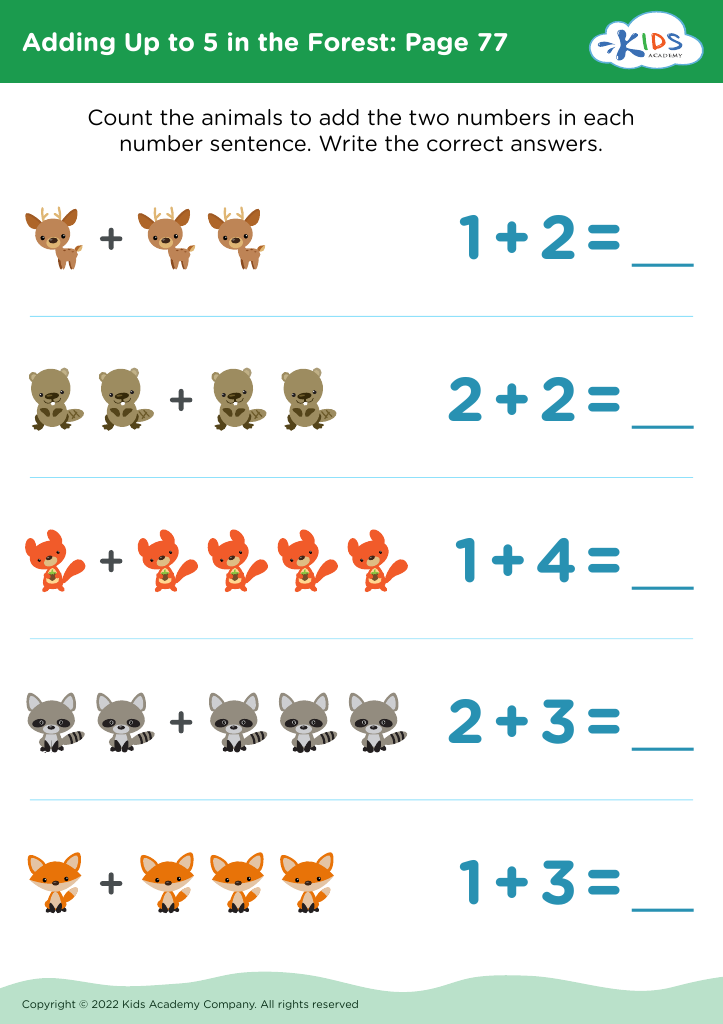
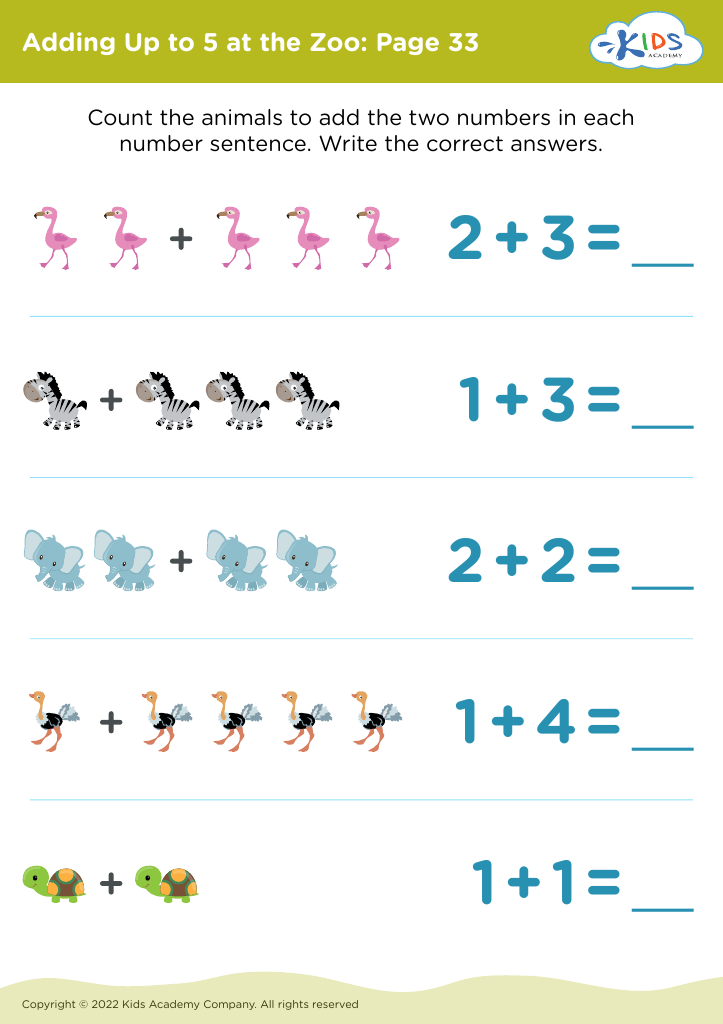
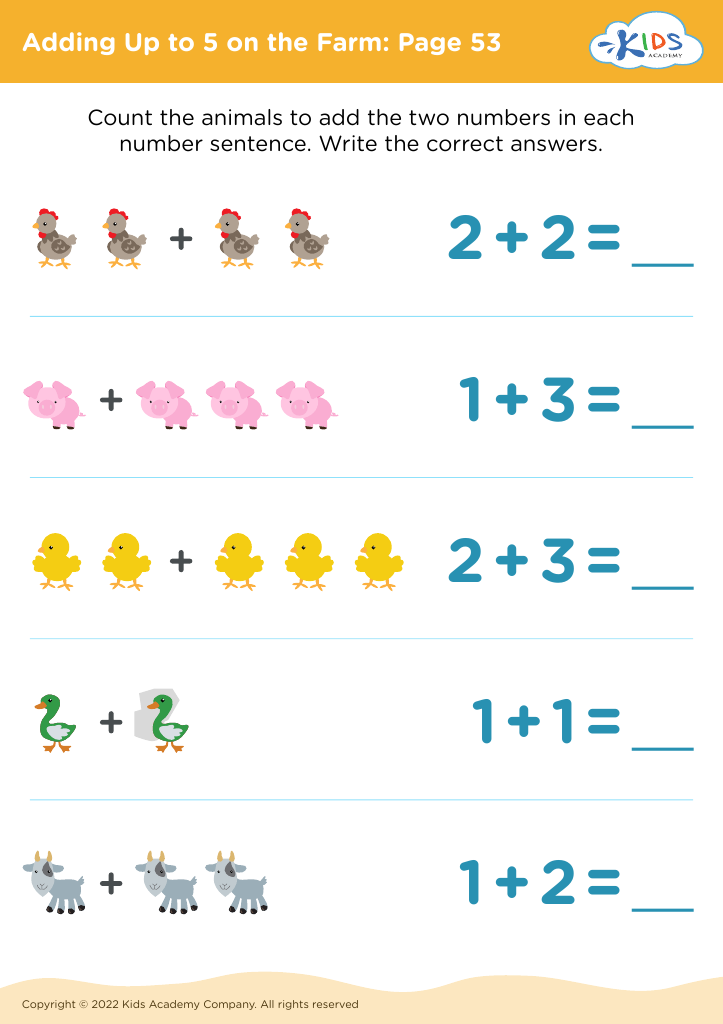
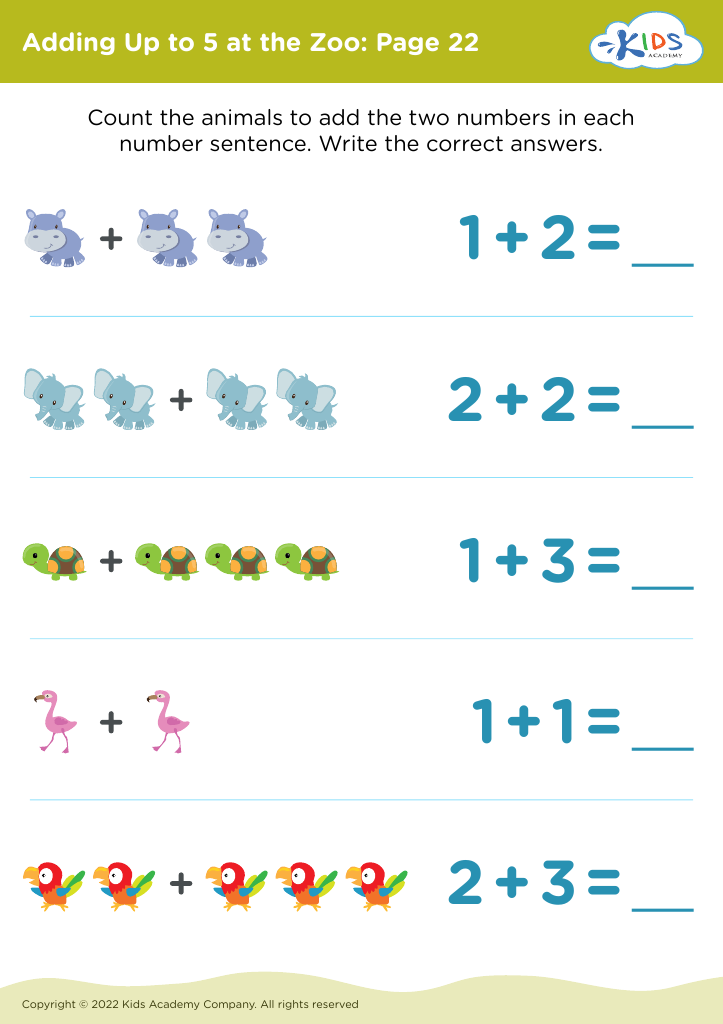
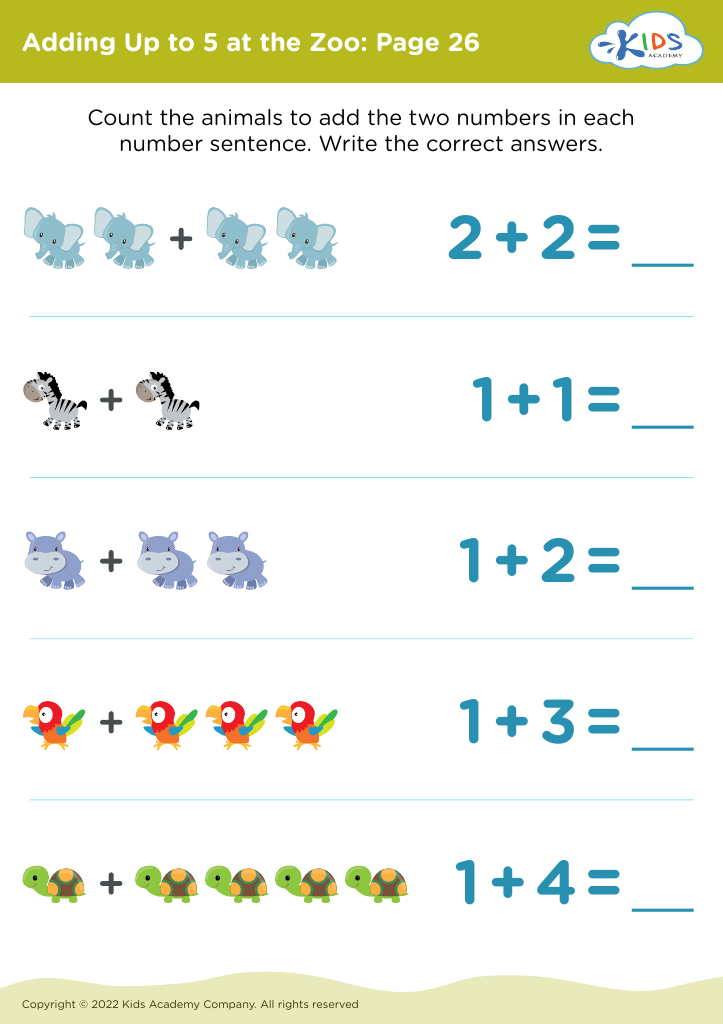
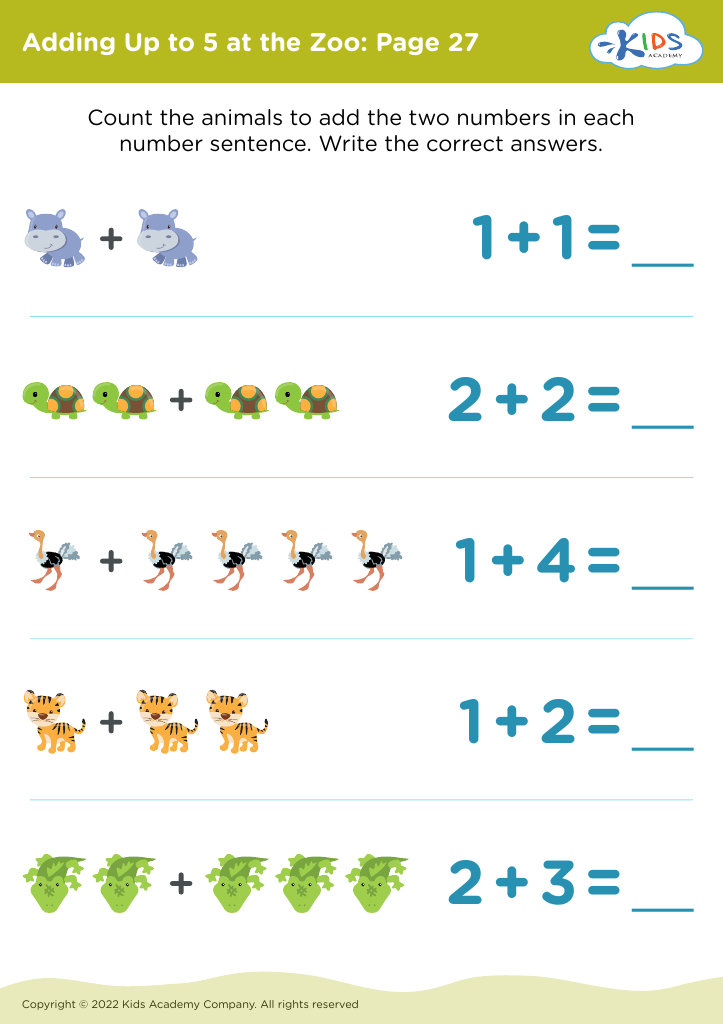
Discover our engaging Animal Recognition Math Worksheets designed specifically for children ages 4-7! These interactive worksheets combine fundamental math concepts with the excitement of learning about animals. Young learners will enhance their counting, sorting, and pattern recognition skills while exploring colorful illustrations of their favorite animals. Each worksheet offers fun activities that support cognitive development and reinforce essential math skills in a playful manner. Perfect for home or classroom use, our resources foster a love for mathematics and wildlife simultaneously, providing a unique educational experience. Download our Animal Recognition Math Worksheets today and watch your child's enthusiasm for learning soar!
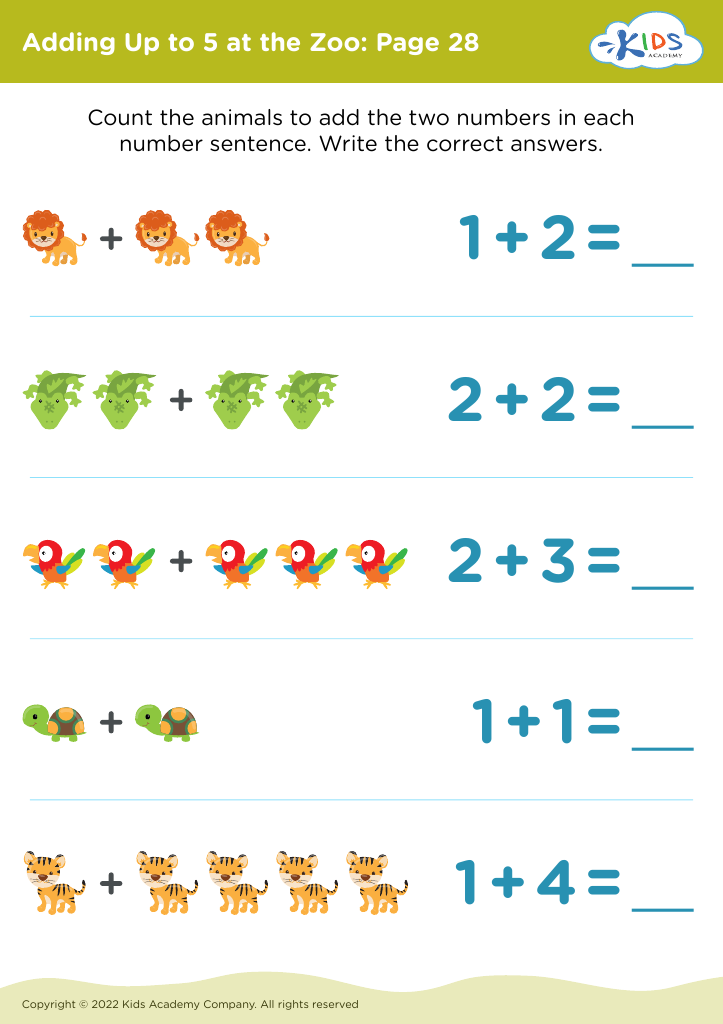
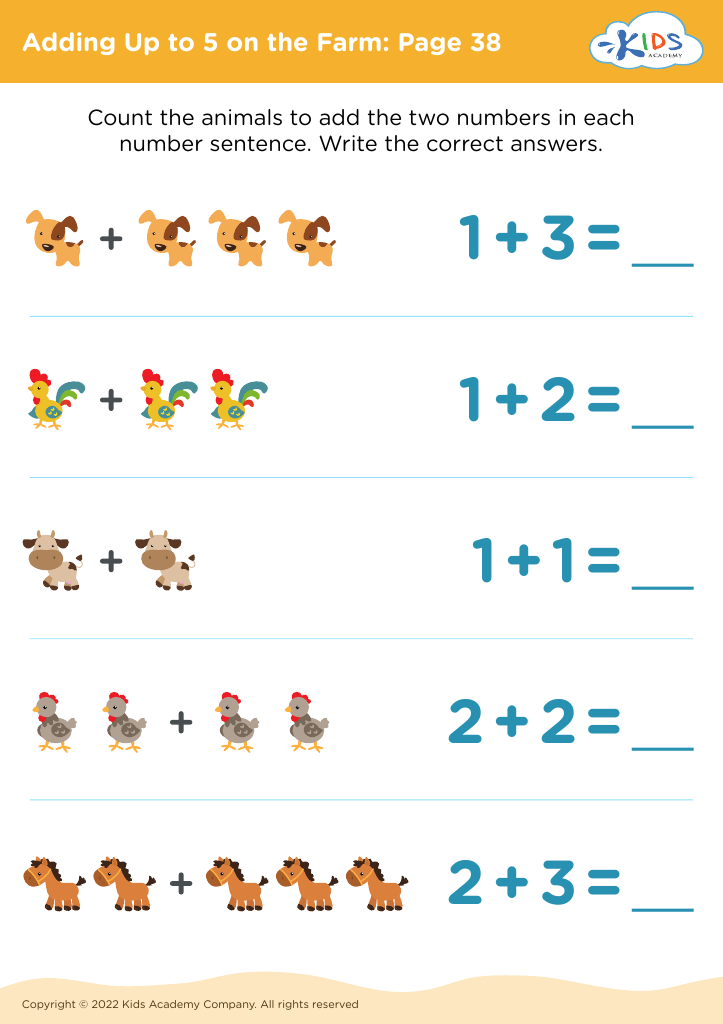
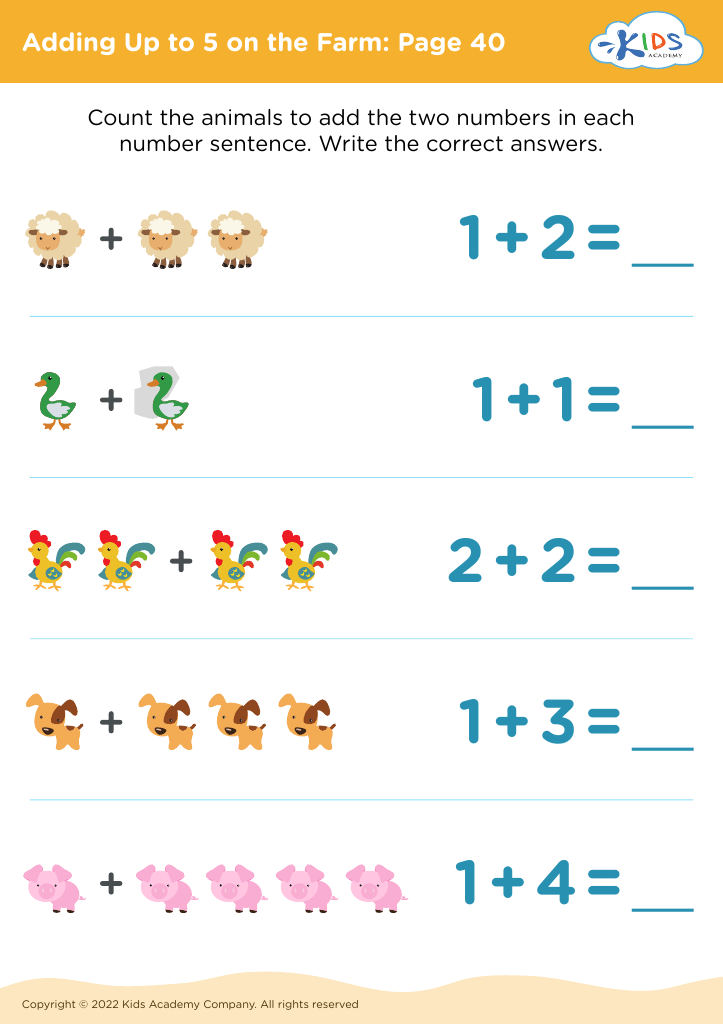
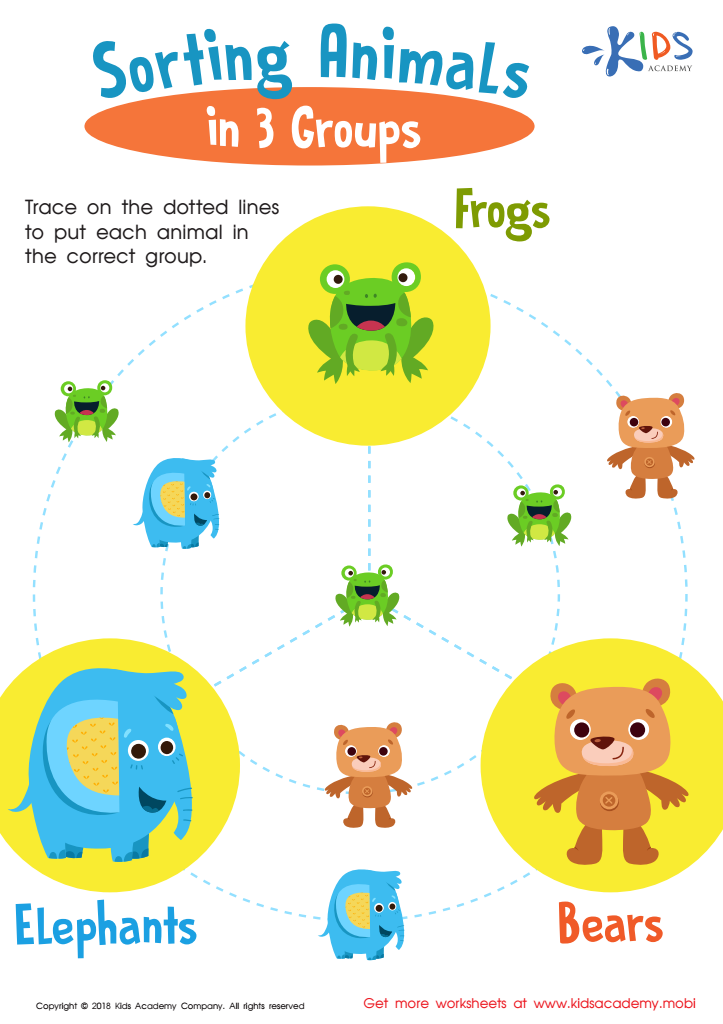
Sorting Animals in 3 Groups Worksheet
 Assign to My Students
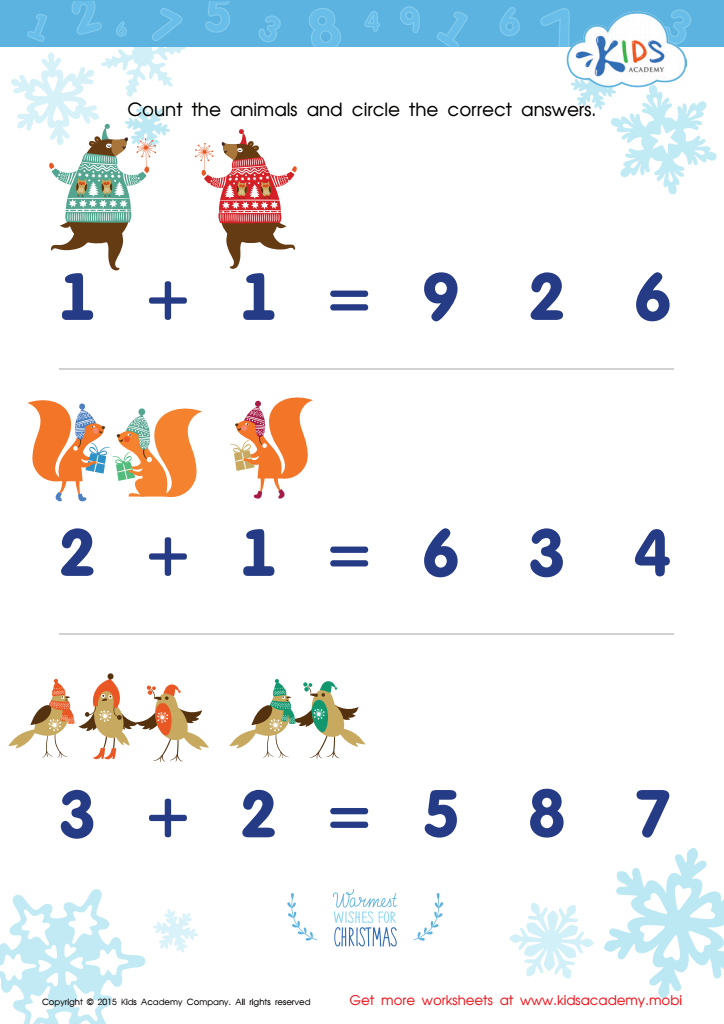
Count Funny Animals Worksheet
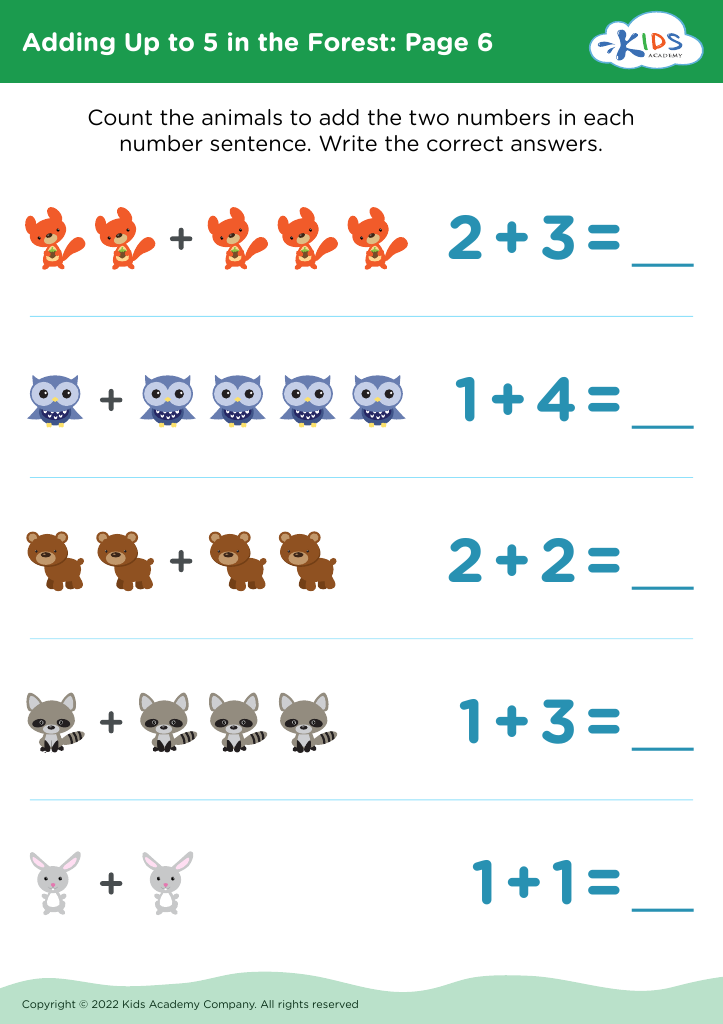
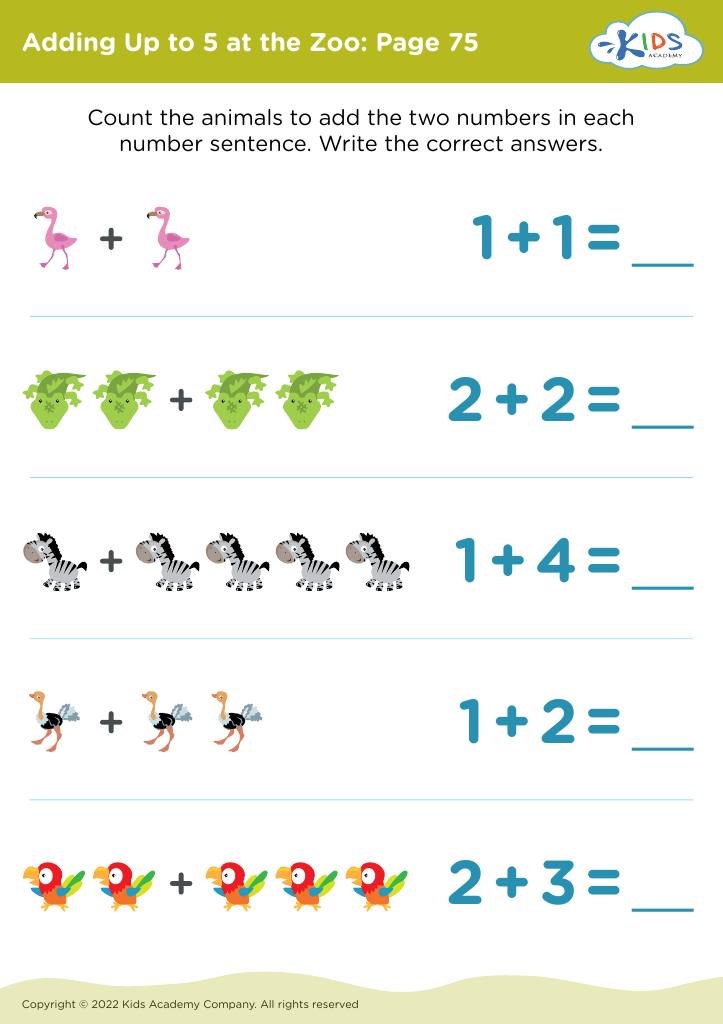
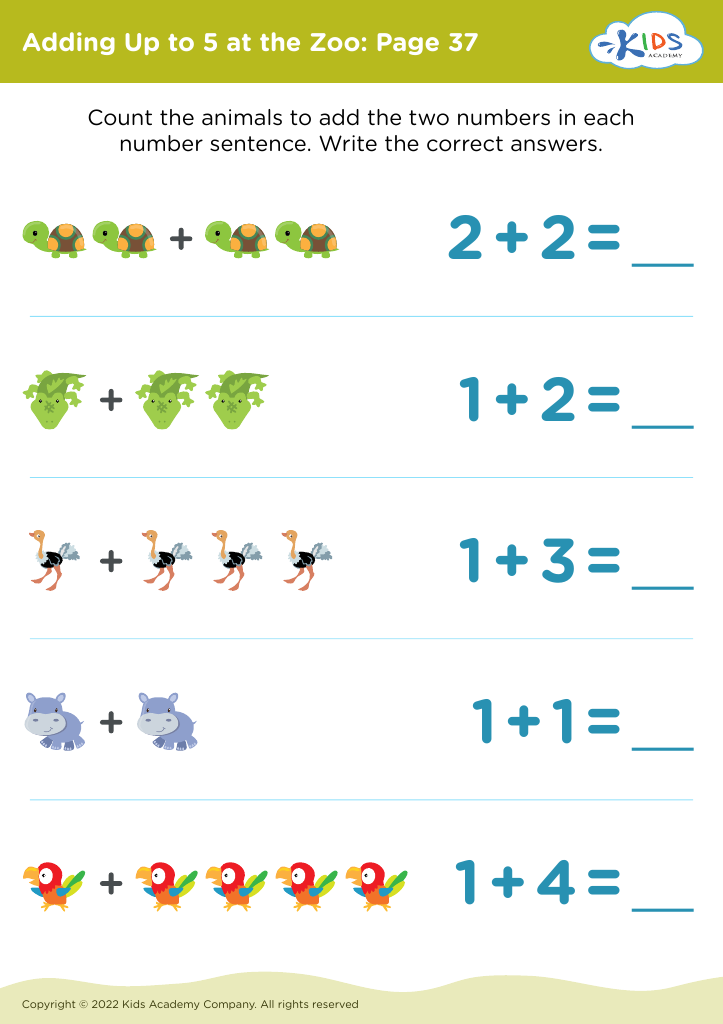



.jpg)



Animal recognition math for children ages 4-7 is vital for both parents and teachers, as it intertwines essential cognitive skills with engaging content. At this developmental stage, children are naturally curious about animals. By integrating animal recognition into math lessons, we can harness that curiosity to improve overall learning motivation.
Understanding animal names and characteristics provides children with rich visual stimuli and context for math concepts, such as counting, sorting, and pattern recognition. For example, using animal groups to teach addition and subtraction makes the concept tangible and relatable.
Furthermore, exploring animals fosters critical thinking and decision-making skills; children can determine which animals belong to specific groups based on characteristics (like habitat or size), enhancing their analytical skills.
This approach also promotes creativity and imagination, as children can visualize and even role-play animals during math activities. Lastly, this method cultivates an appreciation for biodiversity and can lead to early environmental education, encouraging a sense of responsibility towards animal conservation. In essence, animal recognition math is a multidimensional learning approach that not only develops mathematical skills but also supports social, emotional, and cognitive growth in early learners.








